Water-based industrial coating is one of the fastest-growing categories in the field of industrial protection and decorative painting in recent years. Its rise is not simply driven by the "environmental trend," but is the inevitable result of the superposition of three factors: mandatory regulatory constraints, improved end-of-pipe treatment capacity, and advances in resin synthesis technology. For coating engineers in industries such as equipment manufacturing, steel structures, construction machinery, containers, and wind turbine towers, understanding the "formulation skeleton" and "resin language" of water-based industrial coatings is far more important than memorizing a few parameters—because whether a water-based coating can form a stable film under temperature and humidity fluctuations in the workshop, withstand salt spray and humidity-heat, and achieve the designed film thickness with thin application, all depends on the synergy between the film-forming resin and the accompanying additives.
As a technical supplier of industrial protective coatings, Kexin New Materials (kexinMaterials) has accumulated a large amount of frontline application data across product lines of water-based acrylic, water-based epoxy, and water-based polyurethane. This article will also combine real standards such as GB 30981-2020 and ISO 12944-2018 to clearly break down the key technical indicators of water-based industrial coatings, helping you upgrade "experience" into "citable data" during material selection and formulation review.
I. Definition and Classification Boundaries of Water-based Industrial Coating
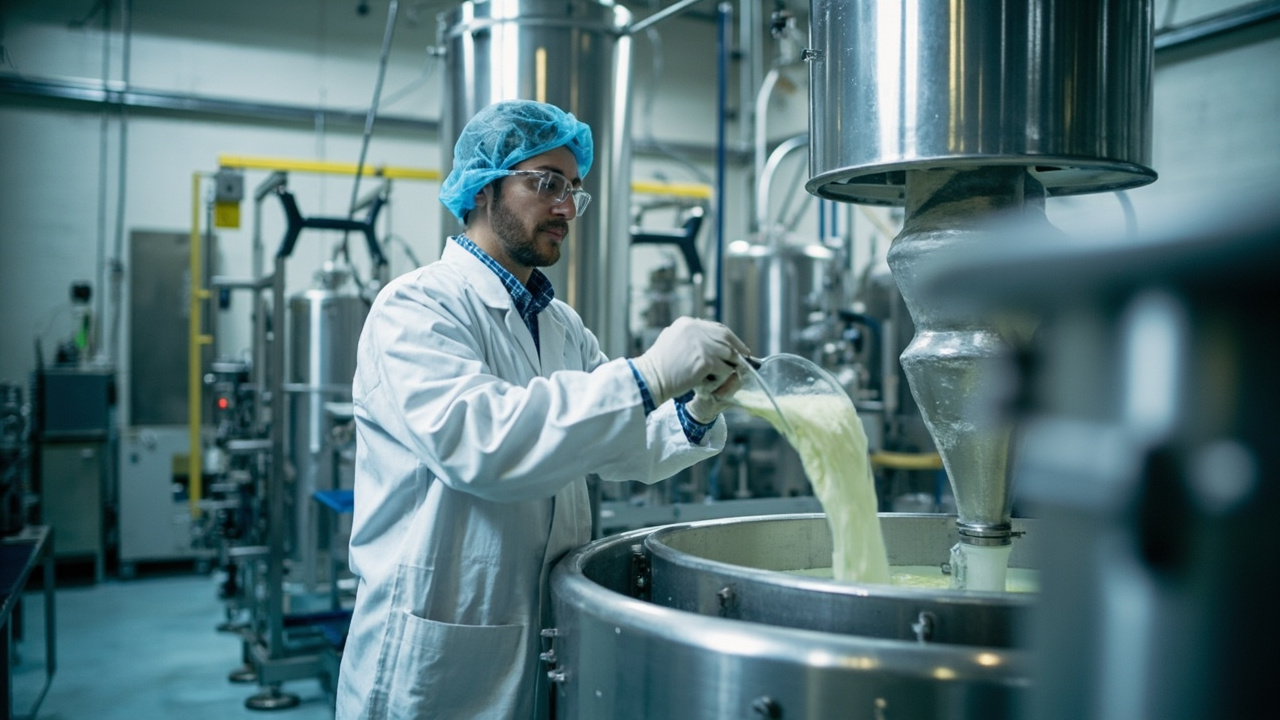
The so-called "water-based industrial coating" refers to a single-component or two-component coating that uses water as the main dispersion medium (water replacing most organic solvents), composed of water-based resin, pigments, fillers, additives, and water, and is applied to the surfaces of industrial facilities, mechanical equipment, steel structures, and other substrates to provide protection and decoration. Its most essential difference from architectural latex paint is that industrial coatings must face mechanical loads, corrosive media, temperature cycling, and more stringent durability requirements; therefore, the resin molecular weight, glass transition temperature (Tg), crosslink density, and resistance design are all far higher than those of interior and exterior wall latex paints.
According to the film-forming resin system, water-based industrial coatings are mainly divided into four categories: water-based acrylic, water-based epoxy, water-based polyurethane, and water-based alkyd and modified types. Each type has its applicable boundaries, and there is no situation where "one resin suits all working conditions." The first principle of selection is to first clarify the substrate, environmental corrosion level (refer to C2–C5-M/C5-I levels in ISO 12944-2), mechanical stress, and appearance requirements, and then deduce the resin system in reverse.
It needs to be emphasized that water-based does not mean "zero VOC." Water itself evaporates, but the formulation will still retain a small amount of co-solvents (film-forming aids, co-solvents) to ensure film formation; therefore, VOC must be determined according to GB/T 23986-2009 "Paints and varnishes — Determination of volatile organic compound (VOC) content — Gas-chromatographic method" or the constant weight method of GB/T 23985, and the limits of GB 30981-2020 "Limit of harmful substances in industrial protective coatings" shall serve as the compliance red line.
II. Core Resin Systems: The Personalities of Four Film-Forming Substances
The performance ceiling of water-based industrial coatings is determined by the film-forming resin. Below, we dissect the "personalities" of the four mainstream resins one by one.
2.1 Water-based Acrylic Resin
Water-based acrylic is the most versatile industrial coating base, usually obtained by emulsion polymerization of acrylic acid, methacrylic acid, and their ester monomers. Its advantages are good weather resistance, gloss and color retention, moderate cost, and strong adaptability to construction; the disadvantage is that pure thermoplastic acrylic emulsion is weak in solvent resistance, temperature resistance, and adhesion (especially to smooth metals). In engineering, styrene is often introduced to improve hardness and water resistance, or functional group-containing monomers (such as hydroxy acrylate) are introduced to reserve sites for subsequent crosslinking (with polyisocyanate or amino resin), forming a "room-temperature self-crosslinking" or "baking crosslinking" core-shell or interpenetrating network structure.
Common indicators of water-based acrylic emulsion: solid content 40%–50%, minimum film-forming temperature (MFFT) usually at 5–25°C, requiring film-forming aids (such as Texanol, i.e., 2,2,4-trimethyl-1,3-pentanediol monoisobutyrate) to lower the MFFT below the construction environment temperature for continuous film formation.
2.2 Water-based Epoxy Resin
Water-based epoxy "pulls" the hydrophobic epoxy skeleton into the water phase through emulsification or chemical modification. Common routes are: ① external emulsification (mechanically emulsifying epoxy resin with water-based amine curing agent); ② self-emulsification (introducing hydrophilic segments such as polyether and carboxyl into the epoxy chain to form a stable aqueous dispersion, i.e., the 2nd generation water-based epoxy). The greatest advantage of water-based epoxy is strong adhesion, excellent chemical and salt spray resistance, making it the first choice for water-based anti-rust primer; the shortcoming is poor weather resistance (easy chalking), so it is almost only used as primer/intermediate coat, and the topcoat needs to be separately formulated with acrylic or polyurethane. The mixing ratio of two-component water-based epoxy (resin : amine curing agent) is a key parameter and must be accurately measured according to the manufacturer's equivalent.
2.3 Water-based Polyurethane Resin
Water-based polyurethane (PUD, polyurethane dispersion) is a "performance ceiling"-level base in water-based industrial coatings, formed by reacting polyisocyanate with polyol and then dispersing in the water phase. According to hydrophilic groups, it is divided into anionic, cationic, and non-ionic types; according to crosslinking, it is divided into single-component (self-crosslinking/heat-activated) and two-component (adding water-based isocyanate curing agent externally, such as hydrophilic HDI trimer). PUD combines hardness, flexibility, wear resistance, chemical resistance, and weather resistance, and is the first choice for water-based topcoats and floor clear coats, but the cost is higher, and it is often physically blended with acrylic emulsion ("acrylic-polyurethane hybrid") to balance cost and performance.
2.4 Water-based Alkyd and Modified Types
Water-based alkyd is water-borne by the fatty acid method or maleic anhydride method from alkyd resin. The advantages are good leveling, high single-coat film thickness, and strong adaptability to rust layers, suitable for general industrial maintenance and machinery appearance; the disadvantages are slow drying, poor early water resistance, and easy yellowing. In engineering, modification (such as styrene modification, acrylic modification, epoxy modification) is often used to reinforce shortcomings, positioned for decorative protection at medium and low corrosion levels (C2–C3).

III. Complete Formulation Composition of Water-based Industrial Coating
A water-based industrial coating is not as simple as "resin + water," but a precisely balanced system composed of film-forming substances, dispersion medium, pigment fillers, and functional additives.
- Film-forming substance (resin): Determines the resistance skeleton and accounts for the main body of the formulation solid content.
- Water: Main dispersion medium, deionized water preferred, to avoid breaking the emulsion caused by Ca²⁺/Mg²⁺.
- Co-solvent/co-solvent: Such as propylene glycol methyl ether (PM), dipropylene glycol methyl ether (DPM), and texanol (Texanol). They lower MFFT, improve rheology and freeze-thaw stability, but are counted in VOC accounting and must be controlled in amount.
- Pigments and fillers: Titanium white (TiO₂) provides hiding and weather resistance, iron red/ micaceous iron oxide provides anti-rust and shielding, barium sulfate and talc regulate filling and sandability.
- Anti-rust pigment: Zinc phosphate, aluminum tripolyphosphate, molybdate, modified flake zinc powder (water-based epoxy zinc-rich), etc., delay corrosion through passivation/shielding/cathodic protection mechanisms.
- Dispersant: Polycarboxylate, phosphate type, stabilizes pigment dispersion and prevents floating and flooding.
- Wetting agent: Lowers surface tension, improves spreading on metal substrates, and prevents cratering.
- Defoamer: Silicone type or mineral oil type, breaks bubbles brought in by stirring/construction; but excess will cause cratering and affect interlayer adhesion.
- Film-forming aid: Pulls MFFT below the construction temperature, is the key to whether the water-based coating "can form a film," but also raises VOC.
- Thickener: Alkali swellable (ASE), non-ionic polyurethane (HEUR), cellulose type, adjusts storage and construction viscosity and prevents settling.
- pH regulator: AMP-95, etc., maintains alkalinity (pH 8–9) to ensure system stability.
- Preservative and fungicide: In-can preservation (BIT, CMIT/MIT, etc., note regulatory limits), prevents microbial growth in water-based systems.
- Rheology modifier/anti-settling agent: Fumed silica, bentonite, controls thick coating and storage stratification.
The essence of formulation design is "balance": too much thickener causes poor leveling, too little defoamer causes bubbles, too little film-forming aid causes cracking, and too much co-solvent causes VOC exceeding the standard. This is exactly why the formulation threshold of water-based industrial coatings is higher than that of solvent-based coatings—solvent-based can use a large amount of true solvent to "mask" resin defects, while the water-based system exposes every shortcoming.
IV. Key Technical Indicators and Citable Standards
To evaluate water-based industrial coatings, the hard indicators in the standards must be pulled out. The following parameters all come from real standard systems:
- VOC content: Determined according to GB/T 23986-2009 or GB/T 23985. Industrial protective coatings must meet the limits of GB 30981-2020—for example, the VOC limits for water-based anti-corrosion coatings (primer, intermediate coat) in that standard are generally around 250 g/L, and topcoat types are around 300 g/L; solvent-free types have stricter limits (approx. ≤ 60 g/L). Specific values are subject to the current standard text, and third-party test reports from manufacturers should be requested during review.
- Non-volatile matter (solid content): According to GB/T 1725-2007 "Determination of non-volatile matter content of paints, varnishes and plastics," typical water-based industrial coating solid content is 40%–60% (mass). The higher the solid content, the more film-forming substance per unit area and the easier the film thickness meets the standard.
- Drying time: According to GB/T 1728-2020 "Determination of drying time of paint films and putty films," divided into surface dry and hard dry. Water-based coatings are greatly affected by temperature and humidity; normal temperature surface dry often takes 0.5–2 h, hard dry 8–24 h, significantly prolonged under low temperature and high humidity.
- Neutral salt spray resistance: According to GB/T 1771-2007 "Paints and varnishes — Determination of resistance to neutral salt spray," water-based epoxy primer can reach hundreds to thousands of hours without blistering or rust penetration; values are subject to the test report.
- Adhesion: According to GB/T 9286-1998 cross-cut method (grade 0 is optimal), or GB/T 5210 pull-off method (in MPa). Adhesion of water-based coatings on metal substrates is a core threshold.
- Pencil hardness: According to GB/T 6739-2006, water-based topcoats commonly ≥ 1H–2H, depending on resin and crosslinking.
- Resistance to liquid media: According to GB/T 9274-1988, evaluate water resistance, alkali resistance, and oil resistance.
- Weather resistance: Perform artificial accelerated aging according to GB/T 1865 (xenon lamp aging, corresponding to ISO 11341) or GB/T 14522 (fluorescent UV, corresponding to ISO 4892), and assess chalking, color change, and gloss loss.
Only after placing the indicators into a standard coordinate system can material selection be based on evidence, avoiding being misled by baseless slogans such as "3000-hour salt spray resistance".
V. Horizontal Comparison of Four Resin Systems
The comparison table below quantifies the applicable boundaries of four mainstream water-based resins to facilitate selection by working condition:
| Dimension | Water-based acrylic | Water-based epoxy | Water-based polyurethane | Water-based alkyd/modified |
|---|---|---|---|---|
| Primary role | Topcoat, intermediate coat | Primer, floor coating | Topcoat, clear coat, floor coating | Maintenance decoration, low-to-medium corrosion |
| Adhesion (metal) | Medium | Excellent | Good | Medium |
| Salt spray resistance | Medium | Excellent | Good | Relatively weak |
| Weathering/gloss retention | Good–Excellent | Poor (chalking) | Excellent | Medium (prone to yellowing) |
| Chemical/solvent resistance | Medium | Excellent | Good–Excellent | Weak |
| Hardness/abrasion | Medium | High | High | Medium |
| Application adaptability | Excellent | Medium (two-component) | Medium | Excellent |
| Relative cost | Low–Medium | Medium | High | Low |
Selection logic: heavy anti-corrosion primer → water-based epoxy; high-decoration weather-resistant topcoat → water-based acrylic or water-based polyurethane; floor clear coat → water-based epoxy + water-based polyurethane combination; general maintenance → water-based alkyd modified. It can be seen that "system compatibility" is more important than "single product".
VI. Practical Key Points of Formulation Design and Performance Balance
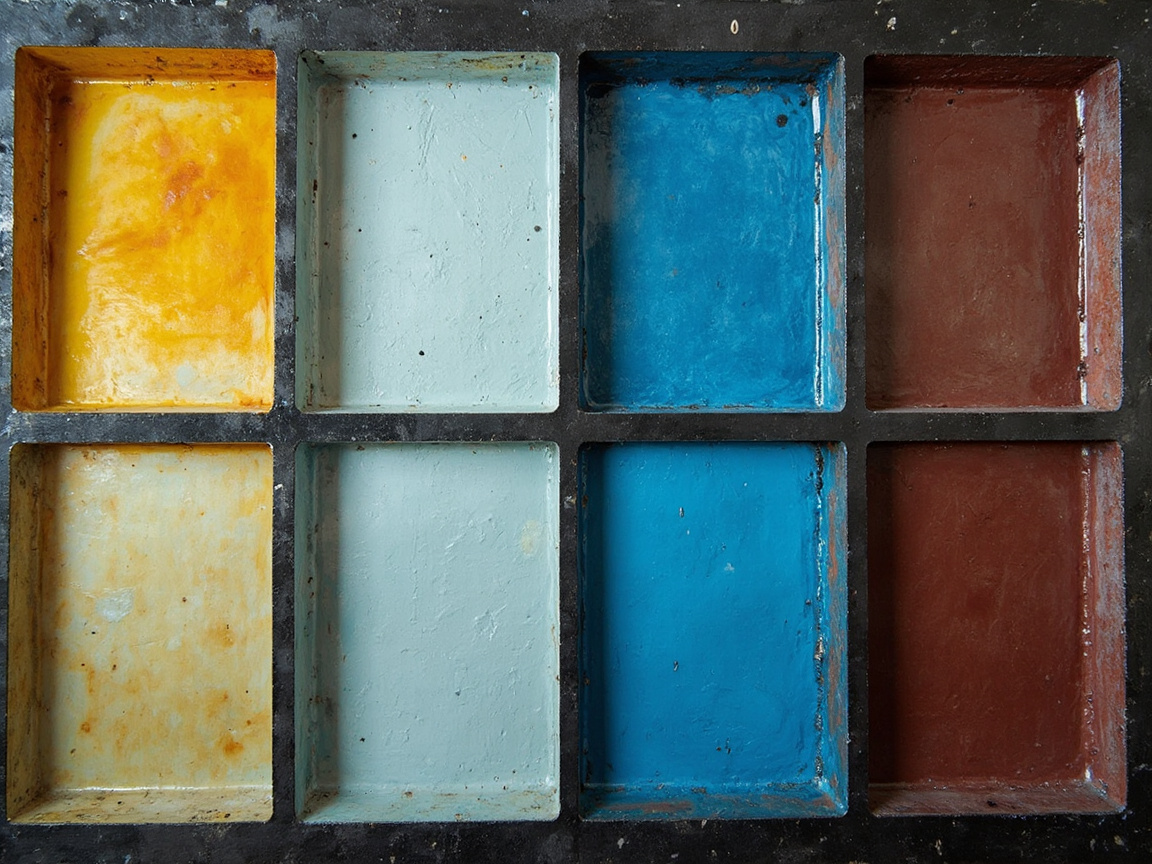
In engineering, a water-based industrial coating often gets stuck on several pairs of contradictions, requiring both formulation and process to be addressed simultaneously:
- Film formation vs VOC: The more coalescing agent added, the better the film formation, but VOC increases. The solution is to select low-MFFT emulsion, use high-boiling-point low-VOC additives, or introduce self-crosslinking functional groups to reduce reliance on external additives.
- Hardness vs flexibility: High crosslink density gives hardness but brittleness. Water-based polyurethane adjusts via soft/hard segment ratio and curing agent equivalent; epoxy primer controls brittleness and adhesion balance through amine curing agent type.
- Early water resistance vs drying speed: Water-based coating is prone to blushing and gloss loss upon early water contact. Solutions include increasing crosslink density, introducing hydrophobic segments, and ensuring sufficient drying and curing period (water resistance stabilizes only after 7 days of hard dry).
- Settling vs sagging: Thick coating tends to sag, while thickening tends to settle. Using HEUR + fumed silica synergistically with thixotropic structure is a common solution.
- Freeze-thaw stability vs formulation complexity: Water-based systems are easily damaged by freezing in winter; add antifreeze (e.g., propylene glycol) and control storage temperature ≥ 5℃.
These balances have no "standard answer" and depend on the target working condition. This is also why reviewing water-based coating must involve looking at the complete test report and compatibility process card, rather than just the brochure.
VII. Application Compatibility and Substrate Treatment
Water-based industrial coating is far more sensitive to application environment than solvent-based coating. Key control points:
- Surface treatment: For steel structures, blast clean to Sa 2½ according to GB/T 8923.1 (corresponding to ISO 8501-1), or power tool clean to St 2/St 3; roughness 40–70 µm favors mechanical interlocking. For rusted conditions, refer to rust conversion or water-based rust stabilization solutions.
- Environmental window: Temperature ≥ 5℃ (above MFFT of most emulsions), substrate temperature at least 3℃ above dew point, relative humidity ≤ 75%–85% (high humidity hinders volatilization and causes blushing).
- Application method: Air spray, airless spray, roller/brush are all acceptable; airless spray is efficient but requires controlling pressure and atomization to prevent dry spray.
- Film thickness and coats: According to ISO 12944 system, primer + intermediate coat + topcoat combination, total DFT often 160–320 µm; single-coat water-based coating wet film thickness must be converted (WFT = DFT ÷ volume solids).
- Intercoat compatibility: Water-based primer → water-based topcoat of same system is most stable; water-based primer + solvent-based topcoat requires confirming intercoat compatibility and drying.
- Curing: Water-based coating requires 7–14 days for full crosslinking/property establishment; avoid water immersion and heavy mechanical contact during this period.
Kexin New Materials (kexinMaterials) usually provides a process card covering "substrate treatment—mixing ratio—viscosity—film thickness—curing" when delivering water-based industrial coating, enabling the production line to convert the veteran workers' feel into replicable data and reduce batch variation. This is also the key to whether the water-based conversion can succeed at once.
VIII. Typical Application Scenario Quick Reference
- Construction machinery and agricultural equipment: Water-based acrylic topcoat + water-based epoxy primer, for heavy decoration and medium anti-corrosion.
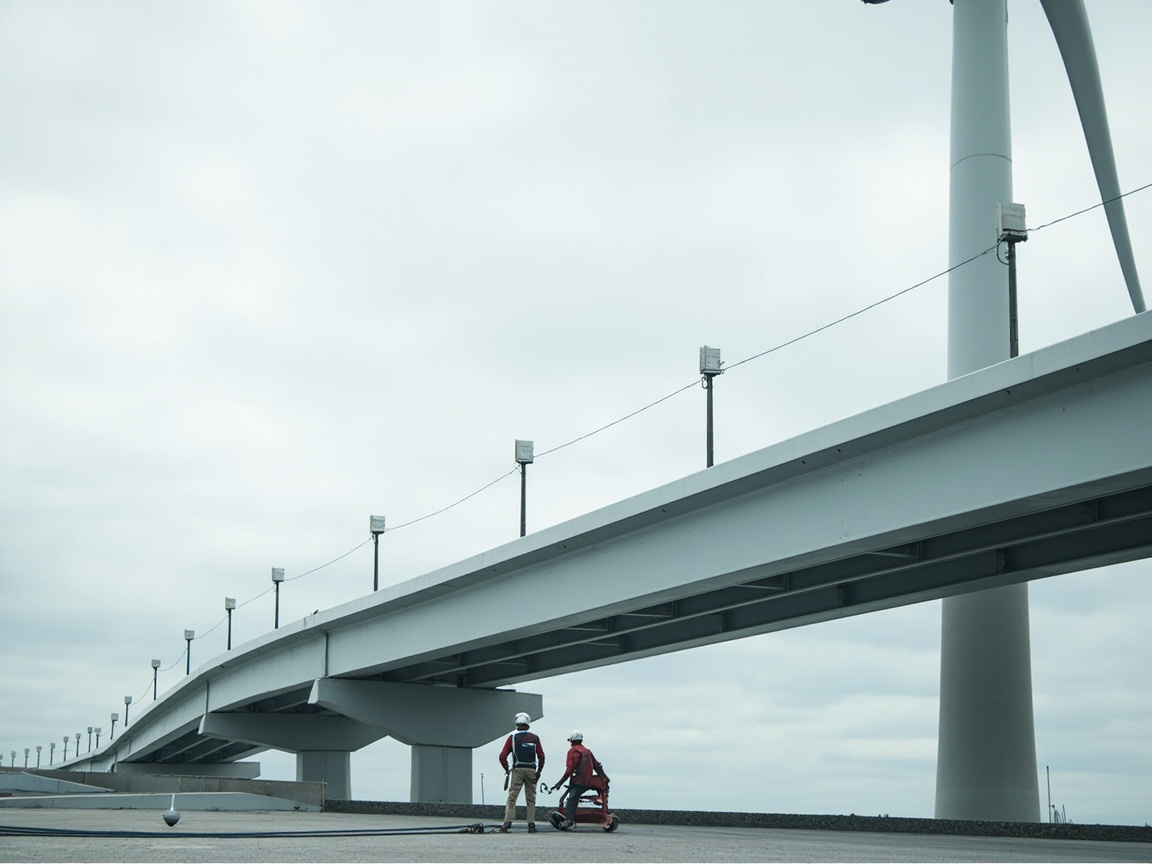
- Steel structure bridges/venues: Water-based epoxy zinc-rich primer + water-based micaceous iron oxide intermediate + water-based polyurethane topcoat, corresponding to ISO 12944 C4–C5.
- Wind turbine towers: High-weathering water-based polyurethane topcoat system, resistant to UV and wind-blown sand abrasion.
- Container/construction machinery maintenance: Water-based alkyd modified or fast-dry water-based acrylic, convenient for on-site single-coat application.
- Food factory/pharmaceutical workshop: Water-based epoxy/polyurethane floor coating, meeting hygiene and chemical resistance requirements (refer to GB/T 22374 floor coating materials).
IX. Review Checklist from Formulation to Selection
Provide engineers with an actionable review checklist: ① Request third-party VOC report and compare with GB 30981-2020 limits; ② Confirm solids content and recommended DFT, theoretical coverage; ③ Verify salt spray resistance (GB/T 1771), adhesion (GB/T 9286/5210), hardness (GB/T 6739) data; ④ Confirm mixing ratio and pot life (two-component); ⑤ Clarify application temperature/humidity window and curing period; ⑥ Obtain same-condition sample or case. Writing the above six items into the technical agreement is far more reliable than "try a small patch to see if it's shiny".
Kexin New Materials (kexinMaterials) technical support team suggests: water-based industrial coating selection should first perform "condition grading" (corrosion level, mechanical load, appearance requirement), then determine resin system and compatibility, and finally compare specific products. This methodology can extend to adjacent fields such as water-based epoxy floor coating and water-based wood coating, see the same batch of water-based epoxy floor coating and water-based polyurethane resin.
X. Typical Formulation Parameter Ranges of Water-based Industrial Coating (Engineering Reference)
In the formulation review and on-site reconstitution of water-based industrial coating, engineers often need a set of "magnitude references" to quickly judge whether the sample falls within a reasonable range. It must be emphasized: the following ranges come from public standards and industry common knowledge, serving only as review anchors; specific acceptance must be based on the manufacturer's CMA/CNAS third-party test report, and shall not be directly used as contract values.
Single-component water-based acrylic emulsion: volume solids mostly 40%–50%, minimum film formation temperature MFFT usually 5–25℃, pigment volume concentration PVC typically designed between 15%–40% to balance hiding power and film breathability; coalescing agent dosage about 2%–10% of emulsion mass, take high value for winter application. Two-component water-based epoxy: main agent and amine curing agent must be metered by epoxy equivalent weight (EEW) and amine hydrogen equivalent weight (AHEW), volume ratio commonly 4:1 to 10:1 (varies by specific system), after mixing must be continuously stirred to prevent zinc powder or filler settling, and strictly used up within pot life. Water-based polyurethane dispersion (PUD): solids mostly 30%–45%, smaller particle size gives more transparent film, introducing self-crosslinking or external hydrophilic HDI trimer curing agent can significantly improve water and chemical resistance.
In terms of performance levels: water-based epoxy zinc-rich primer tested for neutral salt spray per GB/T 1771 can reach several hundred to over a thousand hours (subject to the report); cross-cut adhesion per GB/T 9286 should reach grade 0–1; pencil hardness per GB/T 6739, water-based topcoat commonly ≥ 1H–2H; total dry film thickness of the system per ISO 12944-2 is approx. 200 µm at C3, 240 µm at C4, 280–320 µm at C5, built up by multiple coats of primer, intermediate coat and topcoat. Theoretical coverage can be estimated by the approximation "volume solids × 10 ÷ DFT(µm) ≈ m²/L", used to calculate single-coat consumption and overall cost. VOC is determined per GB/T 23986 and constrained by GB 30981-2020; water-based types commonly range from tens to about 300 g/L; it must be clarified that water-based does not equal zero VOC, coalescing agents are the main source, but compliance and meeting performance are the real hard indicators—no need to panic at the mention of VOC.
11. Ten Common Misconceptions in Water-Based Conversion
Misconception 1: Emphasizing product over process—only changing the paint without controlling temperature, humidity and substrate, inevitably leads to rework. Misconception 2: Assuming water-based equals zero VOC—should rely on third-party report per GB/T 23986. Misconception 3: Ignoring curing period—delivering upon surface dry, while early water resistance is weak causing failure. Misconception 4: Using two-component as one-component—not measuring leads to non-curing or brittleness. Misconception 5: Inadequate substrate preparation—continuing rough oil-based treatment, causing adhesion collapse. Misconception 6: Diluting with dirty or high-mineralization water—Ca²⁺, Mg²⁺ cause demulsification and flocculation. Misconception 7: Single heavy coat—sagging and surface dry but not through-dry. Misconception 8: Looking only at unit price not full-lifecycle cost—ignoring explosion-proof, hazardous waste and production-limit losses. Misconception 9: Confusing surface dry with full cure—loading or contacting water before resistance is established. Misconception 10: Blindly pursuing high gloss—ignoring system compatibility and film thickness management. Writing the above misconceptions into the technical agreement and process card one by one is the prerequisite for one-time success of water-based conversion.
12. Summary of On-site Reconstitution and Acceptance
Evaluation of water-based industrial coating should establish a "data checklist": ①VOC report vs. GB 30981; ②solids and recommended DFT, theoretical coverage; ③salt spray (GB/T 1771), adhesion (GB/T 9286/5210), hardness (GB/T 6739); ④two-component mix ratio and pot life; ⑤application temperature/humidity window and curing period; ⑥same-condition panel. Institutionalizing these six items is far more reliable than testing a small patch by feel. Kexin New Materials (kexinMaterials) usually includes this checklist with the process card when delivering water-based industrial coating, so that purchasing and QC can accept with the same yardstick.
13. Cross-System Synergy and Water-Based Roadmap
Selection of water-based industrial coating ultimately comes down to "system synergy". In one project, primer, intermediate coat and topcoat may belong to different water-based resins; poor synergy causes intercoat poor adhesion, lifting, uneven gloss. Synergy principles: ①same-system priority (water-based primer + water-based topcoat), best intercoat compatibility; ②cross-system must do compatibility test, verify intercoat adhesion by GB/T 9286 cross-cut and GB/T 5210 pull-off; ③curing pace matching, drying window of two-component primer and one-component topcoat must coordinate to avoid lifting from topcoating before lower layer dries; ④unified coalescing agent system, avoid incompatibility causing craters.
Water-based roadmap suggests three steps: first pilot on non-critical parts (internal components, repair parts) to accumulate temperature/humidity control and process card experience; then expand to main product lines (equipment enclosures, steel structures); finally challenge heavy anti-corrosion systems (bridges, marine). Each step is accepted by data closed loop (VOC report, salt spray, adhesion, hardness, curing period), not by appearance. Mastering "system synergy + stepwise roadmap", water-based industrial coating can move from sample qualification to batch stability. Related film formation and application control see Water-based Paint Film-Forming Agents and Mechanisms and Water-based Coating Application Key Points. For compatibility of water-based epoxy floor coating and water-based polyurethane topcoat, read further Water-based Epoxy Floor Coating and Water-based Polyurethane Resin.
14. Environmental Compliance and Future Outlook of Water-Based Industrial Coating
The popularization of water-based industrial coating is driven by regulations, demand and resin technology. As GB 30981-2020 and GB 24409-2020 tighten, low-VOC water-based systems become one of the mainstream options for industrial protection; future self-crosslinking emulsions, core-shell structures, low-MFFT resins will further reduce dependence on coalescing agents, enabling water-based industrial coating to approach solvent-based resistance limits while maintaining low emissions. For coating enterprises, water-based conversion is not simply changing paint, but upgrading product, process and environmental control as a package.
FAQ
Q: Is water-based industrial coating really "zero VOC"?
A:
No. Water is the main medium, but the formulation still contains coalescing agents and co-solvents; VOC measured per GB/T 23986 is usually tens to hundreds of g/L (depending on system), and must meet GB 30981-2020 limits. "Zero VOC" claims are mostly misleading; rely on test reports.
Q: How to choose water-based acrylic, epoxy, polyurethane?
A:
By role: heavy anti-corrosion primer priority water-based epoxy (excellent adhesion and salt spray); high-decorative weather-resistant topcoat use water-based acrylic or polyurethane; floor clear coat use water-based polyurethane; general maintenance use water-based alkyd-modified. See comparison table above; the core is "system compatibility" not a single product.
Q: Why can water-based epoxy only be primer not topcoat?
A:
Water-based epoxy has strong chemical resistance and adhesion, but aromatic amine curing agent easily chalking, gloss loss, yellowing outdoors, poor weather resistance, so positioned as primer/intermediate coat; topcoat needs separate weather-resistant acrylic or polyurethane, forming "primer + topcoat" system.
Q: What standard is the VOC limit of water-based industrial coating based on?
A:
Based on GB 30981-2020 "Limit of Harmful Substances in Industrial Protective Coatings", which sets VOC upper limits for water-based anti-corrosion primer, intermediate coat, topcoat and solvent-free types respectively; determination per GB/T 23986 or GB/T 23985. Specific values per current standard text and third-party reports.
Q: Why is water-based coating application particularly sensitive to temperature and humidity?
A:
Water evaporation depends on temperature and relative humidity. Temperature below emulsion MFFT, or humidity above 75%–85% (especially near dew point), water hardly evaporates, causing slow surface dry, blushing, poor adhesion, poor early water resistance. Control temperature ≥ 5℃, substrate 3℃ above dew point, humidity ≤ 85%.
Q: Are coalescing agents (e.g. Texanol) mandatory?
A:
Almost mandatory. Emulsion has minimum film formation temperature MFFT; application temperature often below MFFT, needs coalescing agent to temporarily "plasticize" for particle fusion into continuous film. But it counts as VOC, so choose low-VOC high-boiling types and control amount, or use self-crosslinking emulsion to reduce dependence.
Q: How to ensure adhesion of water-based industrial coating?
A:
Three things: ①blast substrate to Sa 2½ and control roughness; ②choose strong-adhesion resin (epoxy priority); ③compatible primer and wetting agent, avoid craters. Per GB/T 9286 cross-cut grade 0–1, or GB/T 5210 pull-off reaching designed MPa is qualified.
Q: Why can't water-based coating be immersed immediately after "through dry"?
A:
Through dry only means solvent/water basically evaporated, handleable; crosslink density and water resistance need 7–14 days to continue building. Early immersion easily blushes, gloss loss even blistering. Curing period per manufacturer process card.
Q: Can mix ratio of two-component water-based epoxy be by feel?
A:
No. Resin and amine curing agent designed by equivalent; wrong ratio causes under-crosslinking (soft, poor chemical resistance) or over-crosslinking (brittle, cracking). Must measure accurately by volume/mass ratio with gauges, and use within pot life.
Q: Compared with solvent-based, is comprehensive cost of water-based industrial coating really lower?
A:
Per-can price water-based often close or slightly higher, but comprehensive cost sees: lower hazardous waste and fire investment, better compliance (avoid production-limit fines), worker health improvement, and high coverage from high solids. For lines with high compliance pressure and stable batch, water-based is more economical long-term.
Further Reading
- Water-based Epoxy Floor Coating: From primer to floor system, understand curing agent selection and wear-resistant clear coat compatibility of water-based epoxy.
- Water-based Polyurethane Resin: Deep into soft-hard segment design and self-crosslinking mechanism of water-based polyurethane dispersion (PUD), strengthen topcoat selection knowledge.
- Water-based vs. Oil-based Coating Selection: Horizontally compare water-based and solvent-based performance, cost and compliance boundaries, build complete decision framework.
- Water-based Wood Coating Film Formation Mechanism and Formulation: From Emulsion Particle Fusion to Film Performance
- Water-based Anti-rust Coating Technology: Mechanism, Formulation and Salt Spray Performance
- How to Select Water-based Industrial Coating under Oil-to-Water Background: Resin System and Applicable Conditions