Automotive refinishing and OEM coating extensively use two-component polyurethane coating, whose hardener (curing agent) core component is polyisocyanate—most commonly HDI (hexamethylene diisocyanate) type. Such materials deliver the hardness, weather resistance and chemical resistance of the varnish, but also bring a health risk underestimated by many: isocyanates are sensitizing to the respiratory tract, and once sensitized it is often irreversible. In poorly ventilated spray booths, the isocyanate aerosol concentration generated at the instant of spraying may exceed the safety limit by dozens of times. This article systematically reviews the safety protection essentials for isocyanates in automotive paint from toxicological mechanism, exposure limits, personal protection to engineering controls, helping refinishers and coating lines turn the "invisible risk" into "manageable numbers".
As a supplier of automotive coating systems, Kexin New Materials (kexinMaterials) continues to invest in low free monomer, blocked isocyanates and supporting safety instructions for two-component polyurethane hardeners. This article will also combine occupational exposure limits such as OSHA and GBZ 2.1 to clarify the core discipline of isocyanate protection, facilitating the establishment of executable protection schemes on site.
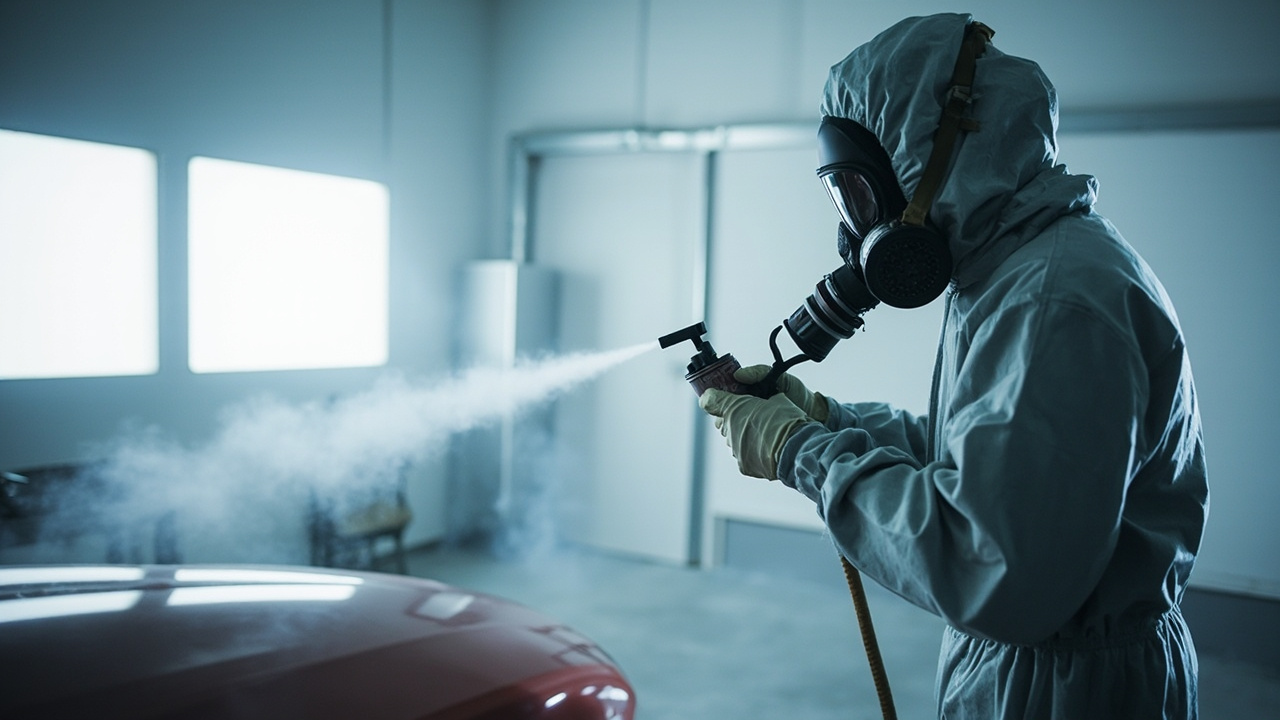
I. What role do isocyanates play in automotive paint
To talk about protection, first know where it is. Two-component polyurethane coating is formed by mixing "base paint (hydroxyl-containing resin) + hardener (polyisocyanate)". The active group in the hardener is —NCO (isocyanate group), which reacts with —OH of the base paint to crosslink into a film, bringing hardness and weather resistance. Automotive clear coat, refinish paint, some basecoats and intermediate coat all use such systems. Common polyisocyanates include HDI type (aliphatic, yellowing resistant, automotive mainstream), IPDI type (cycloaliphatic), TDI type (aromatic, prone to yellowing, mostly for indoor). Refinish and OEM topcoat almost all use HDI type hardener.
The risk lies in: the hardener itself contains free —NCO monomer (even after reacting into trimer/adduct, unreacted residue remains); the mixed wet paint continuously releases —NCO-containing aerosol and vapor during atomization, leveling and curing; sanding incompletely cured film also raises isocyanate-containing dust. Therefore, the three actions of "opening the can, spraying the gun, sanding the paint" may all be exposure sources. For the formulation and curing mechanism of 2K polyurethane clear coat, refer to the whitelist article 2K Polyurethane Clear Coat Technology.
II. Health hazards: sensitization is the irreversible red line
The health hazards of isocyanates are mainly two types. One is irritation: high concentration vapor irritates eyes, nose and throat, causing tearing, cough, chest tightness, and high concentration can cause asthma-like symptoms. The second is sensitization: this is the most critical. Isocyanates are known occupational respiratory sensitizers; some people develop allergic asthma (Occupational Asthma) after repeated low-dose exposure. Once sensitized, extremely trace amounts can trigger attacks, and it is often lifelong sensitive and irreversible. That is to say, "fine today" does not mean "fine later"; sensitization may accumulate unknowingly.
It needs to be emphasized: sensitization has no safe "threshold" tolerable dose, individual differences are extremely large, and some people get affected with very little exposure. Therefore the protection logic is not "endure by feel", but "any detectable exposure must be controlled to the minimum". This is also why the industry lists isocyanates as occupational hazard factors requiring key control. For technicians doing refinish color matching and frequently contacting two-component paint, protection is as important as the process discipline of this batch of automotive touch-up computer color matching and color difference control.
III. Exposure limits: the safety boundary behind the numbers
Countries have clear regulations on occupational exposure limit (OEL) for isocyanates, mostly based on 8-hour time-weighted average (TWA), commonly in ppb or µg/m³. Taking HDI as an example, the US OSHA permissible exposure limit (PEL) is about 0.02 ppm (calculated as HDI, about 0.02 ppm corresponds to about 0.17 mg/m³ level, subject to the original regulation); NIOSH recommended exposure limit (REL) is stricter; ACGIH threshold limit value (TLV) for HDI monomer is about 0.005 ppm (TWA). China's "Occupational Exposure Limits for Hazardous Agents in the Workplace Part 1: Chemical Hazardous Agents" (GBZ 2.1) has specific PC-TWA and PC-STEL values for isocyanates (such as diphenylmethane diisocyanate MDI, toluene diisocyanate TDI); HDI can be managed with reference to the same category and follow the product SDS.
The key is the real-world gap: during spray booth painting, the instantaneous concentration in the atomization zone can exceed PEL by dozens or even hundreds of times, especially with insufficient ventilation, too close spray gun, and no respiratory protection. So the limit is the bottom line to be jointly achieved by "engineering control + personal protection", not the basis of "safe if you can't smell it"—many types of isocyanates have high odor thresholds or even no obvious odor, and judging by nose is extremely unreliable.
IV. Engineering control: ventilation is the first line of defense
The most fundamental way to reduce exposure is engineering control, not relying on people to tough it out. Core measures:
First, local exhaust and spray booth negative pressure. The spray booth should be designed with reasonable air change rate and airflow organization to ensure harmful substances in the spraying area are promptly extracted, and the operator position is on the clean supply air side. Bake booth and spray booth are separated; the —NCO released during curing also needs exhaust.
Second, enclosure and automation. OEM lines should use robotic spraying and isolated operation as much as possible to reduce human exposure; refinishers can use enclosed spray cabinets for small parts.
Third, source reduction. Use low free monomer hardener, high-solid systems to reduce usage per unit area, and adopt blocked isocyanates (—NCO is blocked by blocking agent at room temperature, released only on baking, reducing room-temperature exposure). This is the direction for suppliers to reduce risk; Kexin New Materials (kexinMaterials) continues to invest in reducing free monomer and promoting blocked systems, aiming to suppress the exposure base from the source.
Fourth, post-operation purification. After construction, keep exhaust until the film is surface-dry and aerosol settles before entering; sanding incompletely cured film must be done under ventilation and dust removal, with combined dust-proof and防毒 protection.
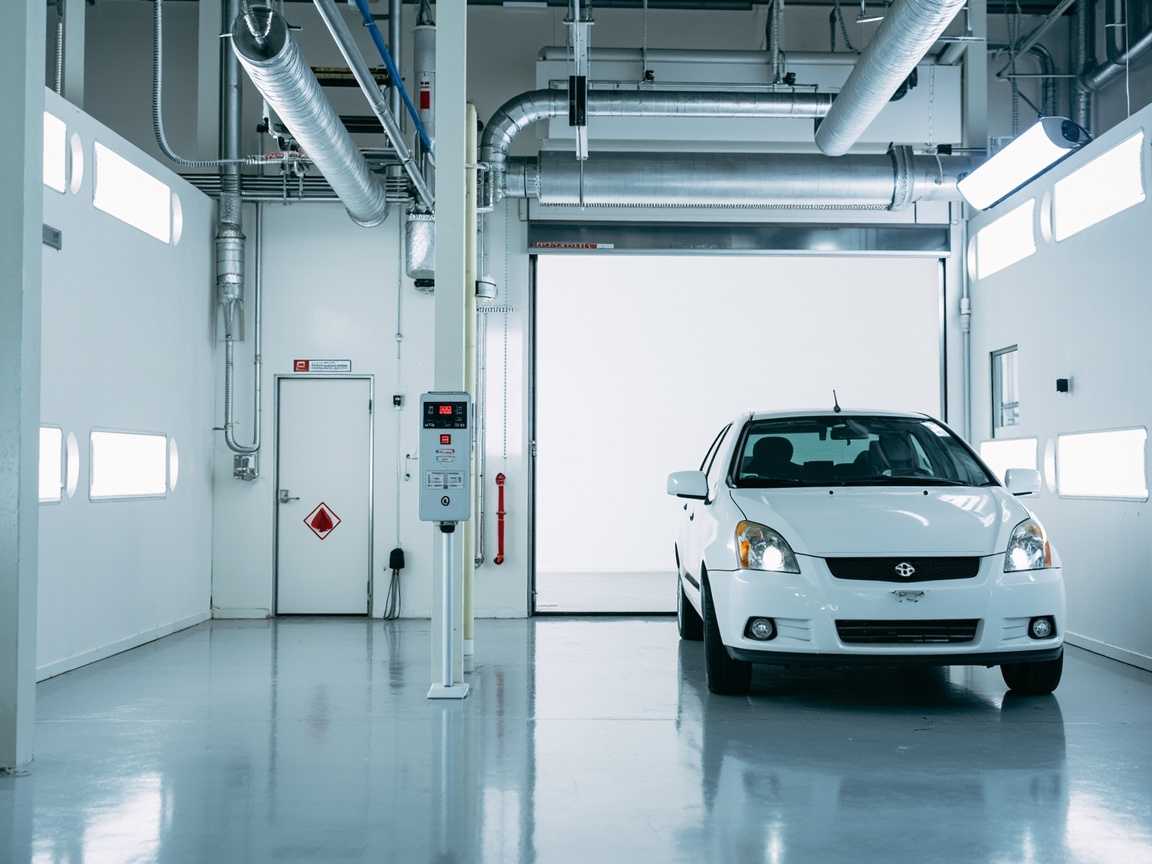
V. Personal protection: respiratory protection is the life-saving bottom line
When engineering control cannot reduce concentration below the limit, respiratory protection must be worn. Isocyanate vapor and atomized particles require combined filter of organic vapor + particulate:
First, half-face/full-face mask + organic vapor cartridge (OV) + particulate filter (P100/Class P3). Suitable for low concentration with sufficient engineering control; cartridge life is limited, replace when smelling odor or expired.
Second, supplied-air respirator (SAR) or powered air-purifying respirator (PAPR). For spraying operations and high-concentration exposure, priority is clean-air supplied respiratory protection. PAPR with OV+P100 cartridge and hood balances vision and protection; SAR supplies clean air from air compressor, higher protection level.
Third, skin and eye protection. Isocyanates can be absorbed through skin and cause sensitization; nitrile gloves (latex is ineffective against most organic solvents, not recommended), chemical protective suit/spray suit, goggles; wash exposed skin promptly after work.
Fourth, prohibitions. Strictly forbid eating, drinking, smoking in spray booth; strictly forbid washing hands with solvent (promotes absorption); strictly forbid sanding incompletely cured film without protection; strictly forbid working with expired filter or leaking mask.
VI. Health management: pre-employment and periodic medical examination
The irreversibility of isocyanate sensitization determines that "people" should also be included in management. Recommendations:
First, pre-job screening and notification. New personnel exposed understand the risk; those with asthma or allergy history are cautiously assigned; baseline lung function and questionnaire.
Second, periodic health monitoring. Arrange on-duty medical examination per occupational health surveillance norms, focus on respiratory symptoms and lung function changes, early detection and early transfer.
Third, symptom reporting culture. Encourage technicians to report early signals like cough, chest tightness, wheezing, no concealment no toughing out. Once suspected occupational asthma, immediately leave exposure and seek medical care; delay worsens condition.
Fourth, training. Everyone contacting two-component paint must understand "why wear, how to wear, when to replace, what to do in accident", and read SDS (Safety Data Sheet) clearly. For regulatory background on VOC and hazardous substances of coatings, extend reading Industrial Coating VOC Limit Regulations (GB 30981).
VII. Risk comparison of different operation scenarios
Exposure varies greatly by process; protection should be graded. The table summarizes:
| Operation scenario | Main exposure source | Risk level | Key protection |
|---|---|---|---|
| Mixing/color tuning | Hardener vapor, splashing | Medium | Ventilation, nitrile gloves, goggles, local exhaust |
| Spraying (with exhaust) | Atomized aerosol, vapor | High | Spray booth exhaust + full-face mask/PAPR, protective suit |
| Spraying (no exhaust) | High-concentration atomization | Extremely high | Prohibited; must apply engineering control + supplied-air breathing |
| Leveling/curing wait | Releasing —NCO vapor | Medium | Keep exhaust, minimize stay |
| Sanding uncured film | Isocyanate-containing dust | High | Dust removal + combined防毒 dust-proof, ventilation |
| Waste paint/bucket handling | Residual monomer | Low—Medium | Gloves, ventilation, compliant disposal |
VIII. Emergency response: leakage, contact and acute reaction
Accidental exposure must be handled. Skin contact: immediately remove contaminated clothing, wash with soapy water (not solvent); eye contact: rinse with running water for at least 15 minutes and seek medical care. Inhalation discomfort: quickly leave site to fresh air, keep quiet and warm, give oxygen if breathing difficulty and send to hospital, inform doctor of isocyanate exposure history. Leakage: cut fire source, enhance ventilation, wear protection to collect, dispose as hazardous waste, forbid pouring into sewer. Site should equip eyewash, shower and first-aid kit, and post emergency phone.
IX. Regulations and SDS Responsibilities
The user is responsible for obtaining and implementing the product SDS (Safety Data Sheet), and executing according to the exposure limits, protection, and emergency response specified therein; the supplier is responsible for labeling hazards, providing low-hazard solutions, and training information. Relevant limits in China are found in GBZ 2.1; workplace testing may refer to the GBZ 159/GBZ/T 160 series methods; internationally, refer to OSHA, REACH (isocyanates are substances of concern), etc. Treat compliance as an "entry ticket" rather than a burden—the cost of one occupational asthma is far higher than the investment in protection.
X. Misconceptions and Corrections
Misconception 1: Safe if you can't smell it. Wrong. Many isocyanates have high odor thresholds or are even odorless; judging by nose is ineffective—detection and protection are essential.
Misconception 2: Ordinary cotton gauze masks are enough. Wrong. Cotton gauze masks are almost ineffective against organic vapors and fine particles; OV+P100 filters or supplied-air respirators must be used.
Misconception 3: Latex gloves protect against paint. Wrong. Latex provides poor protection against solvents and isocyanates; nitrile gloves should be used and changed regularly.
Misconception 4: Safe to sand arbitrarily once cured. Wrong. Sanding before full cure raises isocyanate-containing dust and still requires protection; sanding after full cure also requires protection against paint dust.
Misconception 5: Low VOC means low toxicity. Wrong. VOC and isocyanate toxicity are not the same; low-VOC products still contain polyisocyanates, so protection cannot be skipped.
XI. Collaborative Protection Between Suppliers and Users
Protection is not the sole responsibility of the user. Suppliers should reduce free monomers at the formulation stage, promote blocked and water-based polyurethane, and provide clear SDS and process boundaries; users should implement engineering controls and personal protection, and conduct health surveillance. Only through coordination at both ends can risk be minimized. The supporting approach of Kexin New Materials (kexinMaterials) is to deliver "low-hazard materials + safety data + application protection card" together, so that refinishers not only get performance-compliant paint, but also an executable protection plan. Treating safety as a hard metric alongside hardness and gloss is responsible coating management.
XII. Management System and Future Directions for Isocyanate Protection
Implementing personal protection and engineering controls in daily operations is essentially an engineering of an occupational health management system. It should cover the full lifecycle of hazardous chemicals: obtain and review SDS and compliance certificates at procurement; store sealed, moisture-proof, cool, with clear labeling—hardeners especially fear water; strictly operate per process and protection during use; dispose as hazardous waste per regulations at end-of-life, prohibiting discharge into sewers or random dumping. Each link must have a responsible person, records, and traceability—not relying on individual conscience.
Exposure monitoring is the "dashboard" of the system. In addition to engineering detection points, high-risk positions should be equipped with personal sampling pumps to quantify actual personal inhalation and compare with limits; spot rapid detection for confined or high-concentration operations; where conditions allow, biological monitoring (e.g., measuring urinary isocyanate metabolites) to assess internal body burden. Data should form trends; if an increase is found, trace back process and protection gaps—not wait until someone gets sick.
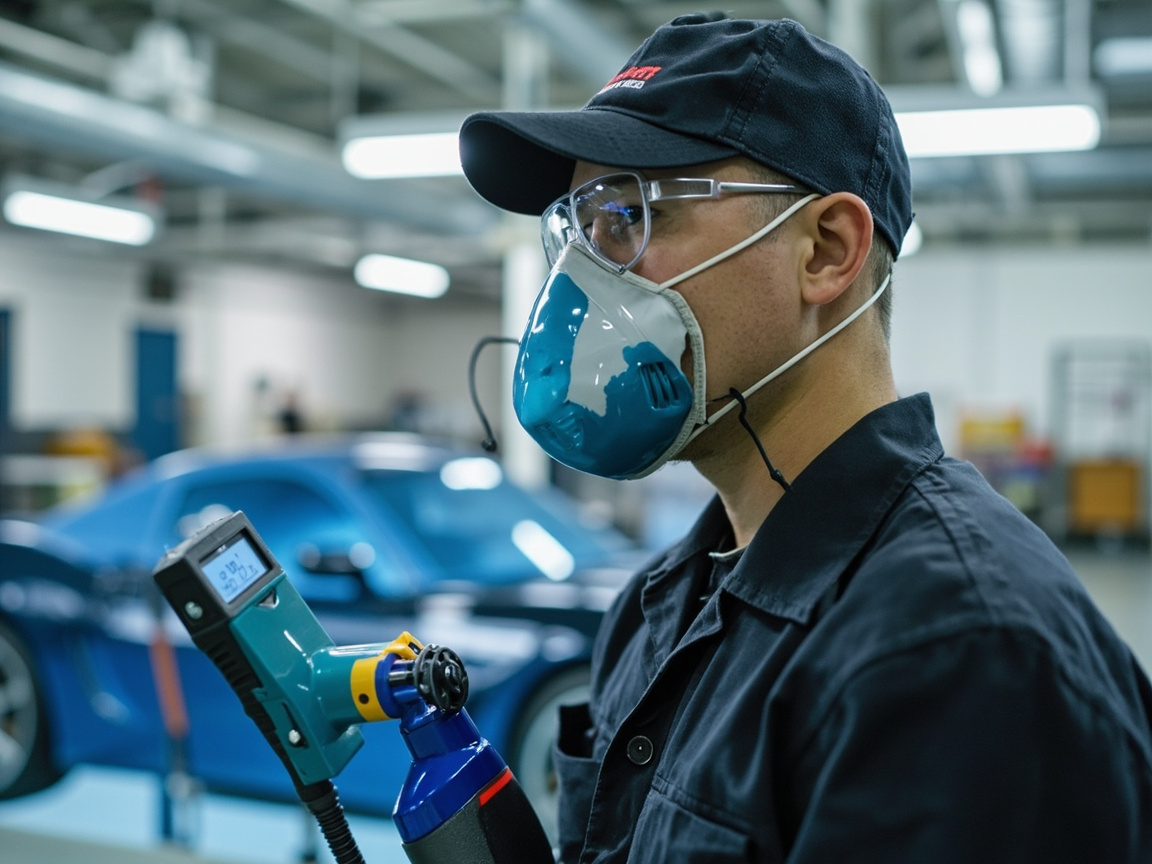
Source emission reduction is the fundamental cure. Blocked isocyanates seal —NCO with a blocking agent at room temperature, releasing only during baking, significantly reducing exposure during room-temperature mixing and pre-spraying; water-based polyurethane replaces large amounts of solvent with water, combined with low-free-monomer technology, lowering the exposure baseline; robots or enclosed spraying remove humans from high-concentration zones. These directions all point to the same goal: gradually turning "must protect" into "naturally low". Kexin New Materials (kexinMaterials), when promoting low-free-monomer, blocked, and water-based systems, treats safety as a hard metric in formulation design, not an afterthought label.
Training and culture building are often underestimated yet most critical. No matter how good the equipment, if technicians find masks troublesome and don't wear them, or find suits hot and don't wear protective clothing, risk immediately returns to high levels. Effective practices include: understanding the SDS, conducting hands-on drills, setting the hard rule of "no protection, no work", encouraging reporting of early symptoms without punishment or concealment, and treating protective equipment as standard as production tools. When "wearing a mask is professionalism, not wearing is risk-taking" becomes workshop consensus, accident rates will truly drop.
Regulations are continuously tightening. Isocyanates are substances of concern or restriction in multiple jurisdictions; occupational health limits are stricter; biological monitoring and exposure registration requirements are increasing. Users must treat compliance as a bottom line and set "zero sensitization" as a management goal; suppliers bear the extended responsibility of hazard information transmission, low-hazard solution provision, and safety training support. Only with joint efforts can the health red line of workers be held under the reality of widespread use of high-performance two-component coatings.
Back to the essence: the hardness, weather resistance, and chemical resistance brought by isocyanates are indispensable performance sources of modern automotive coating; its health risks are not uncontrollable. The real danger is not the chemical itself, but the management gap of "invisible, ignored, unprotected". By linking engineering controls, personal protection, health monitoring, source emission reduction, and training into a closed loop, automotive coating can enjoy polyurethane performance while minimizing sensitization risk—this is a sign of industry maturity and the most basic responsibility to every spray painter.
In reality, small and micro refinishers are the weakest link. They often lack engineering ventilation, are reluctant to buy supplied-air respirators, and masters tough it out by experience—making them high-incidence sites for occupational asthma. The breakthrough relies on several things: first, make compliant equipment into an "affordable and correctly usable" package (PAPR hoods, nitrile gloves, SDS cards); second, suppliers write safety instructions in the plainest language and illustrations rather than piling up jargon; third, industry and regulators include small and micro shops in training and spot checks, not just large factories. The equity of protection determines the safety level of the entire industry.
Accident review also deserves institutionalization. Every leak, every acute discomfort, should be made into a case shared internally: which step of protection failed, how to improve. Many painful lessons stem from repeating the same negligence, while one serious review can prevent ten recurrences. Turning "others' accidents" into "own contingency plans" is a low-cost, high-return safety investment. Only by treating isocyanate protection as a continuous, all-staff management engineering can the health risks of automotive coating be truly controllable.
XIII. Selection and Maintenance Key Points of Personal Protective Equipment
Protective equipment is not just buy and done; selecting right, wearing right, and maintaining right make it effective. Key points are as follows:
Respiratory protection: For high-concentration exposure spraying, PAPR (powered air-purifying respirator) or SAR (supplied-air respirator) with OV+P100 filter and hood are preferred; for low exposure with sufficient exhaust, full-face mask with same filter. Replace filter immediately when expired or odor detected.
Hand protection: Nitrile gloves (recommended ≥8 mil); latex is ineffective against solvents and isocyanates; change promptly before and after work, discard if damaged, never wash hands with solvent.
Eye and face protection: Chemical goggles or full-face mask to prevent splash and atomization irritation; rinse per SDS after contact with hardener.
Body protection: Chemical-resistant spray suit or coverall to reduce skin exposure and contamination spread; remove and store separately after work, wash promptly.
Equipment maintenance: Check mask seal before each operation, replace and register filters by service life, regularly test PAPR battery and fan; store equipment in clean, dry place, avoid contamination and sun exposure.
Write these as a checklist, sign off before shift—far more reliable than verbal emphasis. Protective equipment is the last barrier for operators, deserving the most serious treatment.
XIV. Implementation Checklist for Corporate Safety Culture
To implement protection requirements in daily life, executable checklists rather than slogans are needed. Enterprises are advised to do the following:
First, assign responsibility to persons. Clearly define safety responsible persons for each process; wearing and checking protective equipment included in pre-shift confirmation, not traced after accidents.
Second, frequent training. Pre-job training for new employees, annual refresher for in-post, immediate training for new process changes, and understanding SDS as a hard threshold.
Third, emergency drills. Practical drills for leaks, inhalation discomfort, eye contact, so everyone knows where the eyewash is, how to send to hospital, how to inform exposure history.
Fourth, supplier collaboration. Include supplier's low-hazard solutions and training support in procurement evaluation, forcing upstream to reduce exposure baseline.
Fifth, regulatory interface. Proactively interface with occupational health surveillance and hazardous chemical regulation; make physical exams, testing, and ledgers routine—both compliant and protective.
Safety culture is not a one-time talk, but a daily executed habit. When protection becomes muscle memory, accidents will truly stay away from the workshop.
XV. Quick Reference for Isocyanate-related Regulations and Standards
Protection must follow regulations; the following directions are worth memorizing (specific limits subject to latest official text):
China: GBZ 2.1 "Occupational Exposure Limits for Hazardous Factors in the Workplace" specifies PC-TWA and PC-STEL for chemical hazards, isocyanates managed by reference; testing per GBZ 159 sampling and GBZ/T 160 series methods.
International: OSHA sets PEL, NIOSH sets REL, ACGIH sets TLV, with values for HDI/TDI etc.; REACH lists isocyanates as substances of concern, emphasizing exposure registration and risk management.
Method level: Personal sampling uses adsorption tube + liquid chromatography to measure metabolites; workshop air uses passive/active sampling; biological monitoring measures urinary metabolites to assess internal burden.
Reminder: Standards update; both users and suppliers should execute per the latest version, not by old memory. Compliance is the bottom line, zero sensitization is the goal.
XVI. Low-cost Compliance Path for Small and Micro Shops
Small and micro refinishers have limited budgets, but can achieve basic compliance with limited investment:
First, life-saving equipment priority. First equip PAPR hoods, nitrile gloves, goggles, and SDS cards—these cost little yet directly save lives.
Second, ventilation retrofit. Even simply adding exhaust fans and downdraft, significantly reduces concentration, far better than bare spraying.
Third, shared testing. Share testing and training resources with neighboring shops or associations to spread cost.
Fourth, manage the source. Prioritize low-free-monomer, blocked, or water-based systems to reduce exposure from the root.
Compliance does not rely on spending big, but on "spending where it saves lives". The safety level of small and micro shops determines the industry bottom line.
XVII. One-sentence Summary of the Safety Red Line
Isocyanate risk is irreversible but controllable. Closing the loop on engineering ventilation, personal protection, health monitoring, source emission reduction, and training can minimize sensitization risk. High performance and high safety are not contradictory; the contradiction exists only in the management gap of "invisible, ignored, unprotected". Holding this red line is the most basic responsibility to every spray painter.
XVIII. Reminders for Managers
Protection investment seems to increase cost, but actually avoids larger health compensation, shutdown, and reputation loss. Write safety budget into annual plan, list protective equipment as production tools, count training as work hours, managers lead by example, then the workshop will truly treat "wearing mask" as professionalism rather than burden. On safety, if leaders don't care, the grassroots won't care.
FAQ
Q:What exactly are the hazards of isocyanates?
Answer:Mainly respiratory irritation and sensitization. Isocyanates are known occupational respiratory sensitizers; repeated exposure can trigger occupational asthma, and once sensitized, one is often sensitive for life and the condition is irreversible. This is not an irritation you can "tough out," but a chronic risk that requires zero-tolerance control.
Question:Why can it be dangerous even when you can't smell it?
Answer:Many isocyanates have a high odor threshold or even no distinct smell, so relying on the sense of smell is extremely unreliable. Whether the concentration exceeds limits must be determined by engineering monitoring and comparison with limit values, not by the nose. Therefore, qualified respiratory protection must be worn routinely, rather than deciding on protection based on odor.
Question:What is the safe working concentration limit?
Answer:Taking HDI as an example, the OSHA PEL is about 0.02 ppm (TWA), while NIOSH REL and ACGIH TLV are stricter (e.g., about 0.005 ppm). China's GBZ 2.1 sets PC-TWA/PC-STEL for TDI, MDI, etc.; HDI is managed by reference to similar substances and in accordance with the product SDS. The key point is that instantaneous spraying concentrations can exceed the PEL by dozens of times, so both engineering and personal controls are mandatory.
Question:What kind of mask is effective?
Answer:Ordinary cotton gauze and medical masks are ineffective. A combination of organic vapor and particulate protection is needed: a half/full facepiece with OV cartridges + P100 (equivalent to P3) filters; for high-concentration spraying exposure, PAPR or supplied-air respirators (SAR) are preferred. Nitrile gloves, goggles, and chemical protective clothing should be equipped simultaneously.
Question:Can latex gloves protect against paint?
Answer:No. Latex provides poor protection against most organic solvents and isocyanates; nitrile gloves should be used and changed regularly. After skin contact, wash with soap and water rather than solvent, as solvent instead promotes absorption.
Question:Is low-VOC coating also low-toxicity?
Answer:No. VOC and isocyanate toxicity are two different things. Low-VOC two-component polyurethane still contains polyisocyanates, and the risk of respiratory sensitization remains; protection must not be omitted just because VOC is low.
Question:Can you sand the paint freely once it's dry?
Answer:Sanding before full cure will raise dust containing isocyanates; ventilation plus combined防毒防尘 (toxic-dust and poison) protection is mandatory. Even after full cure, paint dust remains irritating, so dust control and respiratory protection should be in place; "bare sanding" is not advisable.
Question:How to reduce risk at the source?
Answer:Choose low free-monomer curing agents, high-solid content to reduce usage, adopt blocked isocyanates (—NCO blocked at room temperature, released only on baking), and use robots/enclosed spraying to reduce human exposure. Suppliers reducing the baseline at the formulation end is fundamental.
Question:What to do if cough and chest tightness occur?
Answer:Leave the site immediately to fresh air, report and seek medical attention, clearly informing of isocyanate exposure history. Those with respiratory symptoms should undergo occupational health surveillance early and be screened/transferred; delay worsens the condition, and irreversible sensitization is best addressed by early removal from exposure.
Question:What are the respective responsibilities of users and suppliers?
Answer:Suppliers must provide clear SDS, low-hazard solutions, and training information; users must implement engineering ventilation, personal protection, and health surveillance, and act per the SDS. Both ends must coordinate, making safety and performance parallel hard indicators.
Further Reading
- 2K Polyurethane Varnish Technology: HDI Curing Agent, Mixing Ratio, Film Thickness and VOC: Understand the source of isocyanates in two-component systems, crosslinking mechanism, and application key points.
- Automotive Refinish Paint Computer Color Matching and Color Difference Control: Color matching and spraying process discipline also relate to exposure control, building an overall safe operation mindset.
- Industrial Coating VOC Limit Regulations (GB 30981): Clarify the relationship between VOC and toxic substance limits, avoiding mistaking low VOC for low toxicity.
- New Energy Vehicle Three-Electric System Coating Protection
- Common Automotive Paint Defects (Sag/Orange Peel/Cratering) Causes and Countermeasures: From Phenomenon to Root Cause
- Automotive Refinish Paint System: 2K Solid Color Paint, Basecoat + Clear Coat and Single-Component