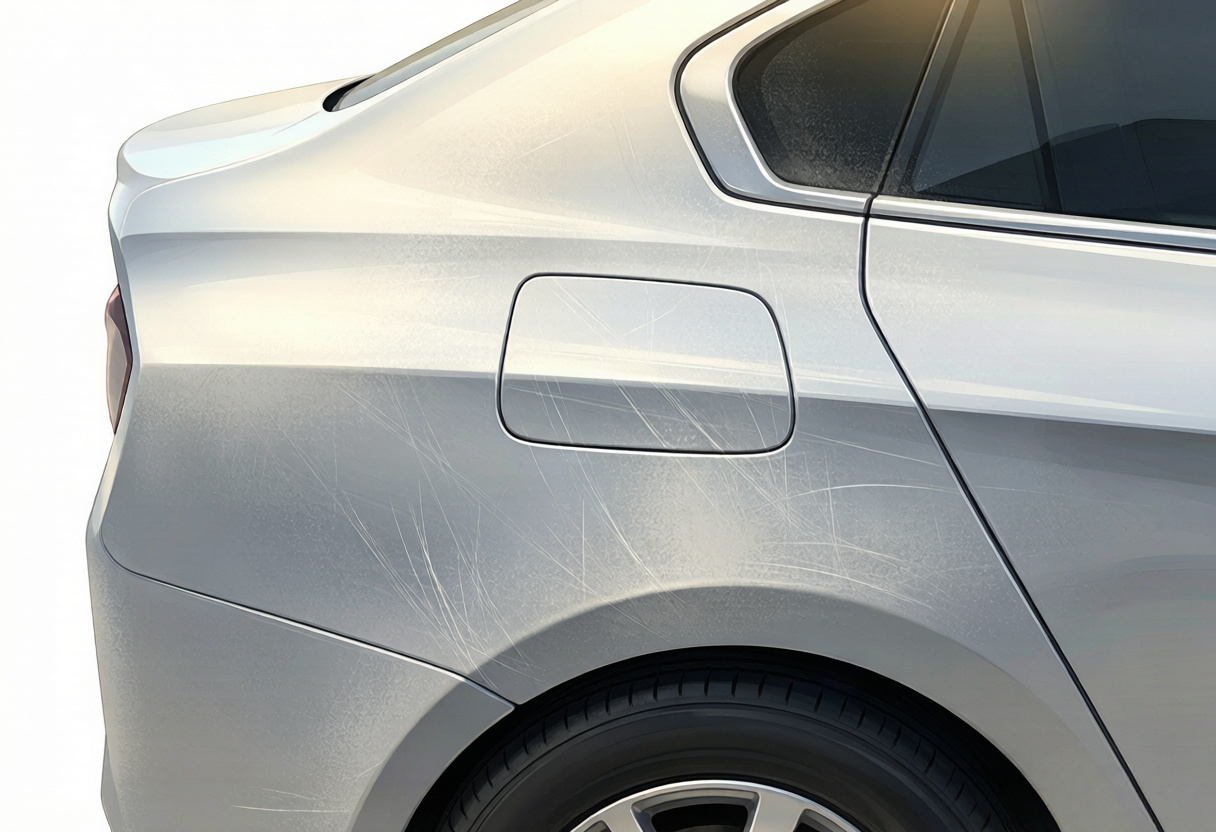
A clear coat should be as bright and mirror-like as glass, yet over time it turns hazy and yellow—this is the "appearance degradation" that car owners care about most. Most loss of gloss and yellowing stem from material and application issues, and are preventable.
I. Causes of Loss of Gloss
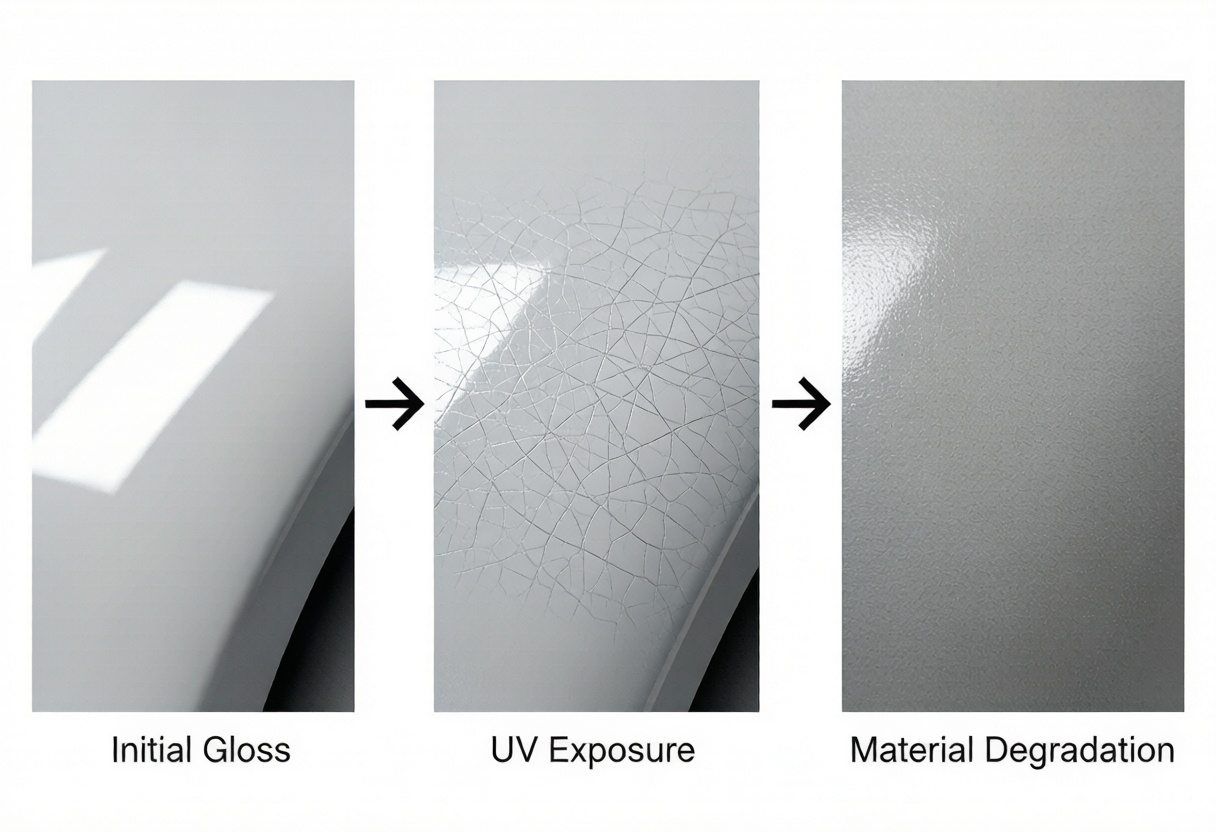
Clear coat subjected to ultraviolet (UV) radiation and high-temperature oxidation over the long term causes surface resin degradation and micro-roughness, turning specular reflection into diffuse reflection, making it look "hazy and dull." Polishing can temporarily restore it, but deep-level aging cannot be saved by polishing either.
II. Causes of Yellowing
- Inferior curing agent: Contains components prone to yellowing, especially aromatic curing agents.
- Resin is not weather-resistant: Ordinary resin turns yellow after prolonged sun exposure.
- Contamination: Workshop chemicals and rubber migration can also cause yellowing.
III. How to Prevent
| Measure | Function |
|---|---|
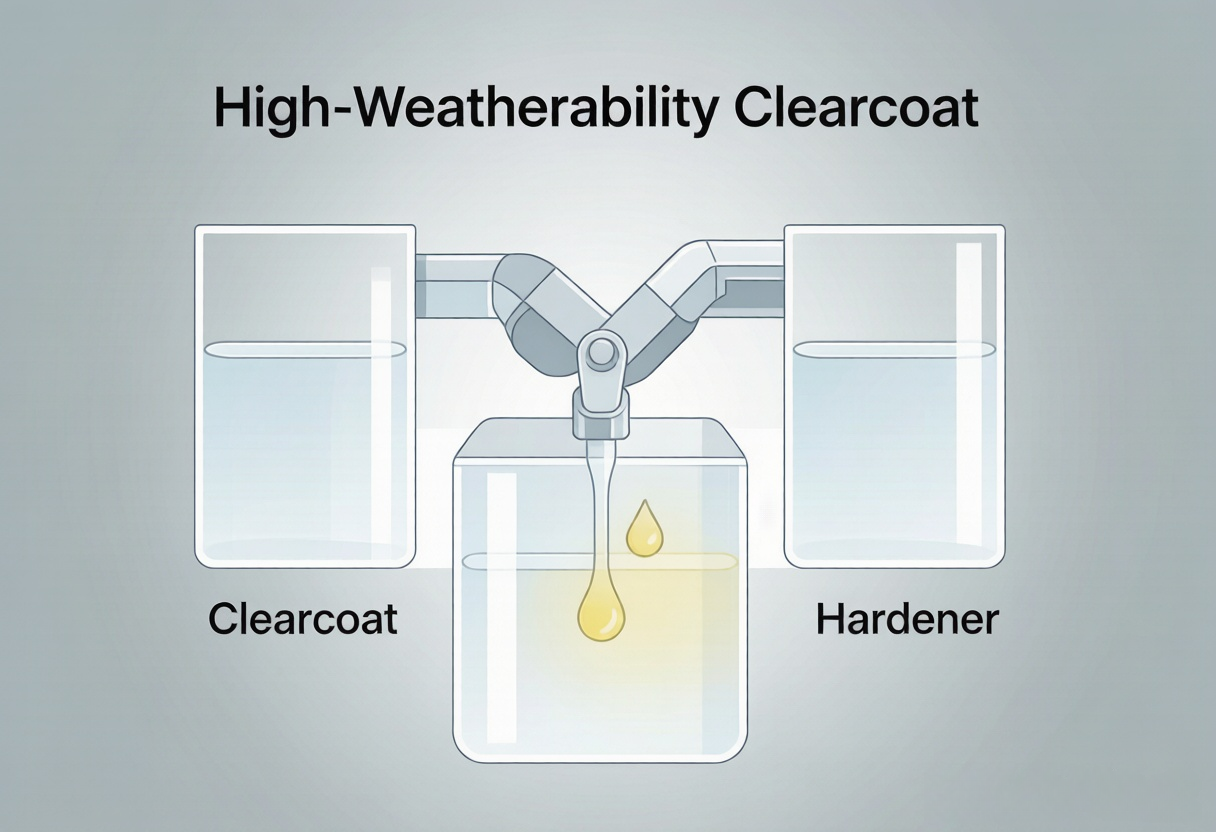
| Choose aliphatic/high weather-resistant clear coat | UV resistant, less prone to yellowing |
| Use curing agent in full proportion | Full cross-linking, stable and non-yellowing |
| Add weather-resistant additives | Absorb UV, delay aging |
| Avoid contaminant contact | Prevent chemical yellowing |
Summary
Loss of gloss in clearcoats stems from UV and oxidation degrading the surface layer, while yellowing is mostly caused by inferior curing agents or weather-unstable resins. Prevention relies on selecting highly weather-resistant clearcoats, using a sufficient and properly proportioned curing agent, and adding weather-resistant additives; for existing damage, polishing or repainting is required.
Frequently Asked Questions (FAQ)
{ "@context": "https://schema.org", "@type": "FAQPage", "mainEntity": [ {"@type":"Question","name":"Why does clear coat lose its gloss?","acceptedAnswer":{"@type":"Answer","text":"Long-term exposure of clear coat to ultraviolet rays and high-temperature oxidation causes the surface resin to degrade and become microscopically rough; specular reflection turns into diffuse reflection, making it look dull and lose gloss visually."}}, {"@type":"Question","name":"Whose fault is clear coat yellowing?","acceptedAnswer":{"@type":"Answer","text":"Mainly it is due to inferior or aromatic curing agents that yellow easily, as well as ordinary resins that are not weather-resistant and turn yellow after prolonged sun exposure; chemical contamination in the workshop may also stain it yellow."}}, {"@type":"Question","name":"How to prevent clear coat yellowing?","acceptedAnswer":{"@type":"Answer","text":"Use aliphatic/high-weather-resistant clear coat, add the curing agent in sufficient proportion to ensure full cross-linking, and incorporate weather-resistant additives to absorb UV, while avoiding chemical contamination."}}, {"@type":"Question","name":"Can polishing restore gloss once it's lost?","acceptedAnswer":{"@type":"Answer","text":"Light gloss loss can be temporarily restored by polishing; but if deep aging and resin degradation have already occurred, polishing is ineffective and the clear coat or even the base coat needs to be repainted."}}, {"@type":"Question","name":"What makes high-weather-resistant clear coat expensive?","acceptedAnswer":{"@type":"Answer","text":"It uses more stable resin and curing systems, plus anti-UV additives, and does not yellow or dull over time; although the unit price is higher, its lifespan and appearance are more reliable."}} ] }