Conductive and Insulating Functional Coatings: The Material Logic from Anti-Static to Electronic Packaging
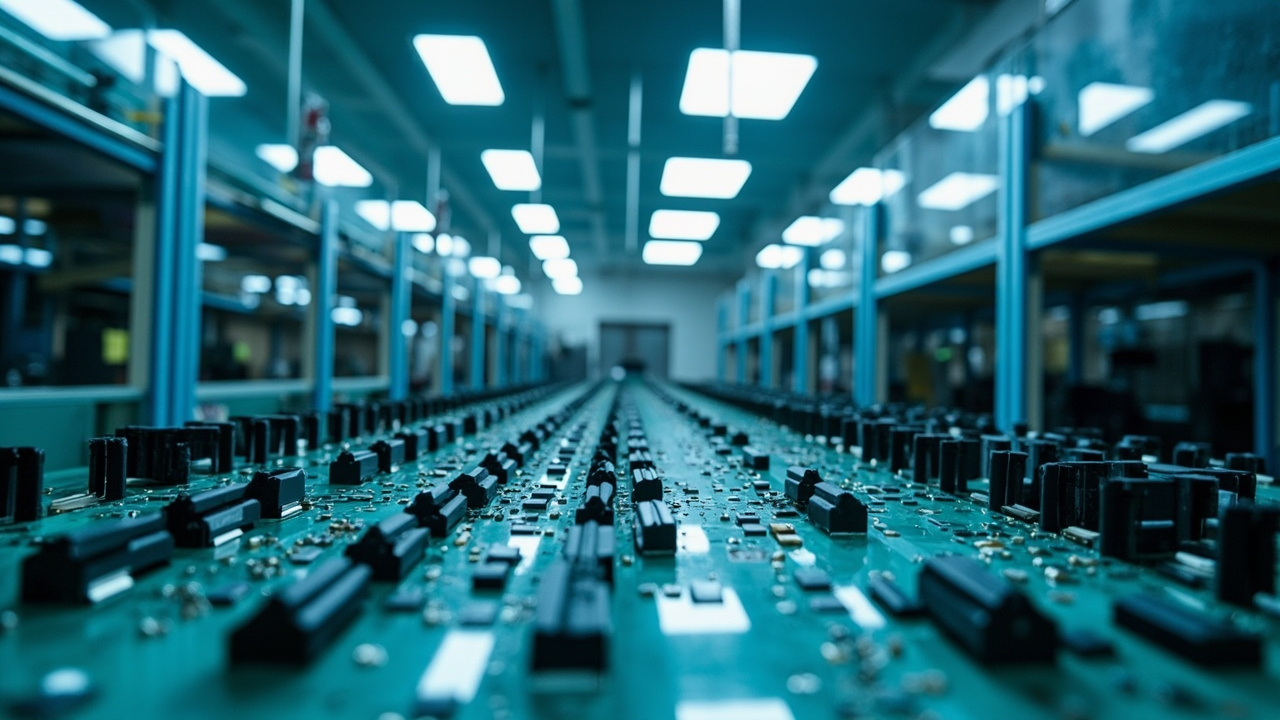
In modern industrial systems such as electronics manufacturing, energy equipment, rail transit, and precision instruments, coatings are no longer merely anti-corrosion and decorative layers. They are increasingly taking on functional roles, among which the most critical and easily overlooked category is functional coatings with conductive or insulating properties. When we talk about anti-static floors in semiconductor workshops, electromagnetic shielding enclosures for communication equipment, insulating protection for power battery packs, and even dielectric isolation layers in chip packaging, we are essentially dealing with the same materials science proposition: how to precisely control the flow and retention of electric charges through a thin film often only tens of microns thick.
Conductivity and insulation are not mutually exclusive opposites, but different segments on the continuous physical scale of resistivity. Engineering practice conventionally refers to coatings with a surface resistivity below 10^6 ohm/square as conductive coatings, those above 10^12 ohm/square as insulating coatings, and the broad intermediate range from 10^6 to 10^12 corresponds to anti-static and electrostatic dissipation functional requirements. Understanding this continuous spectrum is the prerequisite for comprehending the entire technical logic. Based on this foundation, Kexin New Materials (Guangdong) Co., Ltd., relying on its R&D and manufacturing base in Foshan, Guangdong, has long provided implementable functional coating solutions for engineers and procurement decision-makers, helping enterprises establish stable and reliable surface electrical performance in scenarios such as anti-static, electromagnetic compatibility, and electronic packaging.
This article will systematically break down the material logic of conductive and insulating coatings from seven dimensions: electrical fundamentals, material systems, application processes, engineering selection, typical applications, common misconceptions, and relevant standards, striving to enable readers engaged in design, process, and procurement to establish a complete cognitive framework from principle to field, and to make more robust technical decisions in practical projects.
I. Electrical Fundamentals and Classification Logic of Functional Coatings
Resistivity Continuous Spectrum: The Essential Boundary Between Conductive and Insulating
When discussing any functional coating, one must return to the fundamental physical quantity of resistance. For coating films, the two most concerned engineering indicators are surface resistivity and volume resistivity. Surface resistivity describes the ease of lateral charge migration along the coating surface, with the unit ohm/square; volume resistivity describes the resistance to charge migration through the coating thickness direction, with the unit ohm·cm. Together, they determine whether a coating tends to dissipate, consume, or block charges under real working conditions.
Numerically, there is no absolute "conductor" or "insulator" in nature, only differences in resistivity levels. The volume resistivity of metallic silver is on the order of 10^-6 ohm·cm, making it an excellent conductor; while high-quality insulating paint films can exceed 10^16 ohm·cm. Across this span of more than twenty orders of magnitude, functional coatings are divided into several engineering segments: below 10^6 ohm/square is the conductive zone, mainly used for electromagnetic shielding and grounding dissipation; 10^6 to 10^9 is the anti-static zone, used for electrostatic dissipation in electronic factories and flammable/explosive environments; 10^9 to 10^12 is the weakly conductive or high-resistance zone, used for specific voltage division and current equalization scenarios; above 10^12 enters the insulating zone, used for electrical isolation and dielectric protection.
It must be emphasized that this division is not a hard boundary of physical law, but an empirical convention formed by the industry for easier selection. The surface resistivity of the same coating measured in dry versus high-humidity environments may differ by several orders of magnitude, which is the fundamental reason why environmental adaptability must be taken seriously in electrostatic protection engineering.
Generation, Accumulation, and Hazard Mechanism of Static Electricity
Static electricity does not appear out of nowhere; its essence is charge transfer during the contact-separation or friction of two materials. When two substances with different surface energies contact each other, an electric double layer forms at the interface, and upon separation, part of the charge remains on the surface, forming static accumulation. In the handling, assembly, and mounting processes of electronic factories, such microscopic charge exchanges continuously occur between the human body, packaging materials, conveyor belts, and fixtures.
Static hazards manifest at three levels. The first is the adsorption effect: charged surfaces attract dust and particles from the air, directly contaminating wafers, optical components, and precision contacts, leading to reduced yield. The second is discharge damage: when the accumulated voltage exceeds the dielectric breakdown threshold, the instantaneous discharge current can reach several amperes, enough to burn the tiny structures inside integrated circuits. Such damage is often latent—testing normal at shipment but failing prematurely after delivery. The third is ignition risk: in places such as petroleum, chemical, and powder processing, static sparks may ignite combustible gases or dust clouds, causing catastrophic accidents.
The core idea of functional coatings in static governance is to transform "insulating surface accumulating charges" into "surface controllably dissipating or consuming charges." Anti-static coatings introduce a conductive network into the insulating matrix, stabilizing the surface resistivity in the 10^6 to 10^9 range, allowing charges to release slowly at a controlled rate—avoiding both rapid discharge damage and long-term accumulation. This mechanism is the starting point for all subsequent material design.
Functional Gradient from Anti-Static to Conductive to Insulating
A question that easily confuses beginners: since conductive and insulating are the two ends of the same continuous spectrum, why can't one coating solve all problems? The answer is that different scenarios have exactly opposite demands on charge behavior.
In semiconductor workshops, we need surfaces that gently dissipate charges—neither so insulating as to accumulate static, nor so conductive as to let the human body directly short-circuit equipment—thus falling in the mid anti-static range. In communication base stations and medical imaging equipment enclosures, we need to shield external electromagnetic interference and contain internal radiation, requiring sufficiently low surface resistance to form a continuous metallized conductive layer, thus falling in the conductive zone. In motor windings, busbars, and between battery modules, we need to completely isolate different potentials to prevent creepage and breakdown, requiring extremely high volume resistivity and dielectric strength, falling in the insulating zone.
This "functional gradient" thinking is precisely what distinguishes functional coatings from ordinary decorative coatings. It does not push one material to the extreme, but systematically weighs conductive filler type, filling ratio, base resin, film thickness, and curing process against the target working condition, ultimately anchoring the coating's resistance characteristics precisely in the required segment.
Interface Physics of Conductive Phase and Insulating Matrix
The essence of conductive and insulating coatings lies in the synergy between conductive fillers and the insulating matrix. Most conductive coatings use insulating thermosetting or thermoplastic resin as the continuous phase and conductive particles as the dispersed phase. When the conductive filler concentration is below a certain critical value, particles are isolated from each other and the coating as a whole is insulating; as the filling amount increases, particles contact each other or connect via tunneling effect, forming a conductive path through the coating—this is the "percolation threshold" described by percolation theory.
The vicinity of the percolation threshold is a sensitive zone for material design. Too little filler, and the coating is non-conductive; too much filler not only sharply increases cost but also severely damages adhesion, flexibility, and corrosion resistance, because excessive rigid particles destroy the continuous film formation of the resin. An excellent formulation needs to leave a reasonable margin just after crossing the percolation threshold, making the conductive network stable while retaining the protective performance of the base resin. In addition, the interfacial bonding strength between filler and resin directly determines whether the conductive network can remain stable long-term under thermal expansion/contraction, mechanical friction, and chemical erosion—this is also the process barrier for high-end conductive coatings.
II. Material Systems of Conductive Coatings
Carbon-Based Conductive Fillers: Carbon Black, Graphite, and Carbon Nanotubes
Carbon-based fillers are the most cost-effective category in conductive coatings, mainly including carbon black, graphite powder, carbon fiber, and the rapidly emerging carbon nanotubes in recent years. Carbon black has extremely fine particle size and huge specific surface area, with oxygen-containing functional groups on the surface, good wettability with resin, and can form a conductive network at low addition levels, making it the mainstay of anti-static floor coatings and anti-static coatings for oil pipelines. Graphite, with its flake structure and good lubricity, excels in scenarios requiring both conductivity and wear resistance, such as certain conductive putties and grounding coatings.
Carbon nanotubes, due to their extremely high aspect ratio, can cross the percolation threshold at very low filling amounts, producing coatings with excellent conductivity and minimal impact on the matrix mechanical properties, but they are difficult to disperse and expensive, currently mostly used in high-end electromagnetic shielding and transparent conductive films. The common advantage of carbon-based fillers is low cost, good chemical stability, and no oxidative failure like metals; the common shortcoming is deep black color, lower absolute conductivity than metal fillers, and carbon black's sensitivity to coating surface conditions where resistance may drift after wear.
Metal-Based Conductive Fillers: Silver, Copper, and Nickel
When applications require extremely low resistance or high-frequency electromagnetic shielding, metal fillers become the first choice. Silver powder has the best conductivity and strong oxidation resistance, and is the core filler for high-end conductive adhesives and conductive inks, but its high price limits its use in large-scale coating. Copper powder has conductivity close to silver and much lower cost, but the drawback is easy oxidation; the copper oxide layer is insulating and rapidly pushes up resistance, so copper-based coatings must be paired with reductive or coating processes, such as silver-coated copper powder, to balance cost and stability.
Nickel powder has a unique position in electromagnetic shielding, with better attenuation of magnetic fields than copper and silver, and better oxidation and corrosion resistance, making it a common choice for military and aerospace equipment enclosure shielding coatings. The key challenge of metal filler coatings is high density, easy settling, and cracking risk due to mismatch of thermal expansion coefficients between metal particles and resin, often requiring thixotropic agents, coupling agents, and gradient curing processes in the formulation to resolve.
Conductive Polymers and Composite Systems
In addition to the filler route, there is a class of intrinsically conductive polymers, such as polyaniline, polypyrrole, polythiophene, etc., whose molecular chains themselves have conjugated structures capable of conducting charges. The advantage of such materials is transparency, light weight, and tunable color; the drawback is generally lower conductivity than metal fillers, narrow processing window, and long-term environmental stability to be improved. The current industry mainstream is to composite conductive polymers with carbon-based or metal-based fillers, combining strengths: using conductive polymers to improve filler dispersion and interfacial bonding, and using inorganic fillers to pull up the lower limit of conductivity.
Composite systems represent an important evolution direction of functional coatings. For example, in the field of battery insulation, compositing ceramic fillers with elastic resin can obtain heat resistance and puncture resistance while maintaining high insulation; in transparent anti-static fields, compositing conductive polymers with nano metal oxides can control surface resistance under the premise of high visible-light transmittance. This multi-phase composite is the embodiment of material logic evolving from "single filler" to "interface engineering."
Selection Logic of Base Resin
Conductivity and insulation are not determined only by fillers; the base resin is also the performance chassis. Epoxy systems have strong adhesion, good chemical resistance, and excellent dielectric properties, and are the mainstay of industrial anti-corrosion conductive and insulating coatings, with the drawback of average outdoor weather resistance. Polyurethane (PU) coatings are flexible, wear-resistant, and weather-resistant, suitable for scenarios requiring elasticity and appearance, such as automotive and electronic enclosures. Acrylic systems are weather-resistant and transparent, often used for outdoor and topcoats. Silicone is high-temperature and aging resistant, a choice for special high-temperature insulation scenarios.
Insulating coatings have more stringent requirements for the base resin: high volume resistivity, large dielectric strength, low dielectric loss, and low water absorption. Therefore, insulating paints mostly use low-polarity resins such as pure epoxy, polyimide, and silicone, and strictly control curing residues and impurity ions. The polarity, crosslink density, and moisture resistance of the base resin often determine the long-term reliability of insulating coatings in humid-heat environments more than the fillers.
Film Formation and Dielectric Design of Insulating Coatings
The core indicators of insulating coatings are dielectric strength (breakdown voltage) and volume resistivity. In design, on one hand, low-polarity, high-purity film-forming substances should be selected to reduce free ions and polar groups; on the other hand, dense film formation must eliminate pinholes and bubbles, because local defects become the starting point of breakdown. Multi-layer coating, vacuum impregnation, and solvent-free formulations are common means to improve dielectric reliability.
In high-voltage and new-energy scenarios, insulating coatings also need to balance thermal conductivity and flame retardancy. For example, insulating coatings for battery modules must both block potential and dissipate heat, and delay flame spread during thermal runaway. This leads to the composite functional design of "insulation plus thermal conductivity plus flame retardancy," often achieved by introducing functional fillers such as boron nitride and aluminum hydroxide, which is one of the most active directions in insulating material innovation in recent years.

III. Construction Process and Film Formation Control
Substrate Treatment: The Foundation of Electrical Performance
No matter how good the coating is, if the substrate treatment is inadequate, the electrical performance will be greatly compromised. For conductive and insulating coatings, the goals of substrate treatment are twofold: first, to ensure adhesion; second, to ensure a uniform surface condition and avoid local resistance abrupt changes. Metal substrates usually need sandblasting or grinding to a specified roughness to remove scale and oil stains; concrete substrates need grinding, repair, and moisture content control, otherwise moisture rising from below will damage the dielectric properties of the insulating layer.
In anti-static floor engineering, the substrate moisture content and surface flatness directly affect the stability of grounding resistance. In shielding coating of electronic enclosures, if the release agent and fingerprint oils on the substrate surface are not removed, local adhesion failure and cracking of the shielding layer will result. Therefore, pre-construction surface inspection—such as roughness testing, oil detection, moisture content testing—should be written into the process documents as mandatory inspection procedures, rather than operated by experience.
Coating Methods: Spraying, Brushing, Rolling, and Dipping
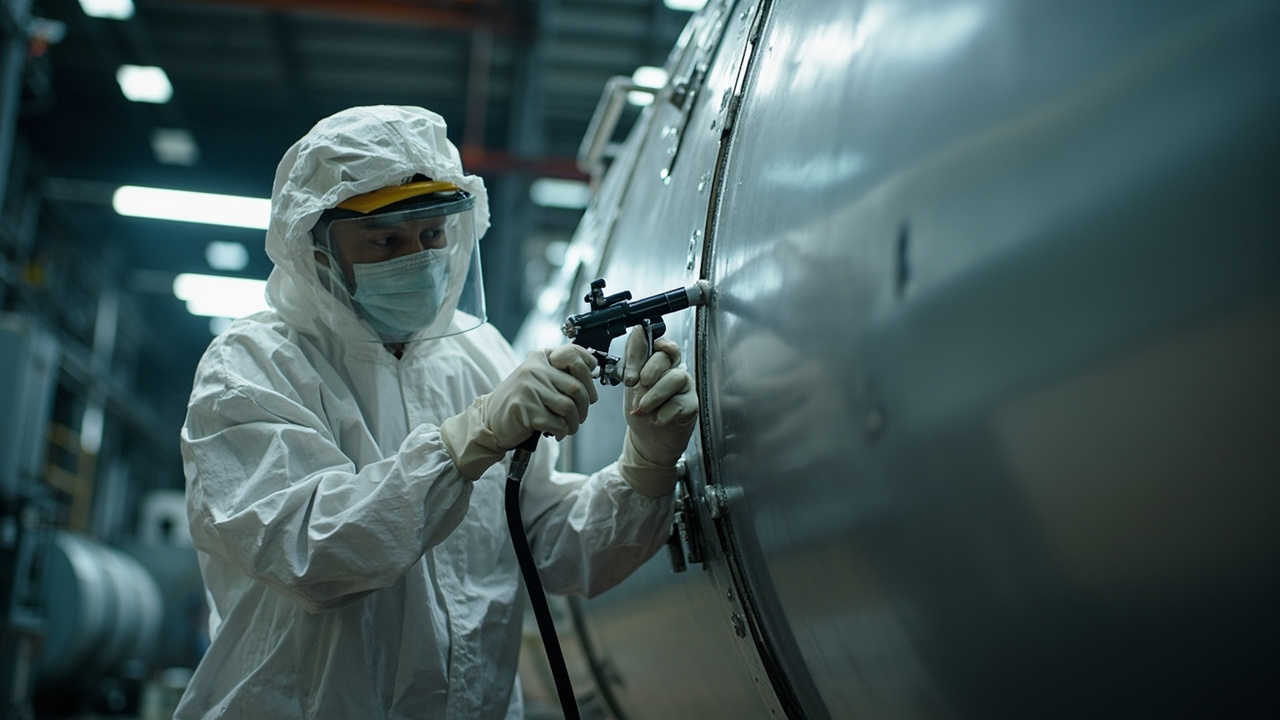
The coating method for conductive insulating coatings should be selected based on product form and batch size. Air spraying and airless spraying offer high efficiency and uniform film thickness, suitable for large-area equipment enclosures and floors; brushing and rolling are flexible, suitable for repair and local reinforcement of complex structures; dipping and electrophoresis are suitable for full coverage of small parts and batch workpieces, ensuring uniform coating of inner cavities and gaps.
It should be noted that metal filler coatings are prone to gravity settling during spraying, causing nozzle clogging and uneven filler distribution within the film. The applicator needs to control coating viscosity, add anti-settling agents, and stir continuously. The application of conductive inks and conductive adhesives relies more on precision processes such as screen printing and dispensing; film thickness and pattern accuracy directly determine resistance and shielding effectiveness. The selection of process route is essentially a bridge that transforms laboratory formulations into stable mass production capability.
Curing Process and Film Thickness Control
Both conductive networks and insulating dielectric properties are extremely sensitive to the degree of curing. If epoxy coatings are not fully cured, residual solvents and unreacted groups become ion channels, significantly lowering volume resistivity; if metal filler coatings have excessive curing shrinkage, the contact between conductive particles is pulled apart, and resistance rises. Therefore, curing temperature profile, curing time, and environmental ventilation must be strictly controlled.
Film thickness is another core variable. Anti-static coatings require sufficient thickness for the conductive filler to form a continuous network, but excessive thickness will mask substrate defects and increase cost; insulating coatings often require a minimum film thickness to ensure dielectric strength, for example, some high-voltage insulation requires dry film thickness not less than several hundred microns. During construction, dual control with wet film gauge and dry film thickness gauge should be adopted, and destructive or non-destructive film thickness sampling should be performed in key areas.
Environmental Temperature and Humidity and Site Management
Functional coatings are more demanding on the construction environment than ordinary coatings. Too low temperature leads to increased viscosity, poor leveling, and slow curing; too high humidity causes surface condensation and introduces moisture, which is especially fatal to insulation performance. In anti-static floor construction for electronic factories, it is often necessary to control the environmental dew point, ensuring the substrate temperature is at least three degrees Celsius above the dew point before coating.
Site management also includes tool cleaning, batch traceability, and personnel training. Once tools are mixed or cross-contaminated between conductive and insulating coatings, serious quality accidents may occur. It is recommended to establish a dedicated tool area and a mixing record sheet at the project site; the batch number, mixing ratio, construction time, and environmental parameters of each batch of coating should be archived for failure analysis and responsibility tracing.
Online Resistivity Testing and Acceptance
After construction is completed, the electrical performance must be measurable and acceptable. Surface resistance and volume resistance are usually measured with an insulation resistance tester or surface resistance meter; anti-static floors also measure system grounding resistance. Electromagnetic shielding coatings need to be evaluated against standards using shielding effectiveness test devices. Insulating coatings must pass dielectric strength and volume resistivity tests.
A dual-track mechanism of "process testing plus final acceptance" should be established: record wet film status and environmental parameters during the process; perform sampling inspection of post-film resistance, adhesion, chemical resistance, etc. at the end. Only by incorporating electrical indicators into the acceptance checklist can functional coatings truly move from "brushed on" to "stable in use".
IV. Key Points for Engineering Selection
Interpretation of Surface Resistance and Volume Resistance Indicators
The first step in selection is to clarify the target resistance range and correspond it to standard clauses. Electronic factory anti-static usually requires surface resistance between 10^6 and 10^9 ohms per square; electromagnetic shielding requires surface resistance below 1 ohm per square or even lower; high-voltage insulation requires volume resistivity above 10^12 ohm·cm and dielectric strength reaching several thousand volts per mm. When purchasing, the supplier should be required to provide third-party test reports, not just promotional data.
It is also necessary to distinguish between "nominal value" and "service value". Data measured in the laboratory at 23°C and 50% humidity may drift several times in on-site high-temperature high-humidity or low-temperature dry environments. Responsible selection should be based on accelerated aging data for the target use environment, not normal-temperature standard data. This is the most easily overlooked point when engineers review technical materials.
Weather Resistance, Chemical Resistance, and Environmental Adaptation
Conductive insulating coatings mostly serve in harsh environments, and weather resistance and chemical resistance are non-negotiable. Outdoor communication equipment shielding coatings must withstand UV, thermal cycling, and salt spray; anti-static floors in chemical zones must tolerate solvents and acid-alkali splashes; insulation coatings for automotive and energy storage must withstand thermal shock and vibration. When selecting, corresponding environmental aging test data should be obtained, such as neutral salt spray, UV aging, thermal shock, immersion tests, etc.
Environmental adaptation is also reflected in the temperature range. Ordinary epoxy conductive coatings have long-term temperature resistance of about 120°C; beyond that, silicone or polyimide systems must be used. New energy and power scenarios often involve high temperatures; if a low-temperature system is mistakenly used in high-temperature parts, it may seem normal in the short term, but long-term insulation failure causes accidents. Therefore, temperature grade must be a separate column in the selection form.
Adhesion Matching with Substrate
Adhesion is the cornerstone of functional coating reliability. Conductive fillers are mostly rigid particles; excessive addition reduces coating cohesion and interfacial adhesion; metal fillers and resin have large differences in thermal expansion coefficients, easily producing micro-cracks under thermal cycling. When selecting, the substrate material should be clarified—steel, aluminum, concrete, and engineering plastics are all different—and corresponding primer and interface treatment schemes should be matched.
For plastic substrates, attention should also be paid to the risk of coating solvent erosion and stress cracking of the substrate; low-solvent or UV-curable systems should be prioritized. For renovation over existing old coatings, interlayer compatibility should be evaluated to avoid debonding of the new coating from the old layer. Adhesion seems basic, but is often the number one cause of on-site failure, and deserves the same weight as electrical indicators in selection review.
Trade-off between Cost and Lifespan
Cost is a dimension that procurement decisions cannot avoid, but should not be misled by surface unit price. Among conductive coatings, silver-based is the most expensive, copper-based next, carbon-based the lowest; among insulating coatings, the higher the temperature rating and flame retardancy rating, the higher the cost. True economy comes from the full life cycle: an anti-static floor that is cheap but fails in two years, its downtime rectification and yield loss far exceed the initial price difference.
It is recommended to compare by "annual cost per unit area" rather than "unit price per kg", and introduce factors such as expected life, maintenance frequency, and downtime risk. For critical production lines and high-risk scenarios, redundancy and inspection investment should be appropriately increased; for non-critical auxiliary areas, cost can be optimized on the premise of meeting minimum indicators. This hierarchical strategy is a common practice for mature enterprises in material selection.
Technical Collaboration with Material Suppliers
The implementation of functional coatings highly depends on technical collaboration between supply and demand. From substrate evaluation, process design, pilot and intermediate trials to on-site guidance, the supplier's engineering capability is often more critical than a single product parameter. Kexin New Materials (Guangdong) Co., Ltd., located in Foshan, Guangdong, has long been deeply engaged in the industrial coating field, and can provide integrated support from formulation selection, construction process to acceptance testing for scenarios such as anti-static, electromagnetic shielding, and electronic packaging, helping engineers transform material logic into stable on-site performance.
In cooperation, it is recommended that the purchaser provide the supplier with the use environment, substrate list, resistance targets, lifespan requirements, and certification needs as early as possible, and both parties jointly determine the technical specification and acceptance criteria. This "front-end collaboration" can significantly reduce later rework and failure risks, and is also the trend of industrial coating procurement moving from "buying products" to "buying capabilities".
V. Typical Engineering Cases
Anti-static Floor System for Electronic Factory
An integrated circuit packaging and testing workshop originally used ordinary epoxy floor; during dry winter, multiple incidents of product contamination and equipment false triggering caused by static adsorption occurred. The renovation scheme adopted a carbon-based anti-static epoxy self-leveling system, and by controlling the addition ratio of conductive paste, the surface resistance was stably anchored in the 10^6 to 10^8 range, and a copper foil grounding network was laid to direct charges into the building grounding system.
There are three key implementation points: first, substrate moisture content controlled below 4% to avoid moisture damaging the dielectric; second, continuous surface resistance measurement during construction to ensure uniformity across the entire area; third, forming a complete static dissipation loop with anti-static shoes, workbenches, and conveyor belts. After commissioning, the static-related defect rate in the workshop dropped significantly, verifying the necessity of systematic governance of "coating plus grounding plus personnel equipment".
Electromagnetic Shielding of Communication and Radar Equipment Enclosures
An outdoor communication cabinet was long affected by surrounding electromagnetic interference, with occasional resets of the internal CNC unit. The rectification adopted nickel-based electromagnetic shielding coating sprayed on the inner surface of the cabinet, combined with conductive gaskets and seam treatment, reducing surface resistance below 1 ohm per square, and shielding effectiveness met relevant standard requirements. The challenge was uniform coverage of corners and joints inside the cabinet; the construction adopted a process of spraying first then patching, with manual reinforcement at key seams.
This case shows that electromagnetic shielding is not only a matter of coating resistance, but also a geometric problem of "continuous conductive enclosure". Any gap or break will form a leakage channel, reducing overall effectiveness. Therefore, shielding engineering must combine structural design and conductive sealing; relying solely on coating cannot solve all leakage paths.
Insulation Protection of Power Battery Pack
New energy vehicle power battery packs have extremely high insulation requirements; potential differences of hundreds or even thousands of volts must be withstood between modules and between modules and the enclosure. A battery factory adopted high-insulation epoxy coating on the module enclosure, combined with ceramic fillers to improve heat resistance and puncture resistance, with volume resistivity controlled above 10^12 ohm·cm, and dielectric strength meeting the vehicle high-voltage safety requirements.
A further scheme introduces thermally conductive insulating composite coating, which directs cell heat to the liquid cooling plate while maintaining electrical isolation, alleviating heat accumulation. This represents the upgrade of insulating coatings from "single barrier" to "insulation plus thermal conduction plus flame retardancy" multifunctional composite, and is also a key direction of material innovation in the new energy track.
Conformal Coating and Encapsulation of Printed Circuit Boards
In humid, salt spray, or dusty environments, printed circuit boards need to be coated with conformal coating to isolate moisture and ionic contamination, essentially an insulating protective layer. High-end packaging also uses insulating dielectric materials for wafer-level or board-level packaging, undertaking dual roles of signal isolation and structural protection. Such coatings require extremely low ionic impurities and water absorption, otherwise leakage current will erode precision circuits.
Common contradictions encountered in implementation are: the thicker the coating, the better the protection, but excessive thickness will mask virtual soldering, hinder heat dissipation, and increase stress. Therefore, a balance must be struck between protection level and maintainability, and low-stress, repairable formulations should be selected. Insulating coatings in the field of electronic packaging are evolving toward low dielectric constant, low loss, high heat resistance, and photolithography-processable directions.
VI. Common Misconceptions and Failure Analysis
Misconception 1: The higher the conductivity, the better
Many purchasers intuitively believe that lower resistance means safer, and thus blindly pursue ultra-low surface resistance. However, in anti-static scenarios, too low resistance means charges dissipate at extremely high speed, which may instead generate discharge sparks that damage sensitive components; in places requiring electrical isolation, mistakenly using conductive coating directly causes short circuits. The correct logic is to "anchor the zone as needed" rather than blindly seeking lower values.
Misconception 2: Ignoring adhesion and substrate matching
Applying functional coating as if it were ordinary paint is the most common on-site error. Conductive fillers reduce adhesion, metal fillers cause thermal stress, and plastic substrates are eroded by solvents, all of which lead to early delamination. Failure often starts from edges or corners, gradually expands, and eventually causes overall collapse of electrical performance. Substrate adaptation must be given equal importance to resistance indicators in selection and construction.
Misconception 3: Using room-temperature data to replace service data
Suppliers mostly provide attractive data under standard temperature and humidity, while the site may be high temperature and high humidity, low temperature and dry, or subject to temperature cycling. Epoxy paint can drop in volume resistivity by several orders of magnitude after moisture absorption; carbon-based coatings drift in resistance after wear. If selection only looks at nominal values, it may fall below the functional threshold during service. Be sure to obtain aging and wear data for the target environment.
Misconception 4: Confusing the application boundaries of insulation and conduction
A typical accident is: mistakenly using conductive anti-corrosion paint on busbars that require insulating isolation, or mistakenly using ordinary insulating paint on floors that require static dissipation, resulting in either short circuit or static accumulation. Such errors stem from unclear understanding of functional boundaries. Engineering documents should clearly mark the resistance category and acceptance range of each coating layer, and strictly review during construction to prevent mixed use.
Misconception 5: Emphasizing product over process
Even with the right coating selected, if the construction environment exceeds limits, film thickness is out of control, or curing is insufficient, performance also goes to zero. Many projects spend all their budget on the product but are reluctant to invest in substrate treatment and process inspection. In fact, functional coating is a system engineering of "material plus process"; process out-of-control will devour all formulation advantages. It is recommended to write process control into contract acceptance clauses.
Misconception 6: Lack of full-lifecycle maintenance
Anti-static flooring and shielding coatings will degrade due to wear, contamination, and aging, but many projects no longer test after delivery. When accidents occur and are traced back, losses have often already been caused. A regular resistance testing and maintenance plan should be established, managing functional coatings as "decaying components" to ensure long-term reliability.
VII. Relevant Standards and Testing System
Electrical coating requirements in the national standard system
In China, there are multiple national standards for the electrical performance and construction acceptance of functional coatings. For example, general test method standards involving the electrical properties of paint films specify test procedures for volume resistance, surface resistance, and dielectric strength; standards related to architectural and industrial flooring give clear requirements for the resistance range, grounding system, and acceptance method of anti-static floors; standards for electrical insulating paint constrain the dielectric strength, volume resistance, and heat resistance grade of insulating paint.
During procurement and acceptance, the national standard clauses corresponding to the specific product shall prevail, and the test report shall be required to indicate the standard number and test conditions. It should be noted that different standards have slightly different expressions for the "anti-static" resistance range; engineers should select the appropriate standard based on the application scenario rather than mechanically applying a certain value.
Building materials and chemical industry standards
In addition to national standards, standards from the building materials industry (JC) and construction industry (JG) also cover a large number of functional coatings. For example, the JC series standards involve technical requirements for flooring materials, architectural anti-corrosion, and some functional coatings; the JG series standards are mostly found in construction and acceptance specifications for construction projects, including on-site test methods for the resistance performance of floors and protective layers. For existing building renovation and industrial flooring projects, these standards are an important part of the acceptance basis.
Standards under different jurisdictions have their own focus on sampling, curing, and judgment; large projects often need to meet multiple types of standards simultaneously. It is recommended to clarify the list of referenced standards at the design stage to avoid disputes caused by different understandings of the "pass line" between the contractor and the supervisor.
Overview of testing methods and laboratory construction
Routine electrical testing of functional coatings includes: surface resistance and volume resistance testing, dielectric strength (breakdown voltage) testing, insulation resistance testing, electromagnetic shielding effectiveness testing, electrostatic decay time testing, etc. In addition to electrical properties, adhesion, chemical resistance, weather resistance, abrasion resistance, and thermal performance tests must also be paired to fully characterize coating reliability.
Enterprises with conditions can establish small internal testing stations for incoming inspection and on-site retesting; key projects shall be submitted to qualified third-party laboratories. Either way, the core is to implement "measurable and controllable electrical performance" so that functional coatings move from experience to data-driven quality management.
Standard evolution and compliance trends
With the acceleration of new energy, semiconductor, and data center construction, the application boundaries of conductive insulating coatings continue to expand, and related standards are constantly being updated. For example, requirements for flame retardancy and thermal runaway of battery insulating coatings, integrity requirements for anti-static systems in electronic factories, and environmental limits for green low-volatile formulations are all tightening. Enterprises should establish a standard tracking mechanism to ensure that material selection and construction do not lag behind the latest compliance requirements.
From a broader perspective, the standardization of functional coatings essentially precipitates "material logic" into "engineering language." When principles, formulations, processes, and acceptance are all linked by standards, engineers and purchasers can confirm quality using the same set of discourse in cross-enterprise and cross-project collaboration, which is the hallmark of industry maturity.
Experimental determination of percolation threshold and formulation window
The percolation threshold is the core parameter in conductive coating formulation design, describing the transition phenomenon where the coating resistivity drops sharply by several orders of magnitude from the insulating state after the conductive filler volume fraction reaches a certain critical value. Experimentally, a series of samples with different filler ratios are typically prepared by fixing the resin system, measuring the volume or surface resistance of each sample, and plotting the logarithm of resistance against filler volume fraction; the inflection point of the curve corresponds to the percolation threshold.
In engineering formulations, the target filler amount is usually set above the percolation threshold with a certain margin to offset the resistance increase caused by construction fluctuations and aging attenuation. Too small a margin, and batch production resistance easily falls below the functional lower limit; too large a margin, and the risks of filler agglomeration, reduced adhesion, and increased cost intensify. Therefore, excellent conductive coating is not about more filler being better, but precisely locking the filler amount in the percolation plateau region, making the conductive network both stable and not excessively sacrificing matrix performance. This delicate balance is the concentrated embodiment of the material supplier's technical accumulation.
Surface modification of fillers: coupling agents and interface engineering
The interfacial bonding between conductive fillers and the resin matrix determines the stability of the conductive network under thermal, mechanical, and chemical actions. Untreated carbon black and metal powders have high surface energy, are prone to agglomeration, and have poor wetting with resin; they not only require higher addition amounts to conduct but also easily become stress concentration points inside the coating. Surface modification of fillers via coupling agents, surfactants, or plasma treatment can significantly reduce agglomeration, improve dispersion uniformity, and enhance chemical bonding between particles and resin.
Interface engineering also affects the long-term reliability of coatings. For example, copper powder coated with silane coupling agent has its surface oxidation suppressed, and resistance drift over time is greatly reduced; polymer-grafted carbon nanotubes can form more stable conductive pathways at low addition amounts. Such surface modification technologies are the key means for current high-end conductive insulating coatings to widen performance gaps, and also the necessary path for formulations to move from laboratory to harsh working conditions.
Non-destructive evaluation of curing degree
Conductive and insulating properties are extremely sensitive to curing completeness, so curing degree evaluation is an important part of quality control. Traditional practice relies on empirical control of curing time and ambient temperature, but a more reliable way is to introduce non-destructive testing, such as using changes in coating hardness, infrared spectral characteristic peaks, and dielectric loss tangent to infer the degree of cross-linking.
In insulating coatings, incompletely cured residual solvents and active groups provide ion channels, reducing volume resistivity and increasing dielectric loss. Portable dielectric testers can be used on-site for random curing status checks, or solvent wipe method for quick judgment of surface dry and hard dry. Upgrading curing evaluation from by-time to by-data can significantly reduce electrical failures caused by insufficient curing, especially suitable for mass production and high-value production lines.
Certification and environmental compliance: low volatility and green limits
Industrial coating is facing increasingly strict environmental constraints. Conductive insulating coatings mostly contain solvents and functional additives, and their volatile organic compound emissions, heavy metals, and harmful substance limits are gradually being constrained by national standards and industry specifications. In electronics and automotive supply chains, downstream OEMs often require coatings to pass corresponding environmental and prohibited substance control certifications, such as restrictions on specific halogens, phthalates, and heavy metals.
Selection should not only compare electrical parameters but also include environmental compliance in the technical specification, and obtain harmful substance test reports and compliance declarations. Low-volatile, water-based, and high-solid formulations are driven by regulations and also needed for on-site health and safety; especially in enclosed workshops and labor-intensive production lines, low-odor and low-toxicity coatings can directly improve the working environment and reduce ventilation energy consumption.
New Scenario: Anti-static and Explosion-proof in Petroleum and Chemical Industries
Anti-static and explosion-proof requirements in petroleum and chemical scenarios
In refining, chemical, coating, and powder processing sites, combustible vapor and dust clouds are widespread, and static sparks are a major safety hazard. Anti-static coatings in such scenarios need to coordinate with the overall explosion-proof design: floors, storage tanks, pipelines, and operation tables all need stable static dissipation capability, and are led into an independent grounding system through copper foil or conductor grids to ensure static charges at any point can be safely exported.
Unlike electronic factories, explosion-proof scenarios also have additional requirements for flame resistance, solvent resistance, and impact resistance on the coating, and grounding resistance and continuity need regular testing; any break point may make a local area a charge island. Therefore, such projects emphasize system continuity rather than single-point resistance; construction acceptance should include overall connectivity testing of the grounding network, not just random surface resistance measurement.
Misconception 7: Ignoring the supporting grounding system
Many projects treat anti-static coating as an isolated product, thinking all is well after application, but ignore that charges must ultimately be led into the earth. If no grounding network is provided or grounding is poor, even if the coating surface resistance is qualified, charges still have nowhere to go and will discharge after accumulation to a certain extent. Anti-static is a complete system of coating plus grounding plus personnel equipment; missing any link causes overall failure.
Misconception 8: Replacing technical review with price
Some purchasers award bids at the lowest unit price but do not evaluate the supplier's engineering capability, batch stability, and failure response speed. The value of functional coating is largely reflected in implementation reliability; if low-price bidding leads to frequent rework or production line accidents, the total cost is instead higher. It is recommended to establish a selection process that includes technical scoring, and incorporate the supplier's engineering support capability into decision-making.
VIII. Reliability Verification and Life Prediction
Functional coatings serve in complex environments, and their electrical performance decays with temperature, humidity, light, mechanical wear, and chemical contact. Turning "usable" into "trustworthy" requires data-based management built on reliability verification and life prediction.
Accelerated aging and Arrhenius model
To evaluate the long-term stability of insulating and conductive coatings, one cannot wait for years of natural aging; accelerated aging tests are typically used to extrapolate life. Samples are stressed in controlled temperature and humidity, UV, salt spray, and thermal cycling environments, and the decay curves of resistance, adhesion, and appearance are measured. For temperature-dominated degradation processes, the Arrhenius model can be used to extrapolate the expected life at room temperature from accelerated failure data at high temperatures.
The reliability of such extrapolation depends on the scientific rigor of the test design: stress levels must not exceed the range of the material's true failure mechanisms, otherwise the model becomes distorted. Therefore, in critical projects, accelerated data should be continuously compared and calibrated against field sampling data, forming a dual closed loop of laboratory extrapolation plus field verification, so that life prediction progressively approaches reality.
Failure Mode Analysis and Redundancy Design
Conducting failure mode and effects analysis on conductive insulating coatings helps identify weak points at the design stage. Typical failures include: conductive network disconnection due to wear causing resistance rise, metal filler oxidation causing shielding degradation, insulating coating breakdown due to pinholes or moisture absorption, and adhesion failure causing overall delamination. For each type of failure, inspection items and warning thresholds should be set.
Redundancy design is a pragmatic means to improve reliability. For example, critical shielding areas adopt dual protection of conductive paint plus conductive gasket, important insulating areas use multi-layer structure of primer plus topcoat, and anti-static floors are equipped with multiple grounding points. Redundancy is not waste, but provides a buffer when single-point failure occurs, especially suitable for high-value production lines and safety-related scenarios.
Digitalized Quality Traceability
Modern industry emphasizes traceability, and functional coatings are no exception. From substrate treatment records, coating batch numbers, mixing ratios, environmental parameters, film thickness measurements to final electrical acceptance, data of every step should be archived. With electronic work orders and inspection databases, quality traceability and trend analysis of individual batches can be achieved, issuing early warnings at the early stage of performance degradation.
Digitalized traceability can also feed back to formula and process optimization. When field feedback shows resistance drift in a certain batch, R&D can lock down raw materials and process variables by batch number to quickly locate the root cause. This field-data-driven R&D closed loop is a capability jointly built by mature coating suppliers and high-end users, and also a sign that functional coatings are moving from empirical craftsmanship to deterministic engineering.
Field Monitoring and Intelligent Early Warning
In critical production lines and high-risk scenarios, periodic sampling alone is no longer sufficient to prevent sudden failures. In recent years, practices of embedding resistance sensing networks into coatings or substrate surfaces have emerged. Through pre-buried electrodes or flexible sensing films, continuous monitoring of surface resistance and grounding resistance trends is achieved. Once values approach the warning threshold, the system automatically alarms, prompting maintenance or replacement.
Such intelligent monitoring upgrades functional coatings from passive protection to active sensing, especially suitable for data centers, energy storage stations and semiconductor cleanrooms that are highly sensitive to static electricity and insulation. Combined with the aforementioned digitalized traceability, it forms a full-life-cycle quality closed loop covering construction, service to maintenance, and is also a typical direction of integration of industrial coating and the Internet of Things.
IX. Future of Printed Electronics and Conductive Materials
Rise of Conductive Inks and Patterning Manufacturing
In addition to traditional coating, conductive coatings are entering the field of printed electronics in the form of conductive inks, conductive silver pastes, etc. Through screen printing, inkjet printing and flexible circuit processes, antennas, sensors and heating elements can be directly printed on films, ceramics or glass, eliminating traditional etching and soldering steps. Such applications impose new requirements on the fine-line resolution, adhesion and bending reliability of the coatings.
The rise of printed electronics extends conductive coatings from industrial protection to functional device manufacturing, with application scenarios expanding from equipment enclosures to wearables, automotive electronics and medical patches. It represents the extension of material logic from macro coating to micro patterning, and also opens new engineering space for the collaborative design of insulation and conduction.
Multifunctional Compositing and Greenization Directions
For the future, the evolution of conductive insulating coatings presents two main lines. One is multifunctional compositing, i.e., simultaneously achieving multiple functions such as conduction, heat dissipation, flame retardancy, anti-corrosion and self-cleaning in a single coating, to compress process steps and system weight, which is urgently demanded in new energy and aerospace fields. The other is greenization; the application of water-based, solvent-free and bio-based resins will gradually reduce the environmental load of functional coatings.
These two main lines jointly point to a trend: functional coatings are no longer passive附属 layers, but active constituents of equipment performance and reliability. Whoever can build depth in material systems, interface engineering and process digitalization will take the initiative in the supply chains of electronics, energy and high-end manufacturing.
FAQ
Q: Can anti-static coating and insulating coating be used interchangeably?
A: No. The two are in different sections of the resistivity continuum, with opposite functional goals. Anti-static coating controls surface resistance at 10^6 to 10^9 ohms per square, used for gentle charge dissipation; insulating coating requires extremely high volume resistivity and dielectric strength, used for electrical isolation. Misusing conductive-type coatings on busbars that require isolation will cause short circuits, while misusing insulating coatings on floors that require static dissipation will cause static accumulation. The two must be strictly distinguished by scenario, and engineering documents should clearly mark the resistance category of each coating layer.
Q: Why does the same conductive coating show very different surface resistance in different seasons?
A: Because surface resistance is extremely sensitive to ambient humidity. In insulating or weakly conductive matrices, the adsorbed water film provides additional ionic conduction channels; when humidity rises, surface resistance can drop by several orders of magnitude; temperature and surface contamination also affect readings. Therefore, selection and acceptance should not only look at normal-temperature normal-condition data, but should be based on accelerated aging and high-humidity test data of the target use environment, and establish a periodic re-measurement mechanism in the field to monitor performance degradation.
Q: Are metal-filler conductive coatings necessarily better than carbon-based ones?
A: Not necessarily. Metal fillers such as silver, copper and nickel have lower resistance and higher shielding effectiveness, but are costly, prone to settling and oxidation (especially copper), and easily crack due to thermal expansion mismatch with resin; carbon-based are low-cost, stable and corrosion-resistant, but dark in color and lower in absolute conductivity. Selection should be based on comprehensive trade-offs of resistance target, environment, budget and appearance, rather than simply pursuing metal fillers. Many industrial anti-static scenarios are fully served by carbon-based and more economical.
Q: Is spray-on conductive coating alone enough for electromagnetic shielding?
A: Usually not. Shielding effectiveness depends on the geometric integrity of "continuous conductive enclosure"; any gap, seam or opening forms a leakage channel, reducing overall effectiveness. Coatings provide low wall resistance, but also require coordination with conductive gaskets, seam conductive sealing, grounding treatment and structural design to form a closed loop. Coatings alone cannot solve all leakage paths; shielding engineering must be a system engineering of structure and material synergy.
Q: Besides insulation, what else should be considered for power battery pack insulating coating?
A: Modern battery pack insulating coatings are often multifunctional composites; heat resistance grade, puncture resistance, thermal conductivity and flame retardancy should also be considered. Large potential differences between modules require high volume resistivity and dielectric strength; thermal accumulation risks require the coating to be heat-resistant and preferably thermally conductive to direct to liquid cooling; during thermal runaway, it must delay flame spread. Introducing functional fillers such as ceramics and boron nitride to achieve "insulation plus thermal conduction plus flame retardancy" is the main evolution direction of new-energy insulating materials.
Q: How to judge whether a functional coating is qualified after construction?
A: Electrical indicators should be included in the acceptance checklist, with process inspection plus final acceptance. Process records ambient temperature and humidity, film thickness and wet film status; final measurement of surface resistance, volume resistance, dielectric strength or shielding effectiveness, with supporting adhesion, chemical resistance and other sampling inspections. Critical projects are sent to third parties for testing and a report noting standard numbers is obtained. Only when measurable and acceptable can functional coatings truly move from "brushed on" to "stably used".
Q: What should be noted for daily maintenance of functional coatings?
A: Functional coatings are components that degrade. Anti-static floors and shielding layers will decline in performance due to wear, contamination and aging; a periodic resistance inspection and cleaning maintenance plan should be established, and damaged areas repaired promptly. Avoid using strong solvents to scrub and destroy the surface conductive or insulating network; take protection when moving heavy equipment to prevent scratches. Writing maintenance into the equipment management system ensures long-term reliable operation.
Further Reading
Kexin New Materials (Guangdong) Co., Ltd. continuously shares the technical system and selection methods of industrial coatings on psste.com. The sister articles of this piece can serve as further reading to help readers build a more complete cognitive framework of functional coatings:
- Complete Explanation of High-Temperature Coating Technology
- Antifouling and Self-Cleaning Functional Coatings
- Architectural Coating Industry Panorama
{"@context": "https://schema.org", "@type": "FAQPage", "mainEntity": [{"@type": "Question", "name": "Can anti-static coating and insulating coating be used interchangeably?", "acceptedAnswer": {"@type": "Answer", "text": "No. The two are located in different sections of the resistivity continuum and have opposite functional goals. Anti-static coating controls surface resistance within 10^6 to 10^9 ohms per square, used for gentle dissipation of charges; insulating coating requires extremely high volume resistivity and dielectric strength, used for electrical isolation. Misapplying conductive-type coating on busbars that require isolation will cause short circuits, while misapplying insulating coating on floors that require static dissipation will lead to static accumulation. The two must be strictly distinguished by scenario, and engineering documents should clearly mark the resistance category of each coating layer."}}, {"@type": "Question", "name": "Why does the same conductive coating show very different surface resistance readings in different seasons?", "acceptedAnswer": {"@type": "Answer", "text": "Because surface resistance is extremely sensitive to ambient humidity. In insulating or weakly conductive matrices, the adsorbed water film provides additional ionic conduction paths; as humidity rises, surface resistance can drop by several orders of magnitude. Temperature and surface contamination also affect readings. Therefore, selection and acceptance should not rely only on normal-temperature normal-condition data, but should be based on accelerated aging and high-humidity test data of the target use environment, and establish an on-site periodic re-measurement mechanism to monitor performance decay."}}, {"@type": "Question", "name": "Are metal-filler conductive coatings necessarily better than carbon-based ones?", "acceptedAnswer": {"@type": "Answer", "text": "Not necessarily. Metal fillers such as silver, copper, and nickel have lower resistance and higher shielding effectiveness, but are costly, prone to settling and oxidation (especially copper), and mismatch with resin thermal expansion causing cracking; carbon-based are low-cost, stable, and corrosion-resistant, but dark in color and lower in absolute conductivity. Selection should be a comprehensive trade-off based on resistance target, environment, budget, and appearance, rather than simply pursuing metal fillers. Many industrial anti-static scenarios are fully served and more economical with carbon-based systems."}}, {"@type": "Question", "name": "Is spraying conductive coating alone enough for electromagnetic shielding?", "acceptedAnswer": {"@type": "Answer", "text": "Usually not. Shielding effectiveness depends on the geometric integrity of a 'continuous conductive enclosure'; any gap, seam, or opening forms a leakage channel that reduces overall effectiveness. Coating provides low wall resistance, but must be combined with conductive gaskets, conductive seam sealing, grounding treatment, and structural design to form a closed loop. Relying solely on coating cannot solve all leakage paths; shielding engineering must be a system engineering of structure and material synergy."}}, {"@type": "Question", "name": "Besides insulation, what else should be considered for power battery pack insulating coating?", "acceptedAnswer": {"@type": "Answer", "text": "Modern battery pack insulating coatings are often multifunctional composites; heat resistance grade, puncture resistance, thermal conductivity, and flame retardancy must also be considered. Large potential differences between modules require high volume resistivity and dielectric strength; thermal accumulation risks require the coating to be heat-resistant and preferably thermally conductive to direct heat to liquid cooling; during thermal runaway, flame spread must be delayed. Introducing functional fillers such as ceramics and boron nitride to achieve 'insulation plus thermal conduction plus flame retardancy' is the main evolution direction of new-energy insulating materials."}}, {"@type": "Question", "name": "How to judge whether a functional coating is qualified after construction?", "acceptedAnswer": {"@type": "Answer", "text": "Electrical indicators should be included in the acceptance checklist, with process inspection plus final acceptance. Process records of ambient temperature and humidity, film thickness, and wet film status; final measurement of surface resistance, volume resistance, dielectric strength, or shielding effectiveness, together with random checks of adhesion and chemical resistance. Key items sent to third-party for testing with reports noting standard numbers. Only when measurable and acceptable does the functional coating truly go from 'brushed on' to 'stable in use'."}}, {"@type": "Question", "name": "What should be noted for daily maintenance of functional coatings?", "acceptedAnswer": {"@type": "Answer", "text": "Functional coatings are decaying components. Anti-static flooring and shielding layers degrade due to wear, contamination, and aging; a periodic resistance testing and cleaning maintenance plan should be established, with damaged areas repaired promptly. Avoid using strong solvents to scrub and destroy the surface conductive or insulating network; take protection when moving heavy equipment to prevent scratches. Writing maintenance into the equipment management system ensures long-term reliable operation."}}]}