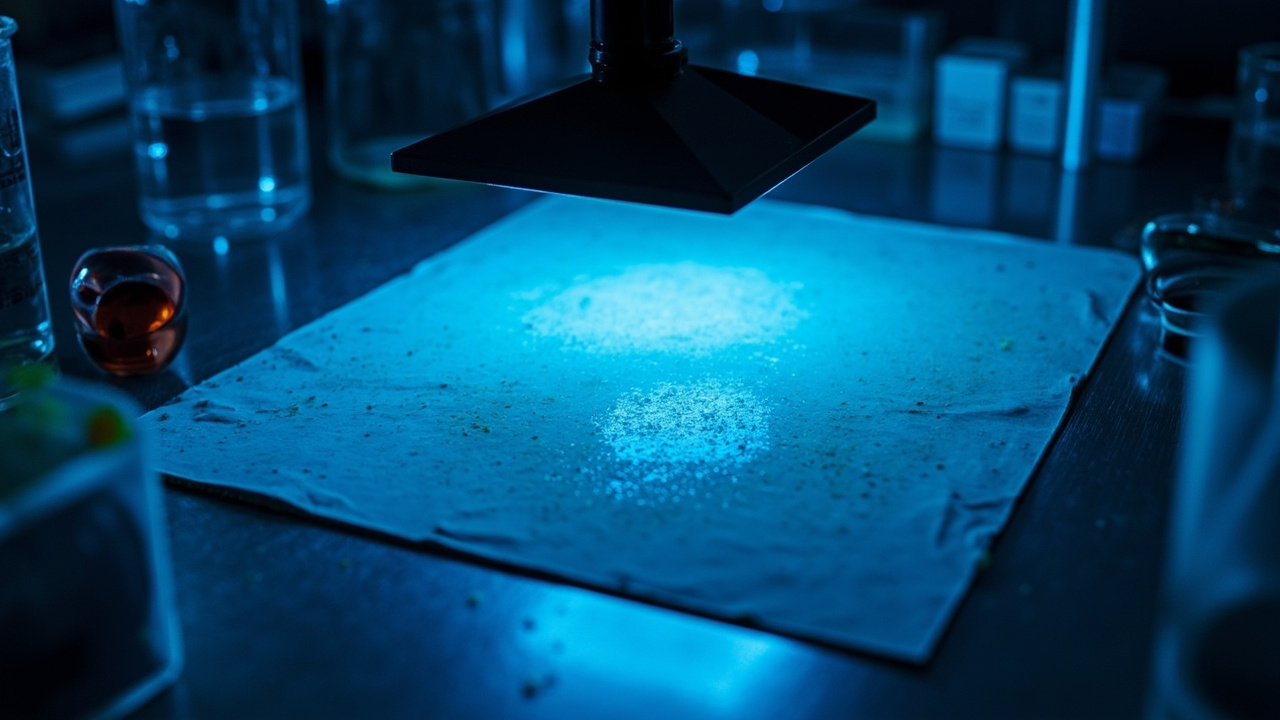
Nano titanium dioxide is one of the most remarkable yet most over-hyped nanomaterials in functional coatings. It is itself the white, non-toxic titanium white pigment, but when particle size drops to the nanometer scale and the crystal form is controlled to anatase, it generates strong oxidizing radicals under UV excitation, decomposes organic dirt, kills some microorganisms, and — via photo-induced superhydrophilicity — lets water films spread and carry away dust. That is photocatalytic self-cleaning.
kexinMaterials systematically screens TiO₂ crystal form, particle size and loading in self-cleaning and anti-fouling coating development to balance photocatalytic activity, weathering and substrate safety. This article covers the mechanism, crystal selection, engineering boundaries and standards.
1. TiO₂ Crystal Forms: Anatase, Rutile, Brookite
TiO₂ has three natural forms. As a pigment, rutile (refractive index ~2.7, excellent weathering) is the outdoor white-pigment workhorse; as a photocatalyst, anatase (band gap ~3.2 eV, better charge-carrier separation) is clearly more active than rutile (~3.0 eV but high recombination). Brookite is unstable and rarely used.
Nanometer scale amplifies the difference: at 10–30 nm, high surface area, more surface defects and quantum confinement multiply photocatalytic sites. But too small (<10 nm) worsens electron-hole recombination and agglomeration. Engineering photocatalytic TiO₂ is mostly 10–30 nm, anatase-dominant, or anatase-rutile mixed crystal (heterojunction aids carrier separation).
2. Photocatalytic Mechanism: From Photon to Radical
Self-cleaning is fundamentally TiO₂ generating electron-hole pairs under light, then strong oxidizing species.
- Excitation: when photon energy ≥ band gap (anatase ~3.2 eV, λ ≤ 387 nm, near-UV), a valence-band electron jumps to the conduction band, leaving a hole.
- Separation & migration: electron and hole migrate to the surface; in reality they often recombine and dissipate as heat — the core efficiency bottleneck.
- Surface redox: the hole oxidizes surface water/OH⁻ to hydroxyl radical (·OH); the electron reduces O₂ to superoxide (O₂·⁻) and H₂O₂. These oxidize organics to CO₂ and H₂O.
Clarification: TiO₂ photocatalysis depends on UV (≤ 387 nm), only ~4–5% of sunlight. Pure TiO₂ responds weakly to visible light — its biggest weakness. Improvements include N/S doping, coupling with narrow-bandgap semiconductors (CdS, g-C₃N₄), and noble-metal (Ag, Au) plasmonic sensitization to extend response to visible light, but doping adds cost and stability issues.
3. Photo-Induced Superhydrophilicity: The Second Pillar
Besides decomposing dirt, anatase TiO₂ under UV also becomes photo-induced superhydrophilic: surface oxygen vacancies form, adsorbed water dissociates and spreads, dropping the water contact angle from hydrophobic (~70–80°, due to organic contamination) to < 5–10°, forming a uniform water film instead of beads. The film flows off under gravity or breeze, carrying loosely decomposed dust — self-cleaning. This is the opposite route to silica hydrophobic rolling.
4. Antibacterial and Antiviral: Bonus of Active Oxygen
The ·OH and active oxygen also damage bacterial/viral membranes and genetic material, giving TiO₂ coatings antibacterial property (alongside Ag or ZnO systems, see nano coating wettability). Note: TiO₂ antibacterial depends on light and active-oxygen concentration, weak in dark; unlike Ag’s continuous ion-release, TiO₂ is light-driven and intermittent. In engineering, pair it with Ag/ZnO for day-night complementarity.
5. Applications in Engineering Coatings
- Building facades & curtain walls:add nano TiO₂ to exterior or clear topcoat to decompose attached grease/dust organics, self-clean with rain, keep appearance and slow mildew. Japan uses it widely; control loading and binder compatibility to avoid chalking.
- Automotive & glass: TiO₂ in clearcoat resists surface soiling, easier washing; glass (mirrors, windows) coated for anti-fog/anti-fouling — different from ceramic nano coating, TiO₂ relies on photocatalysis not just hydrophobicity.
- Indoor air purification: load TiO₂ on porous carriers (coatings, boards, filters) to decompose formaldehyde, VOC, odor under UV/visible — environmental catalysis. Tunnels and noise walls use it to degrade NOx.
- Anti-corrosion & anti-fouling: TiO₂ also serves as inert white pigment and UV screen, improving weathering and slowing resin photo-aging; in marine anti-fouling, the photocatalytic surface inhibits microbial attachment.
6. Engineering Boundaries: Don’t Be Fooled by Hype
- UV dependence: cloudy, indoor, night — activity drops sharply; “visible-light efficient self-cleaning” claims need doping and third-party data.
- Non-selective radicals: ·OH also attacks the coating resin itself, potentially accelerating organic binder aging — use weather-resistant binder or encapsulate/isolate TiO₂.
- Chalking risk: poorly loaded nano TiO₂ with weak resin bonding may self-destruct the coating via photocatalysis — chalking, gloss loss.
- Agglomeration: nanoparticles agglomerate easily, losing active surface; need dispersion/anchoring.
7. Formulation and Application Notes
Prefer surface encapsulation or chemical bonding over blending free nano-powder (avoids chalking); sol-gel in-situ loading on binder works. Choose light-aging-resistant resin (fluorocarbon, silicone-acrylic, aliphatic PU) to slow ·OH attack on the organic phase. Excess loading raises cost, scattering/agglomeration cut transparency and thicken — determine the window by orthogonal tests; effective loading is often 0.x–few wt%.
kexinMaterials’ self-cleaning topcoat uses anatase-rutile mixed crystal loaded on weather-resistant resin with controlled chemical anchoring of TiO₂ to the binder — keeping self-cleaning activity while suppressing chalking, for building facades and outdoor equipment.
8. Common Misconceptions
- “Nano TiO₂ self-cleans strongly even in visible light” — wrong; pure anatase needs UV (≤387 nm), a small sunlight fraction; visible activity needs doping with third-party proof.
- “Self-cleaning means never dirty” — wrong; it slows organic attachment and aids rain cleaning, but inorganic scale and dust piles still need periodic maintenance.
- “More is cleaner” — wrong; excess causes agglomeration, chalking, gloss loss, cost; radicals also attack its own resin.
- “TiO₂ and Ag antibacterial are the same” — wrong; TiO₂ is light-driven intermittent, Ag is continuous ion-release; they complement, not replace.
FAQ
Q: Why use anatase, not more weather-resistant rutile, for photocatalysis?
A: Anatase (~3.2 eV) has better electron-hole separation, clearly higher activity than rutile (though rutile is more weather-resistant and higher refractive, mainly a pigment). Engineering often uses anatase or anatase-rutile mixed crystal to balance activity and durability.
Q: What light does TiO₂ self-cleaning need?
A: Mainly UV (≤387 nm, near-UV), ~4–5% of sunlight. Pure TiO₂ responds weakly to visible; visible self-cleaning needs N/Ag doping or narrow-bandgap composites, verified by third-party data.
Q: What is the chemical process decomposing dirt?
A: UV excitation generates electron-hole pairs; the hole oxidizes surface water/OH⁻ to ·OH, the electron reduces O₂ to superoxide and H₂O₂; these non-selectively oxidize organics to CO₂ and H₂O.
Q: Is photo-induced superhydrophilicity contradictory to silica hydrophobic self-cleaning?
A: No — two different routes. TiO₂ under light becomes superhydrophilic, forming a spreading film; silica hydrophobic modification makes beads roll off. They can combine: decomposition plus rolling/spreading for complementary cleaning.
Q: Can nano TiO₂ damage the coating itself?
A: Possibly. ·OH non-selectively attacks the organic resin; if TiO₂ is poorly loaded or weakly bonded, long-term chalking and gloss loss can occur. Use weather-resistant binder and chemical anchoring to suppress self-destruction.