.kx-article{max-width:860px;margin:0 auto;background:#ffffff;color:#232a33 !important;
border-radius:16px;padding:32px 30px 40px;box-shadow:0 8px 40px rgba(0,0,0,.25);
font-family:-apple-system,”Segoe UI”,”PingFang SC”,”Microsoft YaHei”,sans-serif;line-height:1.9;font-size:16px}
.kx-article *{box-sizing:border-box}
.kx-article h1,.kx-article h2,.kx-article h3,.kx-article p,.kx-article li,.kx-article td,.kx-article th,.kx-article strong,
.kx-article .summary,.kx-article .summary p,.kx-article .summary strong,
.kx-article .note,.kx-article .note p,.kx-article .kxbox-brand,
.kx-article .related,.kx-article .related li,.kx-article .kx-foot,
.kx-article .kxqa-q,.kx-article .kxqa-a{color:#232a33 !important}
.kx-article h1{font-size:28px;line-height:1.35;font-weight:800;margin:0 0 18px;color:#1a1d21 !important}
.kx-article .lead,.kx-article p{margin:14px 0}
.kx-article .cover{width:100%;border-radius:14px;box-shadow:0 6px 24px rgba(0,0,0,.15);margin:6px 0 26px;display:block}
.kx-article h2{font-size:22px;font-weight:700;margin:40px 0 16px;padding-bottom:10px;border-bottom:2px solid #eceff3;position:relative;color:#1a1d21 !important}
.kx-article h2::before{content:””;position:absolute;left:0;bottom:-2px;width:64px;height:2px;background:#e8720c}
.kx-article h3{font-size:18px;font-weight:700;margin:26px 0 12px;color:#2a2f36 !important}
.kx-article strong{color:#111418 !important;font-weight:700}
.kx-article img.inline{width:100%;border-radius:12px;box-shadow:0 4px 16px rgba(0,0,0,.12);margin:22px 0 8px}
.kx-article figcaption{color:#7a828d !important;font-size:13px;text-align:center;margin:6px 0 24px}
.kx-article table{width:100%;border-collapse:collapse;margin:20px 0;font-size:14.5px;background:#fff;border-radius:10px;overflow:hidden;box-shadow:0 2px 12px rgba(0,0,0,.06);border:1px solid #eceff3}
.kx-article th,.kx-article td{padding:12px 14px;text-align:left;border-bottom:1px solid #eceff3;vertical-align:top}
.kx-article th{background:#2a2f36;color:#ffffff !important;font-weight:600;font-size:14px}
.kx-article tr:last-child td{border-bottom:none}
.kx-article tbody tr:nth-child(even){background:#fafbfc}
.kx-article .note{background:#eef6ff !important;border-left:4px solid #0a67d0;padding:14px 18px;border-radius:0 10px 10px 0;margin:22px 0}
.kx-article .note strong{color:#0a4a97 !important}
.kx-article .kxbox-brand{background:#fff3e8 !important;border-left:4px solid #e8720c;padding:16px 18px;border-radius:0 10px 10px 0;margin:22px 0}
.kx-article .kxbox-brand strong{color:#5a4632 !important}
.kx-article ul{margin:12px 0;padding-left:22px}
.kx-article li{margin:8px 0}
.kx-article .kxqa-item{background:#fbfcfd;border:1px solid #eceff3;border-radius:12px;padding:16px 20px;margin:14px 0}
.kx-article .kxqa-q{font-weight:700;color:#e8720c !important;font-size:16px;margin-bottom:8px}
.kx-article .kxqa-a{color:#3a4048 !important;display:block;margin:0}
.kx-article .related{background:#fff !important;border:1px dashed #e8720c;border-radius:12px;padding:16px 22px;margin:26px 0}
.kx-article .related h3{margin:0 0 6px;color:#e8720c !important}
.kx-article .summary{background:linear-gradient(135deg,#fff3e8,#ffe9d6) !important;border-radius:12px;padding:20px 22px;margin:26px 0}
.kx-article .summary h3{margin:0 0 10px;color:#1a1d21 !important}
.kx-article .kx-foot{margin-top:34px;padding-top:18px;border-top:1px solid #eceff3;text-align:center;color:#8a929d !important;font-size:13px}
.related{margin:30px 0 6px;}
.related h3{font-size:18px;color:#1C1917;margin:0 0 12px;padding-left:10px;border-left:4px solid #F97316;}
.related ul{list-style:none;margin:0;padding:0;}
.related li{margin:0 0 9px;padding-left:16px;position:relative;}
.related li:before{content:”203A”;position:absolute;left:0;color:#F97316;font-weight:700;}
.related a{color:#F97316 !important;text-decoration:underline !important;font-weight:600;}
.related a:hover{color:#EA580C !important;}
.kx-article{max-width:860px;margin:0 auto;background:#ffffff;color:#232a33 !important;
border-radius:16px;padding:32px 30px 40px;box-shadow:0 8px 40px rgba(0,0,0,.25);
font-family:-apple-system,”Segoe UI”,”PingFang SC”,”Microsoft YaHei”,sans-serif;line-height:1.9;font-size:16px}
.kx-article *{box-sizing:border-box}
.kx-article h1,.kx-article h2,.kx-article h3,.kx-article p,.kx-article li,.kx-article td,.kx-article th,.kx-article strong,
.kx-article .summary,.kx-article .summary p,.kx-article .summary strong,
.kx-article .note,.kx-article .note p,.kx-article .kxbox-brand,
.kx-article .related,.kx-article .related li,.kx-article .kx-foot,
.kx-article .kxqa-q,.kx-article .kxqa-a{color:#232a33 !important}
.kx-article h1{font-size:28px;line-height:1.35;font-weight:800;margin:0 0 18px;color:#1a1d21 !important}
.kx-article .lead,.kx-article p{margin:14px 0}
.kx-article .cover{width:100%;border-radius:14px;box-shadow:0 6px 24px rgba(0,0,0,.15);margin:6px 0 26px;display:block}
.kx-article h2{font-size:22px;font-weight:700;margin:40px 0 16px;padding-bottom:10px;border-bottom:2px solid #eceff3;position:relative;color:#1a1d21 !important}
.kx-article h2::before{content:””;position:absolute;left:0;bottom:-2px;width:64px;height:2px;background:#e8720c}
.kx-article h3{font-size:18px;font-weight:700;margin:26px 0 12px;color:#2a2f36 !important}
.kx-article strong{color:#111418 !important;font-weight:700}
.kx-article img.inline{width:100%;border-radius:12px;box-shadow:0 4px 16px rgba(0,0,0,.12);margin:22px 0 8px}
.kx-article figcaption{color:#7a828d !important;font-size:13px;text-align:center;margin:6px 0 24px}
.kx-article table{width:100%;border-collapse:collapse;margin:20px 0;font-size:14.5px;background:#fff;border-radius:10px;overflow:hidden;box-shadow:0 2px 12px rgba(0,0,0,.06);border:1px solid #eceff3}
.kx-article th,.kx-article td{padding:12px 14px;text-align:left;border-bottom:1px solid #eceff3;vertical-align:top}
.kx-article th{background:#2a2f36;color:#ffffff !important;font-weight:600;font-size:14px}
.kx-article tr:last-child td{border-bottom:none}
.kx-article tbody tr:nth-child(even){background:#fafbfc}
.kx-article .note{background:#eef6ff !important;border-left:4px solid #0a67d0;padding:14px 18px;border-radius:0 10px 10px 0;margin:22px 0}
.kx-article .note strong{color:#0a4a97 !important}
.kx-article .kxbox-brand{background:#fff3e8 !important;border-left:4px solid #e8720c;padding:16px 18px;border-radius:0 10px 10px 0;margin:22px 0}
.kx-article .kxbox-brand strong{color:#5a4632 !important}
.kx-article ul{margin:12px 0;padding-left:22px}
.kx-article li{margin:8px 0}
.kx-article .kxqa-item{background:#fbfcfd;border:1px solid #eceff3;border-radius:12px;padding:16px 20px;margin:14px 0}
.kx-article .kxqa-q{font-weight:700;color:#e8720c !important;font-size:16px;margin-bottom:8px}
.kx-article .kxqa-a{color:#3a4048 !important;display:block;margin:0}
.kx-article .related{background:#fff !important;border:1px dashed #e8720c;border-radius:12px;padding:16px 22px;margin:26px 0}
.kx-article .related h3{margin:0 0 6px;color:#e8720c !important}
.kx-article .summary{background:linear-gradient(135deg,#fff3e8,#ffe9d6) !important;border-radius:12px;padding:20px 22px;margin:26px 0}
.kx-article .summary h3{margin:0 0 10px;color:#1a1d21 !important}
.kx-article .kx-foot{margin-top:34px;padding-top:18px;border-top:1px solid #eceff3;text-align:center;color:#8a929d !important;font-size:13px}
.related{margin:30px 0 6px;}
.related h3{font-size:18px;color:#1C1917;margin:0 0 12px;padding-left:10px;border-left:4px solid #F97316;}
.related ul{list-style:none;margin:0;padding:0;}
.related li{margin:0 0 9px;padding-left:16px;position:relative;}
.related li:before{content:”203A”;position:absolute;left:0;color:#F97316;font-weight:700;}
.related a{color:#F97316 !important;text-decoration:underline !important;font-weight:600;}
.related a:hover{color:#EA580C !important;}

Many people pay attention to the “appearance” of colored paint and varnish, but ignore the bottommost and most critical primer. The primer directly determines whether the coating can firmly grip the substrate and whether it will rust and peel off after a few years. This article explains the function of primers, common types (epoxy, polyurethane, phosphate, plastic primer) and applicable substrates all at once, to help avoid detours in repair and selection.
I. Why is the primer the “key to the foundation”?
The surface conditions of bare metal, old paint, and plastic parts vary greatly; directly spraying topcoat often results in poor adhesion, easy rusting, and peeling. The primer sits between the substrate and the mid-coat/basecoat, “welding” the two layers together through chemical adhesion and mechanical interlocking, while blocking moisture and corrosive media. It is the first line of defense for the reliability of the coating system.
II. Three Core Functions of the Primer
- Rust prevention: Forms a barrier on the metal surface to isolate oxygen and water, delaying corrosion (especially critical when it replaces the whole-vehicle electrophoresis at the repair end).
- Improve adhesion: Treat the microscopic interface of the substrate so that the topcoat can “grip” it.
- Isolation: Sealing old paint, putty, or plastic additives to prevent them from affecting the top coat (e.g., plastic release agents causing loss of gloss or poor adhesion).
III. Common Types of Primers and Suitable Substrates
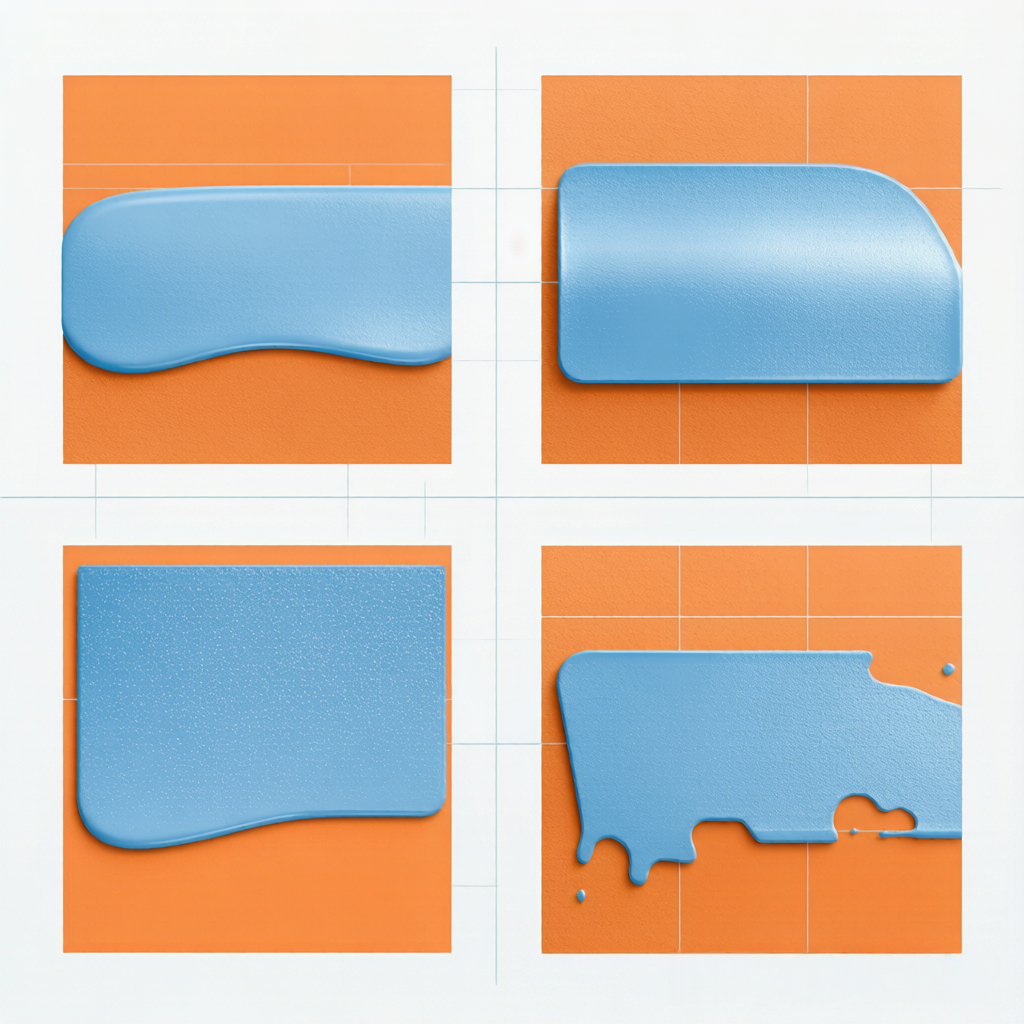
3.1 Epoxy Primer
Excellent adhesion and sealing, good chemical resistance, it is the preferred choice for rust prevention on bare metal. Mostly used as a primer sealer on steel/aluminum plates and intact old paint surfaces. Usually requires a matching hardener (2K), and it is recommended to apply the topcoat within the specified window after application.
3.2 Polyurethane Primer (PU Primer)
Flexible, weather-resistant, and with good intercoat compatibility, suitable as a multi-purpose mid-coat/primer, performing well on both plastic and metal, and is a common backbone of repair systems.
3.3 Phosphate Primer (Etch Primer / Wash Primer)
Contains phosphoric acid and other components, capable of mildly etching metal surfaces to form a conversion coating, greatly enhancing adhesion, commonly used as a primer for “hard-to-adhere” substrates such as galvanized sheets and aluminum. Applied in thin coats, it cannot replace proper anti-rust primer.
3.4 Plastic Primer (PP Water / Plastic Adhesion Promoter)
for low-surface-energy plastics such as polypropylene (PP)
(Common on bumpers) Ordinary paint has poor adhesion to it; a dedicated plastic primer (PP adhesion promoter) must be applied first or flame/plasma treatment used, otherwise paint will inevitably peel off.
| Primer Type | Key Features | Typical Substrates |
|---|---|---|
| Epoxy Primer | Strong adhesion, strong sealing, chemical resistant | Bare steel/aluminum, sound old paint |
| Polyurethane Primer | Flexible, broad compatibility | General metal/plastic |
| Wash Primer | Etch conversion, enhanced adhesion | Galvanized sheet, aluminum and other hard-to-adhere metals |
| Plastic Primer (PP Adhesion Promoter) | Activates low-surface-energy plastics | PP/bumper and other plastic parts |

IV. Key Points for Primer Application
V. Difference Between Primer and Intermediate Coat
Both are “at the base layer,” but have different roles: primer adheres to the substrate, mainly for rust prevention and adhesion; surfacer goes above the primer, mainly for filling defects and interlayer transition. The sequence is substrate → primer → surfacer → basecoat → clearcoat. Skipping primer and going straight to surfacer is like omitting the foundation.
Summary
The primer is the “foundation” of painting, with core functions of rust prevention, improved adhesion, and isolation. Epoxy primer is suitable for rust prevention on bare metal, polyurethane is general-purpose, phosphating primer handles hard-to-adhere metals, and plastic primer (PP water) is specifically for plastic parts such as bumpers. The prerequisite for application is thorough surface treatment + precise mixing ratio + controlled film thickness. Only by choosing the right primer can the coating system be reliable.
Frequently Asked Questions (FAQ)
{
“@context”: “https://schema.org”,
“@type”: “FAQPage”,
“mainEntity”: [
{“@type”:”Question”,”name”:”What is the difference between primer and surfacer?”,”acceptedAnswer”:{“@type”:”Answer”,”text”:”Primer is applied directly to the substrate, mainly for rust prevention and adhesion; the surfacer goes over the primer, mainly to fill imperfections and provide intercoat transition. The sequence is substrate → primer → surfacer → basecoat → clearcoat, and the two cannot replace each other.”}},
{“@type”:”Question”,”name”:”Which primer should be used on bare metal?”,”acceptedAnswer”:{“@type”:”Answer”,”text”:”Epoxy primer is the first choice, offering the strongest adhesion and sealing/rust protection; for hard-to-adhere metals such as galvanized steel or aluminum, a thin coat of wash (etch) primer can be applied first to improve adhesion, then topcoated as planned.”}},
{“@type”:”Question”,”name”:”Why does paint directly applied to a bumper (plastic) peel off?”,”acceptedAnswer”:{“@type”:”Answer”,”text”:”Plastics such as PP have low surface energy and also carry mold release agents, so ordinary paint cannot adhere. You must first remove the mold release agent and apply a dedicated plastic primer (PP adhesion promoter); if necessary, use flame or plasma treatment before painting.”}},
{“@type”:”Question”,”name”:”Does the hardener ratio of 2K primer matter?”,”acceptedAnswer”:{“@type”:”Answer”,”text”:”Yes, same principle as topcoat. Too little hardener causes incomplete curing, poor adhesion and weak durability; too much makes it brittle and cracked. You must follow the manufacturer’s ratio and use it up within the pot life.”}},
{“@type”:”Question”,”name”:”Can primer be skipped?”,”acceptedAnswer”:{“@type”:”Answer”,”text”:”For bare metal, plastic, and hard-to-adhere substrates it is not recommended to skip it—skip the foundation and even the best upper layers will easily blister and peel. Full-vehicle electrocoating already provides base rust protection, but the repair side has no electrocoating, so primer is the key rust-prevention substitute.”}}
]
}