Automotive油漆的成膜机理:物理Drying与化学Curing(2K漆为什么更Wear-Resistant)

2026-07-12 · Category: Technical Knowledge, Paint & Coatings

🌐 This article was automatically translated from Chinese. Please refer to the original Chinese version if needed. · 查看中文原文

.kx-article{max-width:860px;margin:0 auto;background:#ffffff;color:#232a33 !important;
border-radius:16px;padding:32px 30px 40px;box-shadow:0 8px 40px rgba(0,0,0,.25);
font-family:-apple-system,”Segoe UI”,”PingFang SC”,”Microsoft YaHei”,sans-serif;line-height:1.9;font-size:16px}
.kx-article *{box-sizing:border-box}
.kx-article h1,.kx-article h2,.kx-article h3,.kx-article p,.kx-article li,.kx-article td,.kx-article th,.kx-article strong,
.kx-article .summary,.kx-article .summary p,.kx-article .summary strong,
.kx-article .note,.kx-article .note p,.kx-article .kxbox-brand,
.kx-article .related,.kx-article .related li,.kx-article .kx-foot,
.kx-article .kxqa-q,.kx-article .kxqa-a{color:#232a33 !important}
.kx-article h1{font-size:28px;line-height:1.35;font-weight:800;margin:0 0 18px;color:#1a1d21 !important}
.kx-article .lead,.kx-article p{margin:14px 0}
.kx-article .cover{width:100%;border-radius:14px;box-shadow:0 6px 24px rgba(0,0,0,.15);margin:6px 0 26px;display:block}
.kx-article h2{font-size:22px;font-weight:700;margin:40px 0 16px;padding-bottom:10px;border-bottom:2px solid #eceff3;position:relative;color:#1a1d21 !important}
.kx-article h2::before{content:””;position:absolute;left:0;bottom:-2px;width:64px;height:2px;background:#e8720c}
.kx-article h3{font-size:18px;font-weight:700;margin:26px 0 12px;color:#2a2f36 !important}
.kx-article strong{color:#111418 !important;font-weight:700}
.kx-article img.inline{width:100%;border-radius:12px;box-shadow:0 4px 16px rgba(0,0,0,.12);margin:22px 0 8px}
.kx-article figcaption{color:#7a828d !important;font-size:13px;text-align:center;margin:6px 0 24px}
.kx-article table{width:100%;border-collapse:collapse;margin:20px 0;font-size:14.5px;background:#fff;border-radius:10px;overflow:hidden;box-shadow:0 2px 12px rgba(0,0,0,.06);border:1px solid #eceff3}
.kx-article th,.kx-article td{padding:12px 14px;text-align:left;border-bottom:1px solid #eceff3;vertical-align:top}
.kx-article th{background:#2a2f36;color:#ffffff !important;font-weight:600;font-size:14px}
.kx-article tr:last-child td{border-bottom:none}
.kx-article tbody tr:nth-child(even){background:#fafbfc}
.kx-article .note{background:#eef6ff !important;border-left:4px solid #0a67d0;padding:14px 18px;border-radius:0 10px 10px 0;margin:22px 0}
.kx-article .note strong{color:#0a4a97 !important}
.kx-article .kxbox-brand{background:#fff3e8 !important;border-left:4px solid #e8720c;padding:16px 18px;border-radius:0 10px 10px 0;margin:22px 0}
.kx-article .kxbox-brand strong{color:#5a4632 !important}
.kx-article ul{margin:12px 0;padding-left:22px}
.kx-article li{margin:8px 0}
.kx-article .kxqa-item{background:#fbfcfd;border:1px solid #eceff3;border-radius:12px;padding:16px 20px;margin:14px 0}
.kx-article .kxqa-q{font-weight:700;color:#e8720c !important;font-size:16px;margin-bottom:8px}
.kx-article .kxqa-a{color:#3a4048 !important;display:block;margin:0}
.kx-article .related{background:#fff !important;border:1px dashed #e8720c;border-radius:12px;padding:16px 22px;margin:26px 0}
.kx-article .related h3{margin:0 0 6px;color:#e8720c !important}
.kx-article .summary{background:linear-gradient(135deg,#fff3e8,#ffe9d6) !important;border-radius:12px;padding:20px 22px;margin:26px 0}
.kx-article .summary h3{margin:0 0 10px;color:#1a1d21 !important}
.kx-article .kx-foot{margin-top:34px;padding-top:18px;border-top:1px solid #eceff3;text-align:center;color:#8a929d !important;font-size:13px}
.related{margin:30px 0 6px;}
.related h3{font-size:18px;color:#1C1917;margin:0 0 12px;padding-left:10px;border-left:4px solid #F97316;}
.related ul{list-style:none;margin:0;padding:0;}
.related li{margin:0 0 9px;padding-left:16px;position:relative;}
.related li:before{content:”203A”;position:absolute;left:0;color:#F97316;font-weight:700;}
.related a{color:#F97316 !important;text-decoration:underline !important;font-weight:600;}
.related a:hover{color:#EA580C !important;}

.kx-article{max-width:860px;margin:0 auto;background:#ffffff;color:#232a33 !important;
border-radius:16px;padding:32px 30px 40px;box-shadow:0 8px 40px rgba(0,0,0,.25);
font-family:-apple-system,”Segoe UI”,”PingFang SC”,”Microsoft YaHei”,sans-serif;line-height:1.9;font-size:16px}
.kx-article *{box-sizing:border-box}
.kx-article h1,.kx-article h2,.kx-article h3,.kx-article p,.kx-article li,.kx-article td,.kx-article th,.kx-article strong,
.kx-article .summary,.kx-article .summary p,.kx-article .summary strong,
.kx-article .note,.kx-article .note p,.kx-article .kxbox-brand,
.kx-article .related,.kx-article .related li,.kx-article .kx-foot,
.kx-article .kxqa-q,.kx-article .kxqa-a{color:#232a33 !important}
.kx-article h1{font-size:28px;line-height:1.35;font-weight:800;margin:0 0 18px;color:#1a1d21 !important}
.kx-article .lead,.kx-article p{margin:14px 0}
.kx-article .cover{width:100%;border-radius:14px;box-shadow:0 6px 24px rgba(0,0,0,.15);margin:6px 0 26px;display:block}
.kx-article h2{font-size:22px;font-weight:700;margin:40px 0 16px;padding-bottom:10px;border-bottom:2px solid #eceff3;position:relative;color:#1a1d21 !important}
.kx-article h2::before{content:””;position:absolute;left:0;bottom:-2px;width:64px;height:2px;background:#e8720c}
.kx-article h3{font-size:18px;font-weight:700;margin:26px 0 12px;color:#2a2f36 !important}
.kx-article strong{color:#111418 !important;font-weight:700}
.kx-article img.inline{width:100%;border-radius:12px;box-shadow:0 4px 16px rgba(0,0,0,.12);margin:22px 0 8px}
.kx-article figcaption{color:#7a828d !important;font-size:13px;text-align:center;margin:6px 0 24px}
.kx-article table{width:100%;border-collapse:collapse;margin:20px 0;font-size:14.5px;background:#fff;border-radius:10px;overflow:hidden;box-shadow:0 2px 12px rgba(0,0,0,.06);border:1px solid #eceff3}
.kx-article th,.kx-article td{padding:12px 14px;text-align:left;border-bottom:1px solid #eceff3;vertical-align:top}
.kx-article th{background:#2a2f36;color:#ffffff !important;font-weight:600;font-size:14px}
.kx-article tr:last-child td{border-bottom:none}
.kx-article tbody tr:nth-child(even){background:#fafbfc}
.kx-article .note{background:#eef6ff !important;border-left:4px solid #0a67d0;padding:14px 18px;border-radius:0 10px 10px 0;margin:22px 0}
.kx-article .note strong{color:#0a4a97 !important}
.kx-article .kxbox-brand{background:#fff3e8 !important;border-left:4px solid #e8720c;padding:16px 18px;border-radius:0 10px 10px 0;margin:22px 0}
.kx-article .kxbox-brand strong{color:#5a4632 !important}
.kx-article ul{margin:12px 0;padding-left:22px}
.kx-article li{margin:8px 0}
.kx-article .kxqa-item{background:#fbfcfd;border:1px solid #eceff3;border-radius:12px;padding:16px 20px;margin:14px 0}
.kx-article .kxqa-q{font-weight:700;color:#e8720c !important;font-size:16px;margin-bottom:8px}
.kx-article .kxqa-a{color:#3a4048 !important;display:block;margin:0}
.kx-article .related{background:#fff !important;border:1px dashed #e8720c;border-radius:12px;padding:16px 22px;margin:26px 0}
.kx-article .related h3{margin:0 0 6px;color:#e8720c !important}
.kx-article .summary{background:linear-gradient(135deg,#fff3e8,#ffe9d6) !important;border-radius:12px;padding:20px 22px;margin:26px 0}
.kx-article .summary h3{margin:0 0 10px;color:#1a1d21 !important}
.kx-article .kx-foot{margin-top:34px;padding-top:18px;border-top:1px solid #eceff3;text-align:center;color:#8a929d !important;font-size:13px}
.related{margin:30px 0 6px;}
.related h3{font-size:18px;color:#1C1917;margin:0 0 12px;padding-left:10px;border-left:4px solid #F97316;}
.related ul{list-style:none;margin:0;padding:0;}
.related li{margin:0 0 9px;padding-left:16px;position:relative;}
.related li:before{content:”203A”;position:absolute;left:0;color:#F97316;font-weight:700;}
.related a{color:#F97316 !important;text-decoration:underline !important;font-weight:600;}
.related a:hover{color:#EA580C !important;}

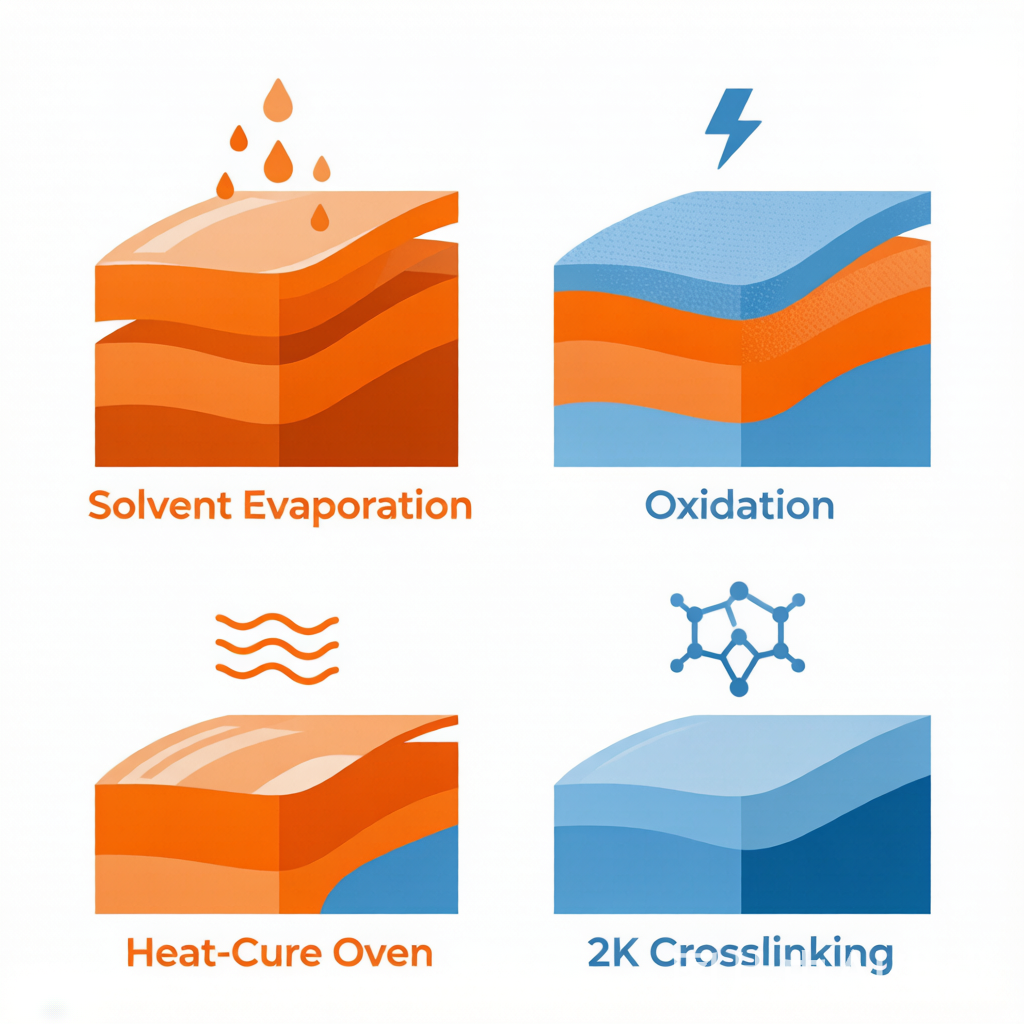
Schematic of four film-forming mechanisms of automotive paint: evaporation, oxidation, thermal curing, and 2K reactive crosslinking

“Why does paint harden?” The answer is not as simple as “the water evaporated.” The transformation of automotive paint from a liquid puddle into a strong, wear-resistant, and weather-resistant paint film is based on differences in the film-forming mechanism. Based on the nature of drying and curing, automotive coatings are mainly divided into two categories: physical drying (evaporative) and chemical curing, with the latter including oxidative, thermosetting, and two-component reactive (2K) types. Only by understanding the mechanism can you select the right paint, use the correct hardener, and avoid “never drying” or “hard but brittle cracking.”

In a nutshell: Physical drying forms a film by “solvent evaporation”, reversible and soft; chemical curing forms a film by “molecular cross-linking”, irreversible, hard and tough. 2K paint is a representative of chemical curing, hence more wear-resistant.

I. What is “film formation”?

During coating application, it is a flowing liquid; after film formation, it becomes a continuous, dense, and firmly adhered solid film. This film must simultaneously possess: adhesion to the substrate, weather resistance against the environment, and hardness and toughness to withstand friction. The film-forming method determines the ceiling of these properties—simple physical drying can hardly achieve the performance of high-temperature baking paint or 2K paint.

II. Four Major Film-Forming Mechanisms

2.1 Volatile (Physical Drying)

The resin has already “cured”, and construction merely volatilizes the solvent/water, leaving resin particles to fuse into a film. Water-based paint, nitrocellulose lacquer (NC), and some one-component acrylics belong to this category. Characteristics: fast drying, reversible (softens again upon contact with solvent), and relatively weak hardness and chemical resistance.

2.2 Oxidative Type (Autoxidative Crosslinking)

Resins containing drying oils or unsaturated bonds (such as alkyd paints) react with oxygen in the air to gradually crosslink and harden. No curing agent is required, but drying is slow and easily affected by temperature and humidity; commonly found in some industrial maintenance paints and old-style coatings.

2.3 Thermosetting Type (Baking Paint)

The resin undergoes a cross-linking reaction to form a film at high temperature (usually above 120–140℃). Automotive original factory paint (OEM) is completed in the assembly line baking paint booth, with a dense film and excellent performance. The repair side finds it difficult to replicate this high temperature, thus giving rise to the low-temperature/room-temperature curing 2K system.

2.4 Two-component reactive (2K)

Main paint (resin + pigments) and curing agent (isocyanate/amine) undergo a chemical reaction only after being mixed in a specific ratio, cross-linking into a three-dimensional network at room temperature. This is the mainstream for automotive refinish paints (clearcoat, 2K topcoat), balancing performance with room-temperature application.
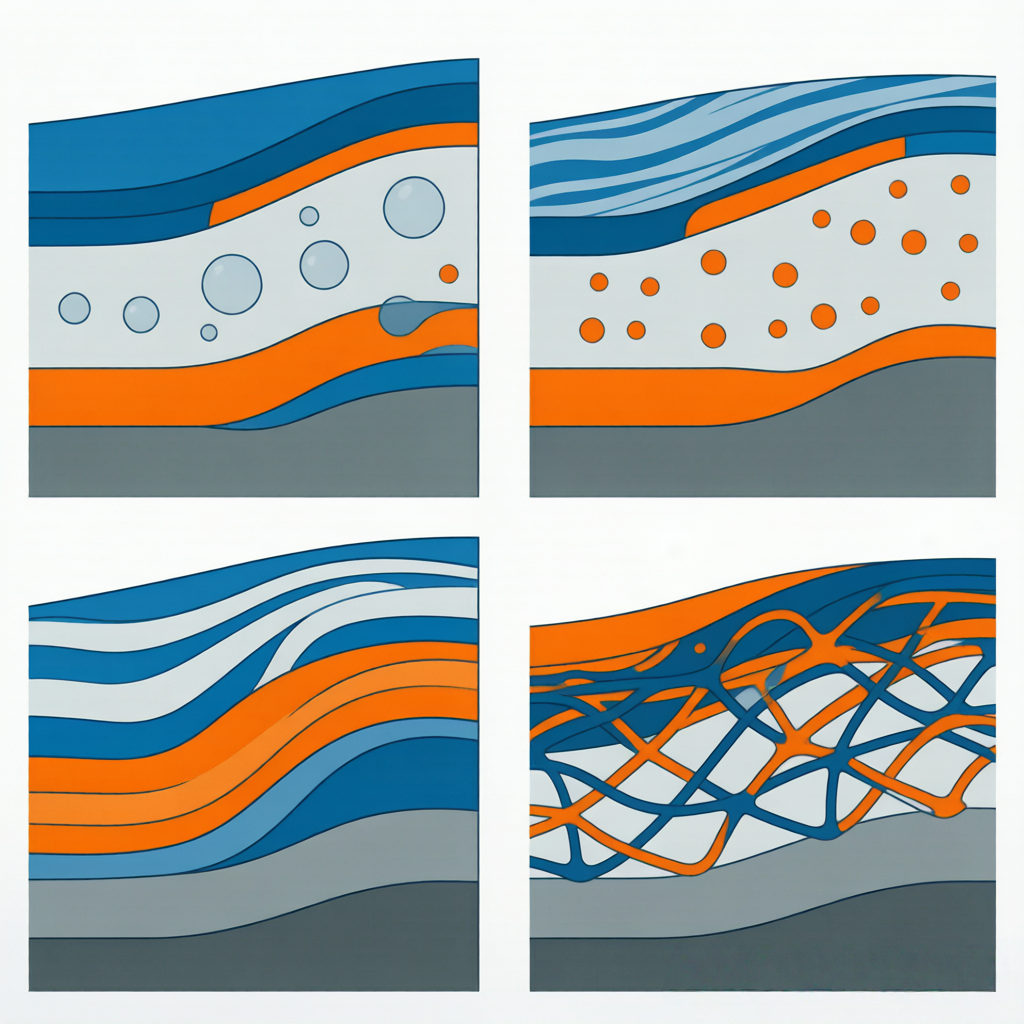
Comparison of four film-forming mechanisms: molecular-level illustration of evaporation, oxidation, thermal curing, and 2K reactive crosslinking
Figure: The difference among the four film-forming methods at the “molecular level”—physical drying is merely solvent leaving, whereas chemical curing forms a permanent crosslinked network.
Film-forming method Driving force Typical coatings Hardness/Durability Application conditions
Evaporation type (physical) Solvent/water evaporation Water-based paint, nitrocellulose lacquer Medium-low Room temperature, fast drying
Oxidation type Reaction with oxygen Alkyd paint Medium Room temperature, slow drying
Thermal curing type High-temperature crosslinking OEM baking paint High 120–140℃ baking booth
2K reactive type Base + hardener Refinish clearcoat / 2K topcoat High Room temperature, precise mixing ratio required

III. Why are 2K paints more wear-resistant?

The key lies in the crosslink density. A physically dried film is like “air-dried glue,” where molecules merely sit next to each other; after 2K reaction, resin molecules are linked hand-in-hand into a three-dimensional network through chemical bonds, making it difficult for external forces to pull the molecules apart. This brings: higher hardness and scratch resistance, better solvent resistance (gasoline and cleaner resistance), and stronger adhesion and weather resistance. That is why clearcoats for automotive refinishing are almost always 2K—they must withstand UV radiation, car-wash friction, and acid rain over the long term.
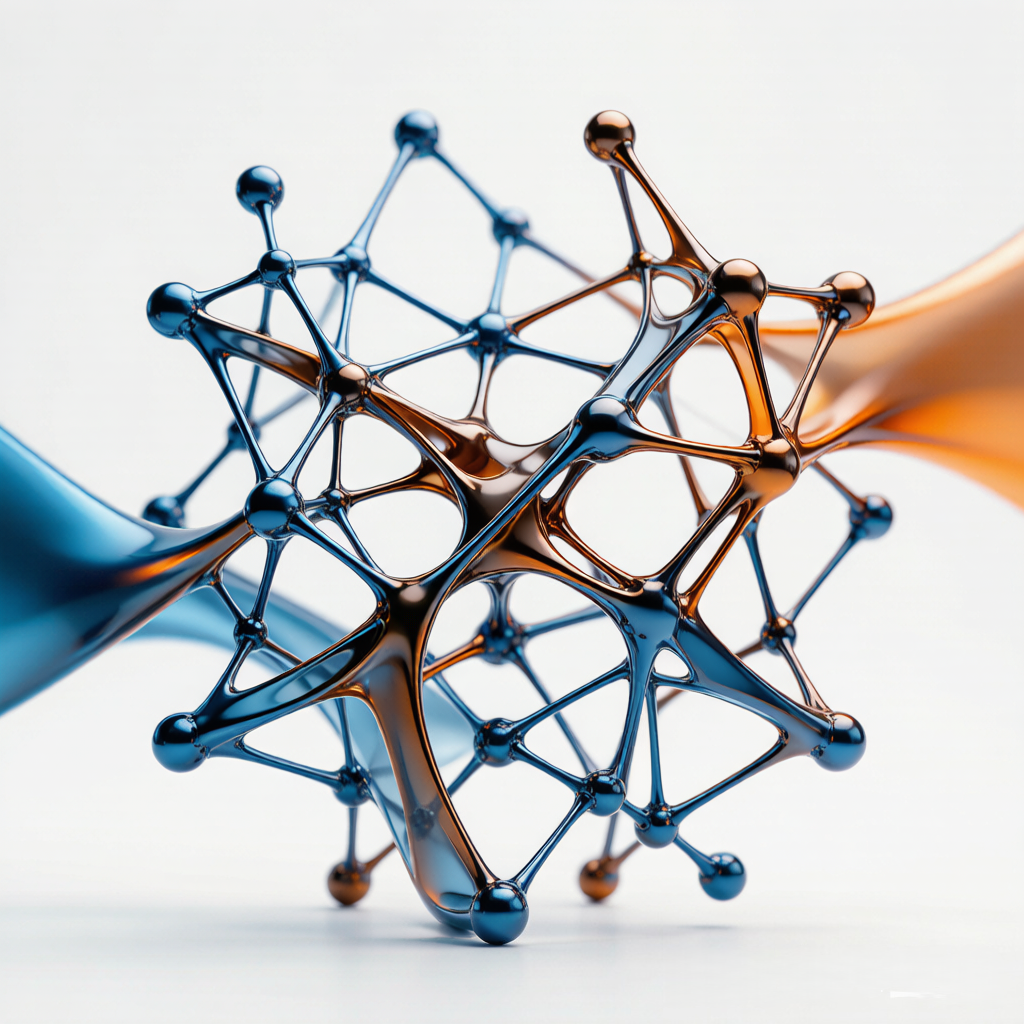
Schematic of crosslinking reaction forming a 3D network after mixing 2K paint base and hardener
Figure: After mixing the hardener with 2K paint, molecules crosslink into a network—this is the fundamental reason for its wear and weather resistance.

IV. Mixing ratio: Curing agent and thinner must not be used arbitrarily.

The ratio of main agent : curing agent : thinner for 2K paint is determined by the manufacturer through crosslinking chemical equivalence and must follow the instruction manual. Common consequences:

  • Insufficient curing agent: inadequate cross-linking → soft film, not fully cured, prone to gloss loss, poor solvent resistance.
  • Excessive curing agent: Over-crosslinking → brittle and easily cracked paint film, high interlayer stress in the decoration layer.
  • Excessive thinner: insufficient film thickness, sagging, uneven gloss; using the wrong type of thinner can also cause lifting.
Construction Reminder:The curing agent readily reacts with moisture in the air and loses effectiveness; after opening the can, use it up as soon as possible and store it sealed; exercise caution when applying in high humidity to avoid blushing of the film (see the article on VOC and construction environment).

V. Common Misconceptions

Misconception 1:“Just let the paint dry”—2K paint does not “air dry”, it “reacts”; incorrect mixing ratio will never achieve the designed performance.
Misconception 2:“Hardened by the sun means well cured”—physical surface dry ≠ chemical through dry; 2K paint requires sufficient activation time and curing period.
Misconception 3:“All paints can be heated to speed up”—some 2K can be low-temperature baked, but temperature/time must follow the product; blind heating will cause bubbling.

Summary

Automotive paint film formation is divided into physical drying and chemical curing: the former relies on solvent evaporation and is reversible and relatively soft; the latter relies on molecular cross-linking and is hard yet tough. 2K two-component reactive types are the most wear-resistant and weather-resistant due to the formation of a three-dimensional cross-linked network, making them the preferred choice for refinish paints; their ratio of base/curing agent/thinner must be precise, otherwise performance is greatly compromised. Choose paint by mechanism, apply by ratio.

Frequently Asked Questions (FAQ)

What is the essential difference between physical drying and chemical curing?
Physical drying relies on the evaporation of solvent/water to fuse existing resin into a film; the process is reversible and the coating is relatively soft. Chemical curing relies on cross-linking reactions between molecules to form a permanent network; it is irreversible, hard yet tough, and has a higher performance ceiling.
Why are automotive refinish clearcoats almost always 2K?
Clearcoats must endure UV exposure, car-wash friction, and acid rain over the long term, requiring high hardness, scratch resistance, solvent resistance, and strong adhesion. The three-dimensional cross-linked network formed by 2K reactions meets these demands precisely, which single-component paints can hardly achieve.
What happens if too little hardener is added to 2K paint?
The cross-linking reaction is incomplete; the film stays soft, dries slowly, easily loses gloss, and shows reduced solvent and weather resistance. In severe cases the surface remains tacky. The manufacturer’s specified ratio must be followed strictly.
Are the film-forming methods of OEM paint and refinish paint the same?
OEM paint is thermally cured on the production line at temperatures above 120–140°C, yielding excellent density. Refinish paint is mostly applied at room temperature and uses 2K two-component reactive curing to balance performance and workability. The mechanisms differ but the goal is the same.
How long does 2K paint take to fully cure?
Surface dry is usually within tens of minutes to a few hours, but chemical cross-linking (through dry) requires a longer activation and curing period, depending on the product and ambient temperature/humidity. It is recommended to follow the manufacturer’s specified time for assembly/polishing.
Kexin New Materials · Automotive Coating Technology Library | This article is technical Q&A content, for reference in selection and application

{
“@context”: “https://schema.org”,
“@type”: “FAQPage”,
“mainEntity”: [
{“@type”:”Question”,”name”:”What is the essential difference between physical drying and chemical curing?”,”acceptedAnswer”:{“@type”:”Answer”,”text”:”Physical drying relies on the evaporation of solvent or water to fuse existing resins into a film; the process is reversible and the coating is relatively soft. Chemical curing relies on cross-linking reactions between molecules to form a permanent network; it is irreversible, hard yet tough, and offers higher performance limits.”}},
{“@type”:”Question”,”name”:”Why are automotive refinish clearcoats almost always 2K?”,”acceptedAnswer”:{“@type”:”Answer”,”text”:”Clearcoats must endure UV exposure, car-wash friction, and acid rain over long periods, requiring high hardness, scratch resistance, solvent resistance, and strong adhesion. The 3D cross-linked network formed by 2K reactions meets these demands, which single-component paints can hardly achieve.”}},
{“@type”:”Question”,”name”:”What happens if too little hardener is added to 2K paint?”,”acceptedAnswer”:{“@type”:”Answer”,”text”:”The cross-linking reaction is incomplete; the film stays soft, dries slowly, easily loses gloss, and shows reduced solvent and weather resistance. In severe cases the surface remains tacky. The manufacturer’s specified ratio must be followed strictly.”}},
{“@type”:”Question”,”name”:”Are the film-forming methods of OEM paint and refinish paint the same?”,”acceptedAnswer”:{“@type”:”Answer”,”text”:”OEM paint is thermally cured on the production line at high temperatures above 120–140°C, giving extremely high density. Refinish paint is mostly applied at room temperature and uses 2K two-component reactive curing to balance performance and workability. The mechanisms differ but the goal is the same.”}},
{“@type”:”Question”,”name”:”How long does 2K paint take to fully cure?”,”acceptedAnswer”:{“@type”:”Answer”,”text”:”Surface dry is usually within tens of minutes to a few hours, but chemical cross-linking (through cure) requires a longer activation and curing period, depending on the product and ambient temperature/humidity. It is recommended to follow the manufacturer’s specified time for assembly or polishing.”}}
]
}