Automotive油漆Coating结构解析:电泳层、Primer、中涂、色漆、Clearcoat各管什么

2026-07-12 · Category: Technical Knowledge, Paint & Coatings

🌐 This article was automatically translated from Chinese. Please refer to the original Chinese version if needed. · 查看中文原文

.kx-article{max-width:860px;margin:0 auto;background:#ffffff;color:#232a33 !important;
border-radius:16px;padding:32px 30px 40px;box-shadow:0 8px 40px rgba(0,0,0,.25);
font-family:-apple-system,”Segoe UI”,”PingFang SC”,”Microsoft YaHei”,sans-serif;line-height:1.9;font-size:16px}
.kx-article *{box-sizing:border-box}
.kx-article h1,.kx-article h2,.kx-article h3,.kx-article p,.kx-article li,.kx-article td,.kx-article th,.kx-article strong,
.kx-article .summary,.kx-article .summary p,.kx-article .summary strong,
.kx-article .note,.kx-article .note p,.kx-article .kxbox-brand,
.kx-article .related,.kx-article .related li,.kx-article .kx-foot,
.kx-article .kxqa-q,.kx-article .kxqa-a{color:#232a33 !important}
.kx-article h1{font-size:28px;line-height:1.35;font-weight:800;margin:0 0 18px;color:#1a1d21 !important}
.kx-article .lead,.kx-article p{margin:14px 0}
.kx-article .cover{width:100%;border-radius:14px;box-shadow:0 6px 24px rgba(0,0,0,.15);margin:6px 0 26px;display:block}
.kx-article h2{font-size:22px;font-weight:700;margin:40px 0 16px;padding-bottom:10px;border-bottom:2px solid #eceff3;position:relative;color:#1a1d21 !important}
.kx-article h2::before{content:””;position:absolute;left:0;bottom:-2px;width:64px;height:2px;background:#e8720c}
.kx-article h3{font-size:18px;font-weight:700;margin:26px 0 12px;color:#2a2f36 !important}
.kx-article strong{color:#111418 !important;font-weight:700}
.kx-article img.inline{width:100%;border-radius:12px;box-shadow:0 4px 16px rgba(0,0,0,.12);margin:22px 0 8px}
.kx-article figcaption{color:#7a828d !important;font-size:13px;text-align:center;margin:6px 0 24px}
.kx-article table{width:100%;border-collapse:collapse;margin:20px 0;font-size:14.5px;background:#fff;border-radius:10px;overflow:hidden;box-shadow:0 2px 12px rgba(0,0,0,.06);border:1px solid #eceff3}
.kx-article th,.kx-article td{padding:12px 14px;text-align:left;border-bottom:1px solid #eceff3;vertical-align:top}
.kx-article th{background:#2a2f36;color:#ffffff !important;font-weight:600;font-size:14px}
.kx-article tr:last-child td{border-bottom:none}
.kx-article tbody tr:nth-child(even){background:#fafbfc}
.kx-article .note{background:#eef6ff !important;border-left:4px solid #0a67d0;padding:14px 18px;border-radius:0 10px 10px 0;margin:22px 0}
.kx-article .note strong{color:#0a4a97 !important}
.kx-article .kxbox-brand{background:#fff3e8 !important;border-left:4px solid #e8720c;padding:16px 18px;border-radius:0 10px 10px 0;margin:22px 0}
.kx-article .kxbox-brand strong{color:#5a4632 !important}
.kx-article ul{margin:12px 0;padding-left:22px}
.kx-article li{margin:8px 0}
.kx-article .kxqa-item{background:#fbfcfd;border:1px solid #eceff3;border-radius:12px;padding:16px 20px;margin:14px 0}
.kx-article .kxqa-q{font-weight:700;color:#e8720c !important;font-size:16px;margin-bottom:8px}
.kx-article .kxqa-a{color:#3a4048 !important;display:block;margin:0}
.kx-article .related{background:#fff !important;border:1px dashed #e8720c;border-radius:12px;padding:16px 22px;margin:26px 0}
.kx-article .related h3{margin:0 0 6px;color:#e8720c !important}
.kx-article .summary{background:linear-gradient(135deg,#fff3e8,#ffe9d6) !important;border-radius:12px;padding:20px 22px;margin:26px 0}
.kx-article .summary h3{margin:0 0 10px;color:#1a1d21 !important}
.kx-article .kx-foot{margin-top:34px;padding-top:18px;border-top:1px solid #eceff3;text-align:center;color:#8a929d !important;font-size:13px}
.related{margin:30px 0 6px;}
.related h3{font-size:18px;color:#1C1917;margin:0 0 12px;padding-left:10px;border-left:4px solid #F97316;}
.related ul{list-style:none;margin:0;padding:0;}
.related li{margin:0 0 9px;padding-left:16px;position:relative;}
.related li:before{content:”203A”;position:absolute;left:0;color:#F97316;font-weight:700;}
.related a{color:#F97316 !important;text-decoration:underline !important;font-weight:600;}
.related a:hover{color:#EA580C !important;}

.kx-article{max-width:860px;margin:0 auto;background:#ffffff;color:#232a33 !important;
border-radius:16px;padding:32px 30px 40px;box-shadow:0 8px 40px rgba(0,0,0,.25);
font-family:-apple-system,”Segoe UI”,”PingFang SC”,”Microsoft YaHei”,sans-serif;line-height:1.9;font-size:16px}
.kx-article *{box-sizing:border-box}
.kx-article h1,.kx-article h2,.kx-article h3,.kx-article p,.kx-article li,.kx-article td,.kx-article th,.kx-article strong,
.kx-article .summary,.kx-article .summary p,.kx-article .summary strong,
.kx-article .note,.kx-article .note p,.kx-article .kxbox-brand,
.kx-article .related,.kx-article .related li,.kx-article .kx-foot,
.kx-article .kxqa-q,.kx-article .kxqa-a{color:#232a33 !important}
.kx-article h1{font-size:28px;line-height:1.35;font-weight:800;margin:0 0 18px;color:#1a1d21 !important}
.kx-article .lead,.kx-article p{margin:14px 0}
.kx-article .cover{width:100%;border-radius:14px;box-shadow:0 6px 24px rgba(0,0,0,.15);margin:6px 0 26px;display:block}
.kx-article h2{font-size:22px;font-weight:700;margin:40px 0 16px;padding-bottom:10px;border-bottom:2px solid #eceff3;position:relative;color:#1a1d21 !important}
.kx-article h2::before{content:””;position:absolute;left:0;bottom:-2px;width:64px;height:2px;background:#e8720c}
.kx-article h3{font-size:18px;font-weight:700;margin:26px 0 12px;color:#2a2f36 !important}
.kx-article strong{color:#111418 !important;font-weight:700}
.kx-article img.inline{width:100%;border-radius:12px;box-shadow:0 4px 16px rgba(0,0,0,.12);margin:22px 0 8px}
.kx-article figcaption{color:#7a828d !important;font-size:13px;text-align:center;margin:6px 0 24px}
.kx-article table{width:100%;border-collapse:collapse;margin:20px 0;font-size:14.5px;background:#fff;border-radius:10px;overflow:hidden;box-shadow:0 2px 12px rgba(0,0,0,.06);border:1px solid #eceff3}
.kx-article th,.kx-article td{padding:12px 14px;text-align:left;border-bottom:1px solid #eceff3;vertical-align:top}
.kx-article th{background:#2a2f36;color:#ffffff !important;font-weight:600;font-size:14px}
.kx-article tr:last-child td{border-bottom:none}
.kx-article tbody tr:nth-child(even){background:#fafbfc}
.kx-article .note{background:#eef6ff !important;border-left:4px solid #0a67d0;padding:14px 18px;border-radius:0 10px 10px 0;margin:22px 0}
.kx-article .note strong{color:#0a4a97 !important}
.kx-article .kxbox-brand{background:#fff3e8 !important;border-left:4px solid #e8720c;padding:16px 18px;border-radius:0 10px 10px 0;margin:22px 0}
.kx-article .kxbox-brand strong{color:#5a4632 !important}
.kx-article ul{margin:12px 0;padding-left:22px}
.kx-article li{margin:8px 0}
.kx-article .kxqa-item{background:#fbfcfd;border:1px solid #eceff3;border-radius:12px;padding:16px 20px;margin:14px 0}
.kx-article .kxqa-q{font-weight:700;color:#e8720c !important;font-size:16px;margin-bottom:8px}
.kx-article .kxqa-a{color:#3a4048 !important;display:block;margin:0}
.kx-article .related{background:#fff !important;border:1px dashed #e8720c;border-radius:12px;padding:16px 22px;margin:26px 0}
.kx-article .related h3{margin:0 0 6px;color:#e8720c !important}
.kx-article .summary{background:linear-gradient(135deg,#fff3e8,#ffe9d6) !important;border-radius:12px;padding:20px 22px;margin:26px 0}
.kx-article .summary h3{margin:0 0 10px;color:#1a1d21 !important}
.kx-article .kx-foot{margin-top:34px;padding-top:18px;border-top:1px solid #eceff3;text-align:center;color:#8a929d !important;font-size:13px}
.related{margin:30px 0 6px;}
.related h3{font-size:18px;color:#1C1917;margin:0 0 12px;padding-left:10px;border-left:4px solid #F97316;}
.related ul{list-style:none;margin:0;padding:0;}
.related li{margin:0 0 9px;padding-left:16px;position:relative;}
.related li:before{content:”203A”;position:absolute;left:0;color:#F97316;font-weight:700;}
.related a{color:#F97316 !important;text-decoration:underline !important;font-weight:600;}
.related a:hover{color:#EA580C !important;}

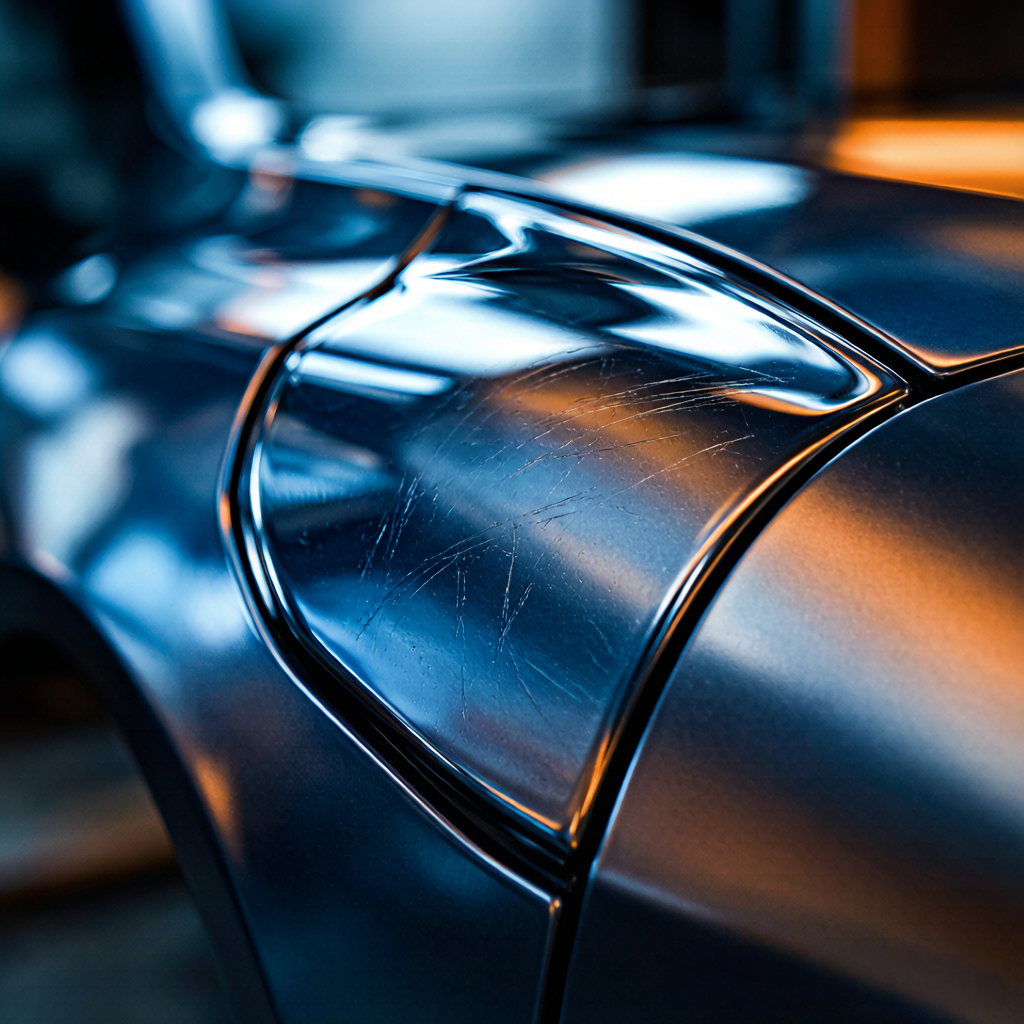
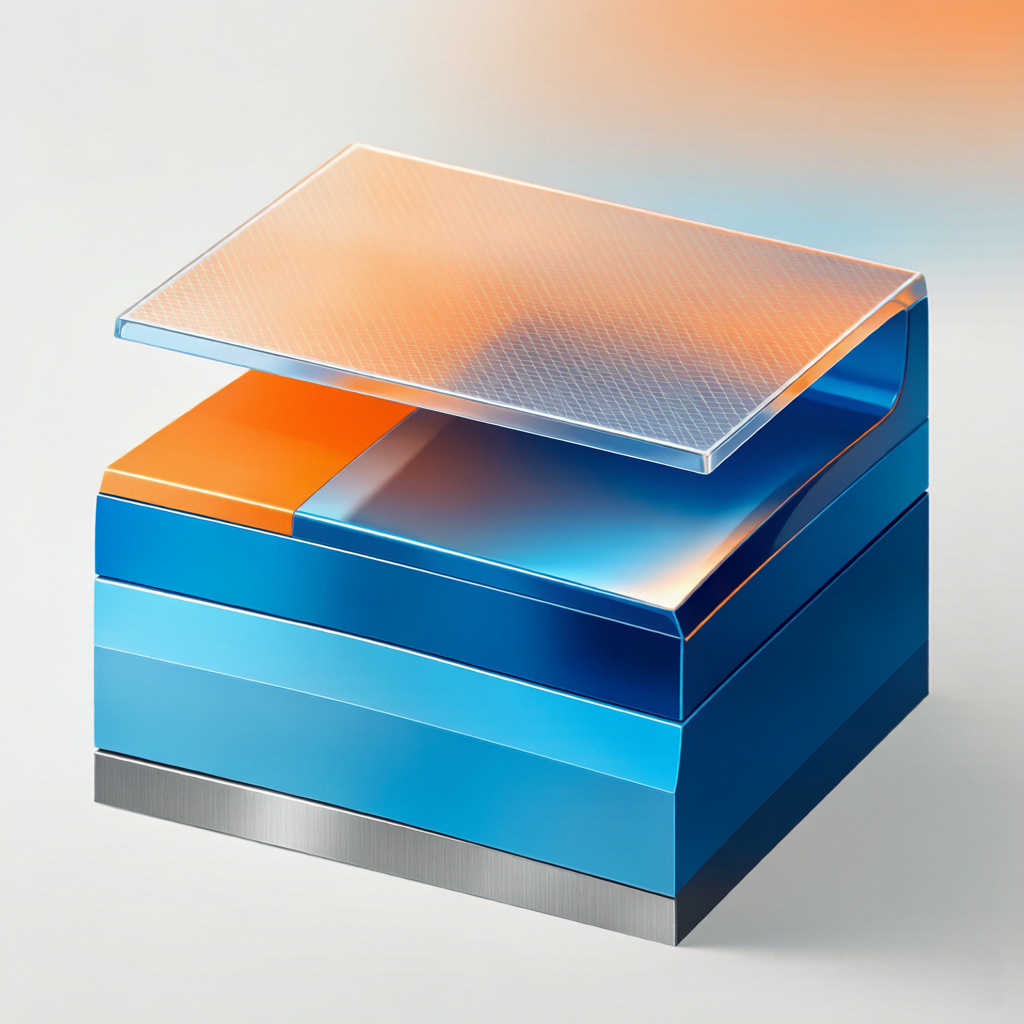
Cross-section of automotive paint layer structure: schematic of multi-layer coating from steel plate to clear coat

Many people think car paint is just “that shiny coat on the outside.” In fact, a car’s paint surface is a multi-layer overlay structure: from the steel plate upward, there are successively the electrophoretic primer layer, middle coat, basecoat, and clearcoat. Each layer has its own role—some handle rust prevention, some handle smoothness, some handle color, and some handle gloss and weather resistance. Only by understanding the structure can you understand “why the paint surface rusts” and “why the clearcoat loses its gloss.”

In one sentence: The electrophoretic layer prevents rust, the primer surfacer levels and adheres, the basecoat provides color, and the clearcoat protects and adds gloss. Only with these four layers working together can you get a paint finish that is both good-looking and durable.

1. The paint surface is not a single layer, but a “multi-layer cake”

The complete vehicle painting (see the process article) applies coatings with different functions in sequence to form a total paint film of approximately 100–150 μm (micrometers). A problem in any single layer will propagate upward: poor electrocoating → blistering and rust recurrence after a few years; clearcoat aging → overall loss of gloss. Therefore, structure is quality.
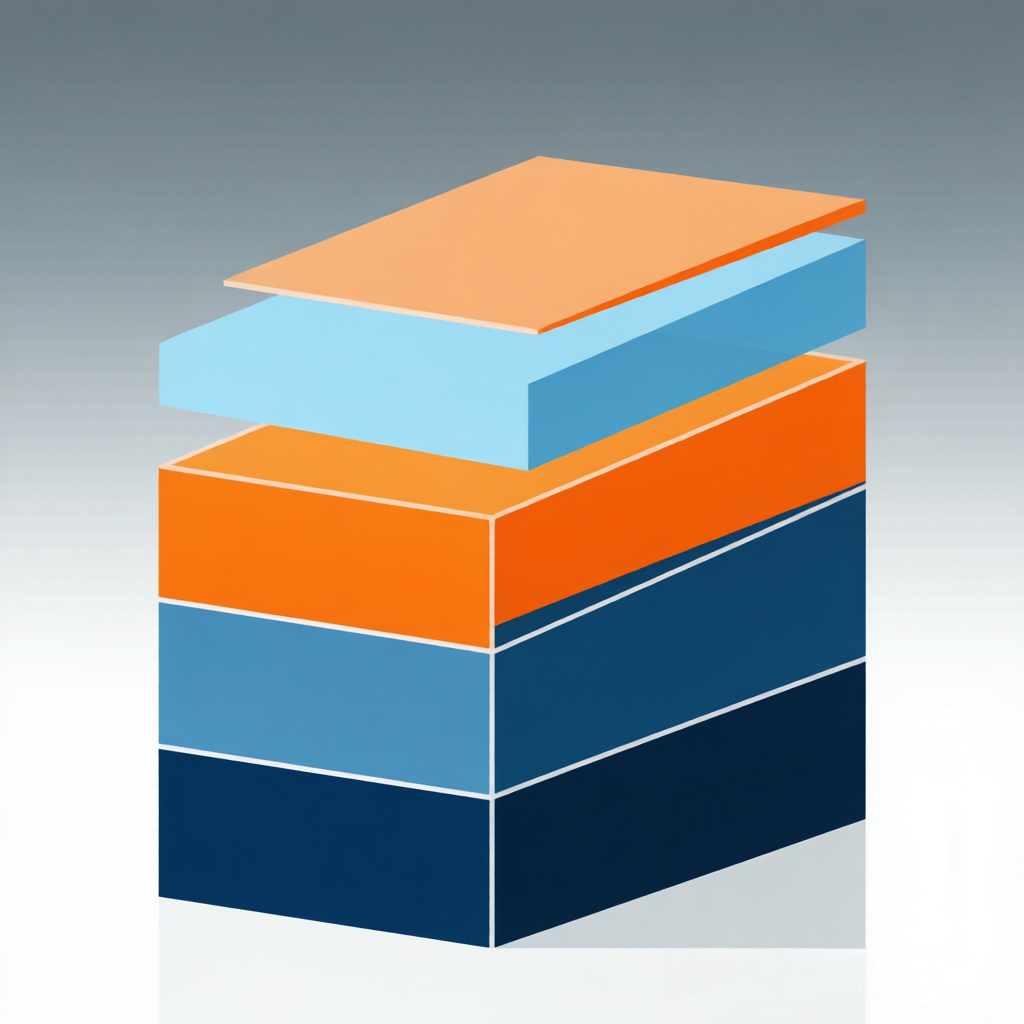
Cross-section layers of automotive coating: thickness and position of steel plate / electrocoat / primer surfacer / basecoat / clearcoat
Figure: Schematic of typical passenger car paint layers (thickness not to strict scale).

II. Responsibilities and Recommended Thickness of Each Layer

2.1 Electrocoat Layer (ED Primer)

The anti-corrosion primer deposited on the entire vehicle steel panels through an electrophoretic process, covering inner cavities and welds, serves as the first line of defense against rust. The thickness is typically about 15–30 μm.

2.2 Intermediate coat

Located between the electrophoretic coating and the color paint, responsible for filling in minor defects, improving interlayer adhesion, and isolating. It determines the “smooth foundation” of the paint surface. Thickness approximately 30–50 μm.

2.3 Basecoat (Topcoat)

Endow the vehicle with color and texture: solid paint features a uniform, pure color; metallic paint contains aluminum powder for a shimmering effect; pearl paint contains mica and shows different colors from different angles. Thickness is approximately 10–25 μm (varies by type).

2.4 Clearcoat (Topcoat)

Outermost transparent layer, providing gloss, weather resistance and scratch resistance protection, mostly 2K in modern times. It is also the layer where daily maintenance (waxing, coating) primarily takes effect. Thickness approx. 30–50 μm.

Coating Core Responsibility Typical Thickness (μm)
Electrophoretic Coat Overall Rust Prevention 15–30
Primer Coat Leveling + Adhesion 30–50
Basecoat Color / Texture 10–25
Clearcoat Protection + Gloss 30–50
Illustration of clearcoat providing mirror gloss and scratch resistance protection
Figure: The clearcoat is the guardian of the paint’s “appearance” and durability, and is also the main layer targeted by maintenance.

III. Why Thickness Matters?

  • Shortcomings: poor coverage, prone to showing base coat, compromised anti-corrosion/weather resistance.
  • Too thick: sagging, cracking, high interlayer stress, waste of paint.
  • Uniformity: Ensured through standardized construction and film thickness inspection (DFT thickness gauge), it is the key to stable quality.

4. Which layer should the curing be targeted at?

Tip: Waxing, sealing, coating, and paint protection film (PPF) mainly act on the clear coat or above it; they can delay clear coat aging and resist scratches, but cannot repair already rusted electrophoretic layer. If bare substrate rust spots are already visible, rust-proof pretreatment must be done first, not surface beautification.

Summary

The car paint surface is a layered structure of electrodeposition layer (rust prevention) + intermediate coat (leveling and adhesion) + basecoat (color) + clearcoat (protection and gloss), with a total thickness of about 100–150 μm. The function of each layer is irreplaceable, and the film thickness needs to be moderate and uniform. Only by understanding the structure can you correctly diagnose paint defects and choose the right maintenance method.

Frequently Asked Questions (FAQ)

How many layers does car paint have in total?
A typical passenger car has a four-layer structure: electrophoretic layer (rust prevention), primer surfacer layer (leveling and adhesion), basecoat layer (color), and clearcoat layer (protecting gloss), with a total film thickness of about 100–150 microns. Repair shops may simplify it, but the logic is the same.
Which layer is the most important?
All are important and irreplaceable. The electrophoretic layer determines rust-proof service life and is the foundation; the clearcoat layer determines appearance durability. A defect in any layer will propagate upward, hence “structure is quality.”
Which layer is to blame for paint bubbling and rust bleed-through?
It is mostly caused by poor electrophoretic layer or pretreatment, where moisture intrusion leads to substrate corrosion that lifts the upper paint film. Surface beautification (waxing or coating) cannot fix it; the rust-proof pretreatment must be redone from scratch.
Does waxing and ceramic coating act on the clearcoat layer?
Yes. Waxing, sealing glaze, ceramic coating, and paint protection film mainly act on or above the clearcoat layer; they can slow aging and resist scratches, but cannot repair already damaged lower layers, and in particular cannot replace rust-proof treatment.
Is thicker film always better?
No. Too thick tends to sag, crack, create high interlayer stress, and waste paint; too thin gives insufficient coverage and protection. It must be controlled within the recommended range for each layer with even application, and checked with a thickness gauge.
Kexin New Materials · Automotive Coating Technology Library | This article is technical Q&A content, for reference in selection and maintenance

{
“@context”: “https://schema.org”,
“@type”: “FAQPage”,
“mainEntity”: [
{“@type”:”Question”,”name”:”How many layers does car paint have in total?”,”acceptedAnswer”:{“@type”:”Answer”,”text”:”A typical passenger car has a four-layer structure: electrophoretic layer (rust prevention), primer surfacer layer (leveling and adhesion), basecoat layer (color), and clearcoat layer (gloss protection), with a total film thickness of about 100–150 microns. Repair shops may simplify it, but the logic is the same.”}},
{“@type”:”Question”,”name”:”Which layer is the most important?”,”acceptedAnswer”:{“@type”:”Answer”,”text”:”All are important and irreplaceable. The electrophoretic layer determines rust-proof service life and is the foundation; the clearcoat layer determines appearance durability. A defect in any layer will propagate upward, so structure is quality.”}},
{“@type”:”Question”,”name”:”Which layer is to blame for paint bubbling and rust bleed-through?”,”acceptedAnswer”:{“@type”:”Answer”,”text”:”It is mostly caused by poor electrophoretic layer or pretreatment, where moisture intrusion leads to substrate corrosion that lifts the upper paint film. Surface beautification cannot fix it; the rust-proof pretreatment must be redone from scratch.”}},
{“@type”:”Question”,”name”:”Do waxing and ceramic coating act on the clearcoat layer?”,”acceptedAnswer”:{“@type”:”Answer”,”text”:”Yes. Waxing, sealing, ceramic coating, and paint protection film mainly act on or above the clearcoat layer; they can slow aging and resist scratches, but cannot repair damaged lower layers, and in particular cannot replace rust-proof treatment.”}},
{“@type”:”Question”,”name”:”Is thicker film always better?”,”acceptedAnswer”:{“@type”:”Answer”,”text”:”No. Too thick tends to sag, crack, create high interlayer stress, and waste paint; too thin gives insufficient coverage and protection. Each layer should be controlled within its recommended range with even application, checked by a thickness gauge.”}}
]
}