The "goodness" of automotive coating cannot be judged qualitatively by "looks shiny, feels smooth"; it must be quantified by standard methods: whether adhesion is sufficient, how many years of weather resistance, what grade of stone-chip resistance, how many hours of salt spray without blistering. Behind these numbers is a set of testing standard system corresponding to GB/T and ISO—it is the common "technical language" among coating suppliers, OEMs and refinish shops. This article sorts out the core testing standards, methods and acceptance key points of automotive coating by "adhesion—weathering—stone-chip—salt spray—hardness gloss—VOC", helping engineers write the acceptance sheet from "feeling" into "indicators".
As a technical supplier of automotive and industrial protective coatings, Kexin New Materials (kexinMaterials) attaches testing methods and limit suggestions upon delivery. This article systematically presents this set of "acceptance map" for cross-batch reference and on-site implementation.

I. Why "test by standard"
"The paint is good" without a standard is empty talk: same panel, A says bright, B says dark; same cross-cut, A says grade 0, B says grade 2. Standards solve three things: ① unified method (how to test); ② unified criterion (how to evaluate after testing); ③ comparability (comparable between suppliers, between batches). Standards involved in automotive painting are divided into domestic (GB/T, QC/T, GB 24409, etc.) and international (ISO, ASTM, SAE, VDA enterprise standards).
According to basic standards such as GB/T 13492 (topcoat for automotive use), the whole-vehicle coating is graded by purpose and quality level, and different grades correspond to different testing strictness. This article focuses on "how to test, which number to look at". It needs to be reminded: "pass" of a standard is not equal to "excellent"; many enterprise standards (such as TPO and technical conditions of each OEM) are stricter than national standards, and the stricter one agreed by both supply and demand parties shall prevail upon acceptance. Without agreement, at least the mandatory national standard (such as VOC limit of GB 24409-2020) and the basic grade of product standard shall be met.
II. Adhesion: cross-cut and pull-off
Adhesion is the basis for the coating not to delaminate. Two major methods:
- Cross-cut method: GB/T 9286 (equivalent to ISO 2409). Cut a 1 mm or 2 mm lattice on the paint film, apply tape and pull, rate by grade 0–5 (grade 0 best, cut edges intact without loss; grade 5 worst). Automotive OEM/refinish quality matching requires grade 0/1. Note that substrate hardness affects the feasibility of cross-cut; for soft substrates, use smaller cross-cut spacing or pull-off.
- Pull-off method: GB/T 5210 (equivalent to ISO 4624). Glue a doll to the paint film and pull to measure adhesion strength (MPa), suitable for thick coatings and interlayer matching. Higher value means stronger adhesion, but affected by glue strength and interface, standardized operation is required.
Adhesion must be tested under the whole matching of "primer—intermediate coat—pigmented paint—clear coat"; it is meaningless to test clear coat hardness in isolation—interlayer delamination still fails. For matching logic, see Automotive refinish 2K clear coat formulation and application key points. The cut depth before cross-cut must penetrate to the substrate, otherwise it evaluates "within layer" rather than "interlayer", which overestimates adhesion. Glue selection in pull-off is also critical: the glue strength itself must be higher than the tested coating, otherwise it measures glue failure rather than coating adhesion.
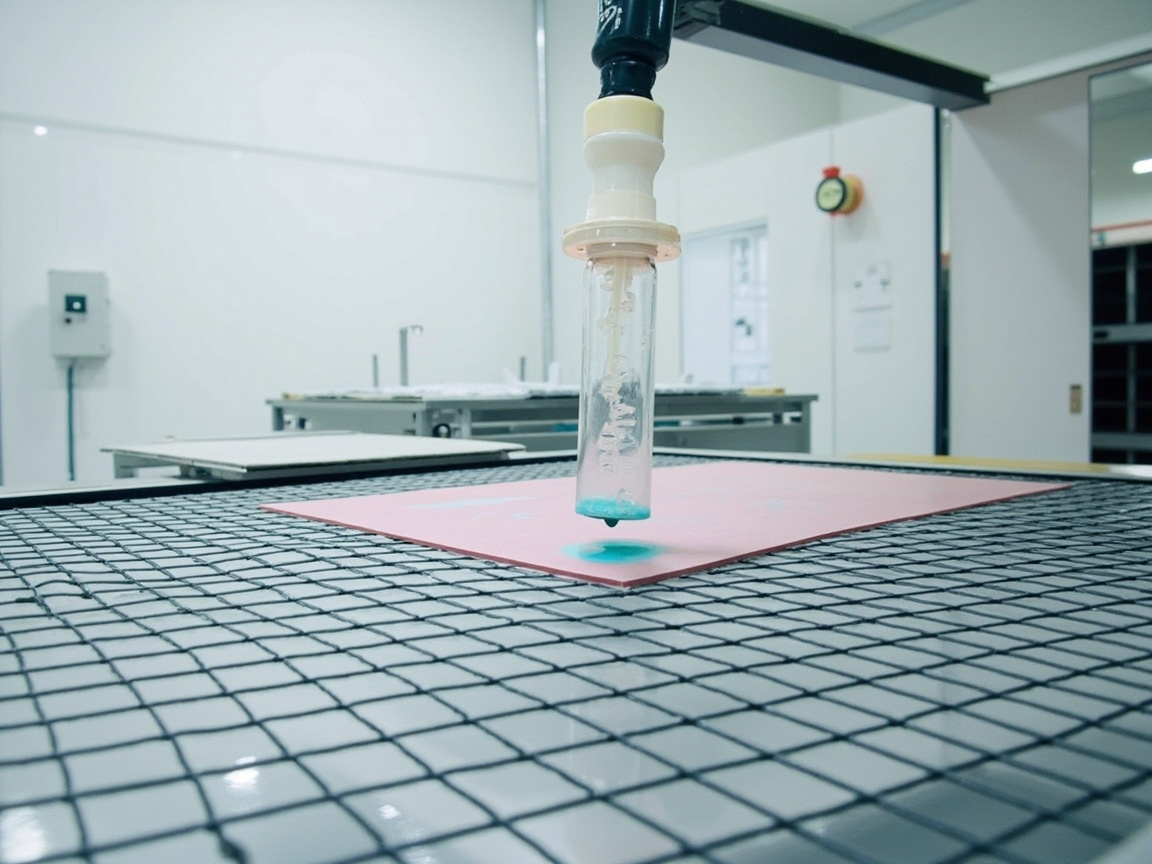
III. Weather resistance: xenon lamp, fluorescent UV and outdoor exposure
Automotive coating must be used outdoors for 5–10 years without chalking or fading; weather resistance relies on accelerated aging simulation:
- Xenon arc weathering (Xenon): GB/T 1865 (equivalent to ISO 11341). Use xenon arc lamp to simulate full-spectrum daylight (including UV, visible, infrared), control temperature and humidity, periodic irradiation + spray, evaluate gloss retention (gloss retention rate), color change (ΔE), chalking. Automotive topcoat often does 1000–2000 h, OEM even longer. Xenon is closest to real daylight spectrum and is the mainstream.
- Fluorescent UV (QUV): GB/T 23987 (refer to ISO 11507). Use UVA-340/UVB lamps to intensify ultraviolet, periodic UV + condensation, focusing on "UV-induced aging". Fast but weak in visible light/heat simulation, often complementary to xenon.
- Outdoor exposure: GB/T 9276 / ISO 2810, real exposure at natural climate stations (such as Hainan, Turpan), most real but slow, mostly used for final verification.
Acceptance looks at "after specified time, gloss retention ≥ X%, ΔE ≤ Y, no chalking or cracking". Weathering results are greatly affected by black panel temperature, spray cycle, and irradiance settings. The standard writes "method"; specific parameters must be locked in the technical agreement, otherwise results from same standard but different equipment are not comparable. It is recommended to write "irradiance W/m²@340nm, black panel temperature, spray cycle" into acceptance, rather than just "xenon 1000h".
IV. Stone-chip resistance
Flying stones hit the paint film during driving; degradation starts at stone-chip points. Stone-chip test:
- ISO 20567-1: Multi-impact method, use steel shot/gravel to impact the coating at set pressure, angle, distance, grade by damage degree (grade 0 no damage, higher grade more severe damage). It is a key indicator for automotive coating (especially clear coat, underbody shield, armor parts).
- SAE J400: Similar gravel impact rating, common in North America.
- VDA 621-414: German OEM method.
Acceptance grades by enterprise specification (such as "stone-chip ≤ grade 2"). Intermediate coat stone-chip resistance design is critical: the flexibility and thick-film buffering of intermediate coat can significantly reduce stone-chip transmission to substrate. Battery underbody shield must also resist stone-chip, which is especially sensitive for new energy vehicles. The "impact pressure, particle size, impact times" of stone-chip test must be locked, otherwise grading is not comparable; same coating can differ by several grades under different impact energies.

V. Salt spray and cyclic corrosion
Anti-corrosion is the bottom line of the bottom line for automotive coating:
- Neutral salt spray NSS: GB/T 10125 (equivalent to ISO 9227). 5% NaCl fog, 35℃ continuous spray, evaluate blistering, scribe creep corrosion, rust time. CED single film often 500–1000 h without blistering; whole-vehicle matching is higher.
- Cyclic corrosion (CCT): Closer to reality (salt spray + dry + humid heat cycle), such as GM 9540P, VDA 233-102, ISO 14993 (cyclic exposure with salt). Stricter and more relevant than continuous NSS.
- Filiform corrosion: Common in effect color/aluminum, evaluate aluminum filiform corrosion by ISO 4623 or enterprise standard.
Salt spray data must be combined with "scribe creep width" rather than only "blistering time", otherwise judging only by blistering misleads. Salt spray performance differs greatly by substrate (cold-rolled steel, galvanized sheet, aluminum); substrate must be fixed when comparing. For cathodic electrophoretic anti-corrosion logic, see Automotive OEM paint system and electrophoretic primer process. The reason CCT is more relevant is that real road is "salt—dry—wet" alternating; continuous NSS lacks dry-wet alternating fatigue damage to coating, so high-end matching often uses CCT for grading.
VI. Hardness, gloss and appearance
- Pencil hardness: GB/T 6739 (equivalent to ISO 15184). Use standard pencil to scratch the paint film to determine hardness (e.g. > 2H). Note it depends on substrate and test method; nano coating "9H" likewise needs stated conditions.
- Gloss: GB/T 9754 (60°, equivalent to ISO 2813). Clear coat high gloss ≥ 85 GU is excellent; 20° for high gloss, 85° for low gloss.
- Appearance/defect rating: ISO 4628 series (blistering, cracking, flaking rated by "size + number" two-dimensional); GB/T 9761 visual color comparison (equivalent to ISO 3668).
- Orange peel: BYK orange peel meter measures long wave/short wave (industry common, not national standard). Defect countermeasures see Common automotive coating defects.
In pencil hardness test, load, push speed, pencil angle all affect results; must be operated by trained personnel and pencils calibrated regularly. Gloss measurement needs attention to calibration plate and measurement angle; same paint surface reads very differently at different angles. Appearance rating should be done under unified light source and observation angle to avoid subjective drift.
VII. Chemical and physical resistance
- Chemical resistance (acid/alkali/gasoline/coolant resistance): ISO 2812 series (drop, immersion, liquid above), evaluate discoloration, gloss loss, blistering. Clear coat chemical resistance depends on formulation (see 2K polyurethane system).
- Impact: GB/T 1732, falling weight impact to measure crack/resistance to falling off.
- Flexibility: GB/T 1731 (shaft-bar bend), evaluates the ability to deform with the substrate.
Chemical resistance and flexibility are often overlooked, but they determine the real service life of the paint film under bird droppings, tree sap, car wash liquids, and gravel impact. High-end refinish clear coat should report both hardness and impact to avoid being "hard but brittle". The "medium, temperature, time" of chemical resistance tests must be fixed, e.g., "resistant to gasoline for 24h, no blistering, gloss loss ≤ grade 1", otherwise "chemical resistance qualified" is meaningless.

VIII. VOC and Hazardous Substances
Automotive coating is regulated by GB 24409-2020 "Limit of Harmful Substances in Vehicle Coatings", with VOC upper limits set separately by vehicle type (OEM/refinish) and coating type (primer/intermediate/pigmented/clear). VOC determination: GB/T 23985 (high VOC coatings, difference method), GB/T 23986 (low VOC, gas chromatography). Hazardous substances such as isocyanate monomers are monitored by corresponding methods.
Writing VOC as an acceptance item is a mandatory condition for compliance and procurement, not an optional one. Low VOC does not mean low performance, but the test method must be correct: if the difference method is wrongly used for high-solid water-based systems, VOC will be overestimated, and GB/T 23986 chromatography should be used. The test report should note "basis method + sampling batch number" to facilitate traceability and retest dispute handling.
IX. Sampling and Panel Preparation: The Premise of Credible Data
The credibility of test results is seven-tenths in panel preparation. Key points:
- Substrate consistency: cold-rolled steel/galvanized sheet/aluminum/plastic, results are not comparable;
- Pre-treatment consistency: sanding grit, degreasing, phosphating/ceramic conversion must be unified;
- Film thickness consistency: apply to specified DFT according to TDS, film thickness deviation will directly affect weather resistance and adhesion;
- Curing consistency: baking temperature/time or room-temperature curing days locked;
- Parallel samples: ≥3 panels per condition take the median, avoid single-point chance.
Non-standard panel preparation, no matter how standard the test method, yields misleading conclusions. It is recommended to establish a "Panel Preparation SOP", writing substrate grade, pre-treatment, film thickness, and curing as reproducible steps.
X. Standard Quick Reference Table
The following table summarizes core test methods and standards for automotive paint (domestic/international):
| Test item | Domestic standard | International standard | Key criterion |
|---|---|---|---|
| Adhesion (cross-cut) | GB/T 9286 | ISO 2409 | Grade 0/1 excellent |
| Adhesion (pull-off) | GB/T 5210 | ISO 4624 | MPa |
| Weathering (xenon) | GB/T 1865 | ISO 11341 | Gloss retention/ΔE |
| Weathering (fluorescent UV) | GB/T 23987 | ISO 11507 | Aging grade |
| Stone chip | Enterprise/std in progress | ISO 20567-1, SAE J400 | Damage grade |
| Salt spray | GB/T 10125 | ISO 9227 | Blistering/creep corrosion |
| Cyclic corrosion | Enterprise standard | GM 9540P, VDA 233-102 | Cycle count |
| Pencil hardness | GB/T 6739 | ISO 15184 | >2H etc. |
| Gloss | GB/T 9754 | ISO 2813 | ≥85 GU |
| Chemical resistance | — | ISO 2812 | Discoloration/blistering |
| VOC | GB 24409, GB/T 23985/23986 | — | Upper limit g/L |
XI. How to Write the Acceptance Sheet
It is recommended to include the following in the automotive paint acceptance sheet (select by application):
- Adhesion: GB/T 9286 cross-cut grade 0/1 (with system);
- Weathering: GB/T 1865 xenon 1000–2000 h, gloss retention ≥ 80%, ΔE ≤ 3;
- Stone chip: ISO 20567-1 ≤ grade 2 (outer panel/underbody shield);
- Salt spray: GB/T 10125 NSS 500–1000 h no blistering (or corresponding cycles for cyclic corrosion);
- Hardness: GB/T 6739 ≥ 2H;
- Gloss: GB/T 9754 60° ≥ 85 GU;
- Appearance: ISO 4628 / GB/T 9761 no orange peel, sag, crater;
- VOC: compliant with GB 24409-2020.
Kexin New Materials (kexinMaterials) advises customers to "write acceptance by standards, receive goods by data", pulling supply-demand disputes from subjective back to objective, and forcing formulation continuous improvement rather than relying on rhetoric.
XII. Accelerated Aging and Outdoor Correlation
The value of laboratory accelerated aging (xenon, fluorescent UV) is to use short time to simulate long time, but its results must establish correlation with outdoor exposure, otherwise it is just a "number game". The key to correlation has three points: first, spectral matching, xenon lamp contains visible and infrared light, so its correlation is better than pure UV fluorescent lamp; second, working condition restoration, spray, condensation, temperature cycle should be close to the use environment (such as high humidity and heat in Hainan, dry heat and strong UV in Turpan); third, consistent judgment indicators, both use gloss retention rate and ΔE, rather than only measuring initial hardness. The industry commonly uses "correlation coefficient" to map laboratory hours to outdoor years, but this is a statistical approximation and cannot be regarded as precise conversion. High-end matching still requires "accelerated pass + outdoor exposure verification" dual-track, especially for effect pigmented paint and clear coat weathering. Treating accelerated aging as "screening" rather than "verdict" is a more stable engineering attitude.
XIII. Acceptance Disputes and Retest Mechanism
A well-written acceptance sheet also needs a dispute handling mechanism. Common problems: supplier self-check qualified, customer retest unqualified, differences come from inconsistent panel preparation, uncalibrated instruments, subjective judgment. It is recommended to agree: based on parallel panels jointly sealed by both supply and demand; instruments need metrological calibration and within validity period; judgment executed by trained personnel according to the same standard; in case of dispute, send to third-party laboratory (with CNAS qualification) for arbitration. Retest sampling should be representative, avoid taking only the best panel. Writing "who tests, how to test, whose result is final" into the technical agreement can eliminate a lot of commercial disputes before signing. For large-volume supply, it should also be agreed: "batch sampling + annual type inspection": daily key items by batch (adhesion, gloss, VOC), annual full items and weathering, balancing cost and risk.
XIV. Common Standard Misreadings
Misreading of standards on site often leads to misjudgment. Misreading 1: "cross-cut grade 0 is the best", actually grade 0 means "no detachment", but cut depth, tape model, and peel angle all affect results; if operation is not standard, grade 0 is also not credible. Misreading 2: "higher gloss means better weathering", gloss and weathering have no direct causality, high-gloss clear coat may also chalk rapidly. Misreading 3: "longer salt spray time means better anti-corrosion", looking only at NSS duration while ignoring cyclic corrosion and creep width will overestimate the system. Misreading 4: "low VOC equals low performance", low VOC is achieved by high solid or water-based, performance depends on resin rather than solvent amount. Misreading 5: "pencil hardness represents scratch resistance", high hardness is not necessarily wear-resistant, also look at Taber abrasion and scratch resistance. Clarifying these misreadings allows standards to truly become a language of communication, rather than a black box of individual interpretation.
XV. Enterprise Testing Capability Building
Small and medium refinish shops and parts factories may not build a full set of laboratories, but should at least have "on-site quick test" capability: gloss meter, cross-cut knife, thickness gauge, temperature/humidity and dew point meter, DIN 4 cup, covering daily release. Full items and weathering sent to third party or supplier laboratory. The core of capability building is "people know how to use, instruments calibrated, methods unified": personnel trained and certified, instruments metered on schedule, methods locked into technical agreement. When on-site quick test and supplier report form cross-verification, quality fluctuation can be early warned. For group enterprises, a central laboratory can be built to serve multiple bases, unifying methods and people, avoiding each factory testing its own and data incomparable. Testing capability is not a cost, but the voice of quality—with data, one can avoid being led by the nose in procurement and warranty.
XVI. Digital Testing and Data Governance
If test data only exists in paper reports, its value is limited; turning it into governable data assets can drive improvement. Recommendations: raw test data (instrument export) directly into database, avoid manual transcription errors; each panel linked to "substrate batch—preparer—equipment—environment—result", forming traceable records; use dashboard to show key indicator trends monthly (gloss, adhesion, salt spray, VOC), abnormal auto-red; cross-base data benchmarked horizontally, identify weakest link. The difficulty of data governance is "unified caliber": same indicator uses different instruments and different judges in different factories, data incomparable. Solution relies on "three unifications"—unified instrument model and calibration cycle, unified method version (note GB/T or ISO year), unified judgment training. When data is credible and comparable, acceptance changes from "haggling per batch" to "dashboard speaks", and supplier improvement also has a clear target. Digitalization is not electronicizing reports, but turning quality into a measurable, predictable engineering object.
XVII. Supply Chain Incoming Inspection
For assembly plants and large refinish networks, the coating is incoming material and must undergo incoming inspection rather than fully trusting supplier reports. It is recommended to establish incoming material sampling specifications: sample each batch at a predetermined ratio and perform quick tests on key items (viscosity, solids content, color, adhesion, VOC), comparing with the supplier's COA (Certificate of Analysis); if the deviation exceeds the tolerance, initiate an investigation or reject the batch. Incoming inspection can both intercept occasional quality fluctuations and force suppliers to stabilize. For critical systems (such as OEM varnish, electrophoretic paint), periodic full-item verification and sample retention should also be conducted to facilitate traceability and dispute arbitration. The intensity of incoming inspection should match the risk: high-risk combinations require high sampling, and mature stable suppliers may reduce frequency but must not cancel it. Transforming supplier management from a "business relationship" into a "data relationship" is the institutional guarantee for large-scale stable quality, and also the true implementation of technical language (standards) across organizations.18. Testing Personnel Training and Competency Verification
No matter how good the standard is, it must be used by people. Testing personnel need training and periodic competency verification: cross-cut tests require practicing cut depth and tape peel angle, gloss requires practicing calibration and measurement position, salt spray requires practicing sample placement and rating consistency. It is recommended to establish a "personnel competency matrix", marking each person's proficiency level for each test; critical tests should be performed in parallel by two people, with results taking the median or cross-checking. Competency verification can use "blind samples": send samples of known grade for personnel to rate, and compare for consistency; those with large deviations retrain. Externally, participate in inter-laboratory comparison (proficiency testing) to calibrate oneself with peer data. Personnel are the last checkpoint for credible test data; investment in training and verification is far less than the loss from one wrong acceptance. Writing "who tested, what competency level" into the report gives the data authority and truly implements the standard as quality.
19. Standard Dynamic Tracking and Version Management
Standards are not static: GB/T and ISO are revised, and industry limits (such as VOC) tighten with environmental protection. Enterprises should assign a dedicated role to track standard dynamics, record the year and version of standards used, and avoid using obsolete methods. Acceptance sheets and technical agreements should clearly state "according to GB/T 9754-2007 (or latest version)" rather than just the standard name, to prevent version ambiguity. After a new version is released, assess its impact on the plant: whether limits are tightened, methods adjusted, equipment needs upgrading. For mandatory national standards (GB 24409-2020, etc.), benchmark in time to avoid penalties from compliance lag. Standard tracking seems clerical, but is actually a moat for compliance and procurement—speaking with the latest version of standards protects oneself and wins customer trust. Incorporating standard versions into controlled document management is a sign of a mature testing system.
20. Uncertainty and Judgment of Test Results
Any test has uncertainty: instrument error, environmental fluctuation, personnel operation, and sample variation together constitute it. Understanding uncertainty allows rational views on "just a little short". For example, if gloss measures 84 GU with a limit of 85 GU, and the instrument uncertainty is ±2 GU, one cannot simply judge it as unqualified; retest or take a multiple-average. Reports should give result ranges rather than single points, avoiding treating errors as differences. Uncertainty management is not an excuse for unqualified results, but to prevent "false unqualified" from killing good batches, or "false qualified" from releasing bad batches. For critical acceptance items, retest rules and judgment thresholds (e.g., average two results, arbitrate by third party if out of tolerance) should be specified. Writing uncertainty into the method makes testing truly scientific, defensible, and able to withstand customer and regulatory scrutiny.
21. Translating Standards into Work Instructions
When standards reach the site, they must be translated into work instructions (SOP) executable by workers. For example, "adhesion grade 0/1" becomes "cut through substrate, peel tape at 600 mm/min, judge under natural light"; "gloss ≥85 GU" becomes "60° angle, measure three points per panel and average, calibrate plate daily". Once abstract standards become actions with values, quality is controllable and reproducible. SOPs should also be revised with equipment and personnel updates to avoid long-term deviation. It is recommended that each SOP mark "based on standard + version" for traceability of execution and standard. When standard, SOP, and record are consistent, acceptance changes from subjective dispute to objective closed loop, and suppliers and customers can dialogue in the same framework, which is the ultimate manifestation of technical language value and a sign of mature testing system.
22. Key Points for Writing Test Reports
The test report is the "output" of the standard, and its writing also affects credibility. A qualified report should include: sample information (substrate, pretreatment, film thickness, curing), basis standard and version, instrument equipment and calibration status, environmental parameters, test results (with values and judgment), uncertainty description, tester and date. Avoid writing only "qualified/unqualified" without data, which is neither defensible nor traceable. Reports should attach original records and curves (e.g., aging gloss retention curve) for customer review. For disputed results, the report should note retest rules and third-party arbitration path. Writing the report as a contract attachment makes testing truly a trust carrier between supply and demand. When reports are standardized, data complete, and traceable, supplier reputation and customer sense of security improve, and standards truly generate commercial value.
In addition, report format should be templated to reduce individual writing styles; key items marked red/green but retain original values; electronic reports add anti-counterfeiting and version numbers to prevent tampering. The maturity of report management often reflects the maturity of an enterprise's quality system—willing to be serious about "issuing reports" means likely serious about "making products". For multi-site groups, unified report templates enable horizontal comparison and let data-driven improvement land. The last link of testing capability building is to sediment every test into a credible, comparable, and traceable asset.
23. Clarification of Common Customer Testing Misconceptions
Customers often ask "how many years does your paint last", but weather resistance life cannot be guaranteed by chest-pounding; only accelerated aging data converted ranges with stated conditions can be given. Another is "high hardness is good", ignoring flexibility and impact. Also "longer salt spray means better anti-corrosion", ignoring cyclic corrosion. Clarifying these manages customer expectations into a scientific framework and avoids after-sales disputes. Testing is not a foil for sales rhetoric, but the cornerstone of trust; willing to answer "how long, why" with data wins long-term customers more than empty promises. Organizing common misconceptions into customer Q&A is advanced technical marketing.
In addition, facing the question "is national standard enough", explain that national standard is a bottom line not a ceiling; high-end matching looks at enterprise standards; facing "why different institutions get different results", explain panel preparation and instrument differences. Clarifying misconceptions upfront aligns expectations before sales, more valuable than post-sales bickering. Testing literacy is also sales power; suppliers who understand standards are often most trusted by customers.
24. Closing Remarks
The value of a testing system ultimately lands on the culture of "speaking with data". When all staff habitually use standards and numbers to communicate quality, subjective bickering gives way to objective improvement, suppliers and customers collaborate in the same framework, and coating quality becomes stable and predictable. The standards of adhesion, weather resistance, stone chip, salt spray, hardness, gloss, VOC, etc. sorted in this article are not checklists for audits, but rulers for daily decisions. Holding the ruler, every selection, every batch acceptance, every dispute has a basis, and quality thus changes from art to engineering.
FAQ
Q: How much difference between cross-cut adhesion grade 0 and grade 1?
A: GB/T 9286 cross-cut grade 0 means cut edges completely smooth, no flaking; grade 1 means flaking area ≤5%. Automotive premium matching requires grade 0/1, visually almost no difference, but instrument can judge.
Q: Which is more accurate, xenon lamp or fluorescent UV?
A: Xenon lamp spectrum is closest to real sunlight (including visible/infrared), mainstream for weather resistance; fluorescent UV intensifies UV, fast but biased to "UV end". They complement each other; critical parts use xenon lamp.
Q: What standard for stone chip test?
A: Internationally ISO 20567-1 (multi-impact), SAE J400; German VDA 621-414. Grade per enterprise spec (e.g., ≤2). Key metric for varnish and underbody protection.
Q: Is salt spray 500 h enough?
A: Alone NSS 500–1000 h is common level for CED single film, but whole vehicle values cyclic corrosion (GM 9540P etc.) and scribe creep width, not just blister time. Must view in combination.
Q: Does pencil hardness 9H mean most resistant?
A: Not necessarily. Hardness depends on substrate and test method; nano coating "9H" is specific substrate result for extremely thin film; varnish "2H" already meets daily. Protection judgment needs film thickness, abrasion, salt spray comprehensive data.
Q: How to measure VOC?
A: High VOC use GB/T 23985 (difference method), low VOC use GB/T 23986 (gas chromatography). Limits per GB 24409-2020 by vehicle type and coating layer.
Q: What standard is gloss ≥85 GU?
A: Per GB/T 9754 (60°, equivalent ISO 2813), automotive varnish high gloss requires 60° gloss ≥ 85 GU, common hard acceptance metric.
Q: Why test adhesion under matching system?
A: Testing varnish alone is meaningless—interlayer flaking still fails. Must test cross-cut/pull-off on full "primer—intermediate—pigmented—clear" system to reflect real adhesion.
Further Reading
- Automotive OEM Paint System and Electrophoretic Primer Process: Adhesion and salt spray data are built on the "primer—intermediate—pigmented—clear" system.
- Common Automotive Paint Defects (Sag/Orange Peel/Cratering): Defect rating (ISO 4628) is the source of appearance items in acceptance sheets.
- Automotive Refinish 2K Clear Coat Formulation and Application Key Points: Implement hardness, gloss, adhesion standards into refinish site acceptance.
- Automotive Paint Isocyanate Health Hazards and Protection
- Automotive Coating UV Curing Technology and Takt Time Improvement: From 2K Baking to Second-level Curing
- Automotive Refinish Paint System: 2K Solid Paint, Basecoat + Clear Coat and Single-Component