Introduction: The standard "Language of the coatings industry — Law — and Safety net — Three in one"
Global coating standards —> over 500 (ISO/EN/GB/ASTM — dedicated committees — e.g. ISO TC35 (paints and varnishes) — every 1–2 years — update "coating technical standards — updates — faster than coating formulations" — technical standards play a role in three ways — (1) Language — a unified set of test methods and terminology — global engineers speak the same language — ASTM D16 "coating vocabulary" — curing "crosslinking/curing"; ISO 12944 "C4 — corrosivity category"; (2) Law — mandatory "VOC — GB 30981 —> limit = banned from entering Chinese market — EU 2004/42/EC — VOC —> "labeling" violation = fine + sales ban" — this is "law — standard — equivalent penalty — no compromise"; (3) Safety net — ISO 12944 provides coating system "C5-M marine —> 15 years — design — high durability" — engineers select based on — "protection — safety" — not fully — standard — structural safety — protection — bridge" 100% — based on — correct application of standards". The coating standards system is a trinity of "safety net" + "toolkit" + "legal document".
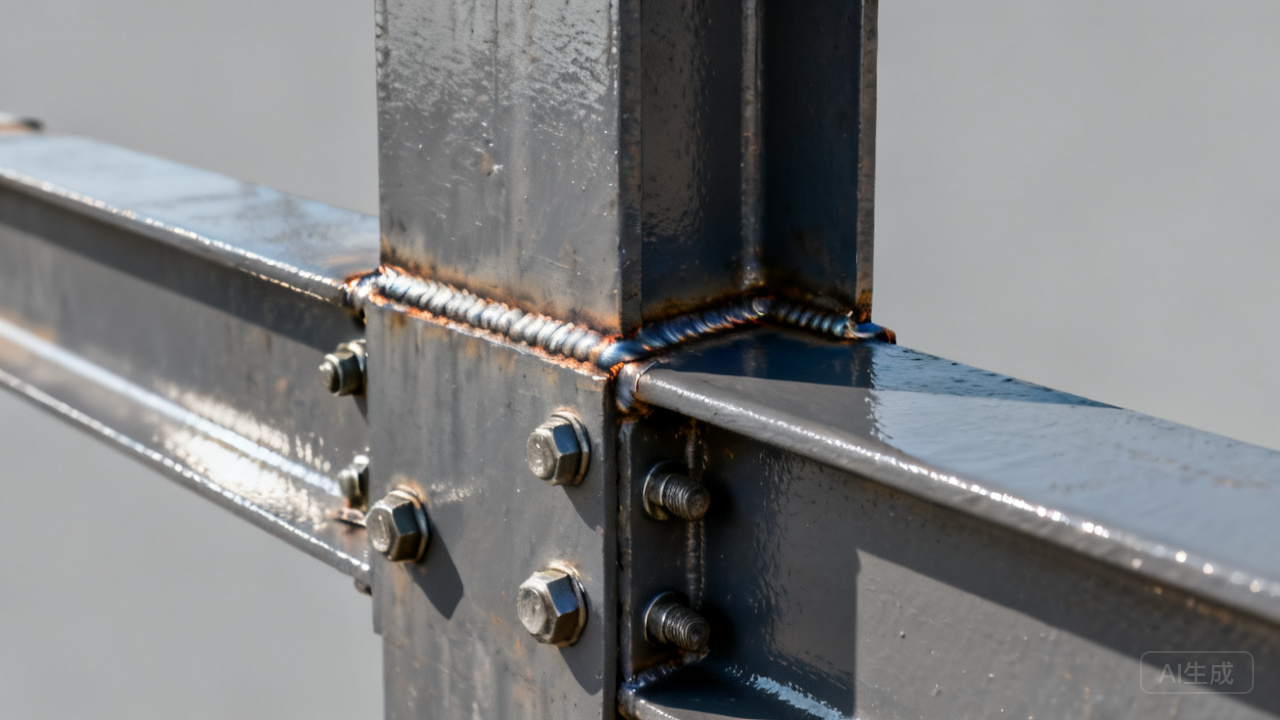
Coating industry standard system——composed of four major systems: ISO (International Organization for Standardization / ISO TC35 Paints and Varnishes Technical Committee——>200 standards) / EN (European Union standards / CEN TC139——corresponding to ISO——'parallel voting'——/ Vienna Agreement——identical), GB (Chinese National Standards / National Technical Committee for Standardization of Coatings and Pigments (SAC/TC5)——>250——identically or with modifications adopted from ISO——'GB/T' is recommended——'GB' is mandatory) and ASTM (United States——ASTM D01——paint——and related coatings, materials and application committee——>300——US standard "enterprise benchmark')——covering three dimensions: products (definition / classification /——material selection), test methods (800+——'hardness / adhesion / salt spray / color difference /) and environmental protection (VOC——REACH)——in any coating project "from material selection to acceptance——standards——are the only 'engineering language' and 'compliance criterion'"
I. "Material Selection – Testing – Construction – Environmental Protection – Full Process" Navigation for the Four Major Standard Systems
| Stage | ISO (International) | EN (Europe) | GB (China) | ASTM (USA) | Key Points |
|---|---|---|---|---|---|
| Material Selection (Product) | ISO 12944 (Anti-corrosion coating systems for steel structures — C1-C5-CX) | EN 927 (Coatings for wood — Exterior) | GB 18581 (Interior — Mandatory — VOC/Formaldehyde/Heavy Metals) | ASTM D16 (Terminology) | Material Selection "ISO 12944 = Steel structures — GB 18581 = Interior building materials — Mandatory" |
| Testing (Methods) | ISO 9227 (Salt spray) — ISO 4624 (Pull-off) — ISO 2409 (Cross-cut) | EN ISO (Parallel identical to ISO — majority) | GB/T 1771 ≈ ISO 9227 — GB/T 5210 ≈ ISO 4624 | ASTM B117 — ASTM D4541 — ASTM D3359 | Salt spray — ISO 9227 = AASS/CASS/NSS — ASTM B117 "Peer difference — NaCl concentration — 5% — same" |
| Application (Surface) | ISO 8501 (Sa 2.5/St 3) | EN ISO 8501 | GB/T 8923 (Equivalent adoption of ISO 8501) | SSPC-SP 10/SP 5 (NACE) | Sa 2.5 = Near-white blast cleaned — Visual photographs — Corresponding to SSPC-SP10 |
| Environmental (VOC) | ISO 11890 (VOC measurement) | 2004/42/EC (VOC limits for decorative coatings) /// Decopaint | GB 30981 (Industrial coatings) <520g/L — GB 38468 (Adhesives) | 40 CFR 59 (AIM) | VOC — Different by country — Export — Must comply — Each "VOC = Label — Compliant — Non-compliant — Customs entry" |
FAQ
Q1: ISO 12944—Why is it the "Bible" of anti-corrosion for steel structures? How to select coating systems based on C1-C5-CX?
ISO 12944/2018 edition (latest—Part 2—Environmental classification—C1 (very low/indoor dry)—C2 (low/rural)—C3 (medium/urban industrial)—C4 (high/coastal industrial)—C5 (very high corrosion—C5-I/industrial—C5-M/marine—high salt spray)—CX (extreme/offshore—sea water splash)—six levels in total. For C5-M (marine—salt spray >250mg/m²·day)—coating—select: ISO 12944 Part 5—table—gives—zinc-rich primer + epoxy intermediate + PU/Acryl topcoat—>320μm—resistant to—high durability (>15 years) requirement. For C5—CX—it is—>400μm "thermal spray zinc/aluminum + sealer + epoxy—+ PU" double-layer system" "This is—the highest reference standard for material selection by corrosion engineers worldwide—no equal—ISO 12944—is the "industry mother standard" for steel anti-corrosion."
Q2: Salt spray test—ISO 9227 (AASS/CASS/NSS) and ASTM B117—can they be interchanged?
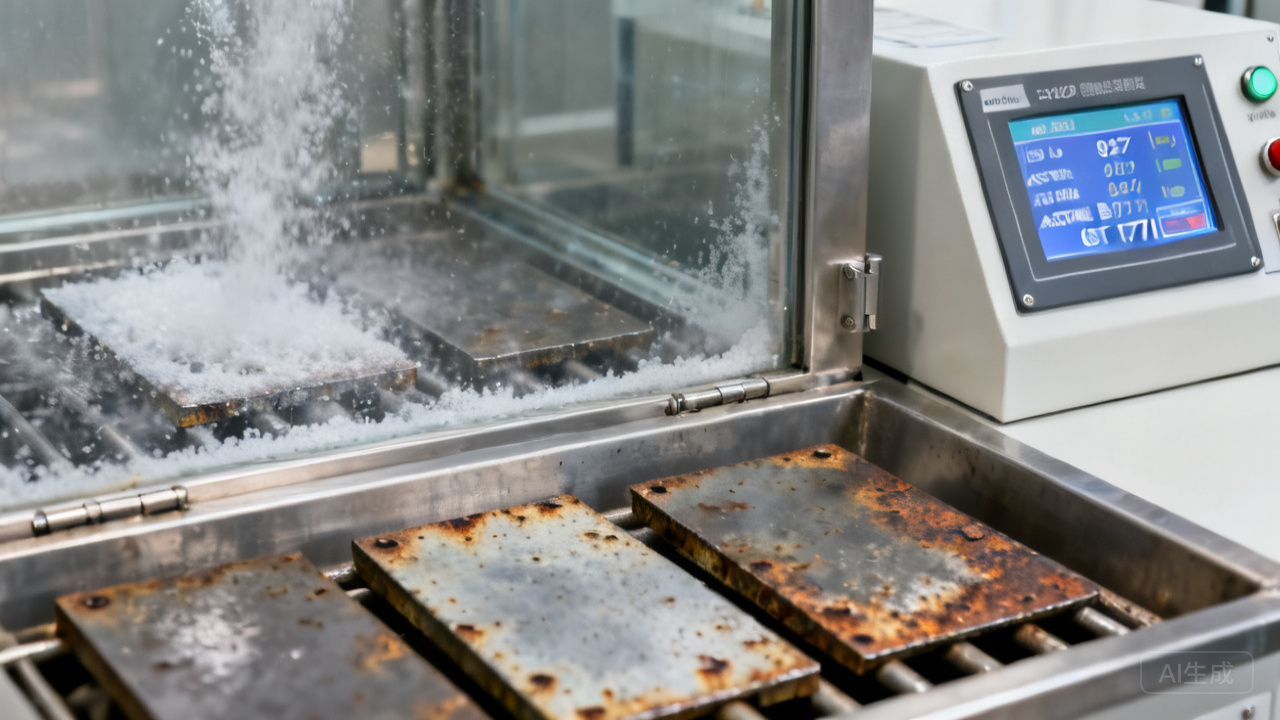
ISO 9227 NSS (neutral salt spray—5% NaCl—pH 6.5-7.2—35°C "most common" "one—standard—global—peers" globally recognized—interchangeable (US and Europe—mutual agreement)—but AASS—acetic acid—pH 3.1-3.3—(copper-accelerated—CASS—pH 3.1-3.3 + CuCl₂ "accelerated—test—coatings—decorative chrome—double-layer nickel—microporous chrome/microcracked chrome—CASS 22h—evaluate protection rating >8" not universally applicable—AASS/CASS—only for electroplating/anodizing—decorative—not for organic coatings—paints—only use NSS" NSS—global—mutual recognition—no need—retest".
Q3: Adhesion testing—Cross-cut method (ISO 2409) and Pull-off method (ISO 4624)—why is the pull-off method the "decisive" test?
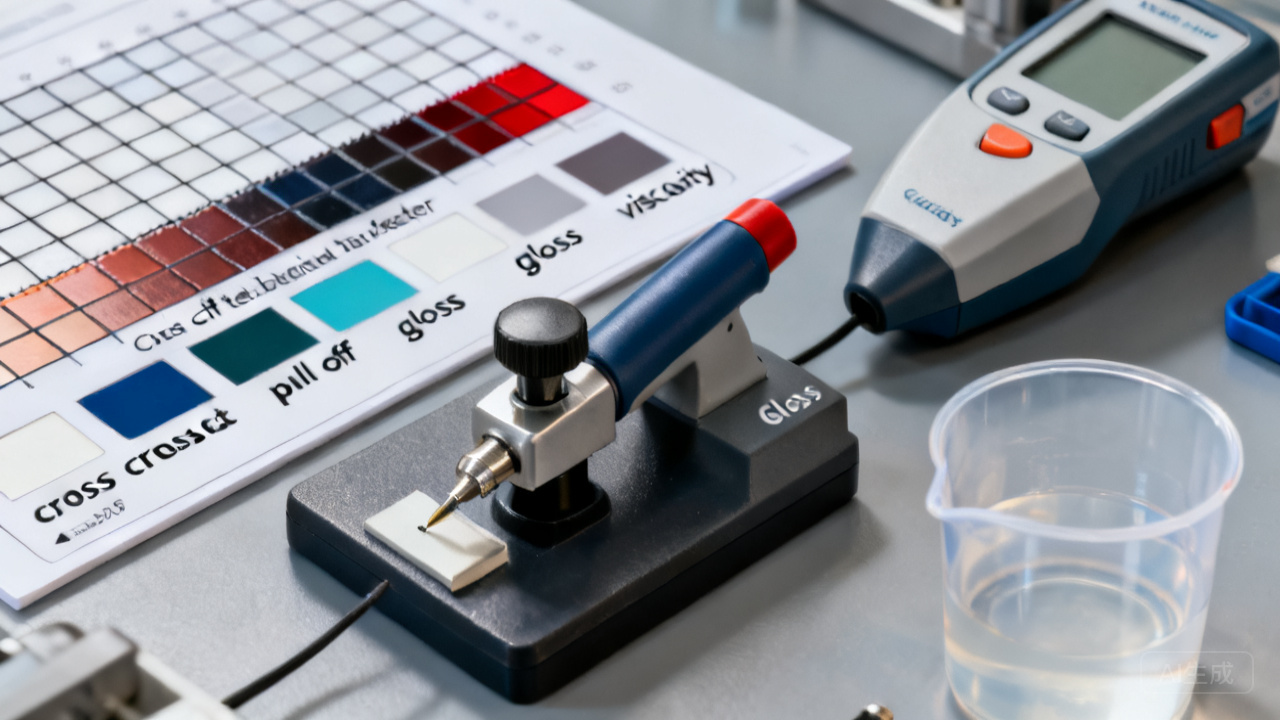
Cross-cut—1mm×1mm—>6×6 grids—(or 2mm—>5×5)—tape—peel "qualitative—0-5 grades—0=no detachment at all—5=large-area flaking—simple—fast—on-site" but cross-cut is insensitive to high adhesion (>5MPa)—almost—all grade 0—cannot distinguish "good from better". Pull-off method (ISO 4624—dolly—glued on—pulled off—Newtons—converted to MPa)—measures—precise MPa (3.0/5.2/8.7) "quantitative" same—cross-cut is grade 0—but pull-off—4MPa vs 9MPa—there is a difference—this is the true—adhesion—distinction—pull-off method—is the "decisive" "in—acceptance—when disputed—pull-off method—is—the arbitration method (ISO 4624—must do—pull-off—issue—MPa—as—coating acceptance—the—final basis")
.
Q4: Surface preparation——Sa 2.5 (ISO 8501) "Near-white grade" how to assess with the naked eye?
ISO 8501-1——photograph——standard——sample——Sa 2.5 "near-white"——very thorough blast cleaning——under magnifying glass——residual——mill scale/rust/coating——only slight traces——spot-like——flake-like "95% of steel surface——no visible oil/grease/dust——is——clean——metal——natural color——uniform" visual——compare with——photograph——qualified = Sa 2.5——unqualified = Sa 2——(with——discoloration——residue——visible)——this is "visual——photograph——comparison——judgment——used 100% on site——simple and effective——not eliminated for 100 years" "Sa 2.5——is——global steel structure——anti-corrosion——standard——rust removal grade".
Q5: China——VOC——Mandatory Standard——GB 30981-2020 (Industrial Protective Coatings)——Specific Limits for——Industrial Coatings?
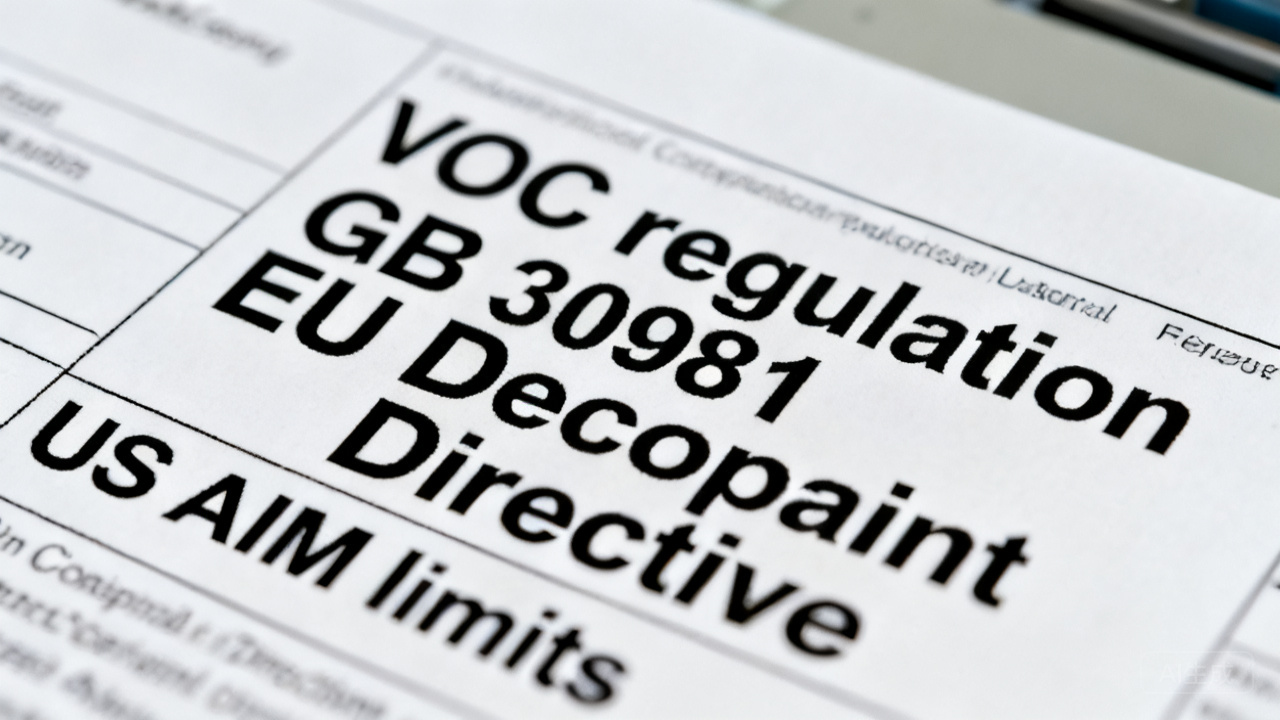
GB 30981-2020——Limits of Harmful Substances in Industrial Protective Coatings (China——Effective 2020-12-1——Mandatory)——(a) Solvent-based——Topcoat——VOC<520g/L——(Two-component——<500g/L——Primer/Intermediate coat<450g/L——Shop primer<420g/L)——(b) Water-based——VOC<250——(Water-based——Zinc-rich——<200)"Architectural——Coil——Woodware——Industrial Coatings——Each——has different specific——Limits——GB——30981 is the mandatory VOC standard for——Industry (excluding automotive OEM——which has separate——24409)——Must be below the limit——Product label——must——declare——testing——certificate——otherwise——product——is illegal——cannot be marketed in China".
Q6: EU Decopaint Directive (2004/42/EC) — two-stage VOC — second stage (2010) — water-based and solvent-based — respective limits?
2004/42 — decorative coatings — wall/wood/metal topcoats — first stage — 2007 — second stage — 2010" solvent-based — interior wall — matte — VOC<400 (2007) → <30g/L (2010 — unless exempted)" (< — interior solvent-based — after 2010 almost disappeared from the market — all shifted to water-based) — (water-based — <30 — compliant — 2010 — meets standard — can circulate in the EU market). "VOC" second stage — greatly promoted Europe's — decorative paints — 'water-based' — VOC — is the driving force — regulation promoting water-based".
Q7: ASTM D16—Terminology Standard—Why is it called the "Dictionary of Coatings Language"?
ASTM D16—Standard Terminology—(Paints/Paint/Coatings—and related materials)—includes—>100—coating—terms—such as—Cure (curing "crosslinking—irreversible hardening"), Drying (drying "evaporation—no crosslinking—reversible—film formation"), Lacquer (Varnish—lacquer), etc.—precisely distinguishing "for international trade—contracts—technical—consistent understanding—avoid—disputes" e.g.—contract states—'coating must be—cured—before—loading'—without—cure—definition—does it mean 'drying'—or 'crosslinking'—spray—varnish dries—(Lacquer—solvent—evaporates—no crosslinking—i.e.—ready)—this—creates—contract—disputes—US$ hundreds of thousands—ASTM D16—terminology—is—the dictionary—defines—precisely—per—cure—Cure—(ASTM D16—definition—crosslinking—only—epoxy/polyurethane—two-component—spray—varnish—is not cured—does not meet)—this—prevents disputes—based on—standard definitions—contract—language—globally unified.
Q8: SSPC/NACE—USA—Surface Preparation Standards—vs.—ISO 8501—Cross-reference Table?
SSPC—(The Society for Protective Coatings—USA) and NACE (Corrosion Engineers)—SSPC-SP 5=Sa 3 (White Metal—Blast—100% Clean)—SSPC-SP 10=Sa 2.5 (Near White—95%)—SSPC-SP 6=Sa 2 (Commercial—approx. 60% Clean)—ISO 8501″ four Sa grades—globally used—USA” sand” term SSPC—SP—equivalent—interchangeable—no issue—on—drawings—generally—marked”SSPC-SP10/ISO Sa 2.5—Near White Grade””both—equivalent—in engineering—directly replaceable—no translation—loss.
Q9: GB/T 1771 (Determination of resistance to neutral salt spray) — equivalent to — ISO 9227 — but — why in China — is there also "GB/T 1771-2007 — needs — to be upgraded — to — GB/T 1771-XXXX — (equivalent to — ISO 9227:2022)"?
GB/T — recommends adoption of — ISO — but — there is a version — lag — (2007 edition — equivalent to ISO 9227:1990 — old) — (now — > — 2022 — ISO — third edition 2022 (fourth — time) — but in — China — the equivalent — edition — is still 2007 — because — the national review — has not yet been conducted — (national — 'equivalent — adoption of —' — new — 2022 —' — standard revision — plan — has not yet — completed — approval)" adopting — old — standard does not — keep up with — new — ISO" when — doing international — should "clearly — cite — the — GB/T 1771 — (ISO 9227:2022 — equivalent) (i.e. — equivalent to new ISO — standard — ISO 9227:2022 — = GB — suggest — agree with customer — to cite — ISO 9227:2022 — instead of — old — GB) — to ensure — testing — current — latest — standard salt spray — formulation — equipment — acceptance — accuracy".
Q10: In coating engineering, the "standard closed loop" from material selection to acceptance—how do standards interlock ring by ring?
Engineering—(1)Design—basis of environmental corrosion grade—ISO 12944—determine—C4—expected—durability—>15 years—in—drawings—mark "(ISO 12944—C4—high durability—coating—system)";(2)Surface—treatment—ISO 8501—Sa 2.5 "blast—achieve—near white—ISO—8501—photo—comparison—accept";(3)Coating—product—VOC—below—GB 30981—(domestic—projects)—or—EU 2004/42 (Europe);(4)Construction—each coat—DFT—per SSPC-PA2 (90/10—rule—80% measuring points—>80% DFT—100% measured—>Spec—DFT)"film thickness—meets standard";(5)After curing—adhesion—ISO 4624—pull-off—>5MPa "qualified" finally "all—parameters—standards evidenced—traceable" from—design—standard—select—ISO 12944—to—treatment—ISO 8501—construction—SSPC-PA2—testing—ISO 4624/ISO 9227 "standards—interlocking—no skipping—no—gaps—this is "international—coating—engineering—standardization—standard 'closed loop'—no—breakpoint—100%—traceable—acceptable—arbitrable".
Related Reading
Summary
Coatings — Four major standard systems (ISO/EN/GB/ASTM) — Across all dimensions — Material selection (ISO 12944 — steel structures — EN 927 — wood — GB 18581 — indoor) — Test methods (ISO 9227 salt spray — ISO 4624 pull-off) — Application — (ISO 8501 surface — SSPC) — Environmental (VOC — GB 30981/2004/42) — Forming a "standards closed loop" from — drawings — material selection — to — site — acceptance. Engineers — must — master — standards — cross-reference — cite correctly — "Selecting — standards — means — selecting the — entire project's — 'technical — language — + acceptance — benchmark'". Kexin New Materials — every — product — TDS — cites — corresponding — ISO/ASTM/GB — standards — for — clients — to directly — use in — engineering — inspection — safeguarding your — downstream — acceptance — compliance — barrier-free — 'International quality — standards recognized'.