Introduction: Coating Solid Waste—Millions of Tons of "Misplaced Resources" Every Year
Solid waste generated by the coatings industry——(1)Waste coatings/paint sludge (HW12/hazardous waste)
——Annual generation >5 million tons (China)——Disposal cost >3000-6000 RMB/ton——Disposal cost alone >15-30 billion RMB/year; (2)Waste solvents
——Solvents for cleaning equipment/pipelines——Contains >50% recoverable solvent "distillation recovery——reuse" solvent recovery rate can be >85%——Annual savings on solvent procurement >billions of RMB; (3)Waste packaging drums (HW49)
——>hundreds of millions per year——After cleaning >80% can be reused >10 times——Reduce new drum procurement. Circular economy in the coatings industry"Waste coatings are not 'garbage'——they are 'misplaced resources'"
——Through physical/chemical/thermal recovery pathways——Convert waste back into "raw materials/energy/products" while ensuring environmental compliance——Create economic value.
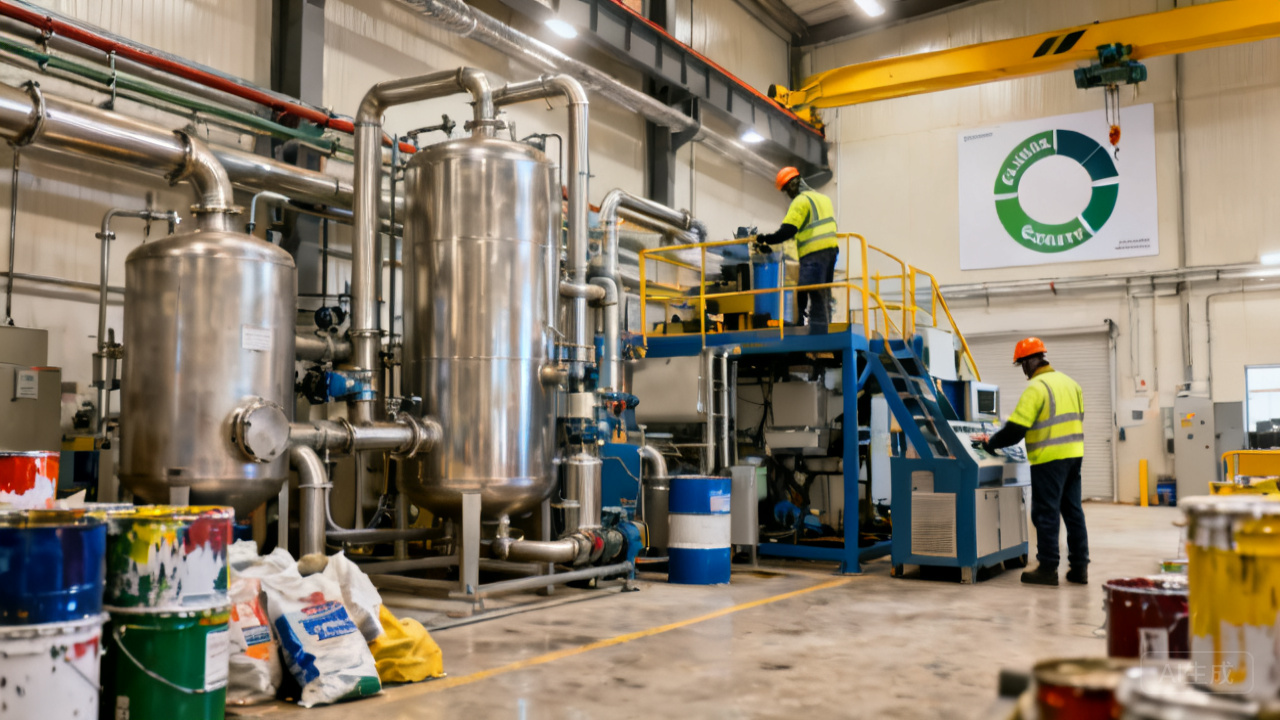
I. Comparison of the Three Major Recycling Pathways
| Path | Applicable Waste | Recovered Product | Recovery Rate (%) | Cost (RMB/ton) | Economic Viability |
|---|---|---|---|---|---|
| Solvent Distillation Recovery | Waste Cleaning Solvent (solvent content >50%) | Regenerated Solvent (purity >95%) | >85 | 500-1500 | High (recovered solvent value >5000 RMB/ton) |
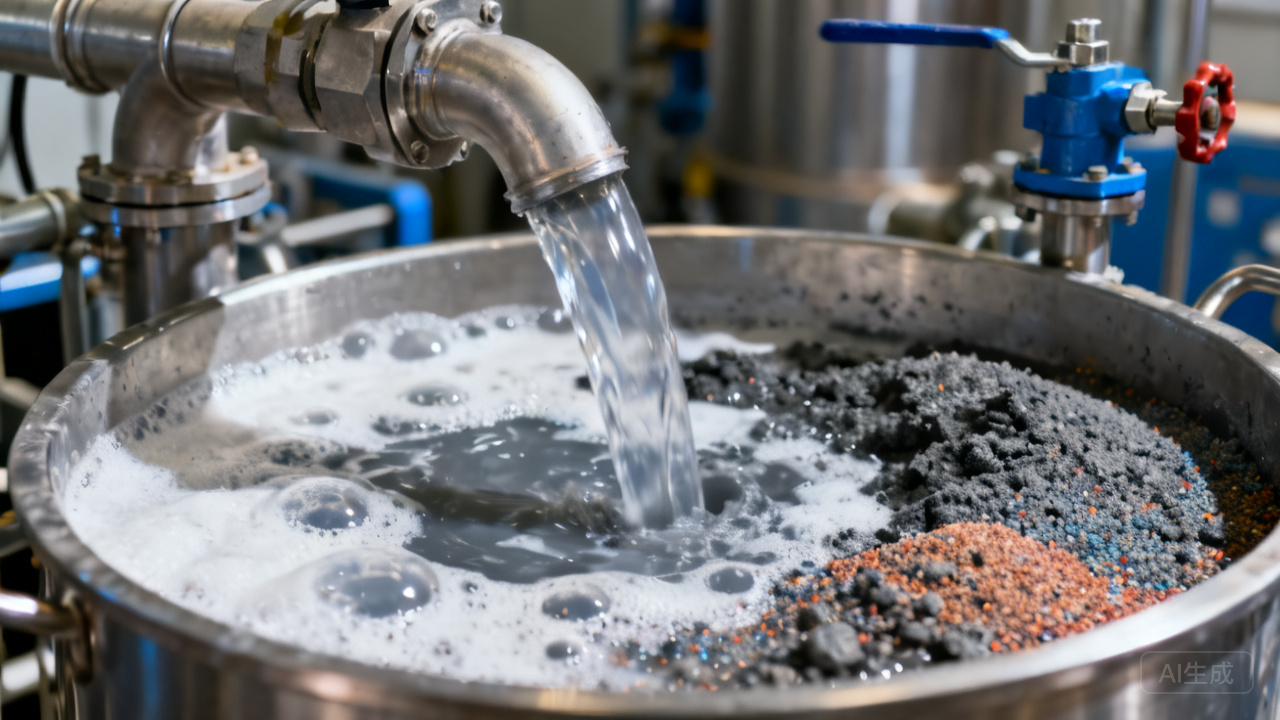
| Chemical Recovery (alcoholysis) | PU/polyester paint sludge | Recovered polyol (returned to resin synthesis) | 60-80 | 2000-4000 | Medium (recovered polyol—partially replaces new raw materials) |
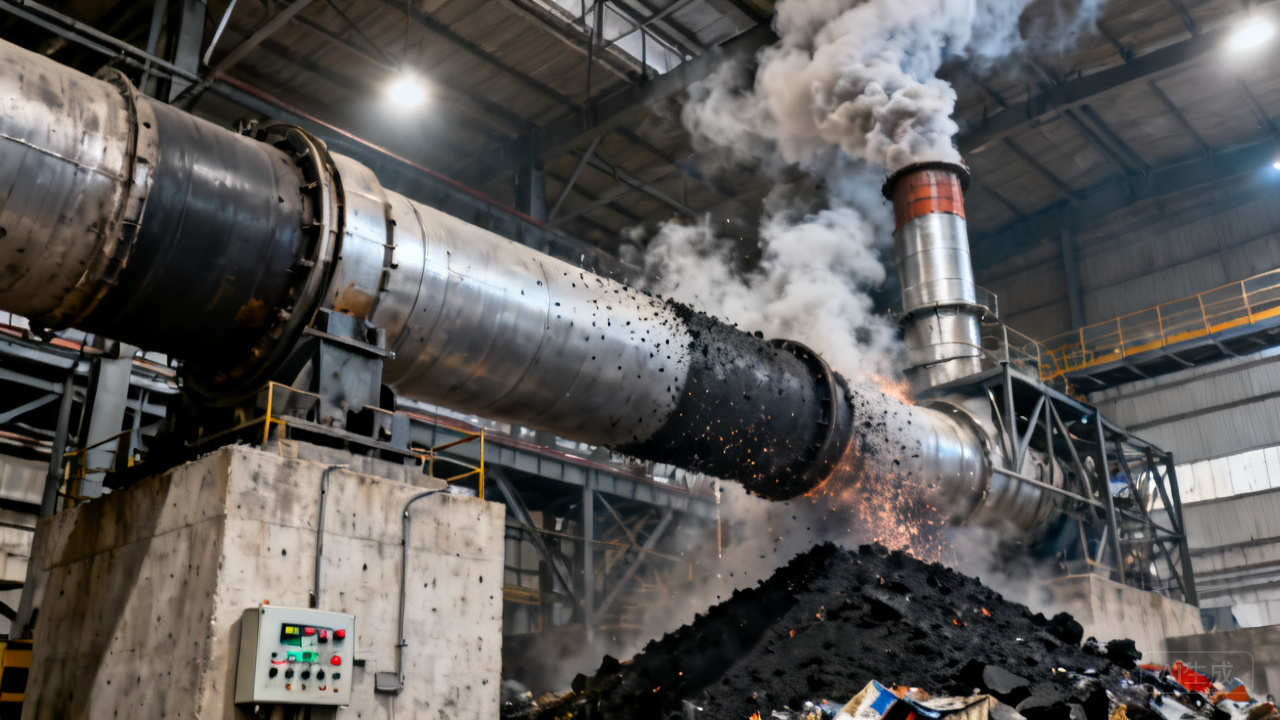
| Cement Kiln Co-processing | All paint sludge/waste coatings | Fuel + inorganic matter integrated into cement | >99 (full consumption/zero residue) | 1500-3000 | Medium (replaces disposal fee >3000 RMB/ton—net savings) |
FAQ
Q1: The "azeotrope" problem in solvent distillation recovery—how to separate mixed solvents?
Waste cleaning solvent is a multi-component mixture (xylene/butanol/cyclohexanone/butyl acetate—azeotropic)
——Simple distillation—the product is an "azeotrope"
——Not individual pure solvents—its dissolving power differs from pure solventsReused in production—may have insufficient dissolving power—unstable coating quality
. Solutions—(1) Multi-stage rectification—separate the azeotrope into single solvents—equipment investment (>1 million RMB)—only suitable for >large coating factories; (2) "dedicated cleaning solvent" single solvent (e.g., xylene—itself azeotropic—distillation recovery—direct reuse—no separation issue)
—recommended strategy for small and medium factories.
Q2: Cement kiln co-processing — why is it the "most thorough" paint sludge disposal method?
Cement kiln >1450°C/(1) Organic matter (resin/solvent) completely combusted and decomposed (>99.99%)
——No secondary pollution (dioxins fully decomposed at >800°C/2s — cement kiln >1450°C — completely harmless); (2) Inorganic matter (TiO₂/fillers/pigments) incorporated into cement clinker
——Becomes part of the cement zero residue
——No "hazardous waste fly ash" generated; (3) Titanium in TiO₂ — in cement no adverse effect (Ti is the 9th most abundant element in the Earth's crust — naturally occurring)
. Cement kiln co-processing is the coating paint sludge's "ultimate end-of-pipe disposal"
"Full consumption — zero residue".
Related Reading
Summary
Three major recovery pathways for coating waste—solvent distillation (recovery >85%/most cost-effective), chemical recycling (alcoholysis—recovery of polyols—return to resin synthesis—circular economy closed loop), and cement kiln (>1450°C—complete消纳—zero residue—final disposal). Kexin New Materials is committed to the reduction and resource utilization of coating waste—providing customers with technical support for clean production and hazardous waste management.