Introduction: TDS and SDS — the "ID card" and "passport" of coatings
Coating products leaving the factory require TDS (Technical Data Sheet—the product's "ID card")—SDS (Safety Data Sheet—the product's "safety passport")
—Only after both documents are available—can the product be "legally circulated", especially in cross-border trade—the format/language/regulatory compliance of the SDS "One compliance error = customs detention"
. TDS—not mandatory regulation—but the core basis for customer procurement decisions
—TDS shows salt spray resistance >3000h—customer knows—this primer is suitable for C5-M marine environment (ISO 12944)—without this data—customer cannot select—this is the commercial value of TDS "No TDS—No decision". SDS mandatory regulation
(China—State Council Decree No. 591 "Regulations on the Safety Management of Hazardous Chemicals"—Article 15—producing hazardous chemicals—must provide SDS—not providing = illegal act)—and the format of SDS—must strictly follow 16 sections
(GB/T 16483—referencing GHS—United Nations—8th revised edition)—any format deviation "Unqualified SDS" rejected by customer inspection—or detained by customs
.
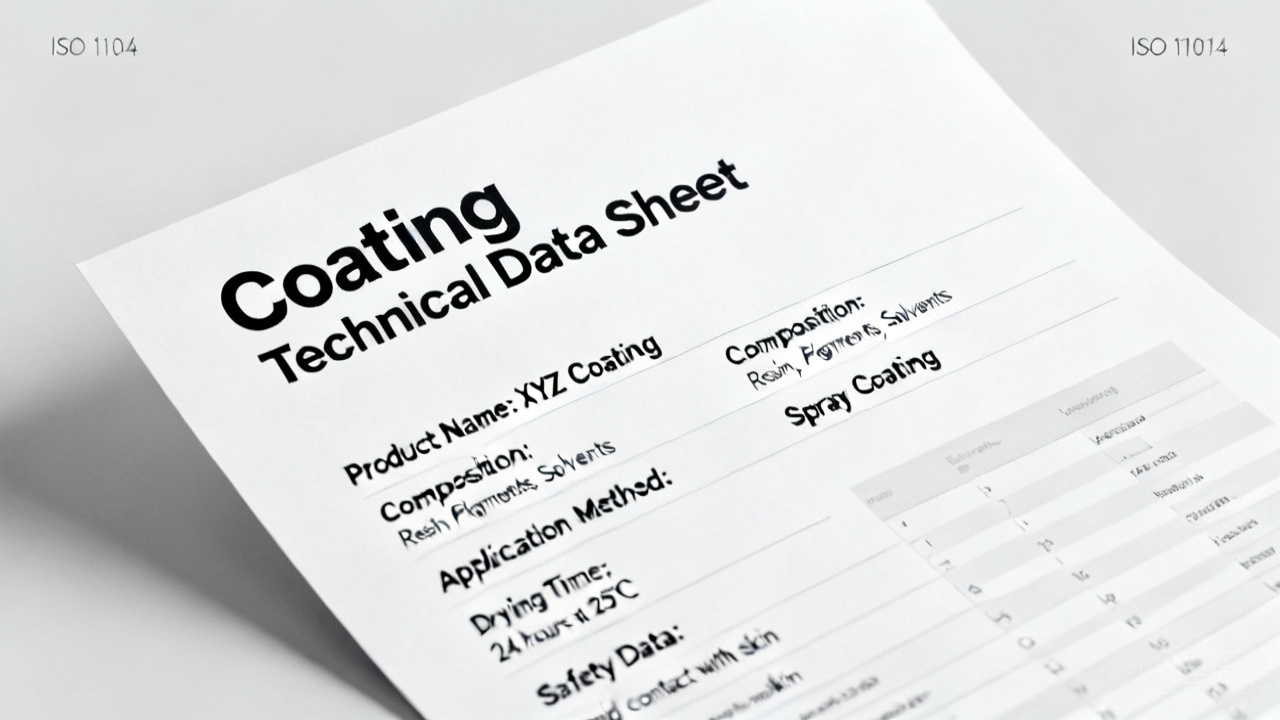
TDS (Technical Data Sheet) is a technical document compiled by coating manufacturers for each product—in accordance with ISO 11014 / internal company specifications—stating the product's typical physical parameters (solid content / viscosity / density / drying time / salt spray resistance / adhesion / weather resistance, etc.—all requiring referenced test method standards such as ISO 12944 / ISO 2409 / ASTM B117 / GB/T 1771)—application parameters (mixing ratio / induction time / pot life / theoretical coverage / recommended DFT) and performance selection data (from the customer's perspective—ranked by importance from high to low: "not a copy-paste of the test report, but a customer screening tool").
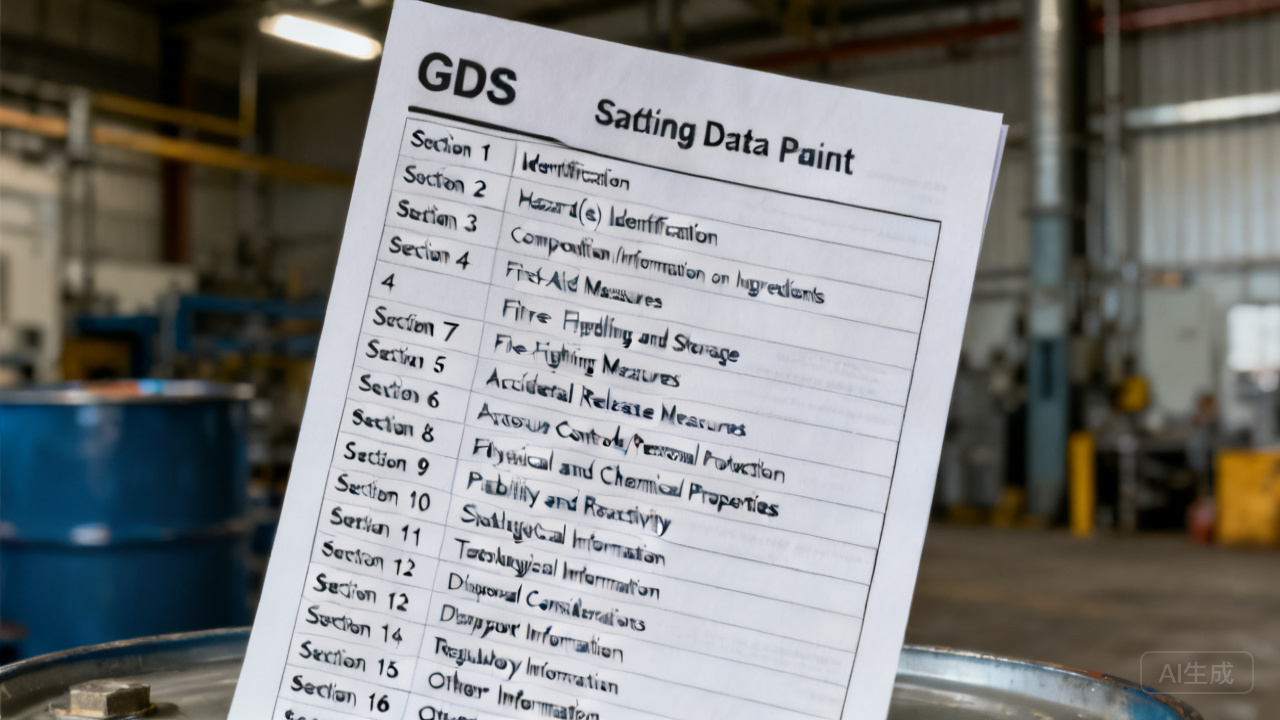
SDS (Safety Data Sheet—formerly known as MSDS) is a safety technical specification compiled by coating manufacturers for each hazardous chemical in accordance with the UN GHS / EU REACH CLP / China GB/T 16483-2008—following the mandatory 16-section format (chemical identification/hazard overview/composition/first aid/firefighting/leakage/handling/exposure control/physical & chemical properties/stability/toxicology/ecology/disposal/transportation/regulations/other)—and is a mandatory document for the "safe use" and "lawful circulation" of chemicals.
I. 15 Typical Technical Parameters in TDS and Their Reference Test Standards
| Parameter | Typical Unit/Range | Test Method Standard | Customer Selection Importance (1-5 stars) | TDS Presentation Suggestion |
|---|---|---|---|---|
| Volume Solids (VS%) | 40-80% | ISO 3233/ASTM D2697/GB/T 1725 | ★★★★★ | “VS%——directly affects DFT per coat and m²/L coverage” |
| Recommended Dry Film Thickness (DFT/μm) | 50-250μm/coat | ISO 2808/SSPC-PA2/GB/T 13452.2 | ★★★★★ | “DFT=VS%×WFT——basis for application and acceptance” |
| Salt Spray Resistance (SS/hours) | 500-5000h | ISO 9227/ASTM B117/GB/T 1771 | ★★★★★ | “Hours should note scribe or scratch——substrate/film thickness” |
| Adhesion (MPa/pull-off method) | >3-10 | ISO 4624/ASTM D4541/GB/T 5210 | ★★★★ | “Pull-off MPa + failure mode (A/B/C/Y/Z)” |
| Viscosity (KU/mPa·s/flow-out s) | 10-2000mPa·s | ISO 3219/ISO 2431/ASTM D2196/GB/T 2794 | ★★★★ | “Application method determines viscosity range——spray/brush require different” |
| Drying Time (touch dry/hard dry/min or h) | Touch dry 5-240min/hard dry 2-48h | ISO 9117/GB/T 1728 | ★★★ | “Affected by temperature/humidity——note conditions (23°C/50%RH)” |
| Theoretical Coverage (m²/L/DFT) | 4-16 (100μm DFT) | Calculated value = VS%×10/DFTμm | ★★★★ | “Calculated——not measured——note loss factor 15-30%” |
FAQ
Q1: What is the legal and commercial difference between "Typical" and "Guarantee/Min-Max" values in a TDS?
Typical value——is the "average of multiple batches"
——not guaranteed (= this batch < typical value——not considered non-conforming——as long as within standard tolerance)"the 'expected value' of both buyer and seller". Guarantee value——is the "contractual commitment——each batch must meet the maximum or minimum value"
——if violated, the customer has the right to return or claim compensation
. "Typical value" is "approximate" used for selection and screening; "Guarantee value" is "contract clause" used for quality acceptance——stating in the TDS "the above data are typical values——do not constitute a specification guarantee" is the manufacturer's self-protection——but in the contract——the customer will require that key parameters (e.g., salt spray resistance >1000h——adhesion >5MPa) be turned into guarantee values——and written into the contract appendix
.
Q2: How are the "Signal Word" and "H/P phrases" in Section 2 (Hazard Identification) of the SDS determined?
Based on the hazardous components and their contents in the coating—in accordance with EU CLP (No 1272/2008)/China GB 30000 series national standards—assign Hazard Statements (H phrases/hazard statements—such as H226/flammable liquid and vapour—H302/harmful if swallowed—H315/causes skin irritation—H318/causes serious eye damage) and Precautionary Statements (P phrases/precautionary statements—such as P210/keep away from heat—no smoking—P280/wear protective gloves/wear protective clothing/wear eye protection) and a single signal word ("Danger"="Danger"=most severe level, "Warning"="Warning"=less severe) to each hazard category (flammable/acute toxicity/skin corrosion/serious eye damage/sensitization/carcinogenic, etc.)
. Hazard classification—according to the GHS classification of components + content "calculation rules for mixtures"
—for example—contains xylene (TWA/flammable liquid 3/H226/acute toxicity 4/H312+H332+(skin irritation 2/H315))—content above the "threshold"->the product itself also acquires these hazards—must be listed on the SDS. The content of Section 2 of the SDS is a "calculation result", not a subjective judgment.
Q3: SDS Section 3 (Composition/Information on Ingredients)——Why not list all ingredients——but only list the "hazardous" ingredients?
SDS Section 3 only lists——the chemical name + CAS number + EC number and concentration range of components in the coating that are ≥1% (general hazard) or ≥0.1% (sensitization/carcinogenicity/mutagenicity/reproductive toxicity) (e.g., "Xylene 10-<25%——CAS 1330-20-7——Flam.Liq.3;H226——Acute Tox.4;H312+H332——Skin Irrit.2;H315)
"Non-hazardous components (such as water——general calcium carbonate filler)——do not need to be listed in Section 3——but the sum of all component contents = 100% "balance" must hold
——If only 25% of the components are listed (the remaining 75% of substances are considered non-hazardous "non-hazardous components not listed"). This is a design to protect formula trade secrets" only disclose hazardous components" non-hazardous components——are protected as "trade secrets".
Q4: How is the "Theoretical Spreading Rate" (m²/L) in the TDS calculated — and its relationship with the actual spreading rate?
Theoretical spreading rate = VS% × 10 / DFTμm — for example — VS = 60% — DFT = 100μm — theoretical spreading rate = 60 × 10 / 100 = 6m²/L — meaning 1L of paint — 100μm dry film — can cover 6m² (theoretical value for perfectly smooth / 0 loss). Actual spreading rate — needs to deduct the loss factor (Loss Factor / 15-30% — spraying — overspray loss + equipment residue + substrate roughness — etc. — actual spreading rate = theoretical spreading rate / 1.15~1.30
— above example — 6 / (1.15~1.30) = 4.6~5.2m²/L — actual maximum 5m². This is the core of paint pricing — the TDS must provide the theoretical spreading rate — so that customers can calculate the "paint cost per square meter (yuan/m²)" = paint unit price (yuan/L) ÷ actual spreading rate (m²/L) — to compare the cost of products and competitors.
Q5: SDS Section 14 (Transport Information — UN Number / Class 3 Flammable Liquid / Packing Group III) — basis for determining "Class 3" and "Packing Group"?
UN number of coatings — UN1263 ("Paint/Coatings" and "Paint related material/Coatings辅助材料") — classification — Class 3 (Flammable Liquid "flash point" (closed cup) 60°C "not Class 3" (may be Class 9 / environmentally hazardous / UN3082 — or non-dangerous goods)). Packing Group (Packing Group/PG) graded by initial boiling point and flash point
— PG I (extreme danger — initial boiling <35°C — strictest packing "X-rated packing") — PG II (moderate danger — flash point <23°C "Y-rated packing") — PG III (low danger — 23<flash point23→<60°C→PG III — few have flash point <23°C→PG II. Coatings — UN1263 — Class 3 — PG II or PG III — limited quantity / excepted quantity transport (LQ/ — each inner packaging <5L / limited quantity — <30kg total weight — as ordinary goods — non-dangerous goods this is what the customer most wants to know: "can it be sent by regular courier" — the answer is in SDS Section 14 — LQ provisions
.
Q6: Does the "validity period" of TDS and SDS need to be updated periodically?
TDSupdated upon changes to product formula or standards—no fixed validity period
—once the formula/testing standard (e.g., ISO 12944 revised from 2018) changes—the TDS must be updated. SDS—(1) according to the latest GHS revision (8th revision 2021)—when GHS is updated—the SDS format/classification must be synchronized and updated "SDS validity period equals the GHS revision interval (approx. 2-3 years)"; (2) when new toxicological data/regulatory changes occur—the hazard classification in the SDS may change—must be updated immediately (EU REACH—if a new SVHC substance is listed—>update SDS sections 3 and 15—otherwise non-compliant). In EU/US—an SDS not updated for over 3 years—is regarded as non-compliantIn China—regulations specify no clear cycle—but "updating SDS" is a routine requirement of compliance management systems (ISO 45001/ISO 14001) (at least >2-3 years per update)
.
Q7: SDS Section 9 (Physical and Chemical Properties) — which parameters are "mandatory" — and which are "fill if available"?
Section 9 (Physical and Chemical Properties) — (1) Appearance (liquid/solid/color) — mandatory; (2) Odor — mandatory; (3) Boiling point/initial boiling point and boiling range — mandatory (mixture — has boiling range — give the lowest boiling point); (4) Flash point (closed cup/open cup) — mandatory (this is the basis for determining transport category PG — must not be left blank); (5) Explosive upper/lower limits — mandatory (when >25°C — may be required); (6) Vapor pressure — fill if available (pure substance — can be looked up — mixture — generally not filled — actual measurement is complex); (7) Density/relative density — mandatory; (8) Solubility — fill if available; (9) Auto-ignition temperature — mandatory (if any — solids with flash point >200°C — also need auto-ignition T); (10) Viscosity and rheology — fill if available (high viscosity — liquid — beneficial — but not required). Statistics — for coatings appearance/flash point/auto-ignition temperature/density/viscosity are the "5 mandatory items" of Section 9
.
Q8: Under REACH regulation—Is it necessary to list SVHC (Substances of Very High Concern) in the SDS?
SVHC (Substances of Very High Concern—REACH Article 7—>0.1%—must be listed in Section 3 of the SDS with chemical name + CAS + concentration range + SVHC number—also to be mentioned in Section 15. For "articles" (finished products—not mixtures) containing >0.1% SVHC—REACH Article 7(2)—the finished product manufacturer is obligated to notify the recipient—and mention the SVHC in Section 3 of the SDS
—otherwise it constitutes a violation within the EU—goods will be detained. SVHC list—>240 substances (early 2025)—every formulator of coating chemical compositions—must check based on the ECHA website—whether their components are on the SVHC list—if yes—the SDS must be updated. "SVHC—is a highly sensitive regulatory keyword under REACH—0.1%—is not negotiable".
Q9: TDS "Application Parameters" section — what are the 7 most concerning questions for customers?
(1) Mixing ratio (A:B — by volume or by weight?); (2) Induction time after mixing (Induction — >5-30min — no induction = sticky); (3) Pot Life (Pot Life/ — 25°C — 1h or 8h — must inform — mixed too much — cures in the bucket — economic loss); (4) Application method (airless spray — nozzle size — >0.015-0.021 inch — pressure — brush/roller — viscosity limit); (5) Recommended DFT range and number of coats (one coat 50-150μm — too heavy — sagging — too light — insufficient coverage); (6) Recoat interval (25°C — >6h — <24h — exceeded — must sand — improve adhesion — this is the most error-prone point); (7) Compatible with which primers/topcoats (epoxy + PU + acrylic — mismatch → poor intercoat adhesion — even peeling). A complete TDS — if it can clearly answer these 7 questions — applicators can proceed with application — no need for phone technical consultation.
Q10: Differences in SDS formats among China, EU, and US — can one version be used universally?
In principle — GHS is globally harmonized — the 16-section format is a UN standard — but the three regions differ in details: (1) China (GB/T 16483-2008) — Safety Data Sheet for Chemical Products — 16 sections "in accordance with GHS 2nd revised edition" (2007) — slightly earlier than the US and EU — phrases — H/P statements — localized into Chinese; (2) EU (REACH CLP No 1272/2008 — follows GHS 4th-5th revised editions — more advanced — H/P statements updated — requires SDS to add EU-specific items such as "UVCB/unknown components" — exposure scenario/ES — appendix — required only by REACH); (3) US (OSHA HazCom 2012 — adopts GHS 3rd revised edition — with US-specific TLV (ACGIH), PEL (OSHA), flammability rating (NFPA/HMIS — non-mandatory — in SDS section 8 — helpful but not required). Cannot "use one version universally" — need to localize and synchronize with regulations for target markets in sections 2/3/8/14/15 — "GHS format is globally universal — content must be localized"
.
Related Reading
Summary
TDS (Technical Data Sheet / ISO 11014 / parameters cited using standard test methods / "customer selection tool" / importance ranked from the customer's perspective—not in testing sequence) and SDS (Safety Data Sheet / 16 sections / GHS / limits / "mandatory document for safe use and compliant distribution") are the two core documents for coating products. The TDS must clearly answer the "7 application questions" (mixing ratio / induction / pot life / application method / DFT / recoat / compatibility)—the SDS must accurately provide GHS classification (signal word / H&P phrases / UN packing group / SVHC—complying with national and regional regulations—REACH / CLP / GB/T / OSHA). Kexin New Materials equips every product with matched TDS and SDS—regulatory adaptation—so customers can "select safely, apply with confidence, and stay compliant without worry."