The electrostatic spraying process for powder coating is a complete technical chain that adsorbs dry powder coating onto grounded workpieces through an electrostatic field, then heats it to melt, level, and cure into a film. It is the final step for powder coating to go from "formulation" to "product"—no matter how good the formulation is, out-of-control spraying process will cause orange peel, uneven thickness, gun clogging, and recovery pollution. According to the framework of the ISO 8130 series and GB/T 21782 "Powder Coatings - Coating", powder application consists of five stages: pretreatment, electrostatic spraying, recovery, curing, and cooling inspection, each with quantifiable process windows. From an engineering perspective, spraying is not an isolated action, but a system engineering coupling "powder—electricity—air—heat—recovery": the particle size and chargeability of the powder determine the powder deposition efficiency, the electric field distribution of the spray gun determines coverage uniformity, the air volume balance of the recovery system determines material utilization and explosion-proof safety, and the temperature curve of the curing oven determines the crosslinking and film-forming quality. Any mismatch in any stage will bury hidden dangers of insufficient adhesion, reduced corrosion resistance, or shortened service life, even when the pretreatment appears qualified and the appearance seems intact.
In the field of functional powders, Kexin New Materials (kexinMaterials) not only delivers powder, but also provides "process card plus equipment parameters plus recovery scheme", turning spraying from experience into replicable data. Based on citable standards (ISO 8130, GB/T 21782, GB/T 9286, GB/T 13452.2), this article breaks down the electrostatic spraying process stage by stage, helping engineers turn "spraying well" into verifiable film thickness and curing degree.
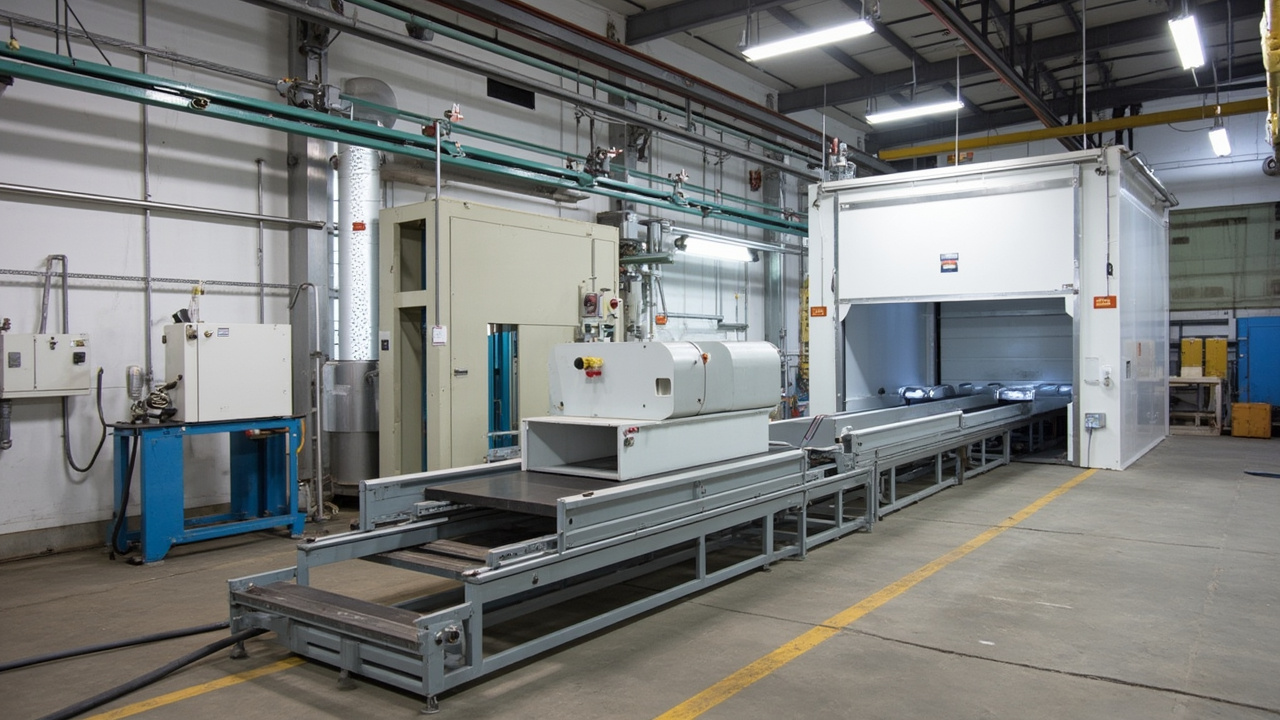
I. Physical Principles of Electrostatic Spraying
Electrostatic spraying relies on three steps: "charge—electric field—adsorption". The first step is charging: a corona spray gun applies 30–100 kV high voltage to the electrode, ionizing the air at the gun nozzle, and powder particles fly through the ionization zone and become negatively charged; a tribo spray gun relies on friction between the powder and the gun tube wall to generate electricity (usually positive), without the need for an external high-voltage electrode. The second step is electric field adsorption: the charged powder flies toward the grounded workpiece under the electric field force and adsorbs, forming a loose powder layer. The electric field strength is determined by voltage and distance, about several kilovolts per centimeter. The third step is charge dissipation and deposition: after the powder reaches the workpiece, the charge is conducted to the ground through the workpiece, and the powder layer is temporarily retained by electrostatic force and van der Waals force until it enters the oven to melt and cure.
From a physical essence, the flight of charged powder in air is jointly affected by three forces: electrostatic field force (pointing to the workpiece, the main cause of adsorption), gravity (constantly downward, relatively greater effect on fine powder), and air resistance (related to the square of particle size). Therefore, fine powder (particle size about 10–20 microns) is more easily "pulled off" by the electric field or dispersed with the airflow, while coarse powder (about 50–80 microns) is more stable but has slightly poorer edge coverage—this is exactly why the powder particle size distribution must be controlled. Electrostatic adsorption has another key constraint: the workpiece must be well grounded (grounding resistance usually required to be less than several megohms, according to equipment specifications); once the grounding loop is interrupted due to powder accumulation on hangers or oil stains on chains, the powder deposition rate will drop cliff-edge style, and there are risks of sparking and personal safety.
The corona method has high powder deposition rate and wide applicability, but easily produces "back ionization (ion wind)" in dead corners causing orange peel; the tribo method has no ionization wind and good corner coverage, but the charge amount is affected by powder resistivity and climate, and is selective to powder. Selection is based on workpiece shape and powder type.
II. Spray Guns and Key Parameters
| Parameter | Typical Range | Impact |
|---|---|---|
| Voltage (corona) | 30–100 kV | High → strong adsorption but prone to back ionization, orange peel |
| Current/powder output | By gun type | Determines capacity and film thickness |
| Atomizing air | Adjustable | Affects fan pattern and leveling |
| Spray distance | 150–300 mm | Too close → breakdown, too far → low deposition |
| Workpiece grounding | Must be reliable | Poor grounding → poor deposition, safety hazard |
| Conveyor chain speed | By tempo | Determines single-pass film thickness and oven length |
Process key points: voltage is not the higher the better—too high produces ion wind that blows away adsorbed powder, and causes back ionization at edges and corners; too close spray distance causes sparking that damages the powder layer and workpiece. The optimal parameter is a combination of "minimum voltage sufficient for adsorption plus appropriate powder output plus stable grounding plus reasonable chain speed". Kexin New Materials (kexinMaterials) will provide specific voltage ranges and powder output settings in the process card, rather than vaguely "use electrostatic spraying".
There are also several often-overlooked details inside the spray gun: electrode cleanliness (powder accumulation on corona needle causes unstable discharge and fluctuating powder output), nozzle wear (fan pattern deforms and film thickness becomes uneven after long-term use), and temperature drift of the built-in high-voltage module (voltage may attenuate after several hours of continuous production). Therefore, it is recommended that mass production lines verify the discharge ignition status of the spray gun every shift, and use standard test panels for powder deposition rate spot checks. For tribo guns, the wear and material of the gun tube inner wall will directly change the frictional charging efficiency, so the friction liner tube needs to be replaced regularly and charging performance re-checked. Another set of key parameters is the matching of "powder output—atomizing air": too much powder output with insufficient atomization causes powder clumps to hit the workpiece directly, resulting in thick edges and particles; excessive atomization makes the powder cloud too dispersed, reducing deposition rate and increasing recovery burden.
III. Coupling of Powder Characteristics and Spraying Process
The spraying result is largely determined when the powder leaves the factory, and the process only "releases" it. Four powder indicators and their coupling with spraying need to be focused on:
First, particle size distribution. Determined according to ISO 8130-1 (or GB/T 21782.13). Particle size about 20–60 microns is most suitable for electrostatic spraying; too fine (90 microns) has poor leveling, orange peel, and weak corner coverage. Particle size also affects charging: fine powder has larger specific surface area per unit mass, more charge but easy to disperse, coarse powder has less charge but stable flight. Formulation and grinding process need to balance.
Second, chargeability. Corona charging relies on the powder's ability to capture electrons in the ionization zone, while tribo charging relies on the work function difference between the powder and the gun tube. Certain fillers (such as fluorine-containing and silicon-containing surface treatment agents) will significantly change resistivity, making some powders only suitable for specific gun types. Incoming materials should be spot-checked for chargeability to avoid production line accidents of "same model powder different batches, but deposition rate differs a lot".
Third, flowability. Evaluated according to ISO 8130-5 (flow characteristics of powder/air mixture). Good flowability means uniform fluidization, stable powder supply, and consistent film thickness; poor flowability easily causes bridging, pulsating powder output, and gun clogging. Flowability is often adjusted by气相氧化铝 (fumed alumina) and other flow aids, but excess will damage appearance and recovery stability, so moderation is needed.
Fourth, gel time and storage stability. Gel Time is determined according to ISO 8130-6, reflecting the time window from melting to start of crosslinking under heating, directly determining the process rhythm of spraying—melting—leveling and the curing oven temperature curve; storage stability (according to GB/T 21782 relevant methods or manufacturer specifications) determines whether the powder will agglomerate, discolor, or drift in performance after warehouse storage and recovery blending. Aligning the gel time with the workpiece heating rate (PMP curve) ensures neither missing the leveling window nor under-curing.
IV. Powder Supply and Fluidized Conveying System
The powder supply system is the link that stably, uniformly, and controllably delivers "powder in the barrel" to the spray gun, core consisting of fluidized bed, supply barrel, Venturi pump, powder hose, and recovery blending.
Fluidized bed: low-pressure clean air is introduced through the porous plate at the bottom of the barrel, making the powder in a "fluidized state" (like boiling liquid), facilitating uniform suction. The fluidization air pressure needs to be adjusted so that the powder just suspends, without surging or static; too low pressure cannot draw powder, too high makes the powder cloud too dense, damaging both deposition rate and appearance. Fluidization uniformity directly determines film thickness fluctuation, so the supply barrel should be cleaned regularly, preventing agglomeration and moisture ingress.
Venturi powder supply: relies on compressed air to form negative pressure at the throat to suck the fluidized powder and convey it to the gun. Its advantage is simple structure and easy multi-gun parallel connection; the disadvantage is that the powder output is affected by air pressure and powder level height, and the powder output gradually changes as the powder level in the barrel drops, requiring "constant pressure plus powder level compensation" or weight closed-loop to stabilize flow.
Powder hose and gun layout: the longer the powder hose and the more bends, the stronger the resistance and electrostatic adsorption along the way, and the more obvious the end powder attenuation, so long lines need multiple guns in sections, short hoses, and few bends. When multiple guns are synchronized, each gun's powder output must be consistent, otherwise the film thickness of the same workpiece in different orientations will differ greatly.
Blending and ratio: after the recovered powder is separated by cyclone—filter cartridge, it is pre-mixed with new powder in the supply barrel at a ratio of 10–30% specified in the process card, and if necessary, sieved first to remove agglomerates and ultra-fine powder. Uncontrolled blending ratio is a common root cause of "same parameters, but film thickness becomes thicker and uglier". Kexin New Materials (kexinMaterials) emphasizes in the powder supply scheme "separate lines by color and system, write the blending ratio into the process card and regularly verify appearance and performance", turning powder supply from feel into data.
V. Faraday Cage and Coverage Countermeasures
Complex workpieces (mesh holes, deep cavities, inner corners) have "Faraday Cage": electric field lines bypass the cavity surrounded by conductors, and the electric field at inner corners and deep recesses is extremely weak, making it difficult for powder to enter, resulting in local missed coating. Countermeasures: tribo spray gun (no ion wind, relies on frictional charge, better corner coverage than corona); multi-gun layout plus workpiece rotation (supplementarily spray dead corners from different angles); reduce voltage and increase current (improve penetration in recesses); preheat workpiece (micro-melt adsorption, improve powder deposition in complex areas); formulation optimization (improve powder chargeability and flowability, see Principles and Classification of Powder Coatings).
Faraday Cage is the most common failure of powder coating where "it looks sprayed but actually not", and the dead corner film thickness must be checked with a thickness gauge (GB/T 13452.2) during first-piece verification. There is also a set of easily overlooked shielding scenarios in engineering: inner cavities of slender tubes, gaps between tightly arranged heat sinks, backs of screw holes—the electric field at these positions is "absorbed" by the surrounding metal, and even if the naked eye sees the gun spraying, the powder cannot get in. In addition to the above multi-gun and rotation, countermeasures can also use a combination of "embedded small gun" "inclined hanging method" or local preheating; for batch complex parts, it is best to use cut test panels to measure the inner wall film thickness distribution during process verification, rather than only measuring the outer surface.
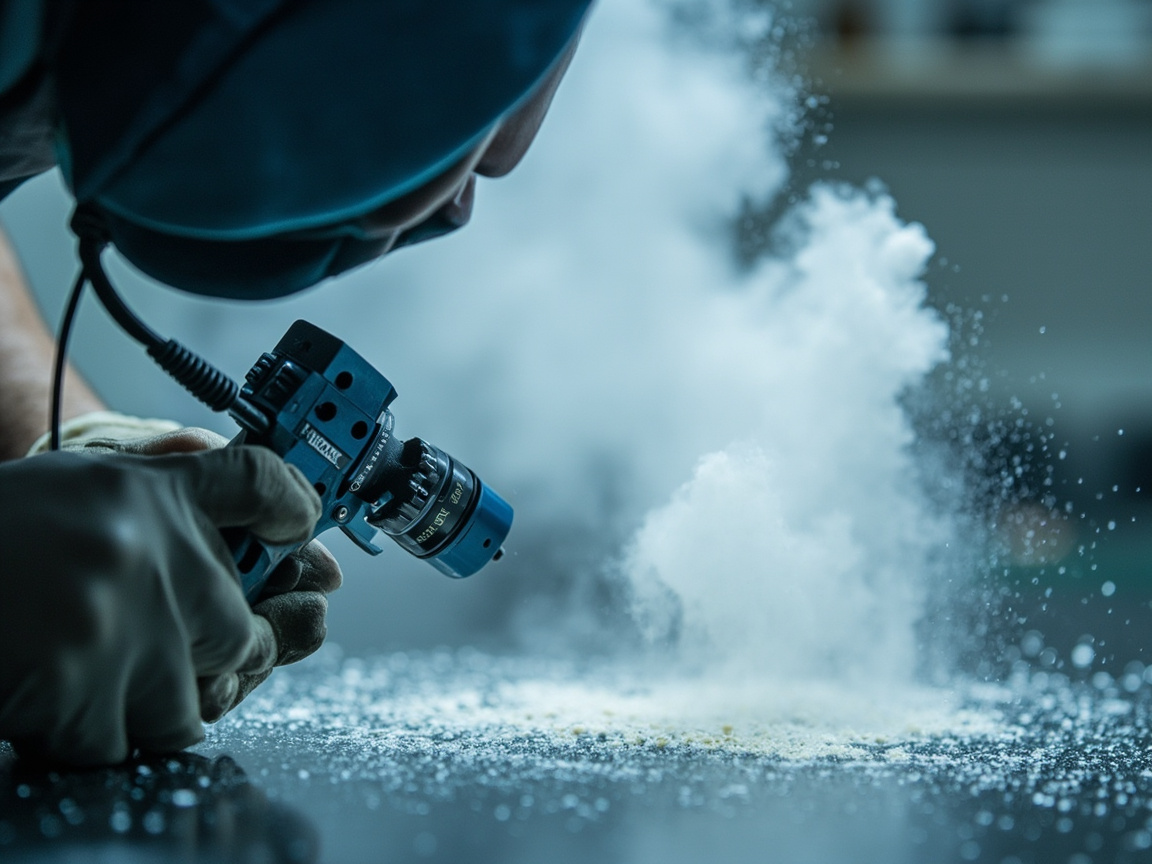
VI. Recovery System: High Utilization and Dust Explosion Prevention
Overspray powder accounts for a considerable proportion of the ejected amount. The recovery system collects and reuses the unadsorbed powder, achieving a material utilization rate of over 95%. Cyclone separation plus cartridge filter is the mainstream solution: large particles are pre-separated by cyclone, fine powder is intercepted by cartridge filter, and recovered powder is blended with new powder at a certain ratio. Recovered powder management: the particle size distribution of recovered powder drifts (with more fine powder), so it should be blended into new powder at a ratio of 10–30%; excessive amounts affect leveling and appearance; different colors and different systems must never be mixed for recovery. Dust explosion prevention: powder is combustible, designed per GB 15577 and GB 17440: concentration monitoring, anti-static grounding, explosion-proof electrical equipment, explosion venting openings; the spray booth and recovery system require an overall explosion-proof assessment.
The design of the recovery system must also take "air volume balance" into account. The spray booth should maintain a controlled state of slight negative or slight positive pressure: excessive negative pressure draws away large amounts of clean air, causing high energy consumption and carrying away fine powder; excessive positive pressure causes dust to escape and contaminate the workshop. The reasonable approach is to design the capture air velocity at booth openings per specifications, so that overspray powder is effectively sucked in without wasting air. The powder cleaning method of the cartridge (pulse back-blow) and replacement cycle also affect recovered powder quality: a clogged cartridge increases system resistance and causes unstable powder deposition; a damaged cartridge lets fine powder escape and exceed concentration limits. Concentration monitoring should be interlocked—once it reaches a certain proportion of the lower explosive limit, it must alarm or shut down, which is a hard requirement for GB 15577 compliance.
Kexin New Materials (kexinMaterials) emphasizes "separate lines by color and system" in its recovery solution, to avoid color-change contamination, and writes the reblending ratio into the process card to ensure batch stability.
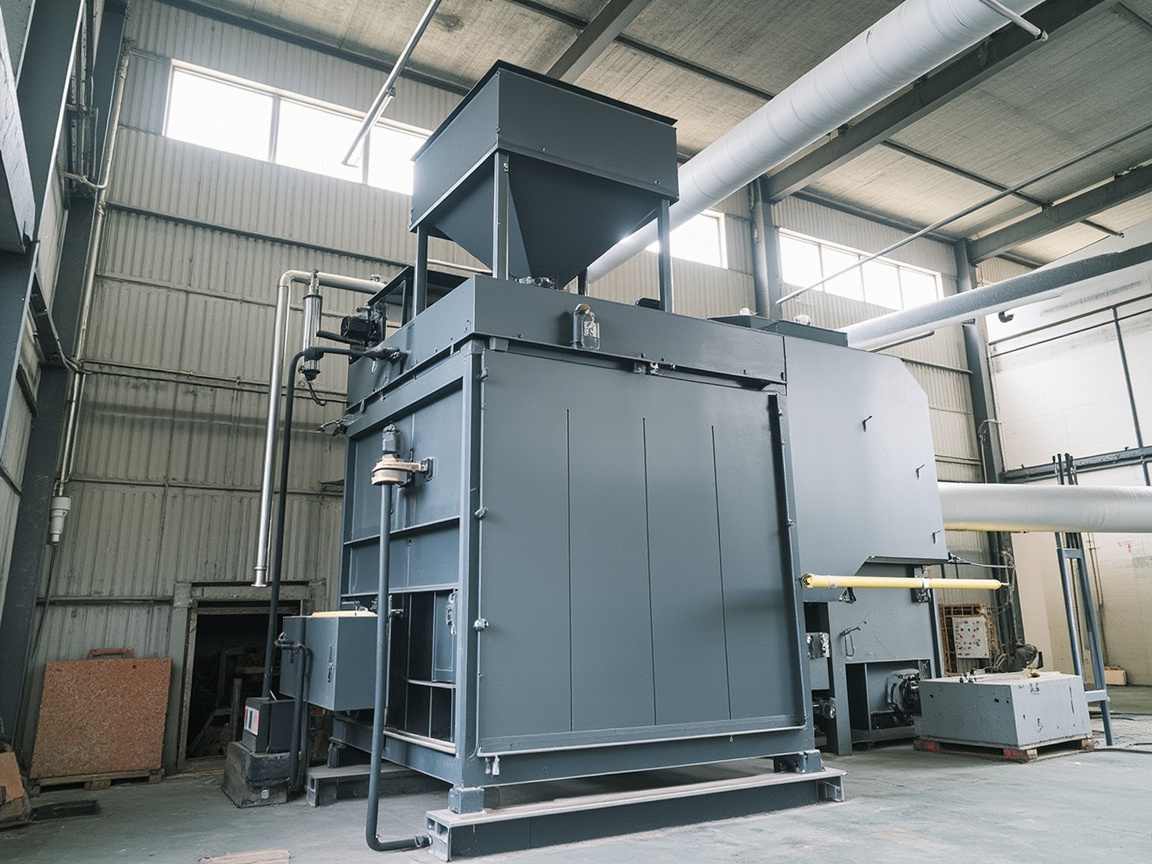
VII. Curing: The Furnace Temperature Curve Is the Key to Success or Failure
The curing oven melts, levels, and crosslinks (thermoset) or melts and sets (thermoplastic) the powder layer. Core parameters: Part Metal Temperature (PMP)—not the oven temperature, but the temperature of the workpiece itself; curing window matched to gel time (measured per ISO 8130-6); heating method (convection hot air is common, infrared heats up fast and suits thin parts, the two are often combined); degassing (thick-film or filler-containing powder requires sufficient degassing to avoid pinholes and bubbles, see insulating powder coating for the requirement of void-free).
Poor curing is the most frequent hidden failure in powder coating—it looks dry in appearance but is actually under-crosslinked, leading to delamination later. A "workpiece temperature recorder" must be used to measure the PMP curve, rather than just looking at the oven temperature gauge. Many factors affect PMP: workpiece wall thickness (thick parts heat up slowly and need longer holding), hanging density (dense hanging blocks hot air circulation), oven air duct design (dead corners have lower temperature), chain speed (too fast means insufficient residence time in oven). Therefore, under the same oven temperature, the actual PMP of thin sheet and thick pipe may differ by tens of degrees. Engineering practice should, when introducing new workpieces, send the temperature recorder through the oven with the workpiece, draw the full "heating—holding—cooling" curve, and set chain speed and oven temperature against gel time and cure degree requirements. For thick-film or filler-containing systems, a "degassing plateau" should be left in the early heating stage to let trapped gas escape before melting and leveling, otherwise pinholes and bubbles are inevitable.
VIII. Pretreatment and In-line Inspection
Pretreatment: degreasing, water rinsing, surface conversion (phosphating or silanization) or sandblasting (Sa2.5, refer to coating surface treatment Sa2.5). Conversion film or anchor pattern is the basis for adhesion; heavy anti-corrosion parts mostly use sandblasting (see heavy-duty anti-corrosion powder coating). Film thickness: measure wet (or powder layer) during application, measure dry film per GB/T 13452.2 after curing, control within design range. Adhesion: GB/T 9286 cross-cut, grade 0/1 is excellent. Appearance: no orange peel, sagging, particles, pinholes, craters. Hardness and impact resistance: GB/T 6739, GB/T 1732.
Pretreatment quality needs to be quantified by instruments, not by feel. After degreasing, a water break test should be done (surface should be fully wetted by water, no broken beads); after sandblasting, use a roughness gauge to measure anchor depth (commonly 40–100 microns, per standard and powder system), and assess cleanliness against standard plates (Sa2.5 per GB/T 8923.1 requires near-white, no visible grease and scale); after silanization or phosphating, measure conversion film weight or do a drop test. In-line inspection emphasizes "process control": set wet film/powder thickness measurement points on the coating line to promptly feedback powder output and chain speed; after curing, spot-check dry film thickness and adhesion, and immediately adjust parameters upon finding trend deviations (e.g., systematically thin film), rather than reworking after the whole batch is done.
Kexin New Materials (kexinMaterials) recommends "first-piece three inspections" for each new workpiece: film thickness distribution, adhesion, cure degree (soluble fraction or acetone wipe or DSC glass transition temperature), and confirm the process window before mass production.
IX. Color Change, Cleaning, and Environmental Control
The biggest hidden cost in multi-variety small-batch production is "color change". Color change is not just emptying the powder hopper, but thorough cleaning of the entire air path, powder hose, spray booth, and recovery system: blow out feed hopper and powder hose, back-blow or replace cartridge, remove powder stuck on booth walls and conveyor, isolate recovery system to avoid color cross-contamination. Color change time directly eats effective capacity, so line design should distinguish "same-color continuous" and "different-color switch": same color only needs powder refill, different color requires cleaning per procedure and "no residual color" verification (spray test on white board to confirm no foreign color). For high-frequency color change scenarios, independent small powder booths, quick-change recovery modules, or "one color one line" dedicated layout can be adopted.
Environmental control also affects stability. Spray booth temperature and humidity should be controlled (commonly 15–30℃, relative humidity 45–65% RH, depending on powder and equipment): too high humidity, powder absorbs moisture, fluidity drops, curing bubbles; too low humidity, static too strong, back ionization and orange peel worsen, and human/equipment static discharge risk rises. Cleanliness must be managed too—dust and fibers in air settle on wet film causing particles and craters. Compressed air must be oil- and water-removed (including dew point control), otherwise oil and water mixed into powder cloud directly cause craters and poor curing.
X. Typical Application Cases
Powder electrostatic spraying has penetrated almost all metal product industries; several typical examples:
First, home appliances and building materials. Refrigerator shells, washing machine inner drums, aluminum profiles, security doors, mostly use polyester or epoxy-polyester powder, emphasizing decoration and weather resistance. Such lines have fast节拍 and many colors, relying on automatic reciprocators with multiple guns and precise color change to control cost.
Second, pipelines and heavy anti-corrosion prefabrication. Oil and gas pipelines, water supply steel pipes, rebar, use FBE single layer or 3LPE/3LPP (see heavy-duty anti-corrosion powder coating), sprayed on factory continuous line then water-cooled to set, quality far superior to on-site coating.
Third, electrical and insulation. Busway, battery cases, motor parts, use insulating powder (see insulating powder coating), requiring volume resistance and dielectric strength, spraying process needs extra control of dust and uniform film thickness.
Fourth, wear-resistant and industrial parts. Mining machinery, conveyor troughs, oil pipe rods (see wear-resistant powder coating), add ceramic aggregate in epoxy matrix, spraying parameters must balance powder deposition and filler non-settling.
Fifth, high-temperature resistant parts. Exhaust pipes, furnace shells, motors use silicone heat-resistant powder (see silicone high-temperature coating), curing needs step heating to let glass frit seal pores and ceramicize.
Each industry's process card focuses differently, but the four things "first-piece verification, process film thickness, cure degree, recovery management" are consistent. Kexin New Materials (kexinMaterials) provides differentiated process card templates by application industry upon delivery, merging the above common requirements and industry-specific parameters into one executable document.
XI. Digital Spraying and Closed-loop Quality Control
Traditional spraying relies on experienced workers to "watch powder cloud, listen to sound" to adjust parameters, hard to replicate and trace. The digital trend is to turn each process quantity into collectable, alarmable, traceable data:
First, online monitoring of deposition rate and film thickness. Use non-contact thickness measurement or gravimetric method to estimate single-piece film thickness in real time, alarm on out-of-tolerance, avoid batch too thick or thin.
Second, online or near-line cure degree detection. Besides temperature recorder, near-line can use gloss, hardness or portable DSC/IR for spot check, blocking "under-cure" before shipment.
Third, digitalization of recovery and explosion-proof. Air volume, cartridge differential pressure, dust concentration, grounding status all uploaded to cloud, automatically reduce load or shut down on anomaly, meeting GB 15577 compliance traceability.
Fourth, versioning of process parameters. Each time changing workpiece/powder, save voltage, powder output, chain speed, oven temperature curve, reblend ratio as "process version", one-click call for same model next time, newcomers can also stably produce.
The value of such closed loop is not only saving material and labor, but "turning experience into data, data into standard", making quality no longer dependent on individual skilled workers. For multi-site, multi-line enterprises, unified process cards and data dashboards can also compare line differences horizontally and quickly locate anomaly sources.
XII. Cost Structure and Energy Saving
Powder coating cost should not only look at "powder price", but calculate the full-link account:
Material utilization: electrostatic spraying plus recovery, material utilization can reach over 95%, overspray powder reused; compared to solvent volatilization and overspray fog in liquid painting, powder has minimal material loss, and zero VOC (solvent zero per GB 30981) saving exhaust treatment cost.
Energy consumption: curing oven is the big energy user. Reduce energy by low-temperature curing powder (lower crosslink temperature), infrared pre-heating (fast heating for thin parts), oven insulation and heat recovery, reasonable chain speed (avoid too slow causing over-dense workpieces in oven, poor air circulation).
Rework cost: first-piece three inspections and process film thickness control eliminate defects at single-piece stage, far cheaper than whole-batch rework. Failures like Faraday shielding, under-cure, mixed color once flow downstream, rework and claim costs rise exponentially.
Color change cost: as said before, color change time and waste are hidden major heads, dedicated line or quick-change module can significantly reduce cost.
Overall, powder spraying unit cost on batch, regular parts is often lower than liquid, and environmental compliance pressure is smaller; the real cost trap is "rework and waste from process out-of-control", which is exactly what process card and digitalization solve.
XIII. Occupational Health and Safety Details
Safety first, and it must be implemented in details. Besides dust explosion prevention of recovery system (GB 15577, GB 17440), also note:
Electrical safety: The spray gun has high voltage and the curing oven has high temperature; equipment must have reliable grounding, overcurrent protection, and emergency stop; before maintaining the oven or spray booth, power must be cut off and a lockout/tagout sign must be placed.
Static electricity and fire: When a powder cloud reaches explosive concentration in an enclosed space and encounters an ignition source, it can deflagrate or explode. Therefore, the spray booth must strictly prohibit open flames and sparks; electrical explosion-proofing, static grounding, and concentration interlock are all indispensable; dust generated during filter and powder hopper cleaning must also be controlled to avoid local concentration accumulation.
Personnel protection: Operators must wear dust masks (to prevent inhalation of fine powder), goggles, anti-static clothing and shoes; oven exhaust must treat curing by-products (some powders release trace volatile substances during curing) to ensure workshop air meets standards.
Chemical contact: Pretreatment degreasers and conversion agents are corrosive or irritating, and must be handled per the Safety Data Sheet (SDS), with eyewash stations and emergency rinsing provided.
Writing safety as a "daily inspection checklist" is more effective than verbal emphasis: whether grounding is intact, whether concentration alarm is online, whether explosion-proof electrical equipment is intact, whether exhaust is normal, whether protective equipment is in place—check each item one by one, then risk is controllable.
14. Common Process Misconceptions
Misconception 1: Curing is done once the oven temperature reaches 200℃. Wrong. Look at the workpiece temperature (PMP); thick parts heat up slowly, oven temperature reaching standard does not mean the workpiece meets standard. Misconception 2: Higher voltage means better powder deposition. Wrong. Too high causes reverse ionization, orange peel, and arcing; the lowest sufficient voltage should be used. Misconception 3: Recycled powder can be added casually. Wrong. Particle size drift requires controlling the blend ratio; excessive amounts damage appearance; mixing colors or systems is an accident. Misconception 4: Complex parts can be fully sprayed in one pass. Wrong. Faraday shielding requires multiple guns or friction guns or rotation, and a thickness gauge to verify dead corners. Misconception 5: Only appearance is checked, not cure degree. Wrong. Under-curing may pass appearance but later delaminate; cure degree must be measured. Misconception 6: Finer powder is easier to spray. Wrong. Over-fine powder cloud disperses, low deposition rate, surging recovery, and grainy appearance; particle size distribution must be reasonable. Misconception 7: Only the powder hopper is changed when changing color. Wrong. Powder hose, spray booth, and recovery line must all be cleaned thoroughly or color contamination is inevitable. Misconception 8: Humidity does not matter. Wrong. Too humid causes blistering from moisture absorption, too dry causes excessive static and orange peel; environment must be controlled.
15. Technology Trends
First, digital spraying: online film thickness and cure degree monitoring with real-time closed loop; second, popularization of friction guns: improving edge and corner coverage and reducing reverse ionization; third, low-temperature curing process: reducing energy consumption and expanding substrates; fourth, green recovery: high-efficiency filters for finer dust and reblending algorithms to further improve utilization; fifth, water-based/high-decoration and functional integration: combining anti-corrosion, wear resistance, insulation, and heat resistance in the same powder system to reduce process steps.
16. Selection Decision Tree
When selecting a spraying process, first look at the workpiece (shape complexity determines corona or friction, whether fluidized bed is needed); then look at output (batch goes to automatic line, small batch goes to manual); then look at color frequency (high-frequency color change requires fast-clean line design); finally look at recovery and explosion-proof grade (per GB 15577). Write this path into the production line specification to avoid process pitfalls. One addition: also look at the powder system itself—wear-resistant powder with coarse aggregate needs larger powder output and anti-settling, insulating powder needs dust and uniform film thickness control, heat-resistant powder needs stepwise temperature rise curing; these are listed separately in the process card.
17. Common Defects and Troubleshooting
| Defect | Cause | Countermeasure |
|---|---|---|
| Orange peel | High voltage, poor leveling | Adjust voltage, control gelation |
| Uneven thickness | Faraday, poor gun placement | Multiple guns / friction / rotation |
| Pinholes | Incomplete degassing | Preheat to degas |
| Gun clogging | Moist powder, fine particle size | Control storage, adjust particle size |
| Under-cure | Insufficient PMP | Measure workpiece temperature |
| Color mixing | Mixed recovery collection | Separate lines and colors |
| Cratering | Oil/water / contamination | Clean air, clean environment |
| Granules | Dust / fibers | Control cleanliness |
18. Standards and Inspection Checklist
Acceptance covers: GB/T 13452.2 (film thickness); GB/T 9286 (adhesion); GB/T 6739 (hardness); GB/T 1732 (impact); ISO 8130-6 (gel time, process setting); ISO 8130-5 (flowability / powder-air mixture); ISO 8130-1 (particle size distribution); GB 15577 / GB 17440 (explosion-proof compliance). It is recommended to establish a four-fold check of "film thickness plus adhesion plus cure degree plus explosion-proof inspection", and combine with the process card for full-process data traceability.
FAQ
Q: What is the typical voltage setting for electrostatic spraying?
A: Corona spray guns commonly use 30–100 kV, but higher is not always better. Too high easily causes reverse ionization (ion wind blows powder away), edge orange peel, or even arcing. It should be set at the lowest voltage sufficient for adhesion plus appropriate powder output plus reliable grounding; the specific range is given by the process card.
Q: How to choose between corona and friction spray guns?
A: Corona relies on high-voltage ionization to charge, with high deposition rate and versatility, but dead corners have ion wind; friction relies on powder friction with the tube wall to generate charge, with no ion wind and good coverage at edges/corners (Faraday shielding zone), but is sensitive to powder resistivity and climate. Complex parts and mesh parts lean toward friction; large flat batch leans toward corona.
Q: What is Faraday shielding and how to solve it?
A: A cavity or inner corner surrounded by a conductor has extremely weak electric field, making it hard for powder to enter, causing missed coating. Countermeasures: use friction gun, multiple gun placement plus workpiece rotation, lower voltage and higher current, preheat workpiece, optimize powder chargeability, and use a thickness gauge (GB/T 13452.2) to check dead corners.
Q: Can recycled powder be reused indefinitely?
A: No. Recycled powder particle size distribution drifts (more fine powder), excessive amounts affect leveling and appearance; different colors or systems must never be mixed. Typically blend with new powder at 10–30% ratio, with the ratio written into the process card and periodically verified for appearance and performance.
Q: For curing, look at oven temperature or workpiece temperature?
A: Look at workpiece temperature (PMP). Workpieces of uneven thickness heat up slowly; oven temperature reaching standard does not mean the workpiece reaches curing temperature. Use a temperature recorder to measure the PMP curve, matching the gel time window (per ISO 8130-6), to avoid under- or over-curing.
Q: What are the consequences of under-curing and over-curing?
A: Under-curing: soft, poor chemical resistance, low adhesion, later delamination; over-curing: embrittlement, yellowing, gloss loss, performance decline. Both are avoided by controlling the oven temperature–time curve and PMP, and confirmed by cure degree testing.
Q: What are the safety priorities for powder coating?
A: The core is dust explosion prevention: powder is combustible, design spray booth and recovery per GB 15577 and GB 17440 (concentration monitoring, anti-static grounding, explosion-proof electrical, venting); operators wear dust protective gear; oven exhaust treats curing by-products.
Q: How important is pretreatment for powder adhesion?
A: Decisive. Incomplete degreasing, insufficient conversion film or anchor pattern, powder adhesion and corrosion resistance drop sharply; heavy anti-corrosion parts must be blasted to Sa2.5 (refer to Coating Surface Treatment Sa2.5). Pretreatment is the foundation of powder coating.
Q: How to control and measure film thickness?
A: Controlled by powder output, chain speed, spray distance, and voltage together; powder layer can be measured during application, after curing measure by magnetic or eddy current per GB/T 13452.2 to ensure reaching the design range with uniform distribution, especially checking edges/corners and dead corners.
Q: Why emphasize first-piece three-inspection?
A: New workpieces differ in shape, thickness, and material, requiring process window verification. First-piece three-inspection (film thickness distribution, adhesion GB/T 9286, cure degree DSC or acetone method) confirmed before mass production avoids batch rework and turns experience into data.
Q: Which standards apply to gel time and flowability respectively?
A: Gel time (Gel Time, determines the window from melting to crosslinking) is measured per ISO 8130-6; flowability (fluidization characteristics of powder/air mixture, affecting feeding stability) is evaluated per ISO 8130-5. Both are key parameters aligning powder indicators with spraying process.
Q: Why does color change take so long, and how to optimize?
A: Color change requires cleaning the feed hopper, powder hose, booth walls, recovery and filters; any residue causes color contamination. Optimization relies on dedicated line layout, fast color-change recovery modules, changeover procedures, and "white board test spray with no residual color" verification; high-frequency color-change lines especially warrant investment in fast-clean systems.
Further Reading
- Powder Coating Principles and Classification: From Film-Forming Mechanism to Resin System Selection: Understanding powder film formation and particle size, gel time, is the premise to read spraying process parameters.
- Heavy-Duty Powder Coating: FBE and Multilayer Structure: Pipeline FBE / 3LPE is typical factory prefabricated spraying, this article's process is implemented thereon.
- Coating Surface Treatment Sa2.5 and Blasting Grades: Pretreatment determines powder adhesion and durability; no matter how good the spraying, it cannot save poor pretreatment.
- Industrial Paint Application: Airless Spray Parameters, Film Thickness Control and Coating Interval