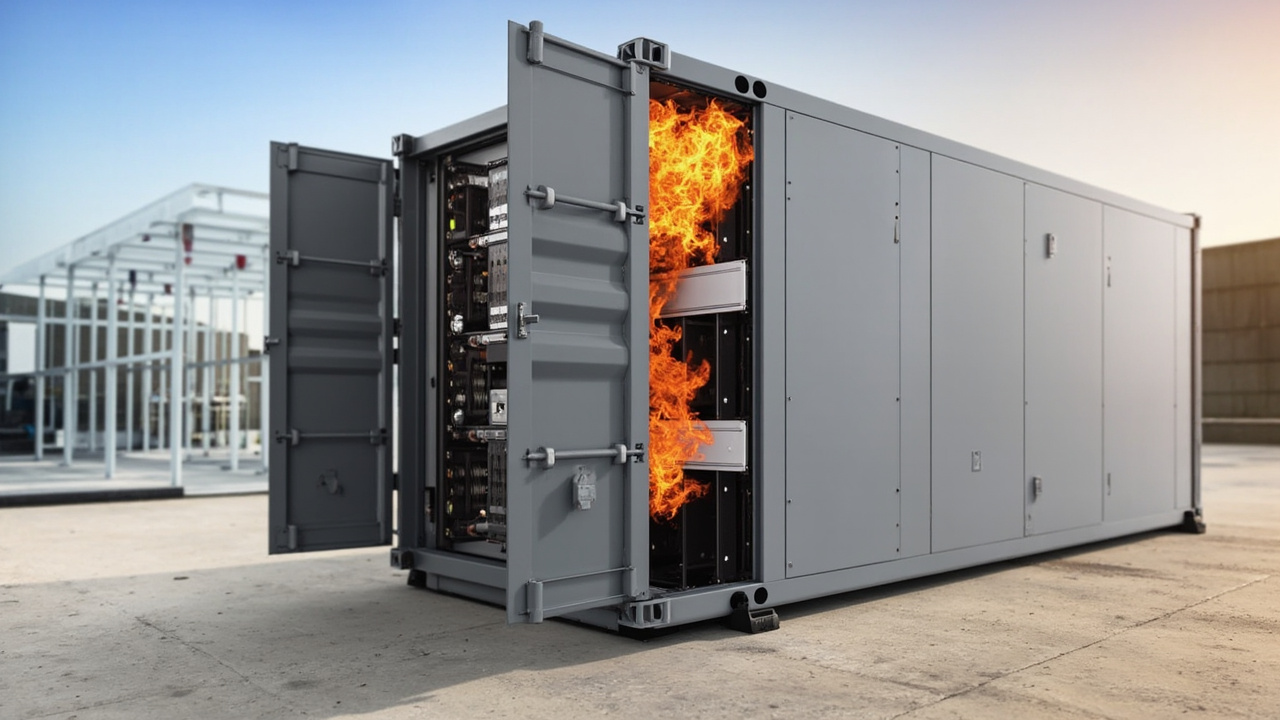
Energy storage (ESS) is the "power bank" for renewable energy absorption, with explosive growth in scale from residential storage to megawatt-level containers. But the core of energy storage is lithium-ion batteries; once thermal runaway causes a fire, conventional firefighting is hard to extinguish and prone to re-ignition. Therefore, "passive fire protection"—relying on the material itself to delay and block—has become the focus of safety design. Fire-retardant coating is precisely the passive safety barrier for storage cabinets, containers, and outdoor cabinets: applied on the enclosure, battery racks, partitions, and cable trays, it expands or insulates during a fire, delaying flame penetration and heat transfer, buying time for firefighting and personnel evacuation. This article clarifies the systems, locations, standards, and selection of ESS fire-retardant coatings, and extends to materials, processes, quality control, standards, and industry trends, for reference by design, procurement, and construction parties.
Kexin New Materials (Guangdong) Co., Ltd. is located in Foshan and has long focused on the R&D and manufacturing of fire-retardant, flame-retardant, and functional protective coatings. Its energy storage and new energy protective coatings emphasize the on-site constructible balance of "thermal insulation + flame retardancy + weather resistance", and has accumulated painting experience on enclosures, battery racks, and cable covering in multiple energy storage supporting projects in South China. kexinMaterials' production line extends passive fire protection from a single coating product to an integrated solution of "substrate treatment—coating system—weather-resistant topcoat—on-site quality inspection", which is also the practical foothold of the technical framework in this article. It must be emphasized that ESS fire protection is never as simple as "buy a bucket of paint and brush it on"; rather, it twists chemistry, thermal science, materials, and construction technology into a verifiable and traceable chain; any weak link may cause the entire barrier to fail first in an actual fire test. Precisely for this reason, the following sections of this article unfold layer by layer from risk mechanism, material system, performance indicators, construction process, quality control standards to selection misconceptions, striving to enable design, procurement, and construction parties to communicate under the same set of language, avoiding safety hazards left by conceptual confusion.
I. The Particularity of Energy Storage Fires
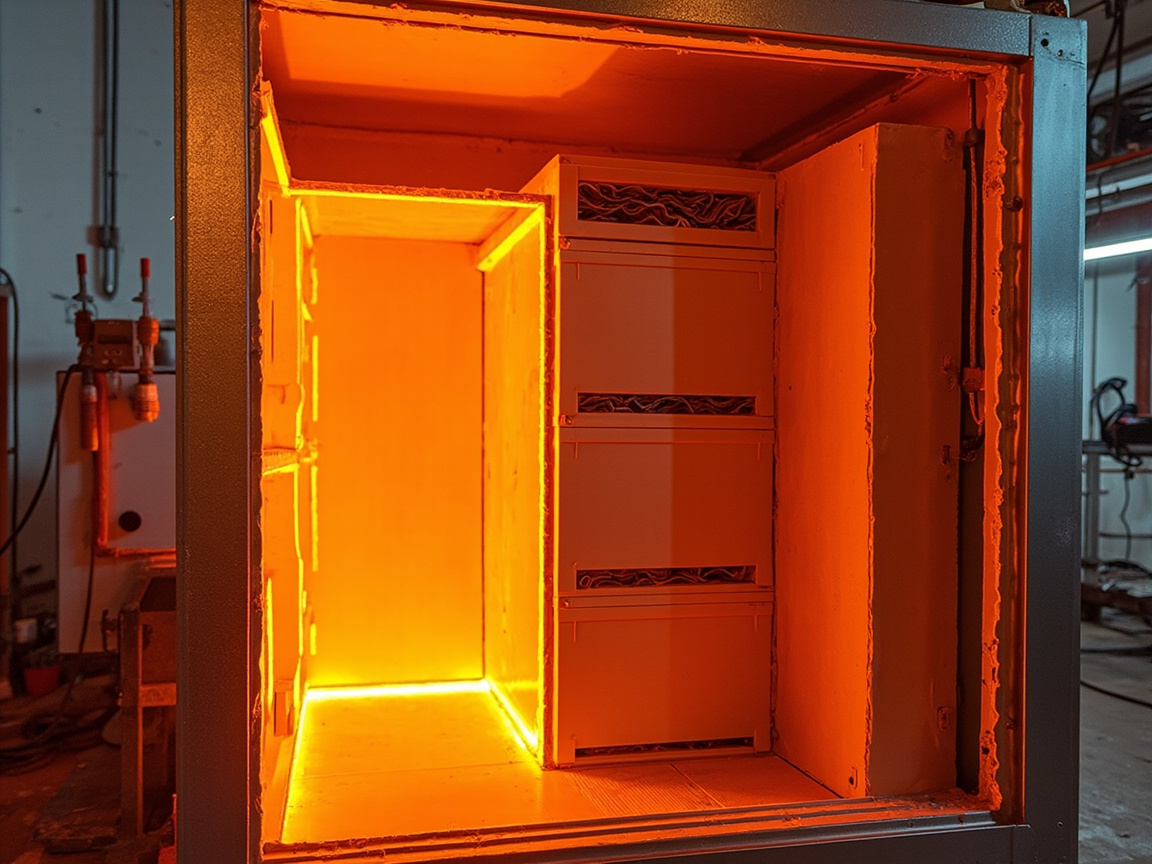
The difficulty of energy storage fires lies in three points: first, lithium-ion battery thermal runaway releases large amounts of heat and flammable gas, prone to jet fire; second, strong re-ignition, the surface is extinguished but the interior is still reacting; third, batteries are densely packed in containers, once spread it is extremely fast. Active firefighting (gas, water spray) has limitations, so standards and design generally require "passive fire protection" as the first barrier—let the fire burn within a confined space, not penetrate outward, not spread rapidly. Coatings, fire-rated boards, and fire stops together constitute this barrier. Statistically, energy storage accidents mostly start from single-cell failure, but the harm amplifies in the word "spread": the energy of a single cell is limited; what truly causes container burn-out and neighboring cabinet involvement is the chain propagation of thermal runaway between modules and cabin sections. The primary goal of passive fire protection is not to extinguish the initial fire, but to cut off or greatly delay the propagation chain, so that the active system has time to act, personnel have time to evacuate, and adjacent assets have time to be isolated. This also explains why recent power station design codes increasingly emphasize "cabin wall fire resistance integrity" and "inter-module blocking", rather than relying solely on detection and sprinklers.
II. Mechanism of Thermal Runaway and Propagation
The trigger temperature of single-cell thermal runaway varies by chemistry: ternary lithium often exhibits exotherm at 120–180℃, while lithium iron phosphate is slightly higher but equally violent once the critical point is breached. There are three paths for heat transfer from a failed cell to adjacent cells: solid conduction (through cell casing, module bracket, partition), convection (flammable gas and hot smoke flow inside the cabin), and radiation (heat radiation from high-temperature surface to low-temperature surface). Passive fire-retardant coating must simultaneously weaken these three paths: on the solid conduction direction, rely on low thermal conductivity or ceramicized shell to lengthen thermal resistance; on the convection direction, rely on sealing and barriers to narrow smoke channels and reduce hot smoke velocity; on the radiation direction, rely on high emissivity/high reflectivity or expanded char layer to form a thermal barrier. Understanding these three paths makes it clear why "just brushing a thin layer of paint" is often insufficient—different locations must be selected based on the dominant heat transfer path. Engineering also evaluates "thermal runaway propagation probability" and "propagation time" as the reverse basis for coating grade: if a neighboring module temperature rise delay of over 10 minutes is required, the thermal resistance and thickness of the module partition must be designed to this target, rather than given a fixed value by experience.
III. Graded Design Approach of Passive Fire Protection
Engineering often divides ESS passive fire protection into three levels: cabin level, module level, and component level. The cabin level targets the container enclosure, cabin walls, and doors, with the goal that fire does not penetrate outward from the cabin and back-side temperature is controllable; the module level targets module partitions, trays, and brackets, with the goal of blocking single-unit failure from propagating to neighboring modules; the component level targets busbars, cables, wall penetrations, and air vents, with the goal of preventing arc ignition and fire jumping. Coatings can be used at all three levels, but the systems differ: cabin level mostly uses intumescent or ceramicized thick coatings, module level mostly uses insulating or aerogel thin coatings, component level mostly uses flame-retardant covering and elastic sealing. Kexin New Materials in its Foshan production line usually supports according to the idea of "cabin level emphasizes blocking, module level emphasizes thin blocking, component level emphasizes flexibility", avoiding one coating forced onto all locations. The significance of grading also lies in cost control: cabin level has large area and high requirements, using composite structure to control material usage; module level has large quantity and emphasizes consistency, using automatable thin-coating systems; component level highlights flexibility and electrical insulation, avoiding impact on electrical safety.
IV. Two Mechanisms of Fire-Retardant Coatings
One is intumescent: when exposed to fire, the acid source, carbon source, and gas source in the coating react synergistically at 150–300℃, foaming and expanding dozens of times to form a porous char layer, which relies on the char layer to insulate and block oxygen to prevent flame from reaching the substrate, commonly used for steel structures and enclosures. The second is insulating type (non-intumescent): relying on low thermal conductivity fillers (hollow microspheres, aerogel, ceramicized fillers) to block heat outside, and ceramicizing under high temperature to form a hard shell, commonly used for battery racks and partitions. Actual ESS solutions often combine the two, and use flame-retardant covering for cables. It must be emphasized that the "expansion ratio" and "char residue strength" of intumescent are equally important: high expansion but the char layer breaks at a touch, back-side temperature will rebound rapidly; therefore the formulation must balance foaming kinetics and char skeleton. In addition, intumescent has extremely high requirements for coating integrity and initial adhesion—if it is already cracked or poorly adhered in normal times, it will delaminate before expansion when exposed to fire, and the barrier function becomes zero. This is why pre-treatment and construction quality control have the highest weight in intumescent systems.
V. Detailed Intumescent System
The core of intumescent fire paint is "three sources and one catalyst": acid source (ammonium polyphosphate APP, etc.) decomposes and releases acid upon heating; carbon source (pentaerythritol, etc.) dehydrates into char under acid catalysis; gas source (melamine, etc.) decomposes to release non-combustible gas to expand the char layer; catalyst/film former (acrylic, epoxy, organosilicon modified resin) binds the system into one and withstands high temperature. ESS scenarios are mostly metal substrates (steel plate, aluminum profile), so substrate adhesion and non-delamination at high temperature are key. In formulation, APP particle size and coating must be controlled to avoid moisture absorption causing poor storage stability; using organosilicon or epoxy modification can improve temperature and wet adhesion. In construction, intumescent generally requires dry film thickness on the order of 1–3mm to achieve a decent fire rating, thin coating can only be auxiliary. kexinMaterials tends to use epoxy/organosilicon hybrid film formers in intumescent systems, to balance metal adhesion and outdoor weather resistance. Furthermore, APP coating technology determines the water resistance and storage life of the coating; uncoated APP is easily soluble in water, absorbs moisture and agglomerates, and after spraying it will "whiten" or even fall off when wet; therefore high-end ESS coatings widely use APP coated with melamine or melamine resin, which is also a detail worth asking suppliers during selection.
VI. Detailed Insulating Type (Non-Intumescent) System
The insulating type wins by filler thermal conductivity; common fillers include hollow glass microspheres, hollow ceramic microspheres, mica powder, aluminum hydroxide/magnesium hydroxide (also flame retardant), expanded perlite, and aerogel powder. Its mechanism is that a large number of closed-cell or layered structures cut off heat flow, and the fillers can dehydrate and endotherm or ceramicize at high temperature. Advantages are stable performance, not dependent on expansion reaction, can be thick-coated; disadvantages are high specific gravity, and self-weight and stress problems are prominent when film is thick. For battery racks and partitions, the insulating type is more suitable for long-term stable barrier; for air ducts and enclosure inner side, it often needs to be combined with intumescent or fire-rated board. The formulation difficulty lies in: too much filler makes construction viscosity high and easy to settle, too little cannot reduce thermal conductivity. Kexin New Materials uses a graded idea of compounded microspheres + mica, reducing thermal conductivity and improving anti-settling under the same film thickness. Specifically, hollow microspheres provide the main low-conductivity contribution, mica flakes provide layered barrier and reinforcement, aluminum hydroxide provides halogen-free flame retardancy and endotherm; the three graded can achieve stable insulation at 3–6mm film thickness, while controlling density within an acceptable range, avoiding excessive load increase on battery racks.
VII. Ceramicized Fire Coating
Ceramicized coating is a flexible or rigid coating at normal temperature, and when exposed to fire (usually above 600℃) it vitrifies and ceramicizes under the action of flux, forming a hard non-combustible shell that separates the interior from the flame. It has the characteristic of "coating in normal times, hard shell in fire", suitable for battery racks, partitions, and some structural parts. Compared with intumescent, ceramicized does not rely on foaming, the shell thickness is stable, and it has good mechanical impact resistance and does not shrink back at high temperature; the disadvantage is higher unit thickness cost, and the formulation is sensitive to sintering aids (too much aid causes low-melting soft collapse, too little causes incomplete ceramicization). Engineering often uses ceramicized for locations that "need to withstand impact in normal times and hard shell in fire", complementing intumescent. The art of ceramicized formulation lies in the flux window: low-melting glass powder must rapidly form ceramic in the fire temperature range, but must not soften prematurely at normal or long-term service temperature (such as 60–70℃ inside the cabinet in summer); therefore, the ceramicization temperature must be repeatedly calibrated through DSC, TGA, and physical ablation, which is one of the formulation thresholds.
VIII. Aerogel Insulating Coating
Aerogel powder (mainly SiO2 aerogel) has thermal conductivity as low as 0.013–0.020 W/(m·K); made into a coating, it can achieve excellent insulation at very thin film thickness, being the direction of "thin yet strong". But aerogel coating is brittle, powder cost is high, and compatibility with resin needs treatment; it is mostly used for module-level thin coating or weight-sensitive components. When applying, note: aerogel coating itself cannot withstand direct open flame burning, usually used as a composite structure of "insulating lining + outer flame-retardant/fire-proof" to be both thin and fire-resistant. kexinMaterials in some high-energy-density storage cabinets adopts a composite solution of aerogel thin coating as primer and outer flame-retardant topcoat, to balance lightweight and fire resistance. Aerogel powder surface is hydrophobic and has poor wettability with organic resin; direct blending easily agglomerates and produces pinholes, so silane coupling agent surface modification and appropriate viscosity system must be done; in construction, low-shear mixing should be adopted to avoid high-speed shear destroying the 3D network, otherwise insulation performance is discounted.
IX. Epoxy Mica System Flame-Retardant Insulation
The epoxy mica system uses epoxy resin as film former and mica flakes etc. as functional fillers, combining flame retardancy and electrical insulation, especially suitable for battery racks, module trays, and around busbars—these locations fear both fire and leakage. The layered structure of mica blocks heat and paths, epoxy provides high adhesion and chemical resistance; combined with halogen-free flame-retardant fillers such as aluminum hydroxide, it can achieve low smoke and halogen-free. Its limitation is that epoxy weather resistance is average, outdoor needs weather-resistant topcoat; and epoxy curing is affected by temperature and humidity, on-site construction must control environment. Kexin New Materials positions the epoxy mica system as the "insulation + flame retardancy" component-level main force, divided from the cabin-level intumescent/ceramicized system. In busbar scenarios, epoxy mica can also provide certain creepage distance and arc resistance, reducing interphase short-circuit ignition risk; but must strictly control the coating free of conductive impurities, and leave blank on conductive contact surfaces to avoid affecting current carrying and heat dissipation.
X. Material System Comparison
| System | Mechanism | Advantages | Limitations | Typical Locations |
|---|---|---|---|---|
| Intumescent fire paint | Foamed char layer | Relatively thin film, good insulation, can be thick-coated on-site | Needs sufficient thickness to be effective, needs topcoat for weather resistance, char layer fears breaking | Enclosure inner side, cabin wall |
| Insulating flame-retardant paint | Low thermal conductivity filler | Stable performance, can be thick-coated, not dependent on reaction | Film heavy, limited thermal conductivity, self-weight stress | Battery rack, partition |
| Ceramicized fire paint | High-temperature ceramicization | Hard shell at high temperature, impact resistant | Higher cost, sensitive to additives | Structural parts, partition |
| Aerogel coating | Extremely low thermal conductivity | Light, thin, strong insulation | Brittle, expensive, not resistant to direct flame | Module-level thin coating |
| Epoxy mica system | Layered barrier + insulation | Flame retardant with insulation, good adhesion | Poor weather resistance needs topcoat | busbar, tray |
| Fire-rated board (non-coating) | Physical barrier | Ready to use, clear rating | Joints need treatment, adds weight | Cabin wall, compartment |
Selection is not "pick the best", but "pick the most suitable and verifiable by location". For example, if the enclosure already uses thick steel plate + fire-rated board, the inner coating can be downgraded to an auxiliary intumescent layer; if the battery rack has tight space, prioritize thin aerogel or epoxy mica rather than heavy insulating paint; coastal salt spray environment must include weather-resistant topcoat and anti-corrosion primer in the whole.
XI. Performance Indicator System
Evaluating ESS fire-retardant coatings cannot just look at the word "fire rating", but should be broken down into a set of indicators: fire resistance limit (minutes), back-side temperature rise (℃), flame penetration time, flame retardant grade (UL94/GB 8624), smoke density (SDR/smoke box), toxicity index, adhesion (normal and post-high-temperature), performance retention after aging, thermal conductivity and density. The design party should translate these indicators into a "procurement specification" by location, for example, the enclosure inner side requires "hydrocarbon fire 30 minutes back-side temperature ≤ a certain value, no penetration", module partition requires "under single-point failure neighboring module temperature rise delay ≥ certain minutes". Kexin New Materials when issuing technical solutions, is used to first clarifying the location and target indicators, then reverse-deriving the system and film thickness, rather than first fixing the coating then fitting indicators. Indicators often conflict: increasing film thickness improves fire resistance but adds weight and cost; low smoke halogen-free may sacrifice some flame-retardant efficiency; thin light weight often brings stricter process requirements. Mature solutions make trade-offs among multiple objectives and use fire test data for closed-loop verification.
XII. Significance of Fire Resistance Limit and Time
Fire resistance limit refers to the time that a component maintains load-bearing capacity, integrity, or insulation (back-side temperature not exceeding limit) under standard or simulated fire, commonly graded as 15/30/60/90 minutes. In energy storage, "integrity" and "insulation" are often more critical than "load-bearing": the enclosure must block fire and heat even if not deformed. Note that laboratory small-sample grade is not equal to real enclosure grade—area, nodes, joints, and support methods all change the result. Therefore verification should be based on component level, preferably whole-cabinet fire test. The essence of the time indicator is to buy time for active firefighting and evacuation: a 30-minute grade means from ignition to back-side temperature runaway there is about half an hour window, enough for gas extinguishing action or personnel evacuation. kexinMaterials' engineering suggestion is that outdoor cabinets should start at least at 30 minutes, and high-risk scenarios go up to 60 minutes. Special reminder: the "judgment condition" of fire resistance limit must state whether it is integrity or insulation: some products meet integrity but have very high back-side temperature, limited protection significance for ESS lithium batteries, must see the judgment caliber clearly when selecting.
XIII. Temperature Drop and Back-Side Temperature Control
Back-side temperature (substrate temperature on the back of the coating) is a hard constraint for ESS fire protection: lithium batteries enter the danger zone at about 80–120℃, so even if the flame is outside, the back-side temperature must be suppressed below the threshold long enough. The coating relies on thermal resistance and endotherm (filler dehydration) dual action to lower back-side temperature. Experience: intumescent char layer 2–5cm equivalent thermal resistance is considerable; insulating type relies on 3–10mm low thermal conductivity layer; composite structure can further lower back-side temperature. Design must calculate "critical film thickness"—below it back-side temperature will breach threshold. On-site construction often fails due to insufficient thickness, so film thickness quality control is the lifeline. Kexin New Materials for key locations adopts "design film thickness + 20% safety margin" and measures thickness point by point. Back-side temperature is also affected by the thermal capacity and heat dissipation of the substrate itself: the same coating on thick steel plate rises back-side temperature slowly, on thin aluminum may be faster, so before converting to real component cannot simply extrapolate from flat plate small sample; this is also the practical reason for emphasizing component-level fire test.
XIV. Smoke Density and Toxicity
The main cause of fire casualties is often smoke rather than open flame. The smoke density (Smoke Density Rating) and toxicity (such as CO, HCl, HF, HBr release) of ESS coating during combustion or heating must be controlled. Halogen-free systems (aluminum/magnesium hydroxide, phosphorus-nitrogen system) are relatively low-toxic and low-halogen, but completely halogen-free is not necessarily low-smoke, still need formulation optimization and smoke suppressant fillers (such as molybdate, zinc series). Standards such as GB/T 8627 smoke density, GB/T 20285 toxicity classification are common bases. For closed or semi-closed storage cabins, smoke toxicity indicator even more affects escape and rescue than fire resistance time, so selection cannot just look at flame retardant grade. kexinMaterials lists "smoke toxicity" as a veto item in formulation review. In actual accidents, if the closed cabin smoke contains hydrogen halide, not only toxic, but also corrodes electronic equipment and expands secondary losses; therefore for large power stations and personnel-accessible areas, strongly recommend halogen-free low-smoke route, even if material cost is slightly higher.
XV. Construction Location Overview
- Container/outdoor cabinet enclosure inner side: intumescent fire paint, delaying flame penetration of the enclosure.
- Battery rack and partition: insulating flame-retardant coating or fire-rated board, blocking spread between cabins.
- Cable tray and busbar: flame-retardant covering, preventing arc ignition.
- Air vent and wall penetration: fire stop material (coordinated with coating).
- Door seam and joint: intumescent sealing strip.
- Module tray and bracket: epoxy mica or insulating type, balancing insulation and flame retardancy.
- Air duct and exhaust channel: flame-retardant and low-smoke, avoiding becoming high-speed smoke channel.
Coatings cannot solve everything, need to coordinate with structural fire protection (thick steel plate, fire-rated board) and sealing. Location determines system, system determines process, the three linked is a qualified solution. Omitting any location may become a spread breakthrough, so before construction a mapping table of "location list + corresponding system" should be made, and checked item by item.
XVI. Module-Level Fire Barrier
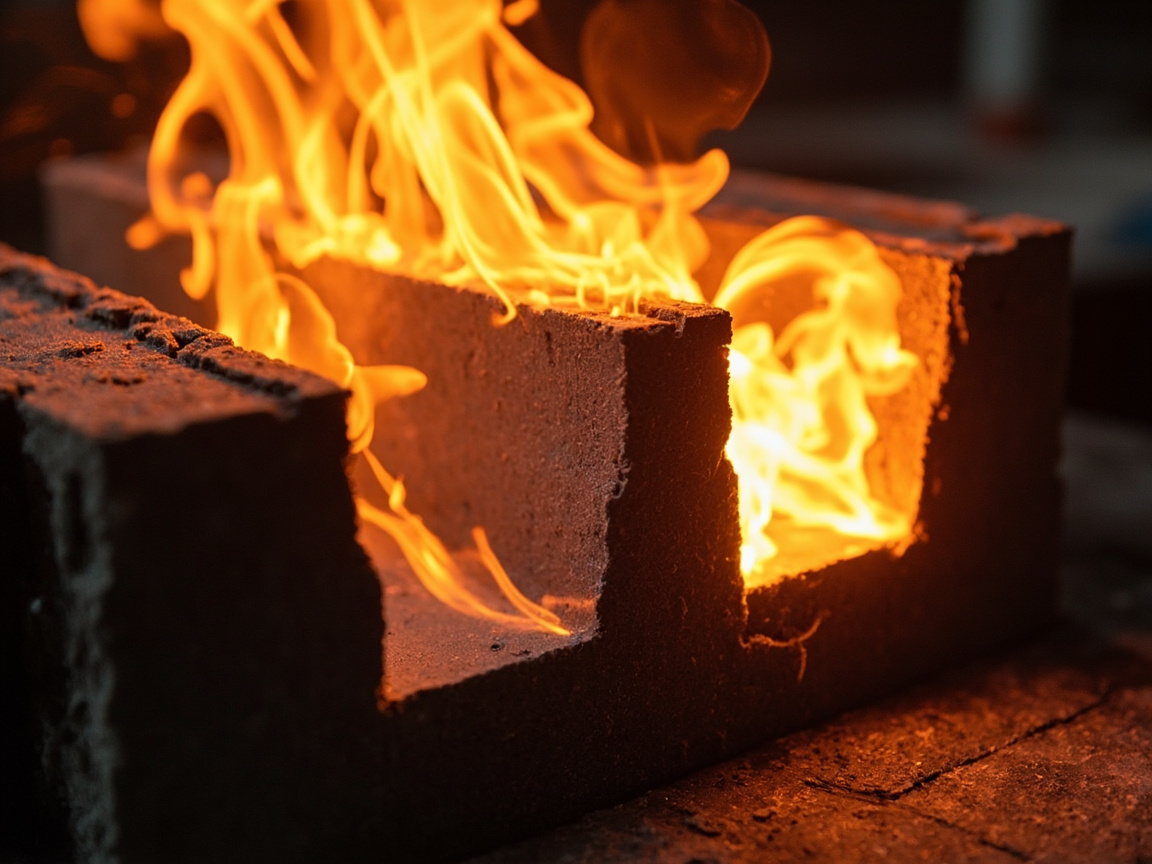
The goal of module-level barrier is "single-unit failure does not affect neighboring modules". Three implementation methods: insert flame-retardant partition between modules (coating treated or fire-rated board), overall thin coating on module enclosure, leave air gap between modules and fill with intumescent seal. The coating here requires thin, light, and not affecting module heat dissipation and disassembly. Aerogel thin coating or epoxy mica thin coating are common choices; for high-energy-density modules, "mica insulation primer + flame-retardant topcoat" composite can be used. The key is to cover the five faces of the module (except the heat dissipation face), leaving no gaps. Kexin New Materials in multiple 280Ah/314Ah cell modules, uses 0.5–1.0mm epoxy mica thin coating on trays and side plates, combined with inter-module flame-retardant partitions, measured to significantly delay neighboring module temperature rise. Note that the heat dissipation face (usually the module large face or bottom liquid cooling plate) cannot be blindly coated thick, otherwise it affects heat exchange and raises daily temperature; module-level coating should "block where should block, dissipate where should dissipate", co-designed with thermal management rather than acting independently.
XVII. Battery Cabin and Container Enclosure Coating
The enclosure shell is mostly 1.5–3mm steel plate, with intumescent or ceramifiable fire-retardant paint applied on the inner side. The goal is that when fire comes from outside or inside, the back-face temperature remains controllable, without penetration or collapse. The construction difficulties lie in the large area, numerous welds, and many irregular parts, requiring segmented spraying and node reinforcement. For the shell, the "two-way fire" must also be considered: external fire (surrounding fire baking the enclosure) and internal fire (battery inside the enclosure burning through toward the outside). The coating requirements for the two differ slightly, and a composite structure is more stable. In the outdoor cabinet solution delivered by kexinMaterials in Foshan, the approach of "2mm intumescent coating on the inside + weather-resistant topcoat on the outside" is often adopted to cope with two-way fire and outdoor aging. Welds and stiffeners are the most vulnerable points: the adhesion in the heat-affected zone of welds often deteriorates, and the back of stiffeners is prone to missed spraying; during fire tests, breakthroughs often start from these points first. Therefore, in terms of process, welds should be ground smooth, the back/dead corners should be re-sprayed and thickness measured, and if necessary, fire-retardant tape or fire-retardant board should be added for reinforcement.18. Flame-retardant covering for busbar and cables
Busbars (current collectors) and cables are high-risk points for arc and fire spread. Cables use flame-retardant sleeves or flame-retardant covering paint, and busbars use flame-retardant insulating coating (epoxy-mica system is suitable) which is both insulating and flame-retardant. Note that busbars are energized for a long time with thermal cycling, so the coating must resist electrothermal aging, not become brittle or crack, and not track. During construction, avoid conductive contact surfaces and only coat the insulated sections. For densely bundled areas, the flame-retardant covering must be continuous with no exposure. Kexin New Materials incorporates busbar protection into a "insulation + flame retardancy" component-level solution, managed separately from the enclosure-level solution. Cables in particular must distinguish between "flame retardant" and "fire resistant": ordinary flame-retardant cables self-extinguish when burned, but still fail under flame; critical energy storage circuits should use flame-retardant + fire-retardant covering or mineral-insulated cables, and implement fire separation at cable trays to avoid a bundle of wires becoming a cross-enclosure fire path.
19. Sealing and joint treatment
No matter how good the coating is, it fears "joints": wall-penetrating holes, cable holes, door gaps, and splicing joints are shortcuts for fire and smoke. The practice is to combine coating with fire sealing (fire-resistant putty, fire bags, fire-resistant sealant) and intumescent sealing strips, achieving "coating to the edge, sealing to the hole, sealing to the seam". The sealing material must be compatible with the coating system, of the same grade, and able to resist vibration (energy storage cabinets are often transported and vibrated). A common on-site mistake is stopping the coating at the hole edge without blocking the hole, resulting in fire spreading through the hole. kexinMaterials lists sealing as a mandatory inspection node in its solution, treated equally with the coating. The door is another major weak point: the metal expands and deforms under high temperature, creating gaps, and ordinary seals fail; an intumescent fire-resistant sealing strip is needed to expand and fill the gap upon fire; the door body itself must also have a corresponding fire resistance rating, not "thick wall but door burns through instantly".
20. Construction process parameters
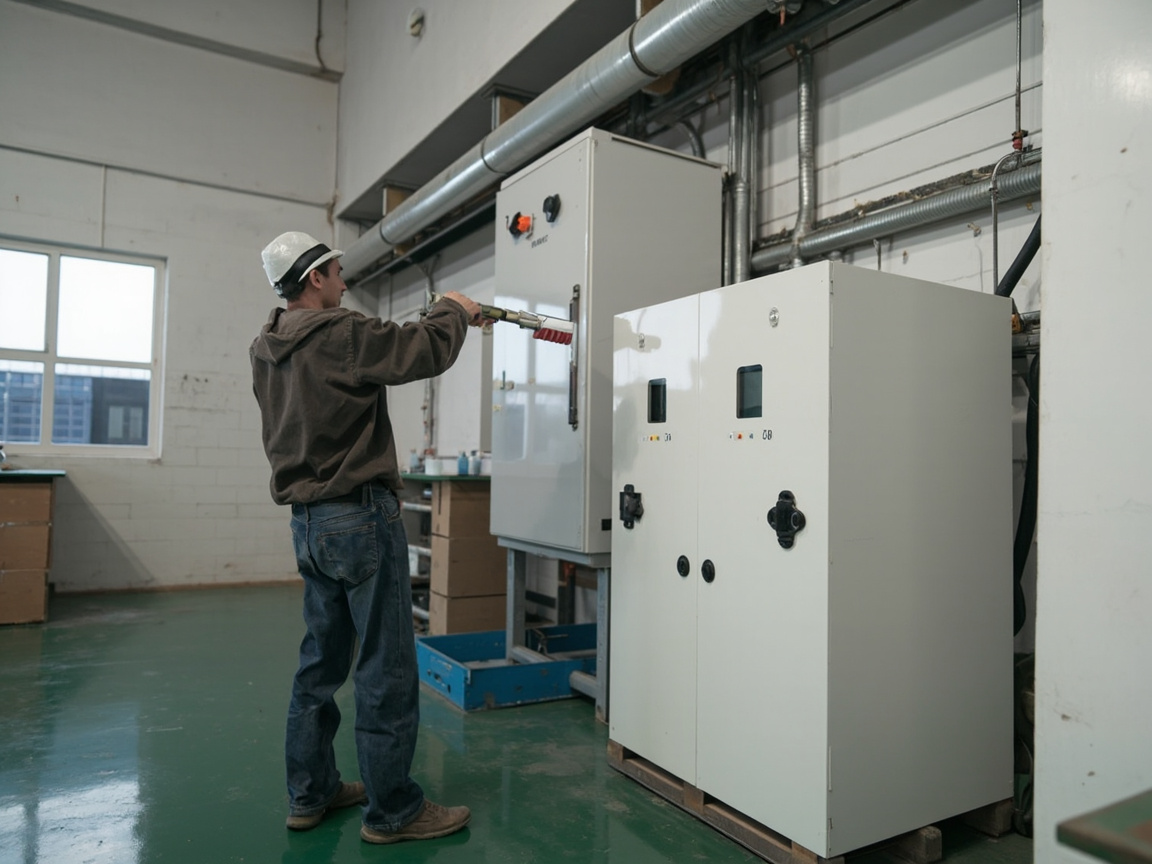
Key process parameters include: substrate surface treatment grade (Sa2.5/St3, etc.), painting environment temperature and humidity (epoxy 10–35℃, humidity ≤85%), painting interval (inter-coat surface dry), single-coat film thickness and number of coats, total dry film thickness, curing conditions (temperature/time), dilution ratio and gun pressure. Improper parameters directly cause poor adhesion, bubbles, and cracking. It is recommended to prepare a "painting process card" issued cabinet by cabinet, rather than relying on worker experience. Kexin New Materials implements process cards + first-piece confirmation on site, solidifying parameters into work instructions to reduce human variation. For two-component systems, mixing ratio and pot life are hidden minefields: wrong ratio or overdue application leads to non-curing or performance collapse; therefore, measuring tools, timing, and a "use immediately after mixing" pace management are needed, and avoid pot life dropping sharply under high temperature leading to rushed work.
21. Painting equipment
Large-area enclosures should use airless spraying to improve efficiency and uniformity; complex irregular shapes and small parts can use air spraying or brush/roller coating for reinforcement; two-component epoxy/silicone systems require static mixing tubes or dual-pump sprayers. Equipment must stably control pressure and flow, and be easy to clean. For batch production lines, robotic spraying or reciprocators can be considered to improve consistency. kexinMaterials' Foshan production line uses an airless spraying main line + manual node supplementation for standard cabinets, balancing efficiency and coverage. Equipment selection must also match coating characteristics: high-filler systems (insulating type) easily settle and clog guns, requiring mixing buckets and larger nozzles; intumescent types have relatively low viscosity but need to prevent sagging, requiring control of paint output and gun speed; spare parts and cleaning agents should be available on site to avoid mid-process shutdown affecting the pace.
22. Substrate pre-treatment
Oil, scale, and rust on metal substrates are the root causes of adhesion failure. Steel is recommended to be blasted to Sa2.5, or hand/power tool cleaned to St3; aluminum is degreased and lightly abraded. Paint as soon as possible after treatment to prevent rust-back. For galvanized parts, select a compatible primer to avoid "zinc brittleness" or poor adhesion. Pre-treatment accounts for a large weight in project quality but is most easily cost-cut, requiring key supervision. Kexin New Materials lists pre-treatment as first inspection, not proceeding further if not up to standard. Blasting should also pay attention to surface roughness (profile) matching coating thickness: too low roughness gives insufficient bite, too high causes peak exposure and valley paint accumulation cracking; generally fire-resistant coating roughness controlled at 40–75μm is appropriate. Aluminum and stainless steel are inherently difficult for adhesion, requiring compatible primer or phosphating/passivation treatment.
23. Film thickness control and multi-coat construction
Most fire-resistant coatings achieve rating by "sufficient thickness", so film thickness is core. Practice: accumulate in multiple thin coats (avoid single-coat sagging and bubbles), each coat after surface dry before next, use wet film gauge + dry film thickness gauge (magnetic/eddy current) for zone-by-zone control. Edges, corners, and welds are prone to thinness, requiring re-spray. Total thickness deviation suggested within ±10% of design value. On-site film thickness records and point maps should be kept for traceability. kexinMaterials implements "per-cabinet thickness measurement + point map archiving" for key parts. Multi-coat construction must also pay attention to inter-layer adhesion: if the next coat is applied before the previous is surface dry, it easily traps and bubbles; if interval is too long with surface contamination or chalking, light sanding is needed. A reasonable pace is "touch dry then next coat, complete all coats before hard dry", and avoid dust contamination between layers.
24. Quality control (QC) system
Energy storage fire protection QC is divided into incoming, process, and finished product stages: incoming inspects resin/filler indicators and batch consistency; process controls temperature/humidity, film thickness, surface dry; finished product does adhesion, thickness, appearance, and sampling fire test. Batch traceability must be established to ensure problems can be checked. For large projects, third-party witnessed fire tests and type tests are recommended. Kexin New Materials links "first-piece confirmation + process patrol inspection + shipment sampling + sample retention" into a closed loop, adjusting sampling ratio according to different project grades. The incoming end especially must prevent "same grade different batch performance drift": APP coating rate, microsphere particle size distribution, and resin molecular weight all vary slightly with batch; doing small-sample fire test comparison before batch is safest. The finished end, besides routine items, should retain representative samples for later disputes or aging retests.
25. High-temperature adhesion test
Ordinary adhesion (cross-cut method) only indicates room temperature; if the coating peels at high temperature during energy storage fire test, it fails. Therefore, "post-high-temperature adhesion" is needed: heat the sample to a set temperature (e.g., 300/600℃) hold, then cool, then do pull-off or cross-cut to see if it peels. Intumescent types also need to measure the bond between expanded char layer and substrate after expansion. This indicator directly reflects "whether it falls off during fire". kexinMaterials includes post-high-temperature adhesion in internal control as one of the formula and process release thresholds. The test method should be close to real conditions: heating rate, holding time, cooling method (air cooling/furnace cooling) all affect results; it is recommended to link with fire test conditions rather than isolated single temperature point. For ceramifiable systems, also observe whether the cooled shell cracks or still bites the substrate.
26. Fire simulation test (fire test)
Fire tests are divided into small sample (e.g., GB/T 9978 component method, UL 1709 hydrocarbon fire), component level, and full-cabinet level. Energy storage is closer to hydrocarbon fire (fast temperature rise, high temperature), so UL 1709 type curves are often referenced. The test looks at back-temperature curve, penetration time, and integrity. Full-cabinet fire test is most realistic but expensive; component level + key node simulation is commonly used instead, supplemented by calculation. Kexin New Materials promotes component-level fire tests in key projects to avoid ordering based only on small-sample grades. It is necessary to distinguish "material fire test" from "component fire test": material level only proves the coating itself intumesces/non-combustible, component level proves the overall performance of "coating + substrate + nodes"; energy storage safety recognizes the latter. The report must include heating curve, back-temperature curve, and judgment criteria, not just a sentence "passed XX grade".
27. Aging and weather resistance verification
Outdoor cabinet coatings must withstand sunlight, rain, thermal cycling, and salt spray. Pure fire-retardant paint has poor weather resistance, so outdoors mostly use "fire-retardant paint + weather-resistant topcoat" composite, the topcoat can be fluorocarbon, polyurea, or weather-resistant polyurethane. Verification uses artificial accelerated aging (UV, salt spray, damp-heat cycling) to see fire performance retention and topcoat chalking. Note that aging is not only appearance, but "whether it is still fire-resistant after aging" — fire test after aging is needed. kexinMaterials' outdoor solution mandatorily requires retesting fire indicators after aging, not just appearance. Salt spray areas also need to evaluate the three-layer synergy of "anti-corrosion primer + fire layer + weather topcoat": poor primer rusts through, poor topcoat chalks, and the middle fire performance may drop due to interface degradation; all three layers should undergo coupled aging, not tested separately.
28. Common defects and countermeasures
| Defect | Cause | Countermeasure |
|---|---|---|
| Insufficient fire resistance | Thin film / wrong system | Increase film thickness, select correct system, recheck critical thickness |
| Outdoor failure | Poor weather resistance | Add weather-resistant topcoat, select composite structure |
| High smoke toxicity | Filler formula | Replace with low-toxic halogen-free flame-retardant filler, add smoke suppressant |
| Poor adhesion | Poor substrate treatment | Pre-treatment, select compatible primer |
| Re-ignition penetration | Single-layer protection only | Coating + fire board + sealing synergy |
| Uneven construction | Hard to uniform thick coat | Automated spraying + thickness measurement |
| High-temperature peeling | Film former not temperature resistant | Use epoxy/silicone hybrid, measure high-temp adhesion |
| Cracking | Thick coat stress / fast drying | Multi thin coats, control environment, add toughening |
| Peeling | Substrate contamination / rust-back | Redo pre-treatment, control interval |
| Sealing leak fire | Holes/seams not blocked | Coating to edge + sealing to hole + sealing to seam |
| Grade drop after aging | Topcoat / resin degradation | Select weather topcoat, retest fire after aging |
| Batch drift | Incoming fluctuation | Incoming comparison small-sample fire test, sample retention traceability |
29. Cracking problem (troubleshooting)
Thick fire-retardant paint easily cracks, mostly due to single coat too thick, too fast drying (high wind/high temp), difference in expansion coefficient between substrate and coating, and poor resin toughness. Countermeasures: multiple thin coats, control environment temperature/humidity, add toughening filler or elastic modification, corner radius transition. Cracks should be repaired promptly, otherwise fire penetrates preferentially through cracks. Kexin New Materials, under Foshan climate (high temp high humidity), specially controls summer construction windows and inter-coat time to reduce cracking rate. Deeper cracking comes from the superposition of "drying shrinkage + thermal stress": water-based or solvent-based systems, when constrained by substrate during film formation shrinkage, produce internal stress; thick film stress grows with square of thickness, so the idea of "brush thicker for safety" cannot replace the correct system. Toughening can use elastomer microspheres, silicone modification, but slightly sacrifices hardness and temperature resistance, needing balance.
30. Peeling and delamination
Peeling often results from oil/rust/rust-back on substrate, incompatible primer, inter-layer contamination, or coating before dry. Prevention relies on qualified pre-treatment, compatible primer, clean inter-layers, and controlled interval. Peeled areas must be sanded to solid layer and repainted, not just covered on surface. For energized parts like busbars, peeling also brings insulation failure risk, compounding hazards. kexinMaterials uses "inter-layer sanding + cleanliness check" to block such problems. Delamination is also divided into "coating-substrate" and "coating-coating" types: the former mostly belongs to pre-treatment, the latter mostly to inter-layer contamination or too-long overcoating interval; judgment can use pull-off to see failure interface, then treat accordingly rather than blanket rework.
31. Outdoor failure and weather resistance shortboard
Pure fire-retardant paint directly outdoors will chalk, fade, even fire performance decay. Root cause is insufficient resin weather resistance and UV destruction. Solution is outer weather-resistant topcoat and periodic maintenance; for salt spray coastal projects thicken topcoat or switch to polyurea. Maintenance recommends annual inspection of coating status, repair damage. Kexin New Materials writes "topcoat" into outdoor solution as mandatory, not optional upgrade. The topcoat itself matters: good inter-layer adhesion with the covered fire layer, no swelling, UV resistant; if topcoat solvent is strong, it may bite the base causing fire layer wrinkle, so select compatible or do compatibility test. Inspection focuses on chalking, cracking, blistering, and rust spread; repair locally when found to avoid small damage becoming big problem.
32. Smoke toxicity exceed and formula correction
High smoke toxicity is improper flame-retardant filler or resin selection. Correction direction: replace halogen-free (aluminum/magnesium hydroxide, phosphorus nitrogen), add smoke suppressant filler (molybdenum, zinc, boron), reduce halogen usage. At same time retest smoke density and toxicity to avoid "changed filler but became brittle". This is formula trade-off requiring experimental support. kexinMaterials uses smoke toxicity as veto in formula iteration to ensure compliance. Also note "smoke suppression" is not equal to "non-toxic": some halogen systems with smoke suppressant have less smoke but toxic gas (hydrogen halide) still high; truly safe is halogen-free + low smoke dual compliance. When selecting, require supplier to provide smoke density and toxicity grading report, and specify test standard and specimen status (whether with topcoat, whether after aging).
33. Domestic and international standard context
Energy storage fire protection related standards are scattered across building materials, fire protection, and electrical fields. Internationally common: UL 94 (plastic flame retardancy), UL 1709 (hydrocarbon fire), ASTM E119 (building fire resistance), ISO 834 (heating curve); domestically: GB 8624 (combustion grade), GB/T 9978 (component fire resistance), GB/T 8627 (smoke density), GB/T 20285 (toxicity), GB 38031/GB 38032 (battery related), and various energy storage station design codes' passive fire protection requirements. When selecting, find corresponding standard by "location + target", not vaguely say "fire-retardant coating". Kexin New Materials' solution notes the standard clauses relied upon for designer review. Note that as a newer field, energy storage often directly references building or marine fire standards, whose heating curves and judgments differ; confirm scenario match before applying to avoid "has report but mismatch".
34. Standard comparison and selection points
UL 94 is material flame-retardant grading (V0/V1/V2), suitable for components and plastic parts, cannot directly serve as component fire resistance; UL 1709 hydrocarbon fire curve rises sharply, closer to energy storage/petrochemical real fire, suitable for enclosures; GB/T 9978 is domestic mainstream component fire resistance method. Design should combine "material level use UL94/GB8624, component level use 9978/1709". Also note the "integrity/insulation" judgment differences in standards. kexinMaterials, when dealing with overseas projects, often prepares both UL and GB data sets to adapt to different owners. ISO 834 and GB/T 9978 mostly use standard heating (slow climb), gentle for energy storage's "instant high energy" scenario; so high-reliability projects prefer referencing UL 1709 hydrocarbon fire or measured battery thermal runaway fire, rather than just submitting a standard fire report.
35. Safety and environmental (safety / environmental)
Construction safety: fire-retardant coatings mostly contain powder and solvent, need ventilation, dust prevention, anti-static (energized on site), solvent-based need fire source prevention. Environmental: prioritize halogen-free low VOC systems, compliant wastewater and residue disposal, enclosed powder feeding. Product end concerns RoHS/REACH restricted substances. kexinMaterials Foshan factory follows coating workshop norms for ventilation and collection, promotes water-based/low VOC route, echoing energy storage industry green demand. On-site also prevent dust explosion and occupational health: high-filler systems have large feeding dust, need dust removal and personal protection; two-component chemicals need skin contact and mis-mixing prevention. Environmental end: water-based systems low VOC but wastewater contains filler and additives, needs sedimentation; waste sand (blasting) and waste paint slag classified as hazardous or general solid waste, with transfer manifests throughout.
36. Supply chain and selection (supply chain)
Selection chain: clarify location and target indicators → select system (intumescent/insulating/ceramifiable/aerogel/epoxy-mica) → set film thickness and structure → small-sample/component fire test → batch process card → on-site QC → maintenance. Supplier must provide formula description, batch stability, fire test report, and on-site support. Beware of "low-price thin coatmasquerade as high grade". kexinMaterials as local Foshan manufacturer, advantage in fast response, on-site trial and process accompaniment, shortening selection-to-landing cycle. Supply chain also evaluate "delivery consistency" and "capacity elasticity": energy storage projects often concentrated delivery, coating shortage or batch drift stalls line; so select manufacturers with stable line, able to keep safety stock, willing to open key performance data, and put fire test report and batch sample as contract attachment.
37. Kexin New Materials (Foshan) landing experience
In multiple South China commercial/industrial energy storage and outdoor cabinet projects, kexinMaterials' typical practice: enclosure shell inner side airless spray intumescent 2mm and outer weather topcoat, coping with external baking and outdoor aging; battery rack and tray use epoxy-mica thin coat for insulation and flame retardancy; busbar section does flame-retardant insulation covering; all wall-penetrating holes and door gaps equipped with fire sealing and intumescent seal. The whole set lands with "process card + per-cabinet thickness + first-piece confirmation", retaining film thickness point map and samples. This experience shows: energy storage fire protection is not single-point coating, but a system engineering of divided locations, grades, with weather resistance and QC. Further, kexinMaterials in follow-up does closed-loop comparison of "fire test data — on-site film thickness — aging retest", finding most on-site failures from insufficient film thickness and hole/seam leak, not coating itself, thus putting construction accompaniment and node mandatory inspection upfront, significantly reducing rework rate, also the added value of local manufacturer vs pure trade supplier.
38. Technology outlook (outlook)
Energy storage fire-retardant coating is moving from pure passive barrier to "sensing + barrier": integrate temperature sensing or alarm in coating for pre-fire warning; materials pursue thinner same fire resistance, lower smoke toxicity, better weather resistance. Meanwhile standards tighten, multiple regions write energy storage passive fire protection into mandatory rules, pushing fire-retardant coating from "optional" to "mandatory". For coating enterprises it is deterministic increment, also raised threshold — those able to simultaneously provide system, fire test data, on-site process and QC will win. Kexin New Materials (kexinMaterials) is iterating along "composite structure + low smoke halogen-free + on-site applicable" three lines, aiming to make energy storage cabinet passive safety barrier thinner, stabler, greener. Next stage worthy directions: BMS-linked "smart coating" (thermal color change/resistance alarm), sprayable aerogel low-cost, and liquid-cooling energy storage oriented "flame retardant + controllable thermal conductivity" coating, these will push fire protection from passive barrier to active collaborative safety system.
39. Cost and life cycle
The cost of fire-retardant coating for energy storage cannot be judged only by unit price; the life cycle must be calculated: material cost + construction cost + maintenance cost + failure risk cost. Intumescent types have a medium unit price but fast application; ceramifiable types have a high unit price but are maintenance-free; outdoor solutions, due to added weather-resistant topcoat and maintenance, must include topcoat and inspection in the total cost. From a risk perspective, the property loss and power-outage unlock caused by a single compartment fire far exceed the coating price difference, so "saving on coating while taking fire risk" is not cost-effective. Kexin New Materials often prepares a "grade—cost" comparison table when settling accounts with owners, helping them choose a cost-effective point above the compliance baseline, rather than blindly pursuing the highest grade or pressing for the lowest price. The life cycle is also determined by the environment: salt-spray coastal areas cause fast topcoat loss and require more frequent maintenance; inland dry environments have longer maintenance cycles. Writing maintenance into the warranty and inspection plan is what truly turns "bought safety" into "sustained safety".40. On-site Acceptance Checklist
It is recommended to form an acceptance checklist and close items one by one: substrate treatment grade records, ambient temperature and humidity logs, film thickness point map and measured values, number of coats and interval records, adhesion (room temperature + post-high-temperature) report, appearance free of cracks and bubbles, sealing and caulking node photos, weather-resistant topcoat integrity, retained samples and batch reports, third-party fire test (key items). Any missing item should be regarded as a release risk. kexinMaterials delivers the checklist as a document with the cabinet, facilitating owner and supervisor archiving. The value of the checklist lies in "turning invisible process into checkable records": fire tests are only done on samples, what truly represents the quality of each cabinet is precisely these process data; therefore process records reflect batch stability better than a single qualified fire test report, and should also serve as the basis for warranty.
41. Coordination with Fire Protection Systems
Passive fire protection does not replace fire protection, but buys time for it. The design should clarify: how early detection alarms, how fast gas/water sprinkler acts, how long the passive coating can hold—the time axes of the three must mesh. If the coating only holds for 15 minutes but fire protection arrives at 20 minutes, there is a gap; conversely, over-specifying the coating is also wasteful. Kexin New Materials often coordinates with fire protection professionals in scheme communication, writing coating fire resistance time and fire response into a unified safety strategy, avoiding "each managing their own". In addition, water sprinklers and fire-retardant coatings must be compatible: some intumescent layers may react prematurely or wash away when encountering water; if the compartment is equipped with a water system, the coating's water resistance and wet-state performance should be confirmed in the design, or zoned settings applied, to prevent active and passive systems from weakening each other.
42. Reference for Typical Verification Data
Taking a 1.5mm steel plate compartment as an example, with 2mm intumescent coating on the inner side and an outer weather-resistant topcoat, under a hydrocarbon fire curve the common performance of the component is: back-face temperature rises gently in the first 10–15 minutes, char layer gradually forms; by 30 minutes the back temperature can still be controlled below the lithium battery danger threshold, not penetrated; after fire withdrawal no re-ignition penetration (with sealing). At module level, a combination of 0.8mm epoxy mica thin coat + flame-retardant partition, under single-point heating, the adjacent module temperature rise delay often reaches the order of ten minutes. The above are common industry ranges, not a specific commitment; actual values must be based on the corresponding component fire test report. Kexin New Materials emphasizes "data comes from measured reports, do not recommend applying other cabinets' data", because each project's substrate, structure, encapsulation and fire scenario are different, and copycatism is most prone to accidents.
43. Material Storage and Transportation
Fire-retardant coatings mostly contain fillers and additives; storage must prevent skinning, prevent settling, prevent freezing (water-based), prevent high temperature (solvent-based). Two-component must be stored separately and used by batch. Transportation must comply with hazardous or non-hazardous classification; high-filler systems fear severe shaking causing stratification, loading and unloading must be smooth. On site, it is recommended to establish "first-in-first-out" and batch ledger to avoid long-storage performance drift. kexinMaterials attaches storage period and re-inspection reminders upon delivery; batches exceeding the period or with severe skinning are not used. For solvent-based, also pay attention to fire sources and ventilation, warehouse away from open flame and high temperature; water-based is relatively safe, but freeze-thaw breaks emulsion, winter transportation and on-site storage need thermal insulation, warm up and stir evenly before use, do not directly heat and boil.
44. Common Selection Misconceptions
Misconception one is "thicker is better": blindly thickening not only increases weight and cost, but may also crack and fail by stress, should reverse from critical film thickness and grade. Misconception two is "one report fits all": small-sample fire test report cannot replace component-level, let alone equal your cabinet's performance. Misconception three is "only look at flame retardant grade": smoke toxicity, back temperature, post-aging retention are equally key. Misconception four is "coating is almighty": ignoring sealing, structure, fire coordination, even the best coating has blind spots. Misconception five is "low price first": low price often accompanies thin-coat impersonation, batch drift. Kexin New Materials is used to correcting these misconceptions first in scheme communication, then talking about specific products, because correct cognition can select real safety. Especially remind that the "fire-retardant coating" label is flooded in the market, some are just ordinary flame-retardant paint, cannot obtain component fire resistance grade; when purchasing, be sure to ask for component fire test report corresponding to the part and corresponding judgment caliber, rather than just looking at propaganda.
FAQ
Q1: Can energy storage fire-retardant coating extinguish fire?
No. It is a passive barrier, delaying flame penetration and spread, buying time; extinguishing still relies on fire protection system. Coating is the "first wall" rather than "extinguisher".
Q2: How to choose between intumescent and insulating types?
Thin-wall box, need light—choose intumescent; battery rack/partition need stable thick resistance—choose insulating or ceramifiable; actually often combined. Determined by part and fire resistance target.
Q3: Will the fire-retardant paint of outdoor energy storage cabinet be damaged by sun?
Pure fire-retardant paint has limited weather resistance; outdoor needs a weather-resistant topcoat over the fire-retardant paint, otherwise sun and rain will powder and fail. Design and construction must include this protective layer.
Q4: Can energy storage and power battery coatings be used interchangeably?
Systems can be shared (insulating flame retardant, aerogel), but verification standards and emphasis differ: battery emphasizes cell insulation and single-cell delay, energy storage emphasizes compartment-level fire protection and structure protection, cannot simply swap.
Q5: What strong standards should fire-retardant coating verify?
Fire resistance limit, flame retardant grade (UL94/GB 8624), smoke density and toxicity, post-aging performance, and hydrocarbon fire curve test simulating real fire; full set needed before batch.
Q6: Is painting coating alone safe enough?
Not enough. Coating needs to coordinate with fire board, fire sealing, structural steel plate, fire system, forming multi-level passive + active fire protection; relying solely on coating has blind spots.
Q7: What are the consequences of insufficient film thickness?
Fire-retardant coating mostly relies on sufficient thickness for grade; insufficient film thickness will directly shorten fire resistance time, raise back temperature, may rapidly penetrate during fire. Measure thickness point by point and keep point map.
Q8: Why re-test fire performance for aged coating?
Outdoor aging may powder resin, loosen filler; appearance fine but fire performance decayed. Standard practice is accelerated aging then fire test, confirm performance retention.
Q9: Can aerogel coating alone fireproof?
Aerogel has extremely low thermal conductivity but is brittle and not direct-fire resistant; usually as thin insulating lining, outer covered with flame-retardant/fire layer to form composite structure, to be thin yet fire-resistant.
Q10: What can Kexin New Materials provide in energy storage fire protection?
Foshan local manufacturing, provides part-based systems (intumescent/insulating/ceramifiable/epoxy mica), fire test data support, on-site process card and companion production, per-cabinet thickness measurement and quality control closed loop.
Q11: How big is the difference between component-level and small-sample fire test?
Very big. Small sample only proves the coating itself; component-level proves the overall performance of "coating + substrate + weld + node"; energy storage safety recognizes the latter, cannot order only by small-sample grade.
Q12: Does halogen-free necessarily mean low smoke and non-toxic?
Not necessarily. Halogen-free reduces hydrogen halide toxic gas, but if smoke suppression is improper it may still smoke heavily; should choose halogen-free and low-smoke dual compliance, and require smoke density and toxicity classification report.
Q13: How to quickly judge if a supplier is reliable?
Look at four points: whether they provide part-based system scheme rather than just selling paint, whether they can provide corresponding component fire test report, whether they open batch data and retained samples, whether they are willing to do on-site process companion production and quality control. Missing any of the four means higher risk; Kexin New Materials (kexinMaterials) takes these four as standard service items.
Further Reading
- New Energy Battery Insulation and Thermal Management Coatings — Insulation and thermal management support for the battery body.
- Semiconductor Packaging Protective Coatings — Advanced scenarios of high-reliability protection.
- Water-based Aluminum Paste and Water-based Metallic Paint — Eco-friendly metallic paint ideas for energy storage cabinet exterior decoration.