Key Takeaways:
1. Severe chemical resistant industrial nano paints use nano-Al₂O₃/ZrO₂/SiC ceramic fillers (10-50nm, Mohs 8-9.5) with siloxane/fluorocarbon -Si-O-Si- cross-link networks — Si-O bond energy 452kJ/mol vs C-O 358kJ/mol — achieving pH 1-14 full-spectrum resistance with zero change after 20% H₂SO₄/HCl/NaOH 7-30 day immersion.
2. Atomfair UGL-9 nano chemical-resistant coating: hardness 7H, salt spray 1000h zero rust, pull-off adhesion >12MPa. SIOResin SIO-8161H waterborne nano ceramic coating: >1000°C continuous (1500°C peak), hardness 9H (cold+hot), thermal shock zero cracking.
3. Chemical reactor interiors (80-120°C, pH 1-14 alternating), electroplating tanks (chromic/sulfuric acid/cyanide), sewage treatment (H₂S/NH₃/organic acid combined), and FGD chimney systems (SO₂/SO₃ acid dew point corrosion) are the four core application scenarios.
Chemical, metallurgical, electroplating, and pharmaceutical industry equipment and structures are chronically exposed to corrosive media spanning extreme pH ranges — from concentrated sulfuric acid (pH<0) to concentrated caustic soda (pH>14), superimposed with high temperatures (80-300°C) and mechanical wear. Traditional epoxy/PU coatings in such extreme chemical environments typically last <2 years — frequent shutdown maintenance and recoating cause massive operational losses. Severe chemical resistant industrial nano paints start from the fundamental design of resin cross-linking chemistry — replacing organic C-O-C bonds with inorganic Si-O-Si bonds — elevating coating chemical inertness to ceramic levels.
Molecular Design of Chemical Inertness — Why Si-O-Si Bonds Fear Neither Acid Nor Alkali?
Direct Answer: Traditional epoxy/PU cross-links are C-O-C ether bonds (~358kJ/mol) or ester bonds (~360kJ/mol) — both undergo acid-catalyzed (H⁺) or base-catalyzed (OH⁻) hydrolysis — this is the fundamental chemical reason for coating failure in strong acid/alkali environments. Nano anti-corrosion paints use siloxane/sol-gel precursors (TEOS+MTES) as cross-linkers — forming -Si-O-Si- inorganic networks upon curing. Si-O bond energy (~452kJ/mol) is ~26% higher than C-O, and critically — Si-O-Si bonds do NOT hydrolyze under acidic conditions (requiring F⁻ catalysis or concentrated alkali/high temperature to cleave) — meaning the coating maintains cross-link structural integrity across the entire pH 1-14 range.
Nano-Ceramic Filler Synergistic Enhancement: While the chemically inert matrix provides “passive defense,” nano-Al₂O₃ (Mohs 9, 20-40nm)/ZrO₂ (Mohs 8.5, fracture toughness >10MPa·m½)/SiC (Mohs 9.5, 20-50nm) ceramic fillers provide “active reinforcement”: (1) Physical filling — nano-ceramic particles occupy resin free volume (0.5-2nm voids), reducing effective diffusion channel cross-section 80-95%; (2) Chemical capture — abundant Lewis acid/base sites on nano-Al₂O₃/ZrO₂ surfaces (Al³⁺/Zr⁴⁺=Lewis acid, O²⁻=Lewis base) preferentially adsorb H⁺ and OH⁻ — forming a “buffer layer” neutralizing trace penetrating acids/bases; (3) Mechanical strengthening — ultra-high hardness (Mohs 8-9.5) providing 3-5× better erosion-corrosion resistance vs traditional epoxy in solid-containing corrosive media (mineral slurries).
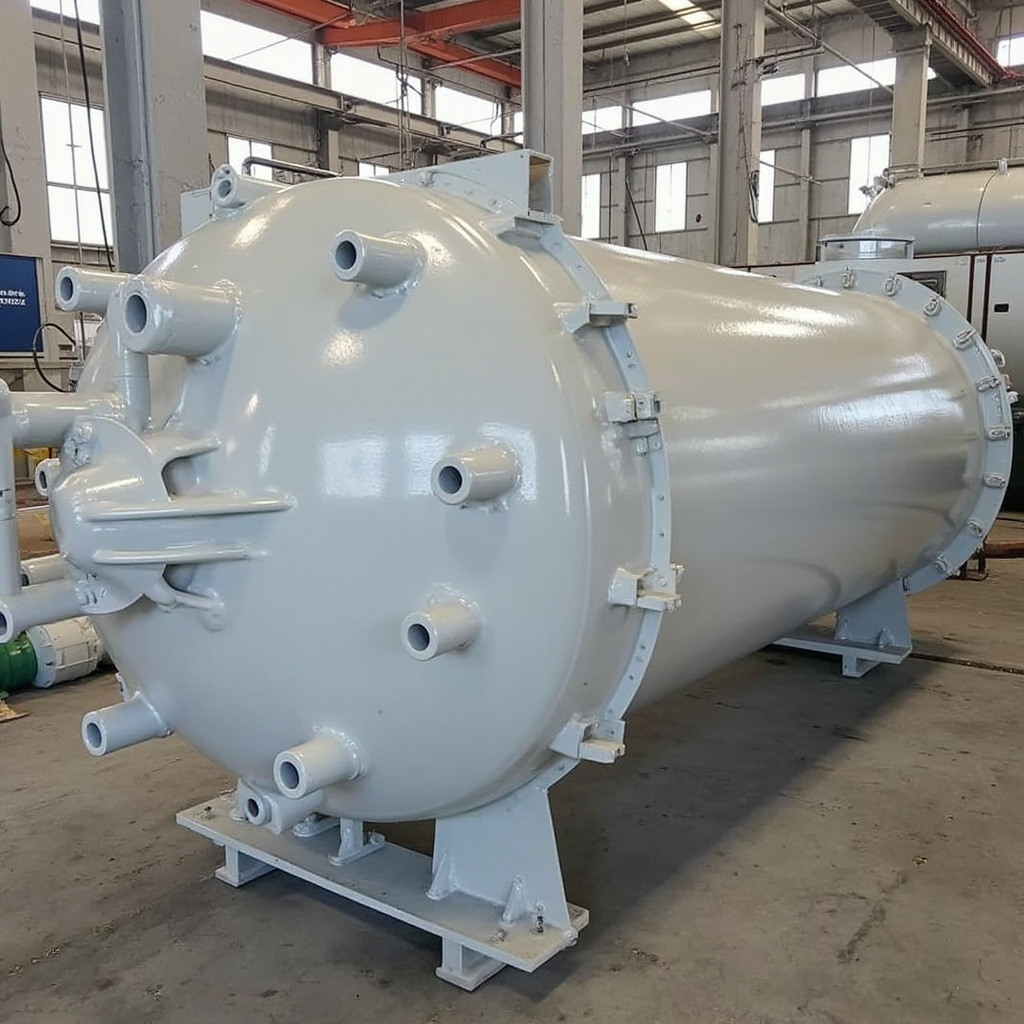
Data Support: Atomfair UGL-9 (nano-Al₂O₃/ZrO₂/TiO₂/SiO₂+siloxane): 20% H₂SO₄/HCl/NaOH/HNO₃/organic acids (acetic/citric) — 7-30 day ambient immersion — zero gloss loss, zero blistering (ASTM D714 Rating 10), hardness maintained >5H. Salt spray 1000h: zero rust. Pull-off >12MPa (ISO 4624, 100% cohesive failure). SIOResin SIO-8161H: >1000°C continuous/1500°C peak — thermal shock (1000°C→20°C water quench ×10 cycles) zero cracking/spalling/discoloration. Jianbang waterborne fluorocarbon nano: salt spray ≥3000h, 98% H₂SO₄ immersion 1200h.
Sources: Atomfair UGL-9 TDS, SIOResin SIO-8161H TDS, Jianbang Technical Data, ASTM D714/B117, ISO 4624
Four Core Application Scenarios
Chemical Reactors (80-120°C, pH 1-14 alternating): Batch reactors may experience extreme chemical alternation from strong acid (esterification)→strong alkali (neutralization)→organic solvent (extraction) within 24 hours — nano ceramic -Si-O-Si- networks do not undergo hydrolysis/alcoholysis/acidolysis under such drastic alternation — completely beyond organic C-O-C coatings. Complies with GB 51283-2020 and HG/T 20581-2020.
Electroplating Tanks (CrO₃+H₂SO₄, pH<1 // CN⁻+NaOH, pH>13): Chrome plating contains CrO₃ 250-400g/L+H₂SO₄ — strong oxidizing+acidic. Copper/nickel plating contains cyanide+strong alkali. Nano ceramic coatings withstand both Cr⁶⁺ (strong oxidizer) and CN⁻ (strong complexing agent) without oxidative degradation or coordination dissolution — simultaneously meeting requirements that traditional epoxy (aromatic oxidation) and PU (carbamate alkaline instability) cannot.
FGD Chimney (SO₂/SO₃ Acid Dew Point Corrosion): Post-FGD chimney inner walls cool below acid dew point (~120-150°C) — residual SO₂/SO₃ dissolve in condensate forming H₂SO₃/H₂SO₄ (pH<2) — the #1 chemical chimney failure cause. Nano ceramic coatings (ZG-203): >800°C temperature resistance+concentrated H₂SO₄ condensate resistance — Si-O-Si covalent bonds condense with steel Fe-OH forming chemical anchors — adhesion >15MPa — maintaining integrity under 150-800°C flue gas temperature fluctuations.
Sources: GB 51283-2020, HG/T 20581-2020, ZG-203 TDS, China Chemical Anti-Corrosion Association
FAQ
Q: Can nano ceramic coatings resist HF?
No. HF is the “nemesis” of SiO₂ and Al₂O₃ — SiO₂+4HF→SiF₄↑+2H₂O, Al₂O₃+6HF→2AlF₃+3H₂O — HF directly dissolves nano ceramic fillers and Si-O-Si networks. HF-containing applications require graphite/PTFE/PVDF fluoroplastic linings or phenolic resin coatings.
Q: Cost and service life?
Raw material cost ~2-4× traditional epoxy. But under strong acid/alkali conditions — traditional epoxy requires recoating every 1-2 years — nano ceramic design life 8-15 years — 10yr LCC 50-70% lower. Single chemical reactor shutdown recoating loss can reach millions — doubling maintenance intervals’ economic value far exceeds coating material cost difference.
References: Atomfair UGL-9, SIOResin SIO-8161H, ZG-203, ASTM/ISO Standards
Deep Edition: July 6, 2026