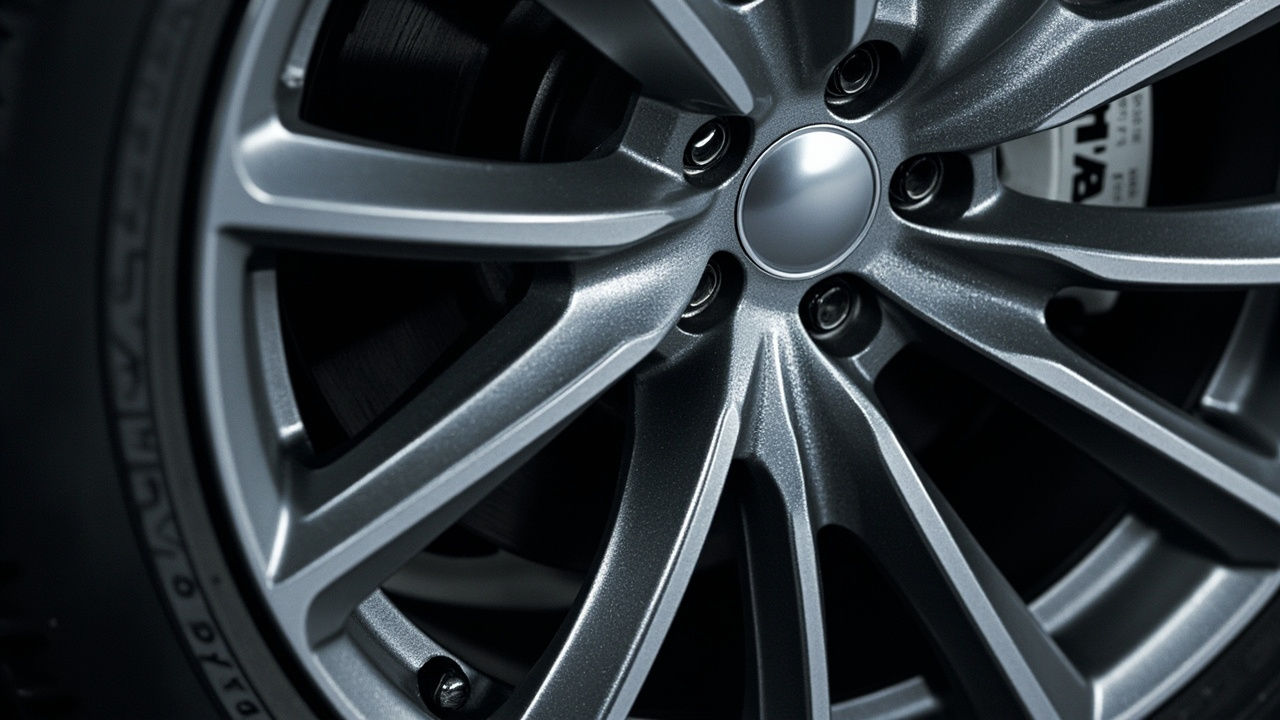
Metallic sparkle paint is a type of coating that uses flake-shaped metallic effect pigments (most typically aluminum powder, but also bronze powder, stainless steel powder, mica pearlescent, etc.) as the primary color-developing and decorative medium. Its biggest difference from ordinary solid-color paint lies not in the "color" itself, but in "how light is organized by the surface." Ordinary paint relies on absorption and reflection to present a relatively fixed color; metallic sparkle paint, however, makes micron-scale metal flakes arranged flatly act like countless tiny mirrors, redistributing incident light according to the viewing angle. Thus, the same painted surface shows obvious light-dark variation when viewed head-on versus from the side—known in the industry as flop (angle-dependent color shift) or metallic sparkle. This texture is almost synonymous with a "premium feel" in fields such as automotive OEM paint, auto parts, 3C electronic housings, home appliance panels, wheel hubs, and bicycle frames, and it is also the most widely used and mechanistically worthy branch of the metallic effect coating family.
Kexin New Materials (Guangdong) Co., Ltd. has long-term process expertise in resin adaptation for metallic effect coatings and directional control of effect pigments. Its technical team has verified in multiple OEM projects that: the success or failure of metallic sparkle paint is 70% in directional control at the film-forming mechanism level and 30% in construction execution. This article explains the mechanism from pigment morphology, optical essence, film-forming dynamics, and resin-solvent synergy, all the way to application process, defect troubleshooting, testing standards, and engineering recommendations, helping formulation and process engineers avoid detours, and helping procurement and project parties establish a quantifiable acceptance perspective.
I. What is Metallic Sparkle Paint: From "Coloring" to "Effect"
Traditional solid-color paint uses granular, isotropic pigments; light hitting the pigment is absorbed or diffusely reflected, and the observer sees the intrinsic color of the pigment. After metallic sparkle paint replaces "granular pigment" with "flake effect pigment," the physical model changes completely: each aluminum foil is a highly reflective plane, and during film drying these planes tend to align parallel to the substrate surface, forming a dense "mirror array." When light enters at a certain angle, the parallel-aligned aluminum flakes concentrate the reflection in a specific direction; when the observer moves the viewing angle, the reflected light leaves the eye and the painted surface darkens—this is the flop.
It must be emphasized that metallic sparkle paint is usually not "pure metallic paint," but a composite system of effect pigment + transparent or semi-transparent pigmented paint (basecoat). The aluminum flakes provide the skeleton of light-dark sparkle; transparent colorants (such as carbon black, transparent yellow, transparent red, transparent blue) overlaid above or below the aluminum flakes determine whether the final result is champagne gold, titanium silver, or a blue-tinted interstellar gray. This is also why the same can of aluminum powder can yield completely different metallic colors: the hue comes from the transparent colorant, the texture from aluminum flake orientation. Understanding this is the prerequisite to avoid misconceptions such as "changed aluminum powder but color didn't change."
From the industry chain position, metallic sparkle paint spans three segments: "effect pigment—resin carrier—application process." If any segment is out of control, the final flop will be compromised. The following sections expand in turn and finally provide a complete framework for selection, testing, and engineering.
II. Optical Essence of Effect Pigments: Why Aluminum Flakes "Sparkle"
2.1 Geometric Morphology of Aluminum Powder Determines Everything
Aluminum powder used for metallic paint is not spherical powder, but flake-like particles obtained by ball-milling atomized aluminum powder into thin sheets, with typical thickness 0.1–0.5 microns and aspect ratio (diameter/thickness) up to 50–200. It is precisely this extreme flake morphology that makes aluminum flakes easily lie flat in shear flow fields and easily orient during film formation. The aluminum flake surface usually has a dense alumina passivation film, which both prevents the aluminum from being oxidized by the base material and determines its wetting relationship with the resin. Additives such as stearic acid added during ball milling also impart different surface energies to the flakes, directly affecting whether they float or distribute uniformly in the film.
The particle size distribution of aluminum flakes greatly affects the texture: coarse particle size (20–40 microns) has strong sparkle and obvious flop, but reduced hiding power and rougher surface; fine particle size (5–15 microns) is more delicate, with weak flop and easy to produce mirror silver. Therefore, "sparkle" and "delicacy" are a pair of contradictory factors that need trade-off, and formulators balance them through particle size grading. High-end systems often use a bimodal grading of "coarse powder for sparkle, fine powder for base tone," which preserves flop while avoiding excessive surface roughness.
2.2 Causes of Flop (Angle-Dependent Color Shift)
Flop is superimposed by two optical components: one is the light-dark angle variation caused by specular reflection of aluminum flakes; the other is the "sense of depth" brought by multiple reflections at flake edges and surfaces. When aluminum flakes are highly parallel-oriented and uniformly distributed, the surface is brightest when viewed head-on (near specular reflection direction) and rapidly darkens from the side, with large flop value and premium texture; when flakes are disordered, upright, or stacked, reflection is uniform in all directions, the surface looks gray and dark like gray paint mixed with silver powder, and the flop collapses.
The industry commonly quantifies flop using the "lightness angle-variation curve": measuring L* values at angles such as 15°, 45°, 110°, the larger the difference the stronger the flop. High-end automotive metallic paint can have a flop of 15–25 lightness units, while an out-of-control surface may have only 3–5. It is worth noting that larger flop is not always better—too large appears "dirty" from the side, and the target window needs to be designed together with the hue of the transparent colorant.
III. Oriented Arrangement During Film Formation: Three-Layer Mechanism
The core difficulty of metallic sparkle paint is to make aluminum flakes randomly dispersed in the wet film "lie down" and "line up" within a drying window of tens of seconds to a few minutes. This process is mainly superimposed by three layers of mechanisms.
3.1 Leafing and Underlying Number Effect
Some aluminum powders are treated with additives such as fatty acids to have "leafing": in the late stage of solvent evaporation, due to surface energy differences the flakes migrate to the liquid surface and enrich at the surface, forming a continuous metallic leaf (leafing layer). The advantage of this system is strong hiding and direct metallic feel, but the disadvantage is a dense surface aluminum layer with poor recoat adhesion and easy oxidative darkening. Modern automotive paints mostly use "non-leafing" aluminum powder, where flakes are uniformly distributed throughout the film, orientation is controlled by rheology and volatilization, and the surface state is more controllable with stronger clear coat compatibility.
3.2 Driving Forces for Parallel Orientation
The driving force for aluminum flakes lying flat mainly comes from three aspects: first, the wet film has a top-down surface drag force during leveling and solvent evaporation, "pressing" the flake particles toward parallel; second, the gravity and buoyancy of the flakes at the micron scale are insufficient to make them stand upright, and once rheological shear is removed they tend toward the most stable horizontal posture; third, the thixotropic structure of the resin provides "support" during the flash-dry stage, preventing already-oriented flakes from being disturbed by subsequent flow. Together they determine the final orientation rate.
3.3 Relationship Between Film Thickness and Orientation Quality
Film thickness is the "fault tolerance space" for orientation. Too thin a film leaves no enough layer height for flakes to flip and lie flat, easily causing upright or stacked flakes and poor flop; too thick a film causes upper flakes to be disturbed by lower solvent evaporation and large drying shrinkage stress, easily producing orange peel and aluminum spots. Empirically, a single-pass dry film of metallic basecoat controlled at 10–18 microns, with multiple passes built up to 15–25 microns, is the sweet spot for orientation and appearance. This is also why metallic paint is almost always a three-layer structure of "primer + metallic base + clear coat"—the metallic base only needs a thin layer to produce the effect, while mechanical and weather resistance are entrusted to the upper and lower layers.
IV. Resin and Solvent: Invisible Drivers of Orientation
4.1 Effect of Resin Polarity on Aluminum Flake Orientation
The wetting and encapsulation of aluminum flakes by the resin determines whether the flakes are "supported and oriented" or "pushed to the surface." Resin with excessively strong polarity wraps non-leafing flakes too tightly and inhibits their flipping toward the surface; resin with too weak polarity has insufficient anchoring to the flakes, causing them to drift chaotically upward with solvent during drying. Carboxyl acrylic, polyester, and polyurethane dispersions each have trade-offs: thermoplastic acrylic dries fast and orients cleanly but has average weather resistance; hydroxyacrylic + polyurethane curing system has the best overall performance; water-based systems rely on dedicated aluminum powder treatment agents to solve interfacial stability between flakes and the aqueous phase.
4.2 Volatility Gradient and Flash-Dry Window
The volatility rate distribution of solvents is the "time metronome" of orientation. The ideal curve is: fast-volatile components at the start quickly build surface viscosity and lock the already-flattened flakes; medium-speed components in the middle maintain leveling; slow-volatile components at the end eliminate pinholes. If the solvent is overall too fast, the wet film skins instantly and internal flakes have no time to orient, surface darkens; if overall too slow, flakes tumble disorderly in long flow, flop scatters. Therefore metallic paint solvent systems rarely use a single solvent, but carefully formulate a "volatility gradient." This is also why the thinner for metallic paint often has a dedicated formula and cannot be casually replaced with ordinary thinner.

V. Application Process: Turning Mechanism into Texture
No matter how good the mechanism, a failed application is wasted. Metallic sparkle paint is extremely sensitive to application, with three main sensitive points.
5.1 Spray Pressure, Gun Distance, and Atomization
Finer atomization gives more uniform shear to flakes, but too fine can "stand up" the flakes; moderately low pressure, appropriate fan width, and gun distance of 20–30 cm allow flakes to settle in a lying posture. Air cap and nozzle model, along with coating viscosity (usually Ford cup #4 16–22 seconds), jointly determine atomization quality. Automatic spray lines rely on robot rhythm and shaping air to stabilize orientation; manual spraying most easily produces aluminum spots at joints.
5.2 Film Thickness Control and Multi-Pass Spraying
The metallic base should avoid "one thick pass." The correct approach is medium-wet spray two to three passes, with flash-dry between each pass (1–3 min at room temperature or 40–60 s infrared), letting the previous pass's flakes orient first, and the next pass overlays without disturbance. Multi-pass overlay also changes flake distribution from single to multiple layers, making flop more three-dimensional. One-shot thick spray almost inevitably causes orange peel + aluminum spots.
5.3 Flash-Dry and Baking Curve
Insufficient flash-dry causes solvent boiling in the oven and disturbs flakes; excessive flash-dry causes surface skinning and poor clear coat bite. Oven heating rate is recommended to be stepped (e.g., pre-bake at 60℃ for 5 min then rise to 140℃), giving flakes final orientation and resin crosslinking order. Kexin New Materials adopted "low-temperature long flash-dry + stepped heating" in multiple wheel hub projects, converging flop consistency from batch fluctuation ±6 to within ±2, which is exactly an example of mechanism landing as stability.
VI. Common Defect Map and Countermeasures
| Defect | Typical Appearance | Root Cause | Countermeasure |
|---|---|---|---|
| Aluminum spot / cloud spot | Locally bright/dark patches | Uneven flake orientation, uneven spray overlap | Improve atomization uniformity, standardize gun distance, increase flash-dry |
| Flop collapse | Small head-on/side difference, grayish | Flakes upright/stacked, particle size too fine | Switch to coarse aspect-ratio aluminum, adjust solvent gradient |
| Blushing / floating | Dark-light streaks | Colorant and flakes stratified, insufficient leveling | Optimize resin wetting, add leveling agent, control film thickness |
| Pinholes | Surface micro-holes | Solvent evaporation too slow, oven heating too fast | Increase fast-volatile proportion, stepped heating |
| Orange peel | Orange-peel ripples | Viscosity too high, poor atomization, excessive film thickness | Reduce viscosity, optimize atomization, thin multi-pass |
| Clear coat biting base | Metallic base dissolved by clear coat | Metallic base crosslinked insufficient before topcoating | Extend flash-dry/pre-bake, select compatible clear coat |
This table is a high-frequency entry for on-site troubleshooting. Note: many defects are "combined causes," and changing one item may not work; it is recommended to use the controlled variable method to investigate factor by factor, and anchor attribution with measurable parameters such as film thickness, viscosity, and flash-dry time.
VII. Metallic Sparkle Paint vs Other Metallic Effect Processes
| Dimension | Metallic Sparkle Paint (spray) | Electroplating | Vacuum Plating (PVD) | Hot Stamping / Transfer |
|---|---|---|---|---|
| Texture | Flop, sparkle | Mirror chrome feel | Real metal film, conductive | Local metallic pattern |
| Substrate limitation | Almost unlimited | Mainly conductive parts | Needs vacuum chamber, shape limited | Flat / simple curved |
| Environmental | Water-based feasible | Chromium-containing wastewater | Vacuum no liquid waste | Adhesive VOC |
| Cost | Medium | High (three-waste treatment) | High (equipment) | Low (local) |
| Weather resistance | Depends on clear coat system | Good but easily passivates | Excellent | Average |
| Applicable volume | Mass coating | Small high-value parts | Small parts / consumer electronics | Decorative local |
As can be seen, the core advantage of metallic sparkle paint is "achieving seventy to eighty percent of the metallic premium feel by spraying without substrate limitation and without heavy-metal wastewater," which is exactly why it is irreplaceable in automotive and 3C fields. When customers want a "metallic but not metal" texture, it is almost the default solution.
VIII. Application Scenarios and Selection Checklist
- Automotive OEM and refinish: require strong flop, good weather resistance, select non-leafing fine aluminum + transparent colorant + polyurethane clear coat system.
- Wheel hub / bicycle: metallic base needs stone-chip resistance, select medium aspect-ratio aluminum + elastic primer.
- 3C housing: thin coat high sparkle, select fine aluminum + UV or water-based clear coat, note flake adhesion to plastic base.
- Home appliance panel: cost-performance priority, select water-based aluminum powder system, control VOC.
- Industrial equipment: anti-corrosion + metallic feel, select epoxy/polyurethane metallic base + aliphatic topcoat.
For selection, it is recommended to first lock the three elements of "sparkle intensity—delicacy—weather resistance grade," then reverse-derive aluminum specification and resin system, rather than first fix the formulation and then pray the appearance meets standard.
IX. Trends: Water-Based, Narrow Distribution, Smart Effect
Metallic sparkle paint is evolving along three main lines. First is water-based: stabilizing aluminum flakes in solvent-based metallic paint was an old problem; now with silane/phosphate-coated aluminum powder and dedicated dispersions, flop close to solvent-based can be achieved, with VOC reduced below 100 g/L, a hard indicator for automakers and appliance factories. Second is narrow-distribution and special-morphology aluminum powder: through gas atomization + precision classification, aluminum powder with concentrated particle size and regular flakes is obtained, giving purer flop; combined with mica pearlescent and glass flakes, new effects like "liquid metal" and "silk silver" are created. Third is smart effect pigments: flop extends from dual-color to multi-color, from passive reflection to thermochromic/photochromic, and metallic sparkle paint is moving from "decorative coating" to "information coating."
X. Manufacturing and Surface Treatment of Aluminum Powder
Understanding how aluminum powder is made helps understand how it behaves in paint. Industrial aluminum powder usually starts from atomized aluminum powder: molten aluminum is high-pressure atomized into irregular spherical particles, then wet ball-milled with stearic acid and other additives to "roll" the spheres into flakes. Longer ball-milling time and harder grinding media yield thinner flakes with larger aspect ratio—stronger sparkle but weaker hiding. The milled aluminum paste is filtered, classified, and solvent-stripped to obtain aluminum powder or aluminum silver paste of different particle size grades.
Surface treatment determines the relationship between flakes and resin. Fatty acid (e.g., stearic acid) coating imparts leafing, enriching flakes to the surface, suitable for high-hiding industrial silver paint; silane or phosphate coating is used in water-based systems, forming an inert film on the aluminum surface to prevent reaction with water and hydrogen generation while maintaining flop; in recent years there are also silica/alumina nano-coated "core-shell aluminum flakes" with significantly improved temperature and weather resistance, usable in high-temperature or outdoor strong-UV scenarios. Classification processes (cyclone/sieving/air classification) cut aluminum powder into narrow-distribution grades by particle size, which is key to consistent texture of high-end metallic paint—wide-distribution aluminum is cheaper but mixes optical contributions of coarse and fine flakes, easily making flop muddy.
XI. Weather Resistance and Aging: Why Metallic Paint Must Use Clear Coat
Bare metallic basecoat can hardly be exposed directly. Three reasons: first, although flakes are encapsulated by resin, the thin resin layer degrades under UV, and once flakes are exposed they oxidize and darken; second, the dry film of metallic base is very thin (a dozen microns), with insufficient physical protection and easy scratching; third, outdoor water, oxygen, and pollutants penetrate along flake edges, causing filiform corrosion. Therefore automotive and high-end industrial metallic paints uniformly adopt a "metallic base + transparent clear coat" structure, with aliphatic polyurethane or acrylic polyurethane clear coat taking weather resistance, scratch resistance, and gloss. The yellowing resistance grade of the clear coat (compatibility of UV absorber, hindered amine light stabilizer HALS) directly determines the appearance of metallic paint after three to five years.
It is worth noting that the recent "single-coat metallic paint" (clear-coat-free) adds high-weather-resistant resin and film-thickening to the metallic base, omitting the clear coat process, mostly used for home appliances and industrial parts with medium weather requirements, but appearance transparency still falls short of the two-coat system.
XII. Testing Standards and Quantification Methods
Evaluation of metallic sparkle paint is far more complex than solid-color paint because it introduces the "angle" dimension. Routine items include: multi-angle color measurement (15/25/45/75/110° measuring L*, a*, b* and flop), film thickness (magnetic/eddy current thickness, metallic base controlled at 15–25 microns), adhesion (cross-cut GB/T 9286 / ISO 2409), weather resistance (xenon lamp ISO 11341 / ASTM G155 or QUVA), appearance (wave-scan quantifying orange peel and DOI), flake orientation rate (cross-section SEM or polarizing microscope counting tilt angle). Making these indicators into SPC control charts is a mature practice for OEMs to manage metallic paint batch fluctuation.
XIII. Economy: Aluminum Powder Cost Share and Cost Reduction Paths
In metallic paint formulation cost, effect pigment (aluminum/pearlescent) often accounts for 30%–60% of raw material cost, the first target for cost reduction. Common paths: use narrow-distribution medium-coarse aluminum to replace part of fine powder to reduce total usage without losing flop; use domestic high-purity aluminum instead of imported; in allowable scenarios mix mica pearlescent with aluminum to reduce expensive pearlescent proportion; optimize orientation process to make film thinner. Simply lowering aluminum grade sacrifices texture; cost reduction must guarantee flop and weather resistance. Another hidden cost is VOC treatment; water-based metallic paint has slightly higher unit price but saves exhaust treatment and compliance costs long-term.
XIV. Compatibility Points on Different Substrates
- Aluminum alloy / steel parts: pretreatment (phosphating, passivation, sandblasting) ensures adhesion, apply metallic base directly, note electrophoretic layer and metallic base compatibility. Plastics (PP/ABS/PC): First treat with flame or plasma to increase surface energy, then apply plastic primer, spray metallic primer thinly, and confirm the plastic primer has crosslinked before clear coat.
- Glass/ceramics: Requires dedicated silane primer; adhesion of metallic primer relies on interfacial coupling.
- Composite materials (SMC/carbon fiber): Pay attention to mold release agent residue and thermal expansion mismatch; select flexible metallic primer to prevent cracking.
15. Formula Example Breakdown (Water-based Wheel Metallic Paint)
A common engineering logic for water-based wheel metallic paint formula: the resin phase is mainly hydroxyacrylic dispersion, providing orientation and weather-resistant skeleton; the crosslinker uses hydrophilic-modified polyisocyanate (or blocked type), reacting with hydroxyl during baking; aluminum powder uses silicon-coated narrow-distribution medium-coarse aluminum paste, dosage about 4%–7%; transparent color paste uses carbon black + transparent blue to achieve titanium-silver cool tone; additives include aluminum-powder-specific dispersant, substrate wetting agent, leveling agent and defoamer; film-forming aid uses dipropylene glycol butyl ether/propylene glycol phenyl ether combination to control volatilization gradient; deionized water adjusts viscosity. In application, two medium-wet coats, 80℃ flash dry 2 min between coats, 140℃ bake 20 min. This logic can achieve stable flop at VOC below 120 g/L.
16. Fault Tree Analysis
On-site troubleshooting most avoids "adjusting by feel". It is recommended to use a fault tree to attribute symptoms layer by layer: symptom "darkening, weak flop" → aluminum flakes standing up (solvent too fast / low film thickness / aluminum powder too fine)? Aluminum flakes oxidized (poor coating / poor varnish sealing)? Base color too dark (too much transparent color paste)? Symptom "aluminum spots" → uneven spray overlap? Insufficient flash dry? Aluminum powder settling? Symptom "orange peel" → viscosity too high? Poor atomization? Excessive film thickness? Each branch corresponds to measurable parameters, turning "feel-based paint mixing" into "parameter control".
17. Sustainability and Regulatory Pressure
Metallic effect coatings are being driven to change by three forces: VOC limits, chromium-free and heavy-metal-free requirements, REACH and supply chain due diligence. Water-based conversion and high-solid modification are hard indicators; chromium-free pretreatment must be synchronized; export customers will trace SVHC declarations. Kexin New Materials' production line at the Foshan base has been laid out with chromium-free pretreatment and low-VOC systems, precisely to meet the compliance thresholds of vehicle manufacturers and export home appliances. Sustainability is also reflected in "reduction": relying on better orientation to make the film thinner and reduce aluminum powder usage, cutting both cost and carbon.
18. Engineering Recommendations and Acceptance Checklist
Five suggestions for engineers preparing to adopt metallic effect coatings: define flop target before selecting aluminum powder; treat solvent volatilization gradient as "first-class citizen of formula"; write application parameters into work instructions and implement SPC; do compatibility matrix experiment for metallic primer and varnish; prevent aluminum powder oxidation and caking in storage. Before delivery, confirm by eight-item checklist: flop value and batch stability, DOI/orange peel within window, film thickness 15–25 microns, adhesion grade 0–1, xenon-arc aging color difference and gloss retention, VOC below limit, aluminum powder storage status, application parameters written into SOP.
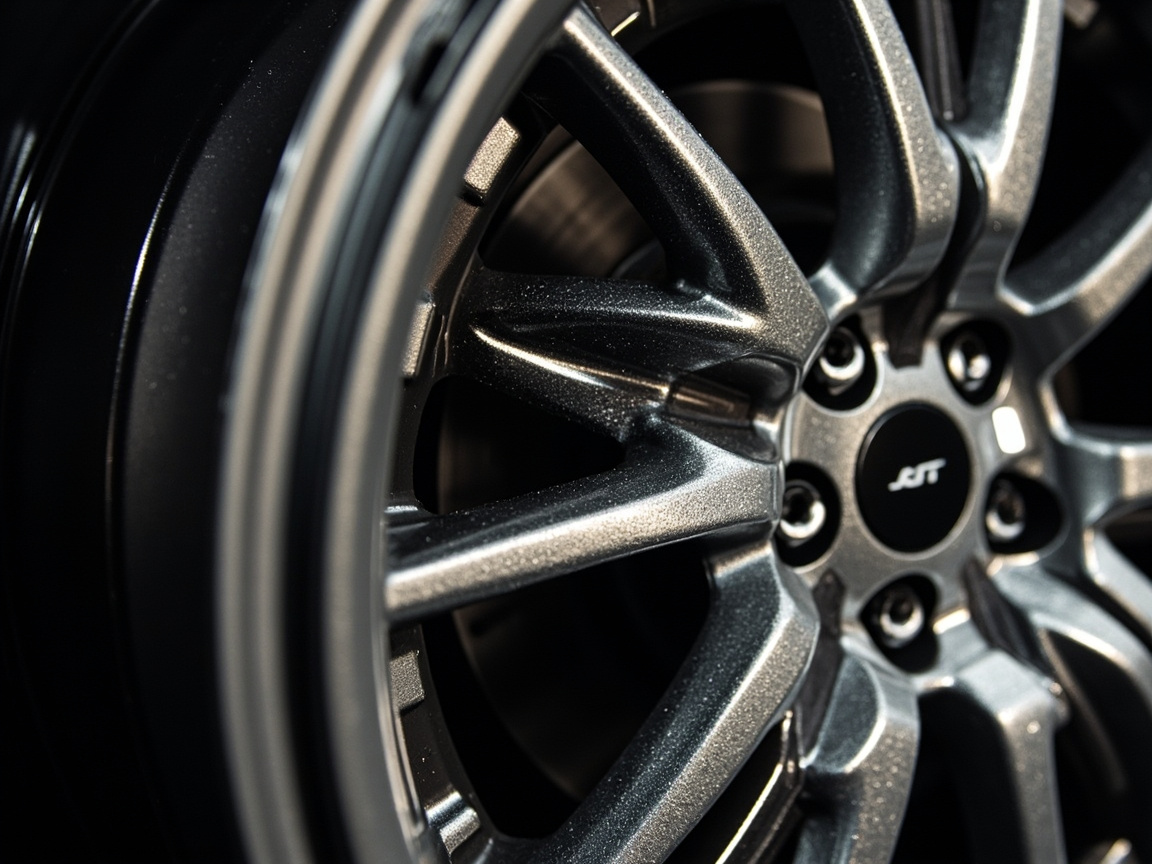
19. Typical Application Cases
Case 1: Low-temperature metallic paint for new energy vehicle wheels. A certain automaker originally used solvent-based aluminum paint for wheels, with high VOC and energy consumption. After switching to water-based aluminum powder system, through silicon-coated narrow-distribution aluminum powder + stepwise heating, flop consistency converged from ±6 to ±2, single-piece energy consumption dropped about 18%, VOC reduced to within 110 g/L.
Case 2: Thin-coat sparkle for 3C laptop shell. Laptop lid requires strong metallic feel but extremely thin film (total film thickness < 25 microns). Adopting fine aluminum powder + UV clear coat "metallic primer + varnish" structure, clear flop obtained under 15-micron metallic primer, passing ball-drop and alcohol abrasion tests.
Case 3: Weather-resistant metallic topcoat for construction machinery. Excavator boom is outdoors long-term, using epoxy metallic primer + aliphatic polyurethane topcoat double-layer structure, aluminum flakes anchored by thick topcoat, maintaining flop and gloss after five years outdoors. These three cases jointly show: the value of metallic effect coatings is not in "having aluminum powder", but in "aluminum powder being systematically oriented and protected by配套 layers".
20. Industry Scale and Evolution Data
The global effect pigment market (aluminum powder, bronze powder, pearlescent, etc.) is at the scale of several billion euros, with aluminum effect pigments dominating; annual growth is highly correlated with automobile production, home appliance renewal, and 3C appearance upgrade. The proportion of water-based metallic paint is increasing year by year under regulatory drive; water-based rate of new car painting in Europe and domestic has reached high level, water-based penetration in industrial and 3C fields is still accelerating. On the technology side, narrow-distribution aluminum powder, core-shell aluminum flakes, and multi-color effect pigments are the main R&D lines; on the application side, "low film thickness high flop", "clearcoat-free single coat", "metallic effect on recyclable substrates" are high-frequency customer demands.
21. Specific Values and Adjustment Logic of Spray Parameters
Application parameters of metallic effect coatings are not by feel, but a set of quantifiable windows. Taking air spray as example, common pressure is between 2.5 and 3.5 kg, gun distance controlled at 20–30 cm, fan adjusted to cover workpiece without virtual edges; coating viscosity measured by Ford cup #4, mostly 16–22 seconds; flash dry between each wet coat, 1–3 min at room temperature, 40–60 sec with infrared assist; single dry film controlled at 10–18 microns, two to three coats stacked to 15–25 microns. The underlying logic of these values: pressure and gun distance determine aluminum flakes settle lying flat and not standing up, viscosity determines atomization fineness and leveling, flash dry determines oriented flakes not disturbed by later coats, film thickness determines flop stereoscopic feel. Any deviation sacrifices texture in that dimension.
Special reminder: parameters are mutually coupled. For example, if viscosity is high and original pressure still used, atomization worsens, aluminum flakes beaten unevenly, flop scatters; then viscosity should be lowered or pressure fine-tuned simultaneously, not single item changed. Therefore correct on-site practice is to write this set of parameters as a whole into work instructions, and periodically re-check with destructive samples.
22. On-site Specification for Aluminum Powder Storage, Can Opening and In-line Stability
Effect pigments are the most delicate raw material in metallic effect coatings. Aluminum paste should be stored in cool, dry warehouse away from acid/alkali and fire, strictly sealed after opening to prevent skinning and slow hydrolysis; water-based aluminum paste is more storage-sensitive, recommend use up quickly after opening, unfilled part expel air before resealing. Use low-shear slow dispersion when charging, avoid high-speed sand mill breaking flake aluminum — once broken into grains, flop collapses irreversibly. In-line mixed metallic primer must specify storage time; beyond may settle or react, must low-speed stir and visually check skinning, graying, gas before use.
Many on-site flop instability root causes are not in formula, but in aluminum powder storage and charging out of control. Managing this link eliminates considerable batch fluctuation.
23. Experimental Design Method for Metallic Primer and Varnish Compatibility
Interlayer compatibility of metallic primer and clear varnish is a hard indicator to verify before launch. Recommended experiment: compatibility matrix — take 3–5 candidate varnishes, clearcoat on metallic primer in normal-crosslinked, under-crosslinked, over-crosslinked states, examine interlayer adhesion (cross-cut), biting/aluminum spots, gloss and DOI change, and water-boil delamination. Also do "solvent wipe" experiment: lightly wipe surface-dry metallic primer with varnish thinner, observe dissolution/rearrangement. This matrix exposes interlayer risk within a week, far cheaper than mass rework after launch.
Worth emphasizing: varnish must be compatible with both metallic primer and transparent color paste. Some pastes redissolve/migrate in varnish solvent, causing hue shift after clearcoat. So matrix must include "colored metallic primer + varnish", not only plain.
24. Key Points of Customer Audit and Incoming Inspection
When metallic effect coatings enter vehicle maker or high-end home appliance supply chain, audit and incoming inspection focus: first, flop value and batch stability, require multi-angle color data per batch within control limits; second, DOI and orange peel, require imaging appearance meter quantification within window; third, film thickness and adhesion sampling method; fourth, weather resistance data, require xenon report not just promise; fifth, VOC test report and eco compliance declaration; sixth, aluminum powder and resin batch traceability. Make these into factory inspection report, both promise to customer and moat for enterprise.
Kexin New Materials' metallic paint line at Foshan base makes flop, DOI, film thickness, adhesion, weather resistance, VOC these six items per-batch mandatory, thus built stable reputation in South China OEM supply chain. For purchaser, these six are also top indicators at acceptance.
25. Nineteen Common Misconceptions of Metallic Effect Coatings
Common front-line misconceptions: finer aluminum brighter — actually too fine flop collapses; thick spray easier — actually thick spray causes orange peel and aluminum spots; solvent universal — actually metallic paint thinner has dedicated volatilization gradient; varnish arbitrary — actually interlayer compatibility decides success; water-based metallic must be dark — actually coated aluminum can approach solvent-based; larger flop more premium — actually too large side view looks dirty; more aluminum more sparkle — actually excess sinks and hides color; clearcoat-free cheaper — actually weather and clarity discounted; plastic direct spray ok — actually pretreatment decides adhesion; longer flash dry better — actually too long skins and bites; higher bake faster — actually rapid heating disturbs flakes; pinhole is aluminum issue — actually mostly solvent curve; mottling is paste issue — actually often flake stratification; metallic primer can be outdoor alone — actually must clearcoat; domestic aluminum unusable — actually narrow-distribution domestic available; water-based must be expensive — actually saves waste treatment; orientation by experience — actually by parameters and SPC. Post this list on-site to save tuition.
26. Differences of Metallic Effect Coatings in OEM and Refinish Systems
Automotive OEM metallic paint and refinish metallic paint share mechanism but very different conditions. OEM line has full electrophoretic, intermediate coat, metallic primer, varnish four-layer and precise robot spray, flash dry and bake curve controlled by central system, flop consistency extremely high; refinish mostly manual in repair shops, environment temp/humidity fluctuates, no stepwise bake oven, metallic primer orientation relies more on technician feel of pressure, gun distance, film thickness. Thus same aluminum batch often more stable and pure in OEM than shop. This is why high-end refinish often shows "color difference obvious at angles" — not wrong pigment, but orientation window not reproduced.
For coating enterprises, OEM and refinish need different guidance: OEM focuses parameterCuring and per-batch control, refinish focuses tolerance and adjustability. Kexin New Materials' aftermarket metallic paint products intentionally increase application tolerance, letting manual spray approach OEM flop.
27. Process Window of Metallic Effect Coatings on Wheels
Wheel is a huge-volume part for metallic effect coatings, with its own process window. Wheels mostly aluminum alloy, surface pretreated and powder primer, then metallic primer; due to complex shape with spokes and recesses, spray easily causes spoke bright recess dark unevenness, needing robot multi-axis or manual touch-up. Film thickness: wheel metallic primer often 20–25 microns for sparkle and stone-chip resistance; elastic clearcoat prevents crescent bare spots from stones. Flash dry uses low-temp long flash plus stepwise heating, converging flop consistency from ±6 to within ±2. These small experiences are key to wheel metallic paint yield.
28. Adhesion Mechanism of Metallic Effect Coatings on Plastic Parts
On plastic parts, adhesion is first gate for metallic effect coatings. Polypropylene, ABS, polycarbonate etc. have low surface energy, aluminum and resin hard to anchor, must flame or plasma treat to raise surface energy, then plastic-specific primer, then thin metallic primer. More troublesome: plastic high thermal expansion, metallic primer and plastic primer need enough flexible buffer, else interface cracks and flakes exposed under thermal cycle. Thus in plastic "primer—intermediate—topcoat" three layers, plastic primer flexibility and adhesion decide success more than metallic effect. This is why many plastic metallic failures are not aluminum but pretreatment and plastic primer.
29. Combination of Metallic Effect Coatings and Pearlescent Paint
Pearlescent pigment (mica titanium) and aluminum powder are two brothers in metallic effect family, often combined. Aluminum gives bright flop and sparkle, pearl gives soft rainbow interference and depth, overlay makes "silk silver" "fantasy gray" etc. advanced effects. Note: pearl flakes more fragile, high shear destroys; particle sizes coordinate to avoid masking; transparent paste hue must compat both optics. Well done, texture far exceeds single aluminum; poorly done, loses both aluminum bright and pearl soft. This is formulator's advanced task.
30. Detailed Outlook on Future Technology Routes
Looking forward, metallic effect coatings will deepen along four main lines. First, purer effect: narrow-distribution aluminum, core-shell flakes, special morphology flakes make flop closer to mirror purity, and smart effect pigments from dual-color to multi-color, from passive reflection to thermo/photo-chromatic. Second, deeper water-based: silane and phosphate-coated aluminum with dedicated dispersions, making water-based flop match solvent-based, VOC continuously down. Third, function stacking: on metallic effect add antibacterial, antistatic, chemical resistance, making decorative also functional. Fourth, green reduction: better orientation thinner film less aluminum, cut cost and carbon. These four reshape metallic effect coating industry.
31. Project Landing Checklist for Metallic Effect Coatings
To push a metallic effect coating project from trial to mass production, check in order. First, clarify application and performance grade: OEM, refinish, wheel, or appliance? Weather and flop targets? Second, lock effect pigment spec: sparkle vs fine tradeoff, floating vs non-floating, particle distribution. Third, determine resin and crosslink system, verify compatibility with transparent paste and aluminum. Fourth, design solvent volatilization gradient as first-class citizen. Fifth, make application parameter work instruction, write pressure, gun distance, viscosity, film thickness, flash, bake as reproducible window. Sixth, metallic primer and varnish compatibility matrix to expose interlayer risk. Seventh, establish flop, DOI, film thickness, adhesion, weather, VOC six per-batch mandatory. Eighth, aluminum storage and charging on-site spec. Make these eight a closed loop, project risk minimized.
32. Key Points for Different Roles
For formulator, core is aluminum orientation and resin/solvent synergy, not simply pile aluminum. For process engineer, core isCuring application parameters and SPC, make flop batch-reproducible. For purchaser, acceptance watch flop, DOI, film thickness, adhesion, weather, VOC six data not just color chip. For project manager, reserve matrix and aging time, don't let launch skip verification. For quality, include multi-angle color in incoming and outgoing mandatory. Roles differ, but all around "aluminum systematically oriented, protected by配套 layers" axis.
33. FAQ Summary of Metallic Effect Coatings
Besides earlier Q&A, often asked: can metallic be matte? Yes, but matte at varnish end, metallic primer still oriented, matte weakens flop but keeps sparkle. Can colored metallic? Yes, by transparent paste and colored effect pigment. Can metallic print directly? Hard, due to varnish and non-ink-absorbing flake layer, need special treatment. Food contact? Need compliant resin and aluminum and migration test. Recycled part? Yes, but thorough pretreatment remove old coating and grease. Answers all return to mechanism and compatibility logic.
34. Synergy of Metallic Effect Coatings and Vehicle Color Development
In vehicle development, metallic paint is not isolated but part of color strategy. Color designer sets target hue and flop direction, coating engineer selects aluminum spec, transparent paste, resin, makes chips for lab and outdoor comparison. Difficulty: lab light box flop differs from outdoor sunlight, and hue shift at angles must fit brand tone. Thus high-end projects do "multi-angle chip review" at 15°, 45°, 110° simultaneously, ensure color flows not abrupt. Metallic effect coating here is both technology and brand language carrier.
35. Advice on Investment and Line Retrofit
For enterprises planning metallic effect coating line, suggest stepwise not all-at-once. First retrofit pretreatment and spray station,Curing six parameters pressure, gun distance, viscosity, film thickness, flash, bake; then introduce multi-angle color and appearance meter for data control; last consider water-based and low-VOC for compliance. This gets stable texture fast without crushed by eco capex. Kexin New Materials often helps customers with lightweight scheme to run metallic effect, then smoothly switch to water-based, reducing transition risk.
36. Conclusion
Metallic effect coating seems just "paint with aluminum", but actually spans effect pigment, resin carrier and application process three precise synergies. Its premium comes from systematically oriented flakes, its durability from metallic primer protected by配套 layers. Understand mechanism,Curing parameters, control fluctuation, are three keys to turn "metallic feel" from subjective to deliverable. For engineers, less feel more data; for enterprises, make flop, DOI, film thickness, adhesion, weather, VOC six per-batch mandatory, is the real moat.
37. Notes on Metallic Effect Coatings in Second-hand and Refurbish Market
In used car refurbish and remanufacturing, metallic effect coatings often restore appearance. Two notes. One, old paint treatment: must thoroughly sand or chemically remove old varnish and metallic primer, else new flakes can't orient evenly on contaminated layer, causing streaks. Two, color restoration: old car UV-aged hue shifted, new paint alone may not reproduce OEM flop, need multi-angle compare old part then tune transparent paste. Refurbish market values application tolerance more, as environment less controlled than OEM, formula should increase tolerance to pressure and film thickness fluctuation.

38. Selection of Common Experimental Equipment
Metallic effect coating R&D and QC need several equipment. Multi-angle spectrophotometer quantifies flop, core device; imaging appearance meter quantifies orange peel and DOI, for high-end appearance; xenon and UV chambers for weather; thickness gauge for film; cross-cut and pull-off for adhesion; SEM or polarizing microscope for flake orientation rate, mostly R&D. For SMEs, at least multi-angle color and thickness, to bring flop and film into data. No quantification "eyes" is a root cause of low yield.
39. Supply Chain and Domestic Substitution of Metallic Effect Coatings
Past high-end aluminum and pearl long relied on import; recent domestic effect pigments improved, narrow-distribution aluminum, core-shell flakes can match import, with cost and lead advantage. For coating firms, domestic substitution cuts cost and secures delivery in shortage. Substitution is not simple replace, but redo orientation and flop verification, as different-origin aluminum morphology and surface treatment transmit to final texture. Suggest establish incoming multi-angle color and orientation rate inspection, block substitution risk at incoming. Kexin New Materials' metallic line introduced domestic narrow-distribution aluminum and ran batch consistency, beneficiary of this trend.
40. Cleanliness Requirements of Application Environment
Metallic paint is extremely sensitive to particles and dust. Because the aluminum flakes arrange to form a high-gloss mirror layer, any dust falling on the wet film will become visible bright or dark spots after clear coating, and cannot be removed by sanding. Therefore, the spray booth should reach class 10,000 or near-class-10,000 cleanliness, intake air should be HEPA-filtered, the floor should use anti-static materials and be regularly tack-cleaned; operators should wear one-piece clean suits, hair nets, and finger cots. A more hidden risk is "paint mist rebound" — the uncured metallic base of the previous pass is contaminated by dry paint mist blown up by the airflow of the next pass. The solution is to control uniform booth air velocity, reasonable workpiece spacing, and use a tack roller to lightly roll surface floating dust between passes. Many factories attribute "appearance defects" to aluminum powder, but in reality it is the cleanliness that was not maintained; this point deserves to be written separately into the work instruction.41. Adhesion Risks When Paired with Plastic Parts
When metallic paint is used on injection-molded parts such as 3C housings and automotive interiors, the logic of adhesion is completely different from that of metal parts. The coefficient of linear thermal expansion of plastic is much larger than that of the coating, and the interfacial stress under temperature cycling is high, making whole-sheet peeling likely. The correct approach is to first match the substrate: ABS, PC, and PP each have different adhesion promoters and flame/plasma treatment windows; PP is especially difficult to adhere to and must be primed with chlorinated polyolefin primer. Metallic base sprayed on plastic parts should be controlled to a thinner film thickness and softer curing, leaving margin for thermal expansion and contraction. Kexin New Materials, in its plastic metallic paint solutions, first confirms the substrate grade, then determines the adhesion promotion and the hardness/softness of the metallic base, avoiding the awkward situation of "metallic look achieved, but falls off with a snap."
42. Recycling Aluminum Powder and Scrap Reuse
Recycled aluminum powder and settled powder generated from color changes or shutdowns on the spraying line are not all useless waste. After sieving, de-oiling, and re-encapsulation, some settled aluminum powder can be downgraded for use in primers or interior parts with low sparkle requirements, reducing both cost and waste. However, the particle size distribution of recycled powder has widened and the surface treatment has degraded; direct reuse will lower flop and weather resistance, so it must be blended in proportion and re-validated for orientation and salt spray. It is recommended to establish a "recycled powder ledger" recording source batch, blending上限 (upper limit), and corresponding products, to avoid arbitrary reuse causing batch loss of control. This is a frequently overlooked but highly beneficial aspect of lean production of metallic paint.
43. Digital Color Matching and Formula Management
Metallic paint has many formula parameters with strong coupling; relying on experienced masters for color matching is increasingly inadequate at scale. The digital approach is to write aluminum powder model, particle size, addition amount, transparent color paste, varnish refractive index, and spraying parameters into the formula system, combined with multi-angle color measurement data closed-loop, compressing new color development from "weeks of trial and error" to "days of trial and error." Further, build a case library from historical qualified formulas so that even with personnel changes the results can be reproduced. For factories like Kexin New Materials serving multi-industry customers, the formula library is core assets: after receiving customer samples, first match within the library then fine-tune, making lead time and consistency more stable. Digitalization is not chasing trends, but the inevitable path for scaled delivery of metallic paint.
FAQ
Q1: Are metallic paint and ordinary silver paint the same thing?
Not exactly. "Silver paint" is the most plain form of metallic paint, generally referring to paints containing aluminum powder; "metallic paint" emphasizes the controllable design of flop and sparkle effect, covering systems of various effect pigments such as aluminum powder, bronze gold powder, and pearlescent. They are often mixed in daily context, but the formula-level differences are obvious.
Q2: Why is my metallic paint very bright face-on but gray at grazing angle, is the aluminum powder bad?
Very likely an orientation issue rather than poor aluminum powder. Bright face-on and gray at grazing indicates aluminum flakes are basically parallel (flop profile present), but overly gray at grazing is often due to fine particle size or thin film thickness making the "mirror layer" not thick enough. Try a coarser grade aluminum powder, slightly increase film thickness, and increase inter-pass flash-off.
Q3: Why does water-based metallic paint easily darken and have weak flop?
The core is that aluminum flakes easily hydrolyze and produce hydrogen in the water phase, with unstable interface, leading to poor flake orientation. Use encapsulated aluminum powder + dedicated aluminum powder dispersant, and control pH and amine neutralizers to avoid corrosion and dulling of flakes.
Q4: Why does "bite-through" with aluminum spots occur when clear coating over metallic primer?
The metallic base is not sufficiently cross-linked before clear coating; the clear coat solvent dissolves and rearranges the lower layer, disturbing the aluminum flakes. The countermeasure is to extend flash-off/pre-bake to surface-dry and cross-link the metallic base, or select a clear coat compatible with the metallic base and with mild solvency.
Q5: Can one heavy coat replace multiple thin coats?
Not recommended. Heavy coating concentrates solvent and extends flow time, causing disordered tumbling of flakes and easy orange peel, with poor flop and appearance. Thin multiple coats with inter-pass flash-off for metallic base is industry consensus.
Q6: Will the aluminum flakes in metallic paint oxidize and turn black?
Non-leafing flakes are encapsulated by resin and isolated from air, normally will not; leafing surface aluminum layer, if the clear coat sealing is poor, may oxidize and darken under long-term UV and moisture. Proper clear coat sealing and weather-resistant varnish selection can avoid this.
Q7: Can flop be quantitatively controlled?
Yes. Use a multi-angle spectrophotometer to measure L* difference (flop value) at 15°/45°/110° and RGB angular variation, combined with film thickness and spraying parameters for SPC control, compressing batch fluctuation to very small.
Q8: Can metallic paint be made matte or soft-touch?
Yes, but it sacrifices some sparkle. The method is to lower clear coat gloss, or add a small amount of matting filler in the metallic base to soften the mirror layer; the cost is weaker flop and flake edges covered by frosted feel. 3C parts needing "metallic but not glaring" often use this route; the key is that matting agent must not excessively destroy flake orientation.
Q9: Why does the same formula show very different flop on two lines?
Almost always different spraying and curing conditions: any drift in atomizing pressure, gun distance, flash-off time, or oven temperature changes flake orientation. It is recommended to write the "spray window" as executable parameter ranges rather than a vague "thin multiple coats," and use multi-angle color measurement for baseline alignment of the two lines.
Q10: Can pearlescent and aluminum powder be mixed?
Yes, and they are often mixed to balance sparkle and color saturation. Aluminum powder gives metallic brightness, pearlescent gives angular color phase; their ratio and particle size pairing determine final texture. When mixing, note pearlescent flakes are more brittle and easily broken by high shear, so dispersion speed should be reduced.
Q11: What should outdoor metallic paint most guard against?
Most guard against loss of protection of flakes due to insufficient clear coat weather resistance. Once the clear coat chalking and cracking, internal flakes are exposed and oxidize darkening, appearance rapidly degrades. The lifespan upper limit of outdoor metallic paint is determined by the clear coat; selecting weather-resistant clear coat is more critical than choosing expensive aluminum powder.
Further Reading
- Principles of Hammer Tone and Wrinkle Coatings Formulation and Construction Machinery Applications — Belonging to the same metallic effect paint family, the "spots" of hammer tone and the aluminum flake orientation in this article are two sides of the same coin.
- Sprayed Chrome-like / Vacuum Plating Alternative Metallic Coatings — Alternative routes when you need "more like real metal" rather than "sparkling metallic feel."
- Plastic Coatings Industry Overview — Understand the adhesion and substrate treatment logic of metallic paint on 3C and automotive interior plastic parts.