In the technical language of nano coatings, "hydrophobic angle" (water contact angle) and "roll-off angle" (sliding angle/release angle) are the two most frequently mentioned parameters, and also the most easily misread. If a coating is labeled "contact angle 120°", does that equal "self-cleaning" "easy to clean"? The answer is not simple. As a surface functional material supplier, Kexin New Materials (kexinMaterials), in the R&D and characterization of functional coatings such as nano SiO₂ and nano TiO₂, has long used the dual indicators of contact angle and roll-off angle to define the true hydrophobic and self-cleaning performance of products. Starting from the physical basis of wetting, this article will systematically explain the definitions of these two parameters, measurement standards, their relationship with surface microstructure, and how they determine the "self-cleaning significance" of coatings in engineering and consumer scenarios, and will try to annotate verifiable standards and method sources for each conclusion (ASTM D7334, ISO 19403-2/-7, GB/T 30693, etc.).
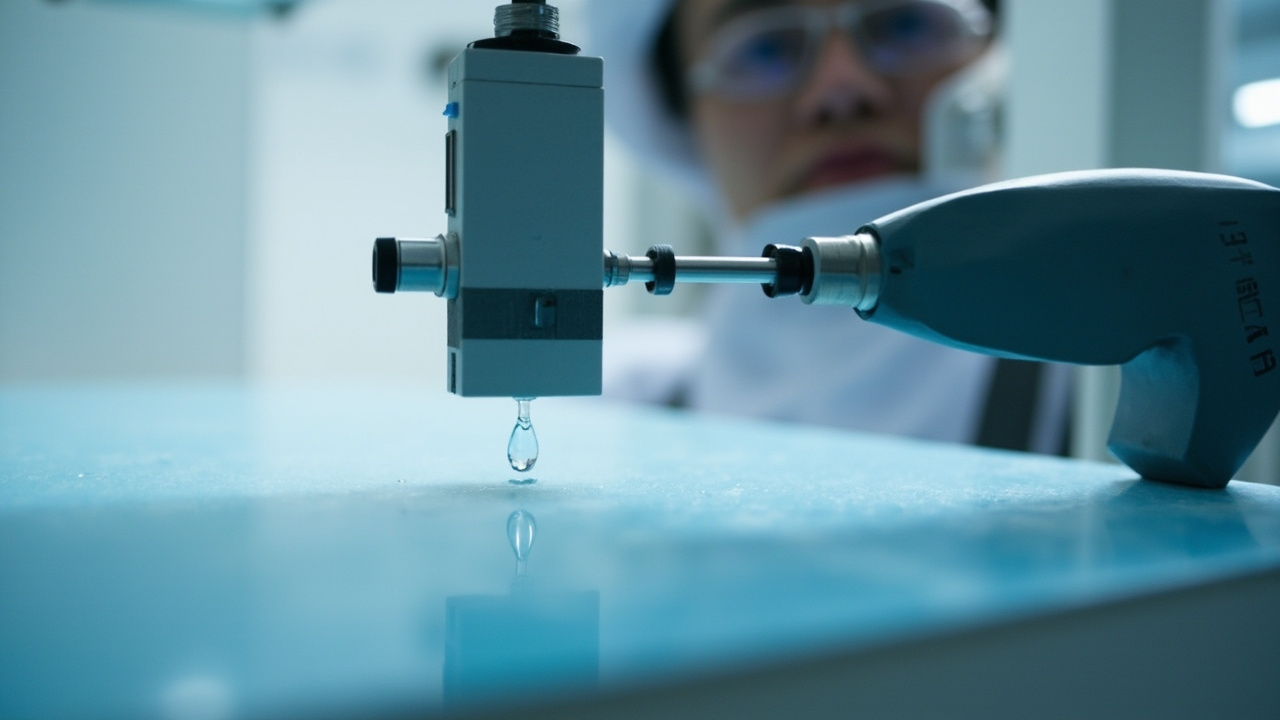
I. Physical Basis of Wettability: Young's Equation
The final shape of a liquid droplet on a solid surface is determined by the balance of solid-gas, solid-liquid, and liquid-gas interfacial tensions. On an ideal smooth, homogeneous, rigid surface, the equilibrium contact angle θ (Young's contact angle) satisfies Young's equation:
cos θ = (γ_SV − γ_SL) / γ_LV
where γ_SV is the solid-gas interfacial tension, γ_SL is the solid-liquid interfacial tension, and γ_LV is the liquid-gas (liquid surface tension). For water, γ_LV ≈ 72.8 mN/m (25℃), and the surface tension of commonly used deionized water is ≥ 71.5 mN/m (according to the requirements for test liquids in ISO 19403-7).
From the equation we can read a key intuition: the larger the contact angle, the lower the solid surface energy and the less easily it is wetted by liquid. Therefore, the essence of "hydrophobic" is a low-surface-energy solid + (on a real rough surface) a structure that traps air, causing the droplet to tend to bead up rather than spread.
It should be pointed out that Young's equation describes an "ideal smooth surface". Real nano coating surfaces are by no means atomically smooth, but are filled with nano- to micron-scale rough structures. At this time, the contact angle needs to be corrected by the Wenzel and Cassie-Baxter models (see Section IV), which is also where "nano" truly plays a role in hydrophobic coatings.
II. Contact Angle (CA): Definition and Measurement
Definition: The contact angle is the angle between the liquid-gas interface and the solid-liquid interface at the three-phase contact line of a droplet, usually expressed in degrees (°). According to the state of the droplet:
- Static contact angle: the angle when the droplet is at static equilibrium;
- Advancing angle (θ_a): the angle when the droplet volume increases and the three-phase line advances forward;
- Receding angle (θ_r): the angle when the droplet volume decreases and the three-phase line recedes;
- Contact angle hysteresis = θ_a − θ_r: reflects surface chemical/structural non-uniformity and pinning degree, directly related to the roll-off angle.
Measurement method: The most commonly used is the sessile drop method, where a microsyringe drops a 2–10 µL droplet on the sample, and a goniometer captures the contour and fits the Young-Laplace or circle/ellipse model to obtain the angle. Relevant standards include:
- ASTM D7334-08(2022) "Standard Practice for Surface Wettability of Coatings, Substrates and Pigments by Advancing Contact Angle Measurement" — determines the advancing contact angle of coating surfaces based on goniometry, explicitly based on the sessile drop method, and can be used to evaluate surface cleanliness, wettability, and ease of cleaning;
- ISO 19403 series (Paints and varnishes — Wettability): Part 1 (ISO 19403-1:2017) specifies terms and principles, Part 2 specifies static contact angle measurement;
- GB/T 30693-2014 "Plastics — Determination of contact angle of films and sheets" — domestic method for measuring contact angle of plastic substrates, often borrowed for coating characterization;
- In addition, ASTM D7490 specifies the derivation of solid surface free energy from contact angle, and ASTM D5946 targets the surface tension of polymer coatings.
Operational points: Samples need to be preconditioned at (23±2)℃, (50±5)%RH (ISO 19403-7 requires at least 16 h environmental equilibration), avoiding contamination and static electricity; droplet volume, dispensing rate, and residence time must be fixed, otherwise results on the same surface can deviate by several degrees.
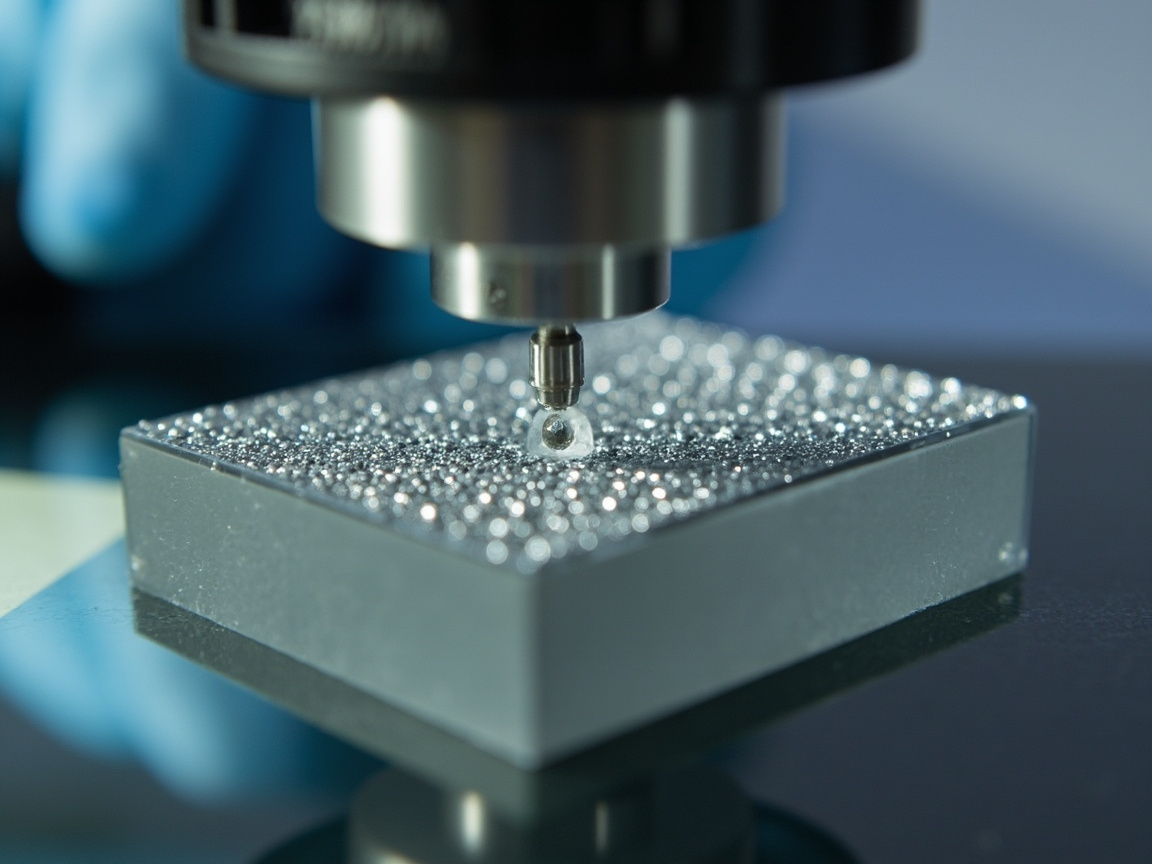
III. Roll-off / Sliding Angle (SA): The True Criterion for Self-Cleaning
If the contact angle measures "how much it dislikes water", the roll-off angle measures "how easily the water droplet can carry dirt away from the surface", and the latter is the core of the self-cleaning experience.
Definition: Tilt the sample at a constant rate; the stage inclination angle when the droplet begins to roll (three-phase line moves ≥ 1 mm) is the roll-off angle α. It is essentially the macroscopic manifestation of contact angle hysteresis — the smaller the hysteresis, the lower the roll-off angle.
Measurement standard: ISO 19403-7:2017 / 2024 "Paints and varnishes — Wettability — Part 7: Measurement of dynamic contact angle and roll-off angle on an inclined plane" is the dedicated specification. Key points are as follows:
- Environment: (23±2)℃, (50±5)%RH, sample preconditioned ≥ 16 h;
- Test liquid: deionized water (surface tension ≥ 71.5 mN/m) or standard listed liquid, analytical pure or above;
- Tilting: constant-speed tilt (recommended 1–2°/s; too fast will make the measured roll-off angle larger) until the droplet starts to move;
- Sampling: take the median of at least 3–5 different points, excluding anomalies;
- Output: roll-off angle α, and optional advancing/receding angles θ_a, θ_r.
Typical ranges: Ordinary hydrophobic coatings (contact angle 100–120°) may have a roll-off angle of 10°–50°; truly "rinse and clean" superhydrophobic surfaces require a roll-off angle < 10° (some literature considers < 5°–10° as excellent). Therefore, a coating labeled with a 120° contact angle but a 30° roll-off angle will still have water droplets "pinned" and not rolling at a gentle tilt, and its self-cleaning effect is far inferior to products with a low roll-off angle.
IV. Wenzel and Cassie-Baxter Models: How Roughness Amplifies Hydrophobicity
The rough structure of a real surface changes the apparent contact angle. Two classic models explain the mechanism:
1. Wenzel model (homogeneous wetting): The droplet completely fills the surface rough depressions, and the three-phase line is inside the solid. The apparent contact angle θ* and Young's angle θ satisfy:
cos θ* = r · cos θ
where r is the roughness ratio (actual area/projected area, r > 1). Conclusion: if intrinsically hydrophobic (θ > 90°), roughening will further increase the apparent contact angle; if intrinsically hydrophilic (θ < 90°), roughening makes it more hydrophilic. This explains why "nano roughness" must be built on low-surface-energy chemistry to be meaningful.
2. Cassie-Baxter model (composite wetting / air trapping): The droplet does not fill the depressions, but traps an air cushion between the rough structures; the droplet actually contacts a "solid + air" composite interface. The apparent contact angle is determined by the solid-liquid contact fraction f:
cos θ* = f · cos θ + (1 − f) · cos 180° = f·(cos θ + 1) − 1
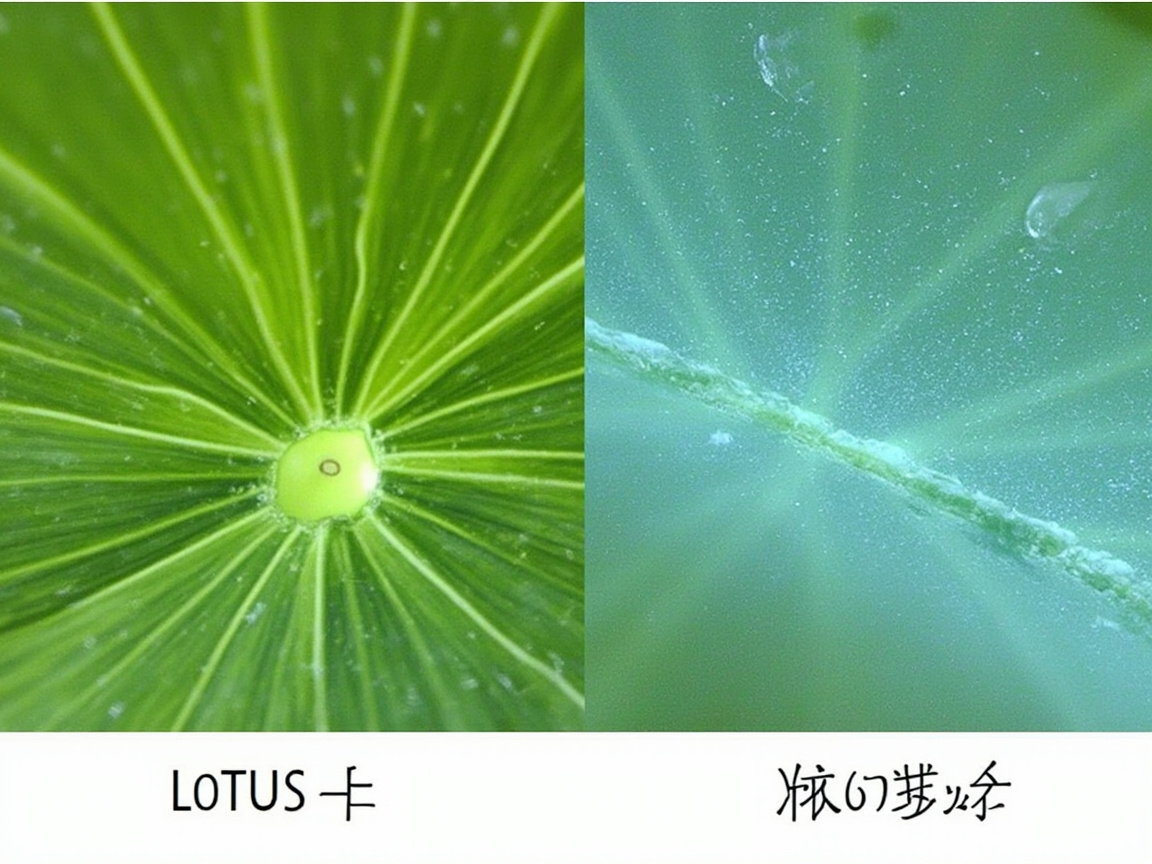
When more air is trapped (small f), the apparent angle approaches 180°, which is the source of superhydrophobicity and extremely low roll-off angle — this is exactly the structural essence of the lotus leaf "lotus effect".
For nano coatings, the engineering goal is often to construct the Cassie-Baxter state: on a low-surface-energy SiO₂/fluorine-containing skeleton, use nanoparticles to create micro-nano bilayer roughness, trap air, so that the contact angle >150° and roll-off angle <10°. However, it should be noted that the Cassie state easily "collapses" into Wenzel wetting after compression, wear, or contamination (water droplets penetrate the roughness, contact angle drops sharply, becomes dirty and hard to clean), which is also the core challenge of superhydrophobic coating durability.
V. Hydrophobic Grading: Engineering Implications from 90° to 150°
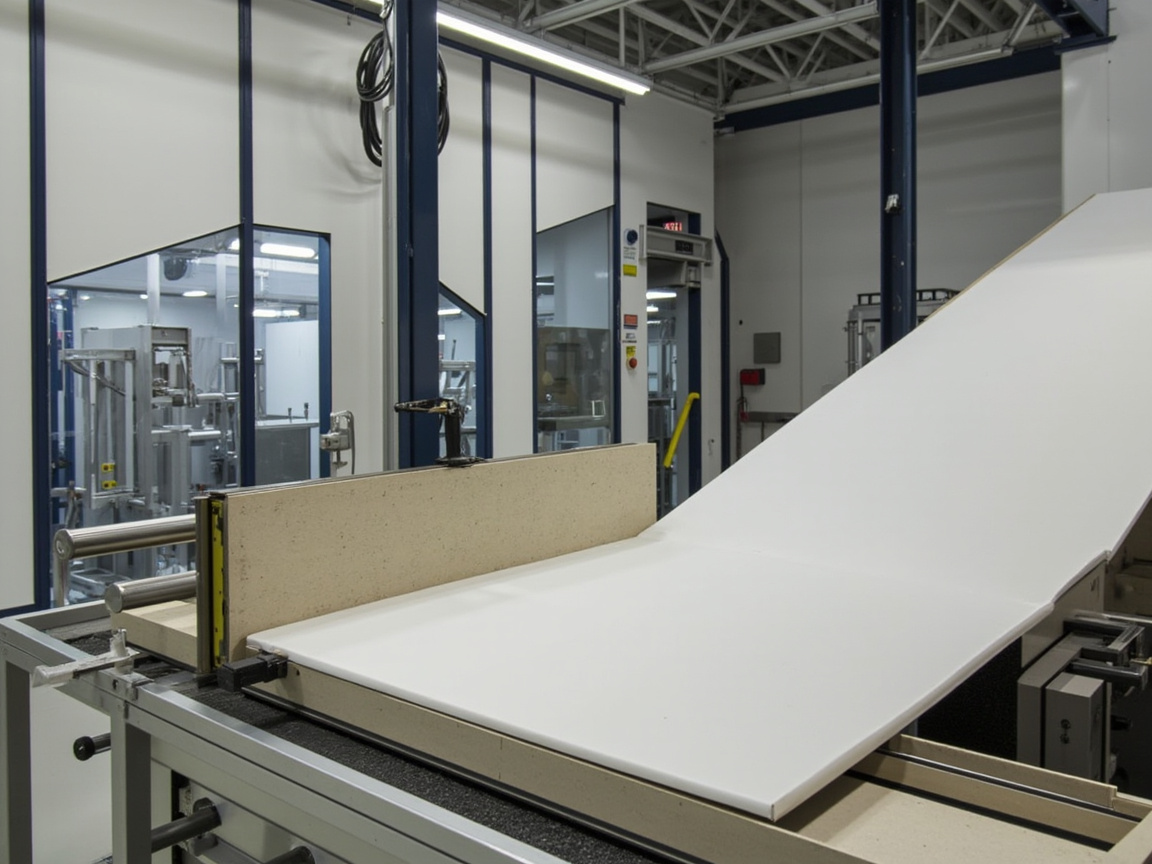
A practical grading can be established based on contact angle and roll-off angle (common industry parlance):
| Grade | Contact Angle Range | Roll-off Angle | Engineering Implication |
|---|---|---|---|
| Hydrophilic | < 90° | High / Spreading | Easy to wet, washable with water, suitable for anti-fog, coating primer |
| Hydrophobic | 90°–150° | Usually > 10° | Water-repellent, anti-fouling; most automotive/protective coatings fall in this range |
| Highly hydrophobic / Strongly hydrophobic | 100°–150° | Can be low or high | Obvious beading, self-cleaning depends on roll-off angle |
| Superhydrophobic | > 150° | < 10° | True self-cleaning, lotus effect, requires micro-nano roughness + air entrapment |
Note: “Superhydrophobic” is a threshold composite criterion, not a single high contact angle. It is exaggerated for the market to call 110°–120° ”superhydrophobic”; the accurate term should be ”strongly hydrophobic / highly hydrophobic”. According to public automotive ceramic coating data, Onyx Nano Shield has a contact angle of about 120° and a roll-off angle of 11–55°, placing it in strongly hydrophobic but not strictly superhydrophobic; Gaamp360 (SiO₂ based) has a hydrophobic angle of 100–120°, and Re-yingcai is labeled ”superhydrophobic self-cleaning” but requires third-party roll-off angle data for verification.
VI. Significance of Self-Cleaning: Lotus Effect and Dirt Removal
The physical essence of self-cleaning is: when a droplet rolls off at an incline or under gravity with a low roll-off angle, it ”rolls away” loose surface contaminants (dust, mud spots, pollen), because the adhesion between the contaminant and the droplet is stronger than that between the contaminant and the coating itself. Under the Cassie-Baxter state, the droplet barely contacts the real solid (separated by an air cushion), making it harder for contaminants to embed.
This mechanism is especially critical in two types of nano coatings:
- SiO₂-based hydrophobic coating: achieves water-repellent self-cleaning through low-surface-energy organosiloxane side groups + nano roughness, such as ceramic layers on automotive paint (see Nano SiO₂ and Hydrophobic/Hardness-Enhancing Coating Technology);
- TiO₂-based photocatalytic self-cleaning coating: under UV generates photogenerated electrons/holes, degrades surface organic pollutants, and makes the surface hydrophilic (photo-induced superhydrophilic) so that a water film spreads and washes away dirt (see Nano TiO₂ and Self-Cleaning Coating Principles).
The two mechanisms differ: the SiO₂ route is ”hydrophobic water-shedding carries away dirt”, while the TiO₂ route is ”photocatalytic decomposition + hydrophilic rinsing”. When selecting, judge by ”whether outdoor self-cleaning without light dependence is needed” — the pure hydrophobic route works even without strong light, while the photocatalytic route depends on UV.
VII. How Nano Coatings Achieve Both High Contact Angle and Low Roll-off Angle
Engineering construction of excellent hydrophobic self-cleaning coatings usually combines three elements:
- Low-surface-energy chemistry: introduce methyl (–CH₃), long-chain alkyl or fluorinated groups to reduce γ_SV. Pure SiO₂ is hydrophilic and needs silane modification (e.g., hydrophobic modifiers such as HDTMS) to become hydrophobic; literature reports that hydrophobic-modified nano SiO₂ can reach a water contact angle above 150°.
- Micro-nano bilayer roughness: nano particles (SiO₂ 5–50 nm) stack to form microscopic roughness, then combine with microstructures to create air-entrapping spaces, approaching the Cassie state.
- Stable dispersion: nano particles easily agglomerate; surface modification and dispersants are needed to ensure uniform film and controllable rough structure; agglomeration causes uneven film thickness, increased haze, and hydrophobic decay.
There is a tension between hardness and hydrophobicity: hardening often requires a highly cross-linked dense network (tending to smooth), while superhydrophobicity requires rough structure (tending to high roughness). Therefore, products mostly trade off between ”hardness-enhancing moderately hydrophobic” (contact angle 100–120°, moderate roll-off angle) and ”functional superhydrophobic” (contact angle >150°, roll-off angle <10° but weaker abrasion resistance), selected per working condition.
VIII. Characterization Parameters and Standard Reference Table
The table below summarizes the core parameters, physical meanings, and standard methods for wettability characterization of nano coatings, to facilitate building a testing checklist:
| Parameter | Physical meaning | Common standard/method | Typical instrument |
|---|---|---|---|
| Static contact angle CA | Equilibrium hydrophobic degree | ASTM D7334; ISO 19403-2; GB/T 30693 | Static drop goniometer |
| Advancing angle θ_a / Receding angle θ_r | Surface uniformity, pinning | ISO 19403 series | Add/remove drop goniometer |
| Contact angle hysteresis θ_a−θ_r | Proxy indicator of self-cleaning potential | Derived from above | Same as above |
| Roll-off angle SA | Self-cleaning / easy-clean criterion | ISO 19403-7:2017/2024 | Tilting stage goniometer system |
| Surface free energy SFE | Low-surface-energy design target | ASTM D7490 | Multi-liquid method + goniometer |
| Roughness/morphology | Roughness model input | ISO 25178 (3D morphology); SEM | Profiler/SEM/AFM |
It must be emphasized: a single contact angle is insufficient to judge self-cleaning; roll-off angle and hysteresis must be combined. The reason ISO 19403-7 separately lists the tilting stage method is precisely to compensate for the static contact angle”s inability to ”see dynamic detachment behavior”.
IX. Key Factors Affecting Measurement Accuracy
For the same coating, results from different labs can differ by as much as ten-odd degrees; common interference sources:
- Tilting rate: ISO 19403-7 notes that increasing the tilting rate from 0.5°/s to 5°/s may raise the roll-off angle by 30%–60%; fixing at 1–2°/s is recommended.
- Droplet volume: a 15–45 µL volume change can lower the roll-off angle by about 30%; volume must be fixed.
- Surface contamination and cleaning: oil, fingerprints, residual release agent significantly alter contact angle; ultrasonic cleaning and resting to remove solvent residue are recommended.
- Environment and equilibrium: insufficient temperature, humidity, and sample equilibrium time introduce systematic error.
- Substrate flatness: curved surfaces and uneven roughness cause fitting deviation.
Therefore, when comparing hydrophobic performance of different products, data must be under ”same standard, same method, same liquid, same volume”; otherwise the numbers are not comparable. This also explains why Kexin New Materials (kexinMaterials) requires dual indicators of ISO 19403-2 (static angle) and ISO 19403-7 (roll-off angle) for reports when delivering functional coatings, rather than just giving a contact angle slogan.
X. Relevance and Selection with Self-Cleaning Coating Systems
Hydrophobic angle / roll-off angle characterization serves both SiO₂ water-shedding coatings and TiO₂ photocatalytic self-cleaning and architectural exterior wall self-cleaning systems. Selection logic:
- Automotive/metal protection, need light-independent self-cleaning: choose SiO₂-based highly hydrophobic coating, focus on contact angle 100–120° and roll-off angle as low as possible (<15° for good experience);
- Architectural exterior wall/glass, acceptable light-driven: choose nano TiO₂ photocatalytic self-cleaning, focus on degradation rate and UV conditions;
- Electronics/PCB superhydrophobic insulation: choose aerogel+ceramic composite superhydrophobic layer (e.g., public-data ECS 1300AG, film thickness 12–25 µm, fluorine-free silicone-free, RoHS/REACH compliant);
- Acceptance baseline: request third-party static angle and roll-off angle reports per ASTM D7334 / ISO 19403, and specify droplet volume, tilting rate, and liquid.
Translating ”hydrophobic” into acceptable numbers is the only way to avoid being misled by marketing jargon. For further understanding of nano particle dispersion stability challenges, refer to Dispersion Stability of Nano Coatings: Agglomeration and Surface Modification (note: this article focuses on nano paint testing and characterization, including particle size, Zeta, film thickness, and hardness systematic methods, complementary to this article”s wettability characterization).
XI. Common Misconceptions
- “Contact angle 120° = superhydrophobic = self-cleaning”: Wrong. Superhydrophobic threshold is contact angle >150° and roll-off angle <10°; 120° is strongly hydrophobic, self-cleaning depends on roll-off angle.
- “Higher contact angle is more practical”: Not necessarily. Extremely high contact angle often accompanies fragile Cassie state; after abrasion it easily turns to Wenzel wetting and gets dirty quickly; engineering often takes a balance (e.g., 100–130° + low roll-off angle) for better durability.
- “Roughness means hydrophobic”: Wrong. Wenzel model shows that intrinsically hydrophilic surfaces become more hydrophilic with more roughness; roughness must be built on low-surface-energy chemistry.
- “Roll-off angle measurement doesn”t matter”: Wrong. The sliding angle (ISO 19403-7) is a direct criterion for dynamic self-cleaning; lacking it is like judging motion performance by only looking at a static photo.
12. Comparison of Three Self-Cleaning Mechanisms: Hydrophobic Beading, Photocatalysis, and Wetting Rinsing
On the market, "self-cleaning coating" is not only a hydrophobic route. Understanding the differences among the three enables avoiding conceptual confusion during selection:
| Mechanism Route | Core Chemistry/Structure | Self-Cleaning Method | Light Dependence | Typical Representative |
|---|---|---|---|---|
| Hydrophobic Beading (main line of this article) | Low surface energy + micro-nano roughness (Cassie state) | Water droplets form beads and roll off, carrying away dirt | None | SiO₂-based nano ceramic coating |
| Photocatalytic Decomposition | Nano TiO₂ excited by UV to generate active oxygen | Degrade organic pollutants + photo-induced superhydrophilic rinsing | Strong (requires UV) | Nano TiO₂ self-cleaning coating |
| Wetting Rinsing (Hydrophilic) | Hydrophilic surface causes water film to spread | Water film flow carries away loose dirt | None | Anti-fog glass, hydrophilic exterior wall |
The hydrophobic route (such as automotive SiO₂ ceramic layer, see Nano SiO₂ and Hydrophobic/Hardening Coating Technology) remains effective in low-light, nighttime, underground garage and other UV-free environments, with broad adaptability; the photocatalytic route (see Nano TiO₂ and Self-Cleaning Coating Principles) is stronger in degrading organic dirt (oil stains, soot), but depends on UV and unencapsulated nano TiO₂ may catalyze aging of adjacent organic resin, requiring encapsulation passivation. In engineering, there are also "hydrophobic + photocatalytic" hybrid schemes to cover both light-free and strong-light environments.
13. Engineering Acceptance Checklist: Quantitative Criteria for R&D and Procurement
To turn the conclusions of this article into executable acceptance actions, it is recommended to request the following quantitative evidence from suppliers and confirm consistent test methods:
- Static Contact Angle: ASTM D7334 / ISO 19403-2, specify liquid (deionized water), droplet volume (recommend 5–10 µL), residence time;
- Sliding Angle: ISO 19403-7:2017/2024, specify tilt rate (recommend 1–2°/s), droplet volume, ambient temperature and humidity;
- Contact Angle Hysteresis: Given by the difference between advancing/receding angles, as a proxy for self-cleaning potential;
- Surface Free Energy: ASTM D7490, verify low surface energy design target;
- Morphology and Roughness: ISO 25178 3D morphology or SEM, confirm micro-nano structure exists and is controllable;
- Durability Decay: Cyclic tilt-stage test or re-measure contact angle/sliding angle after abrasion, provide decay curve rather than single-point value.
Special note: When comparing different products, the above conditions must be consistent, otherwise the numbers are not comparable. A responsible approach is to require "raw report + test condition page" to be delivered together, rather than just a phrase like "contact angle 120°".
14. Effects of Temperature, Chemicals, and Abrasion on Hydrophobic Retention
Hydrophobic performance is not once-and-for-all; three types of stress cause its decay:
- Temperature Cycling: High temperature may soften organic side groups and rearrange low surface energy groups; low-temperature embrittlement induces micro-cracks, altering rough structure. According to public data, SiO₂ ceramic layer temperature resistance range can reach -45~600℃ (depending on formulation), but long-term exposure at boundary temperatures accelerates aging.
- Chemical Erosion: Strong alkali (high pH) easily hydrolyzes siloxane network, strong acid can etch inorganic skeleton. Most SiO₂ coatings have chemical resistance window around pH 2–12, so strong alkaline degreasers should be avoided.
- Mechanical Abrasion: Car wash brushes, sand and grit friction wear down micro-nano roughness, turning Cassie state into Wenzel wetting, with contact angle and sliding angle deteriorating synchronously. This is also the root of the tension between "hardening" and "superhydrophobic" (see Section 7) — in engineering a balance is often taken, using periodic SiO₂ spray re-coating to maintain beading.
After understanding the decay mechanisms, "durability" should be defined as "time until performance decays to threshold", rather than the advertised "no decay for several years". Reasonable acceptance is to set acceptable lower limits for contact angle and sliding angle, and plan maintenance cycles accordingly.
15. Application Boundaries of Hydrophobic Coatings in Different Industries
Although contact angle and sliding angle are general indicators, different industries have very different requirements for "how hydrophobic, and by which mechanism". The table below gives boundary conditions for typical industries, to help translate characterization numbers into working-condition needs during selection:
| Industry / Scenario | Core Demand | Recommended Mechanism | Key Threshold Reference |
|---|---|---|---|
| Automotive Paint Protection | Beading, easy cleaning, anti car-wash marks | SiO₂ hydrophobic (no light dependence) | Contact angle 100–120°, sliding angle preferably <15° |
| Architectural Exterior Wall Self-Cleaning | Reduce manual cleaning, resist atmospheric dirt | TiO₂ photocatalytic + hydrophobic | Requires UV environment, focus on degradation rate |
| Electronics / PCB Protection | Superhydrophobic + electrical insulation | Aerogel ceramic composite | Film thickness 12–25 µm, RoHS/REACH |
| Marine / Heavy Anti-Corrosion | Block water and oxygen, extend salt spray life | Nano composite barrier + hydrophobic | Evaluate with salt spray (GB/T 1771) |
| Medical / Optical | Anti-fog, low contaminant adhesion | Hydrophilic wetting or superhydrophobic | According to specific biological/optical standards |
| Textile Three-Proof | Water, oil and stain repellent | Fluorocarbon / silicone-based low surface energy | Contact angle + wash resistance cycles |
It can be seen that simply pursuing "highest contact angle" does not mean most suitable. Electronic scenarios require insulation and superhydrophobic coexistence, marine scenarios require hydrophobic and barrier synergy, and automotive scenarios value stable light-independent beading more. Judging together with ISO 19403-2 static angle and ISO 19403-7 sliding angle, combined with industry-specific standards (such as salt spray, insulation, biocompatibility), is the rigorous selection path.
16. From Characterization to Mass Production: R&D Closed-Loop Recommendations
For material R&D and quality control teams, it is recommended to establish the following closed loop: first use sessile drop method (ASTM D7334 / ISO 19403-2) to screen low surface energy chemistry, then use tilt-stage method (ISO 19403-7) to verify self-cleaning; then use SEM / ISO 25178 to confirm whether rough structure enters Cassie state; finally do abrasion-remeasurement cycle to obtain "performance-lifetime" curve rather than single-point value. Kexin New Materials (kexinMaterials) adopts this closed loop in functional nano coating delivery, and sets contact angle, sliding angle, film thickness, and abrasion resistance as mandatory factory inspections, ensuring each batch can be re-checked by customers under the same standard, rather than described only by marketing terms.
17. Collaborative Optimization Design Ideas for Hydrophobic Angle and Sliding Angle
In engineering formulations, high contact angle and low sliding angle are often hard to achieve simultaneously, requiring collaborative optimization. The essence of reducing sliding angle is to decrease contact angle hysteresis, which comes from surface chemical non-uniformity and structural pinning. Feasible design ideas include:
- Hierarchical Micro-Nano Structure: Use micron pillar arrays to support nano roughness, maintaining high apparent angle while reducing three-phase line pinning, making droplets easier to start rolling.
- Re-entrant Structure: Design barb-like or overhanging morphology to thermodynamically stabilize trapped air cushion, even under pressure not easily turning from Cassie state to Wenzel state, thus maintaining low sliding angle long-term.
- Chemical Homogenization: Avoid surface energy gradient (e.g., enrichment of migrated low-molecular additives), otherwise advancing/receding angle difference increases and hysteresis rises.
- Top Maintenance Layer: Overlay extremely thin SiO₂ spray on top of superhydrophobic main layer, periodically re-coat to repair roughness degradation caused by abrasion.
It should be reminded that excessively pursuing ultra-low sliding angle may sacrifice abrasion resistance and transparency, so commercial products mostly balance "self-cleaning experience" and "durable transparency". During acceptance, do not stare only at a single extreme value, but require "contact angle/sliding angle decay curve after abrasion cycles", which is the basis for judging real lifetime.
In R&D and QC documents, it is recommended to archive the above design parameters together with corresponding ISO 19403 test conditions, forming a traceable database. When sliding angle drift occurs across batches, one can quickly distinguish whether it is chemical non-uniformity (look at hysteresis) or structural degradation (look at SEM morphology), thus guiding formulation iteration. This data-driven, rather than experience-driven closed loop, is the method Kexin New Materials (kexinMaterials) insists on in nano functional coating development: re-measure under same standard, define durability with decay curve, turning "hydrophobic" "self-cleaning" from adjectives into quantifiable acceptable indicators.
FAQ
1. Are hydrophobic angle and contact angle the same concept?
They are two names for the same physical quantity. In coating context, "hydrophobic angle" usually refers to water contact angle. It measures the degree of repulsion of a solid surface to water; the larger the angle, the more hydrophobic.
2. What is the difference between contact angle and sliding angle, and which is more important?
The contact angle measures "how water-repellent it is", while the roll-off angle (sliding/release angle) measures "how easily water droplets roll away carrying dirt". For self-cleaning and easy-to-clean scenarios, the roll-off angle is more decisive; both should be evaluated together rather than relying solely on the contact angle.
3. What standards are used to measure contact angle?
For coating surfaces, ASTM D7334-08(2022) (advancing contact angle practice), ISO 19403-2 (static contact angle), and ISO 19403-1 (terminology and principles) are commonly used; domestically, for plastic substrates, GB/T 30693-2014 may be referenced. The method is mostly a static drop goniometer.
4. What standard is used to measure the roll-off angle?
According to ISO 19403-7:2017/2024 "Measurement of dynamic contact angle and roll-off angle on an inclined stage", preconditioning at (23±2)℃ and (50±5)%RH for ≥16 h is required, using deionized water (surface tension ≥71.5 mN/m) at a constant tilt rate until the droplet rolls, taking the median of multiple points.
5. What is the strict definition of superhydrophobic?
The common definition is water contact angle >150° and roll-off angle <10° (some literature uses <5°–10°), with the lotus effect. A contact angle of only 110°–120° is strongly hydrophobic and should not be called superhydrophobic.
6. Why do some coatings have a high contact angle but the water droplets do not roll?
Because the roll-off angle is determined by contact angle hysteresis. If the surface structure is non-uniform or in Wenzel wetting (droplet penetrates the roughness), the hysteresis is large and the roll-off angle is high, so the water droplet is pinned. A low roll-off angle requires the Cassie-Baxter air-trapping state.
7. Does nano roughness necessarily make a coating more hydrophobic?
Not necessarily. The Wenzel model shows that if the intrinsic surface is hydrophilic (contact angle <90°), roughening makes it more hydrophilic; only a combination of low-surface-energy chemistry + rough structure can amplify hydrophobicity and approach superhydrophobicity.
8. Why does a superhydrophobic coating fail after wear?
Superhydrophobicity relies on the Cassie state trapping air. Wear, contamination, or pressure can cause the droplet to penetrate the roughness and switch to Wenzel wetting, with the contact angle dropping sharply and the roll-off angle rising, and self-cleaning disappears. Therefore, the durability of superhydrophobic coatings is an engineering challenge, often requiring a top maintenance layer.
9. Silicate (SiO₂) itself is hydrophilic, so why can SiO₂ ceramic coatings be hydrophobic?
Because the precursor is hydrophobically modified (e.g., alkyl/fluorosilane), and after curing the surface is rich in low-surface-energy groups; combined with nano roughness, a high contact angle is formed. A pure unmodified SiO₂ network is hydrophilic; the hydrophobicity comes from chemical modification rather than SiO₂ itself.
10. How to accept a hydrophobic nano coating with the fewest indicators?
Request three items: ① static contact angle (ASTM D7334 / ISO 19403-2, stating liquid and volume); ② roll-off angle (ISO 19403-7, stating tilt rate); ③ contact angle hysteresis or advancing/receding angle. Then combine with film thickness and abrasion resistance (pencil hardness GB/T 6739, Taber GB/T 1768) for a comprehensive judgment, to avoid being misled by a single high angle.
Further Reading
- Nano SiO₂ and Hydrophobic/Hardening Coating Technology: Understand how silica particles jointly contribute to hydrophobicity and hardening through low-surface-energy chemistry and nano roughness, which is the upstream basis of the mechanism in this article.
- Nano TiO₂ and Self-Cleaning (Photocatalytic) Coating Principles and Applications: Compare another self-cleaning route (photocatalytic degradation + photo-induced hydrophilicity), forming a complete self-cleaning picture with the hydrophobic water-shedding route in this article.
- Automotive OEM Paint Four Processes: Electrophoretic Paint, Intermediate Coat, Pigmented Paint and Clear Coat: Understand the base paint system of vehicles, comprehend the position and boundary of the hydrophobic ceramic layer stacked on top, and build cross-category coating knowledge.