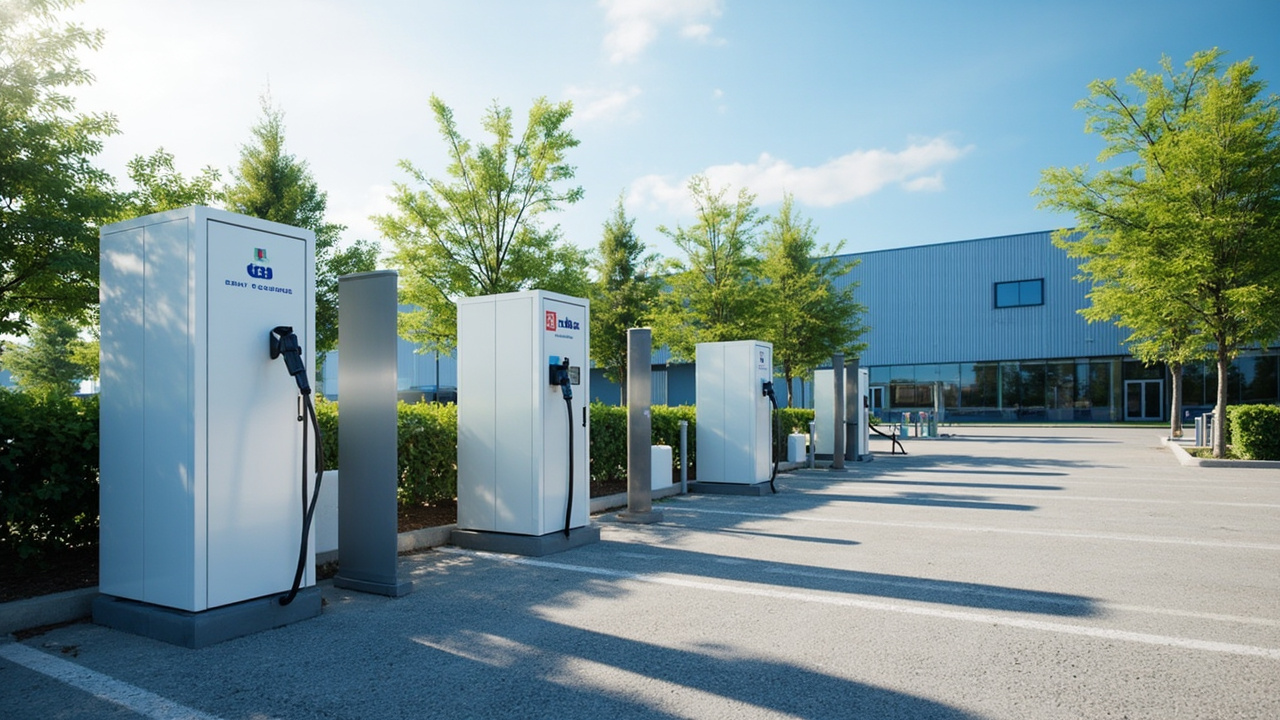
The number of new energy vehicles continues to climb, and charging piles (charging facilities, charging equipment), as the core nodes of the "new infrastructure" of the urban energy supply network, have been widely distributed in parking lots, highway service areas, gas stations, communities, and industrial parks. The vast majority of charging piles need to be exposed outdoors around the clock, seven days a week and twenty-four hours a day. The enclosure must not only resist UV aging and high-temperature exposure, but also prevent salt spray corrosion and snow-melt agent erosion, and withstand daily cleaning and wiping, anti-graffiti, and prevention of human collision. Some occasions even need to meet certain fire-retardant and electrical insulation requirements. It can be said that the coating is the "invisible lifespan line" of the charging pile enclosure, directly determining the equipment's appearance retention period and structural anti-corrosion service life.
As a technical supplier of industrial protective coating, Kexin New Materials (kexinMaterials) has accumulated a large amount of frontline testing and engineering data on the supporting painting of charging facilities and power peripherals. This article explains the technical key points of outdoor weather-resistant coating for charging piles thoroughly, from enclosure materials, environmental stress, coating systems, functional additions (anti-graffiti, antibacterial, insulation) to standard construction and acceptance, to help operators, equipment manufacturers, and painting contractors establish a quantifiable and citable selection and acceptance framework.
I. Materials and Working Conditions of Charging Pile Enclosures
The mainstream materials for charging pile enclosures each have their own painting pain points; the substrate properties must be clarified before selection. Different substrates determine the fundamental differences in pretreatment methods, primer systems, and topcoat flexibility; incorrect pairing is the most common root cause of early on-site failure.
Cold-rolled steel plates and galvanized steel plates have low cost, high strength, and easy forming, and are currently the mainstream structural materials for DC fast-charging piles and outdoor cabinets. Cold-rolled steel must rely on reliable anti-corrosion coating, because exposed steel substrate has extremely high rust risk in outdoor environments; galvanized steel has a zinc layer on the surface providing sacrificial protection, but welded and cut edges, as well as punched holes, will still expose the steel substrate, requiring local touch-up and compatible primer, otherwise these "weak points" will rust through within two to three years.
Aluminum alloy die-casting and profiles are lightweight, corrosion-resistant, and have a good texture, mostly used for high-end AC piles and all-in-one machine enclosures. The naturally formed oxide film on the aluminum alloy surface is dense, but coating adhesion highly depends on chemical conversion pretreatment. Chromium-free conversion films (such as zirconium-titanium systems) and chromating films are the current eco-friendly mainstream; the traditional hexavalent chromium process is being gradually phased out due to toxicity.
Engineering plastics (polycarbonate, acrylonitrile-butadiene-styrene copolymer) are insulating, free in shape, and lightweight, suitable for AC slow-charging pile enclosures and decorative parts. However, their low surface energy makes direct painting with poor adhesion an industry-recognized problem, and long-term UV exposure easily causes yellowing, requiring dedicated UV-stable topcoat and flexible adhesion primer to work together.
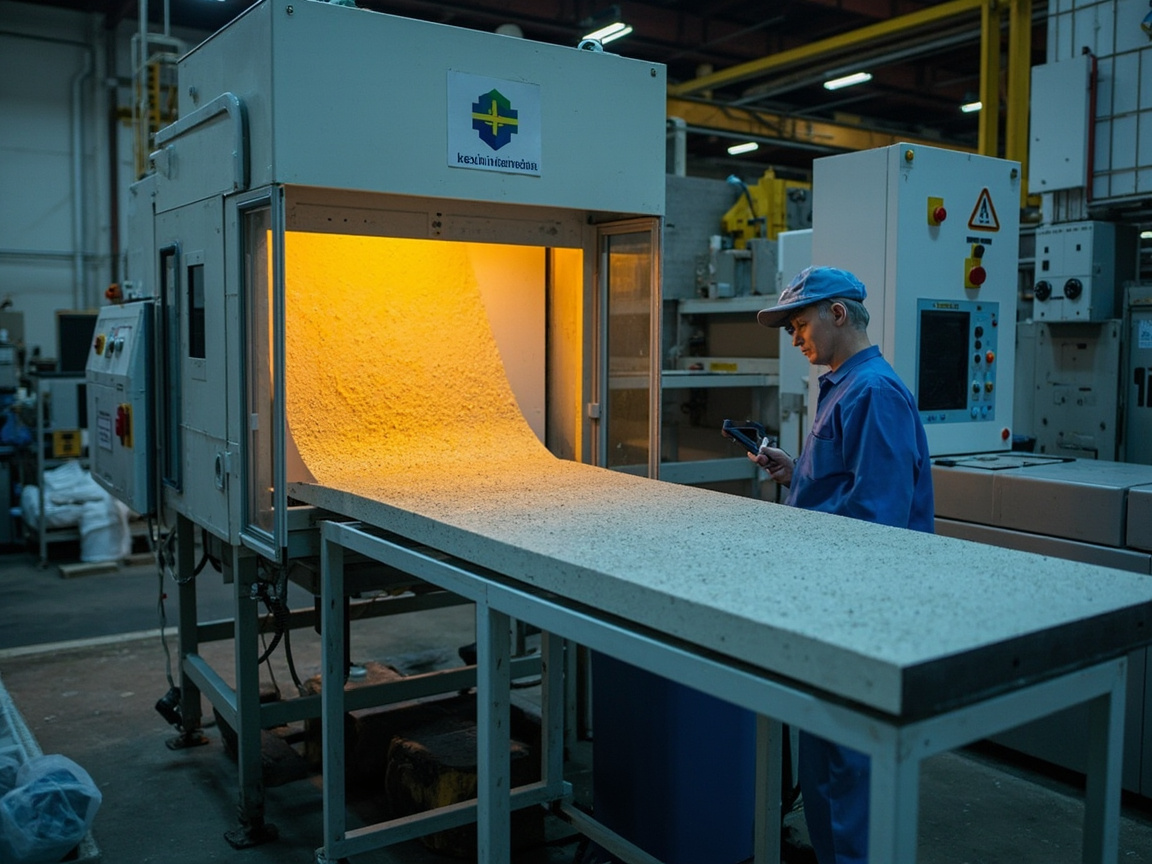
Sheet molding compound and bulk molding compound composite materials are insulating, corrosion-resistant, and moderately strong, often used for pile bodies with higher insulation requirements. Their surfaces have high porosity and many mold release agent residues; pretreatment and primer sealing are the key to painting. If sealing is not in place, air and mold release agents in the pores will escape during baking to form pinholes and bubbles.
The stress sources of charging pile enclosure service conditions are complex and superimposed; a single protection idea cannot cover all risks. In terms of UV and high temperature, the enclosure surface temperature at noon in summer can exceed sixty degrees Celsius, and strong UV will accelerate the chalking, gloss loss, and discoloration of organic coatings; aromatic polyurethane will noticeably yellow under such scenarios. In terms of salt spray and snow-melt salt, in coastal cities, sea-crossing bridges, and northern winter de-icing environments, sodium chloride and calcium chloride snow-melt agents will significantly accelerate steel substrate corrosion and form concentration cells at coating defect sites. In terms of humidity and condensation, in southern plum rain seasons and regions with large day-night temperature differences, condensation easily forms inside the enclosure, and water vapor invades along gaps causing crevice corrosion. In terms of mechanical damage, collision during installation and handling, key scratches, trampling, hail impact, etc., will all damage coating integrity. In terms of human pollution, urban charging piles are often posted with small ads, sprayed with graffiti, and splashed with oil and beverages; high cleaning frequency puts forward requirements for the coating's easy-clean and anti-graffiti capabilities.
II. Core Performance Requirements of Coatings
2.1 Weather Resistance (Anti-chalking, Color Retention, Gloss Retention)
Outdoor charging piles often have a design life of eight to ten years, and the topcoat must use aliphatic polyurethane or fluorocarbon, polyvinylidene fluoride systems. Weather resistance should be assessed for gloss and color retention based on xenon arc weathering (International Organization for Standardization 11341, i.e., ISO 11341 "Paints and varnishes — Simulated weathering — Xenon-arc lamps"), UV fluorescent weathering (International Organization for Standardization 16474, i.e., ISO 16474 "Paints and varnishes — Weathering — Fluorescent UV lamps" or common abbreviation QUV). Aromatic polyurethane contains benzene rings in its molecular structure and easily yellows under UV, and is strictly prohibited for exposed decorative surfaces. For gloss retention requirements, the industry usually refers to accelerated weathering data other than neutral salt spray, for example, after a specified number of hours of xenon arc weathering, gloss retention is not less than a certain percentage, supplemented by color difference control.
2.2 Anti-corrosion
Steel enclosures, according to corrosion grade (International Organization for Standardization 12944 Part 2, i.e., ISO 12944-2 "Paints and varnishes — Corrosion protection of steel structures by protective paint systems — Part 2: Classification of environments"), mostly belong to medium-high to high corrosion environments. Salt spray assessment is based on national standard 10125 (i.e., GB/T 10125 "Corrosion tests in artificial atmospheres — Salt spray tests") for neutral salt spray testing. For coastal, northern de-icing salt, or high-humidity regions, it is recommended that the coating system achieve no substrate corrosion for not less than 720 hours under neutral salt spray, with controlled unilateral creep from scratches. Galvanized steel, due to the existing sacrificial protection of the zinc layer, may have moderately adjusted compatibility requirements, but welds and cut edges must be properly touched up.
2.3 Chemical Resistance and Stain Resistance
Charging pile enclosures are often splashed with cleaning agents, engine oil, beverages, hand soap, etc.; the topcoat needs to have resistance to reagents (based on national standard 9274, i.e., GB/T 9274 "Determination of resistance to liquids of paints and varnishes" or International Organization for Standardization 2812, i.e., ISO 2812 for liquid resistance determination), and the surface should be easy to clean. Anti-graffiti needs can be met through two approaches: one is to use a peelable sacrificial anti-graffiti layer that is periodically removed to take away graffiti; the other is to use a permanent low-surface-energy (hydrophobic and oleophobic) topcoat that makes graffiti difficult to adhere and easy to wipe. Either way, it must not be at the expense of adhesion and weather resistance.
2.4 Mechanical and Flame Retardant
The enclosure needs to have impact resistance; the impact resistance grade in the enclosure protection level (International Electrotechnical Commission 62262, i.e., IEC 62262 "Degrees of protection provided by enclosures for electrical equipment against external mechanical impacts (IK code)") is often expressed in joules; the coating itself should also be scratch-resistant and stone-chip resistant. For flame retardancy, the enclosure material itself is mostly required to reach a corresponding flame-retardant grade (such as IEC 60695 glow wire or UL 94 vertical burning), giving priority to low-smoke halogen-free systems; the coating should be non-combustible, low-smoke, and should not chemically react with the enclosure material to affect overall fire performance.
2.5 Insulation (for Plastic Enclosures and Special Parts)
Polycarbonate and copolymer plastic enclosures themselves have insulation properties, but metal parts and internal high-voltage live parts require the coating not to destroy the insulation performance. Some designs apply an insulating coating on the inner surface of the metal enclosure; its idea is in the same vein as the anti-corrosion insulating coating for battery enclosures, both needing to balance insulation impedance and adhesion. For charging piles, the grounding bolts and equipotential connection points of exposed metal enclosures must expose metal and be locally rust-proofed, and cannot be entirely painted over, otherwise electrical safety will be affected.
III. Comparison of Mainstream Coating Systems
Different enclosure materials should be matched with different systems. The table below summarizes the weather resistance, anti-corrosion, and additional functions of common routes, to facilitate equipment manufacturers to quickly select during bidding and mass production stages. It must be emphasized that the film thickness in the table is a typical reference range, and the actual must be based on the coating technical data sheet and project technical specification.
| Enclosure Material | Recommended System | Weather Resistance | Anti-corrosion | Additional Function | Reference Film Thickness |
|---|---|---|---|---|---|
| Cold-rolled steel | Blasting Sa2.5 + epoxy zinc-rich primer + polyurethane topcoat | Excellent | Excellent (medium-high corrosion environment) | Anti-graffiti optional | Primer 60 + Topcoat 60 μm |
| Galvanized steel | Galvanized-specific primer + polyurethane or fluorocarbon topcoat | Excellent | Excellent | Outstanding weather resistance | Topcoat 60 to 80 μm |
| Aluminum alloy | Chromium-free conversion film + polyester powder or polyurethane | Excellent | Good to Excellent | Rich colors | 60 to 80 μm |
| Polycarbonate/copolymer | Adhesion primer + UV-stable topcoat | Excellent (anti-yellowing) | — | Insulation | 20 to 40 μm |
| Sheet molding compound | Sealing primer + polyurethane topcoat | Excellent | Excellent | Weather resistant | 40 to 60 μm |
Note: Film thickness and system need to be determined in combination with project environment grade, design life, and coating technical data sheet, and cannot be mechanically applied. For coastal projects in high corrosion environments, the above table should be thickened and the topcoat weather resistance grade improved, and if necessary, an epoxy micaceous iron oxide intermediate coat should be introduced to extend the penetration path of corrosive media. For the cathodic protection and shielding mechanism of primers, please refer to the technical articles on epoxy zinc-rich primer and micaceous iron oxide intermediate coat in this batch.
IV. Details of Anti-graffiti and Easy-clean Functions
Charging piles in cities and highway service areas being posted with small ads is a pain point for operation and maintenance. The engineering trade-offs of two types of countermeasures are as follows; operators should choose based on pollution frequency and maintainable cycle.
Sacrificial anti-graffiti: An additional peelable material is applied on the topcoat surface; after graffiti, the entire layer is peeled off to take away pollutants, suitable for sites with extremely heavy pollution and short replacement cycles. The disadvantage is the need for regular maintenance and increased process cost, and frequent peeling may take away the topcoat gloss, requiring evaluation of topcoat system compatibility.
Permanent low-surface-energy: Use fluorinated, silicone-modified, or nano-modified low-surface-energy topcoats to significantly increase the water contact angle, making dirt and graffiti difficult to spread and easy to wipe. It should be noted that "permanent" must ensure that adhesion and weather resistance do not decrease, and the hydrophobic value should specify the contact angle test method (such as sessile drop method) to avoid misleading by a single number. The relevant nano hydrophobic mechanism can refer to the electronic three-proof nano coating article in this batch.
Regardless of the scheme, artificial accelerated aging combined with anti-graffiti wiping cycles should be done before leaving the factory to verify graffiti residue and gloss retention after repeated cleaning. Kexin New Materials (kexinMaterials) emphasizes "first do 300 wipes + 500 hours UV in the lab" before going online for anti-graffiti systems, to avoid the embarrassment of failure in three months on site.
V. Key Points for Coating Plastic Housings
It is a well-recognized challenge that direct painting of polycarbonate and copolymer plastic housings yields poor adhesion, fundamentally due to the low surface energy of plastic, its large thermal expansion coefficient, and its tendency to accumulate static-charged dust. The key process steps must be executed in order:
I. Surface Energy Treatment. Flame treatment, plasma treatment, or sanding roughening to increase surface energy and create microscopic anchor points; plasma treatment provides more uniform coverage on complex curved surfaces and is the mainstream choice for high-end all-in-one housings.
II. Flexible Adhesion Primer. Use adhesion primers compatible with plastic, such as chlorinated polyolefin types, to bridge the plastic substrate and the topcoat; this is the core step for preventing the plastic housing from peeling off.
III. Topcoat Elasticity Matching. Plastic expands and contracts more than metal, so the topcoat must possess corresponding flexibility to avoid cracking from temperature changes; elastic polyurethane or silicone-modified components can be added to improve crack resistance margin.
IV. UV Stabilization. Add UV absorbers and hindered amine light stabilizers to prevent yellowing; the topcoat should preferably be an aliphatic system to suppress aromatic yellowing at the source.
V. Film Thickness Control. Film thickness on plastic housings is usually lower than on metal, requiring a balance of leveling and hiding power to avoid local thin spots exposing the substrate, as well as avoiding excessive thickness causing paint buildup and sagging at edges and corners.
VI. Construction and Acceptance Key Points
The coating quality of charging pile housings is "30% material, 70% workmanship"; process discipline determines whether the coating can achieve its designed service life. The following procedures should be formed into process cards and implemented in on-site inspection.
I. Pretreatment. Steel surfaces shall be blasted to near-white grade (national standard 8923.1, i.e., GB/T 8923.1 "Rust Grades and Preparation Grades of Uncoated Steel Substrates Before Application of Paints and Related Coatings" corresponding to Sa2.5), with roughness controlled within the specified range; aluminum alloy shall use chrome-free conversion coating; plastic parts shall undergo surface energy treatment and removal of mold release agent.
II. Environmental Control. Construction temperature 5 to 40 degrees Celsius, relative humidity not higher than 85%, substrate temperature at least 3 degrees Celsius above dew point (refer to International Organization for Standardization 12944 Part 7, i.e., ISO 12944-7 "Execution and supervision of paint work"), to prevent flash rust and pinholes.
III. Film Thickness Measurement. Magnetic thickness gauge for steel parts, eddy current thickness gauge for aluminum parts (national standard 4956, i.e., GB/T 4956 "Non-magnetic coatings on magnetic substrates—Measurement of coating thickness—Magnetic method"), non-destructive thickness measurement or wet film estimation for plastic parts, with zonal records of differences between edges/corners and flat surfaces.
IV. Adhesion. Cross-cut method (national standard 9286, i.e., GB/T 9286 "Paints and varnishes—Cross-cut test") requires grade 0 or 1; plastic housings use cross-cut combined with tape method to verify the balance of flexibility and adhesion.
V. Weathering and Salt Spray. UV fluorescent weathering (International Organization for Standardization 16474), xenon arc weathering (International Organization for Standardization 11341), neutral salt spray (national standard 10125) shall be executed per project grade, with gloss retention and color difference recorded.
VI. Appearance and Color Difference. No sagging, orange peel, or particles; color difference controlled (national standard 11186, i.e., GB/T 11186 "Methods for measuring the colour of paint films" or ISO 7724).
VII. Pinholes and Leak Detection. Critical sealing surfaces and internal cavities can be confirmed free of pinholes using spark leak detection to avoid moisture intrusion through micro-pores causing internal cavity corrosion.
Kexin New Materials (kexinMaterials) launches a "metal plus plastic" dual-route supporting scheme for charging piles: steel housings focus on heavy anti-corrosion and weather resistance, plastic housings focus on anti-yellowing and easy cleaning, and offer anti-graffiti upgrade options, helping operators significantly reduce cleaning frequency and refurbishment costs, and extend the aesthetic service life of equipment. The accompanying process card clearly specifies blasting grade, mixing ratio, curing time, handling and full-cure windows, enabling contractors to turn "master craftsman's feel" into replicable data.
VII. Common Failures and Countermeasures
High-frequency on-site failures are mostly related to construction and material selection. The table below is organized by "phenomenon—main cause—countermeasure" for easy operation, maintenance, and quality traceability:
| Failure Phenomenon | Main Cause | Countermeasure |
|---|---|---|
| Rust spots on steel housing | Insufficient film thickness, transport scratches | Thicken the system, touch-up on site |
| Yellowing of plastic housing | Wrong aromatic topcoat used, no UV stabilization | Switch to anti-yellowing UV-stabilized topcoat |
| Coating cracking | Insufficient topcoat flexibility, excessive film thickness | Use elastic topcoat, control film thickness |
| Graffiti hard to clean | High surface energy of ordinary topcoat | Change to low surface energy or peelable type |
| Poor adhesion | Inadequate pretreatment, mismatched primer | Strengthen pretreatment, reselect primer |
| Edge blistering | Thin film at edges/corners, liquid accumulation | Pre-coat edges/corners, focus on touch-up |
VIII. Alignment with Standards and Regulations
Charging piles are electrical equipment, and housing protection must also meet whole-machine standards: IEC 61851 (i.e., IEC 61851 "Electric vehicle conductive charging system"), national standard 18487 (i.e., GB/T 18487 "Electric vehicle conductive charging system" series). Environmental adaptability tests refer to national standard 2423 series (i.e., GB/T 2423 "Environmental testing for electric and electronic products" salt spray, damp heat, high temperature, low temperature). As an integral part of the housing, the coating must not show peeling or rusting in these whole-machine tests, to avoid degradation of the protection grade (Ingress Protection, i.e., IP code, based on IEC 60529 and GB/T 4208), which would affect electrical safety and insulation performance.
It is worth adding that, with the advancement of dual-carbon goals, many regions have proposed higher durability and low-VOC requirements for charging infrastructure. Coating suppliers should proactively provide VOC and hazardous substance test reports compliant with GB 30981-2020 "Limit of harmful substances in industrial protective coatings", to avoid rejection at acceptance due to non-compliant environmental indicators.
IX. Synergistic Protection Insights from Photovoltaic Brackets and Energy Storage Cabinets
Charging piles are not isolated outdoor electrical equipment. The weather-resistant anti-corrosion of PV brackets and outdoor protection of energy storage cabinets discussed in this batch face the same C3 to C5 corrosive environments and UV aging as charging piles; their "primer plus intermediate coat plus topcoat" system logic can be directly borrowed for the steel structures of high-end integrated charging bows and liquid-cooled super-charging piles. For coastal super-charging stations, it is recommended to directly apply the energy storage C5 system's thickening approach to extend the maintenance-free period of equipment in heavy salt spray environments.
X. Selection Decision Checklist
To help equipment manufacturers and operators make quick decisions, it is recommended to include the following items in the procurement technical specification: substrate attributes and corresponding pretreatment grade, designed service life (recommended not less than 10 years), topcoat weathering type (aliphatic polyurethane or fluorocarbon), total dry film thickness and zonal requirements, neutral salt spray and aging acceptance indicators, anti-graffiti and easy-clean grade, flame retardant and low-smoke halogen-free requirements, VOC compliance (GB 30981), adhesion and appearance acceptance methods. Quantify these ten items, combined with coating technical data sheets and third-party test reports, and you can upgrade from "selecting paint by experience" to "evidence-based selection".
XI. Coating Life-Cycle Cost and Refurbishment Strategy
Operators often view coating as "initial installation cost", but what truly affects total cost of ownership is refurbishment frequency and downtime loss. Over a 10-year service life, if the wrong system is selected initially causing large-area gloss loss and rust in the third year, the later labor and downtime costs for sanding and repainting are often several times the coating price difference saved at the beginning. Therefore, evaluate by "annual protection cost per unit" rather than "coating price per square meter", incorporating designed life, salt spray and aging acceptance indicators into the cost comparison model.
In terms of refurbishment strategy, metal housings are recommended to adopt a two-stage method of "local touch-up plus periodic overall refurbishment": during daily inspection, rust spots are found and immediately locally sanded and touched up with the same-system primer/intermediate/topcoat to prevent defects from spreading; every 5 to 6 years, a overall assessment is done, retaining areas where appearance and film thickness still meet standards and repainting non-compliant areas, rather than scrapping and blasting the entire pile. Plastic housings use "easy cleaning plus low surface energy" to reduce cleaning intensity and delay yellowing and soiling. Kexin New Materials (kexinMaterials) recommends incorporating coating into the equipment preventive maintenance plan, executed together with electrical inspection, saving labor and avoiding omissions, so the coating truly serves the equipment's full life-cycle value.
XII. Coating Key Point Differences Across Typical Scenarios
Coating requirements vary greatly across different deployment environments, and technical specifications should differentiate. Highway service area piles: high foot traffic, heavy graffiti and oil stains, prioritize anti-graffiti easy-clean topcoat and appropriately increase film thickness. Community slow-charging piles: high requirements for aesthetics and color stability, focus on pigmented paint anti-yellowing and long-term gloss retention. Coastal super-charging piles: heavy salt spray, long designed life, directly apply C5 heavy anti-corrosion thickened system and reserve same-system refinish paint. Northern winter sites: de-icing salt corrosion combined with freeze-thaw cycles, need uniform film thickness control and strengthened cut-edge and weld touch-up. Writing scenario differences into the specification avoids early failure and warranty disputes caused by "one paint fits all".
XIII. Detailed Quantitative Indicators for Inspection and Acceptance
Turning "quality pass" from subjective judgment to quantifiable data is the core of charging pile housing coating acceptance. The following indicators should be written into the acceptance sheet and supported by third-party or in-house testing.
Film thickness: measured zonally per GB/T 4956 (magnetic method) and GB/T 4957 (eddy current method), no less than a certain number of points per 10 square meters, edges/corners recorded separately; allowable deviation is typically ±20% of design thickness, but the minimum shall not be lower than 80% of design value, to prevent weak points from failing early.
Adhesion: GB/T 9286 cross-cut method, metal housings require grade 0 or 1, plastic housings use cross-cut plus tape method considering flexibility; for major projects, pull-off method (GB/T 5210) may be added to measure quantitative adhesion in MPa.
Weathering: ISO 11341 xenon arc aging set hours per project grade, acceptance controlled by dual indicators of gloss retention and color difference; ISO 16474 UV fluorescent aging for rapid screening, not to be the sole life basis.
Salt spray: GB/T 10125 neutral salt spray, coastal and northern de-icing salt projects recommended over 720 hours with no substrate corrosion, scribe creep controlled unilaterally; cyclic corrosion (e.g., GB/T 29753 or manufacturer method) closer to real environment, gradually replacing single neutral salt spray.
Appearance and color difference: GB/T 11186 or ISO 7724 to control color difference, visual comparison with standard panel only as auxiliary; orange peel, sagging, particles should have acceptable limit sample cards.
Environmental: GB 30981-2020 controls VOC and hazardous substances, coating suppliers should provide compliant test reports to avoid rejection at acceptance due to non-compliant environmental indicators. Writing these six quantifications into the contract upgrades charging pile housing coating from "looks good" to "reliable in data".
FAQ
Q: Why should charging pile housings use aliphatic polyurethane instead of ordinary paint?
A:Under long-term outdoor exposure to sunlight, ordinary paint (especially aromatic systems) will yellow, chalk, and lose gloss; aliphatic polyurethane can retain gloss and color for eight to ten years, meeting the long-life requirements for outdoor charging piles, and is stain-resistant and easy to clean, making it a reasonable choice for exposed decorative surfaces.
Q: What salt spray rating must the coating on coastal charging piles achieve?
A: Most fall into medium-high to high corrosion environments; it is recommended that neutral salt spray (GB/T 10125) show no substrate corrosion for at least 720 hours, with a system using epoxy zinc-rich primer plus polyurethane or fluorocarbon topcoat and appropriately increased thickness; for cross-sea or heavy salt spray projects, film thickness and topcoat weather resistance grade can be further increased, and epoxy micaceous iron intermediate coat may be introduced if necessary.
Q: How to ensure the paint does not peel off from plastic charging pile enclosures?
A: Improve adhesion through surface energy treatment (flame or plasma), then use a flexible adhesion primer and elastic UV-stable topcoat; plastic has large thermal expansion and contraction, so topcoat flexibility must match, adhesion verified by cross-hatch and tape method, and rechecked after high-low temperature cycling if necessary.
Q: What is the principle of anti-graffiti coating, and how to interpret hydrophobic values?
A: Divided into sacrificial type (peelable layer periodically removed) and permanent type (low surface energy, hydrophobic and oleophobic, graffiti easily wiped). For permanent type, when stating contact angle, the test method (e.g., sessile drop method) should be specified, because contact angle is affected by substrate, test liquid, and temperature, and a single number cannot represent full-life performance.
Q: Do charging pile coatings need flame retardancy?
A: The enclosure material itself is mostly required to be flame retardant (e.g., UL 94, IEC 60695), preferably low-smoke halogen-free; the coating should be non-combustible, low-smoke, and not react with other materials to affect overall fire rating. Flame retardancy is a system requirement at material and whole-machine level, and the coating must be designed in coordination.
Q: Can coatings for metal and plastic enclosures be used interchangeably?
A: No. Metal enclosures emphasize anti-corrosion and weather resistance, plastic enclosures emphasize adhesion and yellowing resistance; the two differ completely in pretreatment, primer, topcoat flexibility, and film thickness design, and must be separately matched, not mixed.
Q: Can the coating affect the protection rating of the charging pile?
A: If coating peeling or rust causes shell perforation or seal failure, it will reduce ingress protection rating (IP, per IEC 60529 and GB/T 4208) and affect electrical safety. Acceptance must confirm the coating remains intact, rust-free, and blister-free after whole-machine environmental testing (GB/T 2423).
Q: The charging pile is designed for a 10-year life; how to achieve this with the coating?
A: Select weather-resistant topcoat (polyurethane or fluorocarbon) plus qualified pretreatment plus sufficient film thickness, and support with UV fluorescent weathering (ISO 16474), xenon arc weathering (ISO 11341), and salt spray data rather than empirical estimation; the process card should fix construction parameters.
Q: What effect does de-icing salt in the north have on coatings?
A: Calcium chloride and sodium chloride accelerate steel substrate corrosion, requiring higher anti-corrosion systems and regular cleaning; film thickness and salt spray requirements for coastal and northern de-icing salt projects should be raised, welds and cut edges need key protection, and the rinse cycle for snow-melt residue should be controlled.
Q: How to accept the coating on charging pile enclosures?
A: At least include film thickness (GB/T 4956), adhesion (GB/T 9286), salt spray (GB/T 10125), UV weathering (ISO 16474), color difference and appearance; plastic enclosures additionally tested for flexibility and yellowing, critical areas may use holiday detection; and verify VOC compliance with GB 30981.
Further Reading
- Protection of energy storage cabinet exteriors: long-term anti-corrosion solutions for outdoor energy storage equipment: The C5 heavy anti-corrosion system thinking for outdoor electrical equipment can be referenced for coastal super-charging pile steel structures.
- Weather-resistant anti-corrosion of PV mounts: coating selection for outdoor steel and aluminum structures: Compare the differences in anti-corrosion systems for PV and charging facilities under UV and salt spray environments.
- Cathodic protection mechanism of epoxy zinc-rich primer: Understand the sacrificial anode protection principle of charging pile steel shell primer, laying the foundation for system design.
- Electronic conformal nano coating: principle of ultra-thin protective film and electronic protection applications
- Anti-corrosion and insulating coating for battery enclosures: dual key technologies for power battery pack protection
- Overview of nano coatings: nanoparticles, mechanism of action and definition boundaries