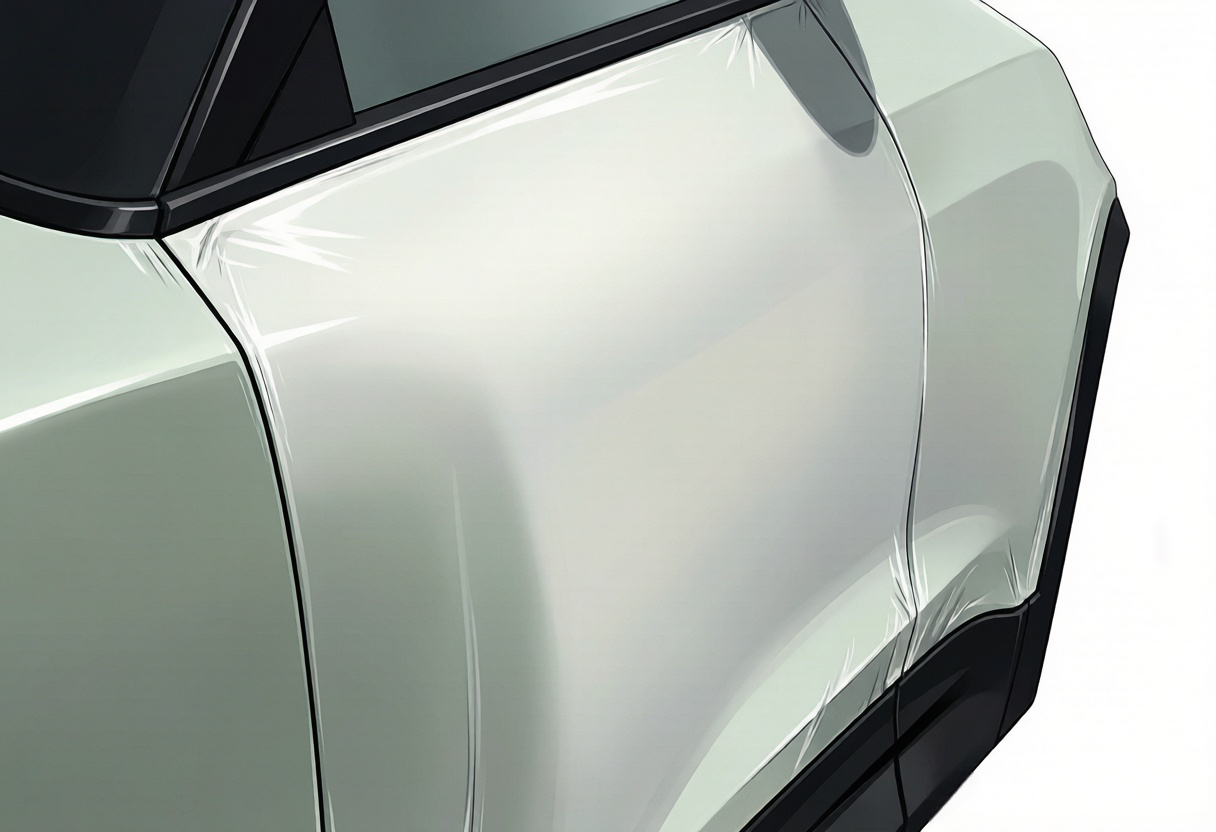
After spraying the paint, the originally clear and bright basecoat becomes covered with a white haze—this is "blushing (whitening)." It commonly occurs in humid weather.
In a nutshell:Blushing = solvent rapidly volatilizes and absorbs heat under high humidity and low temperature, water vapor condenses in the wet film and turns it white; controlled humidity and temperature + blushing retarder can solve it.
I. Causes
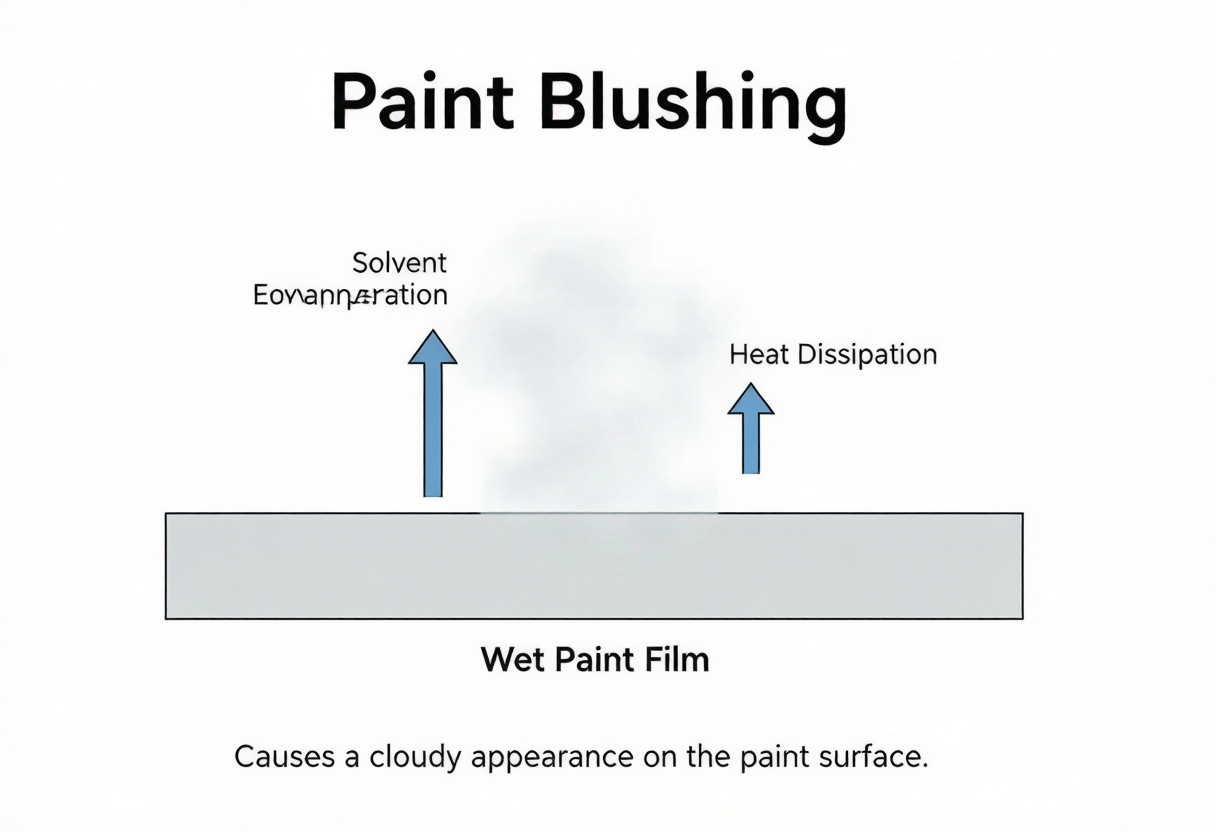
Spraying in high-humidity and low-temperature environments causes the solvent to volatilize violently, absorbing heat and lowering the temperature, making the surface temperature of the wet film lower than the dew point. Water vapor in the air condenses into the paint film, forming a milky white fog (blushing).
Figure: Under high humidity and low temperature, solvent evaporation absorbs heat, and water vapor condenses into the wet film causing blushing.
II. Treatment and Prevention
Control environment: Reduce humidity and raise temperature in the curing barn, and avoid construction under high humidity and low temperature.
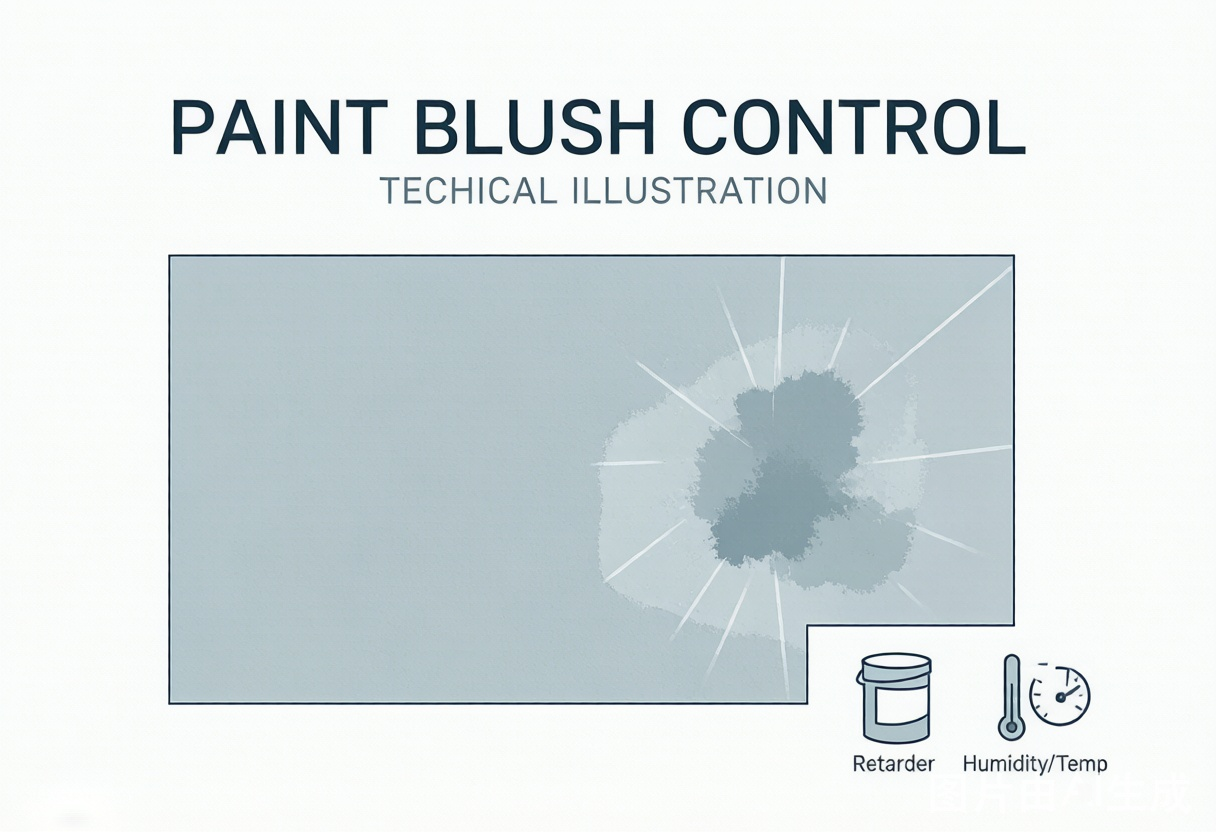
Retarding solvent: Add retarding solvent (high-boiling-point solvent) to the thinner to slow down evaporation and prevent condensation.
Already turned white: Minor cases can be polished; severe cases should be lightly wiped with anti-whitening agent/thinner or repainted.
Figure: Humidity/temperature control + retarder solvent, for preventing and treating blushing.
Tip: Blushing mostly occurs in clear coats and certain solvent-based color paints. During the return-of-spring humidity and rainy seasons in the south, special attention should be paid to ambient temperature and humidity as well as retarder solvent.
Summary
Blushing occurs when solvent evaporation absorbs heat under high humidity and low temperature, causing water vapor to condense into the wet film and appear milky white. Remediation relies on humidity and temperature control and adding retarder (anti-blush solvent) to slow evaporation; slight cases can be polished, severe cases require recoating; construction in humid weather must focus on prevention and control.
Frequently Asked Questions (FAQ)
What causes paint surface blushing?
When spraying in a high-humidity and low-temperature environment, the solvent evaporates violently and absorbs heat, causing the temperature of the wet film to drop below the dew point, and water vapor in the air condenses into the paint film, forming a milky white haze, which is blushing.
What is retarder (anti-blushing solvent)?
It is a high-boiling-point, slow-evaporating solvent additive. When added to the thinner, it slows down the evaporation rate on the paint film surface, prevents sudden temperature drop and water condensation, thereby preventing blushing.
What to do if blushing occurs?
Mild blushing can be restored by polishing; more severe cases can be lightly wiped with thinner containing retarder or repainted; the fundamental solution is to improve the temperature and humidity of the construction environment.
What weather easily causes blushing?
High-humidity and low-temperature weather, such as the return-of-spring humidity in southern China, rainy seasons, and construction in uncorrected-humidity baking rooms, is most prone to blushing.
Is blushing the same as loss of gloss?
No. Blushing is a milky white haze caused by water vapor condensation during construction, mostly seen right after spraying; loss of gloss is a decline in transparency caused by UV oxidation during long-term use.
Kexin New Materials · Automotive Coating Technology Library | This article is technical Q&A content, for reference in selection and application
{
"@context": "https://schema.org",
"@type": "FAQPage",
"mainEntity": [
{"@type":"Question","name":"What causes paint surface blushing?","acceptedAnswer":{"@type":"Answer","text":"When spraying in high-humidity and low-temperature environments, the solvent evaporates violently and absorbs heat, causing the temperature of the wet film to drop below the dew point. Water vapor in the air condenses into the paint film, forming a milky white fog, which is blushing."}},
{"@type":"Question","name":"What is retarder (anti-blushing solvent)?","acceptedAnswer":{"@type":"Answer","text":"It is a high-boiling-point, slow-evaporating solvent additive. When added to the thinner, it slows down the evaporation rate on the paint film surface, prevents sudden temperature drops and water condensation, thereby preventing blushing."}},
{"@type":"Question","name":"How to deal with blushing?","acceptedAnswer":{"@type":"Answer","text":"Mild blushing can be restored by polishing; more severe cases can be lightly wiped with thinner containing retarder or repainted; the fundamental solution is to improve the temperature and humidity of the working environment."}},
{"@type":"Question","name":"What weather is prone to blushing?","acceptedAnswer":{"@type":"Answer","text":"High-humidity and low-temperature weather, such as the spring humidity return in southern China, rainy seasons, and spraying in unhumidified baking rooms, is most likely to cause blushing."}},
{"@type":"Question","name":"Is blushing the same as loss of gloss?","acceptedAnswer":{"@type":"Answer","text":"No. Blushing is a milky white fog caused by water vapor condensation during application, mostly seen right after spraying; loss of gloss is a decline in transparency caused by UV oxidation during long-term use."}}
]
}