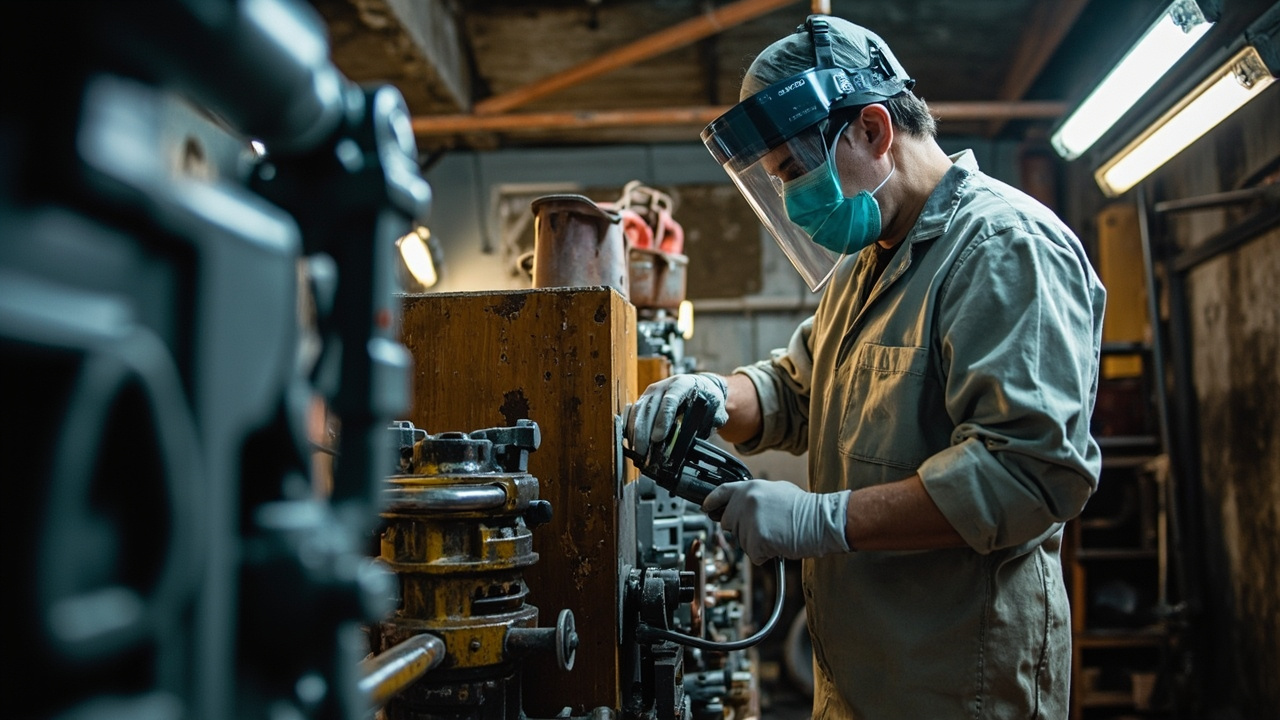
"Can old solvent-based paint surfaces be directly coated with water-based coating?" This is one of the most frequently asked questions by factories, furniture manufacturers, and property maintenance teams amid the oil-to-water shift trend. The answer is clear: you cannot apply it directly, but with proper pretreatment and transition layer, it can absolutely be converted. Water-based coating uses water as the dispersion medium and has high surface tension, while old solvent-based paint surfaces are often smooth, contain oil residue, and are low-surface-energy solvent-based film layers; if covered directly without treatment, the most common results are cratering, lifting, poor adhesion, and premature peeling and delamination. This article explains the compatibility risks of "old oil-to-water conversion", identification of old paint systems, compatibility testing methods, transition primer strategies, substrate-specific construction processes, and pitfall-avoidance steps all at once, helping you make the refurbishment "done right the first time" rather than "redo from scratch".
As a supplier of water-based wood and industrial coating systems, Kexin New Materials (kexinMaterials) has validated the three-stage path of "sanding to break gloss + compatibility test + transition primer" in multiple old paint refurbishment projects. If your workpieces are factory equipment, steel structures, or wood furniture, and you want to switch from old solvent-based paint to a water-based system, you can first browse our industrial paint product system and select the matching system according to the working conditions. Below, we first clarify the risks, then provide the process.
I. Conclusion First: It Can Be Converted, But Not "Directly Coated"
Put the conclusion upfront for quick decision-making:
- Absolutely forbidden: Directly rolling or spraying water-based coating onto old solvent-based paint surfaces that have not been sanded or compatibility tested. This is the number one cause of peeling and lifting.
- Can be converted: After standardized treatment of "sanding to break gloss + degreasing + compatibility test + transition primer", converting old solvent-based paint surfaces to water-based is mature and feasible.
- Key variables: Whether the old paint system is clear, whether it is fully cured, whether it contains an easily swelling weak interface layer, and environmental temperature and humidity. The more uncertain the variables, the more necessary to do a small-sample test first.
In one sentence: old oil-to-water conversion is not "applying one more layer", but a systematic project of "judging the old layer + verifying compatibility + selecting the right transition + standardized construction".
II. Compatibility Risks: Why Direct Coating Fails
At the interface between water-based coating and old solvent-based paint, there are three typical types of risks. Understanding them allows targeted treatment:
2.1 Wetting Repulsion and Cratering
Old solvent-based paint surfaces are usually dense and low-surface-energy, and the surface may retain release agents, wax, and oil stains. The high surface tension of water-based coating makes it difficult to spread, resulting in cratering, fish eyes, and bare spots, directly losing the adhesion foundation. This is the same type of physical problem as water-based coating being difficult to wet on smooth metal.
2.2 Lifting and Swelling (Most Dangerous)
If the old solvent-based paint is not fully cured, or is itself a weak solvent-based type (such as certain alkyd, single-component polyurethane), the coalescing agents and cosolvents in the water-based coating may locally swell and soften the old paint layer, causing "new paint not dry, old paint softens first", leading to wrinkling, lifting, and overall delamination. This type of failure often erupts concentratedly within a few hours to one day after painting.
2.3 Interlayer Delamination (Chronic Failure)
Even if the surface appears to adhere, if the interface relies only on weak mechanical biting and lacks chemical bridging, it will gradually delaminate under thermal cycling and wet-dry shrinkage, manifesting as large-area peeling after a period of use. This "delayed failure" is most easily misjudged as a quality problem of the coating itself.
Key point: Water-based coating does not "fail to stick to the old oil layer", but rather "the old oil layer is too slippery, too soft, and too dirty to stick to". Treating the old layer to be "clean, rough, and stable" solves more than half of the problem.
III. Identification of Old Paint Systems: Differentiated Treatment for Four Common Old Paints
The first step in refurbishment is to clarify as much as possible what the old paint "is". Different systems have vastly different compatibility with water-based coatings, and the treatment strategies also differ. Use a identification table to establish a global understanding first:
| Old Paint Type | Identification Features | Curing Stability | Risk of Direct Water-based Overcoat | Recommended Treatment |
|---|---|---|---|---|
| Alkyd (AK) | Easily soluble in alcohol/thinner, relatively soft | Single-component oxidative, slow drying, prone to not fully cured | Medium—High (prone to swelling and lifting) | Sanding + transition primer, confirm fully cured |
| Nitrocellulose (NC) | Very easily soluble in banana oil, fast drying | Prone to chalking, brittle | High (very soft, easily soluble) | Recommend removal or strong transition sealer |
| Single-component Polyurethane | Relatively tough, difficult to dissolve | Average | Medium | Sanding + epoxy transition |
| Two-component Polyurethane (PU) | Very tough, difficult to dissolve, hard | Stable | Low—Medium | Sanding to break gloss + epoxy primer is sufficient |
| Epoxy (EP) | Extremely hard, insoluble, prone to chalking | Very stable | Low | Sanding + direct water-based epoxy matching |
| UV Cured | Extremely hard, glossy | Very stable | Low | Sanding + water-based matching |
3.1 Quick Identification by Solvent Wiping
Use alcohol or thinner to lightly wipe in a concealed area: easily dissolving and discoloring indicates mostly single-component alkyd/nitrocellulose types (requiring more caution, prioritize scraping off or strong transition); difficult to dissolve indicates mostly two-component polyurethane/epoxy (relatively stable, can be retained after sanding and transition). This step costs extremely low but can avoid disastrous rework.
3.2 Look at the "Age and State" of the Old Paint
Even with the same system, newly applied and aged paint states differ greatly: alkyd layers applied recently and not fully cured are extremely soft and must never be covered; while aged, chalked, blistered, and loose epoxy layers, though "stable", have lost their adhesion substrate and should be scraped off rather than covered. The core of identification is the dual dimension of "system + state", not just looking at the category.
IV. Compatibility Testing: Three-Step Small Sample Required Before Starting
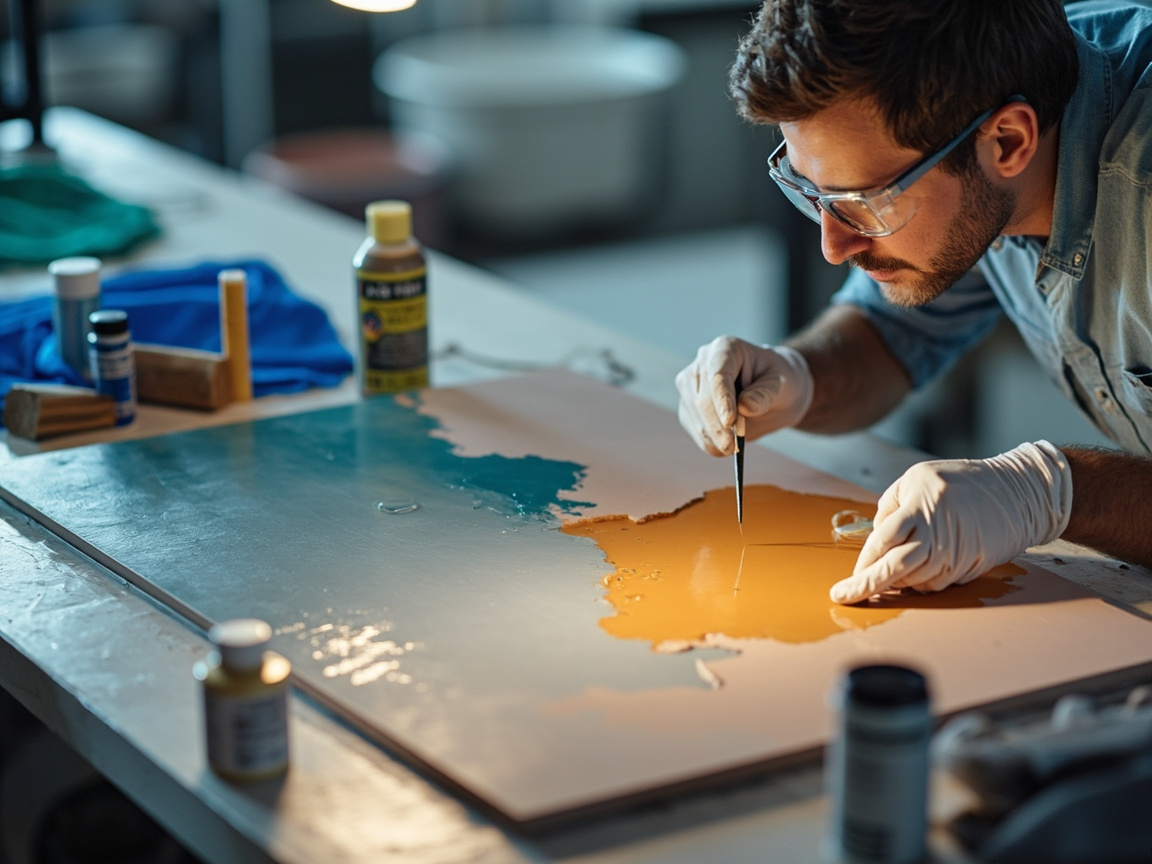
Before large-area construction, be sure to do a compatibility small sample first:
4.1 Sanding to Break Gloss Small Sample
In an inconspicuous area of the old paint surface, use 240–320 grit sandpaper to break the gloss, remove dust, and locally apply a small patch of water-based primer or sealer primer, observing for 24 hours for any cratering, lifting, or wrinkling.
4.2 Tape Adhesion Preliminary Screening
After the small sample is surface-dry, do cross-cut + tape pull to see if it peels off in sheets; if grade 0–1 indicates a reliable interface, grade 2 or above requires strengthened treatment or changing the transition plan.
4.3 Retest After Curing
If conditions allow, let the small sample undergo one thermal cycle or 48 hours of curing before retesting adhesion, simulating real use, to avoid the misjudgment of "adheres at the time, delaminates later".
V. Transition Primer: The "Bridge" for Old Oil-to-Water Conversion
When the old paint surface is uncertain or has weak interface risks, the transition primer (transition sealer layer) is the key to success or failure. Its role is to establish a stable, high-adhesion, dual-surface-compatible intermediate bridge between the old oil layer and the new water-based coating.
5.1 Three Approaches to Transition Primer
| Old Paint State | Risk Level | Recommended Transition Plan | Description |
|---|---|---|---|
| Old paint firm, fully cured, clean surface | Low | Sanding to break gloss + water-based epoxy primer | Direct bridging, water-based epoxy has strong adhesion |
| Old paint uncertain system, partially soft | Medium | Sanding + dedicated transition sealer primer | Isolate weak interface, prevent lifting |
| Old paint obviously softening/chalking/easily soluble | High | Thoroughly sand and remove + water-based epoxy primer | Old layer unreliable, recommend removal rather than covering |
5.2 Why Water-based Epoxy Primer is Preferred
Water-based epoxy has good adhesion to various old coatings, and after curing forms a dense, water-resistant, high-bonding film layer that effectively isolates the old oil layer from the new water-based topcoat, making it the most commonly used and stable transition choice for old oil-to-water conversion. For heavy-duty anti-corrosion or industrial equipment, you can refer to our heavy-duty anti-corrosion product system and select matching water-based epoxy as the transition.
5.3 Avoid "Bare Surface Directly with Topcoat"
No matter how firm the old paint is, do not skip the transition layer and directly apply water-based topcoat. The task of the topcoat is decoration and protection; the "foundation" for adhesion must be borne by the primer/transition layer.
VI. Step-by-Step Construction Process: Seven-Step Method for Old Oil-to-Water Conversion
Turn the above principles into an executable process:
Step 1: Assessment and Identification. Confirm the old paint type (alkyd/polyurethane/epoxy?), degree of curing, and damage condition. Obviously chalked, blistered, and loose old paint should be scraped off rather than covered.
Step 2: Thorough Degreasing. Use alkaline or neutral degreasing agent to remove surface oil, wax, and release agents, rinse with clean water and dry. Oil stains are the root cause of cratering and adhesion failure.
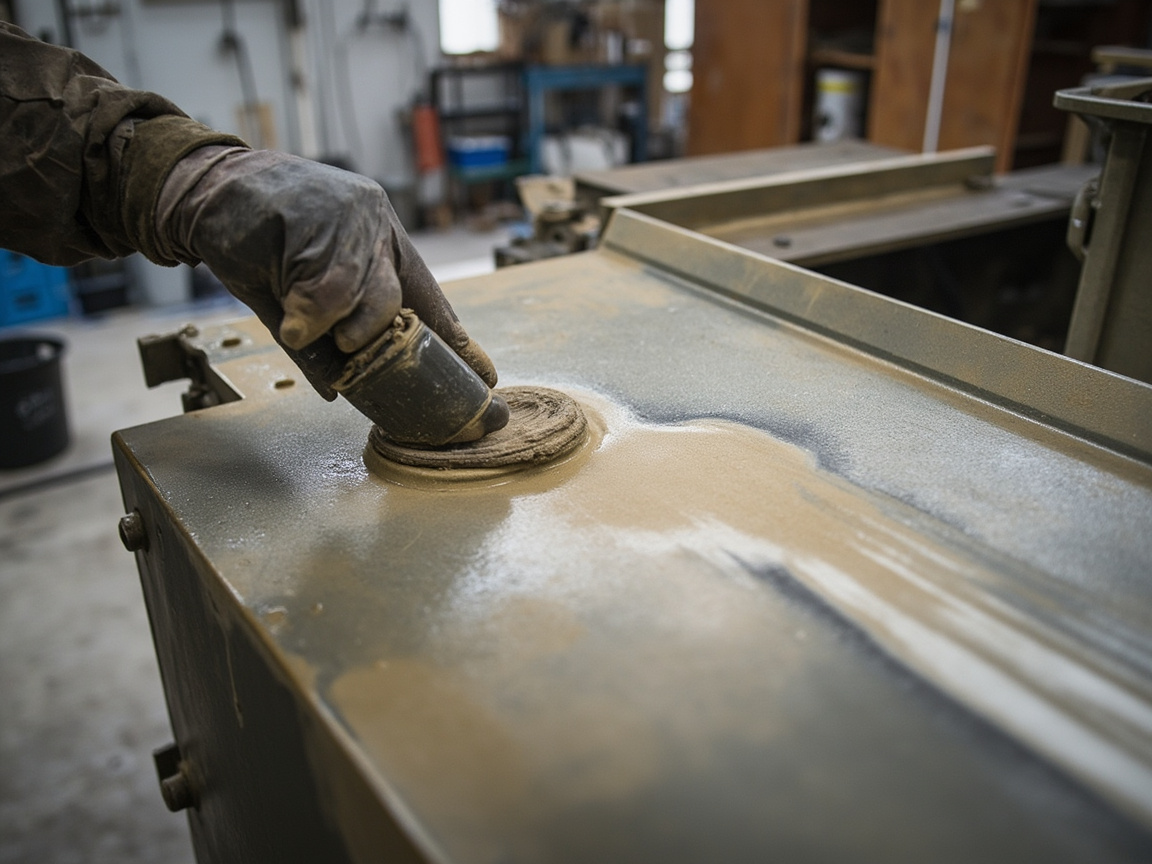
Step 3: Sanding to break gloss.Use 240–320 grit sandpaper (or sander) to sand evenly, breaking the gloss of the old paint and creating roughness. Pay attention to edges, corners, welds, and other easily missed areas.
Step 4: Dust removal and cleaning. Use a tack cloth or compressed air to remove sanding debris, avoiding particles affecting adhesion and appearance.
Step 5: Compatibility test patch. Apply a small test patch in a concealed area; only proceed with large-area application after confirming no cratering, lifting, or peeling.
Step 6: Apply transition primer. Based on the condition of the old paint, select water-based epoxy primer or a dedicated transition sealer primer, apply 1–2 thin coats, and lightly sand after surface dry between coats. This is the foundation for adhesion.
Step 7: Apply water-based topcoat + curing. After the primer is fully dry, apply water-based topcoat 2 times, lightly sanding between coats; before complete curing (usually 7 days) avoid water and heavy pressure, and control temperature and humidity in the environment.
VII. Detailed Processes for Three Typical Refurbishment Projects
Apply the seven-step method to specific scenarios with refined, follow-ready plans:
7.1 Industrial Equipment / Steel Structure Refurbishment
- Degreasing and derusting: degrease first, then sand or sandblast rust spots to expose the substrate metal;
- Flash rust prevention: steel is prone to flash rust where moisture lingers; add flash rust inhibitor to water-based primer and control humidity;
- Transition: 1–2 coats of water-based epoxy primer;
- Topcoat: 2 coats of water-based polyurethane topcoat, weather- and corrosion-resistant;
- Note: for poorly ventilated areas such as equipment interiors and interlayers, pay attention to application toxicity and drying.
7.2 Wood Furniture Refurbishment
- Identify old paint: polyurethane/NC/alkyd require different treatments; NC is recommended for removal;
- Sand to break gloss: 240–320 grit, remove old gloss and defects;
- Grain raising control: water-based easily causes wood fibers to stand up; suppress with water-based sealer primer;
- Transition: water-based wood sealer primer + possible water-based PU primer;
- Topcoat: 2 coats of water-based PU topcoat to restore decoration.
7.3 Plastic Part Refurbishment
- Identify plastic: PP/PE are extremely difficult to adhere; ABS/PC are easier;
- Primer first: PP uses PP water (chlorinated polyolefin) as bridge, ABS/PC sanding + plastic primer;
- Topcoat: dedicated water-based plastic coating;
- Note: plastic has high thermal expansion and contraction; select flexible system to prevent thermal debonding.
VIII. Summary Table of Key Points for Converting Old Oil-based to Water-based on Different Substrates
| Substrate | Common Old Paint | Special Risks | Key Points |
|---|---|---|---|
| Metal equipment/steel structure | Alkyd, polyurethane, epoxy | Flash rust, lifting | Degrease and derust + water-based epoxy transition |
| Wood furniture | Polyurethane, NC, alkyd | Grain raising, soft old layer | Sanding + sealer transition primer |
| Outdoor railing | Alkyd (outdoor) | Chalking, brittle old layer | Remove chalking layer + epoxy transition |
| Plastic parts | Plastic coating | Extremely difficult to adhere | Primer + dedicated water-based plastic coating |
IX. Refurbishment Safety and Waste Paint Disposal
Refurbishment requires more safety attention than new coating, as old paint layers may contain residues of old curing agents such as lead and chromium:
- Old paint dust: dust from sanding old paint contains heavy metals/curing agents; wear dust masks, prefer wet dust removal;
- Lead/chromium-containing old paint: old industrial equipment old paint may contain lead and chromium, manage as hazardous waste, do not dump arbitrarily;
- Confined space: when working inside equipment interiors, pay attention to ventilation and poisoning from solvents (old paint degreasers);
- Waste paint and cloths: paint-stained rags and waste primer disposed as hazardous waste, avoid spontaneous combustion and pollution;
- Water-based advantage: after converting to water-based, VOC of topcoat and most transition primers is greatly reduced, making the application environment healthier, but standardization is still required.
X. Common Refurbishment Defects and Troubleshooting
| Phenomenon | Root Cause | Countermeasure |
|---|---|---|
| Large-area cratering | Oil/wax on old surface, not sanded | Re-degrease + sand to break gloss |
| Wrinkling and lifting | Old paint not cured/swelled | Remove soft layer + transition primer isolation |
| Local peeling | Loose old layer not removed | Scrape off loose layer then patch primer |
| Poor adhesion | No transition primer/primer not dry | Add water-based epoxy transition, ensure curing |
| Topcoat blotching | Old color showing through, uneven primer | Increase transition sealer coats |
| Late-stage delamination | Weak interface, no chemical bridge | Use epoxy transition, do compatibility test |
XI. Cooperation with Kexin New Materials
Kexin New Materials (kexinMaterials) in old oil-to-water projects advocates a prudent route of "test before doing, transition first," and provides supporting materials and process cards:
- Industrial equipment/steel structure refurbishment: use the heavy-duty anti-corrosion system's water-based epoxy primer as transition, then apply water-based polyurethane topcoat, balancing adhesion and protection;
- Wood furniture refurbishment: provide water-based sealer transition primer + water-based polyurethane topcoat, solving old oil layer softness, grain raising, and color bleed;
- On-site technical service: for old paints of unknown system, provide compatibility patch testing and judgment to avoid blind large-area application.
It is recommended to inform the technical team of "old paint type (known/unknown), damage degree, service environment, environmental threshold," so we can provide a specific plan of "whether it can be covered, what transition to use, how many process steps," rather than forcing it by experience.
XII. Common Misconceptions
Misconception 1: The old paint surface looks fine, just brush water-based to save money. Wrong. Looks fine ≠ reliable interface; direct brushing almost inevitably causes cratering or late delamination, and rework cost far exceeds pretreatment.
Misconception 2: Water-based paint can dissolve old oil layer so it sticks firmly. Wrong. Water-based system has limited swelling on cured old oil layer; the real risk is weak solvent "softening" uncured old layer causing lifting, not "sticking more firmly."
Misconception 3: More topcoat coats can compensate adhesion. Wrong. Adhesion relies on interface and primer; thickness cannot compensate adhesion, and may instead increase delamination due to internal film stress.
Misconception 4: Scraping all old paint is most convenient. Not necessarily. Firm old epoxy/polyurethane layers after sanding can serve as good substrate; full removal is laborious; only loose, chalked, soft layers need removal.
Misconception 5: No need for test patch, judge by experience. Wrong. Old paint system is often unknown; test patch is the lowest-cost "insurance," never skip it.
Misconception 6: Water-based epoxy transition primer can be applied thickly at will. Wrong. Transition layer should be thin and continuous; too thick may crack itself or prolong curing, affecting upper layer.
Misconception 7: Refurbishment need not care about old paint dust. Wrong. Old paint dust may contain lead, chromium, etc.; dust protection and hazardous waste disposal are required to protect workers and environment.
XIII. Acceptance and Curing
- Test patch stage: cross-cut 0–1 grade, no cratering or lifting before large area.
- Completion stage: overall cross-cut spot check, visual no cratering or runs, uniform film thickness.
- Curing: before full cure avoid water, heavy pressure, drastic temperature changes; outdoor parts watch early weathering.
- Record: keep old paint identification, test patch results, process coats for later maintenance traceability.
XIV. Pre-Refurbishment Project Assessment Checklist
Before starting, use a checklist to clarify variables, which can significantly reduce rework rate:
| Assessment Item | Content to Clarify | Impact on Decision |
|---|---|---|
| Old paint type | Alkyd/PU/epoxy/NC? | Determines transition strategy |
| Curing state | Cured or not, any soft layer | Determines if coverable |
| Damage degree | Chalking/blistering/loosening ratio | Determines removal scope |
| Substrate type | Metal/wood/plastic | Determines pretreatment |
| Service environment | Indoor/outdoor, wet/dry | Determines matching system |
| Compliance threshold | VOC limit, hazardous waste requirements | Determine the system |
Once this table is filled out, you can basically determine "whether to cover or scrape off, what transition to use, and how many process steps" — avoiding blind painting.
15. Film Formation and Interface Mechanism of Water-Based Paint on Old Paint
Understanding the mechanism explains why the "transition primer" is so critical. Film formation of water-based paint on old oil layers occurs in three steps:
- Spreading and Anchoring: Water-based resin emulsion/particles spread on the sanded and roughened surface of the old layer, penetrating microscopic pits to form mechanical anchor pins.
- Fusion and Film Formation: As water evaporates, resin particles coalesce and fuse into a continuous film; film-forming aids help soften and fuse the particles, but this is also the risk point that may swell the uncured old layer.
- Interface Bonding: Epoxy/polyurethane groups in the transition primer establish chemical/physical bridging with the old layer surface and the new topcoat respectively, forming a stable "old layer—transition—topcoat" three-layer structure.
Without a transition layer, step 3 is missing, and the interface relies only on the weak mechanical bite of step 1, leading to delamination upon thermal and moisture expansion. This is the mechanistic basis for "transition first," not empirical mysticism.
16. Analysis of Typical Refinishing Failure Cases (Abstract Summary)
Summarizing several high-frequency failures as a reference to avoid pitfalls:
- Case A: Skipping degreasing and painting directly——Old equipment surface has anti-rust oil; water-based paint shows large-area cratering and bare substrate, entire batch reworked. Root cause: oil not removed.
- Case B: Water-based applied before old alkyd fully cured——Old alkyd applied only a few days earlier; water-based co-solvents soften it, causing overall wrinkling and lifting. Root cause: curing state not assessed.
- Case C: Bare spraying of water-based on plastic parts——PP bumper directly sprayed with water-based plastic coating, peels off in sheets when scratched. Root cause: missing PP adhesion promoter.
- Case D: Skipping transition primer——Old paint firm but topcoat applied directly; delamination after half a year of thermal cycling. Root cause: no chemical bridging.
Common point of the four failures: all skipped one of the "assess—treat—transition" steps. Following the three-stage path avoids the vast majority of refinishing pitfalls.
17. Maintenance, Warranty, and Traceability After Refinishing
Completion of refinishing is not the end; maintenance and traceability determine service life:
- Curing Window: Water-based systems typically fully cure in 7 days; avoid water and heavy pressure during this period; metal parts need early weather resistance attention, wood avoids wet mopping.
- Warranty Agreement: Set warranty period based on old paint condition and transition plan; clarify responsibility boundaries of "cover type" and "scrape type" to avoid later disputes.
- Traceability Archive: Keep old paint assessment records, compatibility sample photos, process passes, test data to form a reviewable project file.
- Regular Inspection: Establish annual adhesion sampling for industrial equipment; detect early interface weakening and repair promptly to avoid overall rework.
- Waste Paint Disposal: Old paint dust, waste primer, waste rags from refinishing managed per hazardous waste ledger; retain transfer manifests.
Treating "refinishing" as an "engineered project with archives" rather than "applying one coat of paint" is the key to long-term reliability of old oil-to-water conversion.
18. Cost and Schedule Trade-off in Refinishing: Don't Just Count Material Costs
Many projects struggle with "whether to switch to water-based," essentially due to wrong accounting:
- Material Account: Water-based primer + topcoat unit price may be slightly higher than ordinary oil-based, but saves solvent procurement and VOC treatment amortization.
- Process Account: Water-based conversion adds pre-processes like degreasing, sanding, transition, sampling; slightly more labor, but greatly reduces rework probability.
- Risk Account: Directly brushing oil-based seems convenient, but once lifting and peeling occur, rework cost is ten times the pretreatment.
- Compliance Account: Water-based solutions are more stable in VOC and occupational health, avoiding environmental penalties and employment risks.
Conclusion: Old oil-to-water is not a single-choice "expensive or cheap," but a total account of "pretreatment cost + rework risk + compliance benefit." A standardized water conversion total account usually outperforms blind oil covering.
19. One-Line Reminder for Construction Teams
Success of old oil-to-water lies in the "first three steps": degrease thoroughly, sand to roughness, transition stably. Rather spend half a day on samples and pretreatment than rush and brush directly—the former saves ten days of rework, the latter costs the reputation of the whole batch. Engrave the six words "assess—treat—transition" into the process, and old oil-to-water becomes "routine" from "adventure." For contract and OEM parts, write the first three steps into the work instruction and photograph for records; this standardizes the team and protects the contractor's evidence ability in warranty disputes. The root of many rework cases is exactly the three words "too troublesome"—while a truly standardized process is the most hassle-free and cost-effective approach.
FAQ
1. Can water-based paint be applied directly on old oil-based paint?
No. Direct application almost inevitably causes cratering, lifting, or later delamination. Must first sand to break gloss, degrease, do compatibility test, then use transition primer to bridge before applying topcoat.
2. How to judge whether old paint can be retained and covered?
First check damage: chalky, blistered, loose must be scraped off; firm can be retained. Then use solvent wipe to determine system, do water-based sample to observe 24h for cratering/lifting; cover only if passed.
3. Must transition primer be used for old oil-to-water?
Strongly recommended. Transition primer (mostly water-based epoxy or dedicated sealer) establishes a stable, high-adhesion bridge between old oil layer and new water-based paint, core to preventing lifting and delamination.
4. Why does old paint "lift"?
If old paint is not fully cured or is itself weak solvent-based, co-solvents in water-based paint may locally swell and soften the old layer, causing new paint uncured while old softens, resulting in wrinkling and peeling.
5. What to note for old metal equipment refinishing to water-based?
Key points: degrease and derust, sand to break gloss, prevent flash rust, and use water-based epoxy primer for transition. Control humidity, avoid water residence inducing flash rust damaging interface.
6. Can polyurethane paint on old wood furniture be converted to water-based?
Yes, but need sand to break gloss and remove sheen, degrease, and use water-based sealer transition primer to suppress old layer soft spots and grain raising, then apply water-based topcoat, avoiding bleed-through and poor adhesion.
7. How to do compatibility sample and what to look for?
At hidden area, sand then apply small block of water-based primer, observe 24h for cratering, wrinkling, lifting; after tack-free, cross-cut tape pull, grade 0–1 is reliable.
8. Is scraping all old paint or retaining better?
Depends on condition: firm old layer (e.g., epoxy, two-component PU) after sanding can serve as base, retaining saves labor; loose, chalky, obviously soft layer must be removed, covering only buries hazards.
9. How long after water-based conversion until normal use?
Tack-free in hours, but full cure typically 7 days; avoid water, heavy pressure, drastic temperature changes; outdoor parts watch early weather resistance.
10. Is old paint dust hazardous, how to handle?
Old industrial paint may contain lead, chromium, etc.; sanding dust needs dust mask, wet dust control, waste paint/rag as hazardous waste, no random dumping.
11. What support can Kexin New Materials provide for old oil-to-water?
Kexin New Materials (kexinMaterials) provides "test before do, transition first" route: water-based epoxy transition primer, wood sealer transition primer, compatibility sample assessment and process card, and specific cover-or-scrape plan per old paint condition.
Further Reading
- Water-Based Refinish Paint Process and Compliance: From Old Paint Surface Treatment to Water-Based Refinishing Implementation: Further refines the "old oil-to-water" process in this article to repair and compliance caliber, suitable for auto repair and equipment refinishing readers.
- How to Select Water-Based Industrial Coatings Under Oil-to-Water Context: Resin Systems and Applicable Conditions: Understand from selection perspective which water-based system to choose for industrial equipment refinishing.
- Water-Based Industrial Coating VOC Compliance and GB30981: Compliance Key Points for Refinishing Projects: VOC and compliance boundaries after old oil-to-water, helping factory refinishing meet environmental requirements.
- Rust-in-Place Coating and Convertive Anti-Corrosion Paint: Principles and Applicable Boundaries
- Anti-Corrosion Paint Surface Treatment: Sa2.5, St3 and Power Tool Rust Removal