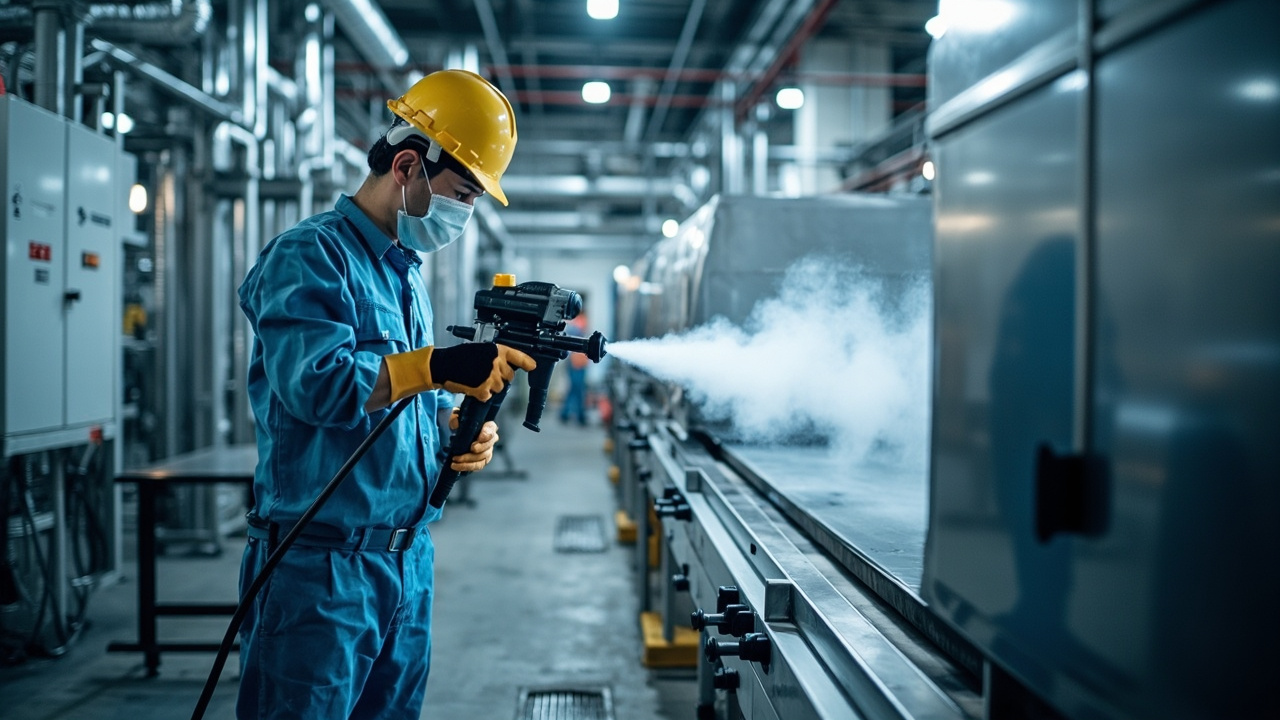
Many factories understand "oil-to-water conversion" as "swapping the paint bucket for a water-based coating bucket," and end up with problems on day one: the spray gun clogs, the pipelines rust, the coating dries and cakes inside the pipes, and the wastewater draws environmental scrutiny. The physical differences between water-based coating and solvent-based paint determine that it has a completely different set of requirements for application hardware—water corrodes carbon steel, breeds bacteria, becomes extremely difficult to clean once dried, and the paint mist wastewater also carries pollutants. This article focuses specifically on "hardware": how to select spray guns, what materials to use for pipelines, why cleaning must be done against the clock, and how to handle paint mist and wastewater—helping factories advance water-based conversion from "buying the right coating" to "preparing the right equipment."
It must be emphasized: this article focuses on equipment and tools, and does not elaborate on spraying process parameters (which belong to the realm of application process comparison). As a water-based system supplier, Kexin New Materials (kexinMaterials) often includes the "equipment list" as part of delivery when assisting furniture factories and steel structure plants with water-based conversion, and the following is also drawn from these frontline experiences. During the selection phase, you may refer to our industrial coating product system to confirm the system's requirements for equipment.
I. Special Challenges of Water-Based Coating to Equipment
First understand "why you can't just use oil-based equipment to spray water-based coating directly":
- Corrosiveness of water: Water-based media will corrode carbon steel, ordinary steel pipes, and carbon steel containers; iron ions will also contaminate light-colored coatings and affect stability.
- Bacteria and mildew: Water-based systems easily breed microorganisms in pipeline residues, producing odors, blockages, and coating film defects.
- Extremely difficult to clean once dried: Once water-based coating loses water and dries, it forms a dense polymer that is harder to dissolve and remove than oil-based paint, permanently clogging nozzles and pipelines.
- Conductivity: Water-based coating usually has a certain conductivity, posing different requirements for insulation and grounding of electrostatic spraying equipment.
- Wastewater carries pollutants: Spray booth water curtains and cleaning wastewater contain resins, pigments, and additives, and are pollutants that require treatment and cannot be discharged at will.
These five points are the underlying logic of equipment selection. They are expanded below item by item.
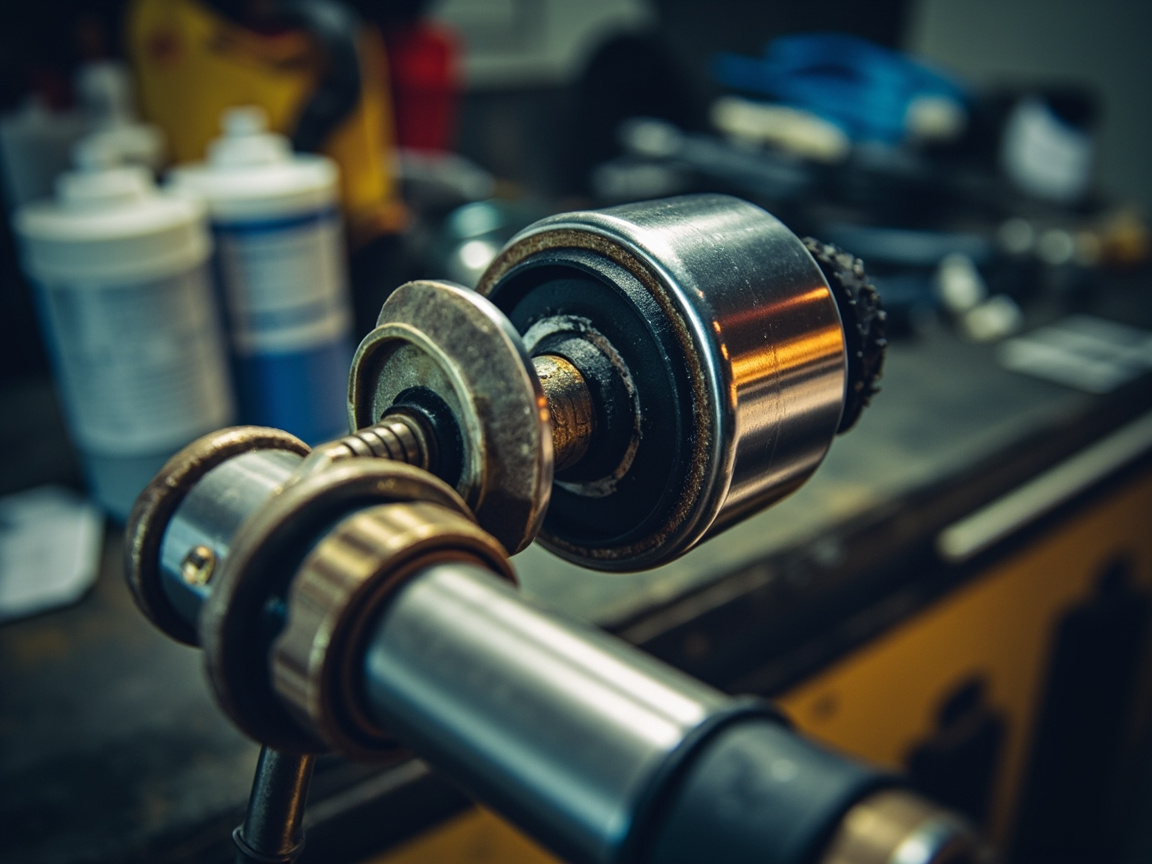
II. Spray Gun Selection: Different Processes Require Different Guns
Water-based coating can be applied by various spraying methods, and spray gun selection directly determines efficiency, coating film quality, and loss.
2.1 Air Spraying (Conventional Spray Gun)
- Advantages: cheap equipment, quick to learn, suitable for small batches and touch-up;
- Disadvantages: large paint mist dispersion, low coating utilization (about 30%–50%), sensitive to water-based coating viscosity;
- Applications: small furniture parts, maintenance, sampling.
2.2 High-Pressure Airless Spraying
- Principle: a high-pressure pump pushes the coating out of the nozzle for atomization, without needing compressed air;
- Advantages: high efficiency, suitable for large areas (steel structures, floor coatings, exterior walls);
- Disadvantages: average atomization fineness, high requirements for nozzle and pump materials (stainless steel/ceramic);
- Note: water-based coating has relatively low abrasiveness, but pump bodies and check valves are still recommended to be stainless steel/engineering plastic.
2.3 Air-Assisted Airless Spraying
- Combines the efficiency of airless with the fine atomization of air, resulting in a smoother film and higher utilization;
- Commonly used for furniture and industrial topcoats, with good compatibility with water-based systems.
4.4 Electrostatic Spraying
- Water-based coating is conductive; electrostatic spraying requires dedicated insulated gun bodies and grounding protection, with high equipment investment;
- Advantages: high coating utilization (can exceed 80%), good wrap;
- Risks: stricter requirements for equipment insulation, personnel protection, and explosion-proofing, requiring professional assessment.
Spray Gun Selection Comparison Table
| Spraying Method | Coating Utilization | Equipment Cost | Applicable Scale | Water-Based Adaptation Points |
|---|---|---|---|---|
| Air Spraying | Low (30%–50%) | Low | Small batch/touch-up | Stainless steel gun body, clean promptly |
| High-Pressure Airless | Medium (50%–70%) | Medium | Large area | Pump/valve stainless steel or ceramic |
| Air-Assisted Airless | Medium-High | Medium | Batch topcoat | Good atomization, wide compatibility |
| Electrostatic Spraying | High (>80%) | High | Large batch | Insulation grounding, special protection |
Selection principle: For high batch and utilization requirements, choose air-assisted/electrostatic; for small batch touch-up use air spray; for large-area steel structures/floor coatings use airless. Gun bodies, nozzles, and needle valves are recommended to be stainless steel or engineering plastic to avoid carbon steel rust contamination.
III. Pipeline and Container Materials: Don't Use Carbon Steel
This is the easiest pitfall in water-based conversion.
3.1 Recommended Materials
- Stainless Steel (304/316): first choice for pipelines, pump bodies, and tanks—corrosion-resistant and less prone to contamination;
- Engineering Plastics (PP, PE, PTFE lining): usable for pipelines, hoses, and seals—low cost and water-resistant;
- Ceramic/Tungsten Carbide: nozzles, check valve cores—wear-resistant and corrosion-resistant.
3.2 Materials to Avoid
- Carbon steel/ordinary steel: rusts when meeting water; iron ions cause light-colored coatings to yellow and flocculate, must be replaced;
- Swelling-prone seals: some rubber rings will swell from water-based additives; should choose compatible materials such as fluoroelastomer, EPDM;
- Copper/brass: some water-based systems are sensitive to copper ions, compatibility must be confirmed.
3.3 System Cleaning Circuit
Water-based lines should be designed with a "circulating cleaning" circuit: after construction, use pure water/specialized cleaning agent to circulate and flush the pump, pipelines, and gun, then blow dry. The circuit should have low-point drain valves to facilitate draining residual liquid and avoid dead pockets of water that breed bacteria.
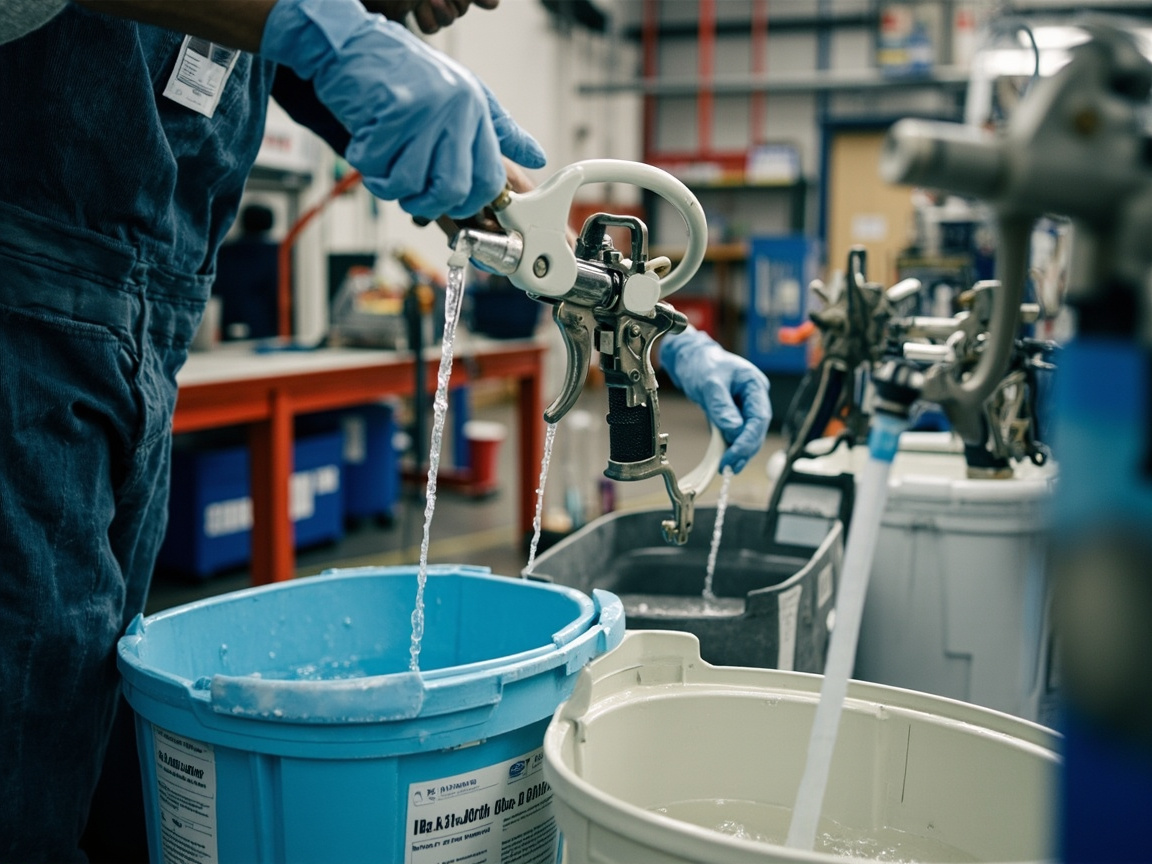
IV. Cleaning: The Lifeline of Water-Based Coating
"Clean promptly" is the iron rule of water-based application—bar none.
4.1 Why Time Is of the Essence
Water-based coating uses water as the medium; once the machine stops and flow ceases, water evaporates from the nozzle and pipeline walls, and the coating droplets concentrate → skin over → cure, capable of clogging fine nozzles within hours. The dried water-based polymer is insoluble in water and extremely difficult to clean, often requiring disassembly and soaking to soften or replacement of parts. Oil-based paint can still be dissolved by solvent, but dried water-based coating basically can only be removed mechanically.
4.2 Recommended Cleaning Procedure
- Short stoppage (<30min): keep pipeline circulating or gun immersed in clean water to prevent nozzle drying;
- End of shift: circulate pure water to flush pump, pipe, and gun, then pass specialized water-based cleaning agent through, and drain;
- Disassemble gun for cleaning: remove nozzle, needle valve, and gun cap; soft brush + cleaning agent for manual cleaning, no hard objects to scratch;
- Blow dry for storage: use compressed air to blow out residual liquid, hang gun body upside down, drain pipeline at low points;
- Record: log cleaning time, dosage, and responsible person into the equipment maintenance card.
4.3 Common Cleaning Accidents
| Accident | Cause | Countermeasure |
|---|---|---|
| Nozzle clogging | No circulation during stoppage, untimely cleaning | Keep circulation during stoppage, clean every shift |
| Pipeline caking | Dead pocket water accumulation, long stoppage without drainage | Low-point drainage, regular flushing |
| Coating film with particles | Residual coating not cleared, incomplete cleaning | Disassemble gun for fine cleaning, filter coating |
| Odor and mildew | Residual liquid breeds bacteria | Drain and blow dry, regular disinfectant |
V. Paint Mist and Wastewater Treatment: A Hard Environmental Threshold
Although water-based coating is low-VOC, the spraying process still produces paint mist and wastewater, so environmental protection cannot be relaxed.
5.1 Spray Booth Water Curtain and Paint Mist Capture
- Spray booth water curtain/water turbine brings overspray paint mist into water, requiring matching paint mist flocculant (coagulant) to make the mist lose tack and float or sink for easy skimming;
- Flocculants for water-based coating differ from those for oil-based; must choose models dedicated to water-based systems to avoid flocculation failure;
- Regularly skim paint sludge to prevent system clogging and water quality deterioration.
5.2 Cleaning Wastewater Treatment
- Wastewater from cleaning guns and pipes contains resins, pigments, and additives, and is wastewater requiring treatment—direct discharge into sewers is prohibited;
- The factory may set up pretreatment of sedimentation/flocculation + filtration on-site, then incorporate it into park sewage or third-party disposal;
- Wastewater barrels must be labeled, protected against overflow, and accompanied by transfer manifests to ensure traceability.
5.3 Solid Waste and Hazardous Waste
- Waste paint sludge, paint-contaminated rags, and waste cleaning agent containers shall be managed according to local hazardous/ general solid waste classification;
- Water-based systems generate less hazardous waste than solvent-based ones, but still require compliant handover to qualified units.
6. Other Tools and Auxiliary Equipment
- Mixing and Filtration: Water-based paint tends to stratify; mechanically stir and filter (80–200 mesh) before application to remove particles;
- Temperature and Humidity Control: Water-based coatings are sensitive to temperature and humidity; spray booths shall be equipped with constant temperature/humidity and dehumidification to ensure film formation;
- Film Thickness and Viscosity Control: Use flow cup for viscosity and wet film gauge for thickness; equipment must be fully provided;
- Personal Protection: Although more friendly than solvent-based, still provide protective masks, gloves, goggles; anti-static clothing in electrostatic zones.
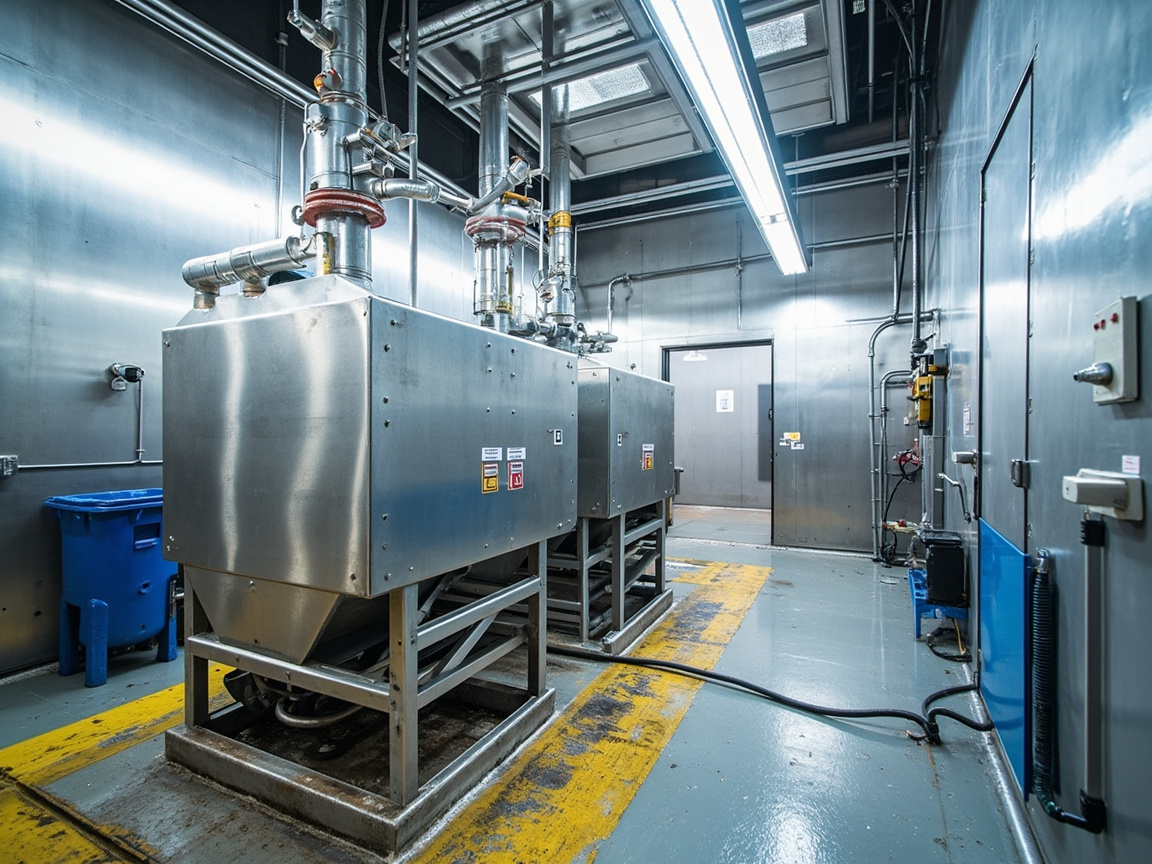
7. Water-based Equipment Retrofit Checklist (for Factories)
Turn the above into a retrofit checklist for easy project initiation:
- Replace carbon steel piping/tanks with stainless steel or PP/PE;
- Upgrade spray guns, pumps, valves to stainless steel/ceramic/engineering plastic;
- Design circulable cleaning loop + low-point drainage;
- Equip pure water and dedicated water-based cleaning agent, cleaning station;
- Install water-based dedicated paint mist coagulant and skimming system in spray booth;
- Build wastewater pretreatment (sedimentation/flocculation/filtration) + compliant transfer;
- Add temperature/humidity control and mixing/filtration, film thickness/viscosity tools;
- Write equipment maintenance card: cleaning frequency, responsible person, records.
The value of this checklist lies in: expanding "oil-to-water" from buying paint to "buying system + modifying equipment + managing wastewater", avoiding failure upon launch.
8. Coordination with Kexin New Materials: Equipment Must Be Delivered Together
Kexin New Materials (kexinMaterials) advocates "paint, process, equipment" delivered together when supporting factory water-based transformation:
- Selection with Equipment Advice: Different water-based systems (acrylic, PUD, epoxy) have different requirements for nozzle, pressure, cleaning frequency; equipment parameters are given at selection to avoid buying wrong guns;
- Cleaning Solution Package: Provide matching water-based cleaning agent and cleaning SOP, turning "timely cleaning" into executable shift actions;
- Wastewater Reduction Advice: By optimizing utilization (e.g., recommending air-assisted/electrostatic), controlling film thickness, reduce overspray and wastewater at source, lowering disposal pressure;
- Retrofit Accompaniment: For production line retrofit customers, assist in verifying material compatibility and loop design, reducing trial-and-error cost.
For factories, the success of water-based transformation is half in paint, half in equipment. Kexin New Materials has verified in multiple furniture and steel structure projects: writing equipment checklist into retrofit plan significantly improves launch stability and comprehensive cost.
9. Equipment Configuration Plans for Different Scale Factories
Water-based equipment investment varies greatly; match by capacity to avoid waste.
9.1 Small Workshop/Refinish Point
- Configuration: 1–2 stainless steel air spray guns, pure water cleaning station, filtration/mixing tools;
- Focus: race against time to clean, collect wastewater in barrels and hand to qualified units;
- Suitable for: small batch wood coating, maintenance, sampling; low investment.
9.2 Medium Furniture/Hardware Factory
- Configuration: air-assisted spray line + stainless steel piping + circulating cleaning loop + spray booth water curtain and paint mist coagulation;
- Focus: fully replace materials with stainless steel/plastic, build wastewater pretreatment (sedimentation flocculation);
- Suitable for: batch topcoat, balancing efficiency and quality.
9.3 Large Continuous Coating Plant
- Configuration: electrostatic spraying or fully automatic line + constant temp/humidity spray booth + online film thickness detection + wastewater treatment station;
- Focus: high utilization source waste reduction, equipment networked maintenance records;
- Suitable for: large batch, high consistency industrial coating.
| Scale | Spray Method | Piping Material | Wastewater Treatment | Investment Level |
|---|---|---|---|---|
| Small Workshop | Air Spray | Stainless Gun + Hose | Barrel Collection Outsourced | Low |
| Medium Plant | Air-assisted | Full Stainless/PP | In-plant Pretreatment | Medium |
| Large Plant | Electrostatic/Auto | Full Stainless | Treatment Station | High |
10. Common Equipment Matching Error Cases
List the most common field failures for pit avoidance during retrofit:
- Error 1: Carbon steel piping directly spraying water-based paint → rust contamination, light-colored paint yellowing. Countermeasure: fully replace with stainless steel/plastic.
- Error 2: No cleaning on shutdown → nozzle clogged within hours. Countermeasure: keep circulating on shutdown, institutionalize shift cleaning.
- Error 3: Using solvent-based paint mist coagulant → water-based paint mist not flocculating, spray booth blocked. Countermeasure: switch to water-based dedicated coagulant.
- Error 4: Direct wastewater discharge → environmental penalty. Countermeasure: pretreatment + transfer manifest.
- Error 5: Seal swelling → paint leakage, unstable pressure. Countermeasure: replace with fluoroelastomer/EPDM.
- Error 6: Poor electrostatic gun grounding → safety hazard. Countermeasure: dedicated insulation grounding and training.
Most of these errors "save small money, lose big money"; checking item by item against the checklist before retrofit is most cost-effective.
11. Cost Perspective of Equipment Investment and Wastewater Disposal
Water-based equipment is not pure cost; view from the overall account:
- Waste Reduction Saves Money: Improving coating utilization (air-assisted/electrostatic) directly reduces overspray and wastewater, lowering disposal fees;
- Reduce Loss: Timely cleaning and correct materials extend spray gun/pump/valve life, reducing part replacement;
- Compliance Dividend: Standardized wastewater and hazardous waste management avoids production halt rectification and fines, and is an entry barrier for export and large customers;
- Payback Period: Small/medium plant equipment retrofit mostly pays back in months to one or two years (from reduced scrap, rework and disposal fees), more sustainable than simply pressing paint price.
Writing equipment investment into water-based retrofit plan is the real way to calculate the total account of "oil-to-water".
12. Spray Parameters and Equipment Matching: Pressure, Viscosity, Nozzle
Selecting right equipment is only the first step; parameter matching determines film quality and loss, water-based paint is more sensitive to parameters.
- Viscosity Adjustment: Water-based paint application viscosity mostly controlled by TU-4 cup, common 20–35 s range; too thick poor atomization, too thin sagging; adjust with water or manufacturer-specified thinner, no random organic solvent addition.
- Pressure Matching: Airless spray pressure selected by nozzle orifice and paint viscosity; water-based paint recommends medium-low pressure to reduce scatter; air-assisted spray air cap pressure and hydraulic must coordinate for fine atomization.
- Nozzle Selection: Nozzle orifice (e.g., 0.013"–0.021") determines flow and fan; large flat select large fan, detail parts select small orifice; water-based paint low abrasion but still recommend tungsten carbide/stainless nozzle for longer life.
- Temp/Humidity Effect: Low temp high humidity slows water-based paint drying, easy sagging; should raise booth temp or dehumidify, not blindly increase pressure; parameters微调 with environment and record in process card.
Locking the four elements "viscosity—pressure—nozzle—environment" is the premise of stable film output, and the key to reduce gun clogging and rework.
13. Annual Equipment Maintenance Plan and Spare Parts Management
Water-based line "emphasize maintenance, light repair"; maintenance plan suggested in layers:
- Each Shift (Daily): Clean gun/pump/piping on shutdown, drain residue and blow dry, record maintenance card;
- Weekly: Check seals, needle valve for swelling/wear, tighten joints;
- Monthly: Pump/valve disassembly, check valve cleaning, filter cartridge replacement;
- Quarterly: Piping circulable disinfectant flush, prevent bacterial accumulation;
- Yearly: Full overhaul pump, electrostatic system insulation, instrument calibration.
Spare Parts Inventory at least includes: nozzle, needle valve, seals (fluoroelastomer/EPDM), filter cartridge, vulnerable washers. Water-based paint dried repair cost high; adequate spares minimize downtime. Post maintenance plan and spare parts list on site, cheaper than after-the-fact rush repair.
14. Storage and Transfer Equipment for Water-based Paint
Beyond spraying equipment, storage and transfer also affect stability, often overlooked:
- Storage Barrels and Tanks: Use stainless steel or PE/PP barrels, no carbon steel; large tanks with low-speed agitation to prevent stratification sedimentation;
- Transfer Pump: Pneumatic diaphragm pump or stainless steel rotor pump, avoid iron contamination and shear damage to emulsion;
- Anti-bacteria Management: Water-based system prone to microorganisms; tanks regularly cleaned/disinfected, long-term storage add compliant in-tank preservative;
- Temperature Control: Extreme cold/heat affects viscosity and freeze-thaw stability; warehouse and transfer temperature controlled, prevent freeze-thaw demulsification;
- Batch Management:Use first-in-first-out by batch number, retain samples for traceability, and prevent mixing of different batches that causes color difference and performance fluctuation.
With storage and transfer done well, the front-end spraying will have fewer strange problems. Many complaints of "paint problems" are eventually traced to rusty tanks or long-term lack of cleaning.
15. Intelligence and Trends of Water-based Coating Equipment
The next stage of equipment investment is "digitalization", which can further reduce cost and improve quality:
- Online inspection: Film thickness, flow rate, and viscosity sensors provide real-time feedback; alarm on out-of-tolerance to reduce blind spots in manual sampling;
- IoT maintenance: Cleaning and maintenance records are networked, with automatic reminders when due, eliminating blockages caused by "forgetting to clean";
- Data traceability: Equipment parameters, environment, and test results of each batch are bound to the batch number for quality traceability;
- Robot/reciprocator spraying: Robots for large-volume parts ensure consistency and high utilization, reducing dependence on skilled workers;
- Closed-loop water treatment: Spray booth water circulation + automatic paint sludge skimming + reclaimed water reuse, further reducing wastewater and disposal costs.
For factories planning long-term water-based conversion, equipment moving from "can spray" to "can manage data" is the watershed of competitiveness. Kexin New Materials, when assisting major customers in retrofitting, also gradually incorporates parameter recommendations into delivery, forming a closed loop between equipment and formulations.
16. Project Budget Breakdown for Equipment Retrofitting
The budget for water-based conversion cannot only count "paint price difference"; equipment and supporting facilities are the bulk. A typical breakdown is as follows:
- Spraying host: Air spray guns have low investment, mixed-air/airless are medium, electrostatic and automatic lines are high; choose by scale to avoid over-investment;
- Piping and tanks: Replacing carbon steel with stainless steel/plastic is a one-time investment but a mandatory item;
- Spray booth and water curtain: New or retrofitted water curtain, paint mist coagulation system, including special coagulant consumables;
- Cleaning station and pure water: Cleaning agents, pure water equipment, wastewater pretreatment unit;
- Testing instruments: Cross-cut, hardness, film thickness, gloss color difference, etc.; small per-item cost but not omittable;
- Training and spare parts: Personnel training, first-year spare parts inventory.
Only by listing the above as a retrofit budget table can one see the real total account of "oil-to-water". Many factories only compare paint prices, then are backfired by equipment and wastewater costs after launch, ending up more expensive.
17. Key Points of Front-line Operation and Maintenance Training
No matter how good the equipment, it relies on people to execute. Training must land on actions and signatures:
- Cleaning SOP practice: Clean every shift, disassemble gun for fine cleaning, drain and blow dry; on-site drill and assessment;
- Parameter recording habit: Viscosity, pressure, film thickness recorded every shift; report anomalies immediately, not by memory;
- Anomaly identification: Early signs of gun clogging, skinning, color difference, foaming; teach front-line to handle at first time;
- Protection and compliance: Masks and gloves, anti-static in electrostatic zones, classified hazardous waste of wastewater; included in safety briefing;
- Signature confirmation: Maintenance card and acceptance sheet signed by operator and reviewer for traceable responsibility.
Write systems into actions, turn actions into habits, so water-based equipment can deliver stable results long-term. Kexin New Materials usually provides accompanying training and SOP at delivery, precisely to convert "equipment capability" into "stable output".
18. Safety and Electrostatic Tips for Water-based Paint Application
Although water-based paint is less flammable than oil-based, application safety cannot be zeroed: sprayed paint mist is still combustible at high concentration in enclosed spaces; spray booth must maintain ventilation and corresponding explosion-proof electricals; electrostatic equipment must be reliably grounded, personnel wear anti-static clothing; cleaning agents and waste rags stored by flammable/hazardous waste classification to avoid accumulation spontaneous combustion; long-term skin contact suggests gloves, wash hands after work. Writing safety into equipment operation procedures is an indispensable lesson for water-based launch. For long holidays with line stoppage, it is recommended to complete whole-line circulation cleaning before holiday and drain/blow dry, cover paint tanks to prevent bacteria; on first day back, circulate to discharge residue before formal production, avoiding defects in first batch from settled paint and bacteria over days. Site should post safety warnings and emergency contacts; new employees must complete safety briefing and sign before starting, truly landing system on people.
FAQ
1. What is the difference between water-based paint application equipment and oil-based?
The core difference is material and cleaning: water-based will rust carbon steel, dry and hard to clean, wastewater carries pollutants, so piping and tanks must use stainless steel/engineering plastic, spray gun use stainless steel ceramic, and must design timely cleaning circuit and wastewater treatment; cannot use oil-based equipment directly.
2. Which water-based paint spray gun is good?
Small-batch touch-up use air spray; large-area steel structure/floor use high-pressure airless; batch furniture and industrial topcoat use mixed-air spray; large-volume high-utilization can choose electrostatic (needs insulation grounding). Gun body nozzle suggest stainless steel/ceramic, avoid carbon steel.
3. Why can't carbon steel piping be used?
Water rusts carbon steel, iron ions contaminate light-colored paint causing yellowing and flocculation, and rust debris clogs system. Should switch to 304/316 stainless steel or PP/PE plastic piping and tanks.
4. How long can water-based paint stop before cleaning is required?
Short stop (within half hour) should keep line circulating or gun immersed in water to prevent drying; end of shift must circulate rinse with pure water and special cleaner and disassemble gun for fine clean. Water-based paint after drying basically only mechanical removal, very hard to dissolve.
5. Can water-based paint wastewater be discharged directly?
No. Cleaning and booth wastewater contains resin, pigment, additives, needs sedimentation/flocculation/filtration pretreatment then compliant disposal, and establish transfer manifest. Water-based is low VOC but wastewater still managed pollutant.
6. How to handle booth paint mist?
Use water curtain/water turbine to capture overspray, with water-based special paint mist coagulant to deflocculate mist for easy skimming, regularly clean sludge, prevent clogging and water deterioration. Note coagulant must match water-based system.
7. Is electrostatic spraying of water-based paint safe?
Usable but demanding: water-based paint conductive, needs special insulated gun body, reliable grounding and explosion-proof protection, well-trained personnel. Investment and compliance cost high, suitable for large-volume high-utilization scenarios, needs professional assessment.
8. What should water-based paint equipment maintenance card record?
At least: cleaning time and cleaner dosage, responsible person, line drain status, nozzle disassembly cleaning record, wastewater generation and transfer volume, temperature and humidity. Institutionalize "timely cleaning" to avoid human omission causing clog.
9. What to note about seals and gaskets?
Some rubber rings swell from water-based additives, should choose FKM, EPDM and other compatible materials; copper/brass parts sensitive in some systems, need confirm compatibility, avoid metal ions affecting paint stability.
10. How does Kexin New Materials assist equipment retrofitting?
Kexin New Materials (kexinMaterials) provides equipment parameters and cleaning SOP corresponding to water-based system at selection stage, packages special water-based cleaner, and reduces wastewater at source by optimizing spray utilization, can assist in verifying material compatibility and circuit design for line retrofitting.
Further Reading
- How to select water-based industrial coating under oil-to-water background: resin system and applicable conditions: Put equipment requirements ahead to selection, build systematic decision for water-based industrial coating.
- Water-based refinish paint process and compliance: implementation points from equipment to process: Focus on touch-up scenario process and equipment matching, supplement practical boundaries of "spray method" in this article.
- Green transition of industrial coating: hardware preparation for low VOC and water-based conversion: View overall investment logic of water-based equipment and wastewater treatment from green transition perspective.
- Automotive coating application equipment and spray gun parameters: HVLP, pressure and DIN4 viscosity
- Industrial coating application: airless spray parameters, film thickness control and recoat interval