On industrial products such as hardware, home appliance housings, lighting fixtures, and metal furniture that require both good appearance and durability, the baking paint process of "spray and immediately enter the curing oven, come out as finished product" has always been the mainstream. However, with the tightening of environmental regulations such as GB 30981, the high VOC emissions of traditional solvent-based amino baking paint are becoming increasingly unsustainable. Water-based amino baking paint is the key upgrade under this trend—it uses water as the main dispersion medium, retains the high hardness, high gloss, and high fullness of amino resin, while reducing VOC to a very low level, truly making the baking coating of metal products green.
I. What is Water-based Amino Baking Paint
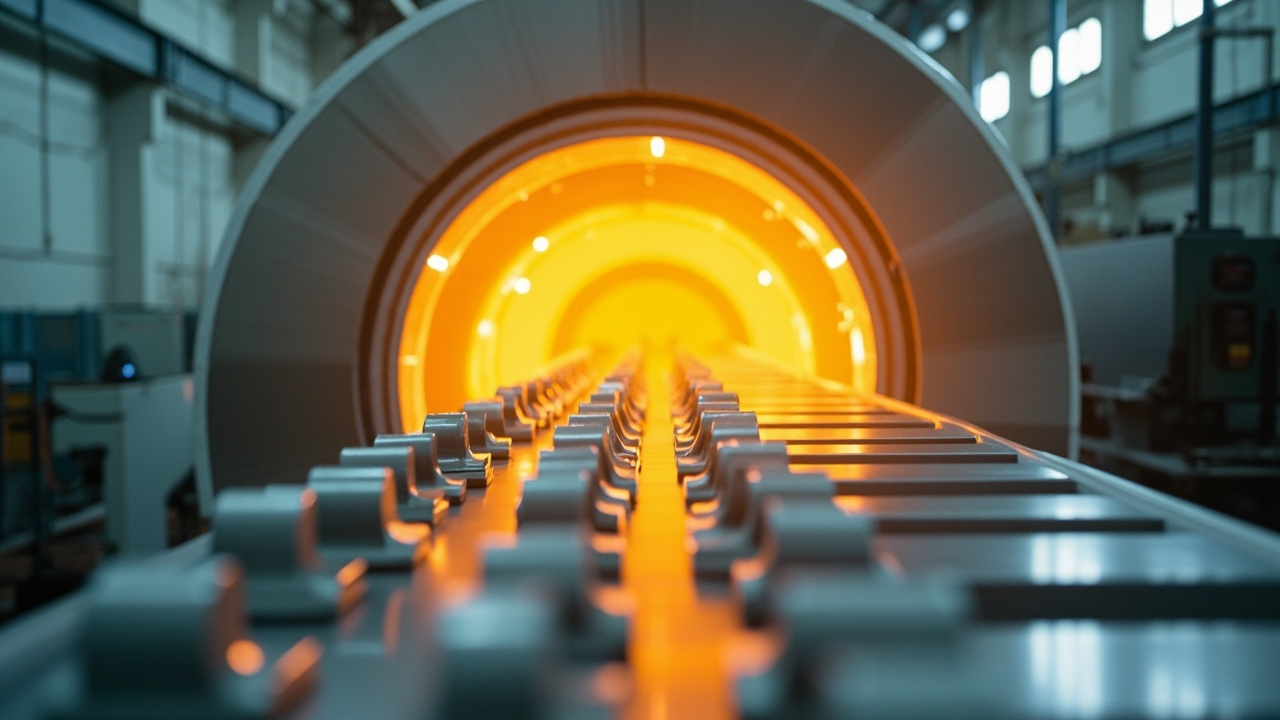
Water-based amino baking paint is a two-component or single-component baking-type coating with water-based alkyd resin or water-based acrylic resin as the main body and water-based amino resin (such as melamine formaldehyde resin) as the crosslinking agent. It must be baked at a certain temperature (usually 120–150℃), and through the crosslinking condensation reaction between the amino resin and the hydroxyl groups on the main resin, a dense three-dimensional network paint film is formed. It is precisely this "high-temperature crosslinking" film-forming method that gives it a series of advantages distinct from air-dry paint:
- The paint film has high hardness and good density, with pencil hardness reaching above 2H, and is wear-resistant and scratch-resistant.
- The gloss is full and the fullness is high, with excellent decorativeness, suitable for consumer metal products with high appearance requirements.
- It has excellent chemical resistance, water resistance, and adhesion, and is not prone to losing gloss or yellowing during long-term use.
- After water-based treatment, VOC is greatly reduced, with low odor and a friendly construction environment, complying with environmental regulations.
II. Film Formation and Crosslinking Mechanism
The key to understanding the performance of water-based amino baking paint lies in the crosslinking reaction. Amino resin hardly reacts at room temperature, so the coating is storage-stable; once it enters the oven and heats up, the hydroxymethyl (–CH₂OH) of the amino resin and the hydroxyl (–OH) of the main resin undergo etherification condensation, releasing water and a small amount of methanol, forming crosslinking points. The higher the crosslinking density, the harder the paint film and the better the corrosion resistance, but excessive crosslinking will make the paint film brittle. Therefore, the baking temperature and time must be strictly matched with the formulation, which is also the reason why baking paint is said to be "30% paint, 70% baking".
III. Reference for Key Technical Parameters
When selecting, the following core indicators should be considered, and actual values are subject to the specific product specification:
| Item | Typical Indicator | Description |
|---|---|---|
| Baking temperature | 120–150℃ | Temperature determines crosslinking sufficiency |
| Baking time | 20–30 min | Used in conjunction with temperature |
| Pencil hardness | ≥ 2H | Reflects scratch resistance |
| Gloss (60°) | Adjustable high gloss/semi-matte/matte | Customized according to appearance needs |
| Adhesion | 0–1 grade (cross-cut method) | Smaller value is better |
| VOC content | Significantly lower than solvent-based | Meets environmental regulations |
| Salt spray resistance | ≥ 500 h (with primer) | Depends on the supporting system |
IV. Typical Application Scenarios
- Hardware and fasteners: door locks, handles, tools, small metal accessories, pursuing high hardness, wear resistance, and stable color.
- Home appliance housings: metal panels of washing machines, refrigerators, microwave ovens, requiring high gloss, high fullness, and resistance to cleaning agent wiping.
- Lighting fixtures and metal furniture: chandeliers, shelves, office furniture steel pipe parts, balancing decorativeness and batch production efficiency.
- Instruments, meters, and electrical cabinets: control cabinets, chassis housings, requiring smooth paint surface and good insulation and corrosion resistance.
V. Full Process of Construction Technology
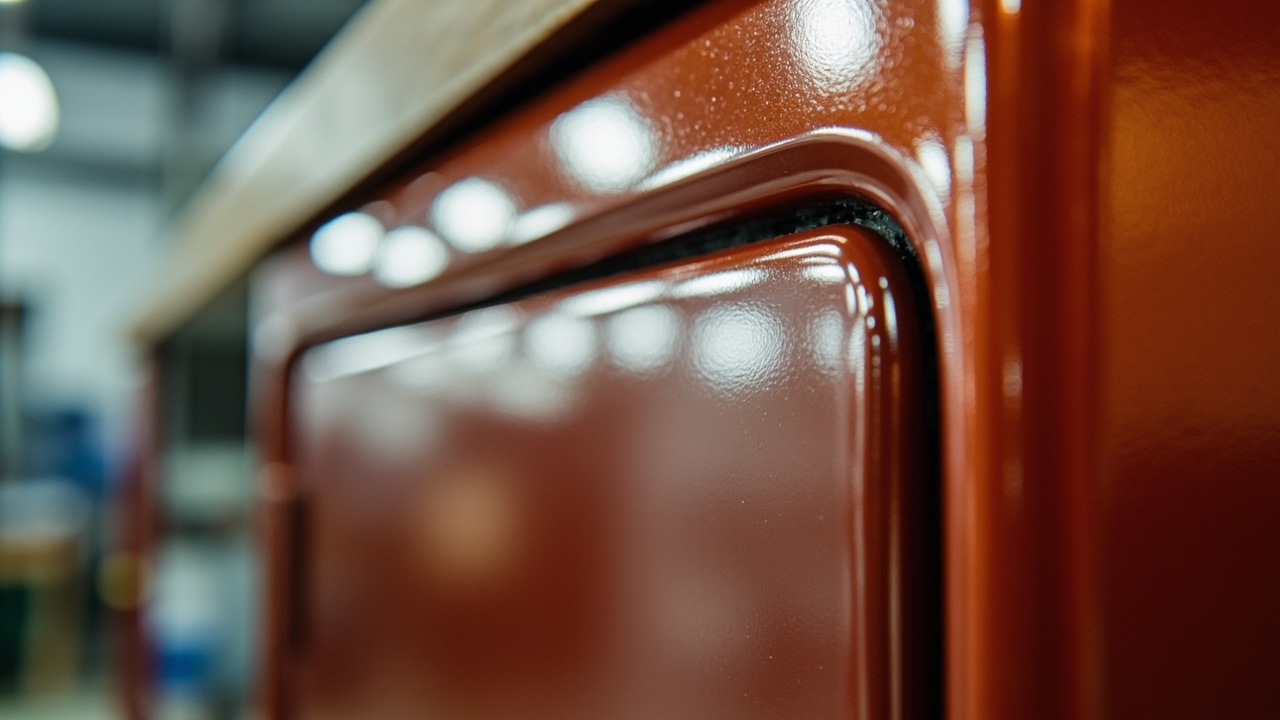
The final effect of water-based amino baking paint largely depends on pre-treatment and baking control:
- Pre-treatment: The metal substrate must be thoroughly degreased and derusted, and treated with phosphating or silane to form a conversion film, improving adhesion and corrosion resistance, which is the foundation for the baking paint not to peel off.
- Primer (optional): For parts with high anti-corrosion requirements, first apply water-based epoxy or water-based zinc-rich primer to form a supporting system with the topcoat.
- Spraying: Mostly electrostatic spraying or air spraying is used, controlling uniform film thickness. For water-based paint, attention should be paid to the influence of workshop humidity on leveling.
- Leveling and pre-baking: After spraying, first level at room temperature or low temperature and discharge moisture to avoid direct high temperature causing bubbles and pinholes.
- High-temperature curing: Enter the oven and bake according to the specified temperature and time to fully crosslink the amino resin, and it becomes finished product after cooling.
VI. Comparison with Solvent-based Baking Paint
The reason why water-based amino baking paint gradually replaces solvent-based is the balance between environmental protection and comprehensive performance:
| Comparison Item | Water-based Amino Baking Paint | Solvent-based Amino Baking Paint |
|---|---|---|
| VOC emission | Low | High |
| Construction odor | Small | Strong irritation |
| Paint film hardness | High (2H+) | High |
| Gloss and fullness | Excellent | Excellent |
| Fire safety | Water-based, non-flammable | Solvent flammable, requires explosion-proof |
| Environmental compliance | Complies with new national standard | Facing restrictions |
| Humidity sensitivity | More sensitive, needs humidity control | Not sensitive |
It should be noted that water-based baking paint is more sensitive to construction environment humidity, and the leveling and pre-baking steps must be well controlled, otherwise shrinkage cavities and bubbles are prone to occur. This is also where the process needs to be re-adjusted during water-based conversion.
VII. Selection and Common Questions (FAQ)
When selecting, comprehensive judgment should be made based on substrate, appearance grade, anti-corrosion requirements, and existing baking equipment: small hardware emphasizes hardness, home appliance panels emphasize gloss and fullness, and outdoor or humid environment parts emphasize corrosion-resistant support.
Q: Can water-based amino baking paint air-dry at room temperature? No. It must be crosslinked by high-temperature baking to form a film, and placing at room temperature cannot form a complete paint film, which is the essential difference between baking paint and air-dry paint.
Q: Why do baking paint parts turn yellow? Mostly due to excessive baking temperature or too long time, causing over-reaction of amino resin. Strictly controlling the baking curve can avoid it.
Q: How to ensure the adhesion of water-based baking paint? The key is in pre-treatment. Phosphating or silane conversion film is the basis of adhesion, and incomplete degreasing and derusting of the substrate is the primary cause of paint peeling.
VIII. Common Coating Defects and Prevention
After water-based conversion, water-based amino baking paint is more sensitive to the process. Several types of defects are most common in actual production, and can be effectively prevented as long as the causes are understood:
- Shrinkage cavities and fish eyes: Mostly due to oil or water in the substrate or compressed air, or silicone oil contamination in the workshop. Preventive measures are to strengthen pre-treatment degreasing, purify the air source, and isolate silicone substances.
- Bubbles and pinholes: Moisture not fully discharged enters the high-temperature oven, and water vapor rapidly vaporizes and breaks the paint film. A sufficient leveling and low-temperature pre-baking stage should be set to allow moisture to slowly volatilize.
- Sagging: Excessive thickness in one spray or too low viscosity causes paint to sag. Should control single-pass film thickness, adjust viscosity, and standardize spraying technique.
- Yellowing and loss of gloss: Excessive baking temperature or too long time causes over-reaction of amino resin. Must strictly execute the baking temperature curve to avoid over-temperature and overtime.
- Poor adhesion: Poor quality of pre-treatment conversion film is the root cause. Uneven phosphating or silane film, and substrate rust return can both cause paint peeling, so the pre-treatment gate must be strictly controlled.
IX. Industry Development Trend
With the continuous tightening of environmental regulations and the advancement of the "dual carbon" goals, the water-based conversion, low-temperature curing, and low energy consumption of industrial coating have become clear directions. Traditional solvent-based amino baking paint is gradually restricted due to high VOC, and water-based amino baking paint is accelerating its replacement with advantages such as low emission, low odor, and fire safety. At the same time, formulation technology is also evolving: on the one hand, through resin modification and additive optimization, the gap between water-based paint and solvent-based in leveling and fullness is narrowed; on the other hand, the development of low-temperature curing baking paint allows some high-temperature intolerant substrates to also adopt the baking process, further broadening the application range. For manufacturing enterprises, choosing suppliers with stable formulations and able to provide baking process support can better guarantee the consistency and yield of batch products than simply comparing prices.