The coating of food plants is fundamentally different from that of ordinary industrial workshops: the coating not only provides anti-corrosion, but may also indirectly contact food or cleaning media, and must serve the hygiene goals of "easy to clean, no dead corners, and pollution prevention". Under the GMP and HACCP systems, industries such as dairy, beer, beverages, meat products, and frozen foods impose requirements on the coatings of workshop walls, ceilings, equipment exterior surfaces, and floors that are far higher than those of general workshops. This article systematically breaks down the technical logic of hygienic-grade coating for food plants.
Kexin New Materials (kexinMaterials) has technical reserves in low-odor, low-migration hygienic-grade systems such as water-based epoxy and water-based polyurethane, which can support food plants with integrated coating solutions from walls to floors. For the trade-off between water-based and solvent-based options, please refer to Water-based Paint vs. Oil-based Paint Selection Comparison.
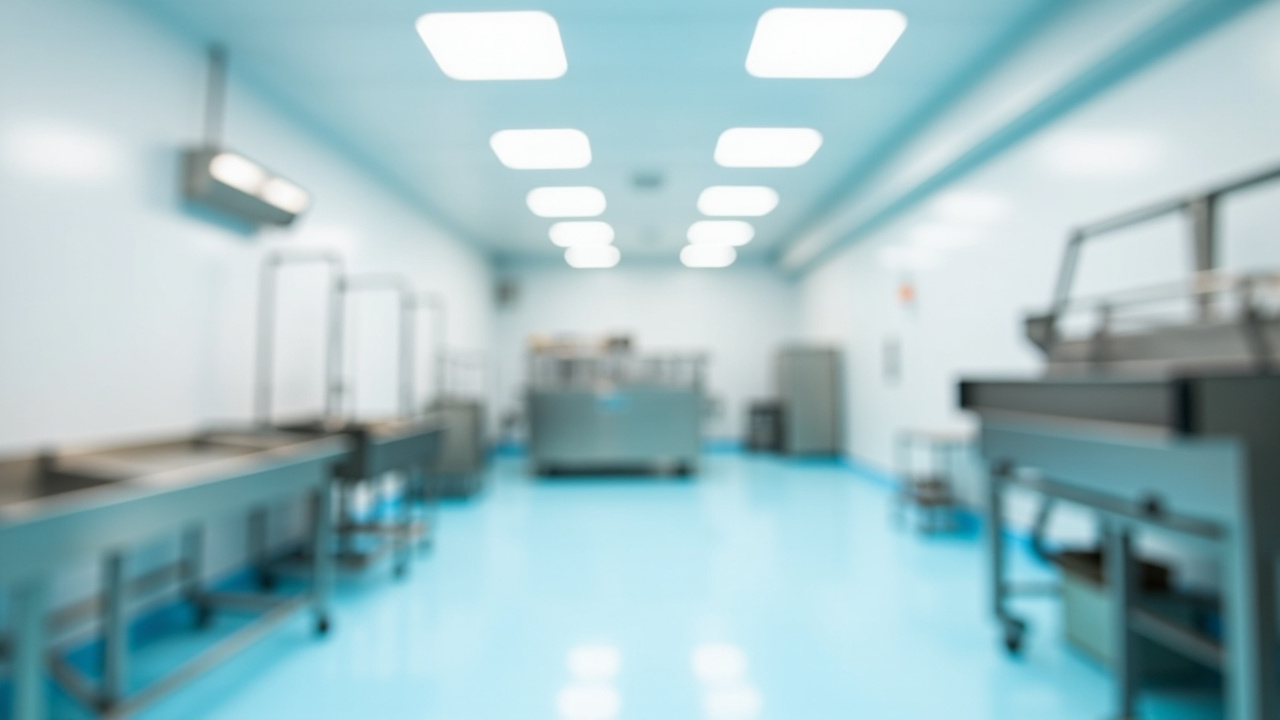
I. Unique Constraints of Food Plant Coating
Food plant coatings must simultaneously satisfy three main lines:
- Food safety: After curing, the coating must not migrate harmful substances into food, and must comply with food contact material frameworks (such as the GB 4806 series).
- Hygienic design: Surfaces should be easy to clean, free of dead corners, with rounded transitions, to avoid dirt accumulation and microbial growth (refer to EHEDG and 3-A standards).
- Corrosion resistance and environmental tolerance: Withstand cleaning agents, hot water, steam, humidity, and temperature differences; the coating needs chemical resistance and resistance to water vapor penetration.
These three points determine that food plants cannot simply apply ordinary epoxy floor coating or industrial topcoat, but need a combined solution of "hygienic-grade system + hygienic design construction".
II. GB 4806 and Food Contact Compliance
China's GB 4806 series standards regulate the safety requirements for food contact materials and articles, covering sensory, total migration, specific migration, and limits for specific substances. For organic coatings used on food plant walls and equipment exterior surfaces that may indirectly contact food or cleaning media, it should be confirmed that the cured coating meets relevant clauses of GB 4806 (such as total migration, specific migration, and sensory indicators). This is the baseline for coating compliance in food plants and is also a frequently inspected item in GMP audits.
It should be noted that GB 4806 targets the "food contact material" itself, while food plant coatings are more often "indirect contact" or "environmental contact". Engineering projects should determine whether to submit for testing as food contact material based on the risk level of specific areas, and use third-party test reports as the basis for delivery. Avoid claiming "food grade" without evidence and failing to provide test data.
III. Hygienic Design: From Material to Construction
Hygienic-grade coating is not just "what paint to brush", but also "how to construct". Key design principles:
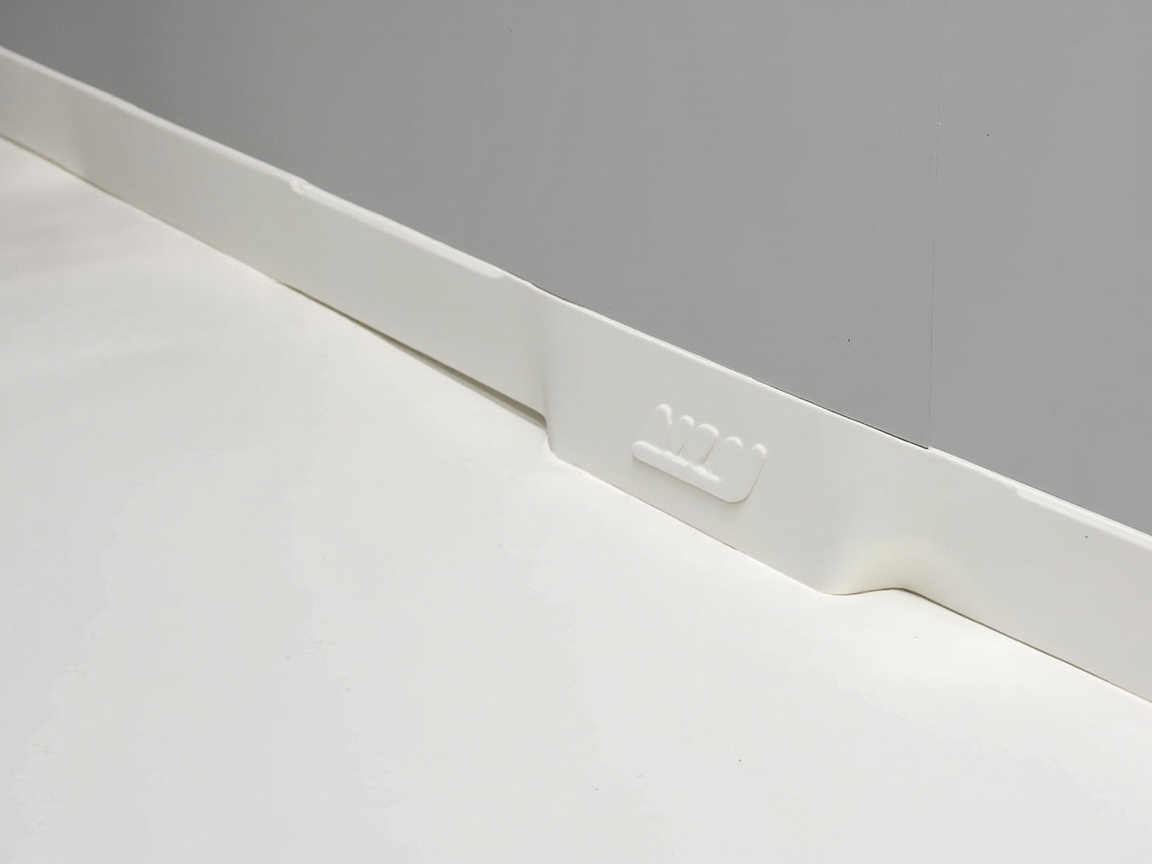
- Cove: Wall-floor junctions and wall-wall corners should use rounded transitions instead of right angles, to avoid dirt accumulation and cleaning blind spots. Coves are usually constructed with flexible epoxy or dedicated fillet materials.
- Continuous sealing: Joints, wall-penetrating pipes, and areas around equipment bases should be continuously sealed to prevent water vapor and microbes from invading interlayers.
- Easy-to-clean surface: The coating should be dense, low-porosity, resistant to cleaning agents, with low surface roughness to reduce adhesion.
- No flaking risk: Coating adhesion must be reliable to avoid particle flaking contaminating products.
These design principles are consistent with hygienic design standards such as EHEDG (European Hygienic Engineering & Design Group) and 3-A, and are the practical thresholds for export-oriented or internationally benchmarked food enterprises.
IV. Typical Area Matching Comparison
The table below summarizes the hygienic-grade matching key points for common areas in food plants:
| Area | Hygiene Requirement | Recommended System | Key Control Points |
|---|---|---|---|
| Wall | Easy to clean, indirect contact | Water-based/solvent-free epoxy or polyurethane topcoat | Dense, low-porosity, cove |
| Ceiling | Mold-proof, anti-condensation | Mold-proof epoxy/polyurethane | Anti-condensation, no flaking |
| Equipment exterior surface | Food contact/cleaning | GB 4806 compliant coating | Migration compliant, easy to disinfect |
| Floor | Wear-resistant, cleaning-resistant | Epoxy self-leveling/mortar | Slip-resistant, seamless, hot-water resistant |
| Drainage ditch/floor drain periphery | High humidity, dirt accumulation | High-build epoxy + sealing | Continuous, rounded, anti-seepage |
It must be emphasized: the above table is a general orientation; the specific system should be based on hygiene risk assessment and product TDS, and third-party GB 4806 testing should be conducted when necessary.
V. Water-based Trend and VOC Compliance
Food plants are often in enclosed or semi-enclosed environments, where odors and health impacts during construction and operation are sensitive, so water-based conversion is an important direction. Water-based epoxy and water-based polyurethane can meet most hygienic-grade needs after curing, while having lower VOC, aligning with the limit requirements of GB 30981-2020 for industrial protective coating. For the VOC regulatory framework, please refer to Interpretation of VOC Limit Regulations for Industrial Protective Coatings.
However, water-based systems are more sensitive to construction environment (temperature, humidity, ventilation); under low temperature and high humidity, drying is slow and whitening easily occurs, requiring strict control of the process window. For areas with high requirements for hot water and steam resistance, solvent-free epoxy and other low-VOC but stronger-performance systems may still be used.
VI. Floor and Slip-resistant Design
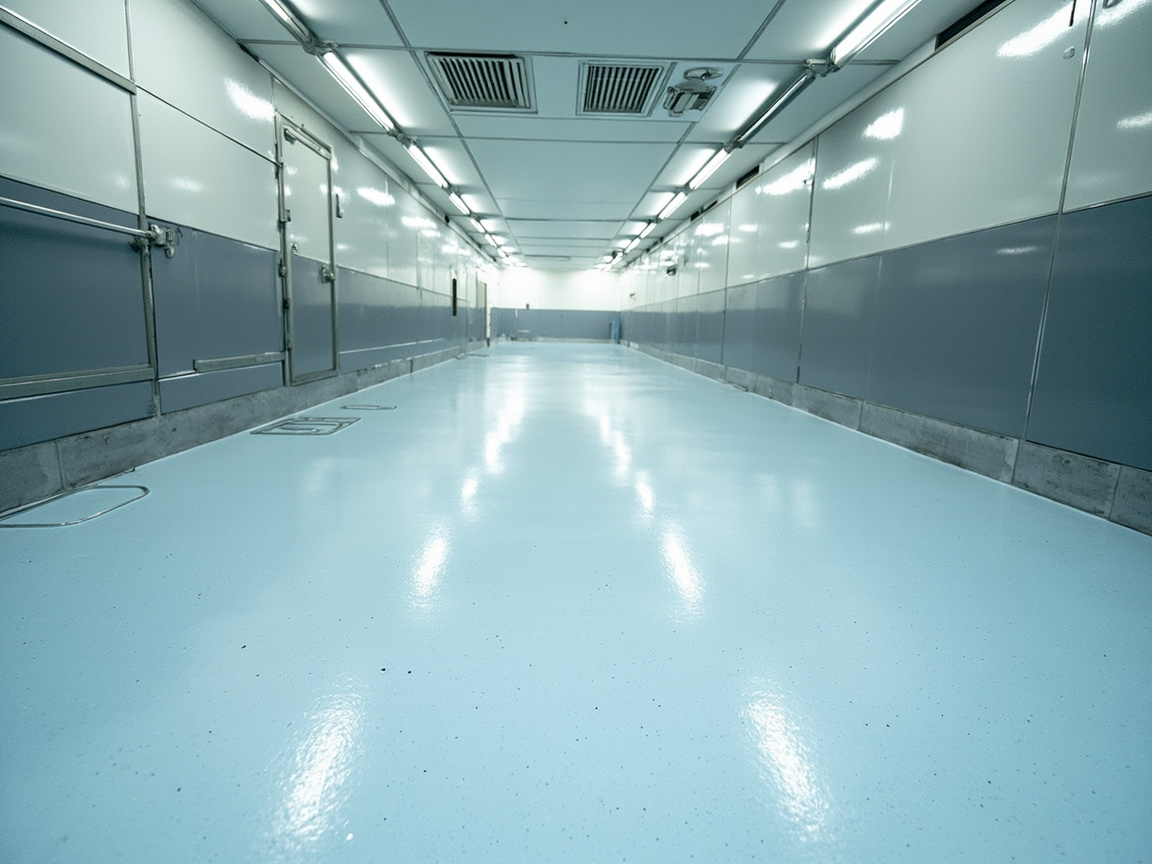
Food plant floors are areas with both heavy wear and corrosion: forklift rolling, hot water washing, cleaning agent erosion, and personnel walking slip resistance. Commonly used epoxy self-leveling or epoxy mortar, combined with anti-slip aggregates to meet friction coefficient. Floors should be seamless, monolithic, sloped toward drains to avoid water accumulation. Drainage ditches and floor drain peripheries are high-risk leakage areas, requiring continuous sealing and cove construction.
VII. Mold-proof and Antibacterial Considerations
High-humidity, nutrient-rich environments easily breed mold. Hygienic-grade coatings can reduce adhesion through dense surfaces, and use mold-proof formulations (with compliant fungicides). But note: if claiming antibacterial/mold-proof functions, corresponding test methods (such as ISO 846 or national standard methods) should support it, to avoid unsubstantiated functional claims.
For the mechanism of self-cleaning and anti-fouling, you can read further Titanium Dioxide Photocatalytic Self-cleaning Coating to understand the potential of surface functionalization in easy-to-clean scenarios (note: food plants should primarily use compliant hygienic-grade systems, and functional coatings must be separately verified for food contact safety).
VIII. Construction and Acceptance Key Points
- Substrate treatment: Concrete must meet strength and moisture content standards, cracks and holes repaired, oil degreased.
- Environmental control: Temperature and humidity meet product requirements, good ventilation but avoid dust.
- Film thickness and adhesion: Floor controlled by design DFT, wall adhesion verified by cross-cut method.
- Hygiene acceptance: Cove continuous, no dead corners, no particle flaking, cleaning validation when necessary.
IX. Maintenance and Cleaning
Hygienic-grade coatings still require standardized maintenance: use neutral or specified cleaning agents to avoid strong solvents damaging the coating; regularly inspect whether coves and seals are intact; local damage handled by "sanding—touch-up", noting new-old compatibility. Maintenance records should be incorporated into the GMP documentation system.
Kexin New Materials (kexinMaterials) recommends that the technical documents for food plant coating clearly specify the hygiene grade of each area, the coating food contact compliance conclusion (including GB 4806 test report), VOC limits, and cove construction requirements, so that hygiene audits and daily operation have evidence to rely on. For the full picture of the standard system, please read further Overview of Industrial Coating Standard System.
X. Common Selection Misconceptions
Misconception 1: Ordinary epoxy floor coating can be used in food plants. Wrong. Hygienic-grade, compliant migration, and cove construction are required; ordinary industrial flooring may not meet them.
Misconception 2: Claiming "food grade" is enough. Wrong. Must be supported by third-party test data such as GB 4806, otherwise it is an unsubstantiated claim.
Misconception 3: Right-angle wall corners are fine. Wrong. Right angles accumulate dirt and are hard to clean; hygienic design requires cove transition.
Misconception 4: Water-based paint performance is definitely poor. Wrong. Water-based epoxy/polyurethane is sufficient in most hygienic-grade scenarios and has lower VOC; the key is choosing the right system and controlling the process.
Misconception 5: Thicker coating means more wear-resistant. Wrong. Floor wear resistance depends on the system and aggregates; too thick may crack, should be controlled by design.
XI. Techno-economics and Audit Preparation for Food Plant Coating
The economy of food plant coating cannot be judged only by material unit price, but should be weighed together with hygiene risk, audit cost, and shutdown loss. A single product contamination caused by non-compliant coating migration or hygiene dead corners, with its recall and brand loss far exceeding the coating budget; while a reasonably designed, well-documented hygienic-grade coating can significantly reduce rectification costs in GMP, HACCP, and third-party audits. Therefore, in the food industry, the logic of "compliance is cost saving" is especially prominent.
From the perspective of materials, although water-based epoxy and water-based polyurethane may have a higher unit price than ordinary solvent-based coatings, their low-odor and low-VOC characteristics reduce the disruption of construction to production scheduling, and also make it easier to pass environmental and occupational health reviews. For renovation projects, low-odor systems can shorten the shutdown window and accelerate resumption of production; this hidden benefit is often underestimated. Sanitary-grade systems also require dense, low-porosity, and easy-to-clean properties, and their performance premium should be understood as insurance for "reducing microbial risk" rather than a mere functional upgrade.
The upfront investment in sanitary design is equally critical. Construction work such as cove angles, continuous sealing, and equipment base treatment, if done correctly at the initial stage, requires almost no additional maintenance later; if remedied later, it requires shutdown, demolition, and redo, at several times the cost. Therefore, coating for food plants should adopt a packaged design of "construction + materials", rather than treating cove angles and sealing as dispensable decorations.
Document preparation is the core link that distinguishes coating for food plants from ordinary industrial coating. Upon delivery, the following should be fully prepared: hygiene grade determination for each area, coating food-contact compliance conclusion (including GB 4806 third-party test report), VOC compliance certificate, cove angle construction photos and acceptance records, adhesion and film thickness data. These documents are not only the basis for acceptance, but also the fundamental assets for responding to customer audits, regulatory inspections, and export certifications. Many food enterprises are required to provide a complete coating compliance chain when changing suppliers; establishing archives in advance can avoid passivity.
It needs to be reminded that functional claims for coating in food plants must be cautious. If the coating adds anti-mold or antibacterial components and makes external claims, it must be supported by data from corresponding test methods, and it must be confirmed that the component does not pose a food-contact safety risk. Unsubstantiated functional claims not only violate advertising compliance, but may also become major non-conformities in food safety audits. Every conclusion in the technical document should be traceable to a test report or standard clause.
12. In-depth Reading of Coating Formulation and Construction Details for Food Plants
The core of sanitary-grade coating lies in the unity of "dense, low-migration, and easy-to-clean". Water-based epoxy forms a continuous dense film through epoxy-amine crosslinking; the total amount of substances migrating to food after curing is controlled by the formulation and curing degree, so full curing must be ensured, and third-party testing must confirm that migration indicators meet the food-contact framework. If curing is insufficient, residual monomers may increase migration risk; therefore, temperature, humidity, and curing period during construction are more critical than in ordinary industrial coating, and early commissioning for schedule cannot be allowed.
Polyurethane topcoat is mostly used on walls and ceilings in food plants, providing wash resistance and color retention. Water-based polyurethane forms a film through the reaction of polyether or polyester polyol with isocyanate; its dense surface reduces dirt adhesion and facilitates daily cleaning. For areas with anti-mold requirements, compliant anti-mold components can be introduced into the formulation, but must be supported by corresponding test methods and confirmed not to pose food-contact safety risks; unsubstantiated functional claims are high-risk behaviors in the food industry and may be judged as non-conformities in audits.
Cove angle construction is the physical implementation of sanitary design. The wall-floor junction uses flexible epoxy or dedicated cove materials to form a continuous curved surface, avoiding right-angle dirt accumulation; equipment bases and areas around wall-penetrating pipes also require continuous sealing to prevent moisture and microbes from invading interlayers. The quality of this construction depends on substrate treatment and material application; any break becomes a cleaning blind spot. In practice, the continuity and non-porosity of cove angles are key points in hygiene audits, and inspection and archiving should be completed before concealment, rather than remedied after commissioning.
Concrete substrate treatment is often underestimated. Floors and walls in food plants are mostly concrete, and its strength, moisture content, and alkalinity directly affect coating adhesion. Before construction, cracks and holes must be repaired, degreased and decontaminated, and interface sealing done if necessary; excessive moisture content causes epoxy layers to blister and peel. Ventilation and temperature-humidity control are also important, especially since water-based systems dry slowly and easily turn white under low temperature and high humidity, requiring air-conditioning dehumidification or heating measures. Writing substrate and environmental control into the process card is the guarantee for getting sanitary-grade coating right the first time.
Compatibility with cleaners and disinfection methods should be evaluated at the design stage. Food plants frequently use acid, alkali, chlorine-containing or quaternary ammonium cleaners and disinfectants; the coating must tolerate these media without degradation or leaching. When selecting, reference test data on relevant media compatibility, and list allowed and prohibited cleaning methods in technical documents to guide on-site operation and maintenance. Considering "coating—cleaning—microbial control" as a system, rather than viewing materials in isolation, can truly achieve workshop hygiene goals and smoothly pass various audits.
Audit preparation for coating in food plants is essentially the construction of an evidence chain. Auditors are not concerned with "looking clean", but whether third-party testing for coating food-contact compliance, archived photos of cove angle construction, acceptance records of adhesion and film thickness, and cleaner compatibility instructions can be produced. Many enterprises neglect documentation in daily production and rush to supplement materials before audits, often full of loopholes. Solidifying key parameters of each construction into retrievable archives may seem cumbersome normally, but is the most efficient clearance credential during audits, and also the underlying capability for customer audits and export certifications.
Compatibility with cleaning and disinfection methods should be set at the design stage. Food plants frequently use acid, alkali, chlorine-containing or quaternary ammonium media; the coating must tolerate them without degradation or leaching. When selecting, reference test conclusions on relevant media compatibility, and list allowed and prohibited cleaning methods in technical documents to guide on-site operation and maintenance. Considering coating, cleaning, and microbial control as a system, rather than viewing materials in isolation, can truly achieve workshop hygiene goals and smoothly pass various audits, avoiding premature coating aging caused by improper cleaning methods.
Concrete substrate treatment is often underestimated yet crucial. Floors and walls in food plants are mostly concrete, and its strength, moisture content, and alkalinity directly affect coating adhesion. Before construction, cracks and holes must be repaired, degreased and decontaminated, and interface sealing done if necessary; excessive moisture content causes epoxy layers to blister and peel. Ventilation and temperature-humidity control are also key, especially since water-based systems dry slowly and easily turn white under low temperature and high humidity, requiring dehumidification or heating measures. Writing substrate and environmental control into the process card is the guarantee for getting sanitary-grade coating right the first time, and also responsibility for later food safety.
The boundary of functional claims must be held. If the coating introduces anti-mold or antibacterial components and makes external claims, it must be supported by data from corresponding test methods and confirmed not to pose food-contact safety risks. Unsubstantiated functional claims not only violate advertising compliance, but may also become major non-conformities in food safety audits. Every conclusion in the technical document should be traceable to a test report or standard clause; this is the fundamental difference between the food industry and ordinary industrial coating, and also where professional suppliers distance themselves from crude suppliers.
Audit preparation for coating in food plants is essentially the construction of an evidence chain. Audits are concerned not with surface cleanliness, but whether third-party testing for coating food-contact compliance, archived photos of cove angle construction, acceptance records of adhesion and film thickness, and cleaner compatibility instructions can be produced. Many enterprises neglect documentation daily and rush to supplement materials before audits, often full of loopholes. Solidifying key parameters of each construction into retrievable archives may seem cumbersome normally, but is the most efficient clearance credential during audits, and also the underlying capability for customer audits and export certifications.
Compatibility with cleaning and disinfection methods should be set at the design stage. Food plants frequently use acid-alkali and chlorine-containing or quaternary ammonium media; the coating must tolerate them without degradation or leaching. When selecting, reference test conclusions on relevant media compatibility, and list allowed and prohibited cleaning methods in technical documents to guide on-site operation and maintenance. Considering coating, cleaning, and microbial control as a system, rather than viewing materials in isolation, can truly achieve workshop hygiene goals and smoothly pass various audits, avoiding premature coating aging caused by improper cleaning methods.
Concrete substrate treatment is often underestimated yet crucial. Floors and walls in food plants are mostly concrete, and its strength, moisture content, and alkalinity directly affect coating adhesion. Before construction, cracks and holes must be repaired, degreased and decontaminated, and interface sealing done if necessary; excessive moisture content causes epoxy layers to blister and peel. Ventilation and temperature-humidity control are also key, especially since water-based systems dry slowly and easily turn white under low temperature and high humidity, requiring dehumidification or heating measures. Writing substrate and environmental control into the process card is the guarantee for getting sanitary-grade coating right the first time.
The boundary of functional claims must be held. If the coating introduces anti-mold or antibacterial components and makes external claims, it must be supported by data from corresponding test methods and confirmed not to pose food-contact safety risks. Unsubstantiated functional claims not only violate advertising compliance, but may also become major non-conformities in food safety audits. Every conclusion in the technical document should be traceable to a test report or standard clause; this is the fundamental difference between the food industry and ordinary industrial coating, and also where professional suppliers distance themselves from crude suppliers.
From a full life-cycle perspective, the return on investment of sanitary-grade coating lies in risk reduction. A single product contamination caused by non-compliant coating migration or hygiene dead corners, with its recall and brand loss far exceeding the coating budget; whereas a reasonably designed and fully documented solution can significantly reduce rectification costs in various audits. Therefore, in the food industry, the logic that compliance equals cost saving is particularly prominent; treating hygiene design, material compliance, and archive construction as a whole is the sustainable way of selection.
The value of sanitary-grade coating is ultimately reflected in the certainty of food safety. A reasonably designed, normatively constructed, and fully documented coating system can keep the workshop at low pollution risk during normal operation, and allow auditors to quickly obtain credible evidence during inspection. Conversely, if only surface aesthetics are pursued while ignoring cove angles, sealing, and migration compliance, hidden dangers will gradually emerge during daily cleaning and customer audits. Therefore, the professionalism of coating for food plants lies not in how expensive the materials are, but in whether the hygiene logic is penetrated into every construction detail and every record.
In summary, the core of sanitary-grade coating for food plants has never been a certain magical material, but the unity of hygiene logic, material compliance, and archive construction. Embedding cove angles, sealing, low migration, and traceability into every process, the workshop can maintain low pollution risk during normal operation, and respond calmly in various audits. For food enterprises, treating coating as a link in the food safety system is far more economical than post-remediation, and better protects brand and consumer trust, which is the irreplaceable value of sanitary-grade coating.
FAQ
FAQ
Q: Why does coating for food plants emphasize GB 4806 compliance?
A: Coatings on walls and equipment exterior surfaces in food plants may indirectly contact food or cleaning media; if the coating migrates harmful substances to food, it will bring safety risks. The GB 4806 series specifies total migration, specific migration, and sensory requirements for food-contact materials, serving as the bottom line of hygiene compliance and often as a spot-check item in GMP audits.
Q: What is the difference between sanitary-grade coating and ordinary industrial coating?
A: The difference lies in three main lines: food safety (migration compliance), hygiene design (easy to clean, cove angles, no dead corners), and corrosion resistance (resistance to cleaners and hot water). Ordinary industrial coating usually only addresses anti-corrosion and aesthetics, and does not meet the health and hygiene goals of food plants.
Q: Why should wall-floor junctions be made into cove angles?
A: Right-angle corners easily accumulate dirt, are difficult to clean, and promote microbial growth, becoming hygiene blind spots. Curved transitions (cove) eliminate dead corners, facilitate rinsing and disinfection, comply with EHEDG, 3-A and other hygiene design criteria, and are basic construction requirements for food plants.
Q: Should water-based paint or solvent-based paint be used in food plants?
A: From the perspective of odor and health, water-based epoxy/polyurethane is superior and has lower VOC, aligning with GB 30981-2020; but for areas with high requirements for hot water and steam resistance, solvent-free epoxy may be selected. Selection should combine area risk and construction environment; see the comparison of water-based paint and oil-based paint selection for details.
Q: Can the coating claim "antibacterial"?
A: If anti-mold/antibacterial components are added and functional claims are made, there should be data support from corresponding test methods (such as ISO 846 or national standards), and it must be confirmed that the component does not pose a food-contact safety risk. Unsubstantiated functional claims are unacceptable in the food industry.
Q: What are the special requirements for food plant flooring?
A:Requires wear resistance, resistance to cleaning agents and hot water, slip resistance, seamless construction, and slope toward drainage. Commonly used self-leveling epoxy or mortar with anti-slip aggregates; continuous sealing around drainage ditches to prevent leakage. Floors are areas subject to both wear and corrosion, so the design of DFT and aggregate selection are critical.
Q: What should be noted when applying water-based paint in a food factory?
A: Water-based systems are more sensitive to temperature and humidity; at low temperature and high humidity, drying is slow and blushing easily occurs, so the process window must be strictly controlled and ventilation ensured. At the same time, the moisture content and strength of the substrate must meet standards, otherwise adhesion and appearance will be affected.
Q: How to avoid contamination during renovation of an old food workshop?
A: Divide, isolate, and ventilate the construction area; use low-odor and low-VOC systems to reduce operational impact; locally grind and patch-coat damaged areas, paying attention to new-old compatibility; after completion, perform cleaning validation before resuming production.
Q: How to determine whether the coating meets hygiene audit?
A: Check the continuity of cove angles, no dead corners, no particle shedding, qualified adhesion and film thickness, and have third-party test reports per GB 4806 and VOC compliance certificates. Hygiene audit is based on dual verification of documentation and site.
Q: Does the coating on equipment exterior surfaces need to meet food contact requirements?
A: If the equipment surface may directly contact food (e.g., splashing contact on exterior surfaces of conveying or processing equipment), it should be evaluated and submitted for testing as food contact material; plant components with purely environmental contact are controlled as hygiene-grade environmental coatings. The risk level determines the depth of compliance, and the conclusion of risk assessment shall prevail.
Further Reading
- Water-based Paint vs. Oil-based Paint Selection Comparison: Helps food factories balance odor, VOC, and performance.
- Titanium Dioxide Photocatalytic Self-cleaning Coating: Understand the technical potential of surface functionalization in easy-to-clean scenarios.
- Overview of Industrial Coating Standard System: Systematically sort out the positioning of GB 4806 and GB 30981-2020 in the standard hierarchy.
- Wind Turbine Tower Coating: Anti-corrosion Systems for Onshore and Offshore Wind Turbines
- Container Coating System: Fast-dry Production Line Systems and VOC Compliance
- General Theory of Industrial Protective Coating Systems: ISO 12944 Corrosion Classes and System Design