Water-based epoxy floor coating is the main product for the water-based renovation of commercial floors, underground garages, food factories, and pharmaceutical workshops in recent years. It inherits the "high strength, chemical resistance, strong adhesion" genes of solvent-based epoxy, while greatly reducing VOC and flammability, meeting environmental reviews and allowing safe construction in places with dense pedestrian and material flow. But to truly make good use of water-based epoxy floor coating, one must understand its essence of "two-component aqueous-phase curing"—which is completely different from solvent-based epoxy where "resin + amine" reacts in the oil phase, and the construction and compatibility logic also differ.
Kexin New Materials (kexinMaterials) has long tracked the combined application of water-based epoxy primer/intermediate/topcoat systems and water-based polyurethane clear coat in floor systems. This article, in conjunction with standards such as GB/T 22374-2018 "Floor Coating Materials" and GB 30981-2020, breaks down water-based epoxy floor coating from formulation to acceptance.
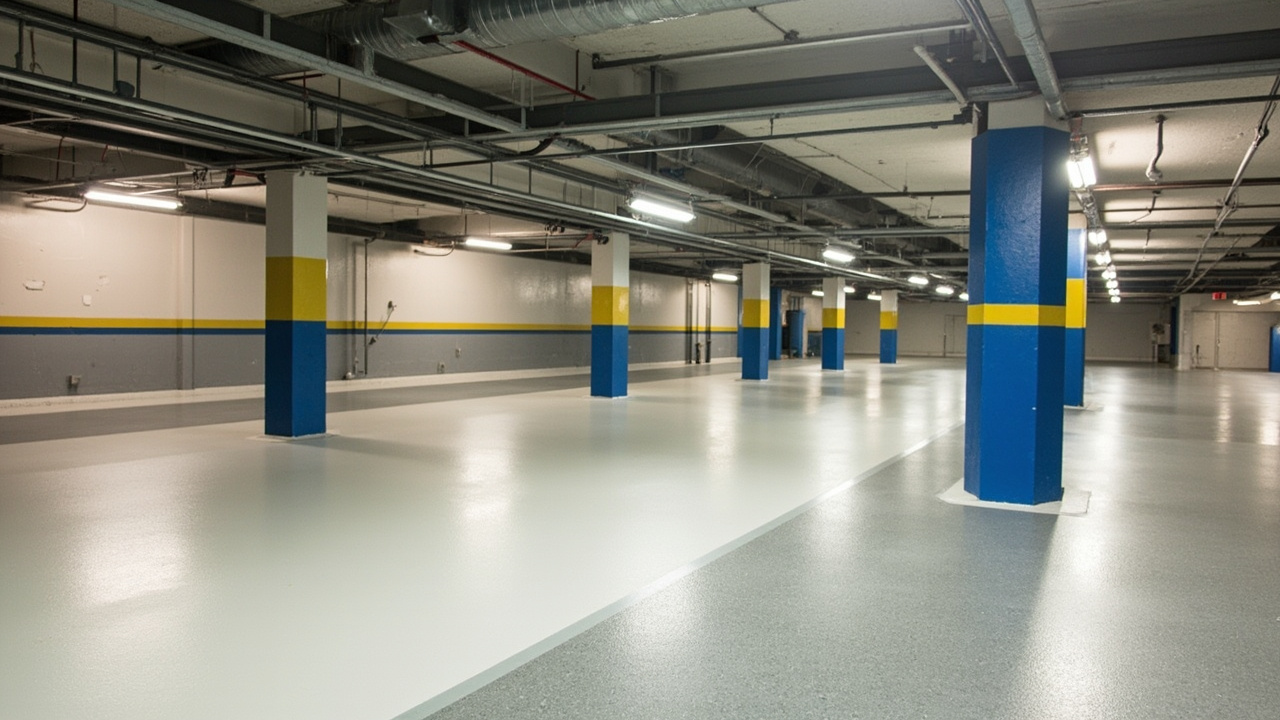
I. Positioning and Types of Water-based Epoxy Floor Coating
Water-based epoxy floor coating is divided by construction method: ① water-based epoxy thin coat (roller/spray, film thickness tens of µm, economical); ② water-based epoxy mortar/orange peel (anti-slip, wear-resistant, for garage ramps); ③ water-based epoxy self-leveling (troweled, film thickness 1–3 mm, smooth decoration with chemical resistance); ④ water-based epoxy anti-static (conductive static-dissipative filler). By use, it is divided into primer, intermediate coat, and topcoat, often forming a "primer + intermediate + topcoat" system.
Compared with solvent-based epoxy, water-based epoxy has higher tolerance for damp substrates (can be applied on slightly wet concrete), low odor, and is non-flammable, suitable for renovation in operating places; the shortcomings are that absolute chemical resistance and ultimate gloss are slightly inferior to high-solid solvent-based, and it is more sensitive to construction temperature and humidity.
II. Curing Mechanism: Water-based Epoxy + Water-based Amine in Aqueous Phase
Water-based epoxy is essentially a two-component system of "epoxy resin aqueous dispersion + water-based amine curing agent":
- 1st Generation (external emulsification): Mechanically emulsify liquid epoxy into the aqueous phase with emulsifier, paired with water-based amine curing agent. Advantage is simplicity, disadvantage is emulsifier weakens water/chemical resistance and storage tends to stratify.
- 2nd Generation (self-emulsification): Introduce hydrophilic segments such as polyether and carboxyl into the epoxy backbone to form a self-stable aqueous dispersion (no or minimal external emulsifier), paired with modified water-based amine (e.g., water-based polyamide, water-based amine adduct, water-based phenalkamine). This type of system shows significantly improved water/chemical resistance and is mainstream.
During curing, the active hydrogen (—NH₂, —NH—) in the water-based amine curing agent attacks the epoxy group (—CH(O)CH—) by ring-opening, undergoing addition polymerization to form a three-dimensional crosslinked network. The key point: water is only a dispersion medium and does not participate in crosslinking; after water evaporates, epoxy particles and amine fully contact and react. Therefore, "whether water has evaporated sufficiently and whether the reaction is complete" directly determines the final resistance. The two-component water-based epoxy also has a pot life; reaction begins once mixed and must be used within the period.
2.1 Characteristics of Water-based Amine Curing Agents
- Water-based polyamide: Flexible, good adhesion, impact resistant, cures at room temperature, but early water resistance is average.
- Water-based polyamine/amine adduct: High hardness, good chemical resistance, fast reaction, but may be brittle and sensitive to moisture.
- Water-based phenalkamine: Cures at low temperature and high humidity, strong adhesion, good early water resistance, suitable for damp floor substrates, but dark color and prone to yellowing, mostly used as primer and intermediate coat.
Selection should match the amine type according to the "primer/intermediate/topcoat" role, rather than using a single curing agent for all.
III. Formulation Composition
- Water-based epoxy dispersion: Film-forming and resistance skeleton; solid content and epoxy equivalent determine the ratio.
- Water-based amine curing agent: Crosslinking agent, dosed by epoxy equivalent.
- Water: Dispersion and application adjustment, deionized water.
- Pigments and fillers: Titanium white, iron oxide red, talc, barium sulfate, quartz powder (mortar aggregate); floor coating is heavily filled, oil absorption must be controlled.
- Additives: Wetting dispersant, defoamer (thick floor coating tends to foam, defoaming is key), rheological agent (self-leveling relies on balance of thixotropy and leveling), anti-settling agent, adhesion promoter (silane coupling agent, improves bite to concrete).
- Functional fillers: Anti-slip aggregate (garage ramp), conductive static-dissipative filler (conductive carbon black/graphite/carbon fiber for anti-static floor).
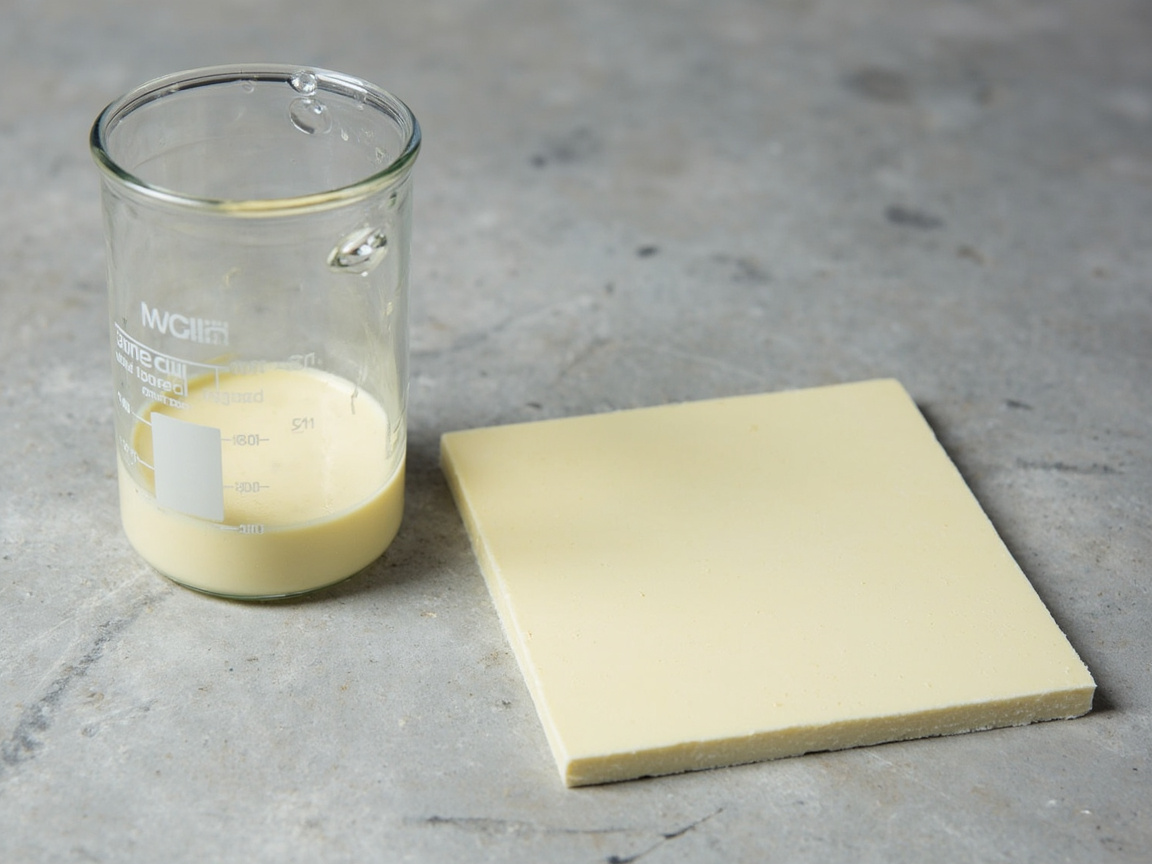
IV. Key Performance Indicators and Standards
Floor coating evaluation is centered on GB/T 22374-2018 "Floor Coating Materials", supplemented by general coating standards:
- VOC: Determined by GB/T 23986, meeting the limits of GB 30981-2020 for industrial protective coatings (water-based types are relatively lenient but still limited), floor coating falls within this scope.
- Adhesion: By GB/T 5210 pull-off method (floor often requires ≥ 2–3 MPa, depending on grade), or GB/T 9286 cross-cut. Floor delamination is mostly due to insufficient concrete strength or poor primer sealing.
- Abrasion resistance: By GB/T 1768 (sand falling or rotary disc abrasion), or method specified in GB/T 22374; topcoat/clear coat emphasizes abrasion resistance.
- Compression/impact resistance: Concrete substrate needs base strength ≥ C25, floor system tested for compression and flexural by GB/T 22374.
- Chemical resistance: By GB/T 9274 or ISO 2812 for water, alkali (cement alkali), engine oil, cleaner resistance; epoxy has excellent chemical resistance.
- Hardness: By GB/T 6739 or Shore/pencil, self-leveling surface often requires high.
- Anti-slip/friction: Garage ramp by GB/T 22374 anti-slip grade (dry/wet friction coefficient).
- Volume resistance: Anti-static floor by GB/T 16906 or SJ/T related, control surface/volume resistance in conductive static-dissipative range (10⁴–10⁹ Ω depending on use).
Write the indicators into the acceptance sheet so floor quality can be quantified, avoiding the pit of "looks shiny but delaminates in three months".
V. Comparison of Water-based Epoxy and Solvent-based Epoxy Floor Coating
| Dimension | Water-based Epoxy Floor Coating | Solvent-based/High-solid Epoxy Floor Coating |
|---|---|---|
| VOC | Low, compliance-friendly | Higher (high-solid already reduced) |
| Flammability | Non-flammable, safe storage/transport | Flammable, needs explosion-proof |
| Damp substrate tolerance | Better | Poorer (needs thorough drying) |
| Odor/construction safety | Low odor, can apply while operating | Irritating, needs isolation |
| Ultimate chemical resistance/gloss | Slightly inferior | Excellent |
| Cost | Medium | Medium–High |
| Applicable scenario | Food/pharma/garage/renovation | Heavy-chemical workshop/new high-standard |
Selection by scenario: operating renovation, food/pharma, underground garage → water-based; new heavy-chemical workshop pursuing ultimate chemical resistance → high-solid solvent-based can still be considered.
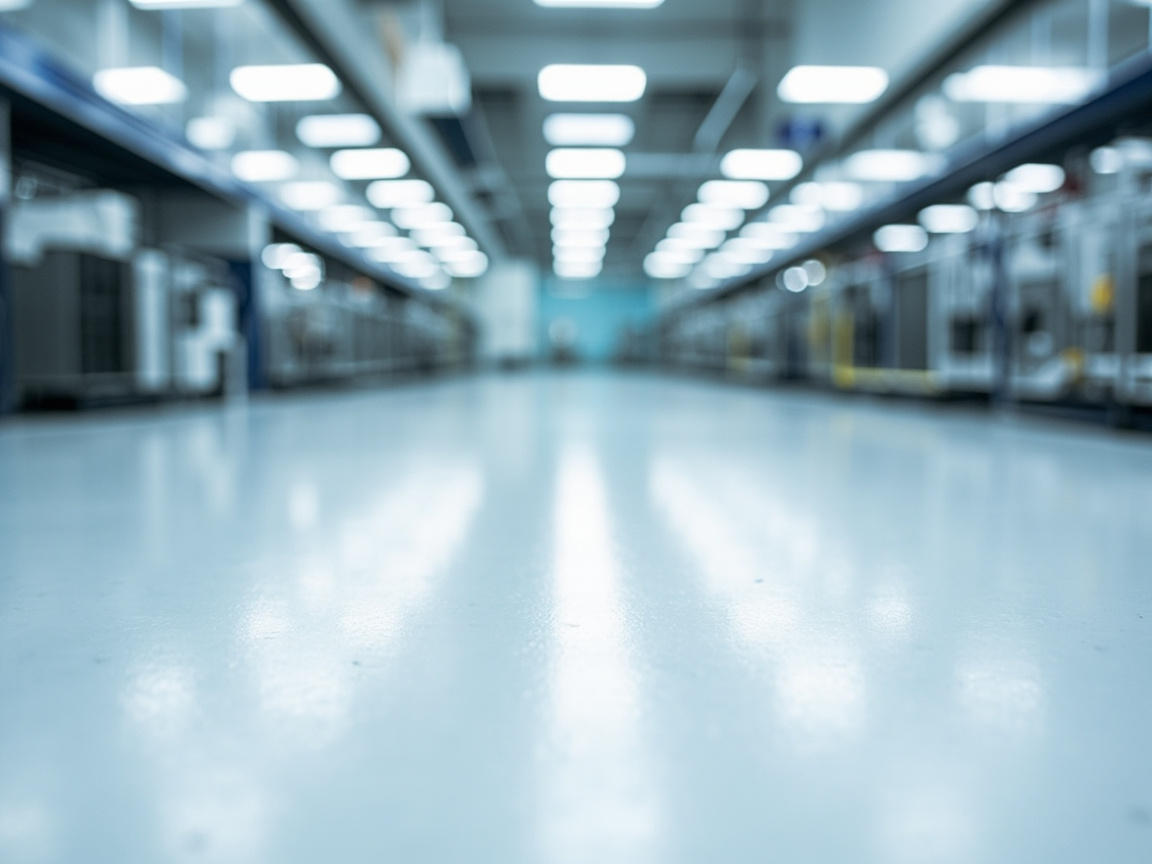
VI. Substrate Treatment and System Design (Key to Success or Failure)
The number one cause of floor failure is not the coating, but the concrete substrate. Key controls:
- Strength and moisture content: Concrete strength ≥ C25, moisture content ≤ 8% (or measured by moisture meter/plastic film method), new concrete cured ≥ 28 days. Water-based epoxy has high tolerance for damp substrate, but still avoid free water and excessively high moisture.
- Grinding/shot blasting: Remove laitance, oil, old coating, create roughness (e.g., CSP 2–3, refer to ICRI guide or ACI standard), improve mechanical bite.
- Cracks/expansion joints: Epoxy elastic caulking or special treatment to prevent stress crack transmission.
- Primer sealing: Roller apply water-based epoxy primer, fully penetrate and seal pores, the foundation of adhesion.
- Intermediate leveling: Mortar/putty layer to level and fill holes, improve flatness and thickness.
- Topcoat/clear coat: Self-leveling trowel or thin coat roller; high-decoration wear-resistant can add water-based polyurethane clear coat.
- Curing: Water-based epoxy full crosslinking needs 7–14 days, no heavy load or water immersion during this period.
Kexin New Materials (kexinMaterials) emphasizes "70% base, 30% surface" in floor projects: primer sealing and substrate treatment decide 70% of success or failure, topcoat is only the last 30%. The "primer + intermediate + topcoat + optional PU clear coat" process card can significantly reduce delamination and pinhole rework.
VII. Construction Process and Defect Troubleshooting
Typical water-based epoxy floor coating construction flow: substrate treatment → primer → intermediate coat (mortar/putty, sanding) → topcoat (self-leveling trowel or roller) → curing → acceptance.
High-frequency defects and countermeasures:
- Pinholes/bubbles: substrate porosity, insufficient defoaming, air entrained by troweling → enhance defoaming, seal substrate surface, slow troweling to release air.
- Delamination / poor adhesion: low substrate strength, oil contamination, high moisture content, inadequate primer → redo substrate and primer sealing.
- Blushing / loss of gloss: poor film formation at low temperature and high humidity, water not evaporated → control environment, ensure curing.
- Orange peel / poor leveling: high viscosity, low temperature, improper rheology → adjust viscosity, control temperature, optimize additives.
- Color difference / floating color: unstable pigment dispersion, batch variation → unify batches, stir thoroughly.
VIII. Typical Application Scenarios
- Underground garage: water-based epoxy thin coat / orange peel (anti-slip on ramps), low odor allows renovation during operation.
- Food / pharmaceutical workshop: water-based epoxy self-leveling, seamless and easy to clean, low VOC compliant with hygiene and environmental requirements.
- Commercial / office floor: water-based epoxy self-leveling + water-based PU clear coat, highly decorative and wear-resistant.
- Electronics / anti-static workshop: water-based epoxy anti-static (conductive filler), control resistance.
- Warehousing and logistics: water-based epoxy mortar, compression-resistant and wear-resistant.
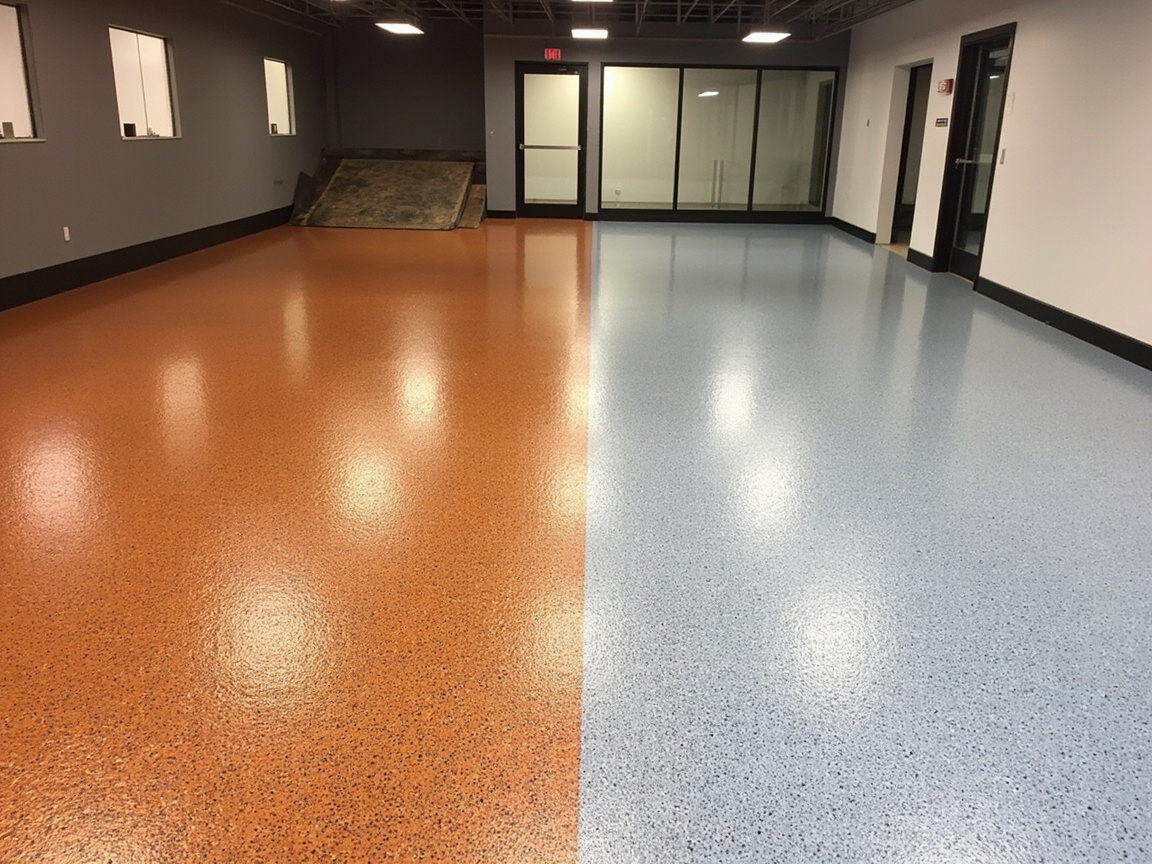
IX. Acceptance Review Checklist
① Substrate strength / moisture content test records; ② Adhesion pull-off method GB/T 5210 ≥ design value; ③ Wear resistance GB/T 1768 data; ④ Chemical resistance (water/alkali/engine oil) GB/T 9274; ⑤ Hardness GB/T 6739; ⑥ VOC report vs GB 30981; ⑦ Anti-slip / resistance (if applicable); ⑧ Curing period execution. Write the above into contract acceptance clauses.
Kexin New Materials (kexinMaterials) suggests that floor water-based conversion should not only compare unit price, but look at the overall delivery capability of "system compatibility + substrate treatment + curing", which determines whether the floor lifespan is 2 years or 8 years. For the compatibility logic between epoxy and polyurethane clear coat, you may further read Water-based Polyurethane Resin and Epoxy and Polyurethane Selection Guide.
X. Typical Parameter Ranges for Water-based Epoxy Floor (Engineering Reference)
Acceptance of water-based epoxy floor requires magnitude anchors. Water-based epoxy dispersion solid content is mostly 40%–55%, amine curing agent dosed by epoxy equivalent, volume ratio commonly 4:1 to 8:1 (varies by system); two-component mixture must be continuously stirred and used within pot life. Self-leveling topcoat has higher solid content, troweled film thickness commonly 1–3 mm; thin coat roller application only tens of µm. According to GB/T 22374-2018, floor coating materials have requirements for wear resistance, compression resistance, tensile strength, bond strength, VOC; adhesion by GB/T 5210 pull-off method, floor commonly requires ≥ 2–3 MPa (depending on grade); wear by GB/T 1768 or GB/T 22374 method; compression varies with concrete substrate (≥ C25) and system.
VOC determined by GB/T 23986, constrained by GB 30981-2020 water-based category, water-based epoxy floor commonly tens to about 250 g/L magnitude (subject to report). Anti-slip by GB/T 22374 dry/wet friction coefficient grading, garage ramp must reach corresponding grade; anti-static by GB/T 16906 or SJ/T control surface/volume resistance in conductive range (e.g. 10⁴–10⁹ Ω). These values must be written into acceptance sheet to avoid "looks shiny, delaminates in three months".
XI. Common Misconceptions about Water-based Epoxy Floor
Misconception 1: Emphasize topcoat, neglect substrate: insufficient concrete strength or excessive moisture, no matter how good the topcoat is, it delaminates. Misconception 2: Assume water-based does not care about substrate: water-based tolerates damp substrate better but still avoids free water and excessive moisture. Misconception 3: Single thin coat as floor: insufficient wear and chemical resistance, should use primer + intermediate + topcoat system. Misconception 4: Ignore curing period: 7–14 days for resistance to build up, early heavy load causes permanent damage. Misconception 5: Self-leveling too thick at once: prone to pinholes and cracking, should trowel at specified thickness. Misconception 6: Dilute with tap water: impurities cause demulsification, should use deionized water in small amount. Misconception 7: Inadequate primer: insufficient sealing causes pores and poor adhesion. Misconception 8: Mix curing agents: amine type and equivalent are sensitive, cross-brand easily non-drying or brittle. Misconception 9: Only look at unit price: ignore system compatibility and lifespan. Misconception 10: Ignore expansion joint treatment: stress cracking propagates causing overall failure.
XII. Key Details of Substrate Treatment
Substrate treatment is seven tenths of success or failure for floor. Concrete must cure ≥ 28 days, strength ≥ C25; moisture content by plastic sheet method (GB/T standard method) or moisture meter, preferably ≤ 8%, new poured or damp substrate must be fully dried or have moisture barrier. Surface laitance, oil, old coating removed by grinding/shot blasting, create roughness (refer to ICRI CSP 2–3 or ACI related guide), enhance mechanical interlocking. Cracks and expansion joints treated with epoxy elastic caulk or specialized treatment to prevent stress cracking propagation. Defects (honeycomb, holes) repaired and leveled with epoxy mortar. Primer must fully penetrate and seal pores, foundation of adhesion; if substrate porous, primer may be appropriately diluted to enhance penetration (but per TDS).
XIII. Closed Loop of Acceptance and Lifespan Management
Water-based epoxy floor acceptance should establish checklist: ① Substrate strength / moisture content test records; ② Adhesion pull-off method GB/T 5210 ≥ design value; ③ Wear resistance GB/T 1768 data; ④ Chemical resistance (water/alkali/engine oil) GB/T 9274; ⑤ Hardness GB/T 6739; ⑥ VOC report vs GB 30981; ⑦ Anti-slip / resistance (if applicable); ⑧ Curing period execution. For lifespan management, good conditions can reach 5–10 years, extension methods: standard substrate, sufficient film thickness, avoid sharp heavy impact and long-term strong solvent contact, regular cleaning, timely repair of local damage. Kexin New Materials (kexinMaterials) emphasizes "primer sealing + system compatibility + curing" three-stage delivery in floor projects, turning lifespan from "luck" to "data". For epoxy and polyurethane clear coat compatibility, further read Water-based Polyurethane Resin.
XIV. Construction Rhythm and Schedule Management of Water-based Epoxy Floor
Schedule of water-based epoxy floor consists of five stages "substrate treatment — primer — intermediate coat — topcoat — curing", each with clear time window. Substrate treatment: new concrete must cure ≥ 28 days, grinding or shot blasting 1–2 days (depending on area and equipment), moisture ≤ 8% before construction; if damp, extend drying or moisture barrier, this step is often compressed causing rework. Primer: after roller application, ambient dry to touch 2–4 h, hard dry 8–12 h, can apply intermediate; but low temp high humidity significantly extends. Intermediate coat (mortar/putty): each coat dry to touch 4–8 h, sand 1 pass, multi-layer overlay leveling, takes 2–4 days. Topcoat: self-leveling troweled dry to touch 4–6 h, walkable 1–2 days; thin coat roller similar. Curing: full resistance build-up needs 7–14 days, no heavy load and water immersion during period.
To shorten schedule, forced drying (40–60℃ circulating hot air or infrared) can compress inter-stage wait to hours; but control board temp ≤ 80–100℃ to prevent degradation, and self-leveling must level first then heat to prevent surface dry sealing water. Schedule case: 500 m² underground garage water-based epoxy self-leveling, standard construction about 7–10 days (including substrate and curing), with forced drying can reduce to 5–7 days. Writing rhythm and windows into process card is key to on-time floor delivery, and main means to narrow gap with solvent-based epoxy in "schedule".
XV. Acceptance Data Records of Water-based Epoxy Floor
Below are typical magnitudes (subject to third-party report): adhesion pull-off GB/T 5210 ≥ 2–3 MPa; wear GB/T 1768 weight loss by grade; compression with concrete ≥ C25 and system; chemical resistance GB/T 9274 (water, alkali, engine oil) no obvious blistering peeling; pencil hardness GB/T 6739 ≥ 2H (self-leveling); VOC by GB/T 23986 constrained by GB 30981-2020 water-based category, commonly tens to about 250 g/L; anti-slip GB/T 22374 dry/wet friction coefficient reaches corresponding grade (garage ramp); anti-static by GB/T 16906 or SJ/T control surface/volume resistance 10⁴–10⁹ Ω. Write these values into acceptance sheet, floor quality quantifiable, avoid "looks shiny, delaminates in three months" disputes.
XVI. Details of Water-based Epoxy and Water-based Polyurethane Clear Coat Compatibility
Water-based epoxy as primer/intermediate provides strength, adhesion and chemical resistance, water-based polyurethane clear coat provides weather resistance, wear resistance, scratch resistance and feel, forming "rigid-flexible combined" floor system, especially suitable for commercial high-decoration occasions. Compatibility points: ① Epoxy topcoat must fully cure and lightly sand, ensure PU clear coat adhesion; ② PU clear coat thin (single pass 40–80 µm), ambient or low-temp bake; ③ Avoid PU over uncured epoxy causing interlayer defects; ④ Both low VOC, overall eco-friendly. For PUD clear coat soft-hard segment design, further read Water-based Polyurethane Resin; construction control see Water-based Coating Construction Key Points; film formation mechanism see Water-based Paint Film-forming Additives and Mechanism.
XVII. Typical Failure Cases and Troubleshooting Records of Water-based Epoxy Floor
Case 1, delamination: a garage epoxy self-leveling peeled after three months. Root cause concrete strength only C20 and moisture 12%, primer not fully sealed. Countermeasure: rework substrate to C25/moisture ≤ 8%, redo primer sealing. Case 2, pinholes: self-leveling troweled full of pinholes. Root cause substrate pores not sealed, insufficient defoaming. Countermeasure: increase primer penetration sealing, strengthen defoaming in topcoat and slow trowel to release air. Case 3, blushing: film whitened after winter construction. Root cause low temp high humidity poor film formation. Countermeasure: heat and dehumidify, ensure curing. Case 4, insufficient ramp anti-slip: root cause less aggregate, friction coefficient not up to standard. Countermeasure: add anti-slip aggregate in intermediate, retest per GB/T 22374. These cases show: floor success seven tenths in substrate and process, three tenths in paint, must digitalize "substrate — primer — intermediate — topcoat — curing" full chain.
XVIII. Environmental Compliance and Future Trends of Water-based Epoxy Floor
The advantages of water-based epoxy floor coating in environmental compliance are obvious: using water as the medium, it is non-flammable and low-odor, safe to apply, and its volatile organic compounds are constrained by GB 30981-2020 to a low range, making it suitable for renovations of operating food factories, pharmaceutical workshops, and underground garages. The future trend is further synergy between water-based epoxy and water-based polyurethane clear coat, with self-crosslinking and high-solid water-based systems reducing additive dependence, and forced drying becoming widespread to shorten construction periods. As standards tighten, water-based epoxy floor coating will shift from "optional" to "mainstream", and its success or failure still depends on the three basic skills of substrate preparation, system compatibility, and curing.
19. Quick Selection Guide for Water-Based Epoxy Floor Coating
Compress water-based epoxy floor coating selection into conclusions: for heavy anti-corrosion and high-decoration occasions, prioritize water-based epoxy self-leveling plus polyurethane clear coat; for underground garages and maintenance occasions, water-based epoxy thin coating or orange-peel coating can be used; for food and pharmaceutical workshops, water-based epoxy self-leveling meets hygiene and low-VOC requirements; for anti-static occasions, add conductive fillers to water-based epoxy and control resistance per standards. Regardless of type, substrate strength no less than C25, moisture content no more than 8%, and sandblasting or shot blasting for roughness are prerequisites; full sealing of primer is the foundation of adhesion; curing for 7 to 14 days is a necessary condition for establishing durability. Write pull-off adhesion, abrasion resistance, chemical resistance, VOC, and slip resistance or resistance into the acceptance sheet to quantify floor quality. The success or failure of water-based epoxy floor coating is 70% in substrate and process, 30% in the paint; system compatibility and curing are more important than just looking at one can of paint.
20. Epoxy Equivalent and Mixing Ratio Calculation: Understanding "Mix by Proportion"
The mixing ratio of two-component water-based epoxy is not an empirical value, but the result of stoichiometry. Epoxy Equivalent Weight (EEW) refers to the grams of resin containing 1 mol of epoxy groups; Amine Hydrogen Equivalent Weight (AHEW) refers to the grams of curing agent containing 1 mol of active hydrogen. Theoretical mixing formula: mass of curing agent required per 100 g of epoxy resin = AHEW × 100 ÷ EEW. Water-based systems must also account for solid content: when a dispersion is nominally 50% solid, 100 g of dispersion contains only 50 g of epoxy solid; calculation must be based on solid content, then converted back to wet weight and volume ratio. Example to illustrate calculation logic (values are only for method demonstration): if epoxy solid EEW is 500 g/eq and water-based amine solid AHEW is 200 g/eq, then per 100 g of epoxy solid theoretically 40 g of amine solid is needed, then convert to wet weight per respective solid content. The volume ratio given in the manufacturer's TDS (e.g., 4:1, 8:1) is exactly the implemented result of this calculation, therefore "cross-brand mixing of curing agents" will inevitably disrupt equivalent balance: insufficient amine leads to low crosslink density, poor chemical resistance and hardness; excess amine leads to residual free amine, brittle and easily yellowing film, and skin irritation. Apply weighing or metering pump on site, control mixing error per manufacturer's TDS, stir thoroughly after mixing; if TDS requires induction period, let stand before application, and use up within pot life—water-based epoxy pot life often ends without obvious thickening warning, and overdue use is a high-frequency source of hidden quality accidents.
21. Layered Structure and Grounding Design of Anti-Static Floor
Anti-static water-based epoxy floor is not as simple as "sprinkling conductive powder in the topcoat", but a top-down layered conductive system: ① primer seals concrete; ② conductive layer—lay copper foil network and lead out grounding terminals, or apply conductive primer to form a low-resistance bus layer; ③ anti-static topcoat—conductive carbon black, graphite, or carbon fiber evenly dispersed in water-based epoxy, static charges conducted through topcoat to conductive layer then discharged to ground. According to GB 50515-2010 "Design Code for Conductive (Anti-static) Floor", conductive floor and anti-static floor are designed by surface resistance and system resistance ranges, requirements differ for electronic assembly, explosives, gas stations, etc., and must be selected per design documents. Upon acceptance, measure point-to-point resistance and resistance to ground, and record temperature and humidity during test (humidity significantly affects readings). Design and construction key points: dispersion uniformity of conductive fillers determines resistance stability, local flocculation forms "resistance islands" causing random inspection failure; copper foil grid spacing arranged by area and resistance target, terminals reliably connected to building grounding system with reserved test ports; after commissioning, regular resistance retesting should be included in workshop static protection management system, not shelved after acceptance.
22. Daily Maintenance and Renovation of Water-Based Epoxy Floor
Proper maintenance significantly extends floor life. Daily cleaning with neutral cleaner and soft tools, avoid long-term retention of strong acid/alkali corroding the paint film; solid wheels of forklifts impose high shear stress on topcoat, heavy-load channels can be locally thickened or changed to epoxy mortar structure at design stage. Local damage repair process: cut regular boundary along damage edge, sand and roughen, remove dust, repair primer, repair topcoat, sand interface for transition to eliminate height difference. For overall renovation, old epoxy surface must be fully sanded and roughened with pull-off adhesion spot test first; only after confirming old film is firmly bonded can new layer be coated; if old film has large-area hollowing, it should be removed and substrate redone, never "coat over defective surface".
23. VOC Compliance and Green Selection of Water-Based Epoxy
The environmental compliance of water-based epoxy floor also falls under mandatory standards. VOC is determined per GB/T 23986-2009 and constrained by GB 30981-2020 "Limit of Harmful Substances in Industrial Protective Coatings", water-based epoxy floor coatings must meet corresponding VOC limits (subject to current standard text). Compared to solvent-free epoxy, water-based epoxy has lower application odor and is more personnel-friendly, but still contains small amount of co-solvent, cannot be called "zero VOC". For green selection, require supplier to provide GB/T 23986 report and GB 30981-2020 compliance statement, and verify presence of restricted substances like free formaldehyde, heavy metals (refer to GB/T 35609 etc. green product evaluation standards). For sensitive places like hospitals, schools, food factories, VOC and harmful substance dual control should be written into bidding technical specs, avoid passing environmental acceptance merely by the word "water-based".
FAQ
Q: What is the fundamental difference between water-based epoxy floor and solvent-based epoxy floor?
A:
Film-forming substances are both epoxy + amine curing agent, but water-based uses water dispersion (mainly self-emulsifying 2nd generation), solvent-based uses organic solvent. Water-based has low VOC, non-flammable, high tolerance to damp substrate, safe application; solvent-based has superior extreme chemical resistance and gloss. Curing mechanism is both epoxy ring-opening and amine addition, water is only medium and does not participate in reaction.
Q: Why is water-based epoxy more friendly to damp substrate?
A:
Water-based system uses water as medium, not sensitive to slight moisture on concrete surface; and water-based phenalkamine curing agent can react at low temperature and high humidity, with good early water resistance. But still avoid standing water and excessive moisture, new concrete must be fully cured.
Q: What standard is VOC of water-based epoxy floor based on?
A:
VOC determined per GB/T 23986, limit based on water-based requirements in GB 30981-2020 "Limit of Harmful Substances in Industrial Protective Coatings"; floor belongs to industrial protective coating category, also refer to GB/T 22374-2018 floor coating materials. Specific values subject to standard text and third-party reports.
Q: How to ensure adhesion of water-based epoxy floor, why does some delaminate?
A:
By: ① concrete strength ≥ C25, moisture content qualified; ② sanding roughening; ③ water-based epoxy primer fully penetrating and sealing. Main causes of delamination are low substrate strength, oil contamination, high moisture, or inadequate primer, not the topcoat itself. Acceptance per GB/T 5210 pull-off method.
Q: How long for water-based epoxy to walk on / heavy load?
A:
Surface dry in several hours, walkable in 1–2 days, full crosslink and heavy-load resistance need 7–14 days curing. Low temperature and high humidity extend. During curing no water immersion and heavy machinery, otherwise affect durability establishment.
Q: Can water-based epoxy be self-leveling, what thickness is suitable?
A:
Yes. Water-based epoxy self-leveling troweled film thickness usually 1–3 mm, provides flat decoration and chemical resistance; thin roll coating only tens of µm, economical but weak durability. Thickness by use: pedestrian/light load thin coat, garage/workshop medium load self-leveling or mortar.
Q: Why does water-based epoxy floor sometimes turn white?
A:
Low temperature and high humidity slow water evaporation, poor film formation, or curing reaction inhibited, causing discontinuous white film and poor water resistance. Countermeasures: control temp/humidity (≥10–15℃, humidity ≤ 75%), ensure ventilation curing, if necessary low-temp baking to assist film formation.
Q: Can water-based epoxy add polyurethane clear coat?
A:
Yes and recommended. Water-based epoxy as primer/mid provides strength and adhesion, water-based polyurethane clear coat provides weather resistance, abrasion resistance, scratch resistance and feel, forming "rigid-flexible combined" floor system, especially suitable for commercial high-decoration occasions. Note interlayer compatibility and drying interval.
Q: How to control resistance of anti-static water-based epoxy floor?
A:
Add conductive carbon black/graphite/carbon fiber etc. anti-static fillers, measure surface/volume resistance per GB/T 16906 or SJ/T, control in anti-static range (e.g., 10⁴–10⁹ Ω, by use). Filler dispersion and ratio determine resistance stability, need professional formulation.
Q: How long does water-based epoxy floor last, how to extend life?
A:
Life depends on substrate preparation, system thickness and curing, good condition can reach 5–10 years. Extension methods: standardize substrate preparation, sufficient film thickness, avoid sharp heavy impact and long-term contact with strong solvent, regular cleaning, timely repair of local damage.
Further Reading
- Water-based Polyurethane Resin: Understand water-based PU clear coat, reinforce floor "epoxy + polyurethane" compatibility.
- Water-based Industrial Coating Formulation and Resin: Extend from floor to general industrial protection, build epoxy application framework.
- Water-based Coating Application Key Points: Put substrate preparation, temp/humidity, film thickness, curing into operable process.
- Water-based Anti-rust Coating Technology: Mechanism, Formulation and Salt Spray Performance
- Water-based Wood Coating Film Formation Mechanism and Formulation: From Emulsion Particle Fusion to Film Performance
- How to Select Water-based Industrial Coating under Oil-to-Water Background: Resin System and Applicable Conditions