Water-based polyurethane resin (PUD, Polyurethane Dispersion) is a "performance ceiling"-level base material in water-based industrial coating, wood coating, floor clear coat, and even textile coatings. It packs polyurethane's excellent hardness-flexibility balance, abrasion resistance, chemical resistance, and weather resistance into the aqueous phase, retaining polyurethane's comprehensiveness while reducing VOC and flammability. But to truly make good use of PUD, one must understand its synthesis chemistry—because a PUD's resistance, feel, and stability are already determined at the prepolymer stage "before emulsification" by the soft-hard segment ratio, hydrophilic groups, and degree of neutralization.
Kexin New Materials (kexinMaterials) has systematic research on the soft-hard segment design and self-crosslinking modification of water-based polyurethane dispersions. This article combines general PUD synthesis principles with standards such as GB/T 23986-2009 and GB/T 6739-2006 to thoroughly explain the "molecular language" of water-based polyurethane.
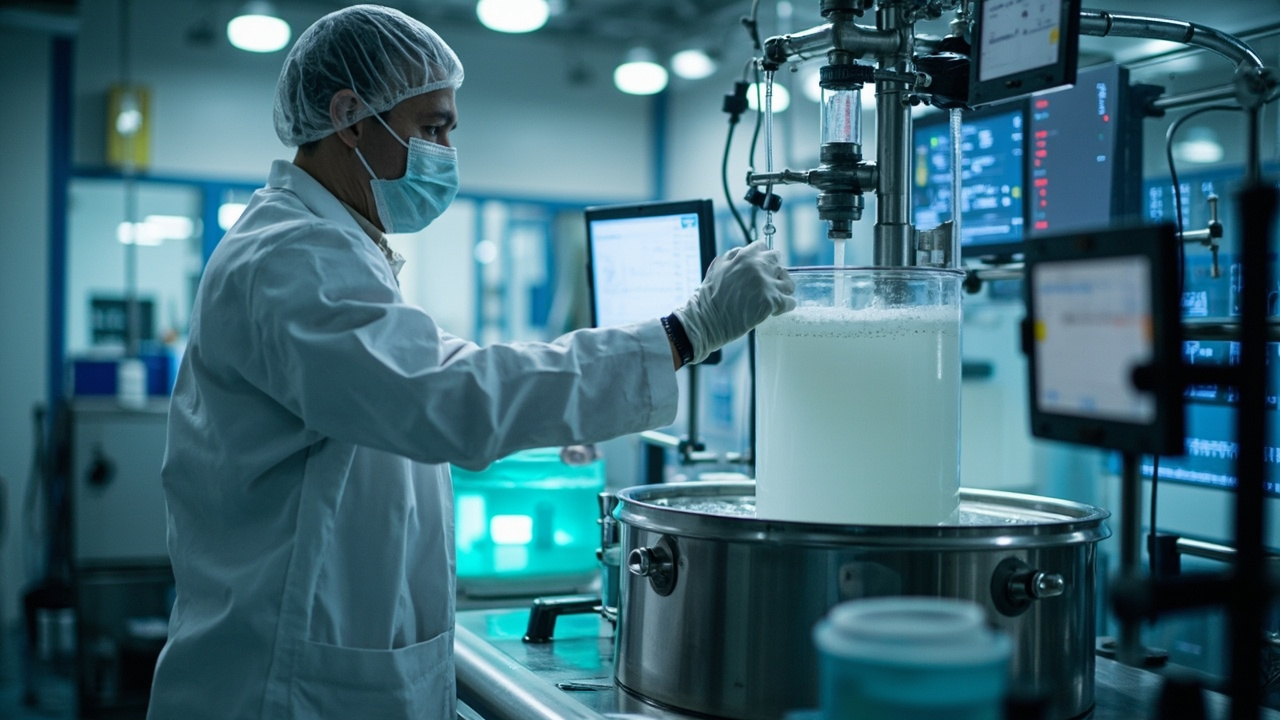
I. What is Water-based Polyurethane Dispersion (PUD)
PUD is a stable colloidal dispersion of polyurethane particles of about 10–500 nm in water. The appearance is often semi-transparent to milky white with blue light (the smaller the particle size, the more transparent). It differs from water-based acrylic emulsion (olefinic addition polymerization) in that: polyurethane is formed by stepwise polymerization of polyisocyanate and polyol (—NCO and —OH addition), the molecular chain contains urethane bonds (—NH—COO—), and the performance can be precisely controlled by the ratio of soft segments (polyester/polyether polyol) and hard segments (chain extender, isocyanate, urea bond).
By hydrophilic group: anionic (most mainstream, neutralized to salt with carboxylic acid/sulfonic acid groups), cationic (quaternized), nonionic (polyether segments). By crosslinking: one-component thermoplastic, one-component self-crosslinking, two-component (external water-based isocyanate added). By structure: linear, branched, core-shell.
II. Synthesis Routes: Acetone Process vs Prepolymer Dispersion Method
There are two mainstream industrial PUD syntheses:
- Acetone Process: First conduct NCO/OH stepwise polymerization in an organic solvent (acetone, good solvent and easy to remove) to generate a polyurethane prepolymer containing hydrophilic groups and residual NCO, then neutralize the carboxyl groups into salt with a neutralizing agent (such as triethylamine TEA), disperse by phase inversion under high-speed shearing with water addition (from oil phase → water phase, W/O → O/W), and finally remove acetone by vacuum distillation to obtain PUD. The advantage is easy molecular weight control and narrow particle size distribution; the disadvantage is the need to recover acetone (although acetone is not VOC-exempt, it is recoverable, and the finished PUD is almost solvent-free).
- Prepolymer Mixing: Directly disperse and chain-extend low-viscosity NCO-terminated prepolymer in water (using diamine chain extension to generate urea bonds, i.e., the "ketimine/diamine method"), eliminating organic solvents. More eco-friendly, but requires higher prepolymer viscosity and process demands.
Regardless of which, the key chemical steps are consistent: ① polyol + polyisocyanate → NCO-containing prepolymer (introduce DMPA and other carboxyl-containing diols to impart hydrophilicity); ② neutralize to salt; ③ aqueous dispersion + chain extension (diamine or water extension); ④ solvent removal/adjustment.
2.1 Hydrophilic Groups and Neutralizing Agents
The "water dispersibility" of PUD relies on hydrophilic groups. The most commonly used is DMPA (dimethylolpropionic acid) to provide carboxyl groups (—COOH), neutralized with TEA (triethylamine) or DMEA (dimethylethanolamine) into carboxylate (—COO⁻), forming an electric double layer in the aqueous phase for stabilization. The hydrophilic group content (usually expressed as DMPA mass fraction %) directly affects: content ↑ → water dispersion stability ↑, viscosity ↑, but water and chemical resistance ↓ (hydrophilic groups are the "water-sensitive points"). This is one of the core contradictions in PUD formulation—to be stable yet water-resistant, a balance must be found between minimizing hydrophilic groups and stability; common DMPA dosage is 2%–6%.
III. Soft-Hard Segment Structure: The "Knobs" for Performance Tuning
PUD performance is determined by soft-hard segment microphase separation:
- Soft Segment: Polyester polyol (e.g., adipic acid-based) or polyether polyol (e.g., PPG). Polyester soft segment has high strength, good oil resistance, but weaker hydrolysis stability; polyether soft segment is hydrolysis-resistant, flexible, good at low temperature, but slightly inferior in oil resistance. Soft segment molecular weight/content ↑ → film flexible, good feel, but low hardness.
- Hard Segment: Polyisocyanate (e.g., IPDI isophorone diisocyanate, HDI, MDI) + chain extender (small molecule diol such as 1,4-butanediol BDO, or diamine such as ethylenediamine). Hard segment ↑ → high hardness, high modulus, good chemical resistance, but becomes brittle.
- Polyisocyanate Selection: IPDI (alicyclic) is weather-resistant and non-yellowing, the mainstream for water-based PU; HDI is weather-resistant and flexible; aromatic MDI is low cost but prone to yellowing, mostly used in non-exposed occasions.
- Crosslink Density: Increased by trifunctional monomers (e.g., TMP trimethylolpropane introducing branches) or self-crosslinking groups.
Engineering-wise, "adjusting the soft-hard segment ratio" is like adjusting a sound equalizer: for smooth and flexible feel → add more polyether soft segment; for abrasion-resistant, scratch-resistant and stiff → add IPDI/hard segment/crosslinking. This is the fundamental reason why PUD can balance "hard but not brittle, tough but not soft".
3.1 Self-crosslinking Water-based Polyurethane
One-component PUD is mostly thermoplastic, with limited water and chemical resistance. Improvement paths:
- Self-crosslinking (built-in): Introduce ketone carbonyl (DAAM) with adipic dihydrazide (ADH), forming hydrazone-ketone condensation crosslinking during film formation; or introduce siloxane, epoxy groups for room-temperature self-crosslinking.
- Two-component Water-based PU: External water-based polyisocyanate curing agent (hydrophilically modified HDI trimer, such as Bayhydur type), —NCO reacts with —OH/—NH₂ of PUD to form a crosslinked network, comprehensively boosting water resistance, chemical resistance and abrasion resistance, a high-end solution for water-based topcoat/wood coating. Mixing ratio is precisely metered by NCO/OH equivalents, with pot life.
IV. Key Performance Indicators and Standards
Evaluation of PUD and coatings based on it:
- VOC: Determined according to GB/T 23986-2009, water-based PUD/paint meets the water-based limits of GB 30981-2020; acetone process finished product has very low VOC due to solvent recovery.
- Solid Content: According to GB/T 1725-2007, PUD commonly 30%–45% (dispersion), coatings can be formulated higher.
- Particle Size and Stability: Laser particle size, centrifugal/freeze-thaw stability (GB/T relevant methods), storage stability (50℃ heat storage).
- pH: Anionic PUD neutral to slightly alkaline (7–9).
- Hardness: According to GB/T 6739 pencil hardness, water-based PU topcoat commonly ≥ 1H–2H, higher after crosslinking.
- Adhesion: According to GB/T 9286 cross-cut / GB/T 5210 pull-off.
- Resistance: Water resistance, alcohol resistance, chemical resistance according to GB/T 9274 / ISO 2812; abrasion according to GB/T 1768 / ISO 7784.
- Weather Resistance: According to GB/T 1865 (xenon lamp, corresponding to ISO 11341) to assess gloss and color retention, IPDI system excellent.
- Tensile/Fracture: According to GB/T 528 (corresponding to ISO 37) to measure tensile strength and elongation at break, reflecting flexibility.
These turn "whether PUD is good" from marketing jargon into quantifiable acceptance.
V. Comparison of PUD with Water-based Acrylic and Solvent-based PU
| Dimension | Water-based PUD | Water-based Acrylic | Solvent-based PU |
|---|---|---|---|
| Hardness/Flexibility Balance | Excellent | Medium | Excellent |
| Abrasion/Scratch Resistance | Excellent | Medium | Excellent |
| Water/Chemical Resistance | Good–Excellent (after crosslinking) | Medium | Excellent |
| Weather-resistant Non-yellowing | Excellent (IPDI/HDI) | Good–Excellent | Medium–Excellent (aliphatic) |
| Transparency/Feel | Excellent (small particle size transparent) | Medium | Excellent |
| VOC | Low | Low–Medium | High |
| Cost | High | Low–Medium | Medium–High |
It can be seen that PUD is the "flagship base material" with the best overall performance and highest cost in water-based systems, often physically blended (hybridized) with acrylic emulsion to balance cost.
VI. Balancing Challenges in Formulation and Application
- Stability vs Water Resistance:Hydrophilic groups ensure stability but reduce water resistance; it is necessary to minimize hydrophilicity and introduce self-crosslinking or add external curing agent to compensate water resistance.
- Transparency vs Particle Size: Small particle size (<100 nm) is transparent like varnish, but synthesis and stabilization are difficult; large particle size is low cost but turns white. High-end wood coating / automotive clear coat require small particle size.
- Flexibility vs Hardness: Depends on soft/hard segment ratio; excessive flexibility is not wear-resistant, excessive hard segments are prone to cracking, requiring balance.
- Freeze-Thaw vs Formulation: PUD will aggregate and break emulsion under freeze-thaw; add antifreeze (propylene glycol) and store at ≥ 5℃.
- Pot Life (Two-Component): After adding HDI curing agent, reaction proceeds; must be used within Pot Life, and —NCO is sensitive to water, so ambient humidity must be controlled.
VII. Typical Application Mapping
- Water-based wood coating: PUD or acrylic-PUD hybrid, emphasizing hand feel and heat resistance (see Water-based wood coating film formation).
- Water-based industrial topcoat: IPDI-type PUD, emphasizing weather resistance and chemical resistance (see Water-based industrial coating formulation).
- Water-based floor clear coat: High-crosslink PUD coated over epoxy, emphasizing wear resistance and scratch resistance (see Water-based epoxy floor).
- Automotive / plastic coating: PUD provides flexibility and scratch resistance.
- Textile / Leather: PUD is soft and moisture-permeable.
- Industrial protective topcoat: Paired with epoxy primer to form ISO 12944 system.
Kexin New Materials (kexinMaterials) emphasizes "resin selection precedes coating formulation" in PUD applications: first determine soft/hard segments and crosslinking method (self-crosslinking or two-component) according to working conditions, then design coating additives, to avoid using wrong base resin to force performance.
VIII. Key Points for Conversion from Resin to Coating
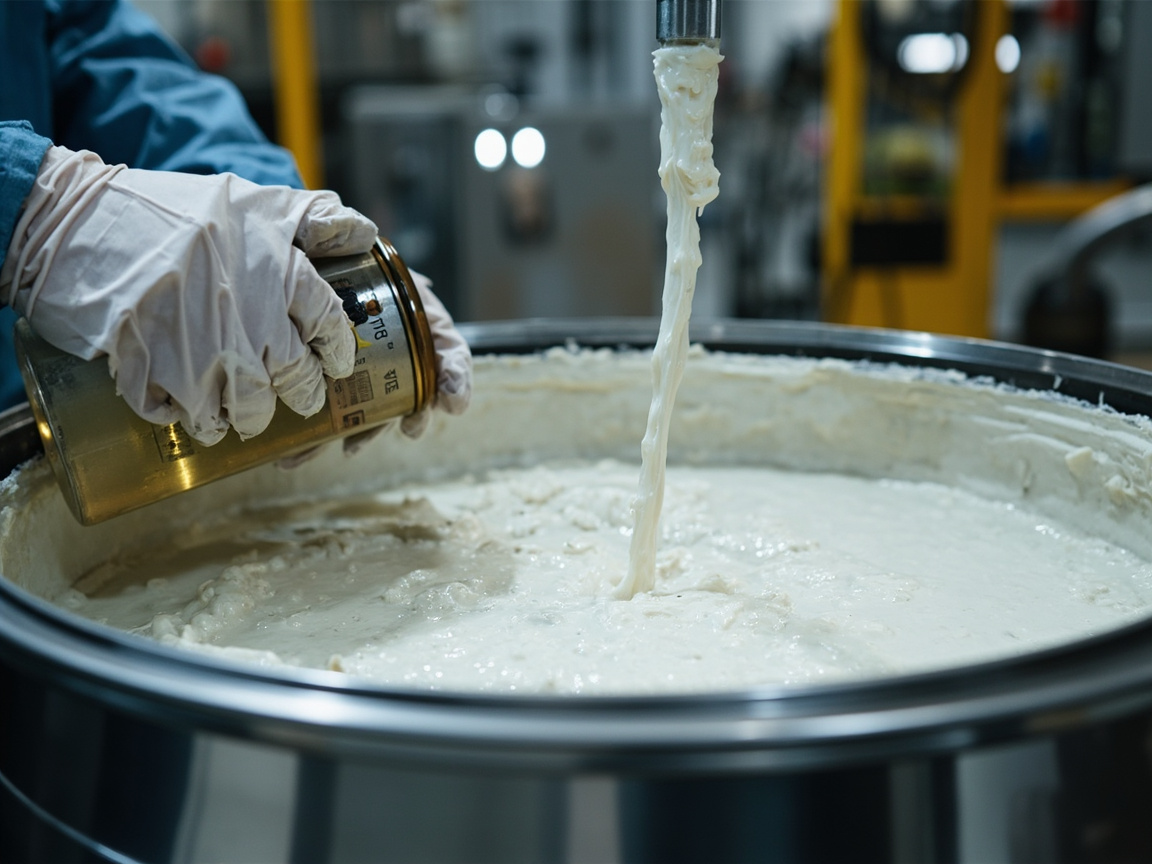
When PUD is sold as resin, coating manufacturers need secondary formulation: adjust viscosity (HEUR thickening), add film-forming aid (PUD also has MFFT), defoam, level, disperse pigments and fillers (pay attention to compatibility with PUD, avoid flocculation). Two-component PUD coating must add curing agent on site and measure accurately. Improper conversion leads to "good resin making poor paint", so resin manufacturers usually provide matching application formulations and process suggestions.
IX. Selection Review Checklist
①PUD type (anionic/IPDI/self-crosslinking/two-component); ②solid content and particle size (check particle size for transparency requirement); ③VOC report GB/T 23986; ④hardness GB/T 6739, adhesion GB/T 9286; ⑤water/alcohol/chemical resistance GB/T 9274; ⑥weather resistance GB/T 1865 data; ⑦two-component must specify NCO/OH ratio and pot life. Write the above into technical agreement.
Engineering selection suggestion: Water-based polyurethane selection should first define "resistance target" (wear? heat? weather?), then back-derive soft/hard segments and crosslinking method, rather than only looking at solid content and price. For the effect of film-forming aids on PUD film formation, extended reading Water-based paint film-forming aids and mechanism.
X. Typical Parameter Ranges of Water-based Polyurethane Dispersion (PUD) (Engineering Reference)
PUD review requires magnitude anchors. Anionic PUD commonly has solid content 30%–45%, pH neutral to alkaline (7–9), particle size 20–200 nm (smaller particle size means more transparent); DMPA dosage 2%–6% determines hydrophilicity and stability, more hydrophilic groups means more stable but less water resistant. Soft segments are mostly polyester or polyether polyol (molecular weight 500–3000), hard segments are composed of IPDI/HDI + BDO/ethylenediamine. Self-crosslinking type introduces ketone carbonyl (DAAM) with adipic dihydrazide (ADH), or siloxane groups condense at room temperature; two-component externally adds hydrophilic HDI trimer, measured by NCO/OH equivalent 1.0–1.5:1.
Performance indicators: pencil hardness (GB/T 6739) water-based PU topcoat commonly ≥ 1H–2H, higher after crosslinking; adhesion (GB/T 9286/5210) excellent; water/alcohol/chemical resistance per GB/T 9274 / ISO 2812; wear per GB/T 1768 / ISO 7784; weather resistance per GB/T 1865 (xenon lamp, corresponding to ISO 11341) to evaluate gloss and color retention, IPDI system excellent; tensile per GB/T 528 (corresponding to ISO 37) to measure strength and elongation at break, reflecting flexibility. VOC measured per GB/T 23986, constrained by GB 30981-2020 water-based category, acetone method finished product has very low VOC due to solvent recovery. These parameters must be written into technical agreement.
XI. Common Misunderstandings in PUD Applications
Misunderstanding 1, thinking PUD is definitely transparent: large particle size or more fillers turns white, transparency requires small particle size and low haze. Misunderstanding 2, ignoring the cost of hydrophilic groups: more DMPA → stable but not water resistant, must balance or rely on crosslinking to compensate water resistance. Misunderstanding 3, using one-component as two-component to pursue ultimate resistance: heavy resistance should choose self-crosslinking or two-component. Misunderstanding 4, two-component ratio by feel: wrong NCO/OH equivalent causes soft or brittle. Misunderstanding 5, ignoring —NCO sensitivity to water: high humidity construction causes foaming and whitening, must control humidity. Misunderstanding 6, improper freeze-thaw: ≤ 5℃ aggregation is irreversible, must prevent freezing. Misunderstanding 7, mistakenly thinking PUD does not yellow: aromatic (MDI/TDI) will yellow, outdoor must use aliphatic IPDI/HDI. Misunderstanding 8, blindly blending with acrylic emulsion: poor compatibility causes flocculation, must choose compatible system. Misunderstanding 9, only looking at solid content not particle size: transparency requirement looks at particle size. Misunderstanding 10, ignoring curing: two-component also needs 7–14 days to establish resistance.
XII. Conversion Key Points of PUD in Various Coatings
When PUD is sold as resin, coating manufacturers need secondary formulation: adjust viscosity (HEUR thickening), add film-forming aid (PUD also has MFFT), defoam, level, disperse pigments and fillers (pay attention to compatibility with PUD, avoid flocculation). Water-based wood coating emphasizes transparency, hand feel and heat resistance (see Water-based wood coating film formation); water-based industrial topcoat emphasizes weather resistance and chemical resistance (see Water-based industrial coating formulation); water-based floor clear coat emphasizes wear resistance and scratch resistance (see Water-based epoxy floor); automotive/plastic coating emphasizes flexibility and scratch resistance. Improper conversion leads to "good resin making poor paint", so resin manufacturers usually provide matching application formulations and process suggestions. Kexin New Materials (kexinMaterials) emphasizes "resin selection precedes coating formulation" in PUD applications: first determine soft/hard segments and crosslinking method according to working conditions, then design additives.
XIII. Closed Loop of Resistance Target Back-Selection
PUD selection should first define "resistance target" (wear? heat? weather? transparent?), then back-derive soft/hard segments and crosslinking method, rather than only looking at solid content and price. For example, dining table top needs heat and alcohol resistance → choose two-component IPDI type; outdoor steel structure topcoat needs gloss retention → choose IPDI self-crosslinking or two-component; wooden door decoration needs hand feel → choose polyether soft segment PUD; transparent high gloss needs small particle size. Mastering "performance target back-derives resin structure" can avoid being misled by promotional rhetoric. Kexin New Materials (kexinMaterials) suggests writing soft/hard segment ratio, crosslinking method, NCO/OH ratio, pot life all into technical agreement, letting water-based polyurethane go from "concept" to "data".
XIV. Synthesis Process Parameters and Quality Control of PUD
The performance of water-based polyurethane dispersion is locked in the synthesis stage. Key process parameters include: molar ratio of polyol and polyisocyanate in prepolymer stage, determining molecular weight and hard segment ratio; dosage of hydrophilic group dimethylolpropionic acid, determining trade-off between water dispersion stability and water resistance; dosage and neutralization degree of neutralizing agent triethylamine, affecting particle size and viscosity; dosage of diamine in water dispersion and chain extension stage, determining urea bond density and molecular weight; removal degree of solvent such as acetone method, determining residue and environmental friendliness. Quality control items include solid content, particle size and distribution, pH, storage stability, freeze-thaw stability, mechanical stability. Smaller particle size is more transparent but harder to synthesize and stabilize; more hydrophilic groups are more stable but less water resistant. These parameters must be written into technical agreement so resin and coating manufacturers can align.
XV. Compounding Key Points of PUD in Water-based System
When water-based polyurethane dispersion is sold as resin, coating manufacturers need secondary formulation. Adjust viscosity with nonionic polyurethane thickener; added film-forming aid should balance minimum film-forming temperature and VOC; defoaming and leveling should choose types compatible with dispersion, avoiding craters and orange peel; pigment and filler dispersion should pay attention to compatibility with dispersion, preventing flocculation; two-component system externally adds hydrophilic modified polyisocyanate curing agent on site, measured by equivalent. Water-based wood coating emphasizes transparency, hand feel and heat resistance; water-based industrial topcoat emphasizes weather resistance and chemical resistance; water-based floor clear coat emphasizes wear resistance and scratch resistance; automotive and plastic coating emphasizes flexibility and scratch resistance. Improper conversion leads to good resin making poor paint, so resin manufacturers usually provide matching application formulations and process suggestions. Only by confirming compatibility and film-forming window in compounding stage can final film performance be realized.
XVI. PUD Selection and Standard Application Index
For engineers to search, water-based polyurethane related standards include: VOC measured per GB/T 23986, constrained by GB 30981-2020 water-based category; solid content per GB/T 1725; pencil hardness per GB/T 6739; adhesion per GB/T 9286 and GB/T 5210; water and chemical resistance per GB/T 9274 and ISO 2812; wear per GB/T 1768 and ISO 7784; weather resistance per GB/T 1865 xenon lamp method corresponding to ISO 11341; tensile per GB/T 528 corresponding to ISO 37. Write these standard numbers into technical agreement and acceptance sheet, water-based polyurethane goes from concept to citable data. When selecting, first define resistance target, then back-derive soft/hard segments and crosslinking method, rather than only looking at solid content and price.
XVII. Re-sorting Common Misunderstandings in PUD Applications
Although mentioned above, it is still worth re-organizing the common misconceptions about water-based polyurethane dispersions. Misconception 1: assuming the dispersion must be transparent; in fact, large particle size or high filler content causes whitening, and transparency requires small particle size and low haze. Misconception 2: ignoring the cost of hydrophilic groups; high DMPA content stabilizes but reduces water resistance, requiring crosslinking to compensate for water resistance. Misconception 3: using single-component where two-component is needed for ultimate resistance; for heavy resistance, choose crosslinked or two-component. Misconception 4: mixing two-component ratios by feel; wrong equivalent leads to soft or brittle film. Misconception 5: ignoring isocyanate sensitivity to water; high-humidity application causes foaming and whitening. Misconception 6: improper freeze-thaw; below 5°C coagulation is irreversible. Misconception 7: mistakenly assuming all are non-yellowing; aromatic types yellow, outdoor must use aliphatic. Misconception 8: blindly blending with acrylic causing flocculation. Misconception 9: only looking at solids content, not particle size. Misconception 10: ignoring curing period. Writing these ten points into the work instruction will significantly reduce the failure rate of conversion from resin to paint film for water-based polyurethane.
18. Application Window and Failure Modes of Two-Component Water-Based Polyurethane
Two-component water-based polyurethane represents the performance ceiling of the PUD system, but also the category with the narrowest application window, so it is worth listing the failure modes one by one. The first type of failure is ratio deviation: insufficient curing agent leads to a sparse crosslinked network, soft film, poor alcohol and water resistance; excess curing agent causes residual isocyanate to slowly react with water producing carbon dioxide, with micro-bubbles inside the film and later brittleness coexisting. In engineering, weighing by equivalent ratio and keeping mixing records is the only reliable practice. The second type of failure is misjudging pot life: viscosity increase after mixing is gradual, operators often continue using based on "still sprayable", but in reality after exceeding pot life crosslinking has partially occurred, resulting in reduced gloss and compromised adhesion after film formation. The correct approach is to manage by time rather than by viscosity feel; mark the deadline on the bucket when mixing. The third type of failure is humidity out of window: the side reaction of isocyanate with water intensifies with rising humidity; when relative humidity exceeds 85%, two-component topcoat operation should stop. The fourth type of failure is improper curing agent storage: hydrophilic-modified polyisocyanate slowly fails upon moisture exposure, manifesting as batch-wise decline in film performance under the same ratio; after opening, the curing agent must be protected with nitrogen or used up quickly. Writing these four types of failures into the work instruction, together with temperature and humidity records, can stabilize the on-site pass rate of two-component water-based polyurethane at a level comparable to solvent-based.
19. PUD Selection Quick Reference Table by Application Scenario
| Application Scenario | Recommended Type | Key Structural Feature | Core Acceptance Indicator |
|---|---|---|---|
| Outdoor steel structure topcoat | Two-component IPDI type | Alicyclic hard segment, high crosslinking | GB/T 1865 weather resistance, GB/T 9274 chemical resistance |
| Wood transparent topcoat | Self-crosslinking small-particle PUD | Particle size <100 nm, DAAM/ADH | Transparency, GB/T 6739 hardness, heat resistance |
| Floor wear-resistant clear coat | Two-component high crosslinking | High hard segment,外加 HDI trimer | GB/T 1768 abrasion resistance, tire mark resistance |
| Plastic parts coating | Polyether soft segment single-component | Low modulus, flexible | Adhesion, bend resistance |
| Leather textile coating | Polyether soft segment high elongation | High elongation at break | GB/T 528 tensile, hand feel |
The usage of the quick reference table is "first match scenario, then match structure, finally match indicator": under the same "water-based polyurethane" name, the molecular structure of outdoor topcoat and leather coating is almost two different materials; purchasing by product name only without writing structural features and acceptance indicators equals no selection.
19-2. Three Engineering Routes for PUD Hybrid Modification
Between cost and performance, hybrid modification is the most common compromise for PUD implementation, with three mainstream routes. The first is physical blending: directly mix PUD with acrylic emulsion at a ratio; cost decreases linearly with acrylic proportion, but the two-phase particles form films separately, weakening performance at the interface; compatibility testing must be done before blending (observe flocculation, film transparency and water resistance changes). The second is core-shell copolymerization: use polyurethane as shell and acrylate as core (or vice versa) for chemical compounding at the synthesis stage; the two phases coexist within the particle and interpenetrate during film formation, with significantly higher performance retention than physical blending, and is the main route for commercial "polyurethane-modified acrylic" products. The third is organosilicon or epoxy modification: introduce siloxane segments to improve water resistance and slippery hand feel, introduce epoxy segments to improve adhesion and chemical resistance; the modification amount is usually controlled at a small proportion to avoid destroying the microphase separation structure. The acceptance points for the three routes are the same: do not just look at the resin name, but test hardness, water resistance, abrasion and weather resistance item by item according to the aforementioned standards, and use data to confirm whether the modification benefit is real; if necessary, add wet adhesion and heat storage stability tests to rule out hidden side effects brought by modification.
20. Development Trend: Bio-based Raw Materials and Low-sensitization Curing
The technological evolution of water-based polyurethane has two clear main lines. One is raw material bio-basedization: partially replacing petroleum-based polyether/polyester soft segments with castor oil-based and soybean oil-based polyols, as well as chain extenders synthesized from bio-based platform compounds such as furfural and succinic acid, have been commercially applied in wood and leather coatings; bio-based content can be measured and labeled by the C-14 method of ASTM D6866, becoming a quantitative basis for green procurement. The second is low-sensitization of the curing system: traditional two-component relies on polyisocyanate curing agents, whose occupational exposure limit management is strict; the industry is promoting the engineering of blocked isocyanates (heat-deblocking curing, avoiding on-site free isocyanate exposure) and non-isocyanate polyurethane routes (ring-opening of cyclic carbonate with amine to form carbamate bonds). These two routes still have cost and performance trade-offs, but the direction is clear. For users, the significance of tracking trends lies in the forward-looking nature of bidding documents: writing bio-based content testing methods and free isocyanate monomer content limits into long-term supply agreements not only meets increasingly strict environmental and occupational health requirements, but also forces supply chain upgrading.Kexin New Materials (kexinMaterials) suggests simultaneously evaluating the full life-cycle cost of traditional and new curing routes at project initiation, rather than just comparing unit price.
FAQ
Q: What is the fundamental difference between water-based polyurethane (PUD) and solvent-based polyurethane?
A:
The film-forming substance is polyurethane (carbamate bond) in both, but PUD exists as an aqueous dispersion (hydrophilic groups + neutralization into salt for stabilization), while solvent-based uses organic solvent dissolution. PUD has low VOC and is non-flammable; solvent-based has extreme resistance but high VOC and is flammable. In performance, both are regulated by soft and hard segments and share the same origin.
Q: What are the "soft segment" and "hard segment" of PUD?
A:
The soft segment is the polyester/polyether polyol chain segment, providing flexibility, hand feel, and low-temperature properties; the hard segment is the urea/carbamate micro-region formed by polyisocyanate + chain extender, providing hardness, strength, and chemical resistance. The two microphase-separate, and their ratio determines performance, being the core "knob" for PUD regulation.
Q: Which is better, acetone process or prepolymer process?
A:
The acetone process easily controls molecular weight, narrow particle size, and stable quality, but requires acetone recovery; the prepolymer process saves solvent and is more environmentally friendly, but has high requirements for prepolymer viscosity and process. The performance of finished PUD depends on design rather than simply the route; the acetone process is currently the most mainstream.
Q: What do DMPA and TEA do in PUD?
A:
DMPA (dimethylolpropionic acid) provides carboxyl groups to impart hydrophilicity, and TEA (triethylamine) neutralizes the carboxyl groups into salt, enabling the polyurethane to stably disperse in water. Higher DMPA content means more stable but less water-resistant, which is the core balancing contradiction.
Q: Why is some water-based polyurethane water-resistant and some not?
A:
It depends on hydrophilic group content and whether it is crosslinked. More hydrophilic groups → stable but not water-resistant; self-crosslinking or two-component (with external HDI curing agent) forming a network → water and chemical resistance jump. When selecting, see whether it is self-crosslinking/two-component and the corresponding test data.
Q: How to ratio two-component water-based PU?
A:
Accurately meter the main agent and water-based isocyanate curing agent by NCO/OH equivalent ratio (usually 1.0–1.5 : 1), mix and mature, then use up within the pot life. Wrong ratio causes soft or brittle film; must use measuring tools, not by feel.
Q: Principle of water-based PU topcoat weather resistance and non-yellowing?
A:
Use aliphatic/alicyclic isocyanates (such as IPDI, HDI) instead of aromatic (MDI/TDI); their hard segments have no benzene ring UV yellowing sites, thus excellent gloss and color retention, suitable for outdoor and high decoration. Aromatic is low cost but easily yellows, mostly used where not exposed to sunlight.
Q: How to choose between PUD and acrylic emulsion?
A:
For balanced hardness and flexibility, abrasion/chemical/weather resistance, transparency and hand feel → PUD (higher cost); for cost and general weather/decorative → acrylic. Often physically blend (hybridize) the two to balance cost and performance. For detailed comparison see water-based industrial coating formulation.
Q: What to note for water-based polyurethane storage?
A:
≥ 5℃ anti-freeze (freeze-thaw coagulation irreversible), cool and dark sealed, prevent water evaporation skinning and contamination. Two-component curing agent must be moisture-proof sealed (—NCO fails on water), use up soon after opening.
Q: Can PUD make a thin and hard coating like automotive varnish?
A:
Yes. Small-particle PUD is transparent, with self-crosslinking or two-component it can achieve high hardness and high abrasion resistance, but automotive OEM clear coat is mostly solvent-based 2K PU (appearance and extreme resistance requirements); water-based PU clear coat is more used for plastic parts, refinish and industrial protection, and extremely thin ceramic stacks belong to the nano coating category.
Q: How long can two-component curing agent last after opening?
A:
Hydrophilic-modified polyisocyanate slowly fails on moisture (—NCO reacts with air moisture); after opening must be sealed moisture-proof and used up quickly; if film performance declines batch-wise under the same ratio, first suspect curing agent moisture. For long-term storage, nitrogen protection is recommended and opening date recorded.
Q: Is bio-based water-based polyurethane reliable, how to verify?
A:
Castor oil-based and soybean oil-based polyols replacing part of petroleum-based soft segments are commercialized, and performance can meet wood and leather coating needs. Bio-based content can be measured and labeled by ASTM D6866 C-14 method; write this test method and content lower limit into the agreement when purchasing to quantitatively verify, avoiding "conceptual green".
Further Reading
- Water-based wood coating film formation: See how PUD enables self-crosslinking and heat-resistant applications in wood coating.
- Water-based epoxy floor coating: Understand the clear coat role of PUD in the "epoxy primer + PU topcoat" floor system.
- Water-based paint film-forming additives and mechanisms: Supplement the MFFT of PUD and the regulation principle of film-forming additives.
- Water-based anti-rust coating technology: mechanisms, formulations and salt spray performance
- How to select water-based industrial coating under the oil-to-water transition: resin systems and applicable conditions