Introduction: The "Temperature-Time" Balance of Baking Paint — Off by a Degree or a Minute Won't Do
The final properties of baked paint (bake-curing coating) are not determined solely by the formulation; the bake-curing curve (temperature × time) is equally a key factor determining the coating's crosslink density, hardness, flexibility, and adhesion. Too low temperature / too short time → incomplete crosslinking → soft coating / poor chemical resistance; Too high temperature / too long time → excessive crosslinking → brittle/cracked coating / yellowing / decomposition. Designing a reasonable bake process window is the most core engineering capability of a baked paint coating workshop.
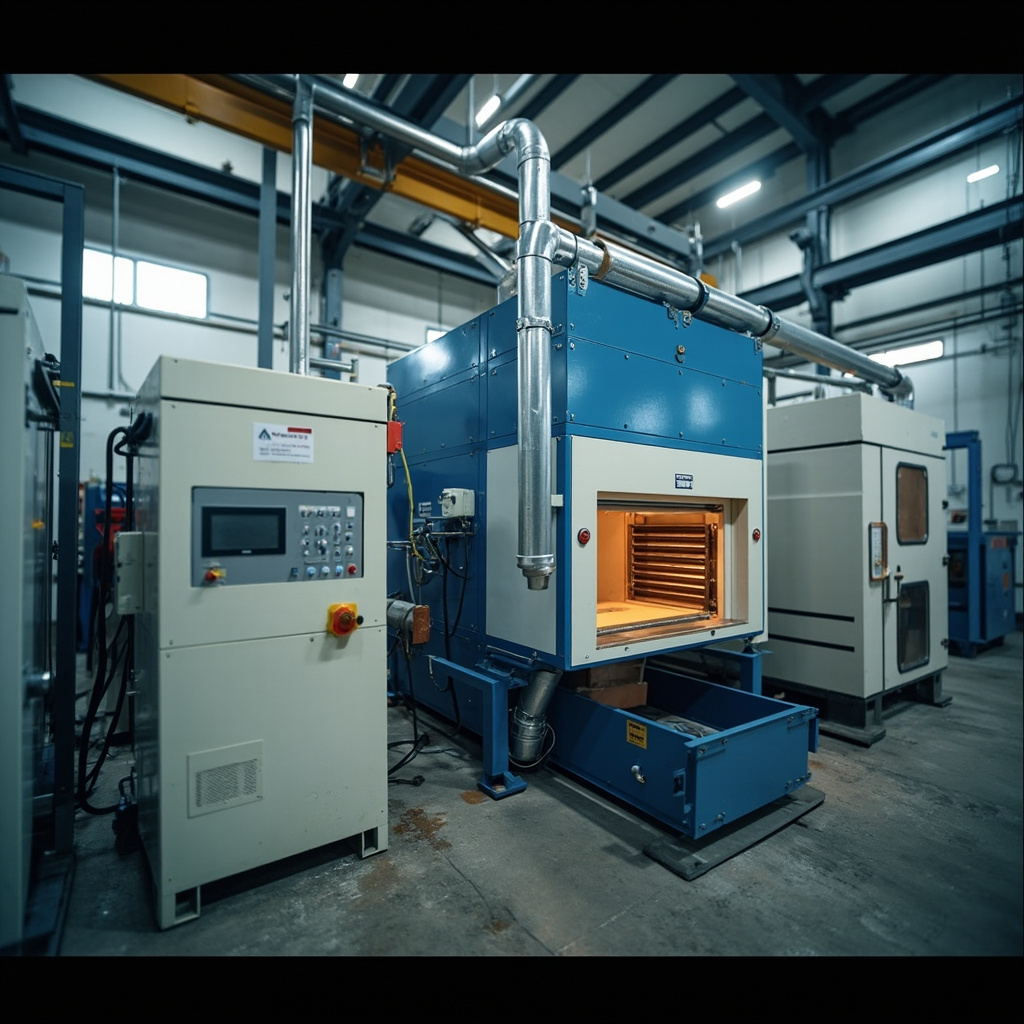
I. Baking process windows of different resin systems
| Resin System | Recommended Baking T×t | Crosslinking Reaction | Pencil Hardness | Flexibility (Mandrel) | Typical Application |
|---|---|---|---|---|---|
| Amino alkyd (short oil) | 120-140°C×20-30min | Alkyd -OH + amino resin -CH₂OH condensation | H-2H | ≤3mm | Hardware / appliance housings |
| Amino alkyd (medium oil) | 130-150°C×15-25min | Same as above | HB-1H | ≤2mm (more flexible) | Automotive parts |
| Thermosetting acrylic | 140-160°C×15-20min | Acrylic -OH + amino resin | 2H-3H | ≤5mm | Automotive OEM topcoat |
| Epoxy phenolic baking | 180-200°C×10-15min | Epoxy - phenolic condensation | 3H-4H | ≤6mm (brittle) | Food can interior lining |
II. Overview of Technical Parameter Comparison
| Technical Indicator | Standard Requirement | Premium Level | Test Method |
|---|---|---|---|
| Adhesion | ≥3MPa | ≥5MPa | ISO 4624 Pull-off Method |
| Salt Spray Resistance | ≥500h | ≥1000h | ASTM B117 |
| Weather Resistance (QUV) | ≥1000h Gloss Retention >50% | ≥3000h Gloss Retention >80% | ISO 16474-3 |
| VOC Content | Compliant with GB Standard | 50% below limit | GB/T 23985 |
| Application Window | 5-35°C | -10~40°C (wide temperature range) | TDS Recommended Conditions |
II. Detection and Determination of Under-Curing and Over-Curing
Under-cure: MEK rub test (methyl ethyl ketone / 50 back-and-forth cycles) — coating exposes substrate or severely softens after rubbing = not fully cured. In pull-off test, failure mode is cohesive failure but strength is significantly below standard (e.g., only 2MPa vs standard 5MPa). Over-cure: coating yellowing (Δb*>3 / self-condensation of amino resin generates chromophores), reduced flexibility (mandrel diameter increases from 2mm to >6mm with cracking), decreased adhesion (excessive crosslinking shrinkage causes excessive internal stress at coating/substrate interface leading to adhesion failure).
Technical deepening: systematic optimization methods for process parameters (DOE experimental design)
Coating production process optimization should not rely on the "trial-and-error method" but should adopt the scientific method of DOE experimental design. Taking the dispersion process as an example—factors affecting quality (linear velocity/time/filling rate/temperature), 4 factors each at 3 levels—full factorial requires 81 experiments—DOE uses orthogonal experiment L9 (9 times) or response surface methodology (27 times) to greatly reduce the number of experiments—while obtaining the main effects and interactions of each factor. For example, it is found that "the interaction of linear velocity × time is significant"—high linear velocity + short time and low linear velocity + long time can achieve the same dispersion effect—but the former saves energy by >20%.
In DOE analysis, interpretation of the P-value — P95% confidence). DOE ultimately outputs a set of prediction models (polynomial regression equations) — input line speed/time/temperature → predict fineness/viscosity/gloss — providing formulation engineers with a "digital formulation optimization" tool.
Industry practice: from "master craftsman's feel" to "parameter standardization"
The common challenge in the coatings industry—when experienced veteran workers retire, their "feel" (mixing resistance / fineness gauge scraping / visual inspection of wet film gloss) is taken away—new employees cannot replicate it. Transform the "feel" into quantifiable standard parameters (1) mixing resistance → viscometer reading; (2) fineness gauge scraping → fineness gauge reading (μm); (3) wet film gloss → gloss meter (GU value). The "standard parameter card" for each process is posted next to the equipment—new employees operate according to the "card" rather than "by feel". "Parameter standardization" is a key step for coating factories to move from "workshop" to "factory".
FAQ
Q1: Does "curing temperature" refer to the oven air temperature or the workpiece temperature?It is the Peak Metal Temperature (PMT/Peak Metal Temperature) of the workpiece rather than the oven set temperature. The workpiece temperature is usually 20-40°C lower than the oven air temperature (depending on workpiece thickness/heat capacity/oven heating efficiency) — the "holding time" of the curing curve should be counted from when the workpiece reaches the target PMT — not from the moment the workpiece enters the oven.
Q2: How to handle PMT differences among different metal substrates (steel/aluminum/zinc)?Steel has a specific heat capacity of about 0.46 kJ/(kg·K), and aluminum about 0.90 kJ/(kg·K) — aluminum heats up about 2 times slower than steel — under the same oven conditions, the PMT of aluminum parts is 15-30°C lower than that of steel parts. For coating lines with multiple metals present (e.g., steel + aluminum body), the baking time needs to be extended to compensate for the heating lag of aluminum.
Q3: How does the "self-condensation" side reaction of amino resins affect coating performance?Under over-baking (>160°C), self-condensation occurs between the hydroxymethyl groups (-CH₂OH) of amino resins instead of cross-linking with the -OH of alkyd resins—the self-condensation products are brittle ether bridges and methylene bridges—which are more brittle and prone to yellowing than the normal alkyd-amino cross-linked structure. The degree of self-condensation can be detected by FTIR—an increased ratio of the ether bridge peak (around 1100 cm⁻¹) to the normal ester cross-link peak (around 1730 cm⁻¹) indicates excessive self-condensation.
Q4: How much does the coating thickness shrink during the baking process of baked paint? Solvent evaporation (wet film → dry film) causes a volume shrinkage of approximately 40%-60% (depending on solid content), plus crosslinking shrinkage (reduced distance between resin molecules) of about 3%-8%. The combined double-layer shrinkage on thick coatings (>100μm) generates significant internal stress—this is an important reason why the single-coat thickness of baked paint is limited to <80μm.
Q5: What is the function of the "flash-off zone" in baking paint before curing?The flash-off zone (room temperature-60°C/5-15min) allows most of the solvent in the coating to evaporate slowly before entering the high-temperature oven—if it enters the high-temperature oven directly (>120°C), the solvent boils rapidly → coating bubbles. Insufficient flash-off is the primary cause of "solvent pops" and "pinholes" on the baked paint surface.
Q6: What to do with workpieces inside the oven when the paint baking line stops?Line stoppage >5min——Workpieces inside the oven are over-baked→brittle cracking and yellowing→this batch of workpieces may be entirely scrapped. Line stoppage >30min——Workpieces inside the oven are not only scrapped but also pose a fire risk (the coating may spontaneously ignite in a sealed high-temperature space without ventilation). The paint baking line must have a UPS-backed exhaust system and an "emergency cooling mode" where the oven door automatically opens and emergency exhaust cooling is activated when the line stops.
Q7: What is the essential difference in weather resistance between amino alkyd and acrylic baking enamels? Amino alkyd contains unsaturated fatty acid ester bonds—under outdoor UV exposure, ester bonds hydrolyze and double bonds oxidize → coating chalking/yellowing intensifies—only used for indoor hardware/home appliances. Acrylic baking enamel uses saturated C-C bonds as the backbone—UV resistance far superior to amino alkyd—can be used outdoors (e.g., aluminum curtain wall panels). Although the outdoor gloss retention life of acrylic baking enamel (5-8 years) is lower than that of fluorocarbon (20-25 years), its cost is only 1/3-1/4 of fluorocarbon.
Q8: How does the baking process of PCM (Pre-Coated Metal) differ from that of conventional paint baking?PCM uses online continuous coil coating + extremely rapid baking (250-300°C/30-60 sec/PMT 200-232°C); the coating cures within an extremely short time—curing speed is 10-20 times faster than conventional paint baking. PCM coating formulations require special design—high-activity catalysts + fast-reacting resin systems.
Q9: The "two-coat one-bake" (2C1B) process for baked paint?Basecoat + clearcoat sprayed sequentially → cured together in a single bake — saving one bake's energy consumption and time. However, it requires the baking curves of the basecoat and clearcoat to be compatible (overlapping cure windows) and the clearcoat solvent not to lift the basecoat — this is the standard process for automotive OEM. Incompatible base/clear systems require "2C2B" (each baked once, twice).
Q10: Daily maintenance and calibration of the paint baking oven?(1) Oven temperature uniformity—use a furnace temperature tracker (DataPaq) to measure the PMT at various positions in the oven when fully loaded with workpieces—temperature difference should be < ±10°C; (2) Oven exhaust volume—solvent vapor concentration should be 3% affects coating curing degree.
FAQ: In-Depth Technical Q&A Supplement
Q11: How do the differences in domestic and international standards for this technology affect product exports?There are differences between domestic standards (GB) and ISO/ASTM standards in terms of test methods and acceptance criteria. For example, salt spray testing—GB/T 1771 (equivalent to ISO 7253) has test conditions basically consistent with ASTM B117—but the rating systems (ISO 4628 vs ASTM D610/D714) differ—when providing test reports for exported products, the corresponding international standards must be indicated simultaneously, otherwise overseas customers cannot make a comparative assessment. It is recommended to list both GB and ISO/ASTM dual-standard indicators in the TDS (Technical Data Sheet) of exported products—to enhance the trust of international customers.
Q12: How to verify the long-term service performance of this technology in actual engineering?Laboratory accelerated testing (salt spray/QUV/cyclic corrosion) provides comparative data—but cannot fully replace actual outdoor exposure testing. Recommendations—(1) Set up outdoor exposure racks at both the factory location and typical customer locations (e.g., coastal C5-M/industrial C4)—conduct annual inspections of coating appearance/adhesion/film thickness changes—establish a company-owned outdoor service database; (2) Collaborate with universities/research institutes—combine enterprise data with academic research—enhance data credibility.
Q13: What should SMEs pay attention to when purchasing related raw materials/equipment?(1) The batch stability of suppliers is more important than unit price—it is recommended to require suppliers to provide COA data for >10 batches—and evaluate batch variation (CpK); (2) For equipment procurement, visit peers who have used the equipment for >2 years to understand the long-term reliability and after-sales service quality of the equipment—rather than relying only on the demonstration data from the equipment supplier; (3) For key raw materials (resin/curing agent)—maintain at least 2 qualified suppliers to guard against single-supply risk.
Q14: What is the current state and trend of digital transformation in this field?The digital transformation of the coatings industry is evolving from “point-based applications” (automation of individual equipment/processes) to ”system integration” (full-chain ERP+MES+PMS). Currently, the digitalization of small and medium-sized coatings factories has the ”highest ROI investment”: automatic batching systems + digitalization of quality control data—payback period of 1-3 years—which is the prioritized recommended direction. Future trend—AI + sensors enabling real-time optimization of process parameters—further reducing quality fluctuations between batches.
Q15: How can a newly entered coating engineer quickly master this technology?(1)Combine theory and practiceDo not only read literature without touching actual production—nor rely solely on experience without studying theory;(2)Build a “failure case archive”Every customer complaint/production anomaly/coating failure—record the root cause and resolution process—this is the most effective learning material;(3)Learn from suppliersTechnical personnel from resin/additive/pigment suppliers are carriers of "tacit knowledge" in this field—communicate more with them about solutions to specific problems.
Related Reading
Summary
The core parameters of a baking paint curing curve are PMT (peak metal temperature) plus time, rather than oven set temperature. Recommended windows vary significantly among different resin systems (amino alkyd / acrylic / epoxy phenolic) (110–200°C / 10–30 min). Detecting and distinguishing under-cure (low MEK test / adhesion) and over-cure (yellowing / embrittlement cracking) is the daily core technology of baking paint quality control. Kexin New Materials provides customers with baking paint product lines and baking process technical support.