
A single coat of “rust-prevention paint” is almost never the correct engineering choice. Real rust prevention is a system: the primer provides cathodic protection / passivation and adhesion, the intermediate provides barrier and thickness, the topcoat provides weathering and media resistance — the three cooperate and lock into a film. This is “coating system / specification design”. As a supplier, kexinMaterials follows “grade the environment first, then design the system, then choose the product”. Using ISO 12944 as the spine, this article explains the design logic, DFT allocation and typical solutions.
1. Why a “System” Not a “Single Coat”
Corrosion is multi-dimensional attack: water, oxygen, ions, UV, mechanical, temperature. No single coating optimally shields, passivates and weathers at once. The system logic is layered defense:
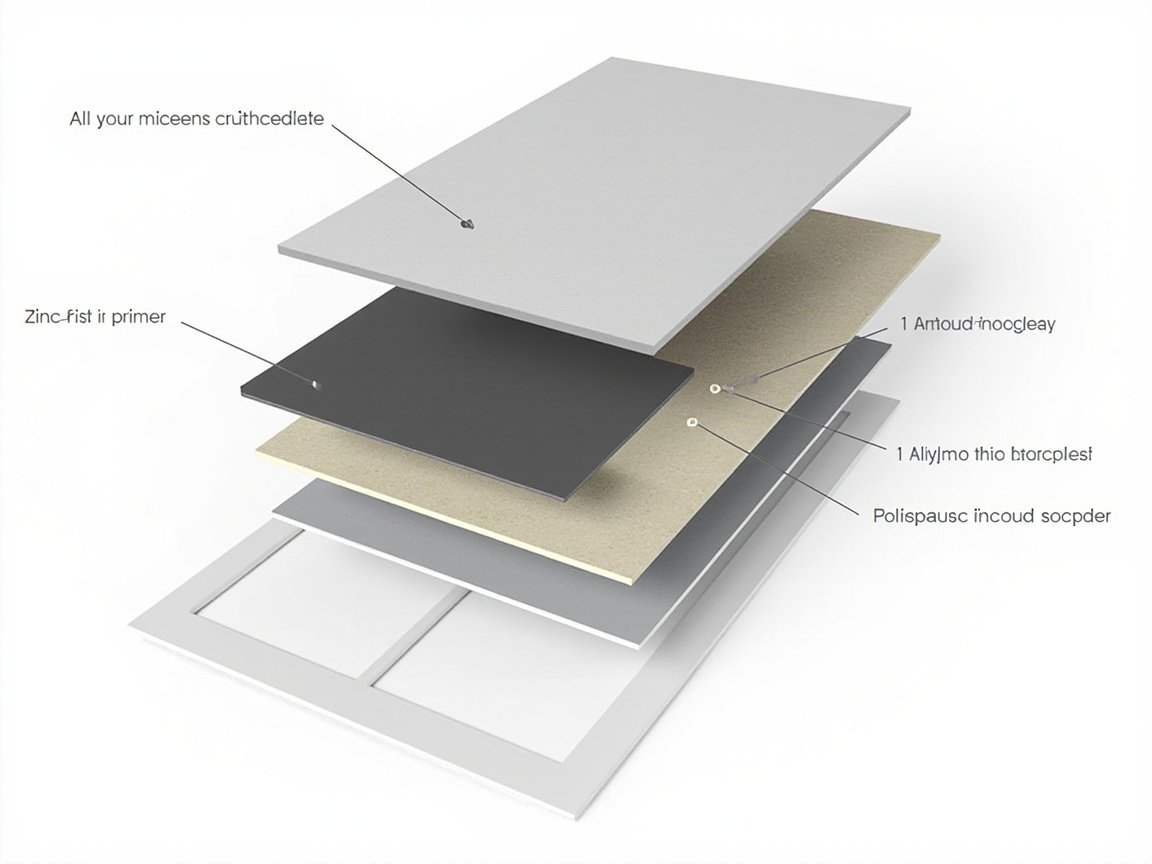
- Primer: closest to metal, gives adhesion + cathodic protection (zinc-rich) or passivation (zinc phosphate), the first anti-corrosion line.
- Intermediate: thick barrier with flake fillers (MIO, glass flake) lengthening media path, building DFT.
- Topcoat: weathering, UV, chemical resistance, decoration, protecting lower layers from photo-oxidation.
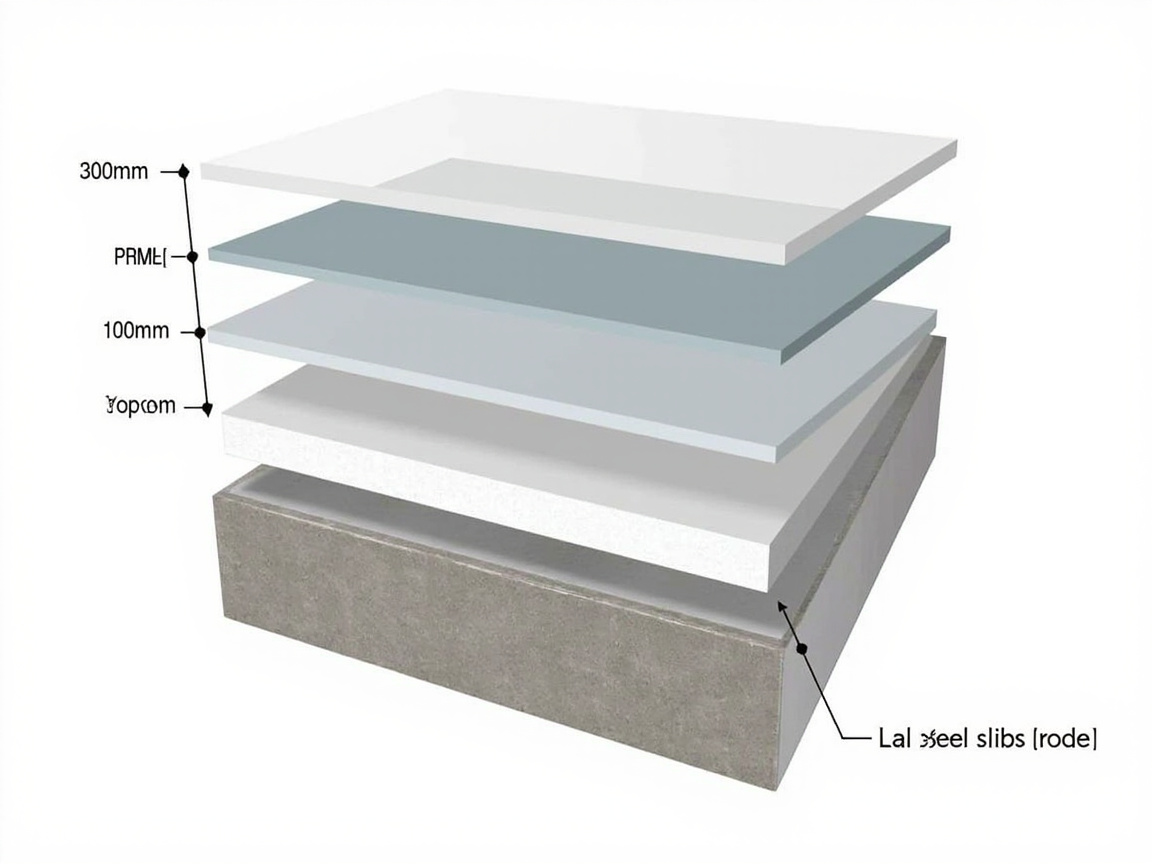
The three roles are irreplaceable — more reliable than one thick coat. ISO 12944-5 defines systems exactly as primer + intermediate + topcoat combinations (e.g., S2.01–S5.x). Understanding this is the prerequisite for good design.
2. Environment Grade Drives Design: ISO 9223 → ISO 12944
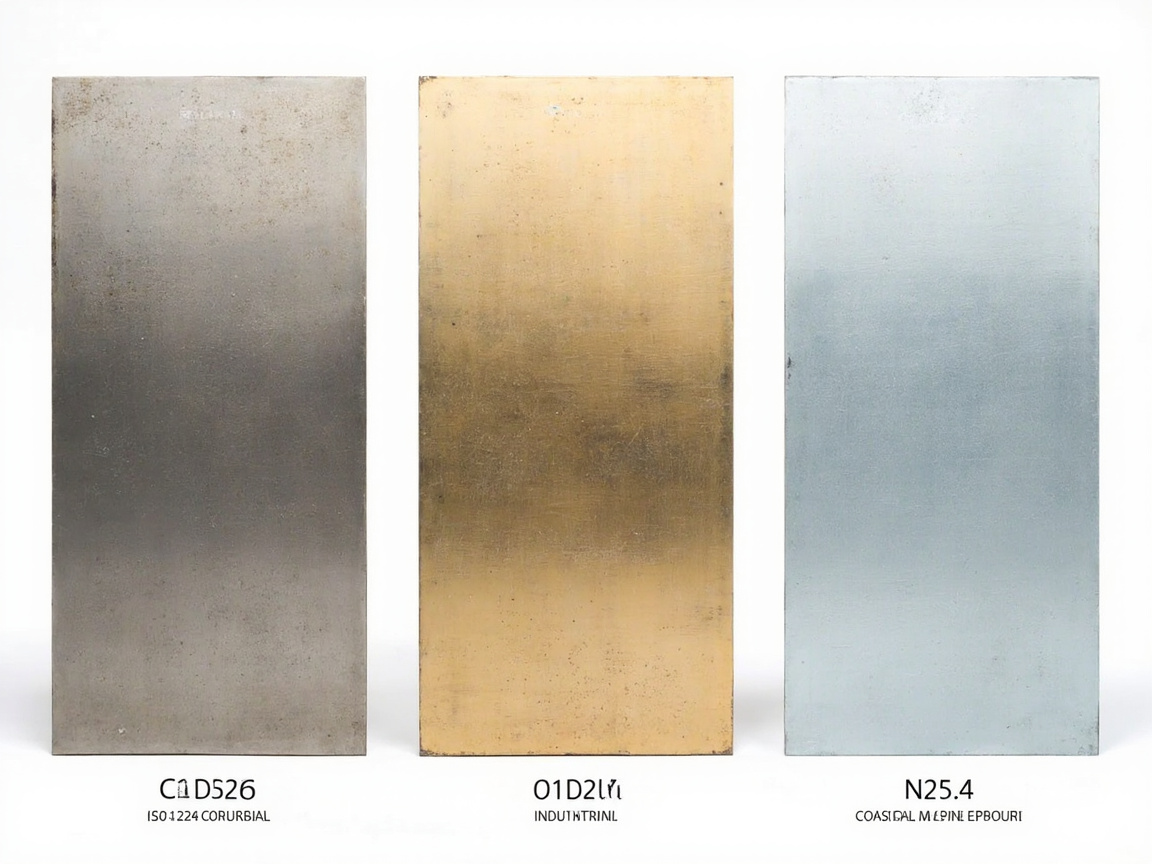
Step one is to set the environment. Typical high-durability (≥15 yr) total DFT magnitudes: C3 ~200 µm, C4 ~240+ µm, C5-M often ≥ 320 µm (per ISO 12944-5 system tables; actual per selected system and design). Harsher environment → larger DFT and higher-grade primer (zinc-rich) and topcoat (aliphatic PU / fluorocarbon). The grade is not “estimated” but judged per ISO 9223 corrosivity (pollutant dose, humidity, salinity).
3. Core Design Parameters
3.1 Total DFT
Set by environment and durability. Allocation: primer 60–80 µm (zinc-rich single coat should not be too thick; >80 µm tends to crack and zinc settle), intermediate multiple passes (MIO epoxy 80–120 µm each), topcoat 60–80 µm. Too little → weak barrier; too much → internal-stress cracking and waste.
3.2 Intercoat Compatibility
Layers must be compatible: chemical type matched (epoxy primer + epoxy intermediate + PU topcoat common), intercoat adhesion (GB/T 9286 0/1), overcoating interval (min/max; beyond it, abrade). GB/T 5210 pull-off is a stronger check for thick-film and heavy-duty systems than cross-cut.
3.3 Surface Preparation Grade
Pre-treatment before primer sets the ceiling: heavy-duty blast Sa2.5 (ISO 8501-1 / GB/T 8923.1); light-duty St2/St3 or rust-tolerant. Roughness Ry5 40–70 µm gives mechanical bite without premature peak rust.
4. Typical Systems
This menu must be fine-tuned by structure shape, accessibility and maintenance cycle. Even within C4, bridge box-exterior vs interior, windward vs leeward differ in system and DFT. Splash-zone members need extra abrasion/impact resistance beyond atmospheric design.
5. Primer Selection: Cathodic vs Passivation vs Barrier
- Sacrificial cathodic: epoxy zinc-rich (solvent/waterborne) for heavy-duty priming, low scribe creep.
- Passivation: zinc phosphate / aluminum triphosphate epoxy ester, economical for medium corrosion.
- Barrier: red-oxide / MIO primer with intermediate.
- Rust-tolerant: conversion/stabilizer types for maintenance.
Primer choice = environment grade × design life × surface-prep accessibility. Zinc-rich is strong but “more zinc is not better” — too high makes porous, brittle, demands strict Sa2.5; forcing zinc-rich on St2/St3 maintenance wastes its value.
6. Intermediate: The Underestimated “Thickness Driver”
Many projects over-value primer and topcoat but ignore the intermediate — yet it is the main DFT and barrier contributor. Epoxy MIO intermediate contains lamellar mica iron oxide stacked like roof tiles, greatly lengthening water/ion path — the standard for ISO 12944 heavy-duty (S4.x). Skipping it and piling primer+topcoat is costlier and less efficient than flake-barrier systems.
7. Topcoat: The “Last Gate” of Weathering
- Aliphatic PU: weatherable, gloss/color retention, chemical-resistant — C4–C5 mainstream.
- Fluorocarbon: super-weathering (15–20 yr+), high-end.
- Acrylic-PU / alkyd: light duty.
- Avoid: alkyd topcoat over uncured alkyd primer causes lifting.
Topcoat “weathering” is fundamentally resisting UV degradation and media penetration. Once it chalks/cracks, the intermediate and primer are exposed and life decays fast — the topcoat is the life gate, not just decoration.
8. What a Specification Must State
A qualified specification includes: environment grade (ISO 9223 Cx) and durability goal; surface-prep grade (Sa2.5/St3) and roughness; each layer’s product type, color, mix ratio; each layer’s DFT (per coat / total); overcoating interval and passes; construction environment boundaries (T/RH, dew point); acceptance (adhesion GB/T 9286, salt spray GB/T 1771, DFT GB/T 13452.2); maintenance cycle and repair process. Missing any item lets the field “improvise”. kexinMaterials delivers not just paint but an executable process card turning these eight items into numbers.
9. Common Misconceptions
- Most expensive topcoat alone suffices — wrong; without qualified primer/intermediate, interlayer failure peels the whole system.
- Total DFT met, layers don’t matter — wrong; same total DFT, primer+intermediate+topcoat flake-barrier far beats single thick coat.
- Environment “estimated” — wrong; C3 vs C5 total DFT can differ by a factor; mis-estimate → early rust. Use ISO 9223.
- Overcoating interval arbitrary — wrong; too short → solvent bite, too long → weak intercoat; follow TDS.
- Waterborne = copy solvent DFT — wrong; waterborne film formation and early water-resistance differ; redesign DFT and cure.
- Details same as main field — wrong; edges, welds, bolts, laps are corrosion hotspots needing separate requirements.
10. Industry Examples
- Cross-sea bridge: C5-M/CX, Sa2.5 + zinc-rich + MIO (multi-pass) + fluorocarbon/PU, total 320–500 µm.
- Ship & offshore: ballast tanks, hull, splash zone per their codes, mostly epoxy; splash needs abrasion/impact.
- Petrochem tanks: C4–C5 exterior; interior by stored medium (anti-static / chemical epoxy); CUI needs heat-resistant hydrophobic.
- Wind towers: C3–C4 land, C5-M offshore — like bridges, more maintainability.
- Containers: dedicated systems, fast-dry, abrasion, consistency.
No “universal formula” — environment, structure and maintenance together decide.
FAQ
Q: Why must rust prevention be primer-intermediate-topcoat, not one thick coat?
A: Corrosion attacks multi-dimensionally (water, oxygen, ions, UV, mechanical); no single coat optimally shields, passivates and weathers. Primer for adhesion/protection, intermediate for barrier/thickness, topcoat for weathering — layered defense beats single thick coat and is the ISO 12944 basis.
Q: How is DFT usually allocated?
A: Total DFT set by environment (e.g., C4 high-durability ~240–280 µm). Typical: zinc-rich primer 60–80 µm, MIO intermediate multiple passes (80–120 µm each), PU topcoat 60–80 µm. Follow the selected system’s standard values.
Q: Is the intermediate really that important?
A: Very — it is the main DFT and barrier contributor. Epoxy MIO’s lamellar structure greatly lengthens media path, standard for heavy-duty (ISO 12944 S4.x); omitting it and piling primer+topcoat costs more with lower barrier efficiency.
Q: How do C3 and C5 systems differ?
A: Harsher environment → larger total DFT, higher-grade primer (zinc-rich at C5), higher-weathering topcoat (PU/fluorocarbon). C5 total often ≥ 320 µm, C3 ~200 µm; different system types — mismatch causes early rust.
Q: Is waterborne design the same as solvent-based?
A: Framework is the same (primer-intermediate-topcoat) but film formation, early water-resistance, pot life and environment sensitivity differ — DFT and cure must be redesigned, not copied from solvent parameters.