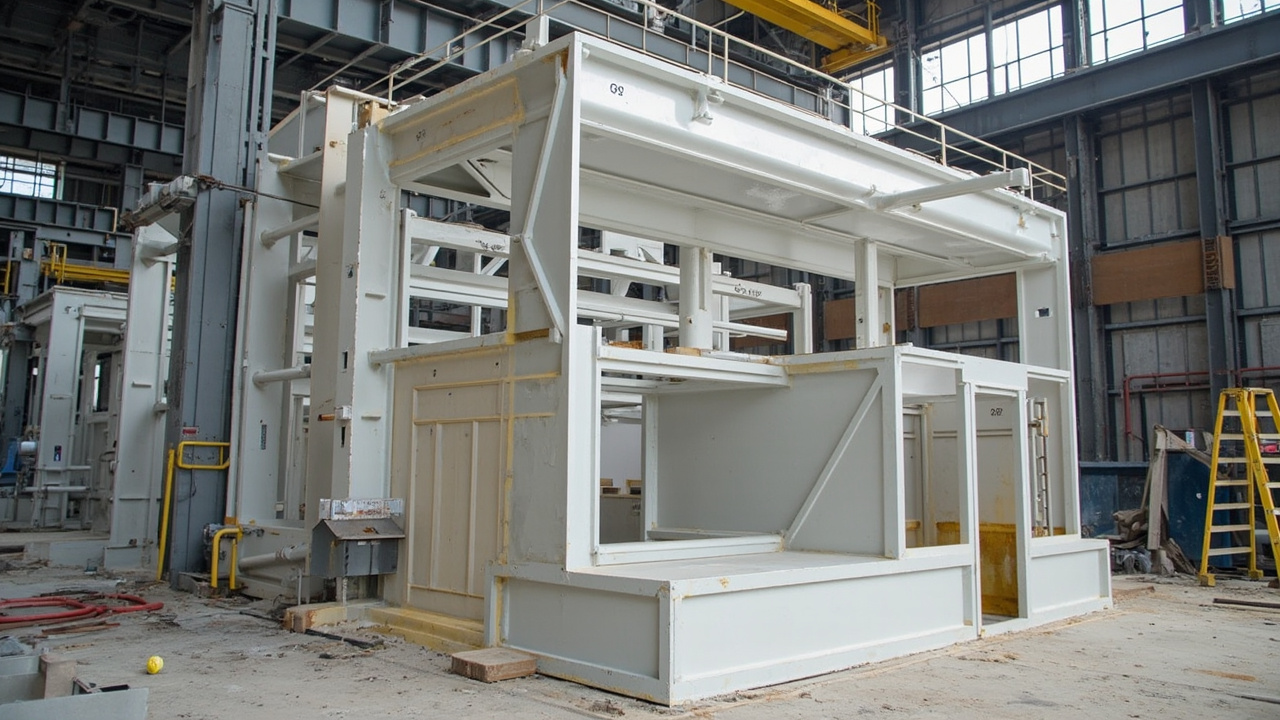
Steel is the skeleton of modern industry — plants, pipe racks, bridges, tanks and equipment frames all depend on its load-bearing capacity. But steel corrodes in natural environments at enormous annual maintenance and replacement cost. The core mission of heavy-duty protective coating is to isolate steel from the environment with an “engineered organic/inorganic film” and provide secondary protection when the film is damaged. This article explains the generic three-layer system (primer / intermediate / topcoat) and the DFT (dry film thickness) logic behind it.
As a technical supplier of industrial protective coatings, kexinMaterials holds a complete chain across zinc-rich epoxy, micaceous iron oxide and aliphatic polyurethane, and provides citable system recommendations for different corrosivity classes. For corrosivity grading itself, see the kexinMaterials rust-prevention system design guide.
1. Steel Corrosion Mechanism and Its Cost
Steel undergoes electrochemical corrosion in moist air: at anodic sites iron loses electrons to form Fe²⁺, at cathodic sites oxygen is reduced, and the two form a corrosion cell through the water film. Pollutants such as chloride and SO₂ destroy the passive film and raise conductivity, accelerating the process. Corrosion not only thins the section and reduces load capacity, but also causes localized damage such as pitting and crevice corrosion —hidden and dangerous.
Economically, corrosion control follows “prevention beats repair”: one qualified coating system costs far less over its life cycle than repeated patching and component replacement. This is why ISO 12944 / GB/T 30790 embed “durability grade” (low / medium / high, roughly 5 / 10 / 15+ years) into the system design.
2. The Three-Layer System: Each Layer Has a Job
The generic heavy-duty system follows “zinc-rich epoxy primer + micaceous iron oxide (MIO) intermediate + aliphatic polyurethane topcoat”:
- Zinc-rich epoxy primer (cathodic protection): high zinc content in the dry film contacts steel and forms a sacrificial anode. When the coating is locally damaged and steel is exposed, zinc corrodes first to protect the substrate — the first line of “self-healing” at defects. See zinc-rich epoxy primer mechanism.
- MIO intermediate (barrier): mica iron oxide flakes align in parallel lamellae, forming a labyrinth that lengthens the path of water, oxygen and ions, while building thickness and intercoat adhesion.
- Aliphatic PU topcoat (weathering): resists UV, salt spray and mechanical wear, deciding appearance life and color retention.
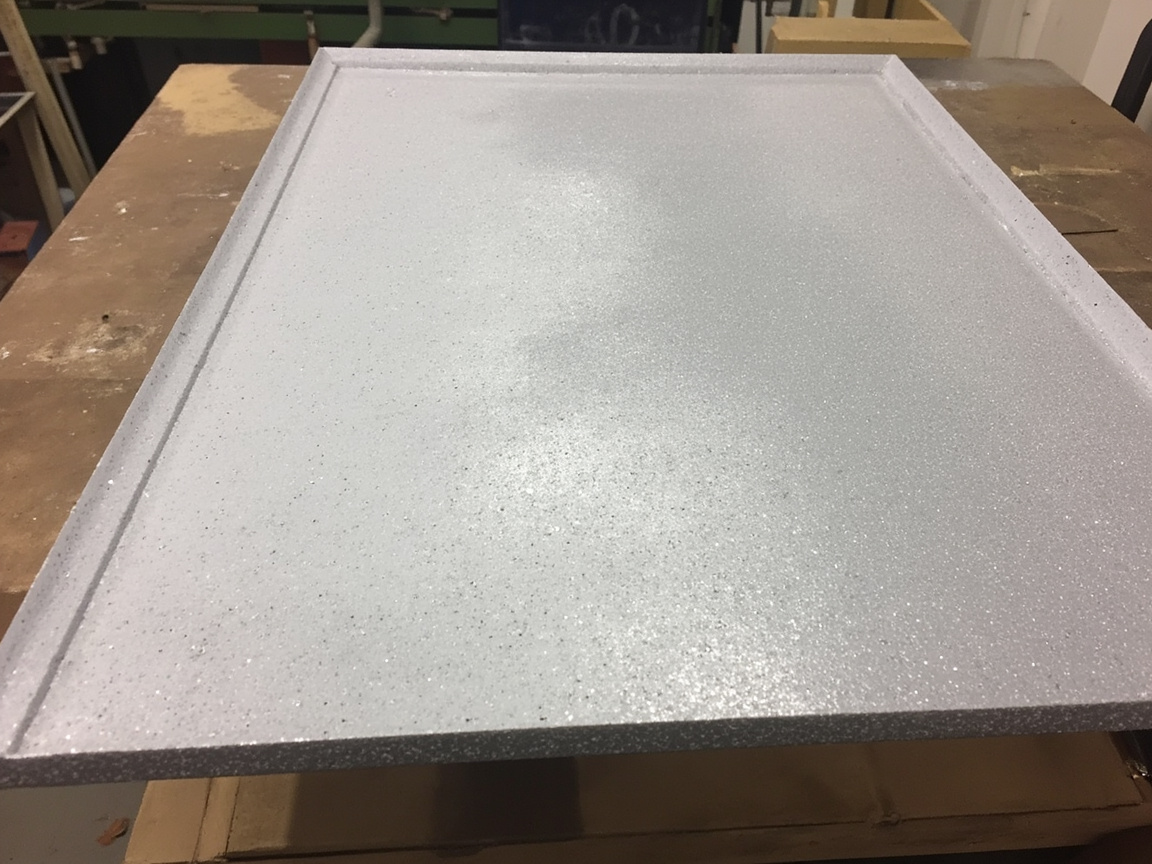
Synergy between layers is the key: primer gives electrochemical protection, intermediate gives barrier and thickness, topcoat gives environmental resistance. Missing any layer weakens overall life.
3. DFT by Corrosivity Class
Total DFT rises with corrosivity: C3 may be around 200 µm, C4 above 240 µm, C5-M often ≥ 320 µm (per ISO 12944-5 / GB/T 30790.5 system tables). These are minimum guarantees validated by cyclic corrosion; real projects often take values near the upper limit for margin.
4. Surface Preparation: 60% of Life
No matter how advanced the system, surface preparation decides over 60% of coating life. ISO 8501-1 defines Sa1–Sa3 blast-cleaning grades; main structural members usually require Sa2.5 (very thorough, only slight staining). Supporting controls:
- Roughness: 40–80 µm per ISO 8503, balancing adhesion and paint consumption.
- Soluble salts: test chlorides per ISO 8502; if above limit, wash or re-blast.
- Dust and oil: clean to standard grade to prevent adhesion loss.
- Dew point rule: steel temperature ≥ 3 °C above dew point, relative humidity often ≤ 85%.
First coat should be applied within the specified time after blasting (often ≤ 4 h, shorter in high humidity) to prevent flash rust. Abrasives must be salt-free.
5. Film Thickness and the 90/90 Rule
Film thickness is the core quantitative QC metric. Wet film is controlled in real time with a comb; dry film is sampled with magnetic/eddy-current gauges (ISO 2808). Acceptance widely uses the “90/90 rule”: 90% of readings ≥ specified DFT, the remaining 10% ≥ 90% of specified DFT, and no single point severely low. For rough surfaces, ISO 19840 gives correction methods. Edges, welds and stiffeners (“film-loss” zones) should be stripe-coated.
6. Adhesion and Acceptance Tests
- GB/T 9286 cross-cut: graded (0/1 best) for intercoat adhesion.
- ASTM D4541 / GB/T 5210 pull-off: MPa-level quantitative adhesion for key members.
- Salt spray and cyclic corrosion: ISO 9227 (NSS), ASTM B117, ISO 12944-9 cyclic, ISO 20340 aging.
Note: salt-spray hours are only relative acceleration, not directly equivalent to life; judge by ISO 12944 durability grade plus third-party cyclic corrosion and field data.
7. Temperature, Humidity and Process Window
Epoxy coatings are temperature-sensitive: below 5 °C (or product minimum) cure is extremely slow or stops; above 40 °C gelation may be too fast with poor leveling. High RH risks condensation, so the +3 °C dew-point rule is the floor. In low temperature, winter-grade hardeners or heating/dehumidification may be used within product limits.
8. Common Defects and Prevention
- Blistering: soluble salts, damp substrate or osmotic pressure — control salts and the process window.
- Intercoat delamination: incompatible system or surface contamination — verify adhesion before changing products.
- Pinholes / misses: low DFT or uneven spray — stripe-coat edges, increase inspection frequency.
- Chalking / gloss loss: insufficient topcoat weathering or low DFT — use aliphatic PU and meet thickness.
9. Selection Flow and Misconceptions
Flow: judge corrosivity (C1–C5-M, Im1–Im3) per ISO 12944-2 → pick system number and minimum total DFT → define surface prep and salt control per ISO 8501-1/8503/8502 → check VOC per GB 30981-2020 → accept by 90/90 thickness, cross-cut/pull-off adhesion, third-party cyclic corrosion. Waterborne / high-solid / solvent-free routes are chosen by environment and conditions.
Common misconceptions: (1) only caring about topcoat brand — wrong, the system is synergistic; (2) thicker is safer — wrong, over-limit raises internal stress and cracking; (3) blasting then coat next day — wrong, flash rust is fast in humidity; (4) salt-spray hours equal life — wrong; (5) mixing different brands freely — wrong, causes delamination.
kexinMaterials emphasizes an integrated “material parameters + process boundaries + acceptance criteria” package in system delivery: not only the three-layer data, but also DFT floors per environment, surface-prep grade and 90/90 acceptance — so design, applicator and owner align on one set of metrics.
FAQ
Q: Why is the three-layer system so common for steel structures?
A: Each layer is irreplaceable: zinc-rich epoxy gives cathodic protection by zinc sacrifice, MIO gives lamellar barrier and thickness, aliphatic PU resists weathering. Their synergy covers defect self-healing, blocking and environmental resistance; missing one layer weakens total life.
Q: Is higher zinc content always better?
A: No. Zinc must form a continuous conductive network to enable cathodic protection; too low is ineffective, too high can reduce mechanical properties and adhesion. Control dry-film zinc per ISO 12944-5 and the product TDS.
Q: How is the 90/90 rule executed?
A: 90% of gauge readings ≥ specified DFT, the rest ≥ 90% of specified DFT, no single point severely low. Apply ISO 19840 correction on rough surfaces and define gauge layout in the spec.
Q: Why Sa2.5 surface preparation?
A: Blast-cleaning grade decides adhesion and life; Sa2.5 (very thorough, slight stain only) is the minimum for heavy-duty main members. Lower grades sharply shorten protection life.
Q: What soluble-salt limit applies?
A: Limits follow the project specification; marine or repaint items often target chlorides ≤ ~50 mg/m² (as NaCl) as a critical goal, with wash or re-blast if exceeded. Always rely on ISO 8502 test results.