In traditional automotive painting, 2K clear coat cures at room temperature over several days or at 60℃ for tens of minutes, while OEM clear coat relies on high-temperature baking at 160–180℃—these "thermal curing" paths have high energy consumption and their cycle time is constrained by the length of the baking oven. UV curing (ultraviolet curing) uses ultraviolet photons to instantly initiate polymerization, compressing "minutes/days"-level curing to "seconds"-level, becoming one of the key technology routes for automotive painting to increase cycle speed, reduce energy consumption, and lower VOC. It has already been applied at scale on automotive clear coat, headlights, bumpers, wheels, and some OEM intermediate coats/pigmented paints.
As a technical supplier of automotive and industrial protective coatings, Kexin New Materials (kexinMaterials) has layout in radiation curing and low-VOC supporting solutions. This article analyzes the photochemical mechanism of UV curing, equipment (especially LED UV), typical processes (3C1B UV), and standards & safety, to help engineers judge "should my line adopt UV".
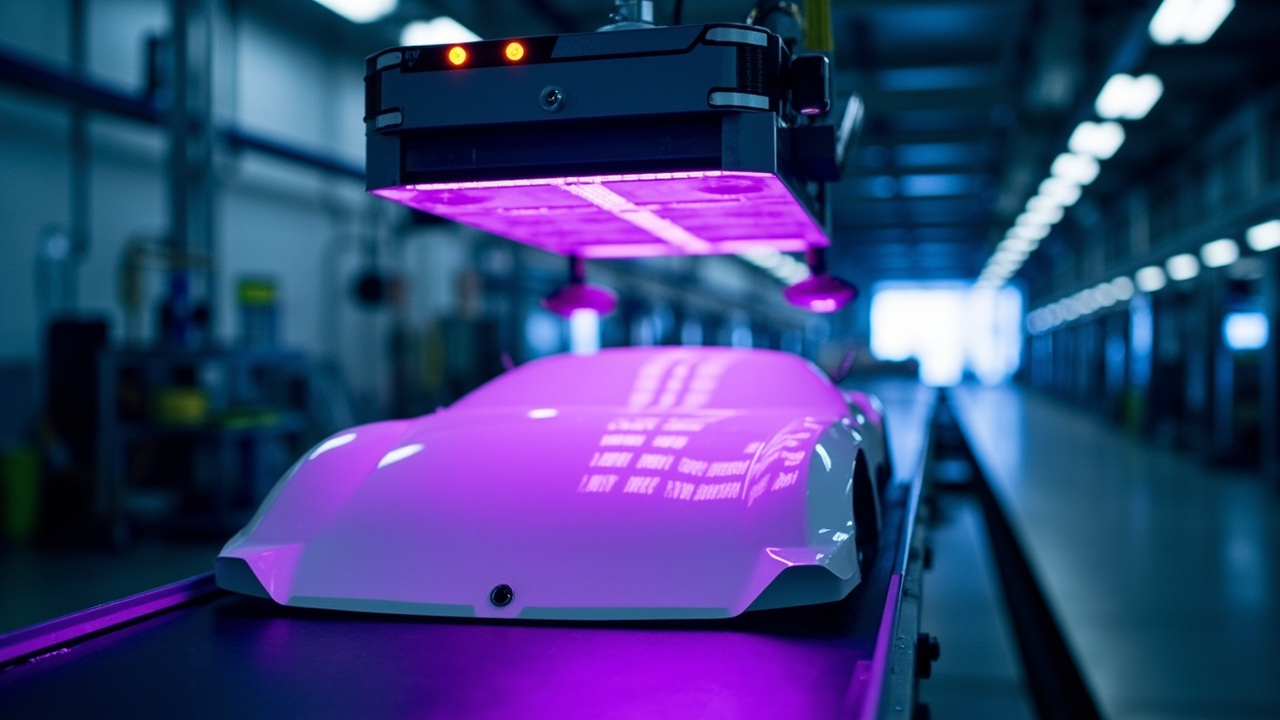
I. The Photochemical Essence of UV Curing
UV curing is a type of Radiation Curing, which relies on ultraviolet photons to excite a photoinitiator to generate free radicals or cations, initiating instantaneous polymerization and crosslinking of the resin. It is divided into two types by mechanism:
- Free-radical type (most common): uses acrylate resin (multifunctional acrylic polyurethane/epoxy acrylate) + free-radical photoinitiator (e.g., Irgacure series). Under UV irradiation, the initiator decomposes to produce free radicals, initiating acrylate double-bond addition crosslinking. Advantages: fast speed, wide raw material availability; disadvantages: oxygen inhibition (surface needs oxygen isolation or addition of wax/amine), slightly larger curing shrinkage.
- Cationic type: uses epoxy/vinyl ether resin + cationic photoinitiator (e.g., iodonium salt). Under UV, strong acid is produced to initiate ring-opening polymerization. Advantages: no oxygen inhibition, small shrinkage, good adhesion, can "post-cure" (reacts after light off); disadvantages: expensive raw materials, sensitive to water, slightly slower speed.
Automotive clear coat UV is mostly free-radical acrylic polyurethane systems, balancing appearance and weather resistance; some high-end use cationic or hybrid systems to improve adhesion and chemical resistance. The "second-level" of UV curing comes from photochemistry rather than heat conduction: photons directly activate the reaction, without needing to heat the entire panel to reaction temperature. This also brings a characteristic—UV curing is almost unaffected by ambient temperature and humidity (unless oxygen inhibition or moisture affects cationic), which forms a sharp contrast with 2K thermal curing constrained by temperature and humidity.
II. UV Spectrum: UVA/UVB/UVC and LED
Ultraviolet is divided by wavelength: UVA 315–400 nm, UVB 280–315 nm, UVC 200–280 nm. UV curing commonly uses UVA (main peaks 365/385/395/405 nm), with good penetration and relatively low harm to skin (but protection still needed); traditional mercury lamps have main peak near 365 nm and contain UVB/UVC plus large amounts of heat/infrared; modern LED UV has monochromatic peak (mostly 365/385/395 nm), mercury-free, cold light source, instantaneous on/off, low energy consumption, and is the industry upgrade direction.
Note: even LED UVA contains enough photons to damage eyes and skin, and UV irradiation of air produces ozone (especially with short wavelengths), so the UV zone must be enclosed, exhausted, equipped with UV protective masks and aprons, and naked-eye direct viewing is prohibited. Mercury lamps are gradually being replaced by LEDs, both for environmental reasons (no mercury hazardous waste) and energy saving (instant on/off, no standby power consumption). Wavelength selection must match the photoinitiator absorption peak: if the initiator has strong absorption at 395 nm, prioritize 395 nm LED, otherwise energy is wasted and curing is insufficient.
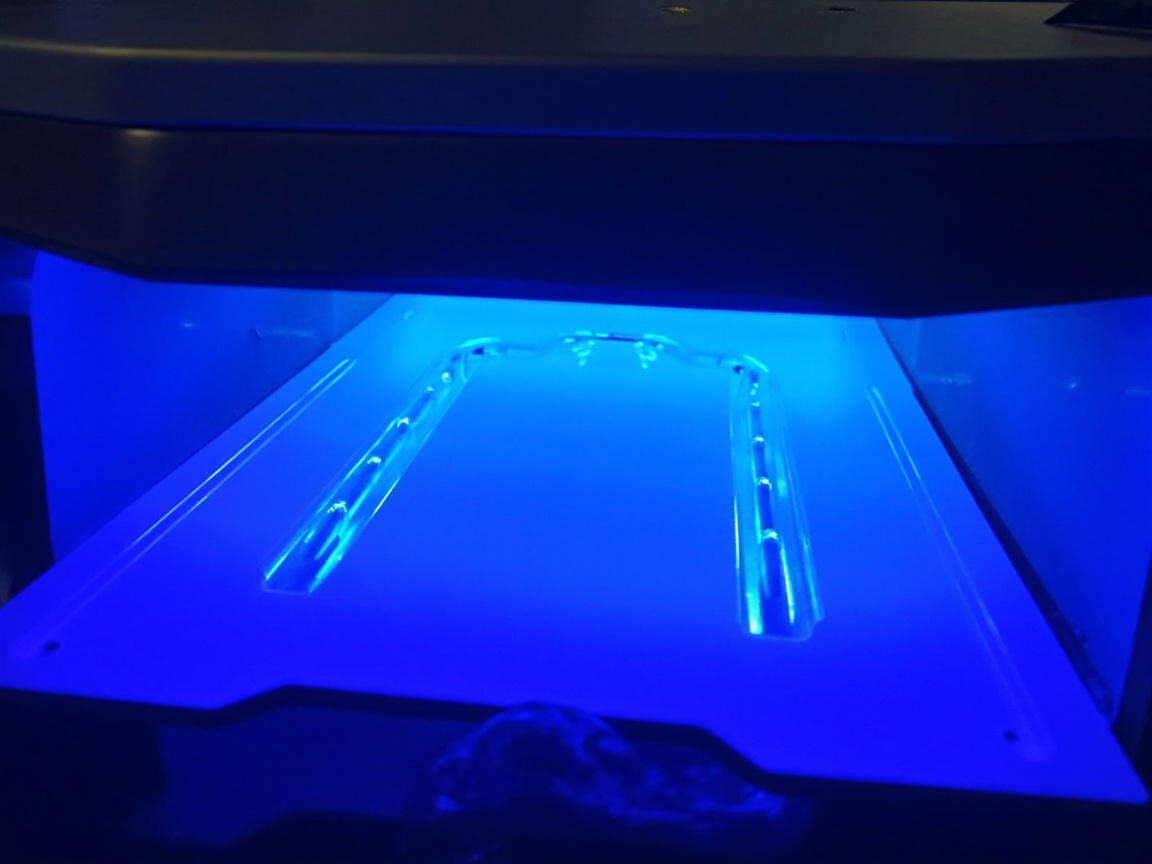
III. Formulation Skeleton of UV Coatings
UV coatings (100% solids or high solids) consist of four parts:
- Oligomer: determines main properties, such as polyurethane acrylate (flexible, weather-resistant), epoxy acrylate (hard, wear-resistant), polyester acrylate (general-purpose). Automotive clear coat mostly uses polyurethane acrylate for gloss retention and weather resistance;
- Reactive diluent (monomer): contains acrylate double bonds, adjusts viscosity and participates in crosslinking, such as TMPTA, TPGDA, HDDA. Note that some monomers are skin-irritating, formulations must assess safety;
- Photoinitiator: free-radical type (Irgacure 184/1173/819 etc.) or cationic type (iodonium salt), determines absorption wavelength and curing speed;
- Additives and effect pigments: leveling, defoaming, adhesion promotion, and (for pigmented paint) effect pigments—but effect pigments (aluminum powder, mica titanium) reflect/absorb UV, affecting curing depth, which is a technical difficulty for UV pigmented paint.
UV coatings are almost solvent-free (or minimal), with VOC far lower than 2K solvent-based, which is the root of their environmental advantage. But 100% solids also means "no solvent evaporation leveling", leveling relies entirely on formulation and spraying, making construction more demanding. The combination of oligomer and initiator determines the triangular balance of curing speed, hardness, and weather resistance. Although reactive diluents participate in curing, some types have skin irritation and migration risks, so formulations must undergo safety assessment and regulatory compliance (e.g., REACH) review.
IV. Cycle Advantage of UV Curing: Seconds vs Minutes/Days
Comparing curing rhythm:
| System | Curing Condition | Reachable for Handling | Full Cure |
|---|---|---|---|
| 2K clear coat (room temp) | 20–25℃ | Several hours | 5–7 days |
| 2K clear coat (60℃ bake) | ≤60℃ baking | 30 min | Several hours |
| OEM 2K (high temp) | 160–180℃ | 20–30 min | Same oven |
| UV clear coat | UVA irradiation | Several sec–tens of sec | Upon irradiation |
UV turns "curing waiting" from a production bottleneck into "pass the machine and go", significantly shortening cycle time, reducing work-in-process, and saving the footprint and energy of long baking ovens. It is especially cost-effective for high-volume lines of plastic/small parts such as bumpers and wheels. But the total account must be calculated: the one-time investment and maintenance of UV equipment (light decay monitoring, cooling) need to be offset against saved oven body, energy, and footprint. Generally, the tighter the single-piece cycle and the larger the output, the shorter the UV payback period; in small-batch multi-variety refinish scenarios, UV advantages are diluted by equipment.
V. Typical Process: 3C1B and UV
UV implementation modes in automotive:
- UV clear coat (most mature): intermediate coat/pigmented paint remains traditional (or water-based), the last clear coat uses UV curing, eliminating high-temperature baking and protecting plastic parts from deformation;
- UV intermediate coat/pigmented paint + UV clear coat (3C1B UV): full-line radiation curing, extreme cycle compression, challenges in UV penetration of effect pigmented paint and flop control;
- Bumper/wheel dedicated lines: plastic parts are not high-temperature resistant, UV is the first choice.
Process points: before UV, "infrared/hot-air pre-leveling" is needed to let the wet film spread (because no solvent leveling), then enter UV zone; UV dose (mJ/cm²) must be sufficient to penetrate film thickness, under-dose causes surface dry but inner uncured, poor resistance, over-exposure causes yellowing and embrittlement. Dose management is the core KPI of UV process, should be online monitored rather than only periodic sampling. Insufficient pre-leveling will "freeze" orange peel under UV, because photo-curing sets instantly with no subsequent leveling opportunity, so spraying leveling is more critical than thermal curing systems.
VI. Application Window and Clean Environment
Although UV coatings are not constrained by temperature and humidity, they have unique requirements for environment and equipment:
- Cleanliness: no-solvent leveling means any particles falling on the wet film will be permanently encapsulated, so spray booth cleanliness requirement is even higher than 2K. See details in Automotive Spray Booth Cleanliness and Booth Design.
- Pre-leveling time: a leveling window is needed from spraying to UV irradiation, too short causes orange peel, too long causes dust settling;
- Oxygen inhibition control: free-radical type surface can be oxygen-isolated (nitrogen curtain) or add surface wax/amine, otherwise surface is tacky;
- Panel temperature: although heating cure is not needed, substrate temperature affects viscosity and leveling, still recommended 20–30℃.
The understanding of application window is often simplified to "just irradiate", but actually "leveling—oxygen isolation—dose" are coupled, any failure manifests as "surface tacky, bottom soft, poor adhesion". On-site UV dose logs should be established, recording lamp power, line speed, cumulative hours, making dose from invisible to manageable.
VII. Dual-cure Detailed
To balance "second-level setting" with "shadow area/thick film curing", dual-cure couples UV with other mechanisms:
- UV + thermal cure: UV first quickly sets, establishes handling strength, thermal cure then supplements shadow area and thick film crosslinking;
- UV + moisture/air: cationic system can still slowly react after light off (post-cure), supplementing weakly lit areas;
- UV + dark reaction (latent type): some systems still have subsequent crosslinking after irradiation.
Dual-curing is a pragmatic route to balance "speed" and "full coverage of complex parts", especially suitable for components with internal cavities, back of brackets, and other light-dead zones inside the vehicle body. The cost is more complex formulations, higher cost, and still requiring a thermal curing stage, so the takt-time advantage is slightly reduced compared to pure UV. When selecting, the "shadow ratio" should be evaluated: regular flat parts are most cost-effective with pure UV, while complex parts should use dual-curing.
8. Relationship between UV, 2K, and Nano Ceramic
UV varnish and 2K varnish have different positioning: UV relies on photon second-level curing, 100% solid content near-zero VOC, suitable for takt and plastic parts; 2K relies on chemical crosslinking, requires time/heat, adapted for refinish and high-temperature OEM. The two can be combined (e.g., UV clear coat + 2K basecoat). Regarding 2K refinish curing logic, you can read further at Automotive Refinish 2K Clearcoat Formulation and Application Key Points. The "nano ceramic coating" on the market is an ultra-thin protective layer stacked on the varnish, which does not conflict with UV varnish—UV varnish is the main clear coat, and the ceramic layer further enhances gloss and hydrophobicity.
Kexin New Materials (kexinMaterials) when promoting UV/dual-curing low-VOC systems, emphasizes the "three wins of takt, energy consumption, VOC", while reminding customers: dose monitoring and safety protection of UV equipment (ozone, UV protection) are indispensable investments, otherwise the efficiency advantage will be offset by safety and quality risks.
9. Standards and Testing
Relevant standards for UV-curable coatings and films:
- Curing degree/polymerization degree: ISO 10640 "Plastics — Radiation-curable materials — Determination of degree of crosslinking/Glass transition temperature by dynamic mechanical analysis", etc., used to evaluate curing completeness;
- Weathering (including UV aging): ISO 16474 series "Plastics — Methods of exposure to laboratory light sources…" (including UV fluorescent lamps, xenon lamps, metal halide lamps), GB/T 1865 (equivalent to ISO 11341) xenon lamp aging, used to verify UV coating weathering;
- VOC: GB 24409-2020 (vehicle coatings) is extremely friendly to UV coatings (near 0 solvent);
- Adhesion/hardness/chemical resistance: GB/T 9286, GB/T 6739, ISO 2812, etc., same as conventional coatings.
Note: UV coating weathering evaluation must truly conduct xenon lamp/fluorescent UV aging, not just measure initial hardness—some acrylates have yellowing or chalking risks in long-term outdoor use, and the selection of oligomers and photoinitiators must balance weathering. Curing degree can be quickly determined by acetone wiping (MEK rub) or DMA Tg change, as a means of first-piece and periodic confirmation on the production line.
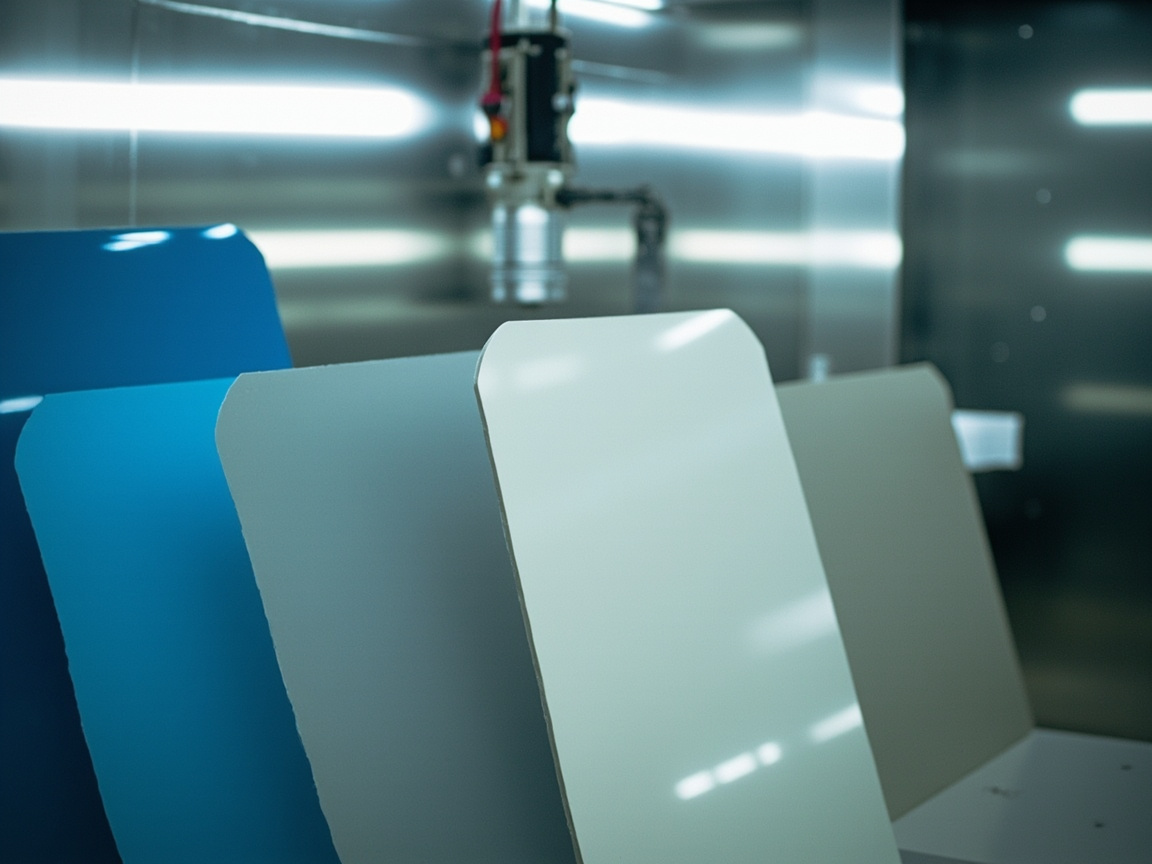
10. Water-based UV and Future Trends
Water-based UV combines "water as diluent" with "UV second-level curing": first water evaporates for leveling (solving the difficulty of 100% solid content leveling), then infrared removes water, and UV crosslinks. It balances low VOC and good leveling, and is one of the directions for high-end coating, but the process window is narrower (incomplete water removal causes bubbling, residual water affects cationic curing). Future trends also include: lower-migration photoinitiators, cost reduction of cationic systems, improved LED deep-UV efficiency, and the popularization of "UV + thermal dual-curing" for complex whole-vehicle parts.
11. Selection Decision: Should I Go UV
Checklist for the production line:
- Are the parts regular, rotatable, and with few shadows? Yes→UV advantage is large; No→consider dual-curing or retain thermal curing;
- Are they plastic/non-high-temperature resistant? Yes→UV is the first choice (avoid deformation);
- Is takt a bottleneck? Yes→UV second-level curing directly releases capacity;
- Can you afford UV equipment and maintenance? Calculate TCO (equipment + electricity + maintenance vs baking oven + long line + energy consumption);
- High proportion of effect pigmented paint? High→need to verify UV penetration and flop, technical threshold rises.
Generally: bumpers, wheels, lamps, small decorative parts prioritize UV; whole-vehicle main line varnish can be partially UV; complex internal cavities and thick pigmented paint with caution. It is recommended to do small-part pilot first, verify with dose monitoring and aging data before expanding the line, to avoid stepping into pitfalls with one-time large investment.
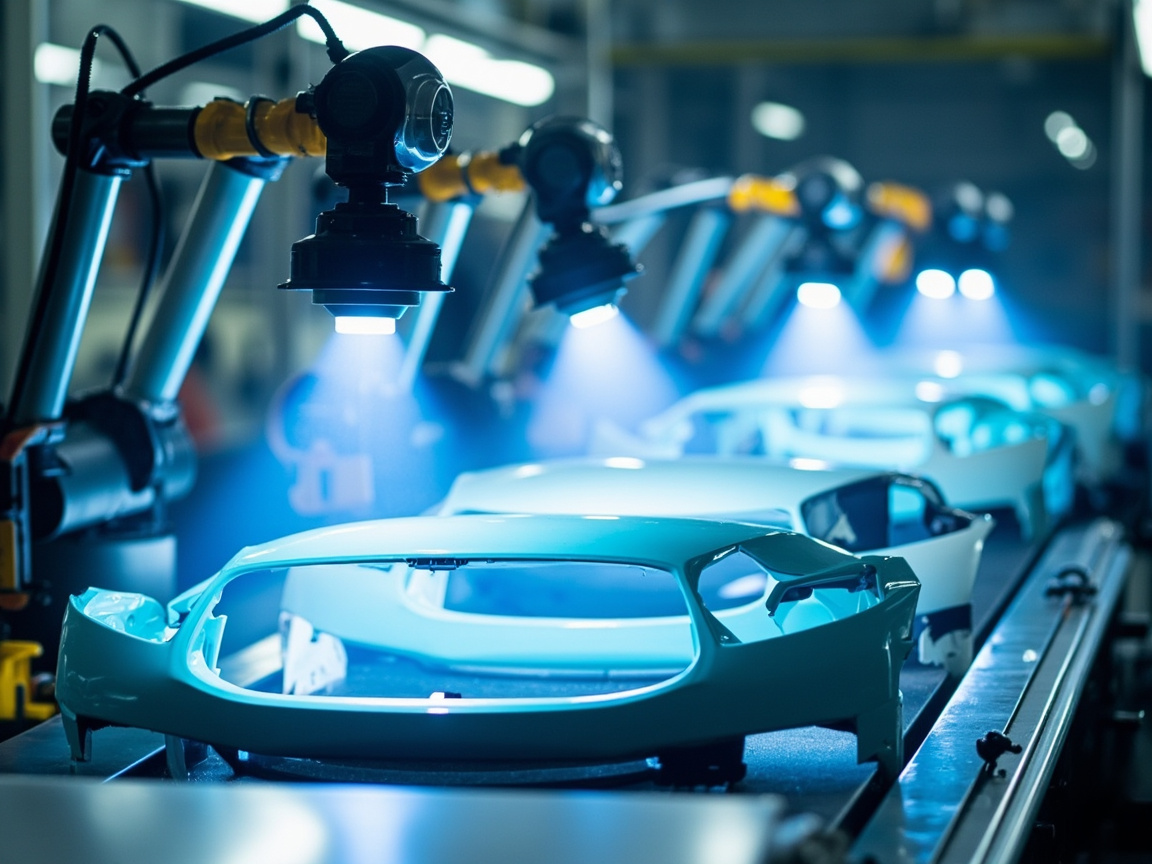
12. Equipment Selection and Lamp Decay Maintenance
UV curing equipment is not "just install a lamp", selection and maintenance determine success or failure. In terms of light sources, LED UV is expensive but has long life, low energy consumption, and cold light source, suitable for long-term production lines; mercury lamps are cheap initially but have mercury hazardous waste and preheat loss, gradually being eliminated. Key parameters: whether peak wavelength matches photoinitiator absorption (e.g., 395 nm photoinitiator with 395 nm LED), irradiance (mW/cm²) and total dose (mJ/cm²), irradiation uniformity (dose difference at each point on the panel), cooling method (air cooling/water cooling). Lamp decay is an invisible risk that cannot be ignored: LED output declines with cumulative working hours, if only timed by set power, actual dose will gradually be insufficient and curing becomes soft. Online dose monitoring (or periodic calibration with radiometer) must be installed, and managed by "maintain/replace when cumulative dose reaches threshold", rather than just looking at whether the lamp is on. Reflector cleaning, quartz window/lens contamination also affect energy transfer, and should be included in spot inspection.
13. UV Coating Standard Operating Procedure
For a UV line to be stable, it relies on process discipline solidified into SOP. Recommended SOP points: confirm substrate temperature and cleanliness before spraying; adjust viscosity per formula and use specified spray gun parameters (caliber, pressure, distance, overlap); leave enough pre-leveling time for the wet film to spread; confirm oxygen barrier measures (nitrogen curtain or surface additive) in place before entering UV zone; lock UV dose by online monitoring value (line speed × irradiance = dose), recalculate dose for any parameter change; do curing degree (MEK rub or Tg) and adhesion confirmation on first piece before mass production; record lamp power, line speed, cumulative working hours, dose reading per shift. UV's "fast" easily makes people relax discipline, but it is precisely the second-level curing that instantly fixes all errors, so SOP is more non-negotiable than thermal curing. Writing parameters into the work card and turning dose into readings is the premise of stable UV line operation.
14. Safety Engineering: Ozone, Protection, and Disposal
UV zone safety is an engineering issue rather than personal attention. UV photon irradiation of air produces ozone, the more short waves the stronger the ozone; ozone irritates respiratory tract and damages mucous membranes, excessive concentration endangers health, so UV zone must be enclosed and forcibly exhausted, exhaust ozone concentration monitored by occupational exposure limits, install ozone decomposition device if necessary. Personnel protection: UV-specific protective mask (blocking UVA), apron, gloves, prohibit naked-eye direct viewing of any light leakage; power off and confirm no leakage before maintenance. Free radical systems commonly use acrylate monomers, some have skin irritation and sensitization, operation area ventilation, avoid direct skin contact, clean promptly if contaminated. Waste UV coating and cleaning solvent managed as hazardous waste, not arbitrarily discharged. Safety investment (enclosure, deodorization, monitoring, PPE) is the "associated cost" of UV efficiency advantage, saving it will turn efficiency dividend into accident bill, so it must be a hard budget rather than an option.
15. Integration of UV and Intelligent Manufacturing
UV's "second-level, online monitorable" characteristics are naturally suitable for intelligent manufacturing. The curing process can become a part of the production line data flow: dose, line speed, lamp status uploaded in real time, linked with upstream and downstream processes (spraying, flash drying, quality inspection); once dose is below threshold, the system automatically slows down or alarms, avoiding unqualified products flowing into the next process. Combined with machine vision, appearance (orange peel, dust spots, leveling) can be detected immediately after UV, achieving a "curing—inspection" closed loop. For multi-variety small batch, UV's rapid changeover advantage is obvious: switching products without waiting for furnace temperature change, just adjust line speed and dose. Intelligent manufacturing does not require one-step completion, can start from the lowest-cost transformation of "online dose monitoring + automatic alarm", gradually adding visual quality inspection and scheduling optimization. The digital benefit of UV line is often higher than the equipment itself, because it turns "fast" into "fast and controllable".
16. Selection and Implementation Roadmap
For factories considering UV, it is recommended to advance steadily in four steps. Step 1: Status assessment, clarify part type (regular/complex), material (plastic/metal), takt bottleneck, budget, judge UV adaptability. Step 2: Small-part pilot, select regular parts such as bumpers or wheels to build a demonstration line, verify dose, adhesion, weathering and yield, accumulate operation and maintenance experience. Step 3: Standard construction, write formula, equipment parameters, SOP, safety specifications into documents, train positions. Step 4: Replicate and expand line, promote the verified model to more part types, use dual-curing for complex parts. Each step sets quantitative goals (yield, takt, energy consumption, VOC), use data to decide whether to enter the next step, avoid stepping into pitfalls with one-time large investment. Kexin New Materials (kexinMaterials) when accompanying customers to import UV/dual-curing systems, emphasizes the pace of "pilot first, then replicate", breaking technical risks into manageable small steps, allowing efficiency and compliance benefits to be steadily realized, rather than betting big.
17. Safety Data Sheet Management of Radiation-curable Materials
Although UV coatings have near-zero VOC, reactive diluents and photoinitiators have their own health risks, and Safety Data Sheet (SDS) must be well managed. Each batch of coating should be attached with SDS, listing component hazards, protective measures, leakage and waste disposal; key warnings (skin contact, eye contact, inhalation) posted in operation area; PPE equipped per SDS (chemical-resistant gloves, goggles, protective clothing, ventilation). Acrylate monomers are easily sensitizing, first contact especially needs protection, skin redness and itching should stop contact and seek medical attention. Waste coating, cleaning agent managed as hazardous chemical/hazardous waste, not discharged into sewer. SDS is not a document to cope with inspection, but the operational basis for on-site safety, should be understood and used by every operator. Making "read SDS, do according to SDS" a habit, the health risk of UV line is controllable, the efficiency advantage can be truly realized, and avoid turning efficient process into high-risk hidden danger.
18. Special Applications of UV in New Energy Vehicles
New energy vehicles present new scenarios for UV coating: battery under-shields are made of plastic or composite materials and are not high-temperature resistant, making UV the preferred choice; motor and electronic control housings need to be lightweight and weather-resistant, and UV clear coat can reduce weight and speed up production; some interior parts pursue matte and tactile feel, and UV formulations are easy to adjust. The challenge lies in the fact that three-electric components often contain internal cavities and metal inserts, where shadows and uneven heat conduction test dual-curing and dose control; moreover, automotive standards demand high reliability, and UV coatings must pass more stringent cyclic corrosion and thermal shock validation. New energy production lines face greater takt pressure, and the second-level curing value of UV becomes prominent, but the premise is to properly solve shadows, penetration, and safety. The combination of UV and new energy is a key battlefield for radiation curing to move from accessories to the main line, and is also one of the key strategic directions of Kexin New Materials (kexinMaterials)—to implement the triple win of "takt, low carbon, VOC-friendly" into automotive-grade production lines, allowing efficiency and compliance to be realized simultaneously in the same process.19. Storage and Shelf Life of UV Coatings
Although UV coatings are stable, they still require proper storage: avoid light (especially ultraviolet and sunlight; warehouses should use yellow light or dark storage), keep cool (usually 5–35°C, see SDS for specifics), and seal to prevent moisture (cationic systems are especially afraid of water). Reactive diluents may slightly polymerize over time, leading to increased viscosity and poorer leveling, so pay attention to shelf life and first-in-first-out. Try to use up opened containers in a short period; seal and isolate from oxygen if not finished; systems containing photoinitiators are light-sensitive, and must not be left open under incandescent or sunlight for long. Improper storage can bury defects before spraying (such as hidden bubbles, insufficient curing), so warehousing is also part of quality and should be included in controlled management rather than randomly stacked. Writing warehouse conditions into supplier audits can reduce incoming material risks from the source.
20. Checklist of Common Causes of UV Project Failures
UV project failures are mostly not due to poor technology, but to negligence in implementation: first, no dose monitoring, so insufficient curing after lamp decay goes unnoticed; second, ignoring oxygen inhibition, blaming the coating for sticky surface; third, insufficient penetration of effect pigmented paint, still forcing thick pigmented paint with pure UV; fourth, lack of safety measures, ozone or UV leakage causing health incidents; fifth, insufficient pre-leveling, orange peel instantly fixed; sixth, mixing systems, UV and thermal-cure ratio messed up. Checklist-style review can quickly locate issues and avoid repeated mistakes. The commonality of successful projects is precisely "doing the small things right": online dose, proper oxygen isolation, rigorous SOP, and hard safety budget. UV is a leverage technology; used well it releases huge efficiency, used poorly it amplifies mistakes—the gap is all in discipline. Posting this checklist at project kickoff can save the team a lot of trial-and-error cost.
21. Key Points of Payback Period Calculation for UV Projects
The key to judging whether UV is cost-effective is to calculate the payback period clearly. Input side: UV lamp/line equipment, cooling, enclosure and odor exhaust, dose monitoring, protection and training; savings side: saved baking oven footprint and energy consumption, released capacity from shortened takt, reduced rework and work-in-process, reduced VOC treatment pressure. Amortize both sides over three years to get the net payback period. Regular parts in large batches usually pay back in one to two years, while complex parts in small batches may take longer. It is recommended to do sensitivity analysis: how the payback period changes if yield falls short of expectations or electricity prices rise. Speak with models, avoid deciding by intuition. UV is not omnipotent, but it is a clear account; mature enterprises use such calculations to turn technology investment from a gamble into a decision.
In calculation, "hidden benefits" should also be counted: customer satisfaction from faster delivery, lower inventory occupation, and the value of carbon emission reduction to brand and compliance—these are hard to price precisely, but increasingly important in bidding and factory audits. Presenting both explicit savings and hidden benefits gives the full picture of the UV project and makes decisions more stable. When the payback period is clear and risks are controllable, UV changes from a "trial technology" to an "operating tool", and the enterprise truly understands its value.
22. Three Sentences for Decision Makers
If you are hesitating whether to adopt UV, remember three sentences: first, for regular parts in large batches, UV almost always wins; second, for complex parts and thick pigmented paint, think dual-curing first; third, the money for safety and dose monitoring cannot be saved. Thinking through these three points, the technical route becomes clear naturally. UV is not showing off skills, but a tool to turn "time" into competitiveness—whoever lets curing go from days to seconds first, leads half a step in takt and cost.
Finally, note that adopting UV is a process paradigm shift, and the organization must prepare synchronously: personnel training, SOP, safety, data—none can be missing. Technology is easy to buy, systems are hard to build; the real barrier is the discipline of running UV stably, not the equipment itself. Think clearly before starting, and once started, run it as reliable capacity—that is what radiation curing should look like.
23. Conclusion
Manage UV as a system rather than a single product, and efficiency and compliance will be realized synchronously. The future of radiation curing belongs to teams that understand both photochemistry and on-site discipline. May this article help you turn "second-level curing" from a concept into real flowing capacity on the production line, and help you find the truly sustainable balance among takt, energy consumption, and VOC.
FAQ
Q: Why is UV curing so fast?
A: UV photons directly excite photoinitiators to generate active species, instantly initiating resin double-bond polymerization and crosslinking. It is photochemistry rather than heat conduction, so it forms in seconds, without long baking or days of room-temperature curing.
Q: Difference between LED UV and traditional mercury lamp?
A: LED UV has a monochromatic peak (365/385/395 nm), mercury-free, cold light source, instant on/off, low energy consumption, long life; mercury lamp contains UVB/UVC and large heat, needs preheating, and has mercury hazardous waste. The industry is upgrading to LED.
Q: Why is VOC of UV coating low?
A: UV coatings are mostly 100% solid content (or near 0 solvent), and film formation relies on photopolymerization rather than solvent evaporation, so VOC is far lower than solvent-based 2K, and very friendly to GB 24409-2020.
Q: What is the "shadow area" problem in UV curing?
A: Areas shielded or on the back of complex parts where light cannot reach, do not crosslink or cure. Countermeasures are optical path design, rotating the workpiece, or adopting "UV + thermal dual-curing" to supplement shadow areas.
Q: Where is the difficulty of UV pigmented paint?
A: Effect pigments (aluminum powder, mica titanium) reflect/absorb UV, causing insufficient energy in thick films and the bottom layer of pigmented paint, incomplete curing; and flop is sensitive to film thickness. Need thickness control, photoinitiator selection, or dual-curing.
Q: How to choose between free-radical and cationic types?
A: Free-radical type is fast, wide raw material range, but has oxygen inhibition and slightly larger shrinkage; cationic type has no oxygen inhibition, small shrinkage, good adhesion, post-curable, but expensive and afraid of water. Automotive varnish mostly uses polyurethane acrylate free-radical system, high-end mixes cationic.
Q: How to ensure weather resistance of UV coating?
A: Select weather-resistant oligomers (such as aliphatic polyurethane acrylate) and suitable photoinitiators, and truly do xenon lamp/fluorescent UV aging (ISO 16474, GB/T 1865) validation; do not only test initial hardness.
Q: Safety focus in UV zone?
A: UV harms eyes and skin, and generates ozone upon irradiation. Must enclose, exhaust odor, equip UV protective masks and aprons, prohibit naked-eye direct viewing, and regularly measure ozone concentration.
Further Reading
- Automotive Refinish 2K Clear Coat Formulation and Application Key Points: Compare the two curing logics of UV and 2K, clarifying their respective positioning.
- Automotive Spray Booth Cleanliness and Paint Booth Design: UV lines also need a clean environment to avoid particulate falling on film.
- Automotive OEM Coating System and Electrophoretic Primer Process: Place UV into the overall OEM system, judge which layers are suitable for radiation curing.
- New Energy Vehicle Three-Electric System Coating Protection
- Common Automotive Paint Defects (Sag/Orange Peel/Crater) Causes and Countermeasures: From Phenomenon to Root Cause
- Automotive Refinish System: 2K Solid Color Paint, Basecoat+Clear Coat and Single Component