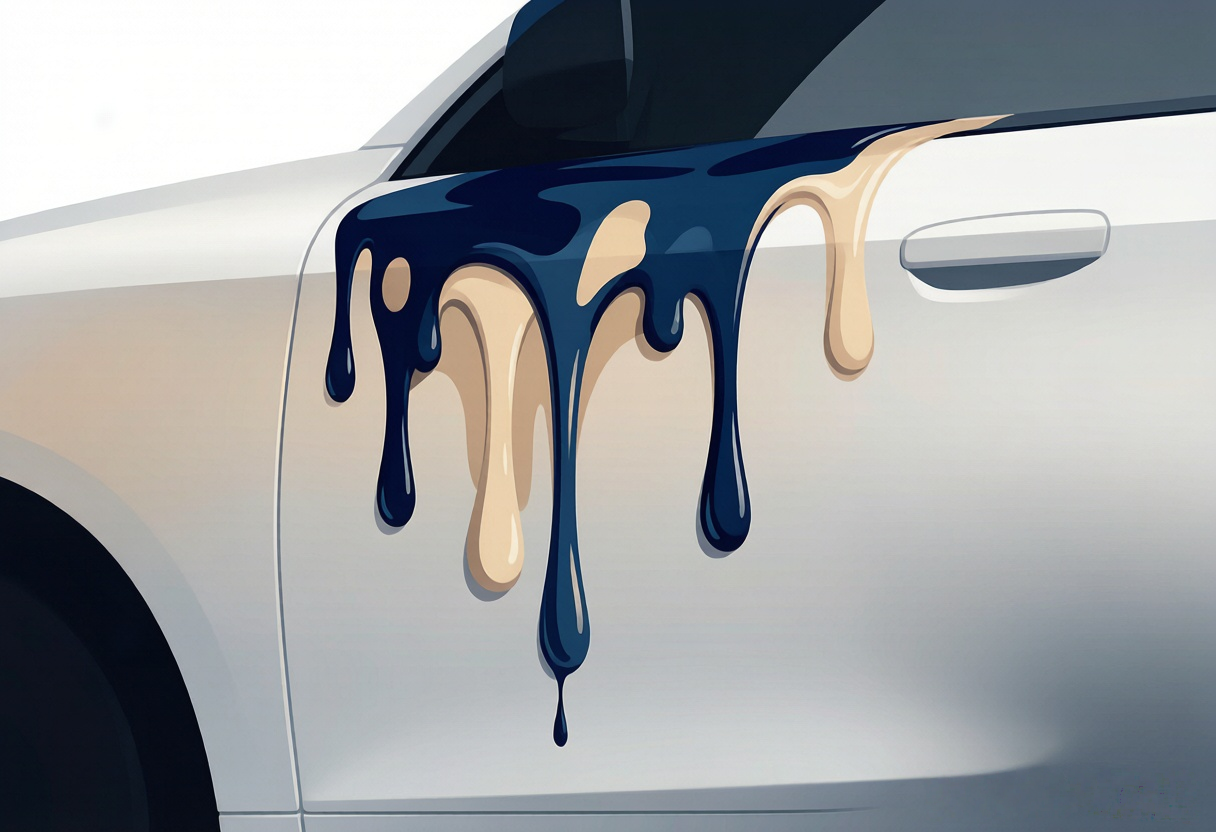
The freshly sprayed paint surface, after a while, shows streaks of downward-running "tear marks" — this is running (sagging). It is not only ugly, but also means the paint film thickness is out of control. This article explains the causes and remedies.
In one sentence:Sagging = too much paint / too thin / moving too slowly; the core is "paint amount per unit area exceeds the critical limit"; reduce paint output, increase distance, and lower dilution to prevent it.
I. Causes of Sagging
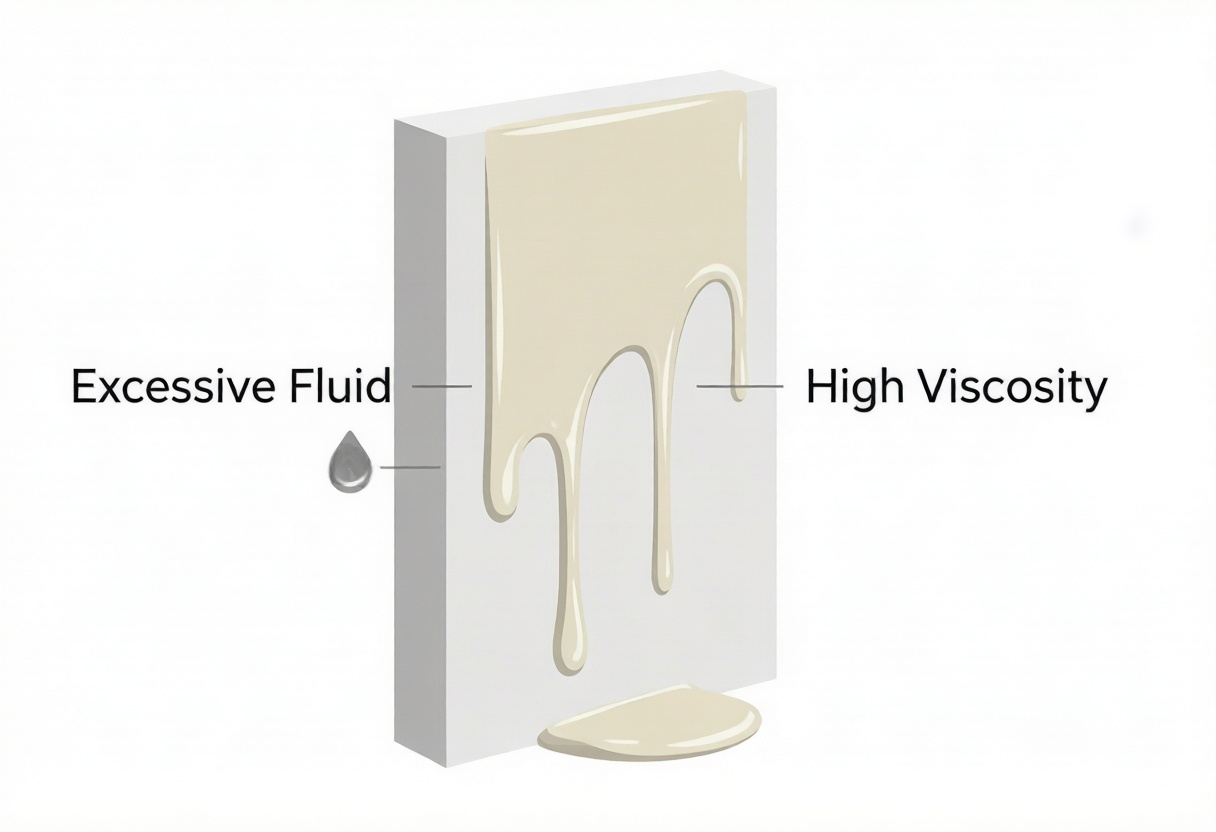
Excessive paint output: The needle/flow is opened too wide, causing local paint buildup.
Spray gun too close: The paint mist lands on one spot before it has fully spread out.
Over-thinning: Viscosity is too low, the paint "won't stick".
Gun travel too slow / excessive overlap: Excessive buildup per unit area.
Figure: Excessive paint, close distance, and over-thinning cause the film to sag once it exceeds the critical thickness.
II. How to Remedy
Not dry: Immediately wipe off with thinner or re-atomize to level.
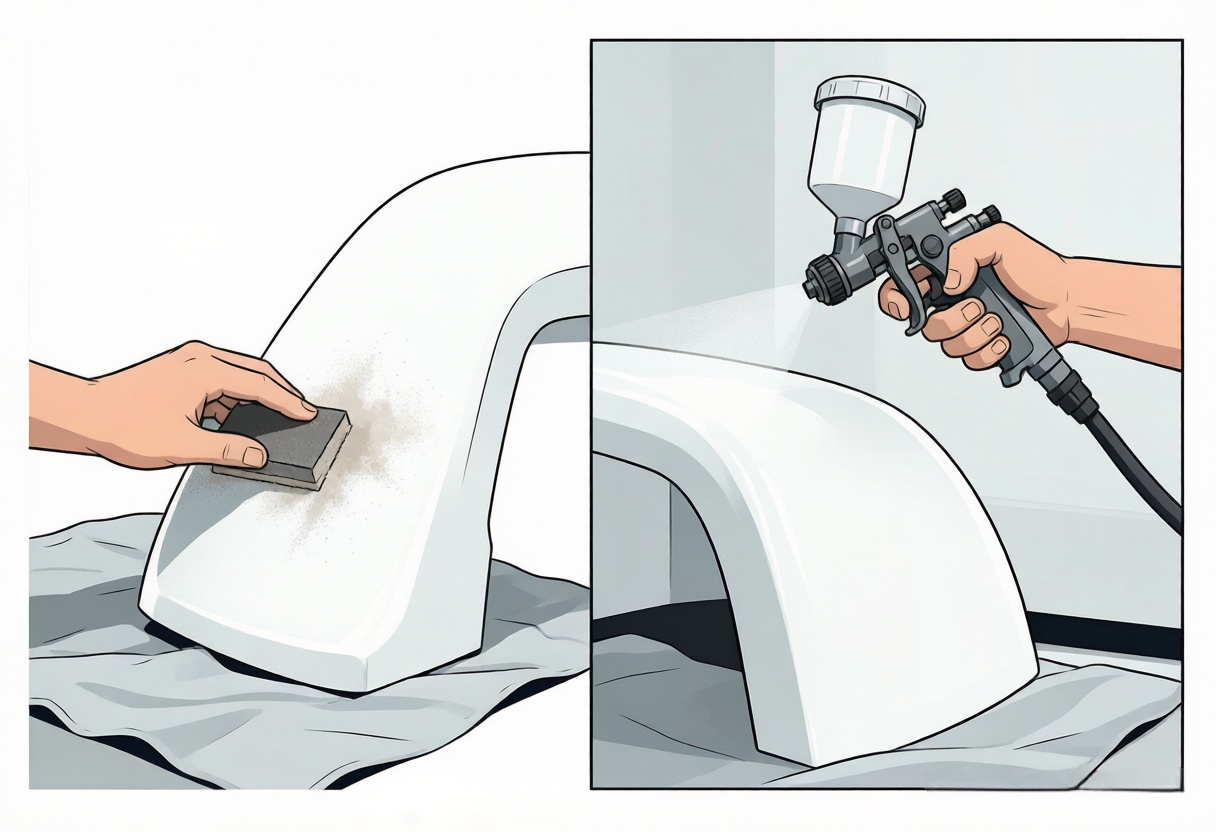
Done: After fully cured, use 1500–2000 grit sandpaper to sand the flow marks smooth, then lightly spray touch-up color/clear coat.
Severe: Sand and repaint the entire panel.
Figure: After drying, sand the sags and apply a thin coat to repair; for severe cases, repaint the entire panel.
Prevention: Adjust viscosity per the coating manufacturer's instructions, control gun travel speed and overlap rate (1/2–2/3), and use "less paint per pass, more passes" on vertical surfaces to allow the film to build up within the sagging threshold.
Summary
Sagging is caused by excessive paint output, holding the spray gun too close, over-thinning, or moving the gun too slowly, leading the film to flow down when exceeding the critical thickness. If not yet dry, it can be wiped off and resprayed; after fully cured, sand the sag marks and apply a mist coat for repair, or completely respray the panel if severe. Prevention relies on controlling viscosity and gun movement.
Frequently Asked Questions (FAQ)
What causes paint sagging/running?
Mainly because the amount of paint per unit area exceeds the critical limit: excessive paint output, spraying too close, over-thinning leading to too low viscosity, or moving the gun too slowly with too much overlap—the paint film cannot hold and drips down.
How to fix sagging/running?
If not yet dry, immediately wipe off with thinner or re-atomize and level; if already dry, after full curing use 1500–2000 grit sandpaper to sand the runs flat, then apply a thin coat of color/clear; if severe, sand the entire panel and repaint.
How to prevent sagging/running?
Adjust viscosity per instructions, control gun speed and overlap rate (1/2–2/3), apply less per pass with more coats on vertical surfaces, and avoid building up thickness in one pass.
Does over-thinning always cause sagging?
Not necessarily, but the risk increases significantly. Too low viscosity means the film cannot hold, especially on vertical surfaces and under high flow, making it very prone to dripping.
Why does moving the gun slowly cause sagging?
Moving the gun slowly causes excessive paint accumulation at the same spot and film thickness beyond spec; once it exceeds the critical sagging thickness, runs form. Keeping a constant speed is key.
Kexin New Materials · Automotive Coating Technology Library | This article is technical Q&A content, for reference in selection and application
{
"@context": "https://schema.org",
"@type": "FAQPage",
"mainEntity": [
{"@type":"Question","name":"What causes paint sagging/runs?","acceptedAnswer":{"@type":"Answer","text":"Mainly because the amount of paint per unit area exceeds the critical limit: excessive paint output, spraying too close, over-thinning leading to low viscosity, or moving the gun too slowly with too much overlap—the paint film cannot hold and drips down."}},
{"@type":"Question","name":"How to fix sagging/runs?","acceptedAnswer":{"@type":"Answer","text":"If not yet dry, immediately wipe off with thinner or re-atomize to level it; if already dry, wait for full cure then sand the run marks flat with 1500–2000 grit sandpaper, then apply a thin touch-up of color/clear coat; for severe cases, sand the entire panel and repaint."}},
{"@type":"Question","name":"How to prevent sagging/runs?","acceptedAnswer":{"@type":"Answer","text":"Adjust viscosity per instructions, control gun speed and overlap rate (1/2–2/3), apply less per pass with more coats on vertical surfaces, and avoid building up thickness in one pass."}},
{"@type":"Question","name":"Does over-thinning always cause sagging?","acceptedAnswer":{"@type":"Answer","text":"Not necessarily, but the risk increases significantly. Too low viscosity means the film cannot hold, especially on vertical surfaces and with high flow rates, making it very prone to dripping."}},
{"@type":"Question","name":"Why does moving the gun slowly cause sagging?","acceptedAnswer":{"@type":"Answer","text":"Moving the gun slowly causes excessive paint accumulation at the same spot and excessive film thickness; once it exceeds the critical sagging thickness, runs form. Keeping a constant speed is key."}}
]
}