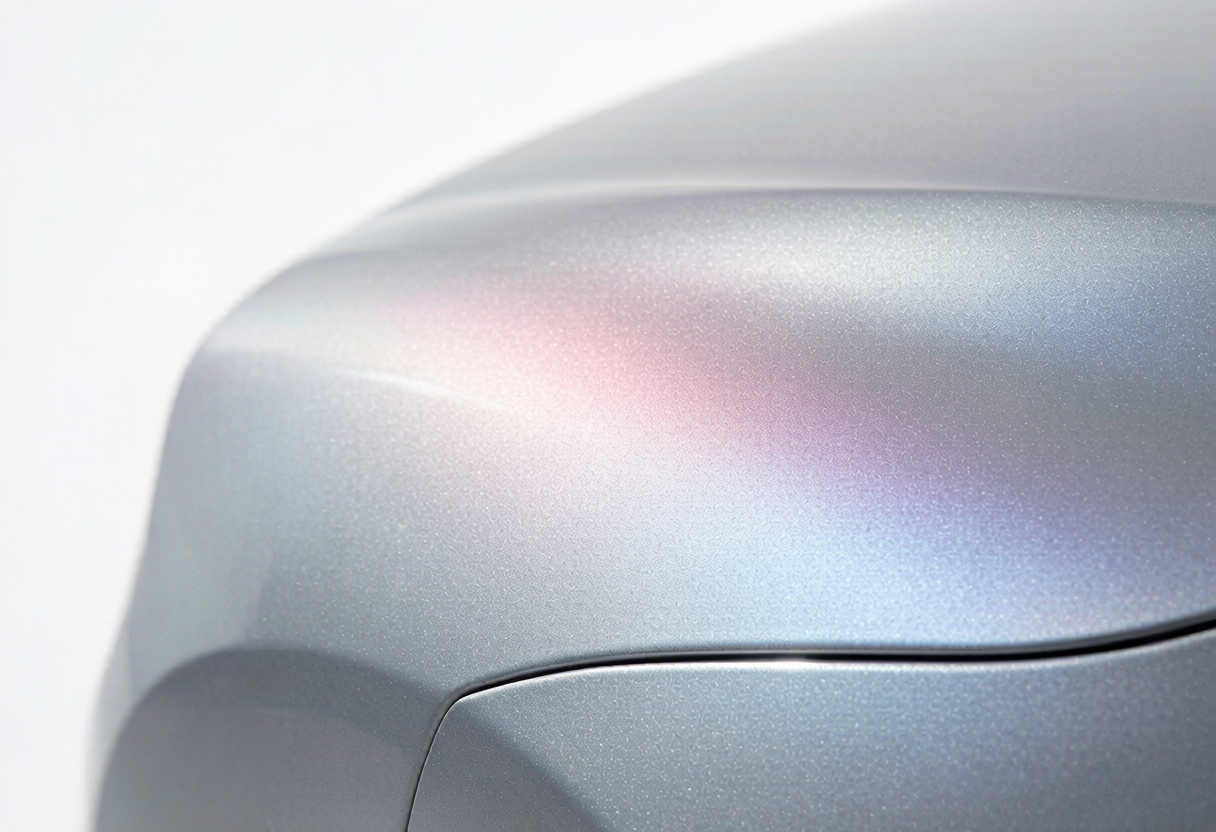
Challenges in color matching automotive pearl (flip-flop) paints: multi-layer structure and angle-dependent color shift

2026-07-12 · Category: Technical Knowledge, Paint & Coatings

🌐 This article was automatically translated from Chinese. Please refer to the original Chinese version if needed. · View original (Chinese)
.kx-article{max-width:860px;margin:0 auto;background:#ffffff;color:#232a33 !important; border-radius:16px;padding:32px 30px 40px;box-shadow:0 8px 40px rgba(0,0,0,.25); font-family:-apple-system,"Segoe UI","PingFang SC","Microsoft YaHei",sans-serif;line-height:1.9;font-size:16px} .kx-article *{box-sizing:border-box} .kx-article h1,.kx-article h2,.kx-article h3,.kx-article p,.kx-article li,.kx-article td,.kx-article th,.kx-article strong, .kx-article .summary,.kx-article .summary p,.kx-article .summary strong, .kx-article .note,.kx-article .note p,.kx-article .kxbox-brand, .kx-article .related,.kx-article .related li,.kx-article .kx-foot, .kx-article .kxqa-q,.kx-article .kxqa-a{color:#232a33 !important} .kx-article h1{font-size:28px;line-height:1.35;font-weight:800;margin:0 0 18px;color:#1a1d21 !important} .kx-article .lead,.kx-article p{margin:14px 0} .kx-article .cover{width:100%;border-radius:14px;box-shadow:0 6px 24px rgba(0,0,0,.15);margin:6px 0 26px;display:block} .kx-article h2{font-size:22px;font-weight:700;margin:40px 0 16px;padding-bottom:10px;border-bottom:2px solid #eceff3;position:relative;color:#1a1d21 !important} .kx-article h2::before{content:"";position:absolute;left:0;bottom:-2px;width:64px;height:2px;background:#e8720c} .kx-article h3{font-size:18px;font-weight:700;margin:26px 0 12px;color:#2a2f36 !important} .kx-article strong{color:#111418 !important;font-weight:700} .kx-article img.inline{width:100%;border-radius:12px;box-shadow:0 4px 16px rgba(0,0,0,.12);margin:22px 0 8px} .kx-article figcaption{color:#7a828d !important;font-size:13px;text-align:center;margin:6px 0 24px} .kx-article table{width:100%;border-collapse:collapse;margin:20px 0;font-size:14.5px;background:#fff;border-radius:10px;overflow:hidden;box-shadow:0 2px 12px rgba(0,0,0,.06);border:1px solid #eceff3} .kx-article th,.kx-article td{padding:12px 14px;text-align:left;border-bottom:1px solid #eceff3;vertical-align:top} .kx-article th{background:#2a2f36;color:#ffffff !important;font-weight:600;font-size:14px} .kx-article tr:last-child td{border-bottom:none} .kx-article tbody tr:nth-child(even){background:#fafbfc} .kx-article .note{background:#eef6ff !important;border-left:4px solid #0a67d0;padding:14px 18px;border-radius:0 10px 10px 0;margin:22px 0} .kx-article .note strong{color:#0a4a97 !important} .kx-article .kxbox-brand{background:#fff3e8 !important;border-left:4px solid #e8720c;padding:16px 18px;border-radius:0 10px 10px 0;margin:22px 0} .kx-article .kxbox-brand strong{color:#5a4632 !important} .kx-article ul{margin:12px 0;padding-left:22px} .kx-article li{margin:8px 0} .kx-article .kxqa-item{background:#fbfcfd;border:1px solid #eceff3;border-radius:12px;padding:16px 20px;margin:14px 0} .kx-article .kxqa-q{font-weight:700;color:#e8720c !important;font-size:16px;margin-bottom:8px} .kx-article .kxqa-a{color:#3a4048 !important;display:block;margin:0} .kx-article .related{background:#fff !important;border:1px dashed #e8720c;border-radius:12px;padding:16px 22px;margin:26px 0} .kx-article .related h3{margin:0 0 6px;color:#e8720c !important} .kx-article .summary{background:linear-gradient(135deg,#fff3e8,#ffe9d6) !important;border-radius:12px;padding:20px 22px;margin:26px 0} .kx-article .summary h3{margin:0 0 10px;color:#1a1d21 !important} .kx-article .kx-foot{margin-top:34px;padding-top:18px;border-top:1px solid #eceff3;text-align:center;color:#8a929d !important;font-size:13px} .related{margin:30px 0 6px;} .related h3{font-size:18px;color:#1C1917;margin:0 0 12px;padding-left:10px;border-left:4px solid #F97316;} .related ul{list-style:none;margin:0;padding:0;} .related li{margin:0 0 9px;padding-left:16px;position:relative;} .related li:before{content:"203A";position:absolute;left:0;color:#F97316;font-weight:700;} .related a{color:#F97316 !important;text-decoration:underline !important;font-weight:600;} .related a:hover{color:#EA580C !important;} .kx-article{max-width:860px;margin:0 auto;background:#ffffff;color:#232a33 !important; border-radius:16px;padding:32px 30px 40px;box-shadow:0 8px 40px rgba(0,0,0,.25); font-family:-apple-system,"Segoe UI","PingFang SC","Microsoft YaHei",sans-serif;line-height:1.9;font-size:16px} .kx-article *{box-sizing:border-box} .kx-article h1,.kx-article h2,.kx-article h3,.kx-article p,.kx-article li,.kx-article td,.kx-article th,.kx-article strong, .kx-article .summary,.kx-article .summary p,.kx-article .summary strong, .kx-article .note,.kx-article .note p,.kx-article .kxbox-brand, .kx-article .related,.kx-article .related li,.kx-article .kx-foot, .kx-article .kxqa-q,.kx-article .kxqa-a{color:#232a33 !important} .kx-article h1{font-size:28px;line-height:1.35;font-weight:800;margin:0 0 18px;color:#1a1d21 !important} .kx-article .lead,.kx-article p{margin:14px 0} .kx-article .cover{width:100%;border-radius:14px;box-shadow:0 6px 24px rgba(0,0,0,.15);margin:6px 0 26px;display:block} .kx-article h2{font-size:22px;font-weight:700;margin:40px 0 16px;padding-bottom:10px;border-bottom:2px solid #eceff3;position:relative;color:#1a1d21 !important} .kx-article h2::before{content:"";position:absolute;left:0;bottom:-2px;width:64px;height:2px;background:#e8720c} .kx-article h3{font-size:18px;font-weight:700;margin:26px 0 12px;color:#2a2f36 !important} .kx-article strong{color:#111418 !important;font-weight:700} .kx-article img.inline{width:100%;border-radius:12px;box-shadow:0 4px 16px rgba(0,0,0,.12);margin:22px 0 8px} .kx-article figcaption{color:#7a828d !important;font-size:13px;text-align:center;margin:6px 0 24px} .kx-article table{width:100%;border-collapse:collapse;margin:20px 0;font-size:14.5px;background:#fff;border-radius:10px;overflow:hidden;box-shadow:0 2px 12px rgba(0,0,0,.06);border:1px solid #eceff3} .kx-article th,.kx-article td{padding:12px 14px;text-align:left;border-bottom:1px solid #eceff3;vertical-align:top} .kx-article th{background:#2a2f36;color:#ffffff !important;font-weight:600;font-size:14px} .kx-article tr:last-child td{border-bottom:none} .kx-article tbody tr:nth-child(even){background:#fafbfc} .kx-article .note{background:#eef6ff !important;border-left:4px solid #0a67d0;padding:14px 18px;border-radius:0 10px 10px 0;margin:22px 0} .kx-article .note strong{color:#0a4a97 !important} .kx-article .kxbox-brand{background:#fff3e8 !important;border-left:4px solid #e8720c;padding:16px 18px;border-radius:0 10px 10px 0;margin:22px 0} .kx-article .kxbox-brand strong{color:#5a4632 !important} .kx-article ul{margin:12px 0;padding-left:22px} .kx-article li{margin:8px 0} .kx-article .kxqa-item{background:#fbfcfd;border:1px solid #eceff3;border-radius:12px;padding:16px 20px;margin:14px 0} .kx-article .kxqa-q{font-weight:700;color:#e8720c !important;font-size:16px;margin-bottom:8px} .kx-article .kxqa-a{color:#3a4048 !important;display:block;margin:0} .kx-article .related{background:#fff !important;border:1px dashed #e8720c;border-radius:12px;padding:16px 22px;margin:26px 0} .kx-article .related h3{margin:0 0 6px;color:#e8720c !important} .kx-article .summary{background:linear-gradient(135deg,#fff3e8,#ffe9d6) !important;border-radius:12px;padding:20px 22px;margin:26px 0} .kx-article .summary h3{margin:0 0 10px;color:#1a1d21 !important} .kx-article .kx-foot{margin-top:34px;padding-top:18px;border-top:1px solid #eceff3;text-align:center;color:#8a929d !important;font-size:13px} .related{margin:30px 0 6px;} .related h3{font-size:18px;color:#1C1917;margin:0 0 12px;padding-left:10px;border-left:4px solid #F97316;} .related ul{list-style:none;margin:0;padding:0;} .related li{margin:0 0 9px;padding-left:16px;position:relative;} .related li:before{content:"203A";position:absolute;left:0;color:#F97316;font-weight:700;} .related a{color:#F97316 !important;text-decoration:underline !important;font-weight:600;} .related a:hover{color:#EA580C !important;}

cover-pearl-matching

More "delicate" than metallic paint is pearl paint (pearlescent paint / iridescent paint). It coats mica flakes with metal oxides, and light interferes across multiple thin films to produce iridescent colors. A slight color mismatch makes a repaired spot look like a "patch." This article explains the difficulties of color matching and blending for pearl paint.

In a nutshell:Pearl paint = base color + pearlescent layer + clear coat with multi-layer interference color; both hue and iridescence are highly sensitive, local transitions are extremely difficult, often requiring whole-panel repaint or refined blend.

I. Structure of Pearl Paint

Pearl paint deposits thin films such as titanium dioxide on transparent mica flakes, where light interferes at the upper and lower surfaces of the film to produce angle-dependent iridescent colors. It is typically a multi-layer structure of "base coat + pearlescent layer (or combined) + clear coat".
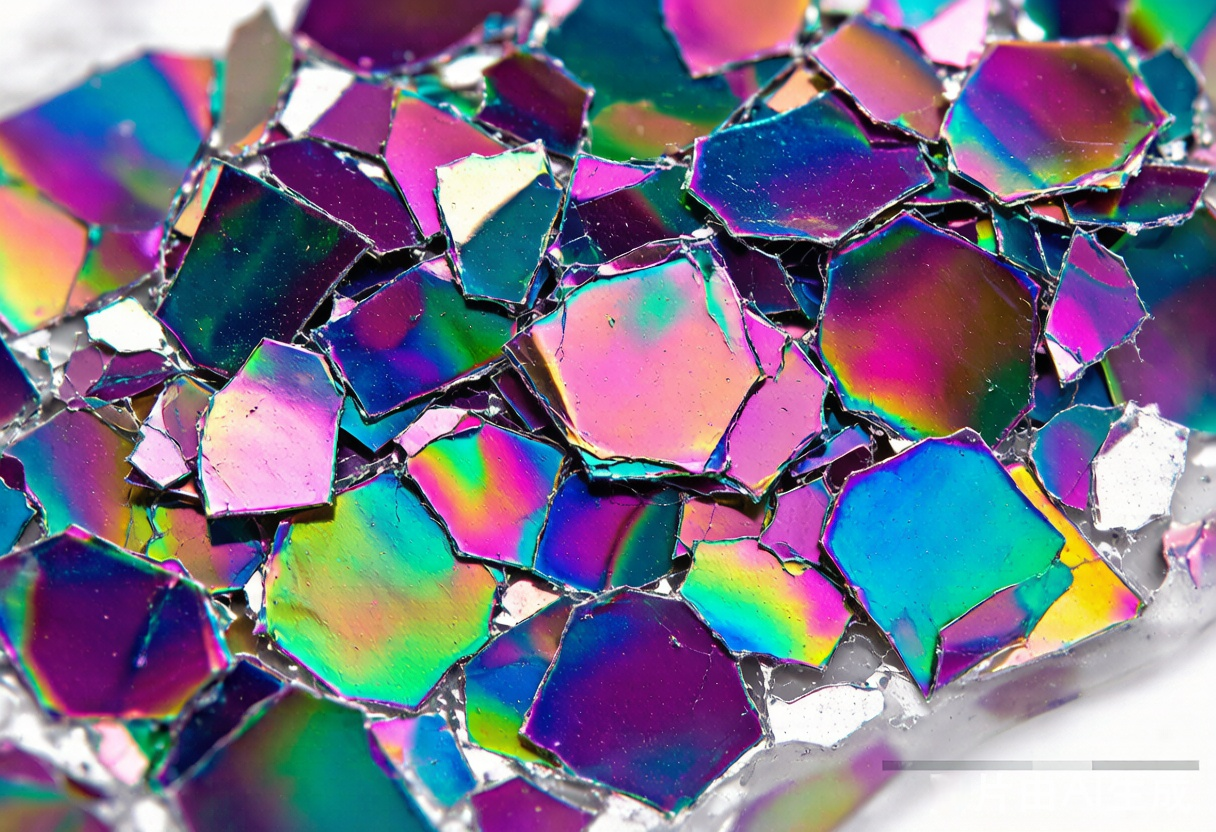
Schematic of mica thin-film interference structure in pearl paint
Figure: Thin-film interference of mica flakes produces angle-dependent iridescence, which is the core of pearl paint.

II. Why is it the most difficult to adjust

  • Dual variables: It is necessary to match both the base color and the iridescent intensity and hue of the pearlescent layer.
  • Extremely angle-sensitive: Tiny arrangement differences are amplified under side lighting.
  • Interlayer coupling: The depth of the base color alters the pearlescent appearance, where one move affects the whole.

III. Blending Transition Techniques

Pearl paint local repair is highly prone to leaving "patches". Commonly used feathered blend: from the damaged area outward, apply multiple thin layers, each layer expanding outward with decreasing concentration, allowing the pearl density to transition smoothly; use blend solvent at the edges to soften.
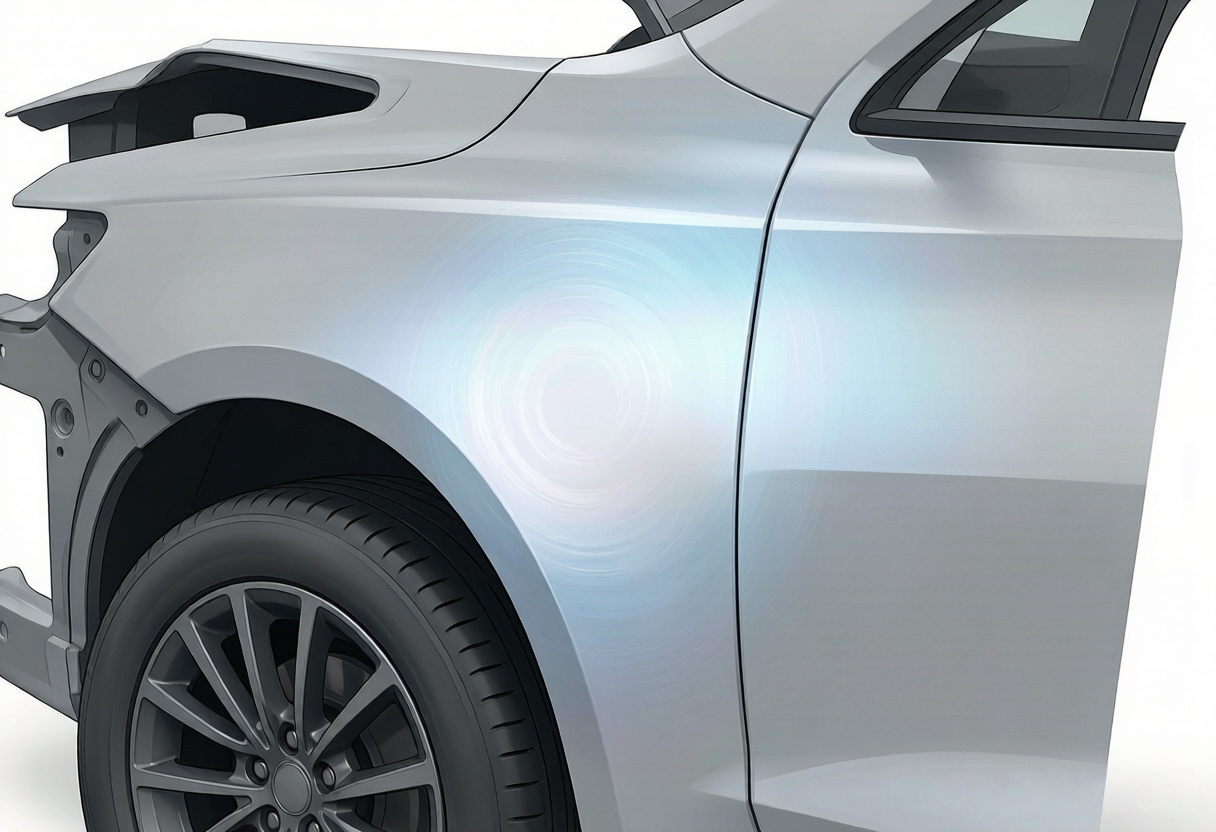
Pearl paint gradient blend transition illustration
Figure: The gradient blend allows pearl density to transition smoothly, reducing the patched appearance.
Practical advice:For large-area or penetrating damage to pearl paint, it is often preferable to repaint the entire panel; only minor damage should be addressed with refined blending, and it must be performed by an experienced technician.

Summary

Pearl paint relies on mica thin-film interference to produce angle-dependent color flop, featuring a multi-layer structure and dual tinting variables, with extreme angle sensitivity and a high tendency for patchy local transitions. Minor damage is refined via gradient blending; major damage or difficult transitions lean toward full-panel repaint.

Frequently Asked Questions (FAQ)

Why is pearl paint harder to mix than metallic paint?
Pearl paint has a multi-layer structure of base color + pearlescent layer + clear coat. You must match both the base color and the iridescent intensity and hue, and the mica orientation angle is extremely sensitive—any deviation is amplified under side lighting.
What is the color-flopping of pearl paint?
Light interferes on the upper and lower surfaces of the coated mica flakes, producing different iridescent effects at different viewing angles. This is the color-flop effect of pearl paint and also the source of its color-matching difficulty.
Why does local repair of pearl paint easily leave patches?
Because the pearlescent density changes abruptly at the repair boundary, the color block edge is visible to the naked eye. A gradual blend (feathering) is needed to make the pearlescent density transition smoothly; otherwise it becomes an obvious patch.
What is a gradual blend (feathering)?
A transition technique of spraying multiple thin layers outward from the damaged area, each layer expanded outward with decreasing concentration, so the pearlescent density changes smoothly and the boundary is softened, reducing the patched look.
When should pearl paint be sprayed over the whole panel?
For large or through-damage areas, aged old paint, and when local blending cannot eliminate color difference, a full-panel repaint is preferred to ensure uniform color and gloss.
Kexin New Materials · Automotive Coating Technology Library | This article is technical Q&A content, for reference in selection and application

{ "@context": "https://schema.org", "@type": "FAQPage", "mainEntity": [ {"@type":"Question","name":"Why is pearl paint harder to mix than metallic paint?","acceptedAnswer":{"@type":"Answer","text":"Pearl paint has a multi-layer structure of base color + pearlescent layer + clear coat. You must match both the base color and the iridescent intensity and hue, and the mica orientation angle is extremely sensitive—any deviation is amplified under side lighting."}}, {"@type":"Question","name":"What is the color-flopping effect of pearl paint?","acceptedAnswer":{"@type":"Answer","text":"Light interferes on the upper and lower surfaces of the coated mica flakes, producing different iridescent colors at different viewing angles. This is the color-flopping effect of pearl paint and also the source of its color-matching difficulty."}}, {"@type":"Question","name":"Why does local repair of pearl paint easily leave patches?","acceptedAnswer":{"@type":"Answer","text":"Because the pearlescent density changes abruptly at the repair boundary, the color block edge is visible to the naked eye. A gradual blend-out is needed to make the pearlescent density transition smoothly; otherwise it is an obvious patch."}}, {"@type":"Question","name":"What is a gradual blend-out?","acceptedAnswer":{"@type":"Answer","text":"A transition technique of spraying multiple thin layers outward from the damaged area, each layer expanded outward with decreasing concentration, so the pearlescent density changes smoothly and the boundary is softened, reducing the patched look."}}, {"@type":"Question","name":"When should pearl paint be sprayed over the whole panel?","acceptedAnswer":{"@type":"Answer","text":"For large-area or through damage, aged old paint, and cases where local blending cannot eliminate color difference, a full panel repaint is preferred to ensure uniform color and gloss."}} ] }