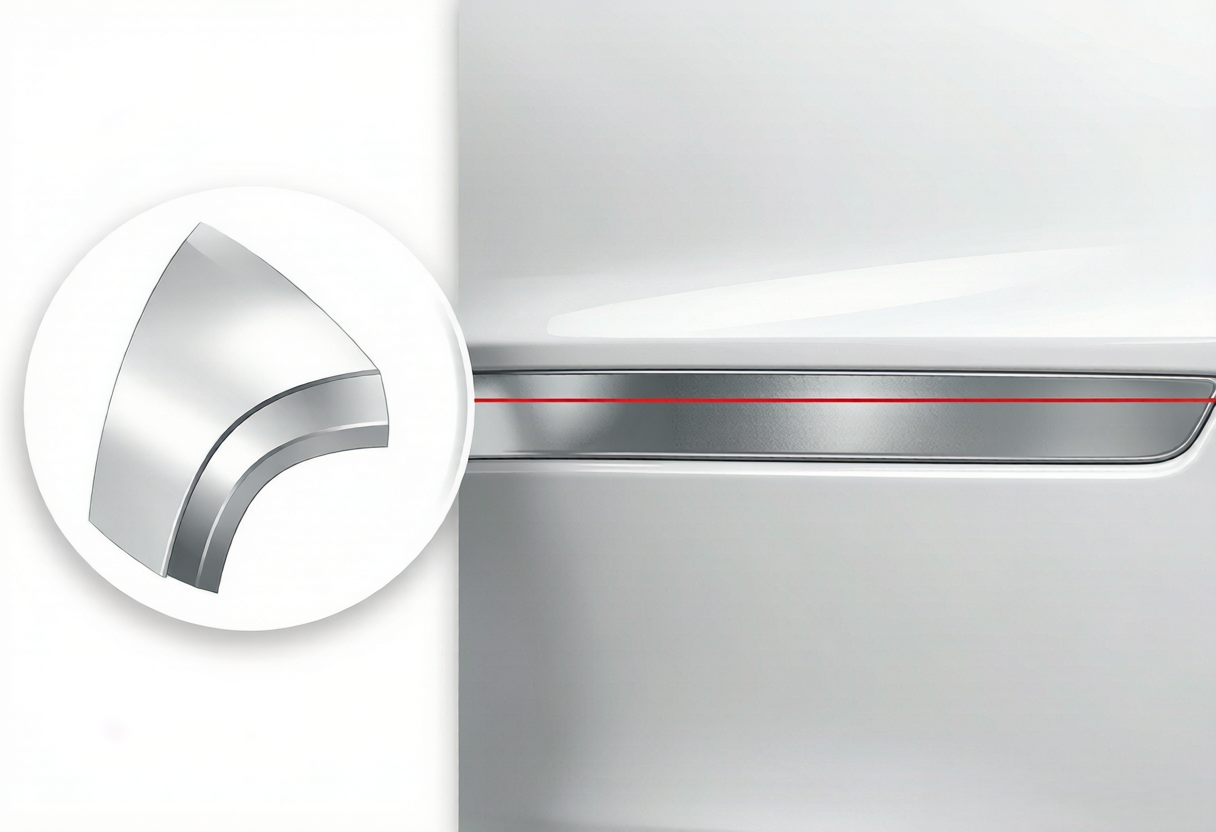
A small scratch on the car body, should you only touch up that spot, or repaint the entire panel? This is the critical fork in repair quotes and results. Spot repair saves material and time but tests blending technique, full panel repaint gives uniform results but costs more. This article explains the process differences and selection principles of the two.
I. Spot Repair
Only treat the damaged area and its surroundings, using blending to naturally merge the new paint with the old, preserving the undamaged original factory parts.
- Feathering: The damaged edge is ground to form a bevel.
- Blending: Thinly spray a transition layer over the old paint to eliminate obvious boundaries.
- Blend water: Spray blend solvent at the edges to soften the seam.
II. Full-panel Spraying
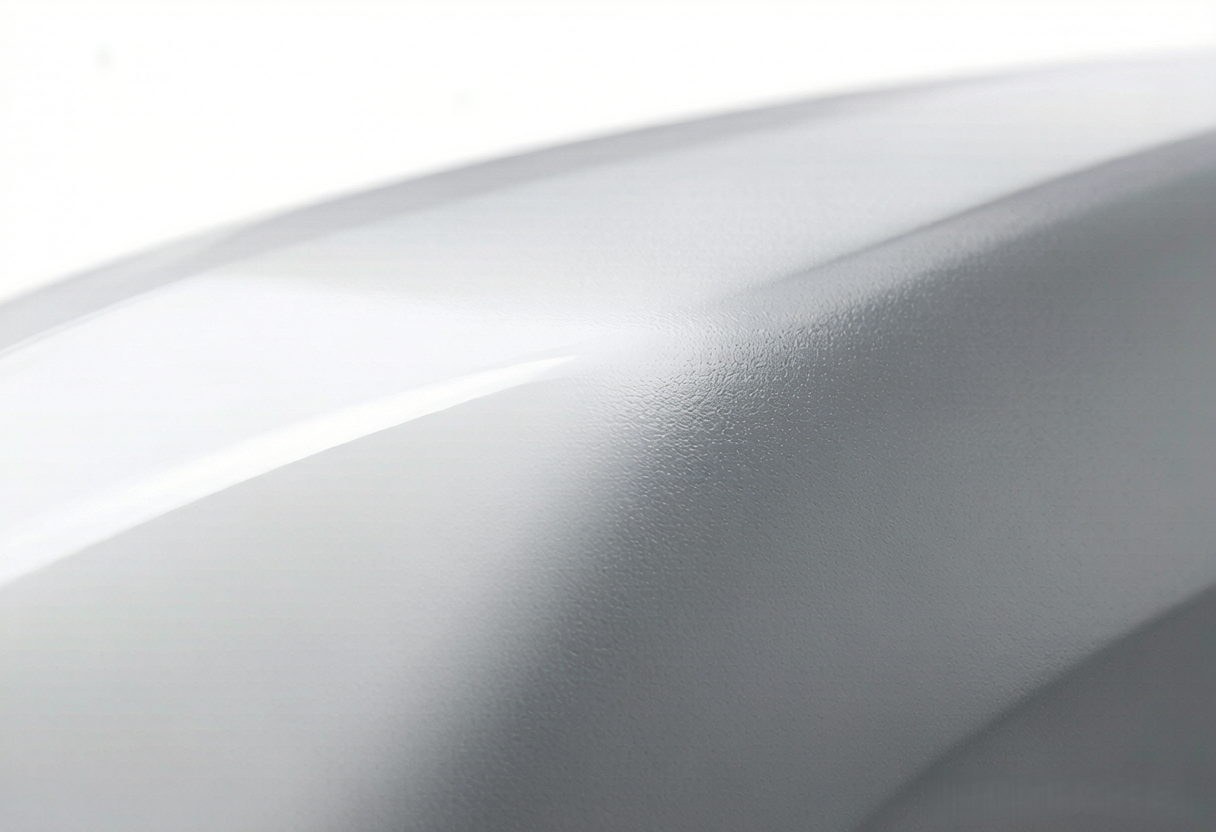
Spray the entire panel (e.g., the whole door) uniformly, achieving completely consistent color and gloss with no seam risks, but at higher material and labor costs.
III. How to Select
| Scenario | Recommendation |
|---|---|
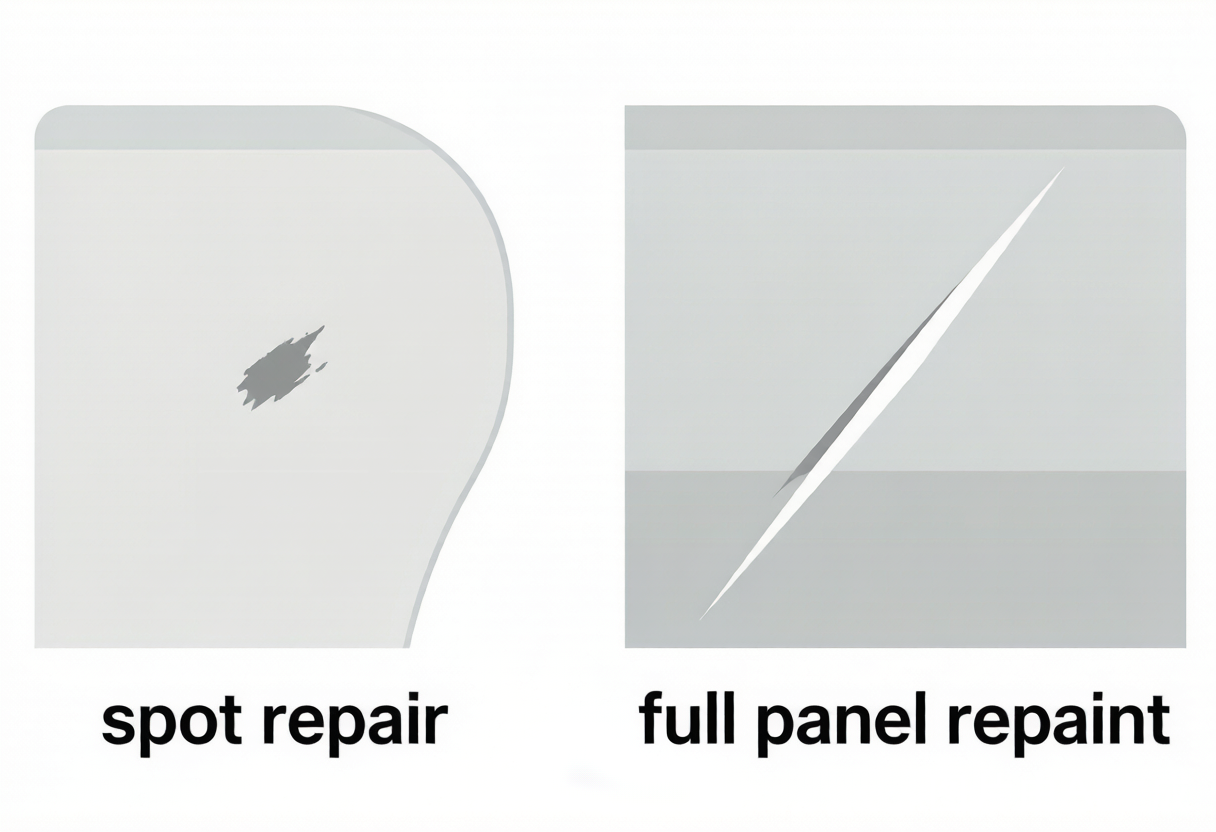
| Small-area single-point damage, adjacent surface intact | Spot repair |
| Large-area / through damage | Full panel spray |
| Old paint aged, lost gloss, multiple color patches | Full panel spray |
| Metallic / pearl paint hard to blend | Prefer full panel |
Summary
Spot repair uses blending overspray + feathering to save material and time, suitable for minor damage; full panel spraying ensures uniform color and gloss across the entire panel, suitable for major damage, aged old paint, or difficult-to-blend metallic/pearl paints. The selection principle is: choose spot repair if the damage is small and adjacent surfaces are intact, otherwise choose full panel.
Frequently Asked Questions (FAQ)
{ "@context": "https://schema.org", "@type": "FAQPage", "mainEntity": [ {"@type":"Question","name":"What is blending?","acceptedAnswer":{"@type":"Answer","text":"Blending is a technique where new paint is feathered thinly from the repair area toward the old paint, allowing color and gloss to transition naturally and eliminating hard edges. It is the core method for removing color mismatch in spot repairs."}}, {"@type":"Question","name":"Why is it harder to do spot repairs on metallic paint?","acceptedAnswer":{"@type":"Answer","text":"Metallic/pearl paints exhibit a flop effect, and the orientation of aluminum flakes/mica is extremely sensitive. Local blending can easily produce visible color differences and a patchy appearance, so full-panel spraying is often preferred."}}, {"@type":"Question","name":"When is full-panel repainting necessary?","acceptedAnswer":{"@type":"Answer","text":"For large or through-panel damage, overall aging and loss of gloss of old paint, multi-color panels, and when metallic/pearl paints are difficult to blend, full-panel spraying should be used to ensure uniform color and gloss and avoid seam risks."}}, {"@type":"Question","name":"What is blender used for?","acceptedAnswer":{"@type":"Answer","text":"Blender is applied at the blend edge to soften the interface between new and old paint, prevent clear ring marks, and help the new clearcoat fuse better with the old clearcoat. It is a common aid for finishing edges in spot repairs."}}, {"@type":"Question","name":"Will spot repair damage the original factory paint?","acceptedAnswer":{"@type":"Answer","text":"With proper operation, only the area around the damage is feathered and the undamaged original paint is preserved, which is actually more economical. However, if new clearcoat is applied directly without sanding a bite into the old clearcoat, adhesion may be insufficient and edges may lift later."}} ] }