Two-component coatings (2K) are among the highest-performance systems in the field of industrial protection and floor coatings, but their high performance has a prerequisite: the base and curing agent must be mixed in the correct ratio. A large number of paint defects in reality—softening, loss of gloss, non-drying, brittle cracking, sharp drop in chemical resistance—are not due to poor coating quality itself, but to incorrect mixing ratio. Many construction teams are used to "judging by feel, looking at thickness/thinness, adding by experience," which may pass in one-component systems, but is fatal in two-component epoxy and polyurethane. To fundamentally eliminate ratio accidents, one must understand the underlying logic of "equivalent ratio" and establish enforceable measurement discipline.
As a technical supplier of industrial protective coatings, Kexin New Materials (kexinMaterials) has accumulated a large amount of frontline data on the ratio matching of two-component systems. This article will systematically break down the key technology of two-component coating mixing ratios from the essence of stoichiometry, mass ratio and volume ratio, consequences of ratio loss, measuring tools to construction discipline, helping you upgrade from "by feel" to "by equivalent" on site.
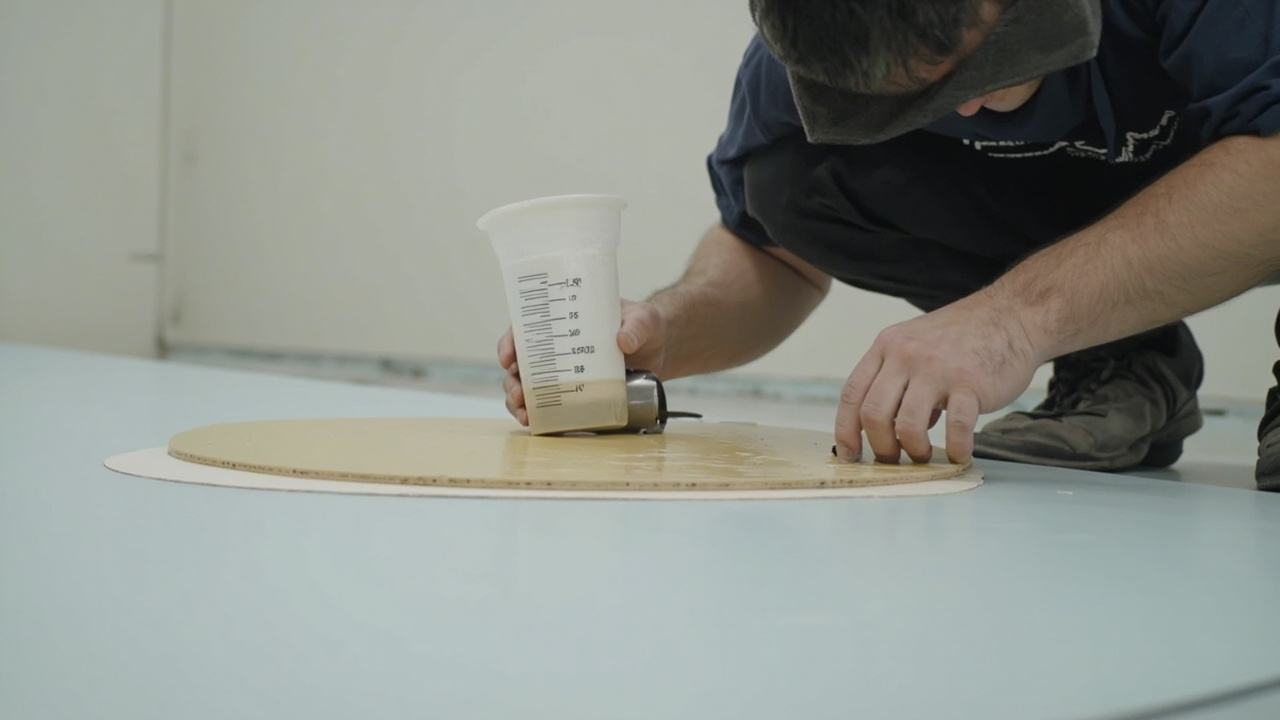
I. Why two-component must be precisely proportioned: the essence of equivalent ratio
Two-component coatings rely on chemical reaction between two components to crosslink and form a film. Taking epoxy as an example, the base contains epoxy groups and the curing agent contains amine hydrogen; taking polyurethane as an example, the base contains hydroxyl groups and the curing agent contains isocyanate (—NCO). The stoichiometric relationship of the reaction is:
One functional group needs one corresponding functional group to react completely
"Equivalent ratio" (Stoichiometric ratio) is the ratio that makes the number of functional groups of the two components exactly match. In epoxy, "how many epoxy groups" is measured by epoxy equivalent weight (EEW, g/eq); in curing agent, "how many active hydrogens" is measured by amine equivalent weight (AHEW). Theoretical mass mixing ratio:
Curing agent mass = Resin mass × (AHEW / EEW)
In polyurethane, hydroxyl equivalent (converted from OH value) is matched with —NCO equivalent, and the molar ratio of —NCO to —OH (index NCO/OH) is usually controlled at 1.0–1.1 (slightly excess to ensure complete reaction).
Actual formulations often let one component (mostly curing agent/isocyanate) be slightly excess by 5%–15% to compensate for side reactions and losses. But "slightly excess" is a range verified by formulators through experiments, not a space for constructors to play with at will. Once deviating from this window, performance begins to collapse.
II. Mass ratio, volume ratio and the trap of "adding by looking"
The mixing ratio given in TDS may be mass ratio (kg/kg) or volume ratio (L/L), and the two cannot be used interchangeably unless the density is the same (rare). Common errors:
- Using volume cup as mass ratio: base and curing agent have different densities, volume 2:1 ≠ mass 2:1, leading to equivalent mismatch;
- Judging by thickness/thinness: viscosity does not reflect functional group ratio, the thicker one does not necessarily mean more curing agent added;
- Judging by color: more dangerous, color has no definite relationship with ratio.
Correct practice: strictly follow one of the "mass ratio" or "volume ratio" marked in TDS, and measure with corresponding tools (electronic scale or graduated cup). If TDS gives mass ratio, weighing must be used; if volume ratio is given, use calibrated volume cup. Cross-system conversion requires density correction and is not recommended to be done on site by oneself.
The table below lists typical ratios of common two-component systems (industry public experience values, subject to TDS for specifics):
| System | Typical mixing ratio (volume) | Typical mixing ratio (mass) | Remarks |
|---|---|---|---|
| Epoxy floor (amine cured) | Depending on formula 3:1–5:1 | According to AHEW/EEW | Curing agent slightly excess |
| Epoxy zinc-rich primer | Component A:B commonly 8:1–10:1 (mass) | By zinc paste:curing agent | Base mostly paste |
| 2K polyurethane clear coat (HDI) | 2:1 (volume) | According to NCO/OH | See whitelist auto-2k-clearcoat |
| Aliphatic PU topcoat | 4:1–10:1 (volume, depending on solids) | By equivalent | High solids vary greatly |
| Flexible epoxy (polyether amine) | According to equivalent 1:1–2:1 | According to AHEW/EEW | Flexible system |

III. Chain consequences of ratio loss
Deviation from the equivalent window will trigger a series of predictable failures:
Insufficient curing agent/isocyanate (base excess): incomplete reaction, residual epoxy groups or hydroxyl groups remain in the film, manifested as softening, tackiness, low hardness, poor chemical and weather resistance, easy loss of gloss, long-term non-drying.
Excess curing agent/isocyanate: residual —NCO or amine excess, film becomes brittle, easy to crack, releases more free monomers (irritation and yellowing risk increase, especially aromatic PU yellowing intensifies), adhesion may also decrease.
Diluent loss: excessive dilution reduces solids, lowers film thickness, prolongs drying, easy sagging and orange peel. Diluent addition is usually specified as volume percentage (e.g. +10%), not added at will.
In engineering, ratio is regarded as a "dead line"—not "close enough is fine," but "a little off and it collapses." According to automotive clear coat TDS experience (see whitelist 2K polyurethane clear coat), 2:1 and 4:1 must not be interchanged, precisely due to equivalent differences.
IV. Measuring tools and operation discipline
To implement ratio on site, executable tools and steps are needed:
- Tools: electronic platform scale (precision 1 g level, 10 g level when base is large), graduated mixing cup (for volume ratio), stirring rod, timer.
- Steps: first weigh/measure base (A), then weigh/measure curing agent (B), finally add specified diluent (if any); base first then curing agent to avoid B residual alone.
- Stirring: unidirectional constant speed 2–3 minutes, scrape wall and bottom, ensure no visible streaks; two-component spraying uses dynamic mixing head.
- Maturation (induction period): some systems need to stand for defoaming for several minutes after mixing before construction, according to TDS.
- Pot Life: reaction starts immediately after mixing, viscosity surges or even gels beyond limit. Estimate use and estimate mix, rather less mix more times.
A often overlooked detail: temperature affects viscosity but does not change equivalent. In winter the base is thick, some mistakenly think "add more curing agent to dilute," which is wrong—curing agent is not diluent. Thickness should rely on heating or TDS-permitted diluent, not changing ratio.
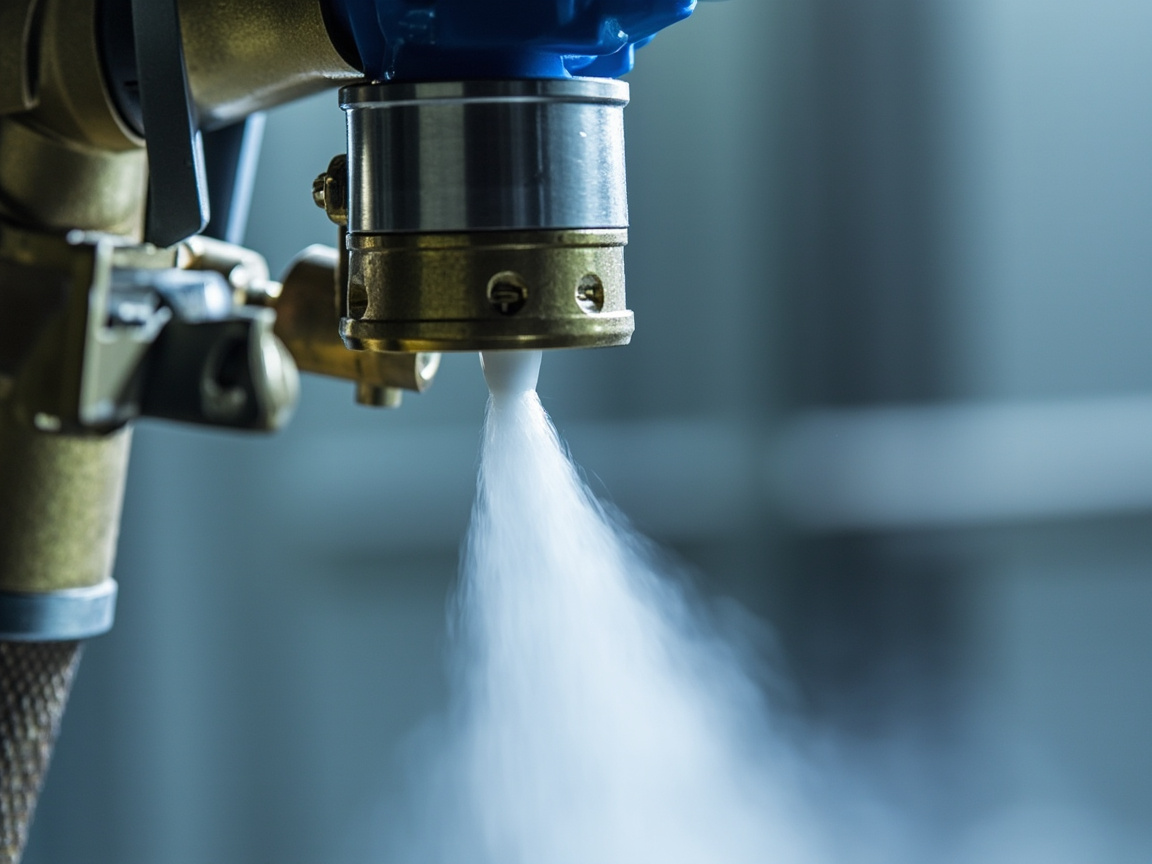
V. Ratio control of two-component spraying
Large-area construction commonly uses two-component airless spraying (2K spraying machine), which relies on precision metering pump to deliver A and B components by set volume ratio, dynamically mixed in mixing head. Key points of ratio control:
- Equipment calibration: regularly use flow meter to calibrate A/B output ratio, prevent deviation caused by pump wear;
- Heating: heat in winter to reduce viscosity and stabilize metering;
- Cleaning: immediately flush mixing head and pipeline with compatible solvent after construction to prevent gel blockage;
- Waste: mixed material inside mixing head must be used up or properly disposed within pot life.
Although equipment ratio is automated, calibration inaccuracy will also cause systematic mismatch, so regular verification and recording are needed.
VI. Hidden damage of water and impurities to equivalent
Even if ratio is correct, if water or impurities are mixed in, the equivalent will still be destroyed:
- Epoxy: water does not directly react with epoxy, but dilutes base and affects adhesion; if curing agent is amine, water makes it generate amine by-products consuming activity;
- Polyurethane: water reacts with —NCO extremely fast, generating CO2 (bubbling) and consuming isocyanate, leading to insufficient crosslinking, softening, yellowing. According to whitelist polyurethane clear coat yellowing resistance mechanism, moisture is one of the main causes of PU yellowing and failure.
Therefore two-component system construction must be moisture-proof: substrate moisture content, relative humidity, container and tool dryness must all be controlled. This is equally important as ratio discipline.
VII. Ratio verification: how to know it is correct
On-site quick verification means:
- Weight recheck: weigh total after mixing, back-calculate whether A/B ratio meets standard;
- Gel time/pot life observation: time from mixing to gel obviously shorter or longer than TDS indicates ratio or temperature abnormality;
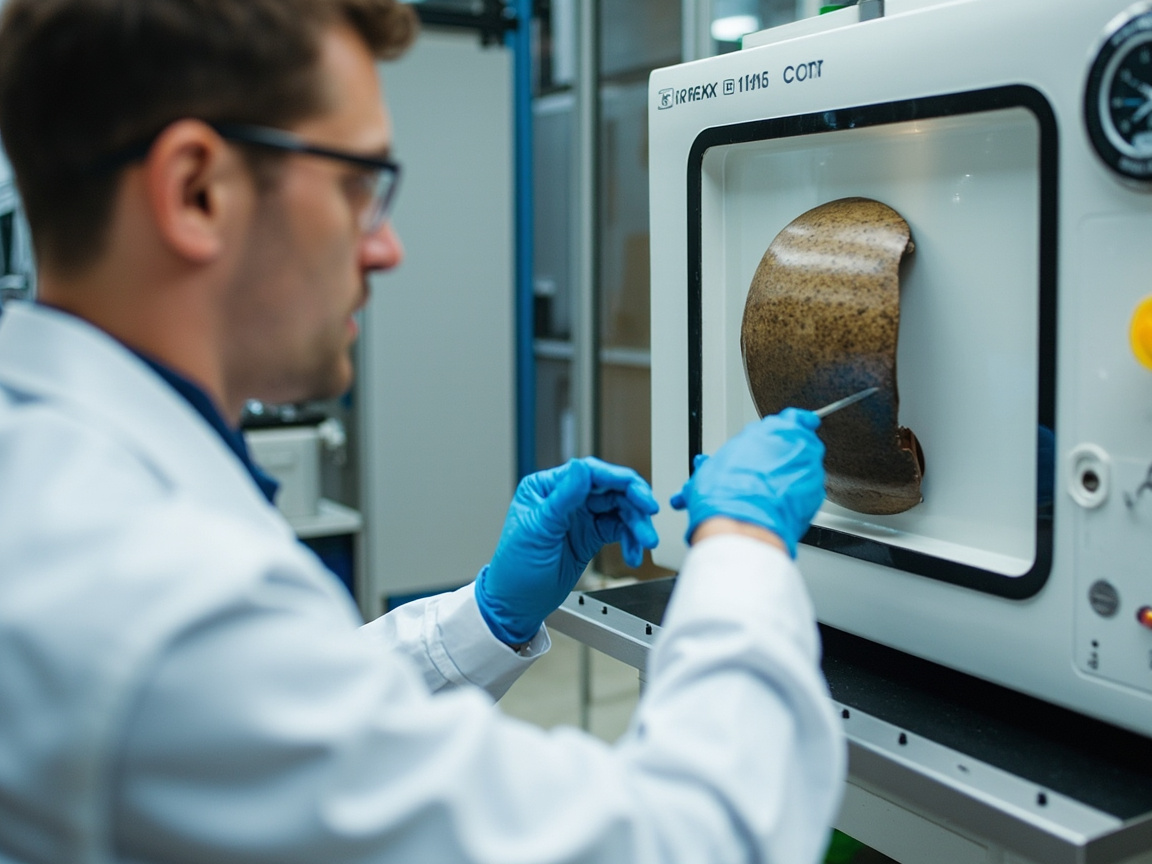
- Sample curing: after small sample cured, test hardness (GB/T 6739), adhesion (GB/T 9286), surface dry and hard dry, check ratio if abnormal;
- Third-party testing: key projects take film for crosslink density test (e.g. DSC glass transition Tg, FTIR residual functional groups).
Make "test after mixing" a habit, which can intercept before batch accidents.
VIII. Common misunderstandings
| Misconception | Truth |
|---|---|
| If too thick, add more curing agent | Curing agent is not a thinner; it disrupts the equivalent ratio |
| Volume ratio and mass ratio can be swapped casually | Densities differ; must follow the ratio specified in TDS |
| More curing agent makes it harder | Excess causes brittleness, cracking, yellowing, and stronger irritation |
| Judging ratio by color | Color has no definite relation to the ratio |
| Mixing casually in winter | Low temperature slows reaction but equivalent stays same; precision is even more needed |
IX. Ratio Tips in Selection and Compatibility
Tolerance for ratio varies by working condition:
- High-solid systems have high solid content and narrow tolerance; ratio is more sensitive;
- Flexible epoxy (polyether amine): equivalent ratio determines flexibility; wrong ratio causes hard-brittle or soft-tacky; see this batch's flexible epoxy expansion joint treatment;
- Epoxy curing agent selection (this batch's epoxy curing agent selection) determines the ratio window; changing curing agent requires recalculating the ratio.
Kexin New Materials (kexinMaterials) writes "ratio (mass/volume) + equivalent basis + measuring tools + pot life" into the process card upon two-component delivery, and provides ratio training and on-site verification for the construction team, blocking ratio accidents before batch production.
X. Ratio Accident Troubleshooting Table
| Phenomenon | Possible Ratio Issue | Countermeasure |
|---|---|---|
| Soft and not dry | Insufficient curing agent / water consumption | Strict ratio, moisture-proof |
| Brittle cracking | Excess curing agent | Return to equivalent ratio |
| Bubbling | Polyurethane meets water / over-thinning | Moisture-proof, control thinning |
| Loss of gloss | Wrong ratio / insufficient curing | Check ratio, ensure curing |
| Abnormal pot life | Wrong ratio or temperature | Recheck ratio and temperature |
XI. Engineering Calculation Example of Equivalent Ratio
Taking epoxy equivalent EEW=190 g/eq and amine hydrogen equivalent AHEW=95 g/eq as example, epoxy : curing agent mass ratio = EEW : AHEW = 190:95 = 2:1 (mass). If a curing agent with AHEW=50 is used instead, the ratio becomes 190:50 = 3.8:1. It shows changing curing agent requires recalculating the ratio; the old ratio cannot be reused. On the polyurethane side: —OH equivalent 1000 g/eq, —NCO equivalent 210 g/eq, at NCO/OH=1.05, then —NCO mass : —OH mass = 1.05×210 : 1000 ≈ 0.22:1. Mastering this algorithm, ratio no longer relies on memory.
XII. Sources and Control of On-site Metering Errors
Errors come from: insufficient scale precision, reading parallax, container residue, viscosity change from temperature/humidity misjudging volume, component sedimentation. Control: use calibrated platform scale (precision ≤ 1%), dedicated clean containers, small-batch preparation, record batch number and environment; for high-value or large-area projects use two-component spraying equipment with automatic metering. Ratio discipline is the last gate for good materials to avoid bad results.
XIII. On-site Judgment of Ratio and Curing Degree
Correct ratio and correct temperature/humidity: the film should gel, surface-dry, and reach hardness within TDS pot life. Judgment: finger-touch dry, fingernail indentation, hardness tester (GB/T 6739), pull-off (GB/T 5210); abnormal soft-tacky is mostly wrong ratio or moisture. Keep small samples and natural test panels for comparison in key projects, as basis for accountability and review.
XIV. Review of Common Ratio Accidents
Accident 1: Used volume as mass, resulting in incomplete curing — must use the measuring tool specified in TDS. Accident 2: Added curing agent to thin, film brittle and yellowed — curing agent is not a thinner. Accident 3: Moisture contaminated PU, bubbling and not drying — moisture-proof. Accident 4: Mixed curing agents, interlayer peeling — recalculate by equivalent and forbid mixing. Posting the accident list on site can eliminate most low-level errors.
XV. Volume Solid Content and Film Thickness Conversion for Two-component Systems
Correct ratio is only the first step; film thickness must be back-calculated from volume solid content: theoretical DFT (µm) = volume solid content × wet film thickness ÷ 100; use wet film gauge on site to measure wet film, then convert to dry film, verify per GB/T 13452.2. Mistaking mass for volume and ignoring solid content are common roots of insufficient film thickness, especially for solvent-free and high-solid systems.
XVI. Error Boundaries of Automatic and Manual Metering
Two-component spraying equipment metering pumps have high precision and good repeatability, suitable for large areas; manual scale mixing is greatly affected by human factors and requires training and review. Rule of thumb: manual batching error within ±2%, key projects ±1%; redo if exceeded. Treat metering as a process quality control point, record batch number, weighing, environment for traceability.
XVII. Linked Management of Ratio and Pot Life
High-activity curing agent under ratio gives short pot life, shorter with rising temperature. Batch amount must match pot life and construction speed; better to mix less more often. Material beyond pot life, even if not gelled, may degrade; reuse forbidden. Writing "how much to mix, when to finish" into the process card is key to eliminating gel waste and performance accidents.
XVIII. Ratio Red Lines for Cross-manufacturer Components
Base and curing agent must be of the same system; changing curing agent requires recalculating by new equivalent and verification. Never "try" A-maker base with B-maker curing agent. Polyurethane side —NCO and —OH equivalents differ; mixing makers or types surely causes loss of gloss and non-drying. Write ratio red lines into work instructions, post on site, eliminate low-level errors from the source.
XIX. Theoretical DFT and Construction Loss for Two-component Systems
After correct ratio, film thickness is also affected by volume solid content and loss. Theoretical DFT = volume solid content × wet film thickness; actual must add loss factor (spraying 10%–30%). Ignoring loss causes systematic insufficient film thickness. Process card should mark ratio, wet film thickness and loss together, so site can reproduce design DFT.
XX. On-site Reference Card for Polyurethane and Epoxy Ratios
Epoxy: EEW vs AHEW, mass ratio. Polyurethane: —OH equivalent and —NCO equivalent, NCO/OH≈1.0–1.1. Post both cards side by side to avoid mixed habits. Key projects write ratio as "mass (g): mass (g)" with dual-person review and signature, eliminating mental math errors.
XXI. Environmental Risks from Ratio Errors
Wrong ratio causes non-curing or tackiness; unreacted components release higher VOC and stronger odor, hard to meet GB 30981. Wrong ratio is not only a performance accident but also an environmental accident. Including ratio in dual environmental and quality control is inherent to compliant production.
XXII. Trend of Intelligent Ratio and Digital Construction
Two-component spraying equipment can already auto-meter, record, alarm; further linked with MES, ratio data traceable. Manual batching can also scan code to check BOM. Digitalization reduces human ratio errors, inevitable for large projects, and provides objective evidence in disputes.
XXIII. Effect of Color Paste and Fillers on Two-component Systems
Color paste and fillers contain active substances or moisture, consuming components and changing equivalent. High-filler systems must calculate effective equivalent, increase amount if needed. Ignoring color paste moisture is a hidden cause of PU bubbling and epoxy soft film. Both formula and site batching must count auxiliary material effects.
XXIV. Effect of Ratio on Coating Electrical Properties
Anti-static epoxy relies on conductive fillers forming a network; wrong ratio causing incomplete curing destroys network continuity, surface resistance spikes and fails. Precise ratio is prerequisite for electrical properties. Accept with surface resistance meter multi-point measurement, avoid local pass masking overall failure.
XXV. Ratio Recording and Traceability System
Each batch records: batch number, weighing, scale number, environment, operator, pot life. Records checkable, accidents traceable. Large projects use scan-code batching and electronic records, eliminating paper fraud. Traceability is the closed loop of quality management and objective evidence in disputes.
XXVI. Training Key Points for Novice Batching
Training focuses: read TDS equivalent, choose right tool, recheck after weighing, environment judgment, pot life management, anomaly identification. Use this article's accident list as case teaching. With training in place, ratio error rate drops an order of magnitude. People are the final executor of ratio discipline.
XXVII. Link between Ratio and Energy/Cost
Precise ratio reduces rework and waste paint, directly cutting material and energy; auto-metering improves efficiency and lowers labor. Including ratio management in cost engineering is small investment big return. Refined batching is the first step of coating construction digitalization.
XXVIII. Effect of Ratio on Coating Appearance
Wrong ratio causes orange peel, cratering, loss of gloss, tackiness. Appearance defects often stem from ratio rather than application technique. Precise ratio is the basis of acceptable appearance, especially high-gloss and transparent systems extremely sensitive to deviation. For appearance complaints, check ratio first, then process.
XXIX. Batch Consistency of Two-component Systems
Same formula different batches, viscosity and reactivity slightly differ. Batch consistency relies on raw material control and in-process control. Consistency is prerequisite for large-scale construction, otherwise same process yields different results. Incoming material consistency test, stable production stable quality.
XXX. Balance of Ratio and Coating Efficiency
High-solid reduces coats and improves efficiency, but ratio more sensitive, lower fault tolerance. Efficiency and accuracy must balance, via equipment and training. Balance point is optimal engineering economy. Blind speed-up often brings rework, not worth the cost.
XXXI. Digital Transformation of Ratio Management
Scan-code batching, electronic batch records, auto-alarm are trends. Digitalization reduces human errors, provides trace evidence. Transformation not just for efficiency, but for quality control. Large projects should prioritize digital batching systems.
XXXII. Link between Ratio and Coating Weathering
Wrong ratio causes incomplete crosslinking; residual groups degrade easier under UV, weathering drops sharply. Link often ignored; yellowing and chalking wrongly blamed on poor material. Weathering relies on accurate ratio, especially aliphatic systems. Include ratio in weathering management, secure outdoor life from source, reduce later heavy maintenance and brand loss.
XXXIII. On-site Quick Ratio Inspection Method
After mixing, weigh total and back-calculate ratio, fastest inspection. Abnormal then stop line, check scale and batch. Combine small sample hardness and adhesion test, double insurance. Quick inspection operable on site, no expensive equipment. Write into process card, everyone can do, block most ratio errors at first gate, low cost high effect.
XXXIV. Relation between Ratio and Waste Paint Reduction
Accurate proportioning reduces uncured material and rework, directly cutting waste paint and solvent consumption. Reducing waste paint lowers cost and benefits the environment. Refined batching is the first touchpoint of digitalization in coating construction. Incorporating proportioning management into cost engineering yields high returns from small investment. Reduction also eases hazardous waste disposal pressure, aligning with corporate environmental goals.
35. Standardized Accumulation of Proportioning Knowledge
Standardize equivalent calculations, common errors, and inspection methods into cards so knowledge is reusable. Newcomers operate by the cards, reducing error rate by an order of magnitude. Standardization is organizational memory, not dependent on individual experience. The deeper the accumulation, the more stable the selection and construction. Knowledge assets are worth more than one-time success and should be systematically built and continuously updated.
36. The Balance Point Between Proportioning and Coating Efficiency
High solid content reduces coats and improves efficiency, but proportioning becomes more sensitive and fault-tolerant. Efficiency and accuracy must be balanced through equipment and training. The balance point is the optimal zone of engineering economy. Blindly speeding up often leads to rework, with more loss than gain. Finding the balance point ensures both schedule and quality, marking mature project management and being a source of competitiveness.
37. Batch Consistency Management of Two-Component Systems
Same formula, different batches: viscosity and reaction activity vary slightly. Batch consistency relies on raw material control and in-process testing. Consistency is a prerequisite for large-scale construction; otherwise the same process yields different results. Conduct consistency testing on incoming materials to stabilize production and quality. Although management adds cost, it avoids the risk of large-area rework caused by batch fluctuations.
38. Digital Transformation of Proportioning Management
Scan-to-batch, electronic batch records, and automatic alarms have become trends. Digitalization reduces human error and provides traceability evidence. Transformation not only improves efficiency but also makes quality controllable. Large projects should prioritize system adoption, shifting proportioning from man-rule to law-rule. Transformation is the industry direction; early layout brings early benefits and facilitates remote audit and compliance.
39. Responsibility Traceability of Proportioning Accidents
Each batch record includes batch number, weighing, scale number, environment, operator, and pot life. Records are checkable, accidents traceable, and responsibilities clear. The traceability system is a quality closed loop and objective evidence in disputes. Incorporating traceability into the system prevents cheating and aids improvement. Clear responsibility instead enhances overall quality awareness, forming a positive cycle.
40. Closed-Loop Management of Proportioning and Quality
Proportioning management should form a closed loop: design equivalent, on-site metering, process recording, finished product inspection, anomaly traceability. The closed loop makes each batch reviewable and improvable. The closed loop is a sign of quality maturity and meets system certification requirements. Writing the closed loop into the system shifts proportioning from man-rule to law-rule. Although the closed loop adds paperwork, it brings stability and credibility, significantly reducing quality cost in the long run.
41. Summary of Proportioning Management
Summarizing proportioning management: accuracy is the bottom line, stability is the goal, and traceability is the guarantee. Accuracy relies on equivalent algorithms and measuring tools; stability relies on environment and equipment; traceability relies on record systems. With all three, two-component coatings are reliable. Proportioning is the most basic yet most easily overlooked step in coating construction. Valuing it allows material potential to be realized as on-site performance, with fewer reworks and better reputation for the project.
42. Causality Between Proportioning and Coating Life
Accurate proportioning gives complete crosslinking and long life; wrong proportioning leaves residual groups and premature aging. The causality is straightforward but often ignored. Understanding causality makes on-site weighing truly valued. Causality is the foundation of quality culture, repeatedly taught in training. Write causality into the safety and quality manual for all to know. Valuing causality realizes material life, bringing project reputation and repeat orders, forming a positive cycle.
43. Cultural Suggestions for Proportioning Management
Suggest elevating proportioning discipline to quality culture: everyone knows equivalents, every post double-checks, and errors are traced. Culture lasts longer than systems, making discipline a habit. Cultural suggestions require leadership example and continuous communication to land. Teams with good proportioning culture have significantly lower rework rates. Culture is invisible competitiveness—not seen short-term, revealed long-term. Investing in culture building pays off over time.
44. Correlation Between Two-Component Proportioning and Coating Hardness
There is a predictable monotonic relationship between proportioning and final hardness. According to GB/T 6739 pencil hardness and GB/T 531 Shore hardness (elastomer) testing concepts, insufficient curing agent leads to low crosslink density, with hardness plateau failing to reach TDS nominal value and remaining soft long-term; excessive curing agent gives higher initial hardness but residual stress causes later embrittlement and cracking on impact. On-site, the "small-sample gradient proportioning" method can control this: take three levels at 95%, 100%, 105% near the TDS recommended ratio, make sample blocks, and after full curing measure hardness and adhesion curves to confirm the qualified proportioning window. This turns the vague "proportioning dead line" into a visible range, preventing misproportioning and allowing reasonable tolerance for on-site construction. Critical projects especially deserve doing this before start, using data instead of experience. After the proportioning window is determined, it should be written into the process card and used as the incoming re-inspection baseline, archived with weighing records. Note that gradient proportioning samples must be fully cured under standard temperature and humidity before measurement, otherwise uncured segment hardness differences are misread as proportioning effects. For high-solid and solvent-free systems, since tolerance is narrower, tighten the levels to 98%, 100%, 102% to better lock the true qualified range, and clearly write the allowed on-site weighing error into the process card to reduce disputes.
Common Questions
Q: Why must two-component coatings be precisely proportioned?
A: Because crosslinking relies on chemical reaction, functional groups must match by equivalent. Deviating from the equivalent window leaves residual groups causing softness, non-curing, brittle cracking, and sharp drop in chemical resistance—performance collapse.
Q: Can mass ratio and volume ratio be interchanged?
A: No. Densities differ; volume 2:1 is not equal to mass 2:1. Must follow one specified by TDS, using corresponding tools (scale or graduated cup).
Q: Will adding more curing agent make it harder?
A: No. Excess leaves residual —NCO/amine, making film brittle and crack-prone, increasing yellowing and irritation, lowering adhesion. Return to equivalent ratio; slight excess only within TDS range (5%–15%).
Q: Can more curing agent be added to dilute thick main agent?
A: No. Curing agent is not thinner; adding more breaks equivalent. Thickness should rely on heating or TDS-allowed thinner, not changing proportioning.
Q: How to know proportioning is correct?
A: After mixing, weigh total and back-calculate ratio; observe gel/pot life abnormality; make small sample to test hardness (GB/T 6739), adhesion (GB/T 9286); critical projects send for crosslink density test.
Q: What happens when polyurethane proportioning meets water?
A: Water rapidly reacts with —NCO to form CO2 bubbles and consumes isocyanate, causing insufficient crosslinking, softness, yellowing. Must control moisture and relative humidity.
Q: How to ensure proportioning of two-component spray equipment?
A: Rely on precision metering pumps to deliver by set volume ratio, periodically calibrate A/B output ratio with flowmeters, heat in winter to stabilize viscosity, flush mixing head immediately after use to prevent gel.
Q: Can different curing agents be swapped to change ratio?
A: No. Amine equivalent/—NCO equivalent differ; swapping curing agent requires recalculating ratio by new equivalent. Cross-type mixing easily causes non-curing, gloss loss, peeling.
Q: Does proportioning affect pot life?
A: Yes. Highly active curing agent gives shorter pot life at set ratio; temperature rise also shortens it. Correct ratio but exceeding pot life still gels and scraps; estimate use and batch.
Q: Is epoxy and polyurethane proportioning logic the same?
A: Both rely on equivalent matching, but functional groups differ: epoxy is epoxy group to amine hydrogen (EEW to AHEW), polyurethane is —OH to —NCO (NCO/OH index about 1.0–1.1). Mechanism consistent, specific equivalents vary.
Further Reading
- Epoxy Curing Agent Selection: Understand how amine equivalent determines proportioning; swapping curing agent requires recalculating ratio.
- 2K Polyurethane Clear Coat Technology: From automotive clear coat, see HDI curing agent proportioning, film thickness, and real TDS data of VOC.
- Polyurethane Varnish Yellowing Resistance: Master how moisture destroys PU proportioning and triggers yellowing, complementing this article's moisture discipline.