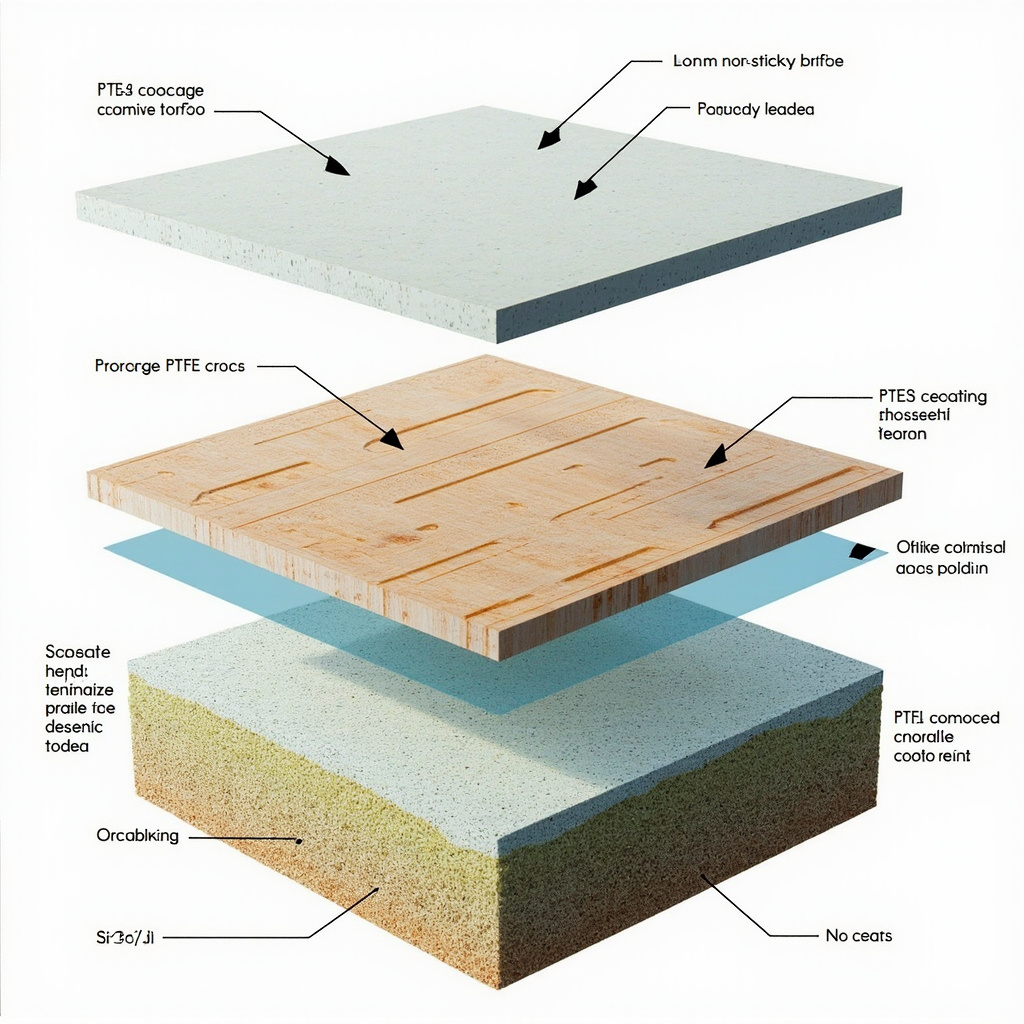
Food-grade nano-ceramic non-stick coating is prepared via sol-gel process—using TEOS/MTES/aluminum isopropoxide/tetrabutyl titanate as precursors—hydrolysis and condensation form Si-O-Si and Si-O-Al inorganic crosslinked networks—building an inorganic ceramic non-stick layer on aluminum alloy/stainless steel cookware bodies (sandblasted anchor profile 20-40 μm). Essential difference from traditional PTFE non-stick coatings: PTFE organic fluoropolymer merely physically adheres, softens and decomposes above 250°C releasing toxic PFIB gas—nano-ceramic coating is chemically bonded via inorganic Si-O-Si network, withstands 450°C, with safety margin >200°C. Pencil hardness 5-7H (PTFE 15,000 cycles). Non-stick performance: oil-free egg frying non-stick >90% (initial), >70% after 500 cycles (surface nano-roughness filled by grease; periodic white vinegar/citric acid cleaning restores). PTFE substitution trend: 3M announced full exit from PFAS production by end of 2025; EU proposes comprehensive PFAS ban in food contact materials 2026-2027. Complies with FDA 21 CFR 175.300, GB 4806.10-2023 (total migration <10 mg/dm², potassium permanganate consumption <10 mg/kg, heavy metals as Pb <1 mg/kg), EU No 10/2011. Global non-stick cookware market ~$12 billion in 2025, ceramic share 25% with 12% annual growth.