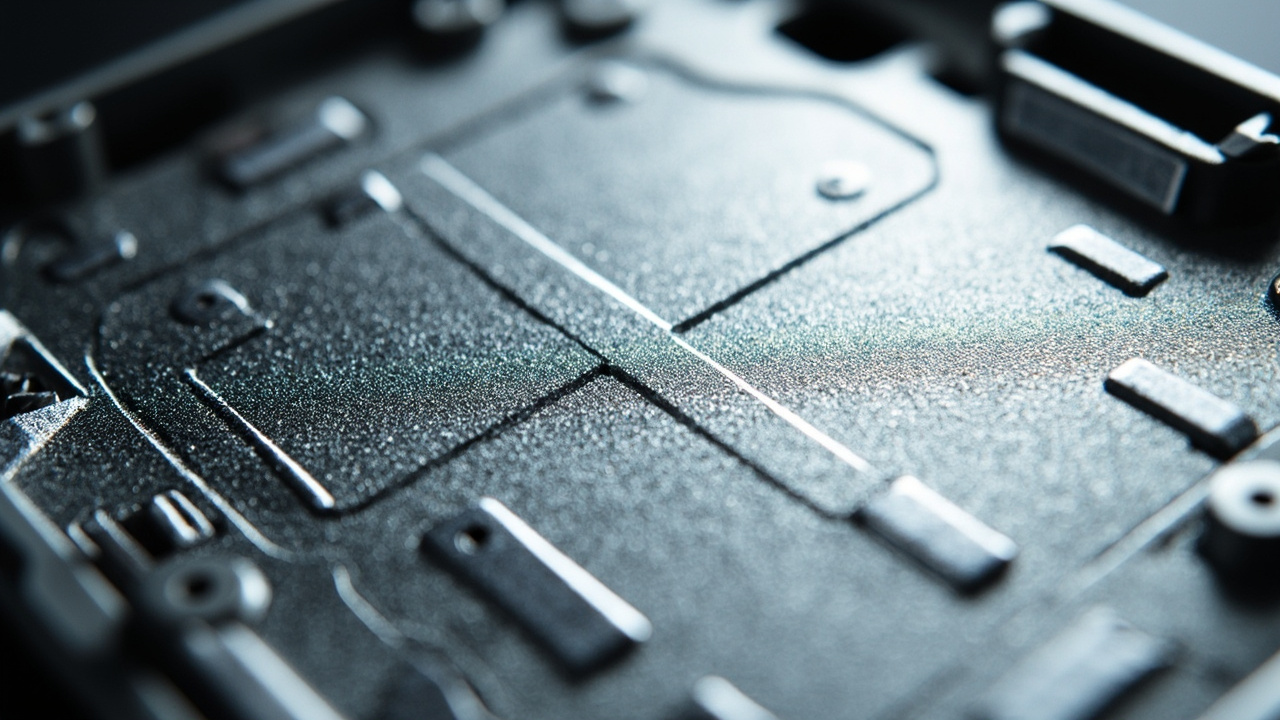
As phones get thinner and 5G and millimeter-wave radar become increasingly widespread, electromagnetic interference (EMI) has shifted from a "nice-to-have optimization" to a hard metric that "determines whether a product can pass certification." While metal housings offer good shielding, they conflict with the lightweight and low-cost goals of plastic bodies. The high-silver coating is the key process to resolve this contradiction—spraying a high-silver-content conductive coating onto the inner walls of plastic housings or shields turns plastic parts into conductive shielding bodies "instantly," achieving electromagnetic shielding close to that of metal with almost no added weight or thickness.
I. Why High-Silver Coatings Offer Good Shielding
The essence of shielding is to let the metal coating reflect and absorb electromagnetic waves, and divert the induced current. Silver is the most conductive metal in nature, which determines the inherent advantage of high-silver coatings:
- Top-tier conductivity: Silver's resistivity is only 1.59×10⁻⁸ Ω·m; the surface sheet resistance of high-silver coatings can be as low as 10⁻²–10⁻⁴ Ω/□, enabling efficient static dissipation and diversion of induced current.
- Excellent EMI shielding: Shielding effectiveness in the 30MHz–1GHz band can reach 60–80dB, attenuating interference signals to below one-millionth, meeting the immunity requirements of most consumer electronics and automotive electronics.
- Strong adhesion: Formulation optimization for common plastic substrates such as ABS, PC, and ABS+PC alloys ensures good adhesion; it can also be directly applied to metal or composite surfaces.
- Environmental aging resistance: Resistant to humidity-heat, salt spray, and oxidation, with minimal resistance drift under long-term use, suitable for harsh conditions such as automotive interiors and outdoor equipment.
II. Typical Application Scenarios
- Consumer electronics: High-silver coating on the inner walls of plastic housings for phones, tablets, laptops, and wearables turns ordinary plastic shells into effective EMI shielding cavities, preventing internal circuit crosstalk and protecting RF antenna and sensor sensitivity.
- Automotive electronics: After coating central control screens, ADAS domain controllers, and millimeter-wave radar housings, it stabilizes the in-cabin electromagnetic environment, avoids interference with in-vehicle communication, navigation, and radar signals, and helps the whole vehicle pass EMC certification.
- Military and industrial control: Composite housings of military rugged tablets, radar equipment, and industrial control displays rely on high-silver coatings to achieve stringent electromagnetic compatibility (EMC) and information security protection.
- Medical and communication equipment: Housings of medical imaging equipment and base station RF modules use high-silver coatings to simultaneously meet shielding and grounding needs.
III. Differences from Ordinary Conductive Coatings
There are many types of conductive coatings on the market; silver content and filler systems directly determine the vast difference in performance and price:
| Comparison item | High-silver coating | Nickel-copper plated coating | Carbon-based conductive coating |
|---|---|---|---|
| Main filler | Silver powder above 60% | Nickel/copper powder | Carbon powder/graphite 5%–20% |
| Surface sheet resistance | 10⁻²–10⁻⁴ Ω/□ | 10⁻¹–10⁰ Ω/□ | 10⁰–10⁴ Ω/□ |
| Shielding effectiveness | 60–80dB | 50–70dB | 20–40dB |
| Stability | Excellent (oxidation resistant) | Medium (prone to oxidation) | Fair |
| Cost | Relatively high | Medium | Low |
| Applicable scenario | High-frequency high-sensitivity products | Mid-range shielding | General antistatic |
IV. Application Process and Quality Control
The final shielding effectiveness of a high-silver coating depends half on the formulation and half on application standards:
- Surface pretreatment: Plastic substrates are first degreased, dedusted, and static-removed; flame or plasma activation treatment is applied if necessary to improve wettability and adhesion.
- Spraying and film formation: Generally low-pressure air spraying or electrostatic spraying is used; gun distance and traverse speed are controlled for uniform coating, with dry film thickness typically 15–30μm.
- Drying and curing: Air drying or low-temperature baking at 60–80℃; baking temperature must be controlled to avoid deformation of plastic parts. After full curing, silver powder overlap becomes denser and resistance lower.
- Performance testing: Four-point probe for surface sheet resistance, shielding box for shielding effectiveness, and cross-cut test for adhesion; all three must pass to be judged qualified.
- Environmental compliance: Formulation must comply with RoHS, REACH, etc.; low VOC, lead- and cadmium-free, meeting green requirements for export electronics.
V. Selection Recommendations
- Select shielding grade by frequency band: Ordinary consumer electronics at 40–60dB is sufficient; RF, radar, and other high-sensitivity scenarios should choose high-silver systems above 70dB.
- Select formulation by substrate: Different plastics have different surface energies; difficult-to-bond substrates such as PC and PA require dedicated formulations or pretreatment—do not use one product for all.
- Balance cost and performance: For parts with low shielding requirements, nickel-copper plated coating can reduce cost; use high-silver coating for key shielding cavities—a "zoned design" is more economical.
VI. Key Factors Affecting Shielding Effectiveness
The same high-silver coating can yield shielding effectiveness differing by over 20dB between factories; the gap often hides in the details. Understanding these key factors is necessary to stably achieve the required shielding grade:
- Coating continuity: Shielding relies on the conductive layer forming a complete "Faraday cage"; any missed spray, bare substrate, or crack creates an electromagnetic leakage point. Inner corners, ribs, and screw-root areas of complex structures are especially prone to inadequate spraying and need focused touch-up.
- Dry film thickness uniformity: Insufficient thickness raises sheet resistance and lowers shielding; excessive thickness wastes silver and tends to crack. Stable gun distance, traverse speed, and cross-spraying ensure uniform thickness.
- Silver powder overlap density: Sufficient curing allows silver particles to tightly overlap and form a continuous conductive network; insufficient curing significantly raises resistance, so the drying and curing regime must be strictly enforced.
- Grounding design: Even the best shielding layer is ineffective without reliable grounding, as induced current cannot be dissipated and shielding is greatly reduced. Grounding point location, quantity, and contact resistance must be planned at the design stage.
- Seam and opening treatment: Parting lines, heat vents, and key holes of housings are high-risk electromagnetic leakage areas; comprehensive treatment with conductive foam, springs, or reduced opening sizes is needed.
VII. Industry Development Trends
With the proliferation of 5G millimeter wave, automotive radar, and high-computing chips, electronic devices operate at higher frequencies and higher integration density, imposing stricter EMI shielding requirements. High-silver coating technology is evolving in parallel: on one hand, through silver powder particle size grading and optimization of flake silver powder with resin systems, unit silver usage and cost are continuously reduced while maintaining shielding effectiveness; on the other hand, water-based and low-VOC formulations have become the mainstream direction to meet increasingly strict environmental regulations and green manufacturing requirements.
At the same time, high-silver coatings are forming a "zoned collaboration" overall EMC design approach with nickel-copper plating, conductive fabrics, metallized films, and other shielding solutions—key shielding cavities use high-silver for performance, secondary areas use low-cost solutions to reduce cost. For manufacturers, choosing a coating supplier with stable formulations and solid technical support better guarantees batch product consistency and certification pass rate than simply comparing prices.
VIII. Frequently Asked Questions (FAQ)
Q: Will the silver in high-silver coatings oxidize and fail? Quality high-silver coatings use resin encapsulation and antioxidant formulations to suppress silver oxidation long-term; under normal use, resistance drift is minimal and service life can match the device.
Q: Is thicker spraying always better for shielding? Not so. Shielding effectiveness saturates after a certain thickness; too thick only wastes silver, raises cost, and may crack. 15–30μm is the common range balancing performance and economy.
Q: Can high-silver coatings be grounded? Yes, and usually required. Connecting the coating to circuit ground via conductive foam, springs, or contact points effectively diverts induced current and completes the shielding loop.