In heavy-duty anti-corrosion coating systems, the three-layer combination of "primer — intermediate coat — topcoat" is a widely recognized basic framework. Many engineering and technical personnel are familiar with the cathodic protection of epoxy zinc-rich primer and the weather-resistant decorative function of polyurethane topcoat, yet they often overlook the role of the intermediate coat — especially the epoxy micaceous iron oxide intermediate coat — and the core tasks it undertakes within the entire anti-corrosion system. In fact, the intermediate coat is by no means as simple as "adding an extra coat just to build up thickness." It serves both as an adhesion bridge between the primer and the topcoat, and as the most critical barrier and thickness-building layer in the overall service life of the coating system. Starting from the material structure of the epoxy micaceous iron oxide intermediate coat, this article systematically breaks down its flake shielding mechanism, interlayer adhesion principle, and thickness-building logic, and combines ISO 12944 system design with real-world project film thickness data to provide a set of actionable selection and application references.
As a supplier of industrial protective coating systems, Kexin New Materials (kexinMaterials) has accumulated a large number of field cases in the "primer — intermediate — topcoat" combination of epoxy zinc-rich primer, epoxy micaceous iron oxide intermediate coat, and epoxy polyurethane topcoat. The combined film thickness and environmental parameters cited in this article are all derived from actual product data summarized in publicly available research archives, facilitating direct verification by the engineering side. If you are currently selecting heavy-duty anti-corrosion combinations for bridges, storage tanks, pipe galleries, or offshore platforms, you may also use this article as a technical draft and make minor adjustments based on actual corrosion grades.
I. Conclusion First: What Exactly Does the Epoxy Micaceous Iron Oxide Intermediate Coat Do in the System
In one sentence: the epoxy micaceous iron oxide intermediate coat is the "thickness-building layer + barrier layer + interlayer bonding layer" in heavy-duty anti-corrosion combinations. It usually does not directly face ultraviolet radiation and atmospheric aging (that is the topcoat's responsibility), nor does it directly provide the first line of cathodic protection to the substrate (that is the zinc-rich primer's responsibility). Instead, it uses a dense, thick epoxy film and directionally arranged micaceous iron oxide flakes to maximize the path for corrosive media to reach the metal, while providing reliable adhesion transition for the upper and lower layers.
Breaking down the three-layer responsibilities:
- Primer (anti-corrosion / adhesion): The epoxy zinc-rich primer provides cathodic protection through sacrificial anode of zinc dust and firmly grips the blasted steel surface.
- Intermediate coat (thickness-building / shielding): The epoxy micaceous iron oxide intermediate coat blocks the permeation channels of water, oxygen, chloride ions, etc. through its thick film and flake maze effect.
- Topcoat (weather resistance / decoration): The epoxy polyurethane topcoat or aliphatic polyurethane topcoat provides UV resistance, gloss and color retention, and appearance.
The research archives clearly summarize the combination principle as "primer (anti-corrosion / adhesion) + intermediate coat (thickness-building / shielding) + topcoat (weather resistance / decoration)," and point out that the shielding effect of the epoxy micaceous iron oxide intermediate coat comes from "micaceous iron oxide flakes extending the diffusion path of corrosive media." This is precisely the mechanistic main line this article will expand upon.
II. Flake Shielding Mechanism of Micaceous Iron Oxide (MIO)
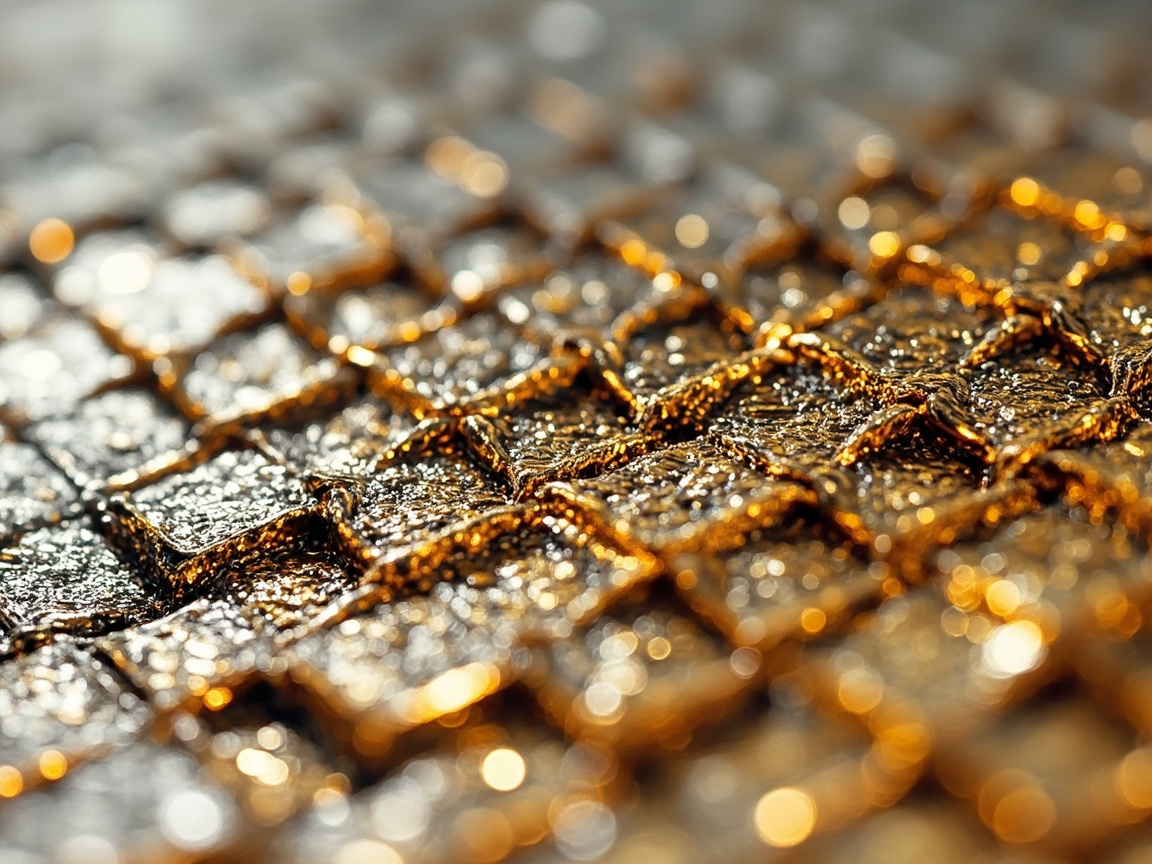
The reason the epoxy micaceous iron oxide intermediate coat is special lies in its pigment — micaceous iron oxide (Micaceous Iron Oxide, abbreviated as MIO). It is an α-Fe₂O₃ with a flake (lamellar / platy) crystalline form. The flake thickness is usually only a few microns, with a large aspect ratio. During film drying, due to shear and gravity, the flakes tend to arrange parallel and directionally within the coating plane, overlapping like layers of roof tiles.
This flake structure's shielding effect can be understood from three perspectives:
1. Labyrinth / Maze Effect extends the diffusion path. When corrosive media such as water, oxygen, and chloride ions attempt to penetrate the film to reach the steel substrate, they must bypass the directionally arranged MIO flakes, changing the path from "straight penetration" to a "repeatedly turning maze." According to the qualitative description of the epoxy micaceous iron oxide intermediate coat mechanism in the research archives, the micaceous iron oxide flakes exert their shielding effect precisely by "extending the diffusion path of corrosive media." The longer the path, the lower the media flux per unit time, and the slower the rate of electrochemical corrosion on the steel substrate.
2. The chemical inertness of the flakes themselves forms a stable barrier. Micaceous iron oxide is a stable iron oxide form that does not participate in corrosion electrochemical reactions, nor does it deplete over time like some active anti-rust pigments. Once directionally arranged within the film, it acts as a long-term physical separator, with good weather, heat, acid, and alkali stability. Therefore, even if the topcoat is locally damaged and media infiltrate, the epoxy micaceous iron oxide intermediate coat can still maintain a considerable degree of shielding capability.
3. The flake layer reduces the overall permeation coefficient and suppresses under-film corrosion spread. The thick epoxy matrix itself is dense with low water absorption; with the addition of MIO flakes, the film's permeability to water and oxygen is further reduced. More importantly, even if minor defects appear in individual areas, the flake structure can confine corrosion locally and delay its spread to the surroundings — this is critical for large steel structures to achieve "point defects do not expand."
It must be emphasized: MIO's shielding is physical shielding; it does not provide cathodic protection (that is the zinc-rich primer's job), nor does it rely on chemical passivation (that is the job of pigments like zinc phosphate). Placing it in the intermediate layer of the combination is precisely to let the primer's cathodic protection and the topcoat's weather-resistant decoration each perform their duties, while the intermediate coat focuses on "thickening + maze shielding."
III. Epoxy Film-Forming Substance: Two-Component Amine-Cured System
The film-forming substance of the epoxy micaceous iron oxide intermediate coat is epoxy resin, usually supplied as a two-component system: Component A is a mixture of epoxy resin with MIO, fillers, and additives; Component B is the amine curing agent. Before application, mix according to the ratio; the epoxy groups of the epoxy resin undergo addition polymerization with the active hydrogen of the amine curing agent to cross-link into a three-dimensional network structure.
The reason for choosing epoxy rather than alkyd or acrylic for the intermediate coat is:
- Epoxy has high cross-link density and a dense film, with inherently better shielding than oxidative drying systems like alkyd;
- Epoxy has strong adhesion to blasted steel surfaces and good compatibility with upper and lower layers;
- Epoxy has excellent chemical and water resistance, making it suitable as a "durable skeleton" buried in the middle of the combination;
- The trade-off is that epoxy has poor UV resistance and easily chalking under direct outdoor exposure, so it must be covered by a topcoat and cannot be used alone as the outermost layer — this is the fundamental reason it is positioned as an "intermediate coat."
From a standards perspective, the VOC of such industrial protective paints is regulated by GB 30981-2020 "Limits of Harmful Substances in Industrial Protective Coatings," and adhesion is assessed according to GB/T 9286-1998 (corresponding to ISO 2409, ASTM D3359), where grades 0–5 with 0/1 being excellent (falloff ≤5%). The high adhesion of the epoxy system is a key reason it becomes the mainstay intermediate coat in the "primer — intermediate — topcoat" combination.
IV. Interlayer Adhesion Principle: The Intermediate Coat is the "Bridge" Between Primer and Topcoat
What heavy-duty anti-corrosion combinations fear most is not insufficient single-layer strength, but interlayer delamination — the primer is good, the topcoat is good, but the two layers "don't stick," and once water enters the interface, the whole thing peels off in sheets. The epoxy micaceous iron oxide intermediate coat plays a critical "bridging layer" role here.
Its interlayer adhesion relies on two points:
1. Chemical affinity with the primer. The epoxy intermediate coat and the epoxy zinc-rich primer both belong to the epoxy system, with similar molecular structures, making it easy to form good wetting and some chemical bonding between layers — far more reliable than an "epoxy primer + unfamiliar topcoat" combination. In application, it is required to apply the intermediate coat within the "recoat window" of the primer, or to properly sand the old epoxy layer for the intermediate coat to increase mechanical interlocking.
2. Compatible transition with the topcoat. Whether the topcoat is epoxy polyurethane or aliphatic polyurethane, it is usually also a two-component cross-linking system, with surface energy and curing rhythm highly matched to the epoxy intermediate layer, making interlayer adhesion easily achieve grade 0/1. The certain roughness of the intermediate coat (formed by MIO flakes and application atomization) also provides a mechanical anchoring surface for the topcoat, avoiding the topcoat "slipping on a smooth surface."
In one sentence: the intermediate coat firmly welds together the "cathodically protected primer" and the "weather-resistant decorative topcoat," serving as the structural guarantee that the entire system does not delaminate or prematurely age. The research archives, in the "combination principle" section, clearly label the intermediate coat as "thickness-building / shielding," and interlayer adhesion is the prerequisite for achieving "shielding without delamination."
V. Thickness-Building Principle: Why the Intermediate Coat Should Bear Most of the Film Thickness
In heavy-duty anti-corrosion combinations, the total dry film thickness (DFT, Dry Film Thickness) is usually shared by three layers, and the intermediate coat often accounts for the largest portion. Taking the "typical combined film thickness of epoxy polyurethane topcoat" summarized in the research archives as an example:
| Combination Layer | Recommended Dry Film Thickness (DFT) | Coats |
|---|---|---|
| Epoxy zinc-rich primer | 70–80 µm | 1 coat |
| Epoxy micaceous iron oxide intermediate coat | 100–150 µm | 1–2 coats |
| Epoxy polyurethane topcoat | 100–120 µm | 2 coats |
As can be seen, the 100–150 µm thickness of the intermediate coat is almost equal to or even exceeds the combined magnitude of the primer and topcoat. Why design it this way?
1. The barrier layer needs "sufficient thickness" to be meaningful. The protective life of physical shielding roughly increases with film thickness — the thicker the film the media must penetrate, the longer it takes to reach the metal. Assigning the "thickening" task to the relatively low-cost and robust epoxy micaceous iron oxide intermediate coat is more economical than piling thickness onto the expensive zinc-rich primer or topcoat.
2. MIO flakes orient more fully at high film thickness.A thicker wet film gives the flakes more space to settle parallel and orient during leveling and drying, making the labyrinth effect more complete; an overly thin film causes the flakes to stand upright or stack disorderly, reducing shielding efficiency. This also explains why the intermediate coat is often applied in 1–2 passes, with a single pass reaching 80–100 µm or more.
3. Economy: Using intermediate coat to gain total thickness is the most cost-effective. Zinc-rich primer contains a large amount of zinc powder and is costly; topcoat requires weather-resistant resin and pigments and is also not cheap. Epoxy micaceous iron oxide (MIO) intermediate coat uses MIO, a stable filler, as the main component, providing large thickness and shielding while its material cost is significantly lower than the option of "using all primer or all topcoat to make up thickness".
4. Buffer stress and accommodate defects. A thicker intermediate coat can absorb minor unevenness of the substrate and local defects of the primer, reducing pinholes and missed coating on the topcoat caused by substrate undulation, and improving the integrity of the entire system.
Therefore, "thickening the intermediate coat" is not cutting corners, but a rational engineering choice that balances protective lifespan and cost—provided that its film thickness, recoat interval, and adhesion to upper and lower layers are all controlled.
VI. Epoxy MIO Intermediate Coat vs Ordinary Filler Intermediate Coat
To see the value of epoxy MIO intermediate coat clearly, it is most intuitive to compare it with epoxy intermediate coat that only uses ordinary inert fillers (such as heavy calcium carbonate, talc, barium sulfate):
| Comparison Dimension | Epoxy MIO Intermediate Coat (MIO) | Ordinary Filler Epoxy Intermediate Coat |
|---|---|---|
| Shielding Mechanism | Lamellar labyrinth effect + dense epoxy matrix | Only relies on dense matrix, no lamellae to extend path |
| Medium Diffusion Path | Repeatedly deflected by flakes, significantly extended | Near straight-through penetration, short path |
| Corrosion Control at Defects | Flakes limit spread, locally controllable | Defects easily expand outward |
| Interlayer Adhesion | Roughness aids topcoat anchoring, good affinity | Depending on filler and process, slightly weaker anchoring |
| Temperature/Weathering Stability | MIO chemically inert, stable | Depends on filler, some easily absorb water |
| Cost Positioning | Medium (MIO as main filler) | Low (ordinary filler) |
| Typical Use | Heavy anti-corrosion primer—intermediate—topcoat system middle layer | General anti-corrosion or decorative middle layer |
The conclusion is clear: Ordinary filler intermediate coat can also be "thickened", but cannot provide the lamellar-level labyrinth shielding of micaceous iron oxide. In C4, C5 and above, or corrosive environments with high design life requirements, epoxy MIO intermediate coat is almost standard for the配套 middle layer; only in C2–C3 low-corrosion, short-lifespan scenarios can ordinary filler intermediate coat be used to reduce cost.
VII. Position in ISO 12944 System
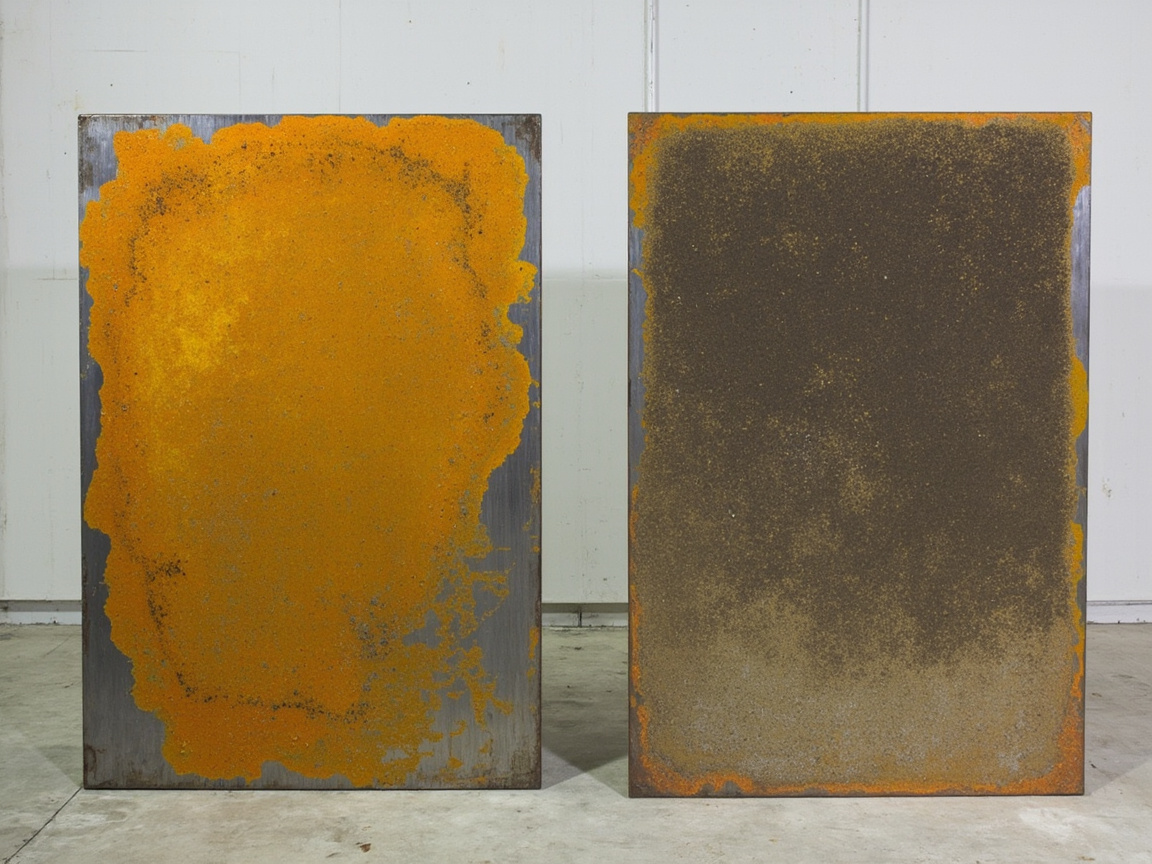
ISO 12944-2018 is the main international standard for anti-corrosion coating of steel structures. It describes environmental severity using corrosion grades from C2 (low) to CX (extreme, offshore), and stipulates the配套 design concept of "primer + intermediate coat + topcoat". Epoxy MIO intermediate coat is one of the most common intermediate layer choices under this standard framework.
Placing epoxy MIO intermediate coat in the context of ISO 12944:
- Corrosion grade positively correlates with配套 thickness. The more severe the environment (C4→C5→CX), the higher the required total DFT, and the more prominent the role of thickening the intermediate coat. The research archive summarizes the ISO 12944 grade ranges as C2 (low)–C5 (very high)–CX (extreme, offshore), as well as immersion environments Im1–Im3.
- 配套 design follows "primer—intermediate—topcoat". The durability years recommended by the standard (Low/L, Medium/M, High/H, Very High/VH) are determined jointly by the entire配套; the thickness and shielding of the intermediate coat directly raise the achievable lifespan. For example, the archive mentions that a certain ultra-high solids epoxy zinc-rich primer achieved "Very High (VH)" durability grade under C5 of ISO 12944-6, and such high-grade配套 inevitably stacks thick-film MIO intermediate coat.
- Surface treatment is the prerequisite. ISO 12944 requires carbon steel blasting to Sa 2½ (ISO 8501-1), with roughness typically 30–75 µm; the research archive also lists "carbon steel blasting Sa 2½" as the recommended treatment grade in multiple industrial coating entries. Without a qualified blasted substrate, no matter how good the MIO intermediate coat is, it won't adhere.
A practical engineering judgment: The higher the corrosion grade, the less you can omit the intermediate coat; the longer the design life, the more the intermediate coat film thickness should hit the upper limit of the specification. Shifting budget from "thickening topcoat" to "thickening intermediate coat" is often a more cost-effective compliant path.
VIII. Typical配套 Scheme: Primer + Intermediate + Topcoat
To turn the previous mechanisms into an operable配套, the most classic combination is:
Epoxy zinc-rich primer + Epoxy MIO intermediate coat + Epoxy polyurethane topcoat
The research archive's "epoxy polyurethane topcoat (domestic product parameter summary)" gives recommended配套 and film thickness that fully match this framework: primer 70–80 µm (1 pass), intermediate coat 100–150 µm (1–2 passes), topcoat 100–120 µm (2 passes). The archive also gives the environmental and construction constraints of this配套:
- Environmental requirements: temperature 5–35℃, relative humidity ≤ 80%, substrate temperature at least 3℃ above dew point;
- Application method: airless spray / conventional spray preferred, brush and roller only for small areas;
- Packaging and storage: base 20 kg + hardener 4 kg, store at 5–35℃, shelf life 12 months;
- Safety: contains isocyanate hardener, harmful if inhaled, requires ventilation + respirator + goggles + chemical-resistant gloves.
Two additional points from a selection perspective:
On solids content and VOC of primer. If low VOC is pursued, refer to the ultra-high solids epoxy zinc-rich primer route—in the research archive, Jotun Barrier 80 UHS has a volume solids of 85 ± 2 %, VOC (per GB 30981 / GB/T 34682) of 134 g/L, zinc powder complies with ASTM D520 Type II, and meets ISO 12944-5 composition requirements. Combining high-solids zinc-rich primer with thick-film MIO intermediate coat can achieve the target total DFT in fewer passes, reducing VOC and labor hours.
On weather-resistant choice of topcoat. For outdoor exposure scenarios, aliphatic polyurethane topcoat should be prioritized for gloss and color retention; if only non-exposed or indoor equipment, aromatic epoxy polyurethane topcoat is also acceptable. The weathering grade of the topcoat determines the lifespan of the entire配套 at the outermost layer, but the shielding of the intermediate coat determines "how long the underside can hold once the topcoat is slightly damaged".
Kexin New Materials (kexinMaterials) when delivering such heavy anti-corrosion配套, usually issues the scheme in the order of "corrosion grade → target DFT → primer-intermediate-topcoat three-slurry ratio → construction process card", rather than selling a single can of intermediate coat. For projects such as bridges, wind power, chemical storage tanks, this systematic delivery can lock interlayer adhesion and total thickness in one go, reducing compatibility risks from on-site layer-by-layer substitution.
IX. Construction and Surface Treatment Key Points
No matter how good the epoxy MIO intermediate coat performs, it must be realized through standardized construction. Combined with general industrial coating requirements in the archive, key points are as follows:
1. Surface treatment. Blast carbon steel to Sa 2½ (ISO 8501-1), roughness 30–75 µm; stainless steel needs non-metallic abrasive grinding to create scratches. Surface oil, salt, and loose rust must be removed, otherwise interlayer adhesion and shielding will be compromised.
2. Environmental conditions. During application and curing, temperature 5–35℃, relative humidity ≤ 80%, and substrate temperature must be at least 3℃ above dew point to prevent condensation causing interlayer blushing and loss of adhesion. For low winter temperatures, choose low-temperature curing epoxy.
3. Application method. Airless spray preferred, ensuring thick film and uniform atomization; conventional spray also works; brush and roller only for small-area repair. The intermediate coat can be applied thick in a single pass, but avoid excessive thickness at once causing sagging; if necessary, apply in 1–2 passes.
4. Recoat interval. The intermediate coat must be applied within the primer's recoatable window; after the intermediate coat is dry, apply the topcoat, light sanding between layers can further improve anchoring. Specific interval per product data sheet, clearly affected by temperature and humidity.
5. Film thickness control. Use wet film gauge + dry film thickness gauge (DFT) for dual control, ensuring the intermediate coat reaches the 100–150 µm target range—not too thin to weaken shielding, nor too thick to cause internal stress cracking.
6. Safety. Although the epoxy system does not contain isocyanate like polyurethane hardener, it is still a solvent-containing chemical; construction requires ventilation, gloves and goggles, and waste paint and drums managed as hazardous waste.
X. Selection Advice and Common Misconceptions
Advice: First determine corrosion grade and design life per ISO 12944, then back-calculate total DFT, allocating the "thickening" mainly to epoxy MIO intermediate coat; choose aliphatic or aromatic topcoat based on exposure; choose zinc-rich primer based on cathodic protection needs. The three work in synergy, not each maximized separately.
Common misconceptions:
- Misconception 1: Intermediate coat is just to make up thickness.Wrong. It provides labyrinth shielding and interlayer bridging, and is the key to preventing premature failure of the system.
- Misconception 2: Ordinary filler intermediate coat is the same as micaceous iron oxide (MIO). Wrong. Without the flake structure, the shielding path is shorter, posing high risk in corrosive environments.
- Misconception 3: Epoxy intermediate coat can be used as topcoat. Wrong. Epoxy is not UV-resistant and will chalk directly outdoors; it must be covered by a topcoat.
- Misconception 4: Thicker film is always better. Wrong. Excessive thickness causes internal stress cracking and sagging; it should be controlled within the specified range.
- Misconception 5: Omitting the intermediate coat and only doing primer + topcoat. Not recommended for C4 and above or long-service-life designs, as total shielding and thickness build are insufficient.
If you need to upgrade the thinking of "heavy-duty anti-corrosion system" from a single can of paint to a system, you can also refer to How to select water-based industrial coatings under the oil-to-water transition: resin systems and applicable conditions to understand the system migration of industrial protective coating under environmental pressure; for scenarios that insist on high-solid solvent-based systems, see When to choose oil-based paint (boundary between oil-based and water-based) to clarify the boundary. If you want a overall cost comparison between oil and water systems, How to choose between oil-based and water-based coatings: a systematic comparison from performance to cost provides a broader decision framework.
XI. Influence of MIO Quality, Particle Size and Application on Shielding Efficiency
The shielding effect of epoxy MIO intermediate coat is not "automatically good once micaceous iron oxide is added"; it is constrained by three factors that must be checked during selection and acceptance:
1. Flake morphology and aspect ratio. Truly effective MIO should be thin-plate shaped with a high aspect ratio, so as to overlap parallel to each other in the paint film to form a labyrinth. If the particle size is too coarse or granular, shielding efficiency drops; if too fine, the flake feel is weak and orientation is difficult. High-quality MIO intermediate coat has clear requirements for the flake morphology and gradation of the raw material; when purchasing, request the raw material specifications rather than just looking at the wording "contains MIO pigment".
2. Degree of directional arrangement. Whether the flakes can arrange parallel to the paint film plane depends on the application method, wet film thickness and leveling time. Airless spray has good atomization and thick wet film, giving flakes sufficient time to settle and orient; brushing and rolling have uneven shear and slightly poorer orientation. Therefore, airless spray is preferred for intermediate coat, not only for efficiency but also for shielding quality.
3. Pigment volume concentration (PVC) and critical point. Excessive MIO content raises paint film porosity and reduces adhesion; too low makes the flake layer discontinuous and the labyrinth broken. Mature formulations control PVC in a range that allows continuous overlap without sacrificing adhesion and toughness. The engineering side need not calculate PVC themselves, but should verify the finished product via cross-cut adhesion (GB/T 9286, grade 0/1) and salt spray (GB/T 1771-2007, heavy-duty anti-corrosion can reach 1000–3000 h).
XII. Reverse-Deriving Film Thickness Configuration by Corrosion Grade
String "corrosion grade → total DFT → intermediate coat thickness" into a lookup table for on-site application (subject to design documents and ISO 12944 durability years; the table below is illustrative based on research archive system parameters):
| Corrosion grade (ISO 12944) | Environment example | Suggested total DFT orientation | Intermediate coat (MIO) orientation |
|---|---|---|---|
| C2–C3 (low–medium) | Dry indoor, urban atmosphere | Lower | Can be thinned or replaced by ordinary filler |
| C4 (high) | Industrial atmosphere, coastal | Medium-high | 100–150 µm standard configuration |
| C5 (very high) | Heavy industry, offshore | High | Up to 150 µm, multiple coats |
| CX (extreme) | Offshore, offshore platforms | Very high | Thick film + composite shielding |
The meaning of this table is: the harsher the environment, the more the intermediate coat should be maxed out. Shifting budget from "thick topcoat" to "thick intermediate coat" is often a more cost-effective compliance path, because the main duty of the topcoat is weatherproof decoration, while the responsibility for shielding and thickness build should be borne by the intermediate coat.
XIII. Overcoating Compatibility and Prevention of Interlayer Failure
Whether the system can remain delamination-free long-term largely depends on the overcoating window and compatibility:
- Primer→Intermediate: Epoxy zinc-rich primer overcoated with MIO intermediate coat within the recoatable window; interlayer is same-system epoxy with good affinity; if primer is heavily zinc-salted or beyond window, lightly sand and verify adhesion.
- Intermediate→Topcoat: After intermediate coat is dry, apply topcoat; lightly sand interlayer for increased anchoring; aliphatic polyurethane topcoat matches epoxy intermediate layer well, adhesion easily reaches grade 0/1.
- Avoid cross-system random matching: Do not directly apply an unfamiliar topcoat with poor adhesion over epoxy intermediate coat; when refurbishing, if old layer system is unknown, must do compatibility test first, confirm no lifting before large-area work.
Writing "overcoating window, interlayer sanding, adhesion verification" into the process card costs far less than repainting afterwards. This is also the core value of systematized delivery versus single-can procurement.
FAQ
1. What is the core function of epoxy MIO intermediate coat?
It is the intermediate layer in the heavy-duty anti-corrosion "primer–intermediate–topcoat" system; its core function is thickness build and shielding: using MIO flakes to extend the diffusion path of corrosive media (labyrinth effect), while providing interlayer adhesion bridging for zinc-rich primer and polyurethane topcoat. It does not directly undertake cathodic protection (primer's duty), nor directly weather resistance (topcoat's duty).
2. Why can micaceous iron oxide (MIO) shield corrosive media?
MIO is flake-shaped α-Fe₂O₃, oriented parallel and overlapping in the paint film, turning the penetration path of water, oxygen and chloride ions from straight to repeatedly turning labyrinth, significantly prolonging the time to reach steel substrate; meanwhile MIO is chemically inert, stably acting as a physical barrier long-term without consumption.
3. How thick is the intermediate coat generally appropriate?
According to research archive summary, the recommended dry film thickness of epoxy MIO intermediate coat in typical systems is 100–150 µm (1–2 coats), almost accounting for the largest share of the entire system film thickness. Specifically, it should be reverse-derived from ISO 12944 corrosion grade and design life, and controlled within the range using a thickness gauge.
4. Can epoxy MIO intermediate coat be used alone as topcoat outdoors?
No. Epoxy resin has poor UV resistance and will chalk, lose gloss and degrade shielding ability under direct outdoor exposure. It must be covered by a weather-resistant topcoat (epoxy-polyurethane or aliphatic polyurethane), and its positioning is always "intermediate layer".
5. Is the difference between epoxy MIO intermediate coat and ordinary filler intermediate coat significant?
Significant. Ordinary filler intermediate coat relies only on dense matrix shielding, media penetrates nearly straight; MIO intermediate coat has flake labyrinth effect, and can limit corrosion spread at defects. Ordinary filler can reduce cost in low-corrosion, short-life scenarios; MIO intermediate coat is recommended for C4/C5 and above high-corrosion environments.
6. How to ensure adhesion between intermediate coat and upper/lower layers?
Through same-system affinity (epoxy primer + epoxy intermediate + polyurethane topcoat with similar molecular structure, easy to wet and bond) and mechanical anchoring (MIO flakes and roughness from application atomization help topcoat bite). In application, apply intermediate coat within primer recoatable window, and lightly sand after intermediate coat is dry before topcoat.
7. What surface preparation grade is required?
Carbon steel recommended blast cleaning to Sa 2½ (ISO 8501-1), roughness 30–75 µm; stainless steel use non-metallic abrasive to create scratches. Surface oil, salt and loose rust must be removed, otherwise interlayer adhesion and shielding will fail.
8. What are the environmental requirements for application?
According to the epoxy-polyurethane topcoat system requirements in the archive, temperature 5–35℃, relative humidity ≤ 80%, and substrate temperature must be at least 3℃ above dew point to prevent condensation. In winter low temperature, choose low-temperature curing epoxy, and use airless spray to ensure uniform thick film.
9. Can the intermediate coat be omitted with only primer + topcoat?
It may be simplified in C2–C3 low-corrosion, short-life designs; but not recommended in C4 and above, long-life heavy-duty anti-corrosion systems. The intermediate coat bears most thickness build and shielding; omitting it leads to insufficient total DFT, too short media path and premature system failure.
Further Reading
- How to select water-based industrial coatings under the oil-to-water transition: resin systems and applicable conditions: Extend heavy-duty anti-corrosion system thinking from solvent-based to water-based industrial protection, understand system migration under environmental pressure.
- When to choose oil-based paint (boundary between oil-based and water-based): Clarify the condition boundaries where high-solid solvent-based epoxy/polyurethane systems remain irreplaceable.
- Formulation science and application of water-based wood coatings: Supplement the "primer–intermediate–topcoat" system thinking from a wood perspective, cross-category understanding of coating synergy principles.