In both consumer and industrial communication contexts, "9H hardness" and "super wear-resistant" have almost become standard labels for nano ceramic coatings. However, when engineers need to actually apply an nm–µm scale thin film to automotive paint surfaces, electronic enclosures, or mechanical parts, they must answer a more fundamental question: how exactly are this "hardness" and "wear resistance" measured, are we testing the coating itself or the substrate, and can the numbers be compared horizontally? This article explains the evaluation logic of wear resistance and hardness for nano coatings from testing principles, standard methods, applicability boundaries of thin layers, to real public data, helping technical procurement, coating engineers, and quality inspectors establish a citable judgment framework.

I. Why nano coatings' "hardness" requires a specialized evaluation perspective
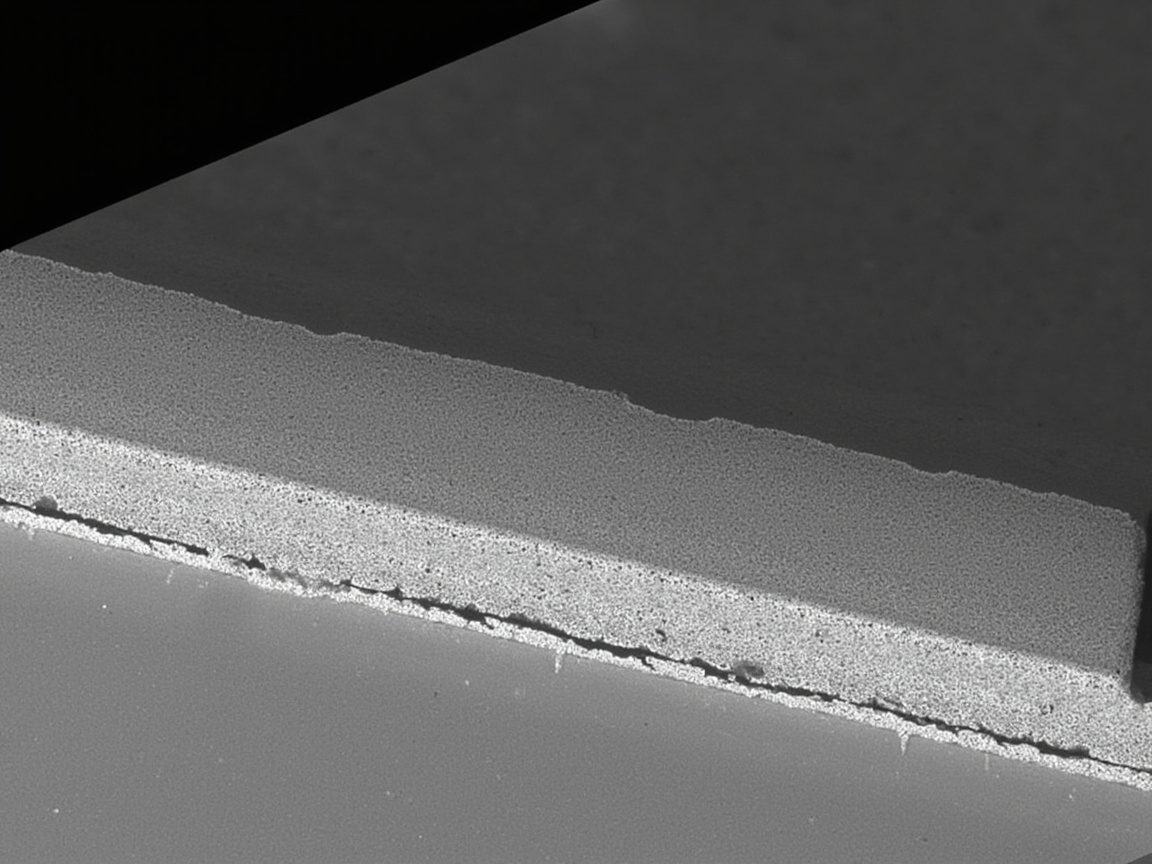
Traditional organic coatings (epoxy, polyurethane, alkyd) typically have dry film thickness in the 40–300 µm range; during testing, the grinding wheel and pencil lead mainly act on the coating body, and substrate influence is relatively controllable. Nano coatings, however, are mostly SiO₂, TiO₂, ceramic, or inorganic-organic hybrid systems, with dry film thickness often falling in the range of 80 nm to several micrometers—for example, public data shows a certain Si-based automotive ceramic shield with film thickness 200–400 nm, a certain inorganic nano ceramic composite coating with dry film 80–150 nm, and a certain SiO₂-based automotive ceramic coating at 1–3 µm (extracted from various manufacturers' TDS in this study's archive). In this thickness range, the mechanical response of "coating" and "substrate" is coupled: when the pencil lead presses down, the deformation transmits to the plastic or metal below; when the grinding wheel rotates, the thin layer may be worn through within a few hundred rotations and reach the substrate directly.
Therefore, evaluating nano coatings cannot simply follow the thick-film approach; one needs to understand what each of the three mainstream methods "actually measures": pencil hardness measures the relative grade of resistance to plastic deformation/plowing; Taber abrasion measures mass loss under specified conditions; scratch and nanoindentation measure critical load, intrinsic hardness (GPa), and film-substrate adhesion. Separating these three avoids misreading "9H" as absolute hardness in the materials science sense.
II. Pencil Hardness: ASTM D3363 / GB/T 6739
Pencil hardness is the most widely known rapid evaluation method for coating hardness, corresponding mainly to ASTM D3363 "Standard Test Method for Film Hardness by Pencil Test", China's GB/T 6739 "Paints and varnishes — Determination of film hardness by pencil test", and ISO 15184 "Paints and varnishes — Determination of film hardness by pencil test". The principle uses a set of graphite pencil leads arranged in increasing hardness (6B softest, through 5B, 4B, 3B, 2B, B, HB, F, H, 2H… up to 9H hardest), pushed at constant speed under a fixed load (ASTM D3363 specifies about 750 g, at about 45° to the horizontal plane), observing whether the coating surface is scratched or shows visible plow grooves. The judgment uses "pass/fail" logic: find "the hardest pencil that does not scratch the coating", and that grade is the reported pencil hardness of the coating.
There are three points that are easily overlooked in engineering practice.
First, pencil hardness is a relative, semi-quantitative grade of resistance to plastic deformation/scratch, not intrinsic material hardness (the latter should be in GPa, given by nanoindentation). It reflects the coating's resistance under pencil lead plowing, affected jointly by coating elastic recovery, surface smoothness, and curing degree.
Second, pencil hardness is highly dependent on substrate and film thickness. The same nano ceramic coating, applied on hardened steel plate versus on soft PP plastic, may report values differing by several grades—because the thin layer itself is insufficient to bear load independently, and the load is partly shared by the substrate. Therefore any "9H" conclusion must be interpreted together with "substrate type + dry film thickness + curing condition"; stating "coating hardness 9H" in isolation is distorted. In this study's archive, the 9H reported by multiple nano coatings are all pencil hardness: Onyx Nano Shield (Si-based automotive ceramic shield) film thickness 200–400 nm, pencil hardness 9H; Gaamp360 (SiO₂-based automotive ceramic coating) film thickness 1–3 µm, pencil hardness 9H; Re-yingcai inorganic nano ceramic composite coating dry film 80–150 nm, pencil hardness 8H–9H; YC-8703 hydrophobic self-cleaning nano composite ceramic coating reports hardness 6–7H (from various manufacturers' TDS). These "H" should all be understood in the above context.
Third, pencil hardness is insensitive to "brittle cracking". If the coating is very hard but has poor adhesion, pencil pushing may fail due to overall collapse rather than plastic deformation; in this case the high grade given by the pencil method does not equate to engineering wear resistance.
III. Taber Abrasion: ASTM D4060 / GB/T 1768
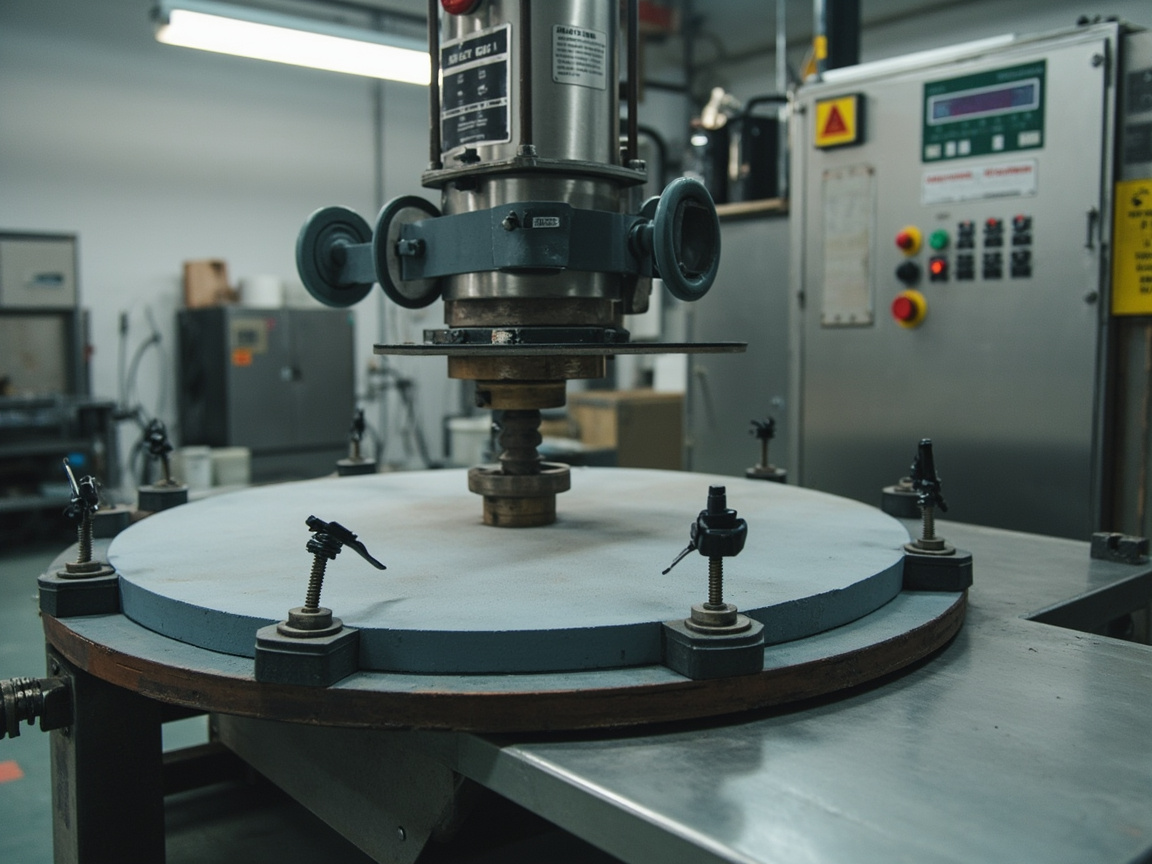
Taber abrasion corresponds to ASTM D4060 "Standard Test Method for Abrasion Resistance of Organic Coatings by the Taber Abraser" and China's GB/T 1768 "Paints and varnishes — Determination of resistance to abrasion — Rotating rubber wheel method". The equipment uses a pair of counter-rotating grinding wheels (common models CS-10, CS-17, H-18, etc., rubber wheels coated with different grit abrasives) pressed on a horizontally rotating disk sample, with specified load applied at the wheel arm end (typical 500 g or 1000 g/arm); after a fixed number of rotations (commonly 1000), the sample mass loss is weighed with a high-precision balance, recorded as "X mg / 1000 rotations". General industrial protective paint wear thresholds are often in the ≤10–50 mg/1000 rotations range (depending on anti-corrosion grade, per this study's archive general standard summary).
The value of the Taber method lies in simulating real "multi-directional reciprocating friction" wear, but it has natural applicability traps for nano thin layers:
- When film thickness is only hundreds of nm to several µm, the grinding wheel under standard load may wear through the film within a few hundred rotations and start abrading the substrate. The measured mass loss then reflects "whether it is worn through" rather than "coating wear life".
- Mass loss numbers are extremely sensitive to conditions: grinding wheel model, load, rotations, sample surface flatness, environmental temperature and humidity all significantly change results. For two products to be comparable, the exact same grinding wheel, load, and rotations must be locked.
- For hydrophobic/superhydrophobic nano coatings, the grinding wheel may first destroy surface micro-nano structures (causing contact angle drop), while mass loss is minimal—in this case Taber mass loss cannot reflect "functional failure".
Therefore, for thin nano coatings, a safer approach is to reduce load and rotations for "light-load Taber", or switch to scratch/nano abrasion described below to evaluate scratch resistance and adhesion. Any citation of Taber data should note the three elements "load + grinding wheel + rotations", otherwise the numbers are not comparable.
IV. Scratch Test and Nanoindentation: ASTM D7027 / ISO 14577
When the evaluation object is as thin as micrometer or even nanometer level, instrumented scratch method can better distinguish "scratch resistance" from "film-substrate adhesion" than pencil and Taber methods. Mainstream standards include ASTM D7027 "Standard Test Method for Evaluating Scratch Resistance of Polymer Coatings and Plastics Using an Instrumented Scratch Machine", and nano-scale nanoindentation/nano-scratch referring to ISO 14577 "Metallic materials — Instrumented indentation test for hardness and materials parameters".
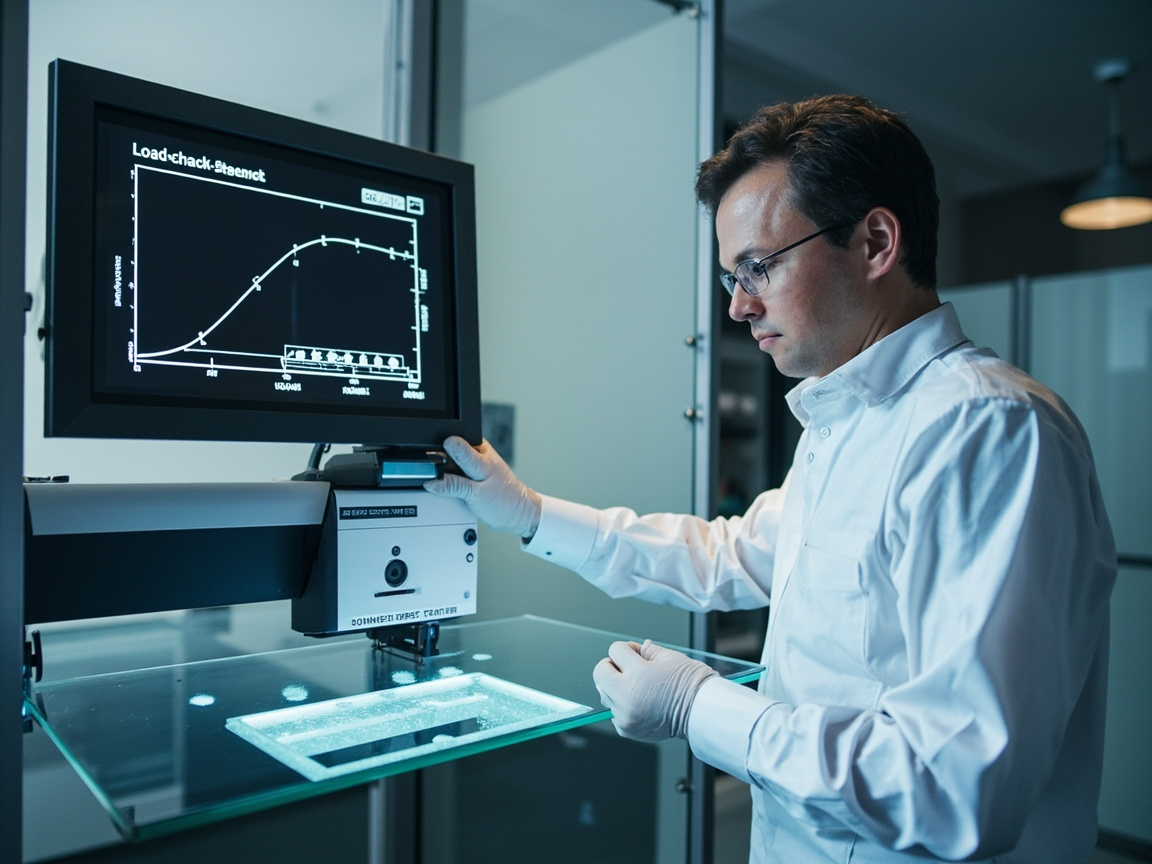
ASTM D7027 uses a diamond indenter (common 200 µm radius spherical or Rockwell diamond cone) to scratch across the coating surface under increasing load; the instrument records in real time normal force, tangential friction, acoustic emission signal or resistance abrupt change, thereby identifying two key critical loads: Lc1 (load at which first visible failure appears, coating starts cracking or peeling) and Lc2 (load at which coating largely peels, substrate exposed). Higher Lc generally indicates better comprehensive scratch resistance and adhesion. This is especially meaningful for "thin and expensive" parts like automotive paint surfaces, phone enclosures, optical lenses.
For 80–400 nm ultra-thin nano ceramic layers, conventional macroscopic scratch may still be overloaded, requiring nano-scratch: indenter progressively loaded at micro-newton to milli-newton scale, observed with optical or atomic force microscope for scratch morphology, to obtain more realistic critical load and failure mode. On the same platform, nanoindentation (ISO 14577) can be done, using diamond Berkovich indenter to press into the coating, and through load-displacement curve inversely calculate intrinsic hardness (GPa) and elastic modulus (GPa)—this is the "hardness" in the materials science sense, belonging to a different dimension from the "H grade" of pencil hardness, and cannot be directly converted.
It must be emphasized that there is no universal conversion formula between the GPa value measured by nanoindentation and the "9H" of the pencil method. The market claim of directly equating "9H" with "high-hardness material" is academically inaccurate; rigorous technical documents should separately report "Pencil hardness (ASTM D3363): 9H" and "Nanoindentation hardness (ISO 14577): X GPa".
V. How to choose among the three methods: applicability boundaries and combination strategy
The table below centrally compares "what is measured, how to report, who it suits, where the limitations are" for the three types of methods, for direct citation in quality inspection schemes and supplier benchmarking.
| Evaluation method | Corresponding standard | Typical load/condition | Output indicator | Applicable object | Main limitation |
|---|---|---|---|---|---|
| Pencil hardness | ASTM D3363 / GB/T 6739 / ISO 15184 | Approx. 750 g, 45° push | Pass/fail grade (6B–9H) | Rapid test, on-site comparison, suitable for both thick/thin films | Semi-quantitative; depends on substrate and film thickness; does not reflect intrinsic hardness |
| Taber Abrasion | ASTM D4060 / GB/T 1768 | 500–1000 g/arm, CS series wheels, 1000 cycles | Mass loss mg/1000 cycles | Thick films, floor paint, industrial topcoat | Thin nano layers easily worn through; weight loss strongly affected by conditions |
| Scratch (macroscopic) | ASTM D7027 | Incremental load diamond indenter | Critical load Lc1/Lc2 | Plastics, thin coatings, scratch resistance evaluation | High equipment requirement; professional interpretation needed |
| Nano-scratch / indentation | ISO 14577 | Micro- to milli-newton level | Critical load, hardness GPa, modulus GPa | nm–µm ultra-thin layers, film-substrate adhesion | High sample preparation and instrument threshold |
A common engineering combination is: use pencil hardness for incoming and outgoing quick inspection (cheap, intuitive), use Taber (or light-load Taber) for wear-life benchmarking, and use scratch/nano-indentation for R&D and failure analysis. The three are complementary, not substitutes for each other. In technical communications with automotive and industrial clients on nano coating technology, kexinMaterials also recommends disclosing "pencil hardness grade + film thickness + substrate" as a bound set of indicators, to avoid misjudgment from looking at a single 9H.
VI. Interpretation Demonstration of Real Public Data
Listing the citable nano coating data from the research archive by "film thickness—pencil hardness" gives a more intuitive view of thin-layer characteristics:
| Product (per manufacturer TDS, excerpted from this research archive) | System | Dry film thickness | Pencil hardness | Remarks |
|---|---|---|---|---|
| Onyx Nano Shield | Si-based automotive ceramic shield | 200–400 nm | 9H | Water contact angle 120°, durability approx. 1 year |
| Gaamp360 ceramic coating | SiO₂-based (optional graphene/TiO₂) | 1–3 µm | 9H | Heat resistance up to 600℃, durability 2–5 years |
| Re-yingcai YCC05006G | Inorganic nano ceramic composite | 80–150 nm | 8H–9H | Neutral salt spray ≥1200 h, temp. resistance -45~180℃ |
| YC-8703 composite ceramic coating | Single-component nano composite ceramic | 50–100 µm (spray) | 6–7H | Long-term temp. resistance -50~400℃, hydrophobic angle approx. 110° |
This table illustrates two points. First, pencil hardness and film thickness are not monotonically related: an 80 nm thin layer can also be rated 8H–9H because it forms composite load-bearing with the underlying paint film/substrate; second, the "H" grade cannot be directly converted to engineering wear life—what truly determines durability is film-substrate adhesion, thickness, and whether the surface micro/nano structure can withstand actual friction. Therefore, when selecting, hardness, film thickness, adhesion (cross-cut GB/T 9286 / ISO 2409), salt spray and abrasion resistance should be viewed on the same specification sheet.
VII. From Testing to Selection: Practical Recommendations for Engineers
To implement the aforementioned methods in procurement and acceptance, it is recommended to form a minimum viable front-end specification (MVS):
- Define substrate and film thickness clearly: any hardness number must be labeled "measured on which substrate, at which film thickness".
- Use dual indicators for hardness: pencil hardness (ASTM D3363) for quick inspection, supplement key parts with nano-indentation hardness (ISO 14577, GPa).
- Determine abrasion method by working condition: automotive paint, electronic housings prioritize scratch method (ASTM D7027) for Lc; industrial floor coating, mechanical parts use Taber (ASTM D4060) for mg/1000 cycles, and lock load and wheels.
- Require third-party reports: avoid trusting slogans only, request test reports with standard numbers and test conditions.
In the productization of nano coatings, kexinMaterials always emphasizes "traceable data, reproducible indicators"—the hardness difference of the same coating on different substrates precisely shows that thin-layer performance is a system issue rather than a single-material issue, which is why we recommend customers to validate on real workpieces instead of making decisions based solely on a 9H on a promo card.
VIII. Mechanisms of How Nanoparticle Types Contribute to Hardness and Abrasion Resistance
The reason nano coatings can still exhibit high hardness and good abrasion resistance under thin-layer conditions lies in the intrinsic hardness of the nano fillers themselves and the composite structures they form in organic/inorganic matrices. Different particles contribute via different paths; understanding these differences helps in selection at the formulation end rather than relying only on promotional numbers.
Silica (SiO₂) nanoparticles are the most common hardening and toughening filler. Their Mohs hardness is about 7; with small particle size and large specific surface area, when dispersed in a resin matrix they enhance the coating's overall resistance to plastic deformation by "particle hindrance of dislocations and crack propagation"; meanwhile their surface hydroxyls can form hydrogen or covalent bonds with the resin, improving the filler-matrix interface and enabling more effective load transfer from the soft matrix to the hard particles. Studies show that properly surface-modified nano SiO₂ can improve pencil hardness and scratch resistance without significantly sacrificing flexibility, which is also the technical basis of hydrophobic hardening nano coatings (such as the SiO₂-based systems in this research archive).
Titania (TiO₂) and alumina (Al₂O₃) particles have higher intrinsic hardness and contribute more directly to abrasion resistance, but high addition levels easily bring dispersion difficulty and gloss change, requiring surface modification and ultrasonic dispersion to suppress agglomeration (nano particles' high surface energy tends to agglomerate, a key challenge emphasized in the "general properties of nano paint" section of the research archive). Zirconia (ZrO₂) particles, due to transformation toughening, can absorb energy at crack tips and hinder propagation, valuable for improving fracture toughness (rather than mere hardness), suitable for conditions requiring both hardness and impact spalling resistance.
Graphene and graphene-like sheets are another approach: they do not rely on high hardness, but on "sheet physical barrier + stress transfer" to improve abrasion resistance and barrier properties. Graphene sheets can act as both solid lubrication and load bearing during friction, reducing friction coefficient and slowing abrasive cutting. It should be noted that the premise for these particles to function is good mono-dispersion; once agglomeration occurs, not only does the performance gain disappear, but the agglomerates themselves become stress concentration points and wear sources, degrading abrasion resistance instead.
IX. Wear Types in Real Working Conditions and Corresponding Tests
In the lab, pencil, Taber, and scratch each simulate one type of wear, while on-site is often a superposition of multiple mechanisms. By tribological classification, common wear includes: abrasive wear (cutting by hard particles or rough surfaces), adhesive wear (material migration at contact surfaces), fatigue wear (cyclic contact stress causing surface spalling), corrosive wear (chemical media combined with mechanical action). Nano coatings fail differently under different mechanisms:
- Against abrasive wear, hard-particle filled coatings (SiO₂/Al₂O₃/ZrO₂) are superior, corresponding to Taber and scratch cut-in resistance.
- Against adhesion and minor scuffing, low-surface-energy, low-friction hydrophobic/graphene coatings are better, corresponding to ASTM D7027 scratch critical load.
- Against cyclic contact fatigue, film-substrate adhesion (cross-cut GB/T 9286 / ISO 2409) and toughness are key; a single high pencil hardness cannot guarantee it.
This further shows: abrasion resistance is not "one number decides all", but a matching problem of "mechanism—test—working condition". A responsible nano coating specification should declare the main failure mode for the target condition and give the corresponding evaluation method and conditions, rather than summarizing with only "9H + super wear-resistant".
X. Incoming Inspection and On-site Quick Test Workflow
To turn the above into executable actions, it is recommended to do three-level checks upon arrival and before application of nano coatings:
Level 1 quick test (mandatory per batch): pencil hardness (ASTM D3363) retest on standard panel, record substrate and film thickness; verify appearance and thickness (step profiler or thickness gauge). Level 2 benchmarking (key parts): select Taber (ASTM D4060, lock load/wheel/cycles) or scratch (ASTM D7027, read Lc1/Lc2) by condition. Level 3 R&D verification (new formula introduction): nano-indentation (ISO 14577) supplementary intrinsic hardness GPa and modulus, combined with SEM cross-section observation of film-substrate interface.
When delivering nano coating products, kexinMaterials recommends customers use Level 1 quick test as incoming threshold and Level 2 benchmarking as acceptance evidence, thereby transforming "9H" from a slogan into a traceable, reproducible engineering indicator. Only by binding and disclosing test conditions, substrate, and film thickness together can the hardness and abrasion data of nano coatings truly have value for horizontal comparison and long-term reference.
XI. Checklist for Reading Hardness and Abrasion Data into Citable Conclusions
Facing a nano coating data sheet or supplier promo page, engineers should not memorize the "9H" number, but check item by item per the eight points below, translating slogans into citable, reproducible technical conclusions.
First, see whether substrate and film thickness are noted together. Any hardness number without "measured on which substrate, at which dry film thickness" should be regarded as incomplete data and not directly used for selection. High grades of thin layers often include substrate contribution; discussing hardness without substrate is meaningless.
Second, see whether the test standard number is complete. Pencil hardness should state ASTM D3363 or GB/T 6739; Taber should state ASTM D4060 or GB/T 1768; scratch should state ASTM D7027; nano-indentation should state ISO 14577. Those that only write "passed hardness test" without giving standards are not comparable.
Third, check whether Taber's "three elements" are locked. If any one of the abrasive wheel model, load, and rotation count is missing, mg/1000 revolutions cannot be compared horizontally. For thin films, it should also be specified whether a light-load and low-rotation scheme is adopted, to avoid wearing through the substrate and misleading the conclusion.Fourth, check whether a third-party test report with a seal/signature is provided. Numbers on promotional cards often come from the most favorable conditions; only a third-party report discloses the real substrate, film thickness, and failure mode, and is the baseline evidence for acceptance.
Fifth, check whether hardness is given as dual indicators. A qualified durable product should provide both pencil hardness (quick test) and intrinsic hardness (nanoindentation GPa); the two have different units and are not convertible, but they are complementary in explaining "where it is hard".
Sixth, look at the correlation between abrasion resistance and adhesion. Abrasion life depends not only on surface hardness but more on film-substrate bonding. Upon acceptance, cross-cut adhesion (GB/T 9286 / ISO 2409) should be listed alongside abrasion resistance; a single high hardness with poor adhesion will still cause whole-sheet peeling on site.
Seventh, beware of the "9H universal" rhetoric. 9H is only the top end of the pencil scale, not equivalent to materials-science high hardness, nor to impact resistance or flex resistance. For automotive paint, flexible plastics, and bendable substrates, more attention should be paid to critical scratch load and flexibility rather than blindly pursuing a higher H grade.
Eighth, beware of giving only peak values without continuity. If data only states "resistant to a certain temperature" without continuous service temperature and thermal shock cycling, its reference value for high-temperature service is limited—although this falls under the temperature-resistance category, the same logic applies in abrasion evaluation: one should clarify whether it is instantaneous or long-term, and whether it is ideal laboratory conditions or real service conditions.
Using the above eight points as a supplier questionnaire can basically filter out the vast majority of exaggerated claims and obtain real indicators that can be written into technical specifications.
XII. Common Misjudgments and Corrections on Site
At engineering sites, misjudgments about nano coating hardness and abrasion resistance occur frequently. Here we centrally correct several of the most typical situations to help technical personnel avoid detours in communication and acceptance.
One misjudgment is "high hardness equals good abrasion resistance". In fact, hardness only reflects resistance to plastic deformation; abrasion resistance also depends on toughness, film-substrate bonding, and friction coefficient. A very hard but very brittle thin film may crack on the first impact or bend, far less durable than a slightly softer but more flexible system.
The second misjudgment is "pencil 9H can be compared horizontally across all products". Since the pencil method depends on substrate and film thickness, if different brands use different test substrates, 9H values are not equivalent. A true horizontal comparison must be built on the premise of identical substrate, identical film thickness, and identical standard; otherwise it is just a numbers game.
The third misjudgment is "small Taber weight loss means long life". For hydrophobic and self-cleaning nano coatings, functional failure often precedes mass loss—the surface micro-nano structure is worn flat, the contact angle drops, and although the coating has not noticeably lost weight it has already lost hydrophobic capability. Therefore, for functional coatings, monitoring of contact angle variation with abrasion should be added, rather than only looking at milligrams.
The fourth misjudgment is "with a nano coating, pretreatment is no longer needed". Regardless of how hard the coating is, adhesion comes from pretreatment and compatibility. Skipping blasting and degreasing and applying directly, a high-hardness thin film is instead more likely to peel as a whole due to weak interface. Treating hardness as a panacea is the most common root cause of on-site failure.
Writing these four types of misjudgments into internal training and supplier questionnaires can significantly reduce selection errors caused by indicator misreading, and also let the real value of nano coatings emerge under correct service conditions.
FAQ
Q: Is the "9H" advertised for nano coatings the same as the 9H in the pencil hardness standard?
A: It is the same scale (the 9H end of ASTM D3363 / GB/T 6739), but it must be understood as "the anti-pencil-plowing grade measured under that substrate, that film thickness, and that curing condition", not the intrinsic hardness of the material (GPa). The high 9H of a thin film often includes substrate contribution and cannot be interpreted in isolation.
Q: Can pencil hardness 9H be converted to a nanoindentation GPa value?
A: No. The two have different units and mechanisms: pencil hardness is a relative scratch-resistance grade, while nanoindentation gives indentation hardness GPa and elastic modulus. There is currently no industry-recognized 9H↔GPa conversion formula; rigorous documents should report them separately.
Q: Why does directly measuring abrasion resistance of thin nano coatings with Taber often give distorted results?
A: Because the film thickness is only hundreds of nanometers to a few microns, a standard-load abrasive wheel will wear through the film to the substrate within hundreds of revolutions; the weight loss mainly reflects "whether it is worn through" rather than "abrasion life", and is greatly affected by abrasive wheel model, load, and rotation count. A light load must be used or the scratch method substituted.
Q: In ASTM D7027 scratch testing, what do Lc1 and Lc2 represent respectively?
A: Lc1 is the critical load at which the first visible failure (cracking/delamination onset) appears; Lc2 is the critical load at which the coating delaminates over a large area and the substrate is exposed. The higher the two, the generally better the combined performance of scratch resistance and film-substrate bonding.
Q: When reporting Taber abrasion data, what minimum conditions must be specified for it to be comparable?
A: At least specify the abrasive wheel model (e.g., CS-10/CS-17), load (e.g., 500 g or 1000 g/arm), rotation count (e.g., 1000 rev), as well as sample film thickness and substrate. If any item is missing, mg/1000 rev of different products cannot be directly compared.
Q: Nano coatings are very thin; can only nanoindentation be used for evaluation, and is the pencil method completely useless?
A: No. The pencil method remains a cheap and fast on-site and outgoing quick-test means; the issue is that it gives a relative grade and depends on the substrate. R&D and failure analysis should additionally perform nanoindentation/nano-scratch; the two are divided in labor rather than mutually exclusive.
Q: If the same nano ceramic coating is applied on steel plate and plastic, will the pencil hardness differ a lot?
A: It may differ by several grades. The thin film itself is insufficient to bear load independently; part of the load is shared by the substrate; a soft substrate (e.g., PP, ABS) will cause the reported value of the same coating to drop significantly, which is exactly why "hardness must be reported bound to substrate".
Q: When selecting nano coatings, besides hardness what other test items should be looked at?
A: Adhesion (cross-cut GB/T 9286 / ISO 2409), salt spray (GB/T 1771 / ASTM B117), contact angle (hydrophobic self-cleaning), temperature resistance and thermal shock, as well as whether a third-party report with standard number is provided, should be examined simultaneously with film thickness.
Q: The same coating shows different hardness on the supplier's test panel and our workpiece; which one prevails?
A: Both may be "accurate", but test conditions differ. Suppliers mostly measure under ideal substrate and optimal film thickness, while your workpiece varies in substrate, pretreatment, and curing curve, so thin-film hardness naturally changes accordingly. The retest value on the real workpiece should be the acceptance basis, with substrate and film thickness locked.
Q: If the nano coating hardness is very high, can primer and surface treatment be omitted?
A: No. High hardness does not mean strong film-substrate bonding; blasting, degreasing, and other pretreatments determine the adhesion foundation; in scenarios such as steel structures, proper compatibility per the ISO 12944 philosophy is still required. Omitting pretreatment often leads to early whole-sheet peeling of high-hardness thin films.