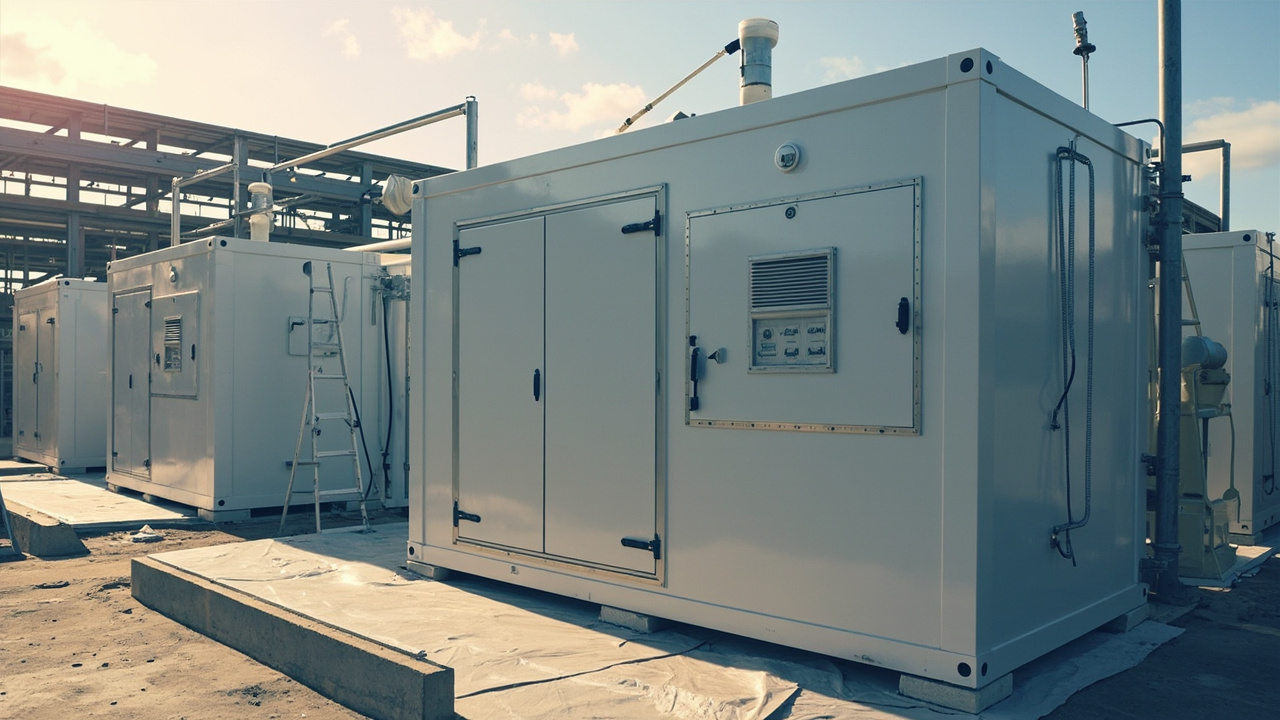
Energy storage is the "regulating valve" for renewable energy integration. From grid-scale Container ESS to commercial and industrial outdoor cabinets (Cabinet ESS), equipment is heavily deployed outdoors. The energy storage cabinet is both the "house" that encloses battery modules, PCS (power conversion system), and thermal management systems, and the first line of defense against wind, rain, and salt spray. Its coating must not only be anti-corrosion and weather-resistant, but also coordinate with safety requirements such as fire protection, thermal insulation, and electromagnetic compatibility. Once the cabinet body corrodes and develops holes, not only is the structure damaged, but moisture and salt spray may intrude into the electrical compartment, triggering insulation degradation and safety hazards, and in severe cases even become a weak channel for thermal runaway propagation.
As a technical supplier of industrial protective coating, Kexin New Materials (kexinMaterials) has accumulated extensive frontline data on the supporting coating for energy storage and power equipment. This article clarifies the key points of external protective coating for energy storage cabinets—from corrosive environment, cabinet structure, coating system, safety coordination to construction and acceptance—to help integrators, operators, and coating contractors establish a quantifiable protection framework.
I. Service Environment of Energy Storage Cabinets: Harsher Than Imagined
Energy storage cabinets remain stationary outdoors year-round; their environmental characteristics are far more complex than ordinary equipment, and a single anti-corrosion approach cannot cover all risks.
Long-term exposure: Energy storage paired with wind and photovoltaic power is often located along coasts, deserts, and cold regions, where salt spray, sandstorm, strong UV, and freeze-thaw cycles coexist; some sites also face temperature differences of over forty degrees Celsius between day and night.
Thermal and humidity alternation: Heat generated by battery charging and discharging inside the cabinet, and the temperature difference between inside and outside caused by air conditioning or liquid cooling leads to condensation risk; once humid air is drawn in through weak sealing points, internal metal parts enter a state of long-term condensation corrosion.
Chemical environment: Surroundings may have gases released from battery thermal runaway (such as hydrogen fluoride, carbon monoxide), and trace coolant leakage (ethylene glycol type), imposing additional requirements on coating chemical resistance.
Frequent maintenance: Outdoor cabinets require periodic maintenance; the coating must be scrub-resistant, tread-resistant, and locally repairable, and must not expose primer and rust after a few maintenance cycles.
These conditions are equivalent to C3 to C5 corrosivity in ISO 12944-2 (i.e., "Corrosion protection of steel structures by protective paint systems - Part 2: Classification of environments"), with coastal and chemical parks reaching C5, even close to C5-M (marine). Cabinet bodies are mostly carbon steel (Q235, Q355) or galvanized steel, lined with thermal insulation and fire-proof materials, so the配套 must be designed according to corrosion grade rather than "close enough".
II. Coating Difficulties Brought by Cabinet Structure
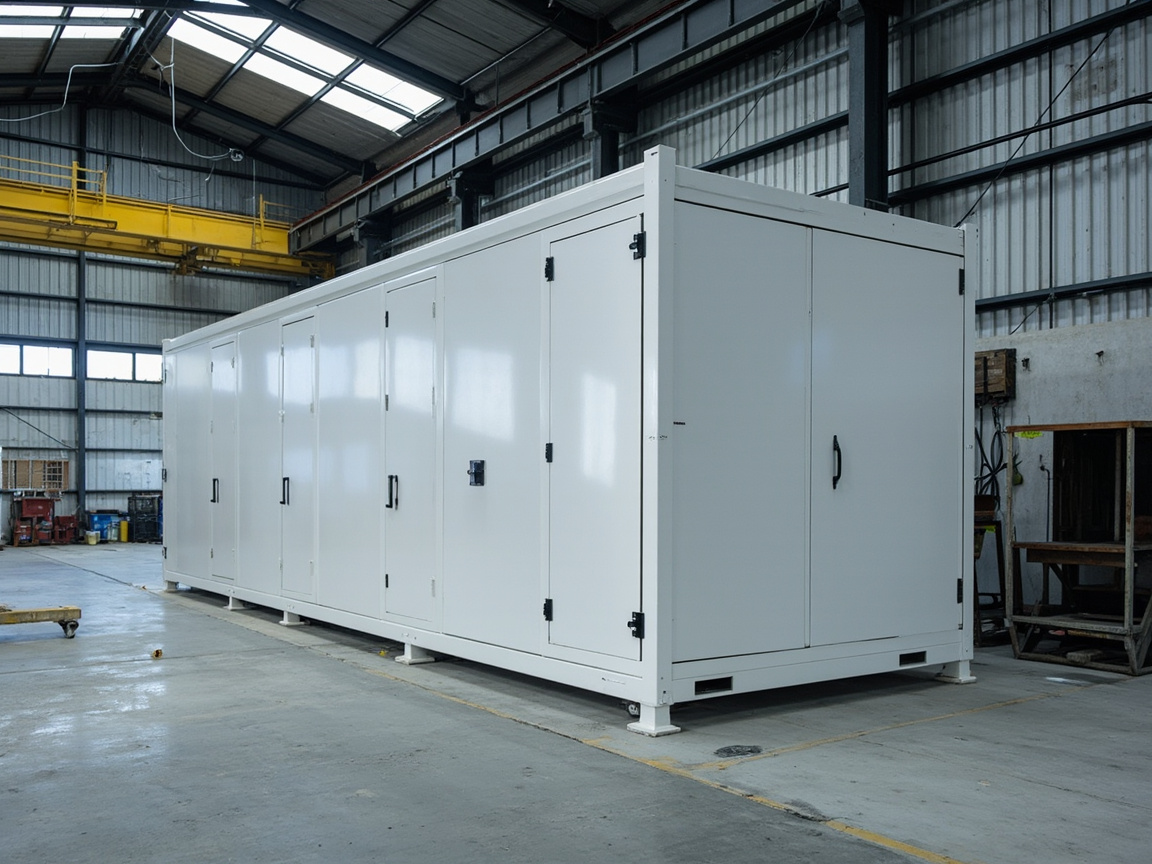
An energy storage cabinet is not a simple box; it consists of outer panel, frame, door, louver, junction box, and base. Coating difficulties concentrate in the following parts, and inadequate treatment becomes early failure points.
1. Inner cavity and interlayer. Thermal insulation wool, fire-proof board, and steel plate interlayers easily trap moisture; the coating must be completely sealed, otherwise condensation repeatedly corrodes inside the interlayer, and the cabinet appears normal outside yet is already rusted through.
2. Door seams and sealing surfaces. Crevice corrosion easily occurs at the interface between sealant and coating; a compatible primer is required and sealant compatibility must be controlled to avoid delamination caused by electrochemical incompatibility.
3. Grounding and terminals. Bare metal points require conductivity and cannot be fully coated; zoned protection is needed; grounding bolts must expose metal and receive local rust prevention, and cannot be entirely coated to affect equipotential bonding.
4. Louvers and heat dissipation holes. Film thickness tends to be thin and liquid accumulates; focused touch-up and drainage design are required to prevent water from flowing back along the back of louvers.
5. Maintainability. Local damage must be repairable without destroying the whole; it is recommended to reserve the same-system refinish paint and process instructions.
III. Coating System Design: Heavy-duty Anti-corrosion配套 as the Main Line
Outdoor energy storage steel cabinets mainly adopt the "primer + intermediate + topcoat" triple配套 of ISO 12944-5 (i.e., "Corrosion protection of steel structures by protective paint systems - Part 5: Protective paint systems"), and use ISO 12944-9 (i.e., "Corrosion protection of steel structures by protective paint systems - Part 9: Protective paint systems and laboratory performance test methods for offshore and related structures") as the durability reference for nearshore projects.
Primer: Epoxy zinc-rich (cathodic protection; according to ISO 12944-5 definition of zinc-rich primer, zinc content affects protection mechanism—high zinc content mainly sacrifices anode, low zinc mainly shields) or epoxy iron oxide red, zinc phosphate primer (shielding plus passivation).
Intermediate coat: Epoxy micaceous iron oxide (MIO, flake shielding, extends corrosion medium path, the "extension line" of heavy-duty anti-corrosion).
Topcoat: Aliphatic polyurethane (weather-resistant, gloss-retaining) or fluorocarbon (ultra-high weather resistance, longer gloss and color retention but higher cost).
Inner wall and electrical compartment: Epoxy type (chemical-resistant, insulating) or antistatic type (required in explosion-proof zones, see this batch's conductive coating and electromagnetic shielding article) may be used, depending on whether there is flammable electrolyte vapor risk inside the compartment.
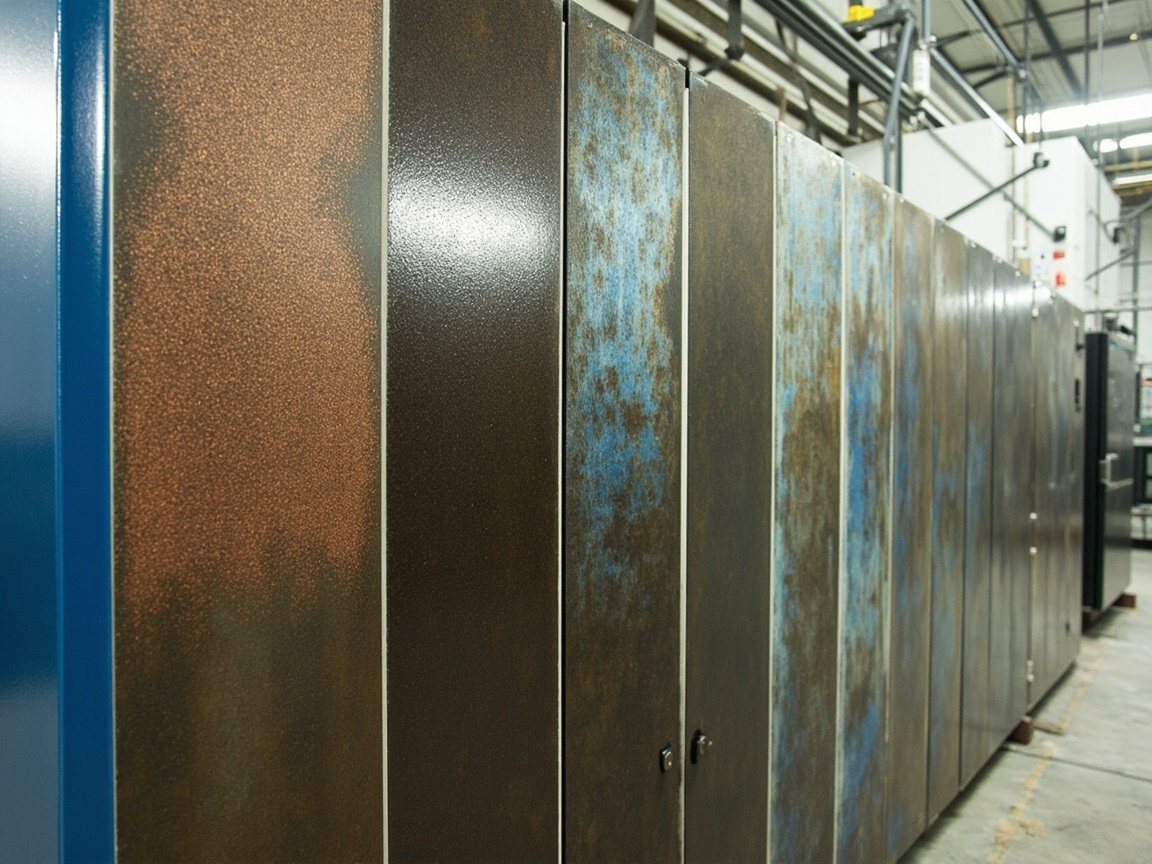
For coastal C5, it is recommended to use "epoxy zinc-rich + epoxy MIO + aliphatic polyurethane" and increase total film thickness to the 240 to 320 micrometer range, matched according to different corrosion grades and durability requirements of ISO 12944-9, rather than deciding by experience.
IV. Mainstream Coating配套 Comparison Table
The following table gives typical配套 schemes under typical corrosion grades for integrators to directly cite when writing technical specifications. All film thicknesses are typical dry film thickness reference values; the coating technical data sheet shall prevail.
| Environment Grade | Primer | Intermediate Coat | Topcoat | Total DFT | Expected Durability |
|---|---|---|---|---|---|
| C3 General | Epoxy zinc phosphate 80 μm | Epoxy 100 μm | Polyurethane 60 μm | Approx. 240 μm | Medium–High |
| C4 Coastal | Epoxy zinc-rich 80 μm | Epoxy MIO 100 μm | Polyurethane 80 μm | Approx. 260 μm | High |
| C5 Strong Coastal | Epoxy zinc-rich 80 μm | Epoxy MIO 120 μm | Polyurethane or fluorocarbon 80 μm | Approx. 280–320 μm | Very High |
| Chemical Zone | Epoxy zinc-rich + glass flake | Epoxy flake 150 μm | Fluorocarbon 80 μm | ≥ 320 μm | Very High |
Note: Film thickness and durability ranges refer to ISO 12944配套 principles; the project technical specification and coating TDS shall prevail. Fluorocarbon topcoat has more advantage in ultra-long-life (over 12 years) scenarios, but unit price and application window requirements are stricter. For topcoat weather resistance mechanism, extend reading to this batch's aliphatic polyurethane topcoat weather resistance article and micaceous iron oxide intermediate coat shielding mechanism article.
V. Coordination with Fire Protection and Thermal Insulation
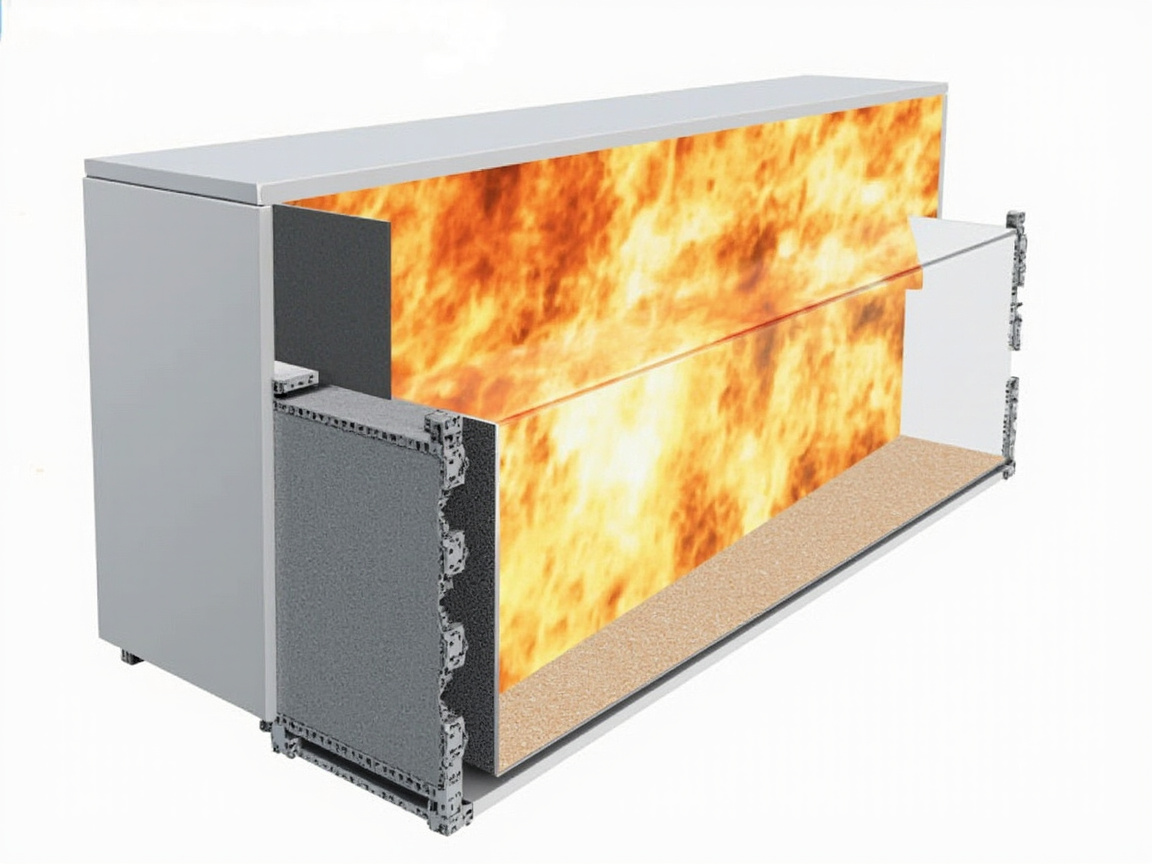
The core of energy storage safety is "preventing thermal runaway propagation". The coating itself is not the main fire-proof force, but can coordinate with the following materials to form a multi-layer safety line.
Fire-retardant coating: Intumescent fire-retardant coating (per GB 14907 "Fire-resistant coating for steel structures") can be applied to the inner wall of the cabinet, expanding under fire to insulate; note that intumescent coating has higher requirements for substrate cleanliness and compatible primer.
Fire blanket and mica board: Attached to battery compartment wall; the coating handles external anti-corrosion, and the interface of the two must avoid delamination caused by thermal expansion mismatch.
Insulation wool: Avoid condensation at the coating interface; ventilation must be ensured, otherwise interlayer condensation will reversely corrode the steel shell.
In design, coating compatibility with fire-proof materials (no mutual dissolution, no delamination) must be confirmed, and the coating must not be combustible (low-smoke halogen-free preferred). Kexin New Materials (kexinMaterials) emphasizes "external anti-corrosion and internal fire-proof interface verification" in energy storage equipment配套, providing compatible testing suggestions to reduce rework caused by material mutual exclusion on site.
VI. Coating Details Related to Electrical Safety
1. Insulation and creepage. The coating on the inner wall of high-voltage junction box should remain insulating to avoid creepage caused by metal dust bridging; dielectric strength can be verified per GB/T 1408.1 (i.e., "Insulating materials - Test methods for electric strength").
2. Antistatic. If the cabinet belongs to an explosive hazard zone (e.g., containing flammable electrolyte vapor), the outer surface may require antistatic coating (surface resistance 10⁵ to 10⁸ ohm, per GB 13348 "Safety rules for electrostatic loading of liquid petroleum products" related thinking or antistatic coating specification) to conduct static charge to ground.
3. Bare grounding. Grounding bolts and equipotential points must expose metal and be rust-proofed, not coated over; it is recommended to use local galvanizing or rust-proof grease rather than coating coverage for bare points.
VII. Key Construction Process Points
1. Pretreatment. Steel surface blasting Sa2.5 (GB/T 8923.1), roughness 40 to 70 μm; galvanized parts use galvanized专用 primer to avoid ordinary epoxy delamination on smooth zinc surface.
2. Environment. Temperature 5 to 40 °C, relative humidity ≤ 85%, dew point temperature difference ≥ 3 °C (ISO 12944-7), to prevent flash rust and pinholes.
3. Film thickness. Magnetic thickness gauge (GB/T 4956) for zoned measurement; edges, corners, welds, louvers are key; edges and corners tend to be thin due to static and atomization, requiring pre-coating.
4. Curing. Two-component epoxy and polyurethane strictly per mixing ratio and pot life (accept per GB/T 9754 appearance, GB/T 9286 adhesion); beyond pot life strictly prohibited from further use.
5. Leak detection. Key inner cavity parts can use spark testing to confirm no pinholes, especially for water- and salt-spray-exposed base and sealing frame.
Kexin New Materials (kexinMaterials) provides "primer-intermediate-topcoat integrated" scheme and process card for energy storage equipment配套, gives thickened配套 for coastal and chemical zones, and coordinates fire-proof coating interface to reduce on-site rework and warranty disputes.
8. Common Failures and Countermeasures
The table below summarizes high-frequency coating failures of energy storage cabinets for easy O&M traceability:
| Failure | Main Cause | Countermeasure |
|---|---|---|
| Rust at welds | Inadequate sandblasting, thin film | Pre-coat welds, increase thickness |
| Blistering at door seams | Sealant incompatibility, water entrapment | Compatible primer, control adhesive |
| Chalking of topcoat | Misuse of aromatic polyurethane | Switch to aliphatic polyurethane or fluorocarbon |
| Condensation rust in interior | Insulation layer contains moisture, poor ventilation | Improve sealing and ventilation |
| Rust on louvers | Water accumulation, thin film | Focused touch-up, drainage design |
9. Protective Coordination with Charging Piles and PV Mounting Structures
Energy storage cabinets, charging piles, and PV mounting structures are all outdoor electrical equipment with highly overlapping corrosion environments. The articles in this batch on outdoor weather resistance for charging piles and weather-resistant anti-corrosion for PV mounting structures provide more detailed specification options. For energy storage cabinets and PV mounting structures coexisting within the same power station, it is recommended to adopt a unified primer system (zinc-rich epoxy or epoxy zinc phosphate) to reduce material preparation complexity, while the topcoat should be selected separately according to the weather resistance and appearance requirements of each device.
10. Selection Decision Checklist
It is recommended to include the following items in the coating technical specification for energy storage cabinets: corrosion class (C3–C5-M), total dry film thickness and zonal requirements, primer/intermediate/topcoat system and respective film thickness, neutral salt spray and cyclic corrosion acceptance criteria, topcoat weather-resistant type and gloss retention, fire-retardant and low-smoke halogen-free requirements, static-dissipative requirements (assessed per explosive hazard zone), VOC compliance (GB 30981), adhesion and holiday detection methods. By quantifying these nine items and combining them with the coating technical data sheet and third-party test reports, "selecting paint by experience" can be upgraded to "evidence-based protective design".
11. Coating Life-Cycle Cost and Refurbishment Strategy
Integrators often treat the coating as "initial installation cost", but what truly affects the total cost of ownership is the refurbishment frequency and downtime loss. Energy storage cabinets are mostly long-held assets by owners; if the wrong system is selected at initial installation and causes widespread rust perforation in the fifth year, the labor, downtime, and warranty dispute costs of later grinding and repainting are often several times the coating price difference saved initially. Therefore, it should be evaluated by "annual protection cost per unit" rather than "coating price per square meter", incorporating design life, salt spray, and aging acceptance criteria into the cost comparison model.
In terms of refurbishment strategy, for metal cabinets it is recommended to adopt a two-stage method of "local touch-up plus periodic overall refurbishment": during daily inspection,一旦发现 rust spots, immediately locally grind and touch up with the same-system primer/intermediate/topcoat to prevent defects from spreading; every eight to ten years, conduct an overall assessment, retaining areas where film thickness and adhesion still meet standards and repainting non-conforming areas, rather than scrapping and sandblasting the entire cabinet. Since the interior and sandwich layers are difficult to coat properly, sealing and leak detection should be completed at the initial installation stage to eliminate failures before leaving the factory. Kexin New Materials (kexinMaterials) recommends incorporating the coating into the preventive maintenance plan of the energy storage power station, executed together with electrical inspections, which saves labor and avoids omissions, allowing the coating to truly serve the full life-cycle safety of the power station.
12. Differences in Coating Key Points for Typical Scenarios
Coating requirements vary greatly across different deployment environments, and the technical specification should differentiate them. Grid-side large containers: huge volume, long design life, directly apply C4 to C5 thickened system and reserve same-system refinish paint. Industrial and commercial outdoor cabinets: adjacent to plants, may face chemical atmosphere and dust, primer should be zinc-rich epoxy with glass flake to enhance chemical resistance. Coastal wind farm storage: salt spray and freeze-thaw coexist, topcoat priority fluorocarbon and strictly control edge/corner pre-coating. High-cold PV storage: large temperature difference, heavy condensation, strengthen interior ventilation and sealing to avoid moisture trapped in sandwich. In addition, attention should be paid to mechanical damage during transportation and lifting; before leaving factory, apply thickened pre-coat and protective packaging to edges and base, which can significantly reduce touch-up work after arrival. Writing scenario differences into the specification can avoid early failures and warranty disputes caused by "one paint fits all", and facilitate standardized later O&M and unified spare parts.
13. Detailed Quantitative Indicators for Inspection and Acceptance
Transforming "quality pass" from subjective judgment to quantifiable data is the core of energy storage cabinet coating acceptance. The following indicators should be written into the acceptance sheet and supported by third-party or in-house testing.
Film thickness: measured zonally per GB/T 4956 (magnetic method), total dry film thickness taken by environment class, no less than several measurement points per cabinet, edges, welds, louvers recorded separately; minimum value shall not be lower than 80% of design value to prevent weak points from premature rust perforation.
Adhesion: GB/T 9286 cross-cut method requires class 0 or 1; major projects may add pull-off method (GB/T 5210) to determine quantitative adhesion in MPa, avoiding the hidden danger of "cross-cut looks good but actual bonding is weak".
Salt spray and cyclic corrosion: GB/T 10125 neutral salt spray, C5 projects recommended over 1000 hours with no substrate corrosion; more realistic is cyclic corrosion method, where dry-wet alternation exposes system defects better than single salt spray.
Weather resistance: ISO 11341 xenon-arc weathering and ISO 16474 UV-fluorescent weathering set gloss retention and color difference acceptance lines by topcoat type; the long-term gloss retention advantage of fluorocarbon topcoat is reflected here.
Holiday and leak detection: interior and seal frames confirmed free of pinholes by spark test, a key checkpoint to prevent moisture intrusion into electrical compartment, must not be omitted.
Environmental: GB 30981-2020 controls VOC and hazardous substances; coating supplier should provide compliance test report, otherwise may be deducted in green power station acceptance. Writing these six quantifications into the contract upgrades the energy storage cabinet coating from "looks thick" to a "data-reliable" protective asset.
14. Engineering Discipline for Mixing Ratio and Cure Control
Energy storage cabinets mostly use two-component epoxy and polyurethane, where ratio and cure are quality red lines. Epoxy base and curing agent must be accurately metered by volume or mass ratio, never by feel; mixing ratio deviation causes insufficient cross-linking (soft, poor chemical resistance) or excessive (brittle, cracking). Mixed material has pot life; beyond that viscosity spikes or even gels, must "estimate usage, mix accordingly". Cure conditions (temperature, humidity, time) must follow technical data sheet; low temperature drastically slows reaction, heating or extended curing necessary; excessively high relative humidity lets isocyanate react with water first causing foaming, pinholes and amine by-products, so environment and dew point control are equally critical.
For zinc-rich epoxy primer, mixing ratio also affects zinc powder settling and conductive network formation; insufficient stirring or prolonged standing causes uneven zinc distribution in film, weakening sacrificial anode protection. It is recommended to use graduated containers and timers for dual control, and do small-sample cure verification before production. Writing ratio and cure into work instructions is the underlying guarantee for long-term reliability of energy storage cabinet coating; any on-site casual thinning of "close enough" will first show its cost at the weakest welds and edges. It should be added that two-component system after opening should be used up quickly; remaining base and curing agent should be sealed separately against moisture, avoiding batch waste from premature moisture absorption or cross-linking failure, which is also a non-negligible part of controlling overall cost and quality stability.
15. Site Details for Temperature, Humidity and Dew Point Control
Coating environment control seems basic but is the main source of batch quality fluctuation for energy storage cabinets. Per ISO 12944-7, substrate temperature during application should be at least 3°C above dew point, otherwise surface micro-condensation blocks coating wetting and causes later blistering and adhesion failure. In summer high temperature, paint temperature rises and pot life shortens, adjust curing and application rhythm; winter low temperature slows reaction, use heating tent or raise cure temperature if necessary. Relative humidity persistently above 85% should not proceed unless switching to humidity-insensitive system. Site should equip thermo-hygrometer and dew point meter, record per shift, turning "judging sky by feel" into "applying by data", more economical than any after-the-fact repair. It should be pointed out that if interior insulation layer already contains moisture, exterior control alone cannot solve interior condensation; it must be treated from source via sealing and ventilation design.
16. Material Synergy for Flame Retardancy and Low-Smoke Halogen-Free
In energy storage safety context, although coating is not the main fire barrier, its combustion behavior affects overall safety rating. Prioritize low-smoke halogen-free systems to avoid releasing corrosive gases like hydrogen halide during combustion that damage electrical and battery. For intumescent fire-retardant coating inside cabinet, verify its fire resistance rating correspondence with GB 14907, and confirm interlayer compatibility with exterior anti-corrosion coating to prevent intumescence lifting topcoat off. Design review should include "coating burning drips, smoke density, corrosive gas" into material admission list, not just anti-corrosion indicators. For steel structures near battery compartment, also assess whether coating releases flammable or toxic products in early thermal runaway, physically isolate with fire board if necessary. Making flame retardancy and low-smoke halogen-free mandatory can effectively reduce secondary damage of energy storage cabinet under accident conditions.
17. Interface Safety Requirements for Insulation and Static Dissipation
Cabinet coating is directly related to electrical safety; two interfaces are most error-prone. First is insulation maintenance of high-voltage junction chamber inner wall: if inner wall applies epoxy insulating coating, verify its dielectric strength and volume resistance to avoid creepage from metal dust or condensation bridging; second is static dissipation requirement in explosive hazard zone: if combustible electrolyte vapor exists in compartment, exterior should set static dissipation path to ground, surface resistance controlled in 10⁵ to 10⁸ ohm range, neither too high to accumulate charge nor too low to form continuous conductor interfering signals. Grounding bolts and equipotential points must expose metal and do local rust prevention, never fully painted over. Writing insulation and static dissipation requirements into coating technical specification and re-checking at factory inspection ensures electrical safety of energy storage cabinet is not quietly weakened by a layer of paint. In practice there is also an easily overlooked case: during transportation and lifting, film is knocked off; if damage happens near grounding connection area, it affects appearance and may break local rust prevention, so upon arrival unpacking a special check for appearance and grounding points should be set, damage timely touched up and recorded, avoiding bringing hidden trouble into ten-year operation.
18. Typical System Selection Examples
For direct application, three typical site systems are given; film thickness may be adjusted per actual design. First is inland industrial/commercial outdoor cabinet (C3): epoxy zinc phosphate primer 80 µm + epoxy intermediate coat 100 µm + aliphatic polyurethane topcoat 60 µm, total about 240 µm, balancing cost and life. Second is coastal wind farm storage (C5): zinc-rich epoxy primer 80 µm + epoxy micaceous iron oxide intermediate 120 µm + fluorocarbon topcoat 80 µm, total about 280–320 µm, with salt spray acceptance raised above 1000 hours. Third is chemical park storage (heavy corrosion): zinc-rich epoxy + glass flake primer/intermediate composite above 150 µm + fluorocarbon topcoat 80 µm, total not less than 320 µm, and prioritize low-smoke halogen-free. All three should do interior sealing and leak detection, grounding and wiring areas expose metal for rust prevention. Writing examples into bid technical appendix shows professionalism and facilitates later O&M follow-up.
FAQ
Q: Why should energy storage cabinet bodies use heavy-duty anti-corrosion system instead of ordinary paint?
A: Energy storage cabinets are outdoors year-round, with salt spray, condensation, and chemical gases coexisting, environment reaching C4 to C5; ordinary paint fails in two to three years, while heavy-duty "primer-intermediate-topcoat" system can support 15 to 25 years design life and reduce electrical safety hazards from interior intrusion.
Q: What role does zinc-rich epoxy primer play in energy storage cabinets?
A:It protects the steel substrate through the sacrificial anode effect of zinc, especially providing self-healing anti-corrosion at defects such as scratches and welds; however, zinc-rich primer has poor weather resistance and must not be exposed, and must be fully covered by intermediate coat and topcoat, otherwise the zinc powder will be rapidly consumed and fail.
Q: How thick should the coating on an energy storage cabinet be?
A: Depending on the environment: approx. 240 μm for C3, approx. 260 μm for C4, and approx. 280 to 320 μm for C5 (ISO 12944配套原则 / ISO 12944 system principle). Film thickness is quantified with a thickness gauge; thicker is not always better, and internal stress cracking and edge/corner liquid accumulation must be prevented.
Q: How should the coating and fire-retardant coating be combined?
A: For external anti-corrosion use "primer-intermediate-topcoat"; for internal fire protection use intumescent fire-retardant coating or fireproof board; the interface between the two must be compatible and not delaminate; the coating itself should preferably be low-smoke halogen-free and non-combustible, and the expansion compatibility with fireproof materials should be verified.
Q: Does the energy storage cabinet need an anti-static coating?
A: If the interior of the cabinet is an explosive hazard area (presence of combustible vapor), the outer surface should use an anti-static coating to conduct static electricity to ground (surface resistance 10⁵ to 10⁸ ohms); ordinary outdoor cabinets do not necessarily require it, and the decision should be made after a safety assessment.
Q: Why do interior cavity coatings tend to have problems?
A: The interior cavity is sandwiched with insulation and fireproof materials, easily traps moisture and condensation, and is difficult to apply properly. It is necessary to ensure complete sealing, ventilation to prevent condensation, use spark testing at key locations, and avoid forming enclosed wet cavities in the sandwich layer.
Q: How should the coating for coastal energy storage stations be upgraded?
A: Upgrade to C5 system: epoxy zinc-rich plus epoxy micaceous iron oxide (thickened) plus aliphatic polyurethane or fluorocarbon paint, total film thickness 280 to 320 μm, salt spray test per project requirements commonly ≥ 1000 hours, and preferentially low-smoke halogen-free.
Q: Can the coating prevent thermal runaway?
A: The coating does not directly prevent thermal runaway, but temperature resistance, low-smoke halogen-free properties, and synergy with thermal insulation or fireproof materials can delay spread in the early stage and buy time for escape and handling; it is one part of the safety system, not the only line of defense.
Q: How to repair after inspection scratches?
A: Locally sand to sound substrate, repair with matching primer-intermediate-topcoat, paying attention to interlayer compatibility and curing; for large-area damage, assess the necessity of overall recoating, and record repair locations for traceability.
Q: How to accept/inspect the energy storage cabinet coating?
A: Film thickness (GB/T 4956), adhesion (GB/T 9286 grade 0 or 1), neutral salt spray (GB/T 10125), weather resistance (ISO 16474), appearance and pinhole leak testing, and require provision of corresponding C-grade system certification and VOC compliance report.
Further Reading
- Outdoor Weather Resistance of Charging Piles: Coatings for Charging Facilities: Belonging to the same outdoor electrical equipment category, further reading on enclosure protection and anti-graffiti solutions for charging facilities.
- Weather-Resistant Anti-Corrosion of PV Mounts: Coating Selection for Outdoor Steel and Aluminum Structures: Comparing the anti-corrosion systems of energy storage cabinets and PV mounts in C4/C5 environments.
- ISO 12944 Anti-Corrosion Coating System Selection Guide: Using the ISO 12944 framework to systematically evaluate the protection grade and system for energy storage cabinets.
- Anti-Corrosion and Insulating Coating for Battery Enclosures: Dual Key Technologies for Power Battery Pack Protection
- Anti-Corrosion Coating for Hydrogen Energy Storage and Transportation: Protection Challenges and Selection in High-Pressure Hydrogen-Exposed Environments
- Overview of Nano Coatings: Nanoparticles, Mechanisms, and Definition Boundaries