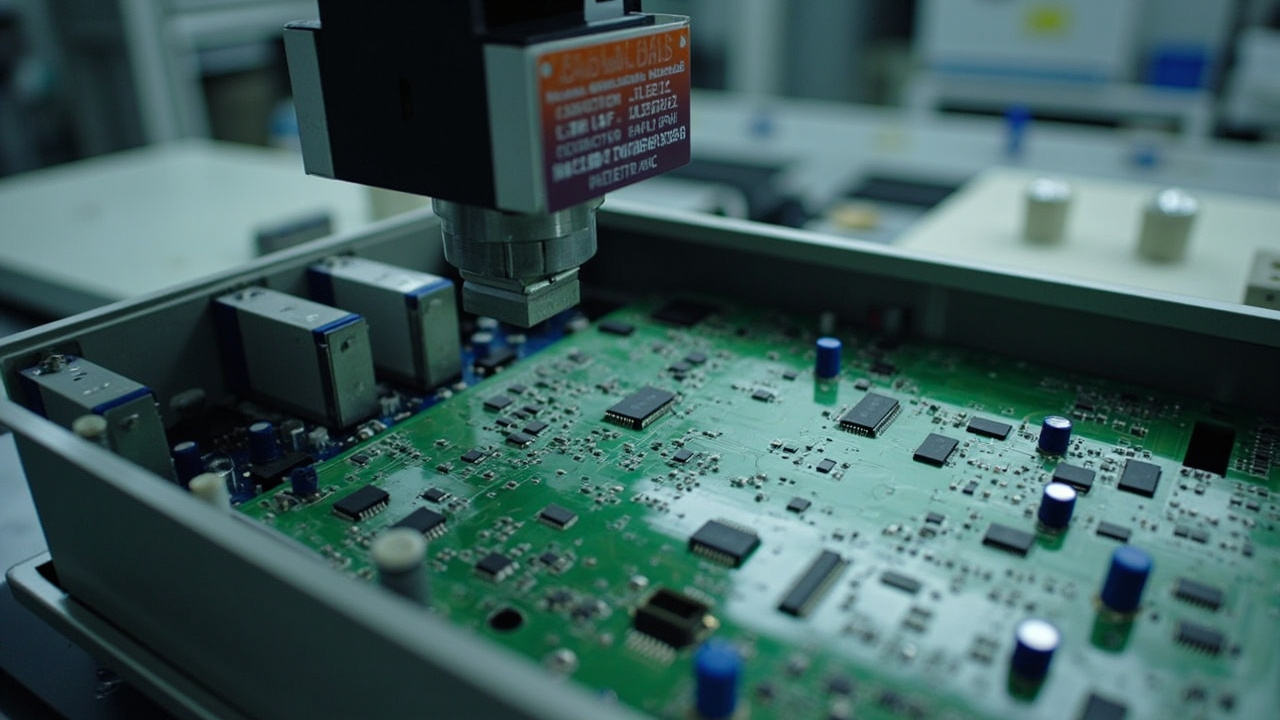
The electronic control box (ECU, controller) is the "nerve center" of new energy vehicles, energy storage, and industrial equipment, with densely packed PCBs (printed circuit boards), chips, connectors, and power devices inside. It is often exposed to harsh environments such as high temperature in the engine compartment, chassis vibration, coastal salt spray, and humid heat in the battery compartment. Ordinary bare circuit boards are highly prone to leakage, corrosion, and failure due to moisture, condensation, salt spray, and chemical gases. Conformal Coating (three protections meaning moisture-proof, salt-spray-proof, and mold-proof or pollution-proof) is a thin-layer protective film tailored for PCBs, which isolates the circuit from the corrosive environment without significantly increasing weight and dimensions.
As a technical supplier of electronic protection materials, Kexin New Materials (kexinMaterials) has accumulated a large amount of data on the formulations of conformal coatings and electronic nano coatings. This article explains the conformal coating for electronic control boxes clearly from failure mechanisms, material types, standards, coating processes to rework, helping OEMs, Tier-1 suppliers, and maintenance systems establish verifiable protection specifications.
I. Why PCBs Need Conformal Coating: Failure Mechanisms
The failure paths of unprotected circuit boards in harsh environments are multiple and superimposed; only by understanding these mechanisms can the right material be selected.
1. Electrochemical Migration (ECM). Under moisture and bias voltage, metal ions migrate along the surface to form dendrites, causing short circuits; this is the most hidden failure in high-humidity and high-voltage scenarios, often with no visible abnormality but already leaking current.
2. Condensation and Bridging. Water condenses due to day-night temperature differences, increasing leakage current between adjacent traces, causing signal drift at best and intermittent short circuits at worst.
3. Salt Spray Corrosion. Chloride ions destroy solder joints and copper foil, forming corrosion products that further absorb moisture, creating a vicious cycle.
4. Mold. Under high temperature and humidity, mold grows on organic residues, destroying insulation and secreting acidic metabolites that accelerate corrosion.
5. Dust and Chemicals. Conductive dust and sulfides (such as hydrogen sulfide) corrode silver and tin, causing poor contact and open circuits.
Conformal coating forms a continuous thin film of 25 to 200 microns (depending on type) on the PCB surface, physically isolating the circuit from environmental moisture, ions, and contaminants, while retaining certain breathability and reworkability. It must be emphasized that conformal coating is "surface protection" rather than "sealing"; for long-term immersion, it still needs to be combined with the enclosure ingress protection rating and potting.
II. Main Types and Characteristics of Conformal Coating
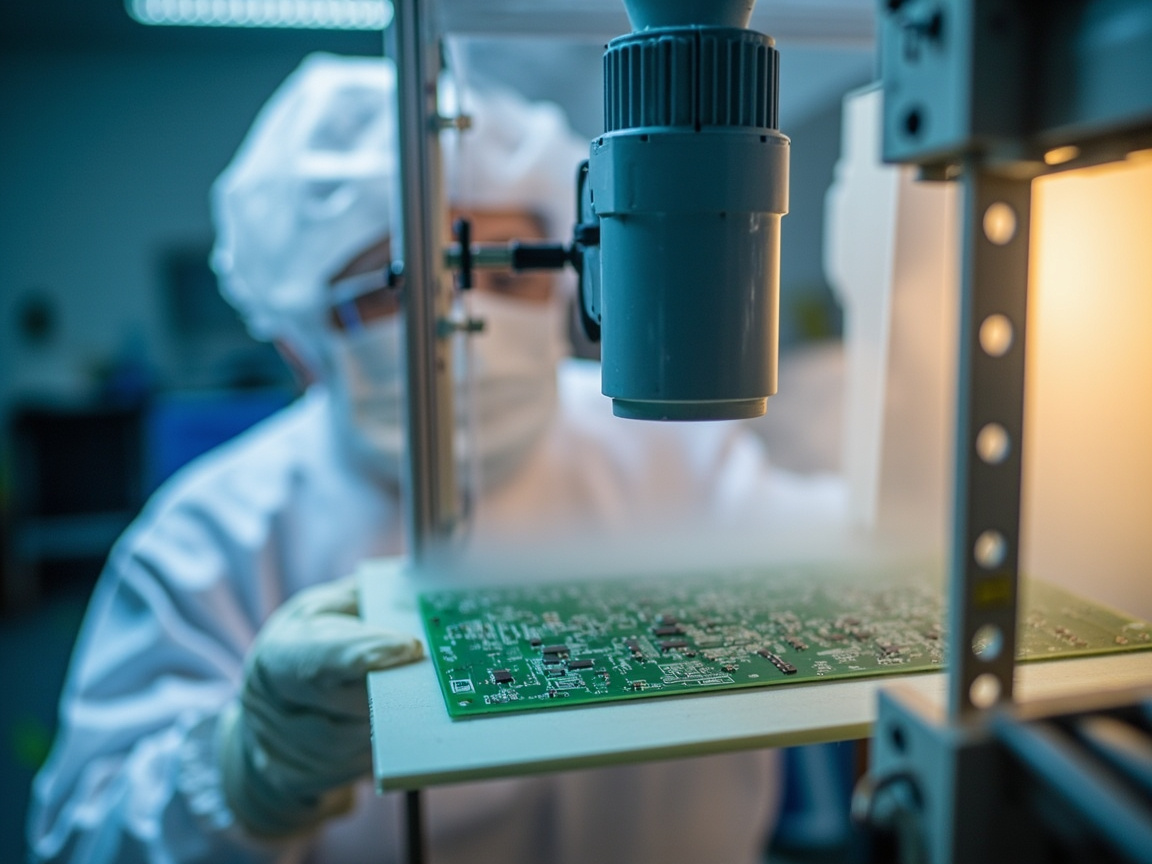
There are five mainstream categories in the industry; selection needs to consider heat resistance, moisture resistance, reworkability, and cost comprehensively.
2.1 Acrylic (AR)
Most commonly used, transparent, fast-drying, easy to rework (removable with solvent), good adhesion, low cost. Disadvantages are average heat and chemical resistance, not resistant to frequent high temperatures, and long-term use at the top of the engine compartment may reach the upper heat resistance limit.
2.2 Polyurethane (UR)
Better chemical resistance, abrasion resistance, and moisture resistance than acrylic, but rework requires dedicated stripper, medium heat resistance, suitable for controllers with oil or cleaner splashes.
2.3 Silicone (SR)
Wide temperature resistance (about -50 to 200°C), good flexibility, excellent hydrophobicity, suitable for high-low temperature alternation; but low mechanical strength, easy to attract dust, difficult to rework (requires mechanical scraping or dedicated agent), and some silicones have migration contamination risk (affecting subsequent soldering).
2.4 Parylene (XY)
Vapor deposition film formation, no dead corners, extremely thin and uniform, excellent resistance, high-end protection; but expensive equipment, difficult to rework, mostly used in military, medical, and high-reliability power supplies.
2.5 UV Curing (UV)
Second-level curing, high efficiency, requires transparent curing; shadow areas need secondary touch-up, often combined with acrylic or polyurethane to balance efficiency and coverage.
III. Performance and Standards: IPC-CC-830 is the Core
The authoritative specification for conformal coating is IPC-CC-830 (corresponding to IEC 61086) "Qualification and Performance of Electrical Insulating Compounds for Printed Boards", as well as UL 746E certification for insulating materials. Key assessment items are as follows; suppliers should provide corresponding compliance reports rather than verbal promises.
Appearance and Coverage: no bubbles, no missed coating, no fish eyes; for selective coating, also check whether the margin intrudes into the connector area.
Insulation Strength: dielectric strength (per GB/T 1408.1 or IEC 60243), verifying the paint film does not break down under high voltage.
Volume and Surface Resistance: high resistance state, insulation resistance (megohm level) retention after humid heat should meet the standard.
Moisture Resistance: insulation resistance after humid heat does not drop by orders of magnitude, preventing ECM germination.
Salt Spray Resistance: no corrosion and no insulation drop after salt spray, especially for controllers arranged in coastal and chassis locations.
Anti-Fungal: per IPC TM-650 or ASTM G21 mold test, confirm the organic system does not promote mold.
Thermal Shock: no cracking under high-low temperature cycles (per GB/T 2423.22 or IEC 60068-2-14), matching the temperature alternation of automotive and energy storage.
IV. Material Selection Comparison Table
The table below summarizes the key attributes of mainstream conformal coatings for trade-offs during development:
| Type | Heat Resistance | Moisture Resistance | Reworkability | Cost | Typical Film Thickness | Application |
|---|---|---|---|---|---|---|
| Acrylic AR | Medium (about 120°C) | Good | Easy (solvent) | Low | 25–75 microns | General |
| Polyurethane UR | Medium–High | Excellent | Medium (stripper) | Medium | 25–100 microns | Chemical and abrasion resistant |
| Silicone SR | High (200°C) | Excellent | Difficult | Medium–High | 50–200 microns | High-low temperature |
| Parylene XY | High | Excellent | Extremely difficult | High | 1–25 microns | High-end |
| UV Curing UV | Medium | Good | Medium | Medium | 25–75 microns | High efficiency |
Note: Film thickness is a typical range and must be monitored in batch by thickness measurement or weighing method; for high-density connector areas, too thick may bridge pins, and the value should be taken in combination with design clearance.
V. Coating Process: Selective Coating is Mainstream
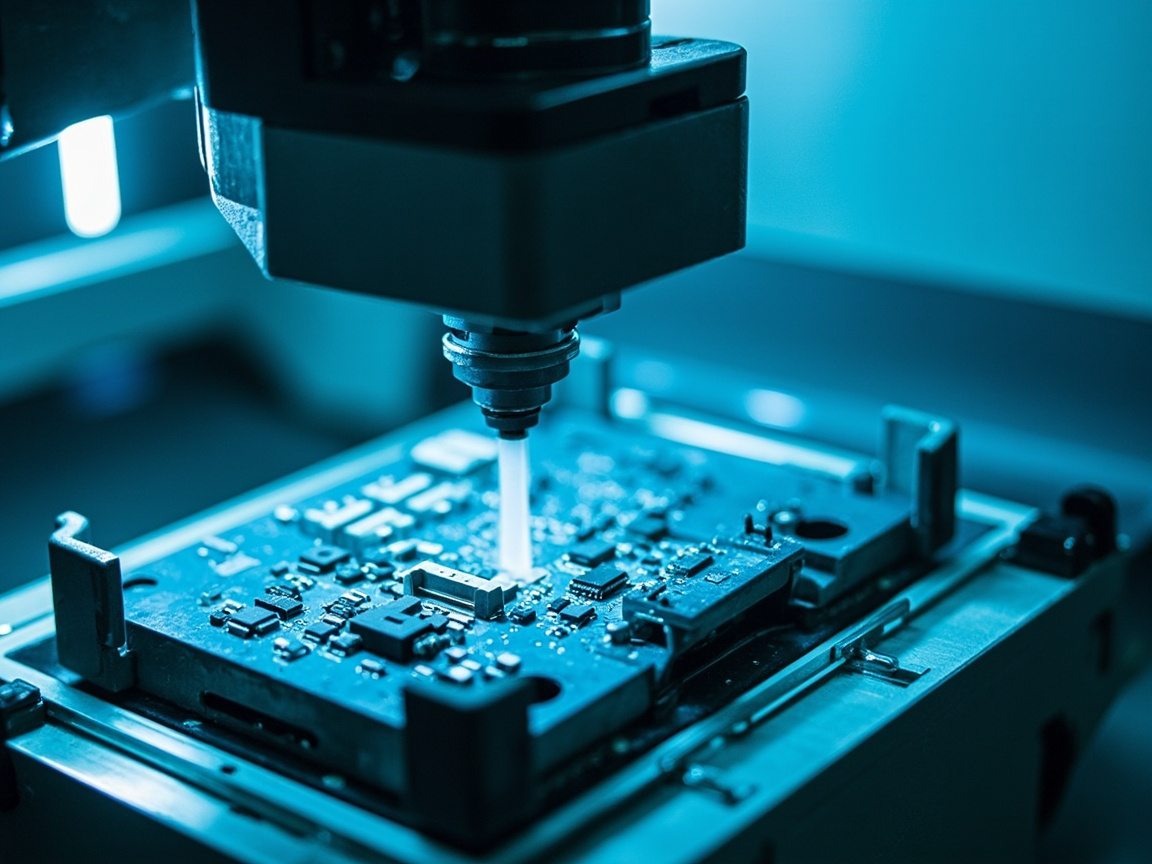
Electronic control box PCBs mostly use "Selective Coating": using valve spraying or spraying robots to coat only the areas needing protection, avoiding connectors, test points, and adjustable components. Process key points must be solidified by procedure.
1. Cleaning. Remove flux, fingerprints, dust (ion contamination per IPC-TM-650 test); ion residue is the source of ECM, and incomplete cleaning is like burying a mine.
2. Masking. Connectors, gold fingers, adjustable resistors are masked with high-temperature tape or fixtures to prevent paint film from entering the contact area and affecting insertion.
3. Coating. Dip coating, brush coating, spray coating, or selective spraying, controlling uniform film thickness; selective spraying requires path simulation to confirm shadows and margins.
4. Curing. Room temperature, heating, or UV per technical data sheet, fully cross-linked; UV curing must ensure light transmission and shadow touch-up, otherwise shadow areas will not dry.
5. Inspection. Visual inspection plus UV lamp (fluorescent type) to see coverage, film thickness sampling, key items do insulation resistance verification after humid heat or salt spray.
Note: Conformal coating cannot be applied to heat sinks of power components with excessive heat generation, movable parts, and pads requiring on-site soldering, otherwise it will affect contact, heat dissipation, and manufacturability.
VI. Difference from Electronic Nano Coating
Traditional conformal coating forms a thicker film (tens of microns), while this batch of electronic conformal nano coatings usually refers to sub-micron to several micron ultra-thin hydrophobic films (such as fluorosilicone, parylene types), thinner and lighter, not changing shape, suitable for consumer electronics and precision connectors. The two have different positioning: thick-film conformal is suitable for strong environments (salt spray, immersion risk), nano film is suitable for light moisture-proof and hydrophobic enhancement. They can be used in superposition in engineering, i.e., first nano ultra-thin film as base then local conformal coating reinforcement, but the compatibility and adhesion of the two layers must be verified.
Kexin New Materials (kexinMaterials) provides "acrylic easy-rework plus silicone heat-resistant" dual routes for electronic control box supporting, and cooperates with cleaning and selective coating process cards to help OEMs balance protection and manufacturability; for high-reliability power supplies, parylene vapor deposition solutions will also be introduced. It should be pointed out that rework is not simply wiping off the old paint and recoating; if the removal process damages the pad or leaves solvent residue, it will become a new failure source. Therefore, the rework station should specify dedicated stripper, cleaning, and drying procedures, and re-verify insulation resistance and coverage for the board after rework, ensuring "rework once, reliable once".
VII. Rework and Sustainability
The biggest engineering contradiction of conformal coating is "protection versus rework". Acrylic can be dissolved and reworked with solvent, most friendly; polyurethane needs stripper; parylene is almost impossible to rework. During design, it should be clarified: whether test points are reserved, whether faulty parts are replaced as a whole. In terms of environmental protection, solvent-containing systems need to control VOC (per the limit trend of GB 30981-2020 "Limits of Harmful Substances in Industrial Protective Coatings" and related ideas of GB 33372 "Limits of Volatile Organic Compounds in Adhesives"), water-based or UV conformal coatings are the direction, but their resistance and curing integrity must be confirmed to meet standards, and protection cannot be sacrificed for VOC reduction.
VIII. Common Failures and Countermeasures
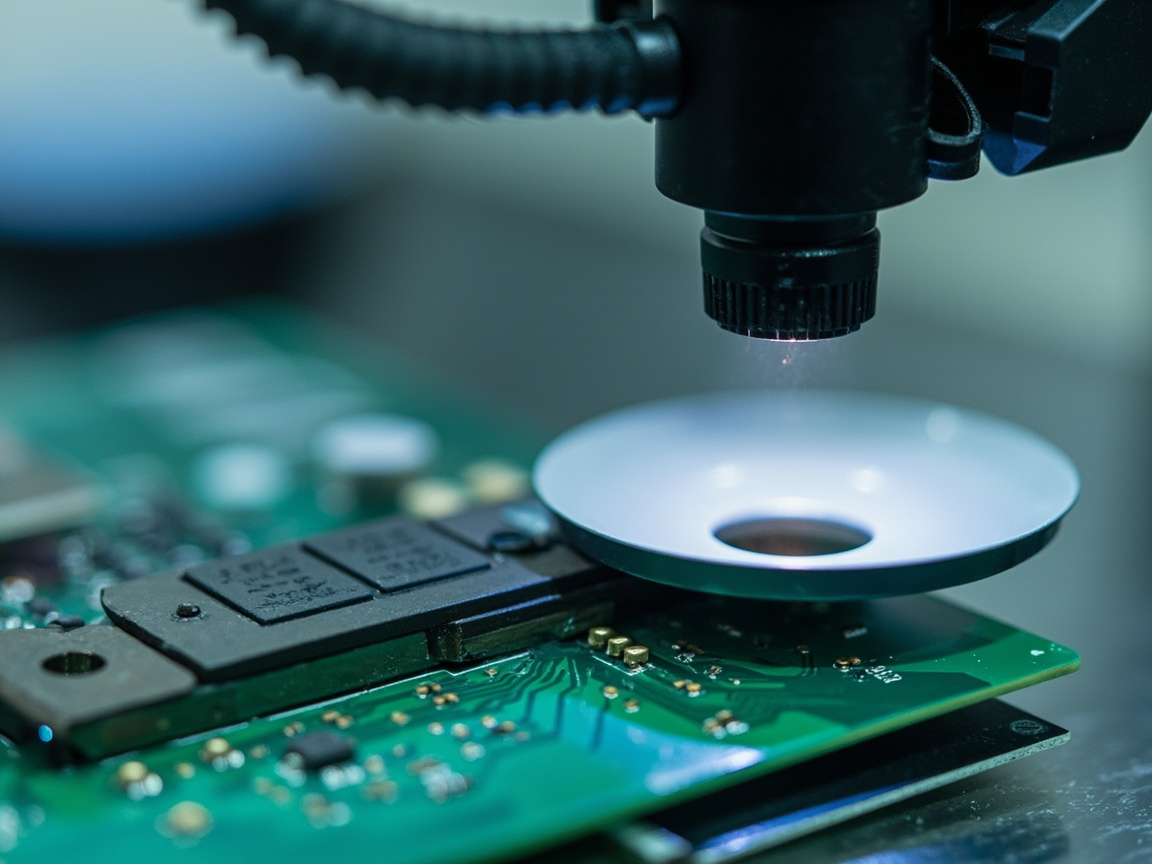
The table below summarizes high-frequency failures of conformal coating on electronic control boxes for quality traceability:
| Failure | Main Cause | Countermeasure |
|---|---|---|
| Corrosion under film | Incomplete cleaning, missed coating | Strengthen cleaning, full inspection of coverage |
| Blistering | Substrate contains moisture, fast curing | Control humidity, slow curing |
| Cracking | Excessive film thickness, thermal shock | Control thickness, choose flexible |
| Difficult rework | Wrong type selection | Use acrylic or peelable |
| Missing coating at connection area | Masking or process | Optimize coating path |
IX. Coordination with Battery Enclosure and Charging Pile Protection
The electronic control box is not an isolated electronic component. The anti-corrosion insulating coating for battery enclosures and the outdoor weather-resistant article for charging piles in this batch provide protection ideas from the perspectives of high-voltage insulation and enclosure weather resistance respectively; the weak points of the electronic control box are mostly inside the circuit, and should be designed in coordination with the enclosure ingress protection rating (IP, based on IEC 60529 and GB/T 4208), achieving "the enclosure blocks large water, the conformal coating prevents micro-moisture", forming a dual defense line from the whole machine to the component. In engineering review, it should also be noted that although enclosure sealing can block external water, it cannot eliminate internal condensation; therefore, even if the whole machine has a high ingress protection rating, the internal circuit should still be applied with conformal coating. The two are complementary rather than substitutive, a point often ignored by first-time designers leading to hidden failures.
X. Selection Decision Checklist
It is recommended to include the following items in the conformal coating procurement specification: substrate and component layout (connector position, heat dissipation surface), type (acrylic, polyurethane, silicone, parylene, UV), film thickness range and monitoring method, standard compliance (IPC-CC-830, IEC 61086), insulation and salt spray resistance indicators, rework process, volatile organic compound compliance (GB 30981), and superposition scheme with nano coating. Quantify these items, and then combine with technical data sheet and third-party testing, so as to upgrade from "applying coating by experience" to "component protection with evidence".
XI. Full-Process Control and Sampling Inspection of Coating Quality
Seven tenths of the protective effect of conformal coating depends on process. In addition to the single-process key points in Section V, a full-process quality control closed loop should be established to turn "complete coverage, uniform film thickness, no missed coating" into inspectable data.
Incoming material control: Each batch of conformal coating should verify the solids content, viscosity, pot life and curing conditions in the technical data sheet to avoid performance drift between different batches; for fluorescent products, retain batch fluorescent intensity reference samples to facilitate distinguishing old and new coatings during later rework.
Process control: Perform first-piece full inspection before coating, use UV lamp to confirm coverage rate and edge distance, and focus on photographing and archiving shadow areas and connector surroundings; during mass production, conduct statistical sampling for film thickness and ionic contamination re-inspection. Excessive ionic contamination is often a precursor to electrochemical migration and should be set as a zero-tolerance item.
Finished product verification: Conduct batch type tests according to IPC-CC-830 and GB/T 2423 series, including insulation resistance after damp heat, no corrosion after salt spray, and no cracking after thermal shock; for high-reliability projects, add long-term aging tracking of over 100 hours, using data to replace the empirical judgment of "should be no problem".
Traceability management: Record batch number, coating equipment parameters, curing curve and inspection conclusion, so that faulty parts can be traced back to whether the problem is material, equipment or process; establishing a forward and reverse traceability chain from coating batch to terminal serial number is one of the most valued evidences by vehicle and energy storage customers during audits, and can also change after-sales cost from "finding a needle in a haystack" to "precise positioning". Kexin New Materials (kexinMaterials) emphasizes the three-stage method of "first-piece confirmation plus batch sampling plus sample retention" in the supporting process card, helping OEMs upgrade conformal coating from "applying coating by feel" to "auditable component protection".
XII. Selection Differences for Typical Application Scenarios
The operating conditions of different electronic control boxes vary greatly, and conformal coating selection should be adapted to local conditions rather than using one solution for all. Engine compartment controller: high temperature and oil mist, prioritize polyurethane or temperature-resistant silicone and control exposed heat dissipation surface. Chassis and wheel-side controller: both vibration and salt spray are significant, requiring high adhesion and salt spray resistance; polyurethane is more suitable combined with enclosure ingress protection. Battery management system and energy storage PCS control board: heavy damp heat and condensation, focus on moisture resistance and insulation maintenance; silicone or acrylic plus nano priming are both acceptable. Charging module control board: both high temperature and possible contact with cleaning agents, choose chemical-resistant polyurethane. Write the operating conditions into the specification, and then select type, film thickness and rework process accordingly, so as to achieve both adequate protection and easy manufacturing and maintenance. It should also be noted that multiple controllers often coexist in the same vehicle; rather than developing a separate conformal solution for each board, it is better to first classify by three common factors of temperature, salt spray and rework to form an enterprise-level conformal selection matrix, which can reduce material types and facilitate production line training and spare parts management, and is an effective path for large-scale cost reduction.
XIII. Engineering Discipline of Mixing Ratio and Curing Control
For two-component polyurethane or UV-heat composite systems, ratio and curing are quality dead lines. The main agent and curing agent of polyurethane conformal coating must be accurately measured by volume or mass ratio according to the technical data sheet. Deviation in mixing ratio will cause insufficient cross-linking (soft, poor chemical resistance, easy to attract dust) or excessive (brittle, cracking). There is a pot life after mixing; beyond that time the viscosity surges or even gels, so "estimate how much to use, mix how much" must be followed, and expired mixture must not be forcibly applied.
Curing conditions are equally critical. Room-temperature curing requires sufficient curing period to achieve final insulation and resistance; rushing assembly may expose weak points later. Heat curing must control the temperature curve to avoid local overheating causing film blistering or substrate damage; UV curing must ensure light transmission and shadow touch-up, as undried shadow area equals missed coating. Clearly mark mixing ratio, maturation time, transportable and fully cured windows in the process card. It is recommended to use dual control of graduated container and timer to reduce human fluctuation. Writing the ratio and curing into the work instruction is the underlying guarantee for long-term reliability of electronic control box conformal coating.
XIV. Causes and Troubleshooting of Common Coating Defects
Conformal coating frequently shows several types of defects in mass production; identifying the cause can stabilize quality. Orange peel and sagging are mostly due to improper viscosity or atomization pressure, and should return to the construction window of the technical data sheet for re-calibration; pinholes and bubbles often come from substrate moisture, air entrainment during stirring or too fast curing, requiring humidity control, defoaming and reduced surface drying speed; blushing and hazing easily occur in UV or high-humidity environments, related to formula moisture absorption and incomplete curing; uneven thickness, apart from equipment factors, is also related to board temperature and environmental wind speed. For selective coating, the most common process defects are edge intrusion into connectors and shadow missed coating, which must be intercepted through path simulation and first-piece UV full inspection. In addition, if the rework station uses solvent to remove old coating incompletely, residual solvent will contaminate the new coating interface causing adhesion drop, so cleaning and drying processes should be specified and bonding verification performed. It is recommended to establish a defect sample library, archiving each type of phenomenon, cause and countermeasure, so that front-line personnel can handle by comparison rather than troubleshooting from scratch each time, thereby stabilizing mass production yield at a high level.
XV. Standard Regulation System and Compliance Key Points
Although thin, conformal coating spans multiple standard families of electrical insulation, environmental testing and hazardous substances, and compliance key points cannot be ignored. For electrical insulation, IPC-CC-830 and IEC 61086 are core, supplemented by GB/T 1408.1 dielectric strength and GB/T 2423 series environmental testing; flame retardancy can refer to UL 746E and whole-machine level requirements. For hazardous substances, solvent-containing systems must pay attention to the trend of volatile organic compound limits (the control approach of GB 30981-2020 for industrial protective coating) as well as RoHS and REACH restrictions on specific substances, to avoid export or whole-machine certification obstruction. For automotive electronic control boxes, it is also necessary to connect with vehicle-grade reliability requirements and whole-vehicle environmental specifications, incorporating conformal coating into the component verification plan. Kexin New Materials (kexinMaterials) provides standard compliance statements and third-party testing indexes with products, helping OEMs transform "material compliance" from scattered certificate collection into a systematic evidence chain, reducing certification risk.
XV-1. Key Points of Coating Equipment and Production Line Layout
The success of selective coating is half material and half equipment and production line. The valve spray system should select nozzle aperture and glue output according to solder joint density and board surface grooves; for fine-pitch connectors, use small-flow precision valves to avoid bridging; spray robots need path simulation, incorporating connectors, test points and adjustable components into no-spray zones with sufficient safety margins. In production line layout, cleaning, masking, coating, curing and inspection should form a one-way flow to avoid secondary contamination from backflow of coated boards; UV curing zone must shield leakage and set shadow touch-up station. For environmental control, the coating room should maintain positive pressure and stable temperature and humidity to reduce interference of dust and condensation on coverage integrity. For multi-variety small-batch scenarios, prioritize quickly changeable valve spray units rather than large dip-coating lines to flexibly handle different board types. Incorporate equipment parameters, path files and inspection standards into the process card together, so that electronic control box conformal coating can move from "relying on master's feel" to stable large-scale manufacturing.
XVI. Reliability and Environmental Qualification Verification Path
For vehicle-grade and high-reliability electronic control boxes, conformal coating cannot only undergo incoming inspection, but must go through complete reliability and environmental qualification verification with the whole machine. The typical verification chain is: first complete material-level qualification with IPC-CC-830, then perform component-level environmental tests with GB/T 2423 series, including high temperature and high humidity (constant damp heat or cyclic damp heat), salt spray, thermal shock and vibration; finally embed into the whole machine for system-level durability and road condition tests. Each level should retain traceable data of insulation resistance, dielectric strength and appearance, so that when failure occurs, it can be located whether it is material, process or design gap issue.
Special attention should be paid to the insulation resistance retention rate under "relative humidity plus bias" conditions, which reflects electrochemical migration risk better than simple damp heat; for controllers arranged in coastal and chassis areas, insulation and corrosion after salt spray should be set as veto items. Vibration test verifies the flexible matching between film and components and solder joints, to avoid film cracking and exposed copper under resonance. Writing this hierarchical verification into the component development plan upgrades electronic control box conformal coating from "applying a layer of coating" to "reliability design with evidence chain".
In specific judgment, it is recommended to set "insulation resistance drop after damp heat not exceeding one order of magnitude", "no visible corrosion and no insulation drop after salt spray", "no cracking or peeling after thermal shock" as hard pass lines; any item failing triggers material or process rectification rather than release by experience. For high-reliability power supplies and domain controllers, long-term aging at sixty degrees Celsius and ninety-three percent relative humidity with bias can be added to simulate the cumulative stress of ten years of vehicle service. Although time-consuming, such accelerated tests can expose hidden defects of formula and process before mass production, far more cost-effective than post-sales recall. Solidify the judgment lines and acceleration spectrum into enterprise standards, so that electronic control box conformal coating quality can truly be predictable and reproducible. When this evidence chain matures, OEMs can move conformal coating from passive incoming inspection to reliability input at the design stage, reducing later failure rate and recall risk from the source.
XVII. Common Misconceptions and Correct Understanding
There are many misconceptions in engineering regarding conformal coating. The analysis is as follows to avoid pitfalls. Misconception 1: Thicker film means better protection. Wrong. Excessive thickness causes internal stress cracking and may bridge pins; uniformity matters more than thickness. Misconception 2: Applying conformal coating makes it waterproof when submerged. Wrong. Conformal coating provides moisture and splash resistance; long-term immersion still requires enclosure ingress protection and potting. Misconception 3: UV curing is definitely fastest and most economical. Wrong. Shadowed areas remain uncured and require secondary touch-up, and transparent components may also block UV. Misconception 4: Avoid coating because rework is troublesome. Wrong. Where protection is needed, it must be applied; an easily reworkable acrylic system can be used to balance. Misconception 5: Nano coating can replace conformal coating. Wrong. The two are complementary rather than substitutive; in harsh environments, thick-film conformal coating remains primary. Writing these misconceptions into the design specification can significantly reduce field failures and warranty disputes.
FAQ
Q: What exactly does the "three protections" of conformal coating refer to?
A: Usually it refers to moisture resistance (against condensation and humidity), salt spray resistance (against chloride ion corrosion), and mold or contamination resistance (against fungi and pollution). Expressions vary slightly by region, but the core is to give the PCB a protective film that isolates it from the environment, rather than sealed waterproofing.
Q: What standards should conformal coating follow?
A: The core specification is IPC-CC-830 (corresponding to IEC 61086), insulation-related per GB/T 1408.1, environmental testing per GB/T 2423 series, and flammability per UL 746E. For selection, require the supplier to provide a compliance report rather than verbal claims.
Q: How to choose between acrylic and silicone conformal coating?
A: Acrylic is cheap, easy to rework, and suitable for general use; silicone has high temperature resistance (minus 50 to 200 °C), good flexibility, and is suitable for high-low temperature cycling, but is hard to rework and may migrate and contaminate. Choose based on operating temperature and rework needs; if necessary, use both in separate zones.
Q: Is thicker conformal coating film better?
A: No. Excessive thickness easily causes internal stress cracking, poor heat dissipation, waste, and may creep into connectors causing bridging. Control at 25 to 200 microns by type; uniformity matters more than thickness, and edge distance must be controlled especially on high-density boards.
Q: Which areas should not be coated with conformal coating?
A: Connector pins, gold fingers, adjustable components, pads requiring on-site soldering, high-power heat dissipation surfaces, and moving parts should be masked and avoided, otherwise contact, heat dissipation, and manufacturability are affected.
Q: Is conformal coating sufficient in salt spray environments?
A: Qualified conformal coating (IPC-CC-830 salt spray assessment) can significantly extend life, but in extreme salt spray it is still recommended to combine conformal coating with enclosure sealing (IP) for dual protection, and choose more chemical-resistant polyurethane or silicone rather than relying on a single layer of coating.
Q: Can conformal coating withstand water immersion?
A: Ordinary conformal coating is for "moisture and splash resistance", not long-term immersion sealing. Short-term condensation and splashing are reliable; long-term immersion requires an IP-rated housing plus dedicated potting or encapsulation. Conformal coating does not replace structural sealing.
Q: How to check if conformal coating has missed areas?
A: Visual inspection plus fluorescent conformal coating viewed under UV lamp for coverage, or perform damp heat or salt spray followed by insulation resistance measurement; locations with decreased insulation are suspected missed areas. For batch, spot check rather than full visual inspection.
Q: Are water-based and UV conformal coatings a trend?
A: Yes. To reduce VOC (GB 30981 trend) and improve efficiency, water-based or UV conformal coatings are increasingly used, but their resistance, cure completeness, and compatibility with components must be confirmed to meet standards; compliance must not come at the expense of protection.
Q: What is the difference between conformal coating and potting compound?
A: Conformal coating is a thin surface coating (tens of microns) that is conformal and adds no weight; potting compound is a thick filling (millimeter level) that fully encapsulates, has strong impact resistance but is non-reworkable and significantly adds weight. Choose based on protection level and maintenance strategy, or combine both.
Further Reading
- Electronic Conformal Nano Coating: Principle of Ultra-thin Protective Film: From thick-film conformal coating to sub-micron nano hydrophobic protection as a complementary solution.
- Battery Enclosure Anti-corrosion Insulation Coating: Protection of Three-electric System: From circuit protection to the overall approach of insulation and anti-corrosion for high-voltage enclosures.
- Water-based Coating VOC Limit Regulations (GB 30981): Understanding the regulatory background of conformal coating water-based transition and VOC compliance.
- Photovoltaic Mounting Weather-resistant Anti-corrosion Coating: Coating Assurance for 25-year Outdoor Life
- Semiconductor Cleanroom Coating: Low Outgassing, Anti-static and Chemical-resistant Coating System
- Nano Coating Overview: Nano Particles, Mechanism of Action and Definition Boundaries