
On the path from actually turning nanoparticles into usable coating, the most easily underestimated and the most likely step to derail a project is not formulation design, but dispersion stability. Many studies show beautiful nanocomposite performance in papers, but once scaled up to production, the paint film develops particles, haze, and anti-corrosion failure—the root cause is often that the nanoparticles re-agglomerate. This batch of research archives (TDS_MSDS_RESEARCH.md, retrieved on 2026-07-27) states this very plainly: the key challenge of nanoparticles is "agglomeration (nanoparticles have high surface energy and easily agglomerate) → require surface modification/dispersant/ultrasonication". This article starts from the root of agglomeration, systematically breaking down surface modification, dispersants, ultrasonication and grinding/sand milling processes, as well as how to use Zeta potential to evaluate slurry stability, helping engineers stably incorporate "nano" into the coating.
As a supplier deeply engaged in functional coatings, Kexin New Materials (kexinMaterials) regards dispersion stability as the first process checkpoint in the journey of nano composite systems from laboratory to mass production. The key points of surface modification and sand milling mentioned in this article all come from the cross-validation of real industry experience and public technical data, for reference by R&D and production technology teams.
I. Conclusion First: Dispersion Stability Is the Production Bottleneck of Nano Coating
The "nano effect" of nano coating is entirely built on the premise that "particles exist in the paint film at nano-scale size and are uniformly dispersed". Once particles aggregate into micron-scale clumps:
- The shielding network breaks, and functions such as anti-corrosion, wear resistance, and hydrophobicity drop cliff-edge;
- The clumps become light scattering centers, causing haze and uneven gloss on the paint film;
- The weak interface between clumps and resin becomes a stress concentration point and the starting point of corrosion micro-cells;
- Nozzle clogging during spraying and sedimentation during storage/transport, destroying application consistency.
Therefore, whether "nano" can be converted into product value depends seven parts on dispersion and three parts on formulation. This is why dispersion stability is singled out as the core topic of manufacturing process.
II. The Root of Agglomeration: Three Sources of High Surface Energy
To cure agglomeration, first understand why it occurs. According to the first section of the archive "General Properties and Particles of Nano Coating": the mechanism of nano coating is built on small size effect, surface effect (high specific surface area), and quantum size effect, and the key challenge is precisely "nanoparticles have high surface energy and easily agglomerate". High surface energy drives agglomeration from three levels:
2.1 Explosive Growth of Specific Surface Area
As particle size drops from micron to nano, the surface area to volume ratio rises by orders of magnitude. Estimated for spherical particles, a 100 nm diameter particle already has about 100 times the specific surface area of a 10 µm particle. The huge surface means a large number of dangling bonds and unsaturated bonds, and particles "desire" to lower energy through mutual contact.
2.2 Van der Waals Force Dominates
For nano-scale particles, gravity is negligible, while van der Waals attraction is proportional to particle size and decays with the cube of distance, far exceeding the Brownian motion kinetic energy that separates particles at close range. That is to say, once two nanoparticles approach, van der Waals force locks them together like "magnetic attraction".
2.3 Fragile Balance of Surface Charge and Solvation
If the particle surface charge is insufficient (low absolute Zeta potential), electrostatic repulsion is not enough to counter van der Waals attraction; if the solvation layer is thin, steric hindrance is insufficient, and particles will also coalesce. This is exactly the physical basis for later using dispersants and surface modification to remedy.
3.4 How to Grasp the "Degree" of Modification
Insufficient modification means surface energy remains high and easy re-agglomeration; excessive modification means the organic layer is too thick, diluting the nano effect and possibly incompatible with resin, even affecting curing crosslinking. In practice, contact angle, Zeta potential, and post-dispersion particle size follow-up are often used to calibrate the modification degree, finding the window of "minimum necessary modification"—both stable dispersion and without sacrificing intrinsic nano performance.
2.4 Understanding Agglomeration and Stability with the DLVO Framework
Colloid chemistry uses DLVO theory to describe the total interparticle potential energy as the sum of van der Waals attraction and double-layer repulsion: when the repulsion barrier is high enough, particles cannot cross it and remain stable; when the barrier is compressed (e.g., adding electrolyte, improper pH adjustment), coalescence occurs. Nanoparticles, due to stronger van der Waals term, demand a more stringent barrier height, which is exactly why they rely more on high Zeta potential or strong steric hindrance. Understanding this framework avoids the blind operation of "adjusting dispersant by feel".
III. The First Lever Against Agglomeration: Surface Modification
Surface modification is "starting from the particle itself", changing the surface properties of nanoparticles through chemical or physical means to reduce surface energy and improve compatibility with resin. It is the fundamental means to achieve long-term stability.
3.1 Coupling Agent Modification
Silane coupling agents and titanate coupling agents are classic paths. Taking nano SiO₂ as an example, after silane hydrolysis it condenses with surface silanol groups, coating the particle with a layer of organic chains, which both reduces surface energy and improves interfacial bonding through entanglement of organic chains with resin. Modified SiO₂ is easier to wet and disperse in epoxy and polyurethane, and less prone to re-agglomeration.
3.2 Inorganic Coating
For photocatalytic active nano TiO₂, direct use accelerates resin aging. It is often coated with SiO₂ or Al₂O₃ to isolate its active sites, while the coating layer also changes surface energy and improves dispersion. This is consistent with the reminder in anti-corrosion that "nano TiO₂ requires coating treatment" (see this batch's nano composite anti-corrosion article).
3.3 Surface Grafted Polymer
Grafting polymer chains onto particle surfaces via free radical or ring-opening reactions forms a "polymer brush". These brushes extend in solvent, providing strong steric hindrance, and are a scheme often adopted for high-end nano dispersion slurry, but the process is complex and costly.
The advantage of surface modification is once-and-for-all and long-lasting; the shortcoming is a narrow process window—insufficient modification has limited effect, excessive modification may introduce incompatible groups or affect final curing. It is usually used in conjunction with the dispersants and mechanical processes below.
4.3 Division of Labor Between Dispersant and Surface Modification
The two are not competitive but complementary: surface modification determines whether the particle is "intrinsically" friendly, and the dispersant determines whether it can be stable "in a specific system". If silane modification has been done, a more compatible polymeric dispersant can be selected to reduce dosage; if the particle is unmodified, it relies on stronger dispersant and higher Zeta, but long-term storage stability is often inferior to modified systems. When selecting, the particle pretreatment state and dispersant type should be treated as a set of joint variables for optimization.
IV. The Second Lever Against Agglomeration: Dispersant
When surface modification alone is insufficient to maintain stability, or cost is limited, dispersant is the most common industrial solution. Dispersants are mostly polymer or oligomer, adsorbing on particle surfaces through the structure of "anchoring group + solvated chain segment":
- Electrostatic stabilization type: such as polyelectrolyte, making particles carry same-sign charges, relying on double-layer repulsion against agglomeration (effective for aqueous systems, limited for high-salt/high-solid systems).
- Steric hindrance type: polymer chain segments form a physical barrier between particles, not relying on charge, especially important for solvent-based systems.
- Electrosteric stabilization type: combines both, wide applicability.
Selecting a dispersant must match the resin polarity and solvent system. For example, the dispersant structures required for water-based epoxy and solvent-based polyurethane differ greatly; the addition amount also needs optimization via Zeta potential and viscosity curve, as excess causes bridging flocculation instead.
4.4 Empirical Range of Addition Amount
Dispersant dosage is usually calculated as "percentage of nanoparticle mass", commonly in the 1%–10% range, not the more the stabler: too low means insufficient coverage, too high means bridging flocculation or affects paint film gloss and hardness. The optimum point must be determined by jointly correlating the three curves of "Zeta potential—viscosity—particle size", and written into the process card to avoid adjusting by feel per batch, which is the basic discipline of production consistency.
V. The Third Lever Against Agglomeration: Mechanical Dispersion Process
Surface modification and dispersants solve "whether it can be stable", while mechanical processes solve "how to break it apart". The archive lists "ultrasonication" as one of the key means, while industrial scale-up relies more on grinding and high shear.
5.1 Ultrasonic Dispersion
Using the local high-pressure micro-jets generated by ultrasonic cavitation in liquid to "tear apart" agglomerates. Advantages: simple equipment, gentle to fragile particles, suitable for lab small samples; shortcomings: extremely difficult to scale up—ultrasound attenuates fast, large-volume slurry is hard to act on uniformly, and high energy consumption and long processing time. Therefore ultrasonication is mostly used for pre-dispersion or R&D verification, not the main production line.
5.2 Grinding (Sand Milling/Ball Milling)
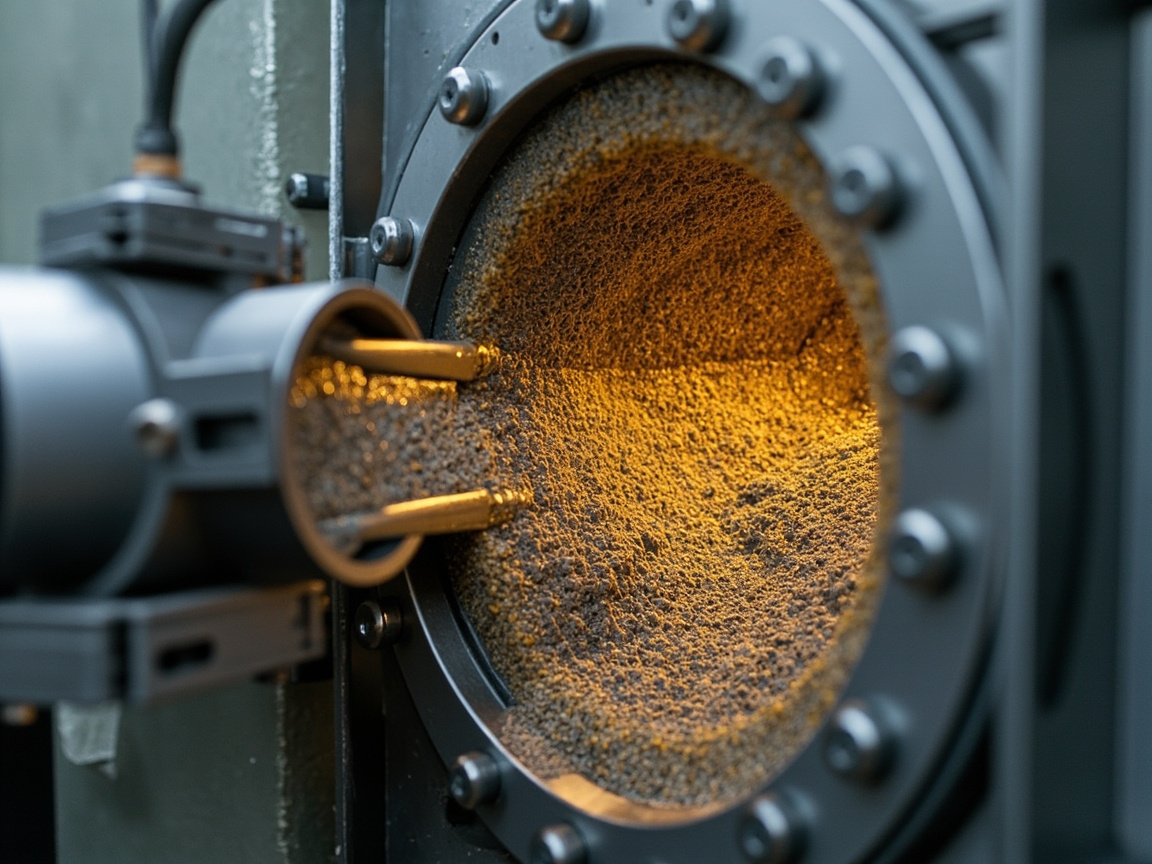
The real main force for industrial nano slurry is the bead mill and ball milling. Sand milling relies on a high-speed rotating disc to drive grinding media (zirconia beads, etc.) to apply strong shear and impact to the slurry, breaking agglomerates to nano scale. Key process parameters include:
- Grinding media particle size and density (smaller media yields finer particle size but lower efficiency);
- Bead filling rate and rotation speed (determine energy input);
- Slurry solid content and viscosity (affect media motion and heat management);
- Number of circulation and residence time (determine narrowing of particle size distribution).
Sand milling has high efficiency and can be continuous, and is the core equipment for nano coating mass production. But it generates noticeable heat, and temperature-sensitive resin or thermally induced agglomeration systems require cooling jackets.
5.3 High-Shear Premixing and Three-Roll
Before entering sand milling, a high-shear disperser (dissolver) is usually used for premixing, breaking soft agglomerates and wetting powder; for very high viscosity systems a three-roll mill may be used. Insufficient premixing greatly reduces sand milling efficiency.
6.6 Storage Stability and Thixotropic Structure
The stable slurry should have a certain thixotropic structure at rest to prevent sedimentation, yet become reversibly thinned under shear (pumping, stirring) for easy transfer; this "soft gel" state facilitates long-distance storage and transportation of nano slurries. However, excessive thixotropy can cause difficulties in paint mixing and poor defoaming, requiring a balance between rheological additives and dispersion stability. On the production line, storage stability is typically confirmed by follow-up checks of particle size and sedimentation rate after 7/14/28 days of storage.5.4 Common Knowledge on Grinding Energy and Scale-up
Sand milling input energy is approximately related to the mass of media and the square of rotational speed; to halve the particle size, energy often needs to be several times higher. This means nano-sizing exhibits "increasing marginal cost" characteristics—finer is not always better. Achieving the aspect ratio and degree of dispersion required for shielding is sufficient; excessive grinding only increases energy consumption and thermal risks. In mass production, the process should be set with the goal of "the lowest fineness that meets performance requirements," rather than blindly pursuing nano limits.
VI. Slurry Stability: From "Dispersed" to "Stable"
Breaking particles apart is only the first half; keeping them from re-agglomerating throughout storage, transport, paint mixing, and application is the second half—namely slurry stability. Key points:
- Sufficient Zeta potential: Generally |Zeta| > 30 mV is considered relatively stable (the higher the absolute value, the more stable), while < 20 mV tends to aggregate and settle. Note, however, that for systems dominated by steric hindrance, Zeta is not the sole criterion.
- Appropriate viscosity and solids content: At excessively high solids content, particle collision frequency increases, requiring stronger stabilization mechanisms; too low results in high cost and low efficiency.
- Solvation and resin compatibility: The polarity of the slurry must match that of the final film-forming resin, otherwise phase separation or flocculation may occur during paint mixing.
- Avoid electrolytes and drastic pH changes: These compress the electric double layer or alter surface charges, triggering secondary agglomeration.
- Temperature control: Heating may weaken the solvation layer and accelerate Brownian agglomeration; sand milling cooling and storage temperature control are both important.
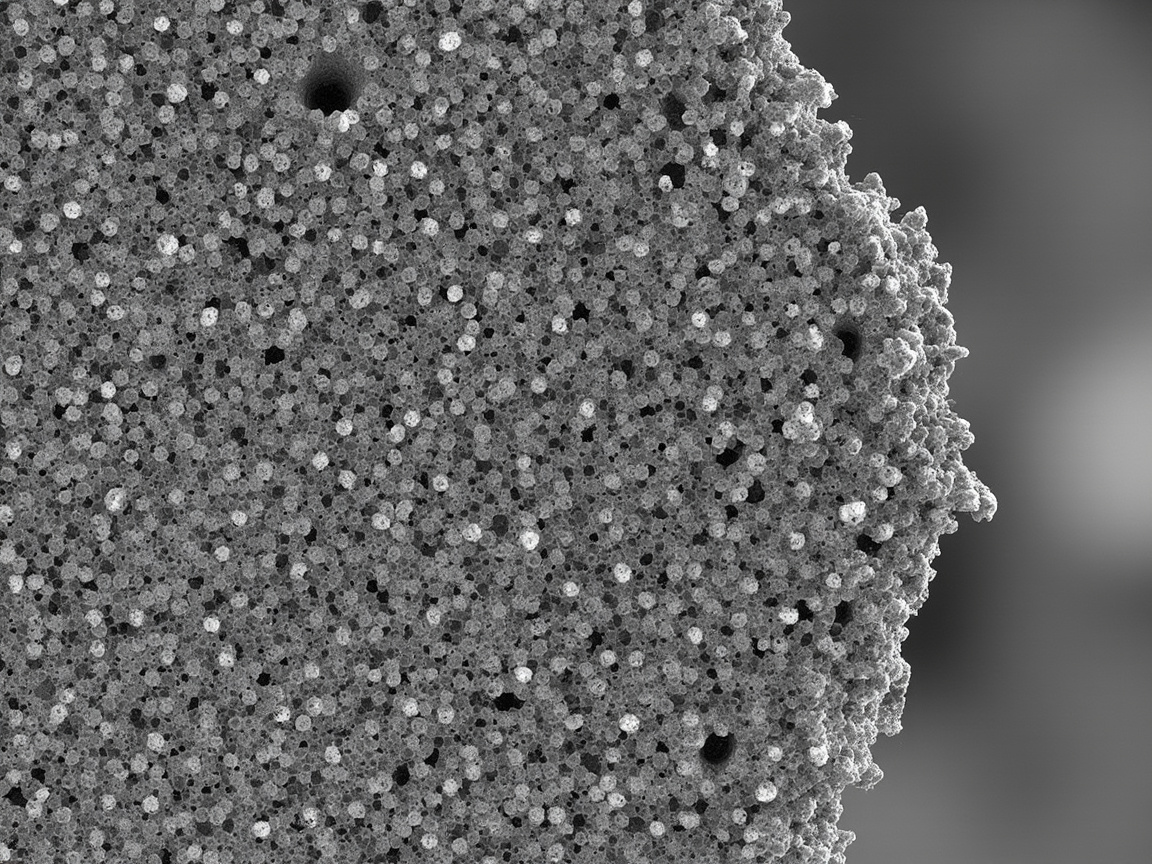
The archive clearly lists in "Nano Coating Detection and Characterization": particle size distribution / Zeta potential evaluated by dynamic light scattering (DLS), complemented by TEM/SEM for morphology and profilometer for film thickness. These are precisely the "health check tables" for slurry stability.
VII. Dispersion Method Comparison Table: How to Select Process Combinations
The table below summarizes the mechanisms, applications, and limitations of mainstream dispersion and stabilization methods, facilitating combination decisions at the process design stage.
| Dispersion/Stabilization Method | Working Principle | Applicable System/Scale | Main Advantages | Main Limitations |
|---|---|---|---|---|
| Surface modification (coupling agent/coating/grafting) | Reduce surface energy, improve compatibility with resin | Inorganic nanoparticles (SiO₂/TiO₂/clay) | Long-lasting, improves interfacial bonding | Complex process, narrow window |
| Dispersant (polyelectrolyte/polymer) | Electrostatic repulsion or steric hindrance | Both water-based and solvent-based | Versatile, easy to scale up | Wrong type causes bridging flocculation |
| Ultrasonic dispersion | Cavitation microjet depolymerization | Laboratory, small batch | Simple equipment, mild | Hard to scale up, high energy consumption |
| Sand milling/ball milling | High-shear impact breaks agglomerates | Slurry, color paste continuous production line | High efficiency, scalable | Heat generation, possible media wear introduction |
| High-shear premixing | Shear wetting, break soft agglomerates | Ingredient predispersion | Simple, essential pretreatment | Only coarse dispersion, no nano-sizing |
In practice, a typical production line is "high-shear premixing → sand milling refinement → add dispersant/surface-modified particle stabilization → paint mixing → Zeta/particle size detection release", with five generations of steps closely linked.
8.4 Hidden Requirements of Curing Kinetics on Dispersion
Both epoxy-amine curing and polyurethane NCO/OH reactions have time windows. If the nano slurry contains trace water or polar groups introduced by dispersants, it may alter the curing rate or cause foaming. Therefore, before finalizing a nano composite system, differential scanning calorimetry (DSC) or gel time tests should be performed to confirm that the dispersed components do not "steal" the curing agent or catalyze side reactions; otherwise the coating film will be soft, sticky, and have reduced anti-corrosion performance.
VIII. Connection with Film Formation: Is Good Dispersion the End of the Story?
Dispersion stability solves "nano particles do not aggregate in liquid", but new challenges arise after coating and film formation:
- Rheology and application: Nano slurry viscosity is highly sensitive to solids content and dispersant polarity; airless spraying requires proper shear-thinning behavior, otherwise gun clogging or sagging occurs.
- Curing shrinkage: Volume shrinkage during epoxy/polyurethane curing may "push" previously separated particles together; formulation margin is needed (e.g., controlling PVC, adding flexible segments).
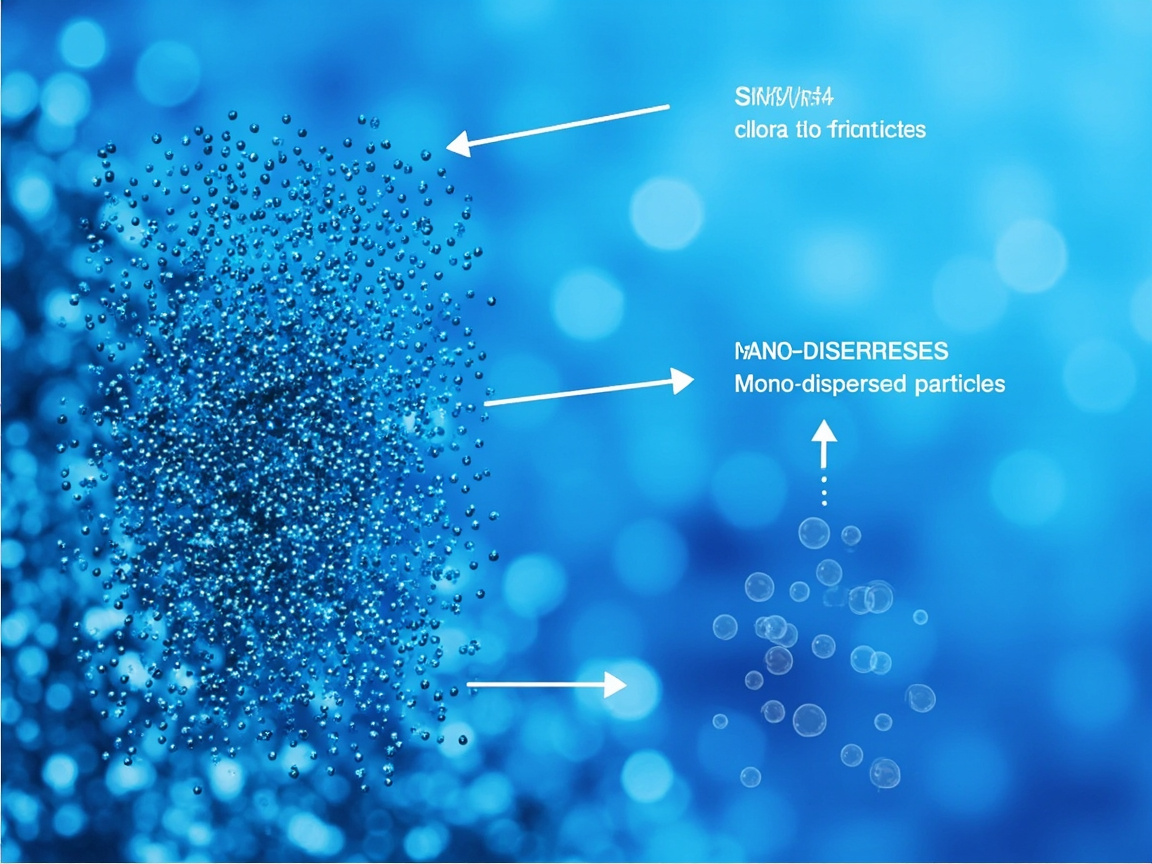
- Final characterization: After the coating film is made, SEM cross-section should be used to confirm whether nanoparticles remain mono-dispersed and whether flakes are oriented; salt spray resistance (GB/T 1771) and adhesion (GB/T 9286) should be used to verify functional realization.
It can be said that dispersion stability is the starting point, not the end; it determines the lower limit, while the film-forming process determines the upper limit.
IX. Safety and Environmental Protection: The Other Side of Nano Operation
The archive reminds in "Nano Safety (MSDS Key Points)": nanoparticles can be inhaled into the lungs, with potential inflammation/fibrosis; NIOSH-certified particulate respirators should be worn during operation. Liquid formulations are usually inert after curing, but spray dust and uncured slurry still require protection; release of nano powders into the environment should be avoided. For production workshops, this means:
- Powder feeding area equipped with local exhaust and dust removal;
- Operators equipped with NIOSH particulate masks/half-face masks, prohibited from bare-hand scattering;
- Waste slurry and machine-washing solvent managed as hazardous waste to prevent nano powder diffusion via wastewater.
This is consistent with the PPE discipline for all batches containing isocyanates and solvent-based systems: advanced materials must be supported by advanced and compliant operations. It is recommended to include nano operations in standard operating procedures (SOP) and onboard training, clarifying PPE and ventilation requirements for feeding, grinding, and cleaning stages, and forming a closed loop through regular occupational health examinations—process stability and personnel safety are the two bottom lines for nano coating mass production.
X. Engineering Checklist: Five Questions to Ask Yourself Before Launching Nano Coating
- Is the surface energy of nanoparticles suppressed to a controllable range via modification/dispersant?
- Does the production line have high-shear equipment such as sand mills, with temperature control?
- Are there release standards for Zeta potential and particle size distribution (e.g., |Zeta| > 30 mV)?
- Is the polarity of slurry and final resin matched, will paint mixing cause flocculation?
- After film formation, are there SEM/salt spray/adhesion verifications confirming the nano effect is truly realized?
By holding this checkpoint, the experience of Kexin New Materials (kexinMaterials) is: the yield and performance stability of nano coatings are almost entirely determined by the dispersion section. Writing clear media particle size, rotational speed, circulation times, and addition order in process documents is more effective than repeatedly adjusting formulations.
XI. Grinding Media, Water/Solvent Differences, and Mass Production Release
To transform dispersion stability from "lab technique" to "replicable production line process", there are three hurdles that must be crossed: media selection, system differences, and release standards.
11.1 How to Select Grinding Media
The core of sand milling lies in the grinding media. Zirconia beads have high density and wear resistance, suitable for nano-sizing of hard particles (e.g., TiO₂, SiO₂); glass beads are low cost but inefficient and fragile, potentially introducing silicon contamination affecting performance. Media particle size is generally preferably 10–30 times the target particle size: to achieve 100 nm slurry, 0.3–0.6 mm micro-beads are commonly used. Filling rate is mostly 70–85% of chamber volume; too low lacks energy, too high causes severe media self-wear and temperature rise. Rotational speed and disc type determine linear velocity, typically targeting 8–12 m/s, requiring parameter adjustment based on slurry viscosity.
11.2 Dispersion Differences Between Water-based and Solvent-based Systems
Water-based nano dispersion uses water as continuous phase, commonly using polyelectrolyte dispersants for electrostatic stabilization; Zeta potential is highly pH-dependent, and slurry pH must be adjusted to the stable zone; also, water evaporation causes solids content changes and freeze-thaw sensitivity, requiring anti-freeze storage. Solvent-based systems (e.g., polyurethane using ester/ketone solvents) mostly use polymer dispersants for steric hindrance, insensitive to electrolytes, but VOC is constrained by GB 30981-2020 (industrial coating) and GB 24409-2020 (automotive coating), requiring low-VOC carriers. The two differ in equipment cleaning, fire rating, and exhaust treatment, so production line design must be planned separately.
11.3 Common Faults and Countermeasures Table
| Fault Phenomenon | Possible Cause | Countermeasure |
|---|---|---|
| Particle size won't decrease | Media too large/low speed/few cycles | Change to finer beads, increase speed, add cycles |
| Slurry viscosity spikes | Dispersant excess bridging/high solids | Optimize addition amount, reduce solids |
| Rapid sedimentation and agglomeration | Low Zeta/lack of steric hindrance | Adjust pH, switch to polymer dispersant |
| Sand milling heat caking | Insufficient cooling/excessive energy input | Add jacket cooling, reduce feed rate |
| Flocculation during paint mixing | Slurry-resin polarity mismatch | Select compatible resin, add compatibilizer |
11.4 Scale-up Traps from Lab to Production Line
In the lab, using ultrasound to process a few grams of sample is easily stable, but scaling up to ton-level bead milling, problems concentrate on heat management and uniformity: large-volume slurry transfers heat slowly, and local overheating triggers agglomeration; uneven feeding causes broadening of particle size distribution. The countermeasures are staged bead milling (multiple units in series), enhanced jacket cooling, and stable constant-speed feeding. Many nano projects show "stunning lab samples, failed mass production", and the root cause is almost always this scale-up barrier.
11.5 Characterization is not an afterthought
Treating DLS, Zeta, and TEM as mandatory batch inspections rather than tests only when problems arise can turn dispersion stability from "mysticism" into an engineerable discipline. The particle size distribution/Zeta (DLS), TEM/SEM morphology, and film thickness (step profiler) listed in the archive should be embedded into the QC process, rather than merely kept as paper material.
11.6 Recommended Mass Production Release Standards
Write the following into the process card: premix fineness before bead milling meets standard; out-of-mill particle size D50 and D90 meet design; absolute Zeta potential > 30 mV; 24 h sedimentation rate below threshold; re-measure particle size after paint mixing shows no growth. Retain samples from each batch for salt spray (GB/T 1771)/adhesion (GB/T 9286) verification. SPC (Statistical Process Control) of the dispersion section guarantees the yield and performance stability of nano coating more than repeatedly adjusting the formula.
11.7 Digitalization and Online Quality Control
Leading production lines have begun connecting DLS, Zeta, and online particle size analyzers to MES, providing real-time feedback to adjust bead mill speed and feed rate, replacing master craftsmen's experience with a data closed loop. For a system like nano coating where "process is the product", whoever first turns dispersion stability into an observable and traceable digital process holds the decisive power over mass production yield. Although this step requires large investment, it is the only way to truly turn stunning lab results into shelf-stable commercial products.
12. Frequently Asked Questions
Q: Why do nanoparticles agglomerate so easily, while ordinary pigments hardly do?
A: Ordinary pigments have micron-level particle sizes, small specific surface area, and low surface energy, so van der Waals forces are negligible relative to their mass. Nanoparticles have hundreds to thousands of times higher specific surface area, many dangling bonds on the surface, and extremely high surface energy; van der Waals attraction dominates at the nanoscale, and once they get close they are "stuck" together, so they agglomerate very easily. This is a physical inevitability brought by the size effect, not a wrong formula.
Q: Between surface modification and adding dispersant, which is better?
A: It is not an either-or choice, but layered usage. Surface modification reduces surface energy from the particle's intrinsic properties and improves compatibility with resin, being a long-term solution but with complex process; dispersant is the most common external stabilization means in industrialization, relying on electrostatic or steric hindrance to prevent coalescence. High-end systems often use both: first surface modification, then matching dispersant, and finally mechanical dispersion, with the three working synergistically.
Q: Ultrasound or bead milling, which is actually used in industry?
A: Ultrasound is suitable for lab-scale pre-dispersion or research validation; its advantages are mildness and simple equipment, but scale-up is extremely difficult and energy consumption is high, making it hard to use in main production lines. Bead mill is the main force for nano slurry mass production, relying on high-shear impact of grinding media to break agglomerates down to nanoscale, enabling continuous operation and high efficiency, but temperature control is needed. A typical production line is "high-shear premix → bead milling → stabilization → paint mixing".
Q: How to judge whether a nano slurry is stable?
A: The core indicators are Zeta potential and particle size distribution, measured by dynamic light scattering (DLS). Generally |Zeta| > 30 mV is considered relatively stable, < 20 mV tends to aggregate and settle; also check whether the particle size distribution is narrow and whether there is a tail of large particles. Combine with viscosity change over time and sedimentation observation for comprehensive judgment. For steric-hindrance-dominated systems, Zeta is not the only criterion; solventization and compatibility must also be examined.
Q: What value should be looked at for Zeta potential?
A: Look at the absolute value. Zeta potential reflects the net surface charge of particles; the larger the absolute value, the stronger the double-layer repulsion, and the less likely coalescence occurs. Empirically |Zeta| > 30 mV is stable, 20–30 mV is critical, < 20 mV tends to aggregate and settle. But it only describes the electrostatic stabilization contribution; if steric hindrance is provided by polymeric dispersants, it may still be stable even with low Zeta, and particle size distribution should be used as corroboration.
Q: How large should the beads be for grinding, and what rotation speed is appropriate?
A: There is no universal value; it depends on target particle size and slurry properties. Generally, smaller media particle size yields finer particle size, but efficiency and heat generation increase; bead filling rate and rotation speed determine energy input; slurry solid content and viscosity affect media movement and heat management. The window must be determined through particle size distribution and capacity experiments, with cooling jacket to control temperature rise and prevent heat-induced secondary agglomeration.
Q: Dispersion is done well, so why are there still problems after film formation?
A: Dispersion only solves "no aggregation in liquid"; film formation has new variables: curing shrinkage may push particles together; improper rheology causes spray gun clogging or sagging; resin polarity mismatch triggers flocculation during paint mixing. Therefore, after film formation, use SEM cross-section to confirm particles remain mono-dispersed and flakes oriented, and verify functional realization with salt spray resistance (GB/T 1771) and adhesion (GB/T 9286).
Q: What safety precautions should be taken when handling nano powders?
A: According to the archive's nano safety entries: nanoparticles can be inhaled and damage lungs, so operations should use NIOSH particulate respirators; liquid after curing is usually inert, but spraying dust and uncured slurry require protection; avoid releasing nano powders into the environment. Workshops should have local exhaust ventilation and dust removal, compliant PPE, and waste slurry and machine-washing solvents managed as hazardous waste.
13. Further Reading
The following three published articles from the whitelist allow you to continue extending from the perspectives of "system selection — film curing — film science":
- Industrial Water-based Coating Selection Guide: Understanding resin systems with solid content and VOC constraints is the prerequisite for selecting dispersant types and adapting bead milling processes.
- Water-based Paint Drying and Curing Mechanisms: Film formation and curing shrinkage affect the final distribution of nanoparticles; this article helps connect dispersion and curing ends.
- Science Principles of Water-based Wood Coating: Cross-category understanding of film-forming substances, additives, and interfacial interactions is also enlightening for understanding nanoparticle surface modification and resin compatibility.