Solutions for pinholes and bubbles after spraying: drying, thinner, and temperature increase

2026-07-12 · Category: Technical Knowledge, Paint & Coatings

🌐 This article was automatically translated from Chinese. Please refer to the original Chinese version if needed. · View original (Chinese)
.kx-article{max-width:860px;margin:0 auto;background:#ffffff;color:#232a33 !important; border-radius:16px;padding:32px 30px 40px;box-shadow:0 8px 40px rgba(0,0,0,.25); font-family:-apple-system,"Segoe UI","PingFang SC","Microsoft YaHei",sans-serif;line-height:1.9;font-size:16px} .kx-article *{box-sizing:border-box} .kx-article h1,.kx-article h2,.kx-article h3,.kx-article p,.kx-article li,.kx-article td,.kx-article th,.kx-article strong, .kx-article .summary,.kx-article .summary p,.kx-article .summary strong, .kx-article .note,.kx-article .note p,.kx-article .kxbox-brand, .kx-article .related,.kx-article .related li,.kx-article .kx-foot, .kx-article .kxqa-q,.kx-article .kxqa-a{color:#232a33 !important} .kx-article h1{font-size:28px;line-height:1.35;font-weight:800;margin:0 0 18px;color:#1a1d21 !important} .kx-article .lead,.kx-article p{margin:14px 0} .kx-article .cover{width:100%;border-radius:14px;box-shadow:0 6px 24px rgba(0,0,0,.15);margin:6px 0 26px;display:block} .kx-article h2{font-size:22px;font-weight:700;margin:40px 0 16px;padding-bottom:10px;border-bottom:2px solid #eceff3;position:relative;color:#1a1d21 !important} .kx-article h2::before{content:"";position:absolute;left:0;bottom:-2px;width:64px;height:2px;background:#e8720c} .kx-article h3{font-size:18px;font-weight:700;margin:26px 0 12px;color:#2a2f36 !important} .kx-article strong{color:#111418 !important;font-weight:700} .kx-article img.inline{width:100%;border-radius:12px;box-shadow:0 4px 16px rgba(0,0,0,.12);margin:22px 0 8px} .kx-article figcaption{color:#7a828d !important;font-size:13px;text-align:center;margin:6px 0 24px} .kx-article table{width:100%;border-collapse:collapse;margin:20px 0;font-size:14.5px;background:#fff;border-radius:10px;overflow:hidden;box-shadow:0 2px 12px rgba(0,0,0,.06);border:1px solid #eceff3} .kx-article th,.kx-article td{padding:12px 14px;text-align:left;border-bottom:1px solid #eceff3;vertical-align:top} .kx-article th{background:#2a2f36;color:#ffffff !important;font-weight:600;font-size:14px} .kx-article tr:last-child td{border-bottom:none} .kx-article tbody tr:nth-child(even){background:#fafbfc} .kx-article .note{background:#eef6ff !important;border-left:4px solid #0a67d0;padding:14px 18px;border-radius:0 10px 10px 0;margin:22px 0} .kx-article .note strong{color:#0a4a97 !important} .kx-article .kxbox-brand{background:#fff3e8 !important;border-left:4px solid #e8720c;padding:16px 18px;border-radius:0 10px 10px 0;margin:22px 0} .kx-article .kxbox-brand strong{color:#5a4632 !important} .kx-article ul{margin:12px 0;padding-left:22px} .kx-article li{margin:8px 0} .kx-article .kxqa-item{background:#fbfcfd;border:1px solid #eceff3;border-radius:12px;padding:16px 20px;margin:14px 0} .kx-article .kxqa-q{font-weight:700;color:#e8720c !important;font-size:16px;margin-bottom:8px} .kx-article .kxqa-a{color:#3a4048 !important;display:block;margin:0} .kx-article .related{background:#fff !important;border:1px dashed #e8720c;border-radius:12px;padding:16px 22px;margin:26px 0} .kx-article .related h3{margin:0 0 6px;color:#e8720c !important} .kx-article .summary{background:linear-gradient(135deg,#fff3e8,#ffe9d6) !important;border-radius:12px;padding:20px 22px;margin:26px 0} .kx-article .summary h3{margin:0 0 10px;color:#1a1d21 !important} .kx-article .kx-foot{margin-top:34px;padding-top:18px;border-top:1px solid #eceff3;text-align:center;color:#8a929d !important;font-size:13px} .related{margin:30px 0 6px;} .related h3{font-size:18px;color:#1C1917;margin:0 0 12px;padding-left:10px;border-left:4px solid #F97316;} .related ul{list-style:none;margin:0;padding:0;} .related li{margin:0 0 9px;padding-left:16px;position:relative;} .related li:before{content:"203A";position:absolute;left:0;color:#F97316;font-weight:700;} .related a{color:#F97316 !important;text-decoration:underline !important;font-weight:600;} .related a:hover{color:#EA580C !important;} .kx-article{max-width:860px;margin:0 auto;background:#ffffff;color:#232a33 !important; border-radius:16px;padding:32px 30px 40px;box-shadow:0 8px 40px rgba(0,0,0,.25); font-family:-apple-system,"Segoe UI","PingFang SC","Microsoft YaHei",sans-serif;line-height:1.9;font-size:16px} .kx-article *{box-sizing:border-box} .kx-article h1,.kx-article h2,.kx-article h3,.kx-article p,.kx-article li,.kx-article td,.kx-article th,.kx-article strong, .kx-article .summary,.kx-article .summary p,.kx-article .summary strong, .kx-article .note,.kx-article .note p,.kx-article .kxbox-brand, .kx-article .related,.kx-article .related li,.kx-article .kx-foot, .kx-article .kxqa-q,.kx-article .kxqa-a{color:#232a33 !important} .kx-article h1{font-size:28px;line-height:1.35;font-weight:800;margin:0 0 18px;color:#1a1d21 !important} .kx-article .lead,.kx-article p{margin:14px 0} .kx-article .cover{width:100%;border-radius:14px;box-shadow:0 6px 24px rgba(0,0,0,.15);margin:6px 0 26px;display:block} .kx-article h2{font-size:22px;font-weight:700;margin:40px 0 16px;padding-bottom:10px;border-bottom:2px solid #eceff3;position:relative;color:#1a1d21 !important} .kx-article h2::before{content:"";position:absolute;left:0;bottom:-2px;width:64px;height:2px;background:#e8720c} .kx-article h3{font-size:18px;font-weight:700;margin:26px 0 12px;color:#2a2f36 !important} .kx-article strong{color:#111418 !important;font-weight:700} .kx-article img.inline{width:100%;border-radius:12px;box-shadow:0 4px 16px rgba(0,0,0,.12);margin:22px 0 8px} .kx-article figcaption{color:#7a828d !important;font-size:13px;text-align:center;margin:6px 0 24px} .kx-article table{width:100%;border-collapse:collapse;margin:20px 0;font-size:14.5px;background:#fff;border-radius:10px;overflow:hidden;box-shadow:0 2px 12px rgba(0,0,0,.06);border:1px solid #eceff3} .kx-article th,.kx-article td{padding:12px 14px;text-align:left;border-bottom:1px solid #eceff3;vertical-align:top} .kx-article th{background:#2a2f36;color:#ffffff !important;font-weight:600;font-size:14px} .kx-article tr:last-child td{border-bottom:none} .kx-article tbody tr:nth-child(even){background:#fafbfc} .kx-article .note{background:#eef6ff !important;border-left:4px solid #0a67d0;padding:14px 18px;border-radius:0 10px 10px 0;margin:22px 0} .kx-article .note strong{color:#0a4a97 !important} .kx-article .kxbox-brand{background:#fff3e8 !important;border-left:4px solid #e8720c;padding:16px 18px;border-radius:0 10px 10px 0;margin:22px 0} .kx-article .kxbox-brand strong{color:#5a4632 !important} .kx-article ul{margin:12px 0;padding-left:22px} .kx-article li{margin:8px 0} .kx-article .kxqa-item{background:#fbfcfd;border:1px solid #eceff3;border-radius:12px;padding:16px 20px;margin:14px 0} .kx-article .kxqa-q{font-weight:700;color:#e8720c !important;font-size:16px;margin-bottom:8px} .kx-article .kxqa-a{color:#3a4048 !important;display:block;margin:0} .kx-article .related{background:#fff !important;border:1px dashed #e8720c;border-radius:12px;padding:16px 22px;margin:26px 0} .kx-article .related h3{margin:0 0 6px;color:#e8720c !important} .kx-article .summary{background:linear-gradient(135deg,#fff3e8,#ffe9d6) !important;border-radius:12px;padding:20px 22px;margin:26px 0} .kx-article .summary h3{margin:0 0 10px;color:#1a1d21 !important} .kx-article .kx-foot{margin-top:34px;padding-top:18px;border-top:1px solid #eceff3;text-align:center;color:#8a929d !important;font-size:13px} .related{margin:30px 0 6px;} .related h3{font-size:18px;color:#1C1917;margin:0 0 12px;padding-left:10px;border-left:4px solid #F97316;} .related ul{list-style:none;margin:0;padding:0;} .related li{margin:0 0 9px;padding-left:16px;position:relative;} .related li:before{content:"203A";position:absolute;left:0;color:#F97316;font-weight:700;} .related a{color:#F97316 !important;text-decoration:underline !important;font-weight:600;} .related a:hover{color:#EA580C !important;}

cover-pinholes

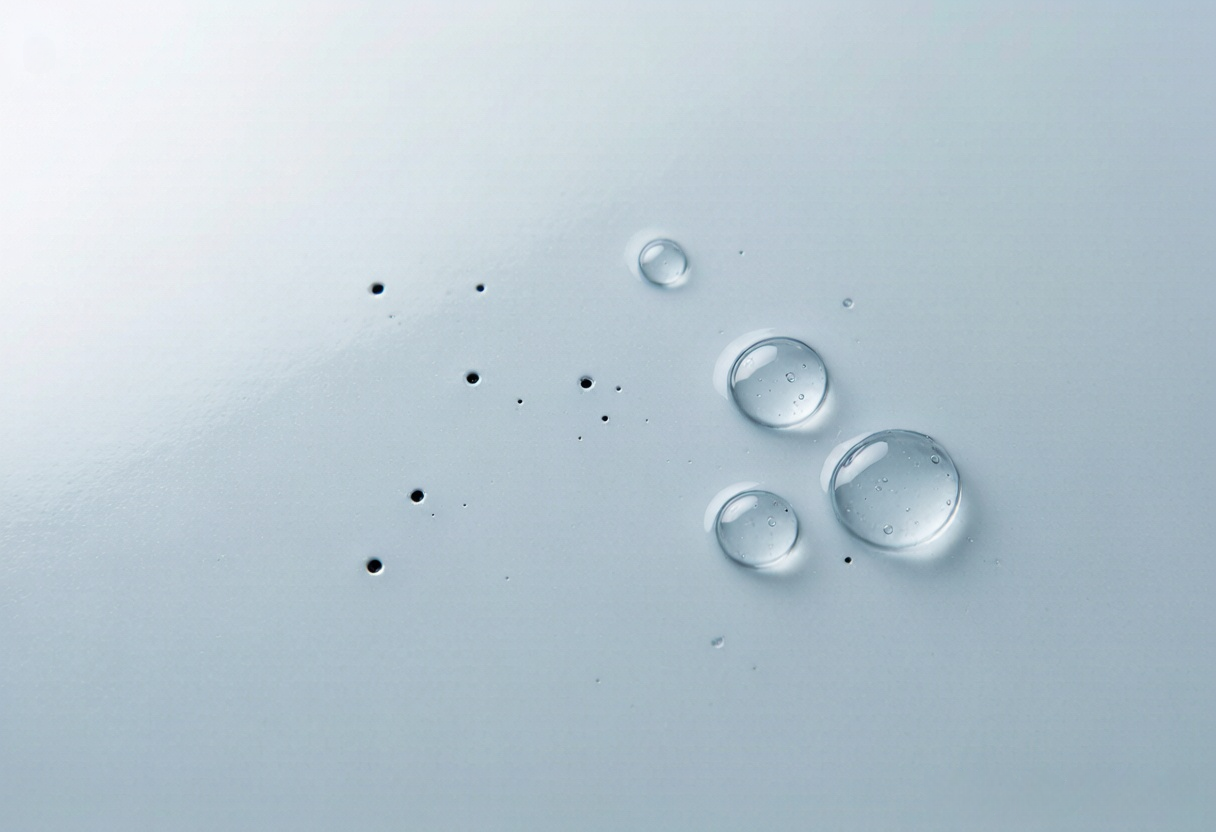
A pinhole-sized pore on the paint film, or even blistering—this is solvent/gas that "tried to escape but couldn't" and got trapped in the coating.

In a nutshell: Pinholes and bubbles = underlying gas/solvent trapped after surface drying; solve by spraying after fully dry, using matched thinner, and raising temperature slowly.

I. Causes

  • Undercoat not fully dry: Solvents or moisture in the putty/primer are trapped after the top coat is sprayed, and are pushed out when heated.
  • Thinner mismatch: Volatilizes too fast or in excess, gas has no time to escape.
  • Too rapid temperature rise: Surface dries too quickly forming a skin, and internal gas breaks through to form pinholes.
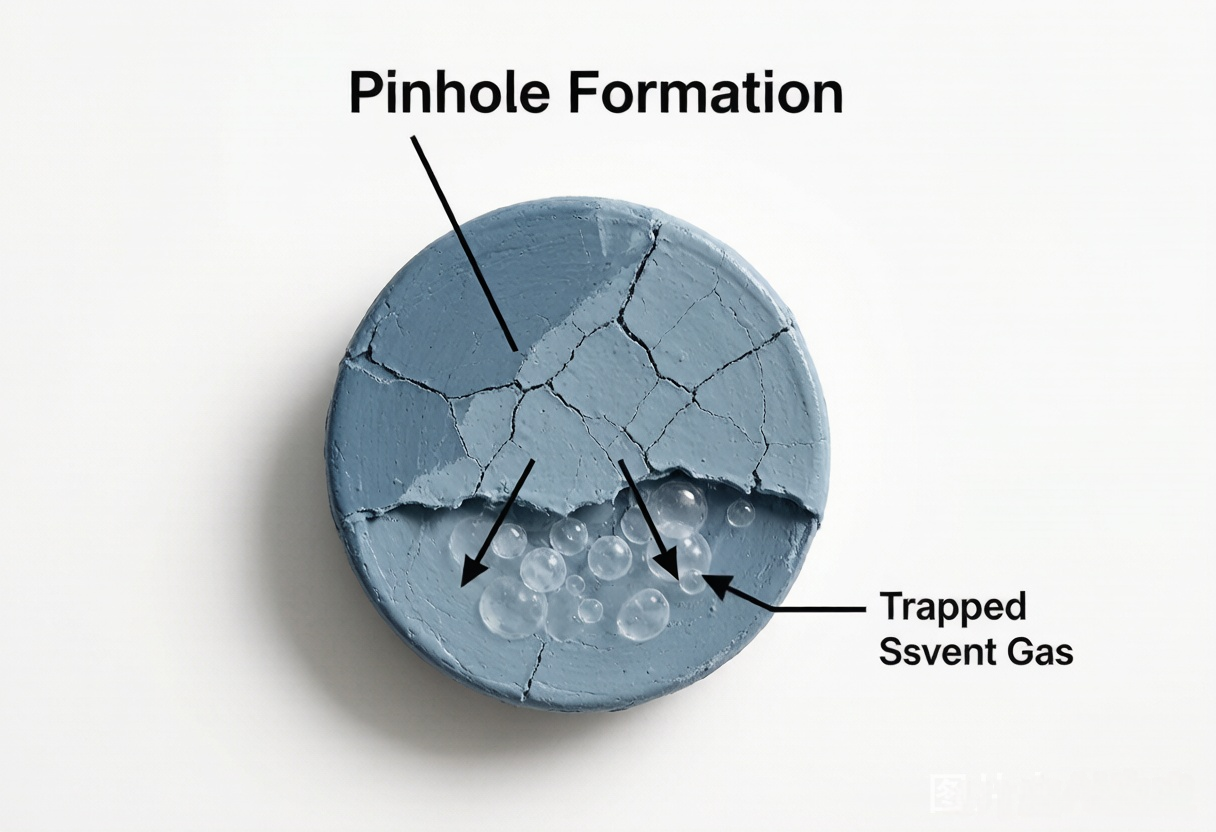
Schematic of pinholes caused by trapped uncured solvent at the bottom layer
Figure: Solvent/gas at the bottom layer is sealed after surface drying, and is pushed out to form pinhole bubbles.

II. Solutions

  • Thoroughly dry: Allow the putty/primer to dry completely before applying the topcoat.
  • Matching diluent: Select a diluent with an appropriate evaporation rate according to the temperature zone.
  • Slow heating: Allow sufficient flash-off before baking to avoid rapid temperature rise.
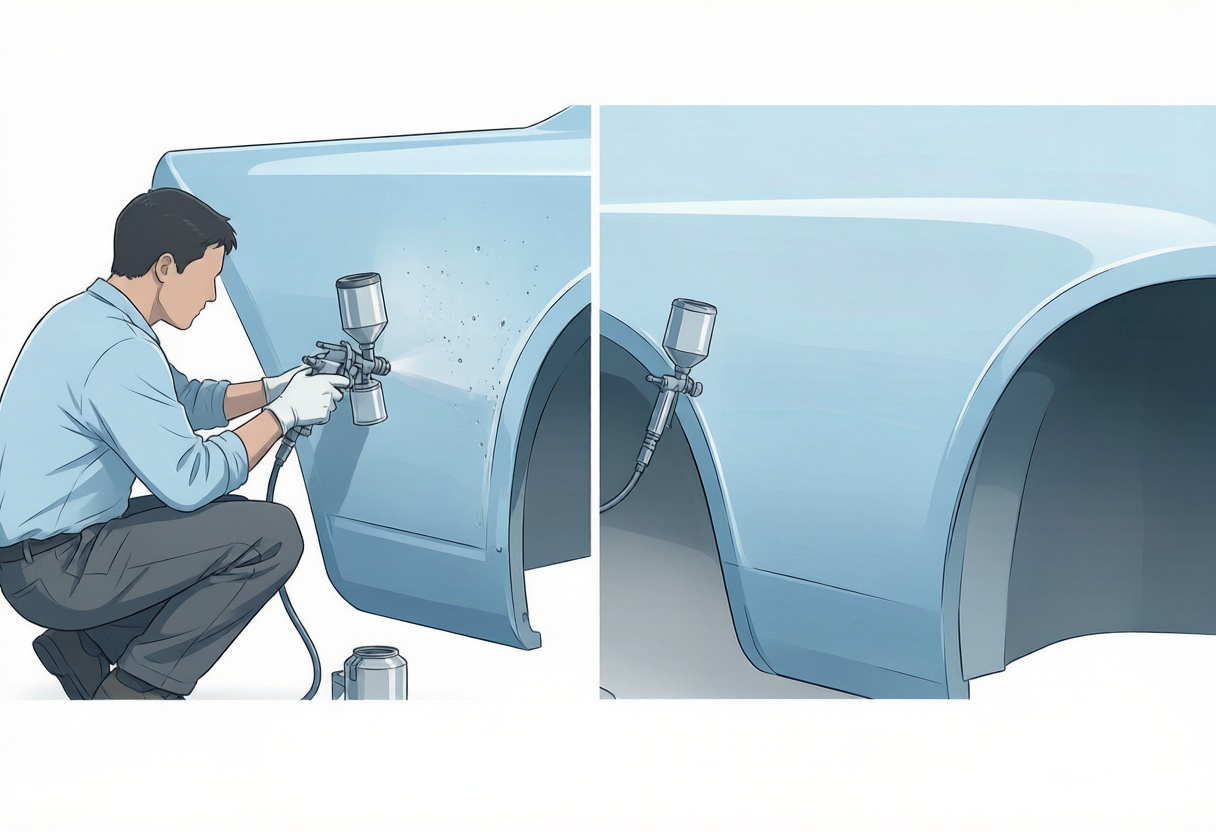
Dry thoroughly, use matching thinner, and raise temperature slowly to fix pinholes
Figure: Dry thoroughly + matching thinner + slow temperature rise eliminates pinholes at the source.
Remedy: Existing pinholes must be sanded to a clean layer, then primer/basecoat applied and repainted; severe bubbles should be scraped off and redone, and the uncured underlying layer identified.

Summary

Pinholes and bubbles occur when the underlying filler/primer is not fully dry, the thinner is incompatible, or the temperature rises too quickly, causing solvent vapor to be trapped and forced out after surface drying. The solution is to ensure adequate drying, use a compatible thinner, and raise the temperature gradually; if already present, sand and repaint, and investigate the root cause.

Frequently Asked Questions (FAQ)

What causes pinholes in spraying?
Mainly it is because the underlying putty or primer is not fully dry, the thinner is incompatible causing abnormal evaporation, or heating too fast causes surface skinning, trapping internal solvent gases which are forced out to form pinholes.
Are bubbles and pinholes the same thing?
They share the same origin but differ in appearance: a small amount of gas forced out creates tiny holes, i.e. pinholes; a larger amount of gas forms raised blisters, i.e. bubbles. In essence, both are caused by underlying gas/solvent being sealed by the surface layer.
How to solve pinholes?
Let the underlayer dry thoroughly before spraying the topcoat, choose a thinner with a matching evaporation rate according to the application temperature, allow sufficient flash-off before baking, and avoid rapid temperature rise.
How to repair existing pinholes?
Sand down to a clean layer, apply primer/basecoat and respray; for severe bubbles, scrape off and redo, and find out which layer was not fully dry.
Will using the wrong thinner cause pinholes?
Yes. A thinner that evaporates too fast causes surface skinning before the gas escapes, easily leading to pinholes; excessive dilution also increases the gas volume.
Kexin New Materials · Automotive Coating Technology Library | This article is technical Q&A content, for reference in selection and application

{ "@context": "https://schema.org", "@type": "FAQPage", "mainEntity": [ {"@type":"Question","name":"What causes pinholes in spraying?","acceptedAnswer":{"@type":"Answer","text":"Mainly due to the underlying putty or primer not being fully dry, mismatch of thinner causing abnormal evaporation, or too rapid heating causing surface skinning, which traps internal solvent gases and forces them out to form pinholes."}}, {"@type":"Question","name":"Are bubbles and pinholes the same thing?","acceptedAnswer":{"@type":"Answer","text":"They share the same origin but differ in appearance: a small amount of gas forced out creates tiny holes (pinholes), while a larger amount of gas forms raised bubbles. Essentially, both are caused by gases/solvents in the lower layer being sealed by the surface layer."}}, {"@type":"Question","name":"How to solve pinholes?","acceptedAnswer":{"@type":"Answer","text":"Allow the lower layer to dry thoroughly before spraying the topcoat, select a thinner with a matching evaporation rate according to the application temperature, and allow sufficient flash-off before baking to avoid rapid temperature rise."}}, {"@type":"Question","name":"How to repair existing pinholes?","acceptedAnswer":{"@type":"Answer","text":"Sand down to a clean layer, apply primer/basecoat and respray; for severe bubbles, scrape off and redo, and find out which layer was not fully dry."}}, {"@type":"Question","name":"Can wrong thinner choice cause pinholes?","acceptedAnswer":{"@type":"Answer","text":"Yes. A thinner that evaporates too fast causes surface skinning before gases escape, easily leading to pinholes; excessive dilution also increases the amount of gas."}} ] }