Introduction: The "Low Surface Energy Curse" of Plastics
PP (polypropylene) is the most commonly used plastic for automotive bumpers, interior parts, and appliance housings, but its surface energy is only 29-31 mN/m, far below the minimum surface energy required for paint spreading (about 38-42 mN/m). The result of direct spraying is that the paint shrinks into water-drop shapes (poor wetting) or peels off in whole sheets with a light scratch after curing. Although the surface energy of ABS and PC is higher than that of PP, adhesion without treatment is also unreliable. The three major pretreatment technologies flame treatment, corona treatment, and specialized primer are the three keys to breaking the "low surface energy curse of plastics."
I. Quantitative Comparison of Three Pretreatment Technologies
| Treatment Method | Principle | Surface Energy after Treatment (mN/m) | Applicable Substrates | Processing Speed | Investment Cost | Adhesion Improvement |
|---|---|---|---|---|---|---|
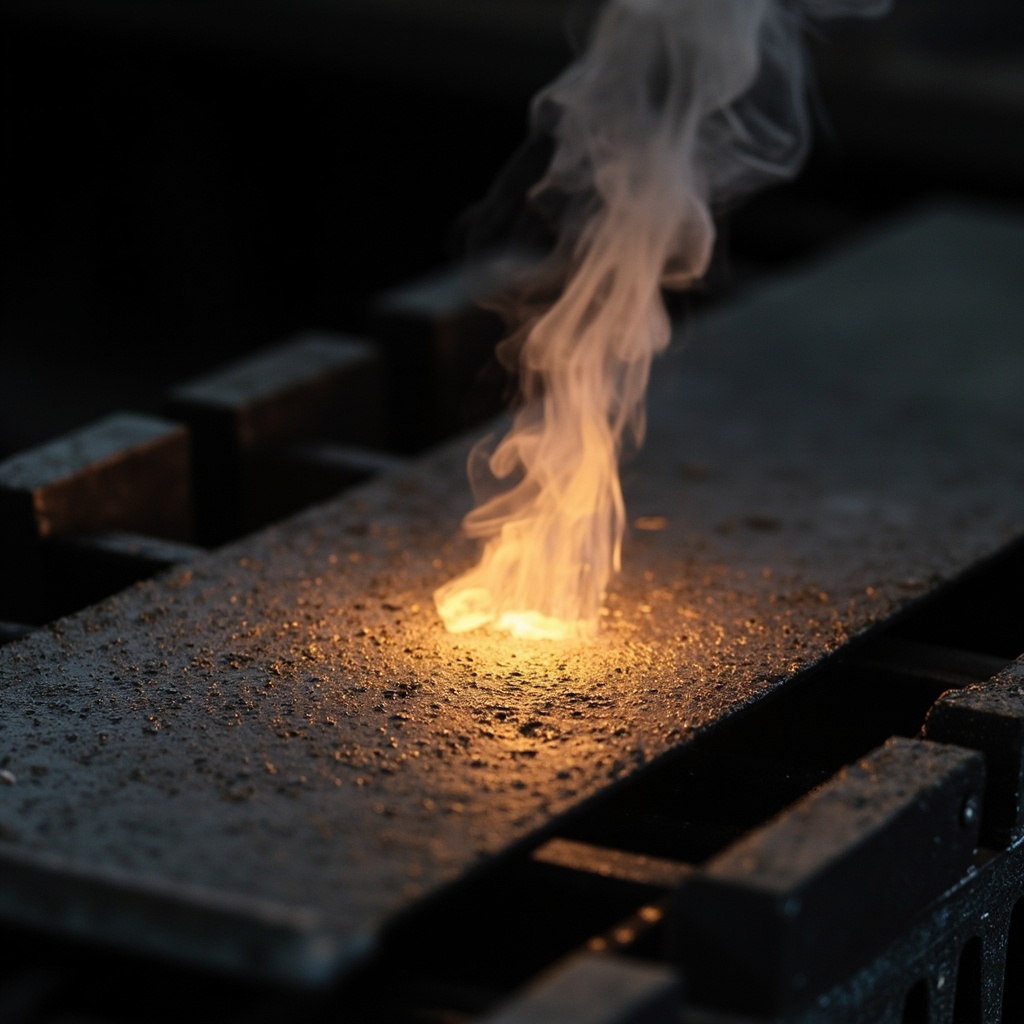
| Flame Treatment | Propane/natural gas flame (1000-1500°C) 0.1-0.3s contact | 50-60 | PP/PE (preferred) | Fast (continuous inline) | Low-Medium (100k-300k) | From grade 0 → 5B (excellent) |
| Corona Treatment | High-voltage discharge (10-40kV) generating plasma | 56-72 | PP/PE/PET/films | Very fast (continuous inline) | Medium (200k-800k) | From grade 0 → 5B (optimal) |
| Chlorinated Polyolefin Primer | CPO resin chemical anchoring + swelling plastic surface layer | Primer itself >38 | PP/ABS/PC (general purpose) | Slow (requires flash drying 5-10min) | Lowest (no equipment needed) | From grade 0 → 4-5B |
II. Effects of Different Pretreatments on Coating Adhesion
| Surface pretreatment method | Roughness Rz (μm) | Adhesion (MPa) | Cross-cut rating | Applicable substrate |
|---|---|---|---|---|
| Untreated | <5 | 1-3 | Grade 3-5 | Unacceptable |
| Manual grinding (St3) | 10-25 | 3-5 | Grade 1-2 | Small area repair |
| Sandblasting Sa2.5 | 40-70 | 5-8 | Grade 0 | Steel structure (standard) |
| Chemical silane treatment | 2-5 | 3-5 | Grade 0-1 | Aluminum / galvanized sheet |
II. Recommended Solutions for Various Substrates
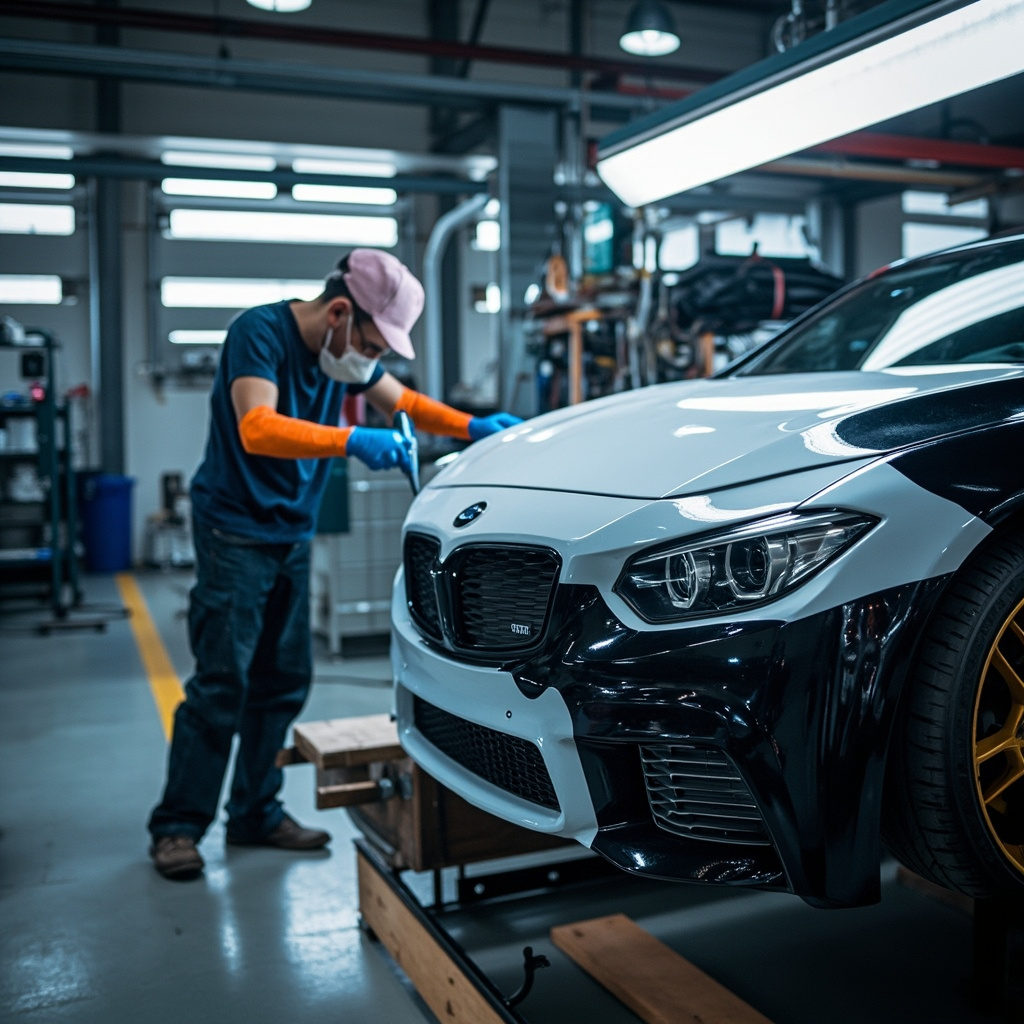
PP bumper: Flame treatment (preferred, online continuous processing) → PP-specific primer (containing chlorinated polyolefin resin / 5-10μm DFT) → topcoat. The flame + primer dual-protection scheme is the standard process for automotive OEMs. ABS interior trim: Corona treatment or PP primer is sufficient — ABS contains butadiene rubber phase with inherently higher polarity than PP, so adhesion issues are less severe than with PP. PC transparent parts: Corona treatment should be used with caution (may cause microcracks — stress corrosion effect); it is recommended to use a specialized transparent primer (containing silane coupling agent) — processing temperature <80°C.

Technical deepening: systematic optimization methods for process parameters (DOE experimental design)
Coating production process optimization should not rely on the "trial-and-error method" but should adopt the scientific method of DOE experimental design. Taking the dispersion process as an example—factors affecting quality (linear velocity/time/filling rate/temperature), 4 factors each at 3 levels—full factorial requires 81 experiments—DOE uses orthogonal experiment L9 (9 times) or response surface methodology (27 times) to greatly reduce the number of experiments—while obtaining the main effects and interactions of each factor. For example, it is found that "the interaction of linear velocity × time is significant": high linear velocity + short time and low linear velocity + long time can achieve the same dispersion effect—but the former saves energy by >20%.
In DOE analysis, interpretation of the P-value — P95% confidence). The final output of DOE is a set of prediction models (polynomial regression equations) — input line speed/time/temperature → predict fineness/viscosity/gloss — providing formulation engineers with a ”digital formulation optimization” tool.
Industry practice: from "master craftsman's feel" to "parameter standardization"
The common challenge in the coatings industry — when experienced veteran workers retire, their "feel" (mixing resistance / fineness gauge scraping / visual inspection of wet film gloss) is taken away — new employees cannot replicate it. Transform "feel" into quantifiable standard parameters (1) mixing resistance → viscometer reading; (2) fineness gauge scraping → fineness gauge reading (μm); (3) wet film gloss → gloss meter (GU value). The "standard parameter card" for each process is posted next to the equipment — new employees operate according to the "card" rather than "by feel". "Parameter standardization" is a key step for coating factories to move from "workshop" to "factory".
FAQ
Q1: Why can't flame treatment "burn for too long"?The flame at 1000-1500°C can introduce polar groups (-OH/-COOH/-C=O) on the PP surface within 0.1-0.3 seconds—contact for more than 0.5 seconds causes the plastic surface to begin melting and deforming—causing irreversible damage to the product. The distance between the flame and the plastic surface is usually controlled at 5-10mm—the treatment parameters (flame intensity/distance/speed) need to be locked after testing with a Dyne Pen to confirm the surface energy reaches >50mN/m.
Q2: How to use a dyne pen for on-site rapid detection of plastic surface energy?The dyne pen contains inks of different surface tensions (30/32/34…56/58/60 mN/m). Draw a line on the treated plastic surface — the lowest dyne value at which the ink remains continuous without shrinking = the surface energy of that surface. The minimum acceptance standard for treated PP bumpers in the automotive industry is ≥50 mN/m (SW index).
Q3: The "chemical anchoring" principle of CPO primer? The non-polar segments (polyolefin backbone) in the chlorinated polyolefin (CPO) molecular chain combine with the PP substrate through van der Waals forces and chain entanglement (like dissolves like), while the polar groups of CPO (-Cl atoms) provide crosslinking anchor points for the subsequent topcoat. CPO primer requires a very thin DFT (5-10μm); if too thick (>20μm), adhesion instead decreases (CPO's own cohesive strength is low—cohesive failure easily occurs within thick layers).
Q4: Why does the surface energy after corona treatment decay over time?Corona-generated polar groups on the plastic surface are in a thermodynamically non-equilibrium state—over time (several hours to several days) the polymer chain segments rotate inward, "burying" the polar groups into the bulk—and the surface energy gradually recovers to the pre-treatment level. The decay rate depends on: (1) Temperature—high temperature accelerates decay, (2) Plastic crystallinity—high-crystallinity PP decays more slowly than amorphous PP. After corona treatment, coating must be completed within 30 min (at room temperature).
Q5: What are the differences in environmental durability after the three treatment methods? The surface functional groups generated by flame treatment and corona treatment will decay over time (as mentioned earlier), but once the coating is cured—the chemical anchoring is complete—it is no longer affected by surface energy decay thereafter. The primer-treated coating has the best durability—because the CPO primer forms a semi-interpenetrating network structure with the plastic. In long-term hot water immersion (>60°C) tests, the primer solution shows the highest adhesion retention rate—this is a scenario where automotive parts are frequently exposed to engine heat radiation and rainwater.
Q6: Impact of injection molding release agent on coating adhesion?Fatal. Release agent (silicone oil/wax/zinc stearate) remains on the plastic surface—its surface energy is <25 mN/m—must be thoroughly cleaned to remove the release agent before any treatment. Cleaning methods: (1) Alkaline degreaser (5%-10% concentration/50-60°C/5-10 min immersion + spray); (2) Wipe with isopropanol or dedicated plastic cleaning solvent. Using "non-transfer release agent" (PTFE-based/non-migrating) can greatly reduce subsequent cleaning difficulty.
Q7: The "three-layer system" for painting automotive plastic parts?Primer (CPO/PP primer/5-10μm) → Basecoat (color paint/15-25μm) → Clearcoat (2K PU/30-50μm). The primer provides adhesion, the basecoat provides color, and the clearcoat provides gloss + weather resistance + scratch resistance. Some automotive OEMs require that plastic parts and metal body parts have completely identical color after assembly — this imposes a higher requirement of ΔE≤1.0 on color difference control between plastic and metal parts.
Q8: Challenges of water-based plastic coatings?Water has high surface tension (72.8 mN/m) → more difficult to wet on low-surface-energy plastics → need to add efficient substrate wetting agents (0.5%-1% silicone/fluorocarbon-modified surfactants). Moreover, water-based primer (water-based CPO emulsion) has weaker swelling ability on plastics than solvent-based CPO — slightly inferior adhesion. Currently, water-based plastic coatings are mainly used for interior parts (ABS/PC), while exterior parts (PP bumpers) are still predominantly solvent-based.
Q9: Why is "stress relief" necessary before plastic painting?Injection-molded parts have residual internal stress (caused by uneven cooling shrinkage) — the thermal shock of flame treatment or solvents in the coating may induce stress cracking (ESC/Environmental Stress Cracking). The coating peels preferentially at stress concentration areas — this is a hidden failure mode in plastic painting that is harder to diagnose than insufficient adhesion. Elimination method: anneal at 80-100°C for 30-60 min before painting to release internal stress.
Q10: What is the difference in coating between recycled PP and virgin PP?Recycled PP (r-PP) contains PP blends from different sources, residual pigments, antioxidants, and unknown impurities—resulting in non-uniform surface chemical composition—with surface energy differences exceeding 10 mN/m between different areas—leading to uneven local adhesion after coating (patchy paint peeling on the same part). Coating recycled PP requires the use of a reinforced primer (higher CPO concentration + longer flash-off time) after flame/corona treatment to compensate for surface non-uniformity.
FAQ: In-Depth Technical Q&A Supplement
Q11: How do the differences in domestic and international standards for this technology affect product export? There are differences between domestic standards (GB) and ISO/ASTM standards in test methods and acceptance criteria. For example, salt spray testing—GB/T 1771 (equivalent to ISO 7253) test conditions are basically consistent with ASTM B117—but the rating systems (ISO 4628 vs ASTM D610/D714) differ—when providing test reports for exported products, you must simultaneously indicate the corresponding international standards, otherwise overseas customers cannot make a comparative assessment. It is recommended to list both GB and ISO/ASTM dual-standard indicators in the TDS (Technical Data Sheet) of exported products—to enhance the trust of international customers.
Q12: How to verify the long-term service performance of this technology in actual engineering?Laboratory accelerated testing (salt spray/QUV/cyclic corrosion) provides comparative data—but cannot fully replace actual outdoor exposure testing. Recommendations—(1) Set up outdoor exposure racks at both the factory location and typical customer locations (e.g., coastal C5-M/industrial C4)—conduct annual inspections of coating appearance/adhesion/film thickness changes—establish a company-owned outdoor service database; (2) Collaborate with universities/research institutes—combine enterprise data with academic research—enhance data credibility.
Q13: What should SMEs pay attention to when purchasing related raw materials/equipment?(1) The batch stability of suppliers is more important than unit price—it is recommended to require suppliers to provide COA data for >10 batches—and evaluate batch variation (CpK); (2) For equipment procurement, visit peers who have used the equipment for >2 years to understand the long-term reliability and after-sales service quality of the equipment—rather than relying only on the demonstration data from equipment suppliers; (3) For key raw materials (resin/curing agent)—maintain at least 2 qualified suppliers to guard against single-supply risk.
Q14: What is the current state and trend of digital transformation in this field?The digital transformation of the coatings industry is evolving from “point-based applications” (automation of individual equipment/processes) to ”system integration” (full-chain ERP+MES+PMS). Currently, the digitalization of small and medium-sized coatings factories sees the ”highest-ROI investment” in automatic batching systems + digitalization of quality control data — with a payback period of 1-3 years — which is the prioritized recommended direction. Future trend — AI + sensors enabling real-time optimization of process parameters — further reducing quality fluctuations between batches.
Q15: How can a newly entered coating engineer quickly master this technology?(1)Combine theory and practiceDo not only read literature without touching actual production—nor rely solely on experience without studying theory;(2)Establish a “failure case archive”Every customer complaint/production anomaly/coating failure—record the root cause and resolution process—this is the most effective learning material;(3)Learn from suppliersTechnical personnel from resin/additive/pigment suppliers are carriers of "tacit knowledge" in this field—communicate more with them about solutions to specific problems.
Engineering Application and Implementation Recommendations
Pre-construction preparation and risk assessment
Before formal construction, the three prerequisite tasks must be completed: (1) Substrate condition confirmation — inspect the moisture content of the substrate (concrete <4% / steel with no visible water film), surface preparation grade (sandblasting Sa2.5 / manual St3), and salt contamination (chlorides dew point +3°C) — construction may proceed only when all three are satisfied — any exceedance will cause irreversible defects during coating curing; (3) Coating batch verification — check the coating batch number, production date, and COA test report — confirm that the coating is within its shelf life and that key indicators (viscosity / fineness / curing time) meet requirements.
Key control points during the construction process
During construction, it is necessary to continuously monitor and record the following parameters: (1) Wet film thickness (WFT) of each coat (wet film thickness gauge / at least 5 points per 10m²) — the conversion relationship between WFT and target dry film thickness (DFT) is DFT = WFT × volume solids (%) — adjust spraying parameters immediately if WFT deviation is found; (2) Drying/curing time of each coat — epoxy system requires surface dry (2-4h/23°C) → hard dry (6-12h) → full cure (7 days) — the application of the next coat must be within the optimal recoat window of the previous coat (usually 4-24h after surface dry) — recoating too early → interlayer solvent penetration and lifting/ recoating too late → decreased interlayer adhesion; (3) Continuous recording of construction environmental conditions — record temperature/humidity/dew point every 2h — archived as part of the completion document.
Quality Acceptance and Completion Documentation
The final acceptance of the coating system shall be based on the acceptance criteria specified in the contract (e.g., ISO 12944 / SSPC-PA 2 / GB 50205) — key acceptance items include: (1) Dry film thickness (DFT / ≥5 points per 10m² / any single point ≥80% of nominal value / average within 100–120% of nominal value); (2) Pinhole detection (wet sponge method for DFT 500μm / zero pinholes); (3) Adhesion (pull-off method ISO 4624 / ≥ design value / failure mode preferably cohesive failure); (4) Visual inspection (no sagging / no orange peel / no particles / uniform gloss). All acceptance inspection data shall be compiled into as-built documentation including inspection reports + construction records + paint batch numbers + environmental records — serving as the data baseline for the 25-year warranty period of the coating system — with an archival period of ≥5 years.
Related Reading
Summary
Three major technical routes to improve adhesion in plastic coating—flame treatment (>50 mN/m), corona treatment (>56 mN/m), and CPO primer—each have their applicable scenarios: flame plus primer double insurance is recommended for PP exterior trim parts, corona treatment alone suffices for ABS interior parts, and dedicated primer is used for PC transparent parts. Coating must be completed within 30 min (corona) or 24 h (flame) after treatment to lock in the surface activation effect. Kexin New Materials provides a full range of plastic coating product lines and pre-treatment process technical support.