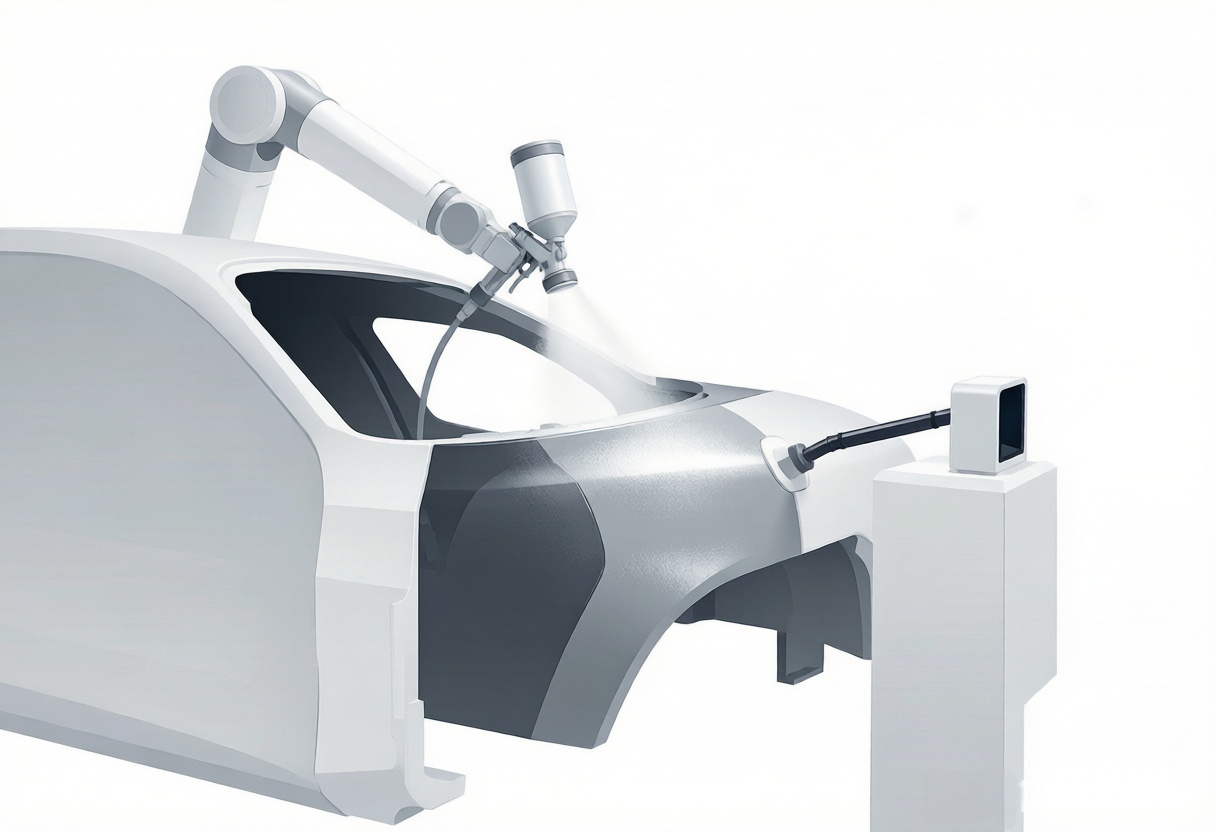
The traditional "electrophoresis + primer surfacer + basecoat + clearcoat" process requires multiple baking cycles. The primer-surfacer-free process blends the primer surfacer into other layers, completing it in a single pass.
I. Conventional vs. Primerless (middle-coat-free)
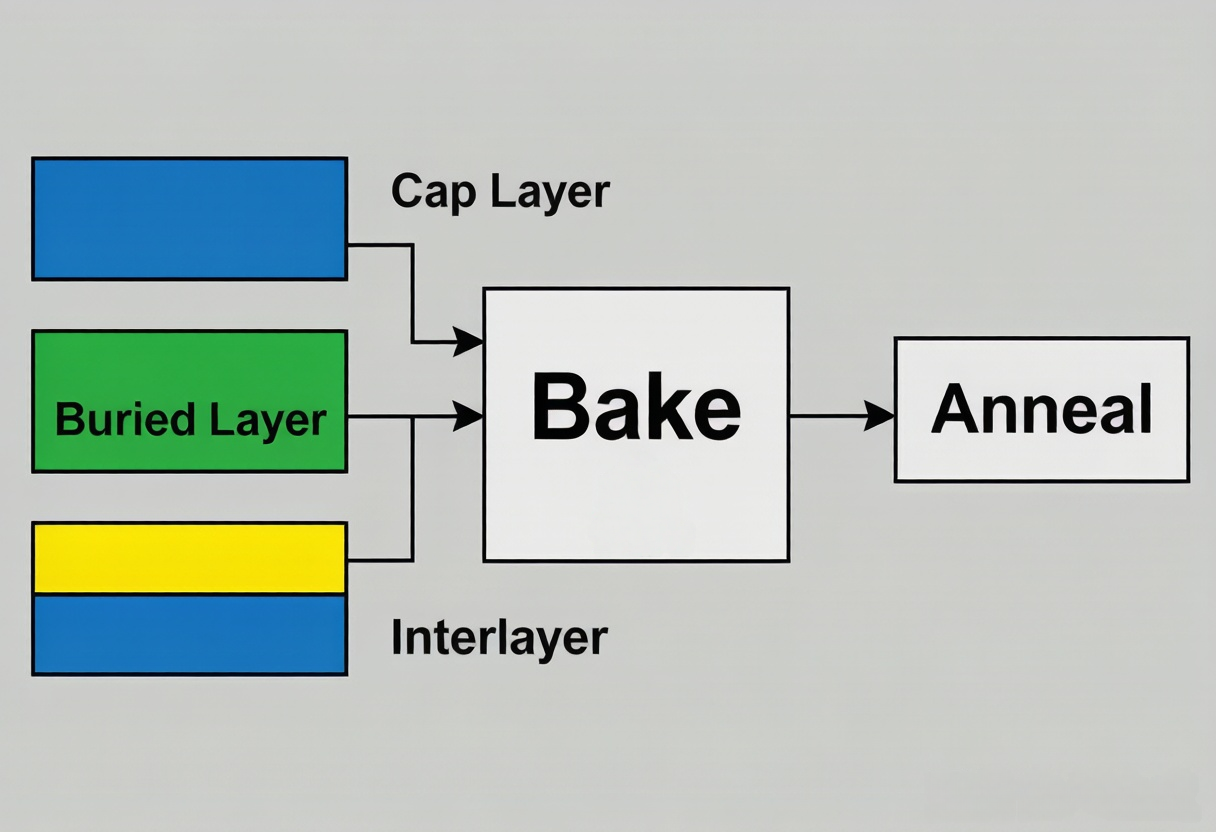
Traditional 3C2B is "primer surfacer + basecoat + clearcoat" each baked once; primer-surfacer-free (3C1B/3-Wet) combines the functions of basecoat and primer surfacer, applying wet-on-wet continuously and then baking once, eliminating one baking cycle.
II. Provincial-level Logic
- Function merging: High-solid color paint combines filling and coloring.
- Wet-on-wet: No baking between coats, continuous spraying.
- One-time drying: Saves one round of drying room energy consumption.
III. Energy Conservation and Requirements
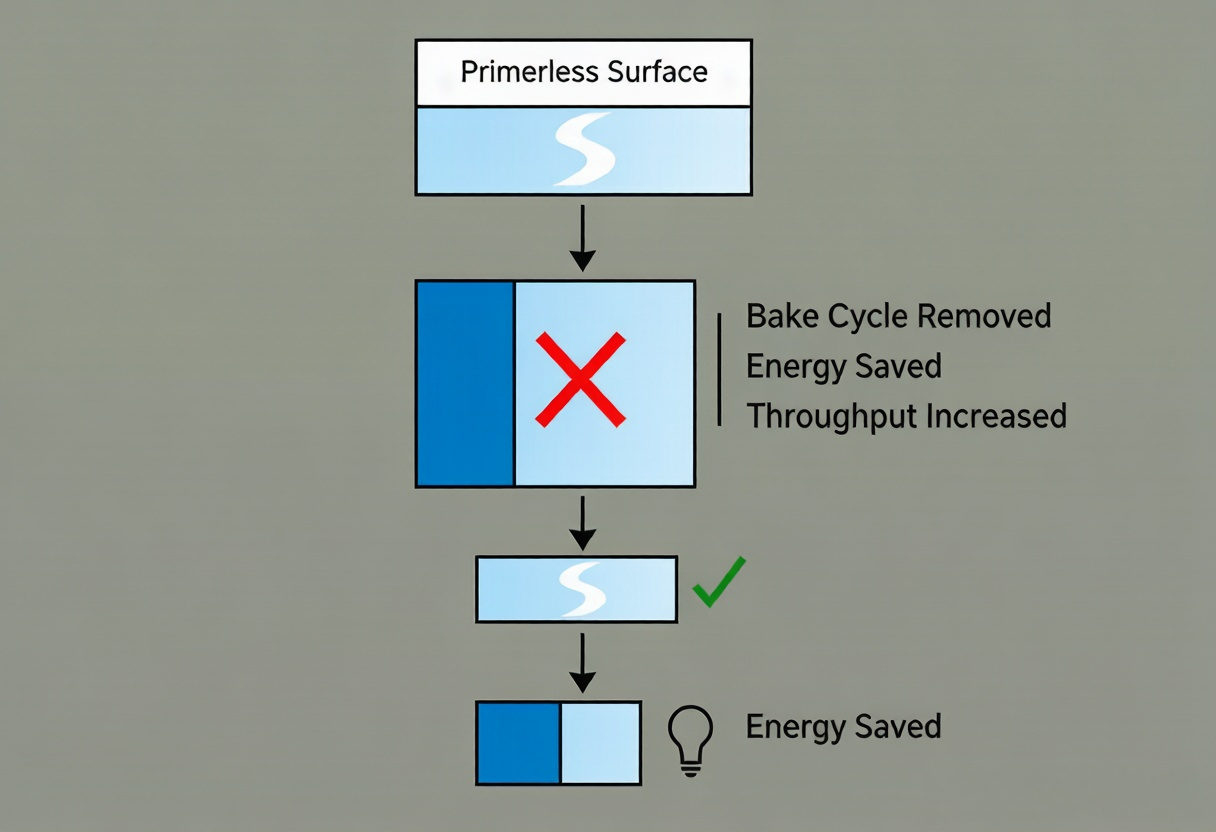
Saving baking means saving energy consumption and cycle time, and also reducing VOC treatment load. But it places higher demands on coating stability, robot spraying accuracy, and oven temperature control.
Summary
The primerless (3C1B/3-Wet) process integrates primer functions into the basecoat, applies coats wet-on-wet consecutively, and cures them in a single bake, eliminating one baking cycle to save energy, reduce consumption, and lower VOC load, but it demands higher coating stability, spray accuracy, and substrate flatness.
Frequently Asked Questions (FAQ)
{ "@context": "https://schema.org", "@type": "FAQPage", "mainEntity": [ {"@type":"Question","name":"What is the primerless process?","acceptedAnswer":{"@type":"Answer","text":"It is a compact process in vehicle painting where the independent primer coat is omitted, and the filling and adhesion functions of the primer are integrated into the basecoat, which is sprayed wet-on-wet continuously and then cured in a single bake. Also known as 3C1B/3-Wet."}}, {"@type":"Question","name":"How does the primerless process save energy?","acceptedAnswer":{"@type":"Answer","text":"Traditional primer requires a separate baking pass; the primerless process merges this step, eliminating one baking cycle means less energy consumption and cycle time, and also reduces the VOC treatment load."}}, {"@type":"Question","name":"Does the primerless process have high equipment requirements?","acceptedAnswer":{"@type":"Answer","text":"Yes. It requires good coating stability, high robot spraying precision, stable oven temperature control, and higher requirements for substrate flatness; otherwise defects are more easily exposed."}}, {"@type":"Question","name":"Difference between 3C1B and 3-Wet?","acceptedAnswer":{"@type":"Answer","text":"Both belong to the primerless compact process, with different emphasis in description: 3C1B emphasizes three coats in one bake, while 3-Wet emphasizes multiple layers sprayed wet-on-wet continuously."}}, {"@type":"Question","name":"Does the primerless process affect quality?","acceptedAnswer":{"@type":"Answer","text":"When substrate and electrocoat quality are in place and the process is stable, quality is controllable; if sheet metal flatness is poor, omitting the primer will expose defects and actually make them more visible."}} ] }