Once steel rusts, the loose, porous, and moisture-absorbing rust layer continuously delivers water and oxygen to the metal substrate like a sponge, driving corrosion deeper inward. The traditional approach requires thorough abrasive blasting to Sa2.5 (ISO 8501-1 / GB/T 8923.1) before applying primer, but on-site conditions are often constrained by equipment, schedule, environmental protection, or structural accessibility, making thorough cleaning impossible. For example, in-service bridge trusses, transmission towers, tank exteriors, and chemical pipe racks are frequently non-removable, cannot be shut down, have confined spaces, and do not allow excessive dust—forced abrasive blasting is not only costly but also raises prominent environmental and safety issues. Rust Converter is precisely designed for such "rust-in-place application" scenarios: instead of removing the rust, it uses chemical means to convert harmful active rust into a stable, dense black film layer, which both stops further corrosion and serves as an adhesion base for subsequent coatings.
As a technical supplier of industrial protective coating, Kexin New Materials (kexinMaterials) has long paired rust converter as the "preferred solution when thorough abrasive blasting is impossible" in its rust-in-place coating systems. This article, based on the real chemical mechanisms of the two mainstream routes—tannic acid and phosphoric acid—explains the principles, application, and selection of rust converters in depth, helping you judge when to use them and when absolutely not to. For the overall treatment process of rust-in-place coating, refer further to the companion article Rust-in-place Coating Surface Treatment, and for the difference between rust conversion and rust stabilization, see Rust Stabilizer Field Application.

I. What Is a Rust Converter: The Essential Difference from Conventional Primer
A rust converter belongs to "convertive rust-in-place coating," alongside "stabilizing type" and "penetrating type" rust-in-place coatings, but its mechanism is completely different. Understanding the differences among the three is the first step to selecting the right product:
- Stabilizing type (rust stabilizer): Relies on passivating or stabilizing components such as zinc phosphate and tannin to encapsulate and stabilize active rust, without generating a new compound film layer; it mainly acts as a sealant and has high tolerance for thick rust (see companion article Rust Stabilizer Field Application).
- Penetrating type: Low-viscosity resin penetrates rust layer pores for physical encapsulation; requires a relatively thin rust layer and offers limited shielding.
- Convertive type (rust converter): The core is a chemical reaction with iron rust to generate insoluble, stable black complexes or salt films, chemically "inactivating" the rust.
What a rust converter truly does are two things: First, convert active rust such as Fe₂O₃·xH₂O and FeOOH into thermodynamically more stable iron tannate complexes or iron phosphate; second, use film-forming resin to firmly lock this conversion film and residual rust, forming a primer coat that bridges the substrate and topcoat. It is not a "rust remover"—a rust remover (such as acid pickling) dissolves the rust and rinses it away, whereas a rust converter "retrofits in situ" the rust, without rinsing or complete removal. This difference makes it especially suitable for large in-service structures that cannot be rinsed. A common engineering misconception is treating the rust converter as a "universal rust-removal substitute," assuming it eliminates the need for any treatment. In reality, a rust converter works well on "firmly adhered colored rust" but still requires pre-cleaning of "loose floating rust, oil stains, and salts." It replaces the "thorough abrasive blasting" step, not "all surface treatment."
II. Core Mechanism: Tannic Acid Route and Phosphoric Acid Route
2.1 Tannic Acid Route
Tannic acid is a class of polyphenolic compounds (hydrolyzable tannins such as gallnut tannin, with molecular structures rich in multiple catechol and gallic acid groups). It complexes with iron ions in rust (mainly Fe³⁺) to form iron tannate complex, which is stable blue-black, water-insoluble, and dense. The reaction can be summarized as:
Tannic acid (polyphenol −OH) + Fe³⁺ (from Fe₂O₃·xH₂O, β-FeOOH, etc.) → Iron tannate complex (black stable film)
The key to this step is that iron must exist in the trivalent oxidation state—that is, the rust converter works well on "red-brown ferric rust," while for exposed "metallic iron" it relies on tannic acid reacting with Fe to form ferrous or iron tannate film for passivation. The iron tannate film itself is corrosion-resistant and strongly adhesive, and is the core of tannic acid product performance. The advantages of the tannic acid route are visible blackening, dense film, low odor, and low toxicity, suitable for most atmospheric-zone maintenance; the drawback is that tannic acid easily settles and requires thorough stirring, and its penetration into extremely thick rust layers is limited.
2.2 Phosphoric Acid Route
Phosphoric acid (H₃PO₄) reacts with rust and base iron to generate iron phosphate (FePO₄) and ferrous phosphate salts, and forms a phosphating film on clean metal surfaces:
Fe₂O₃·xH₂O + 2H₃PO₄ → 2FePO₄↓ + (x+3)H₂O Fe + 2H₃PO₄ → Fe(H₂PO₄)₂ + H₂↑ (and further forms phosphating layer)
The added value of the phosphoric acid route is slight etching and phosphating of clean metal, which improves subsequent adhesion; however, phosphoric acid itself is non-volatile with high residue and requires controlled dosage, and when used alone the conversion film is rather brittle, so commercial products are mostly compounded as "phosphoric acid + film-forming resin or inhibitor." The phosphoric acid route has strong penetration and good phosphating, but higher VOC and strong odor, limiting it in enclosed or environmentally sensitive scenarios.
2.3 Composite Route (Tannic Acid + Phosphoric Acid + Resin)
High-performance rust converters are almost all composite systems: tannic acid turns the rust "black and stable," phosphoric acid handles phosphating and activation, and acrylic emulsion, epoxy ester, or modified resin forms the film and locks the conversion layer. Some products also add small amounts of inhibitors (such as molybdate, zinc phosphate) to further enhance the barrier. Kexin New Materials (kexinMaterials) typically adopts a composite route of "tannic acid dominant, phosphoric acid auxiliary, water-based acrylic or epoxy ester film-forming" in formulation design, balancing environmental protection (low VOC, per GB 30981-2020 "Limit of Harmful Substances in Industrial Protective Coatings") and tolerance for moist rust surfaces. This composite approach avoids the insufficient penetration of tannic acid alone and reduces the VOC and brittleness risks of pure phosphoric acid systems.
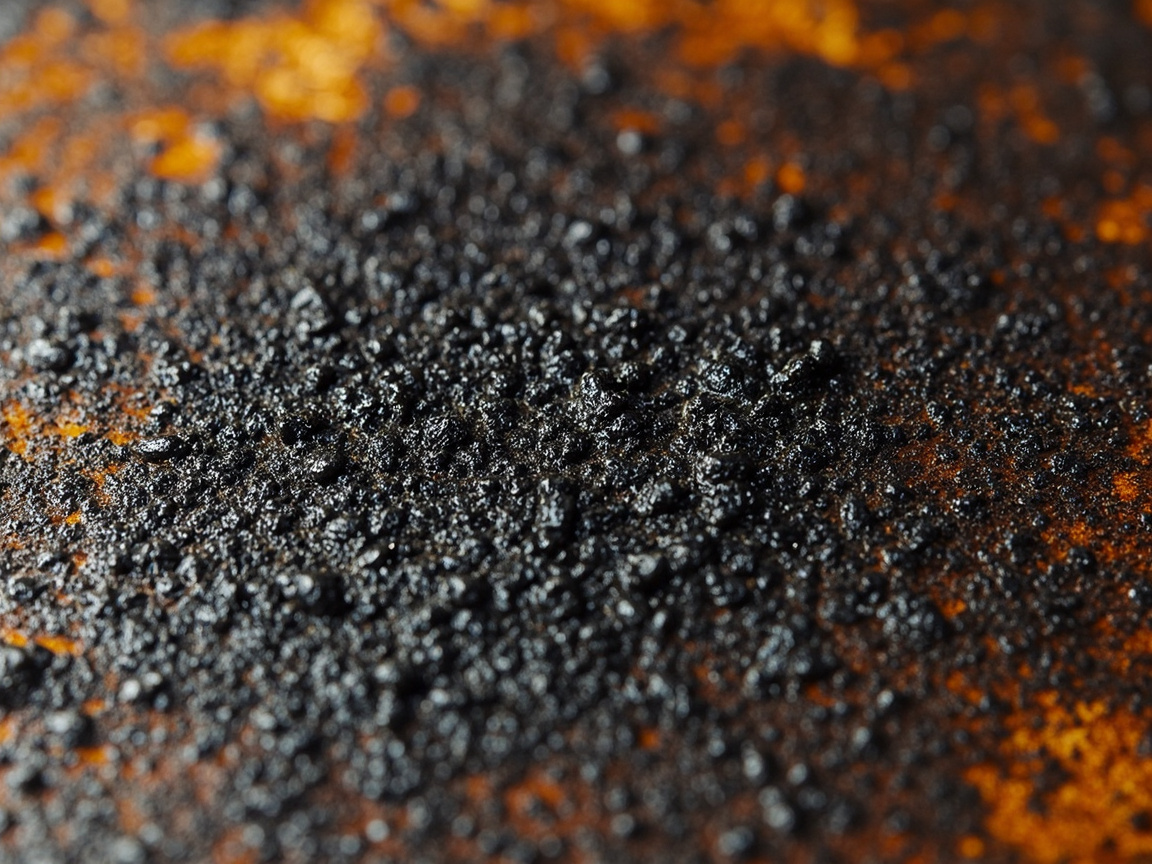
From a materials science perspective, the protective essence of the rust conversion layer has three points: first, chemical inactivation, turning the originally moisture-absorbing, expanding, and conductive active rust into an inert stable phase; second, forming a continuous dense organic-inorganic hybrid film with inherent shielding; third, providing a substrate for the topcoat with mechanical interlocking and chemical bonding capabilities, greatly improving interlayer adhesion. These three points are the fundamental reason a rust converter can "use rust as the base."
III. Main Components and Product Forms
By carrier and form, rust converters can be divided into the following types, each with different applicable scenarios:
| Type | Main Components | Features | Typical VOC Orientation |
|---|---|---|---|
| Tannic acid water-based type | Tannic acid + water-based acrylic emulsion | Low odor, low VOC, obvious blackening of rust layer | Low (per GB 30981) |
| Phosphoric acid solvent-based type | Phosphoric acid + alcohol or ester solvent + resin | Strong penetration, good phosphating, but higher VOC | Medium to high |
| Composite water-based type | Tannic acid + phosphoric acid + epoxy ester or acrylic | Balances blackening and film-forming, engineering mainstream | Low to medium |
| Two-component epoxy type | Conversion liquid + epoxy curing | Best adhesion and durability, more complex process | Depends on system |
When selecting, prioritize "rust layer condition": for thick, loose, porous floating rust, prefer a composite water-based type that balances penetration and film-forming; for stabilization-focused applications with subsequent heavy anti-corrosion systems, consider epoxy-type priming. For urban ordinary steel structures and plant pipe racks in C3-level atmospheric environments, the tannic acid water-based type is often sufficient; for coastal or heavy industrial pollution zones, stronger shielding intermediate coat and topcoat should be added after conversion. It should be specifically noted that although called a "agent," a rust converter often appears in engineering as a "primer form"—with both conversion function and film-forming and adhesion capabilities, and can be directly topcoated after the conversion layer is dry. Therefore, do not completely separate it from "surface treatment agent"; it is essentially a two-in-one product of "treatment + primer."
IV. Application Process: Surface Treatment, Coating, and Environment
A rust converter is not "brushed casually"; process discipline determines success or failure. Many on-site failures are not product quality issues but loss of control in the application stage.
4.1 Surface Pre-treatment
A rust converter is suitable for St2, St3 levels after hand or power tool cleaning (GB/T 8923.1 / ISO 8501-1), with the core being: remove loose floating rust, oil stains, old coating fragments, salts, but allow firmly adhered colored rust to remain for conversion. Key operations:
- Use wire brush, sandpaper, power grinding to remove scaling and chalking layers; if floating rust is not removed, the conversion liquid cannot contact active rust and conversion will be incomplete.
- Use fresh water or solvent to remove oil and salt (especially important in coastal or chemical plants, as chloride ions destroy the conversion film and cause pitting).
- Strictly prohibit direct use on components with continuous water seepage, large-area pitting corrosion, or severely reduced original plate thickness; such structures should be patched or blasted first.
- After pre-treatment, use clean compressed air or vacuum for dust removal, paying attention to oil-water separation of the air source to avoid introducing new contaminants.
4.2 Coating
- Stir thoroughly (tannic acid settles easily), dilute if necessary to reduce viscosity, using the manufacturer-specified thinner.
- First coat thinly to let the conversion liquid penetrate and react (rust surface gradually turning black is the sign of conversion), then apply second coat after surface dry to ensure film formation.
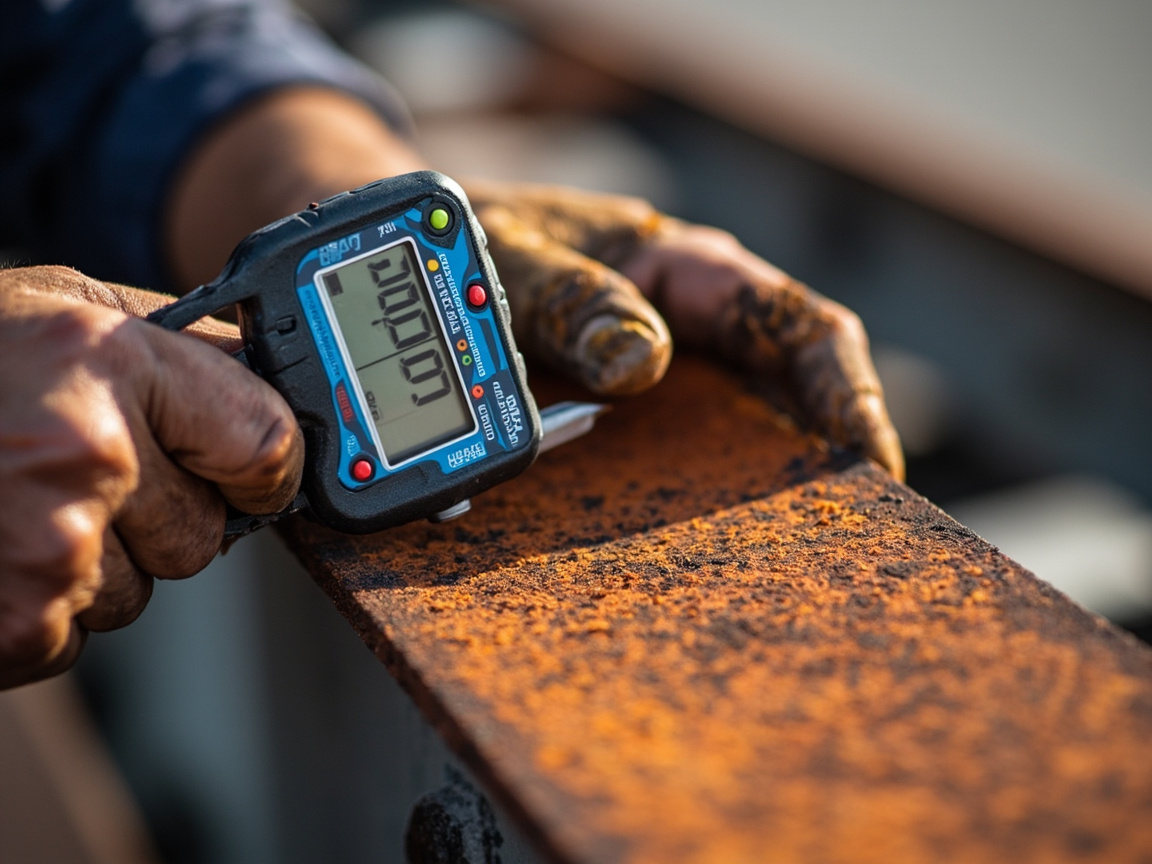
- Dry film thickness (DFT) usually controlled at 40–80 microns (measured per GB/T 13452.2 / ISO 2808); too thin lacks shielding, too thick easily cracks.
- Conversion reaction takes time (several hours to a day at room temperature); do not rush to apply topcoat before fully blackened, otherwise "lifting" or reduced adhesion will occur.
- Edges, corners, welds, and bolt overlaps are high-risk corrosion zones and should be stripe coated to ensure these thin spots are not missed.
4.3 Environment and Compatibility
- Application temperature 5–35℃, relative humidity ≤ 85%, substrate temperature at least 3℃ above dew point (general requirement of ISO 12944).
- After the conversion film is dry to touch, apply the intermediate coat or topcoat according to the designed system; do not leave it exposed for a long time (the conversion film itself has limited weather resistance).
- Compatibility with the subsequent coat must be verified (cross-cut adhesion per GB/T 9286 reaching grade 0 or 1 is preferred), especially since solvent-based strong topcoats may dissolve the incompletely cured conversion layer.
V. Applicable Boundaries: When to Use, When Not to Use
The advantages of rust converters are significant—eliminating sandblasting dust and equipment, shortening the construction period, reducing overall cost, and being suitable for non-removable components. But they have clear boundaries; using them beyond those boundaries will inevitably lead to failure.
Applicable:
- Large in-service steel structures that cannot be sandblasted (bridges, towers, storage tank exteriors);
- Local repair, spot rust control;
- Light to moderate rust (thin rust layer, substrate not significantly thinned over large areas);
- Municipal or plant area maintenance where environmental or space constraints do not allow large amounts of dust.
Not applicable:
- Severe pitting corrosion where the original plate thickness has been significantly reduced (must remove rust and patch the plate, otherwise corrosion continues under the conversion layer);
- Continuously immersed in water, strong chemical environments (conversion film has limited chemical resistance);
- Primary system for high-standard heavy anti-corrosion (should revert to sandblasting + zinc-rich primer, see Steel Structure Anti-rust Engineering Specification);
- Dynamically stressed, fatigue-sensitive parts, where the bond strength of the rust conversion layer to the substrate is inferior to sandblasting systems.
In one sentence: Rust converter is a "tool for rust-in-place maintenance", not a "replacement for heavy anti-corrosion". In long-term, harsh environments, the ISO 12944 system should still be the framework; rust conversion only solves the "surface preparation when sandblasting is impossible", and cannot replace a complete protective system design. Once used on immersed parts or core heavily-corroded components in engineering, rusting often reappears in a short time, instead increasing later rework costs.
VI. Performance Evaluation and Standards
The quality of rust converters must be backed by data; common methods include:
- Adhesion: GB/T 9286 cross-cut method (grade 0 or 1 is excellent), or GB/T 5210 pull-off method;
- Neutral salt spray resistance: GB/T 1771-2007 (equivalent to ISO 7253, salt spray test method also see ISO 9227 / ASTM B117); a high-quality rust conversion sealing system single coat generally requires ≥ 72 hours without blistering, and the overall system after topcoat often requires ≥ 240–480 hours, subject to design documents;
- Conversion efficiency: determined by rust layer mass change, XRD or IR characterization of ferric tannate or iron phosphate formation;
- Water resistance: GB/T 1733 or GB/T 5209 (ISO 1521);
- VOC: GB 30981-2020 limits.
Note: The salt spray data of rust converters strongly depends on "whether conversion is sufficient + whether subsequent system is in place". Looking at single-coat salt spray in isolation is of limited meaning; the system of "conversion layer + sealer + topcoat" must be evaluated. Many manufacturers only report single-coat salt spray without stating whether a topcoat was applied; such data has limited reference value for engineering selection. The correct evaluation method is: make a complete system of "conversion + sealer + topcoat" on a test panel, then perform scribed salt spray per GB/T 1771, and observe blistering, rusted area, and scribe creep width. In addition, the weather resistance of the rust conversion layer itself is weak and will chalk under long-term outdoor exposure; therefore in engineering it almost always exists as a "base layer" and must be covered by subsequent coats. Upon acceptance, not only the immediate indicators of the conversion layer should be checked, but also comprehensive salt spray and aging evaluation after system application.
VII. Comparison with Sandblasting and Rust Stabilizers
| Solution | Rust removal requirement | Schedule and cost | Applicable environment | Long-term corrosion resistance |
|---|---|---|---|---|
| Sandblasting + zinc-rich primer | Sa2.5 (ISO 8501-1) | High | Heavy anti-corrosion, new build or overhaul | Excellent |
| Rust converter | St2/St3 | Low to medium | In-service maintenance, non-removable | Medium to good |
| Rust stabilizer | St2/St3 | Low | Light to moderate rust, sealing | Medium |
| Penetrating rust-in-place paint | St2 | Low | Thin rust, non-severe | Medium |
This table illustrates a core trade-off: thorough sandblasting + zinc-rich provides optimal, most predictable durability but at the highest cost; rust converter provides a highly cost-effective compromise under the constraint of "cannot sandblast". Rust stabilizer is more suitable for tolerant treatment of thick, uneven rust. Selection is not about which is "more advanced", but which better matches the working conditions. For field application of stabilizing solutions, refer to Rust Stabilizer Field Application. Under conditions of limited maintenance budget, tight schedule, and inability to stop production, the comprehensive advantage of rust converters is often most evident, which is why they are widely adopted in municipal and energy sectors.
VIII. Engineering Cases and Site Management
In actual maintenance engineering, rust converters are often implemented in the following flow: Step 1, assess rust grade (GB/T 8923.1 A–D), confirm it is grade C or D suitable for rust-in-place treatment; Step 2, mechanically remove loose rust, degrease and desalinate; Step 3, thinly apply conversion liquid and observe blackening; Step 4, after dry to touch, measure thickness and cross-cut; Step 5, apply intermediate coat and topcoat; Step 6, completion inspection. Each step should be recorded, especially film thickness and adhesion data, for future maintenance traceability.
In site management, the most common problem is "rushing the schedule"—applying topcoat before conversion is dry to touch, or applying only one coat to save material. These lead to seemingly intact in the short term but local rust return after half a year. The correct approach is to rather wait longer and apply more coats than compress reaction and film-forming time. Kexin New Materials (kexinMaterials) recommends positioning the rust converter as "maintenance-grade surface preparation"; after confirming rust grade and design service life (e.g., ISO 12944 C3–C4 environment), provide a complete process card of "conversion liquid + sealing intermediate coat + topcoat", rather than selling a bottle of conversion liquid alone. This "product + process" package can significantly reduce site error rates and give acceptance quantifiable boundaries.
IX. Storage, Safety and Waste Liquid Treatment
Although rust converters are milder than strong-acid rust removal, still note: tannic acid type—prevent freezing and long-term sedimentation caking; phosphoric acid type—prevent container corrosion and ensure ventilation. Wear gloves and goggles during application, avoid long-term skin contact. Waste liquid and rinse water contain conversion products and small amounts of acid or solvent, and should be treated as industrial wastewater per local environmental requirements, not directly discharged into rainwater or natural water bodies. Although water-based systems have lower VOC, the wastewater still contains chemicals and requires compliant disposal. From an economic perspective, the advantage of rust converters is not "cheap paint", but saving the entire cost chain of "sandblasting equipment, dust removal, shutdown, and waste residue disposal", especially suitable for maintenance scenarios of "limited budget, tight schedule, cannot stop production". Many owners only compare material unit price when accounting, but ignore the shutdown loss and waste residue transport cost brought by sandblasting, and finally find the full-life-cycle cost of rust converters is actually lower.
X. Summary of Common Misconceptions
Misconception 1: The thicker the rust, the easier the converter. Wrong. Thick loose rust must first be mechanically removed from the floating layer, otherwise the conversion liquid cannot penetrate to the bottom and residual active rust continues to corrode.
Misconception 2: Blackening means conversion is complete. Wrong. Surface blackening is only a visual sign of tannin complexation; whether the interior is fully converted depends on thickness and reaction time, applying topcoat before dry to touch will cause biting through.
Misconception 3: Rust conversion can replace zinc-rich primer. Wrong. The rust conversion layer basically provides no cathodic protection; heavy anti-corrosion should still be paired with epoxy zinc-rich (see Water-based Epoxy Zinc-rich Primer).
Misconception 4: Can be applied in any weather. Wrong. High humidity, condensation, and low temperature inhibit reaction and introduce moisture, causing soft film and poor adhesion.
Misconception 5: Rust converter can be used bare without system. Wrong. The conversion film has limited weather resistance and must be paired with sealer and topcoat, otherwise it will quickly chalk and rust.
Misconception 6: High single-coat salt spray means good system. Wrong. Must look at the complete system of "conversion + sealer + topcoat" salt spray and scribe creep; isolated data is meaningless.
XI. Detail Control in Engineering Implementation
Turning a rust converter from a "product" into a "reliable engineering" lies in site details. First is test panel verification: before any large-area application, make a small sample going through the full "cleaning—conversion—system—curing" process, and do cross-cut and short-term water resistance to confirm before proceeding. Second is process recording: temperature, humidity, dew point, mixing ratio, number of coats, film thickness, curing time should all be archived. Third is edge reinforcement: welds, bolts, and edges are the most prone to early rust and should be pre-coated. Last is process interval: applying topcoat before conversion is dry to touch is the most common root of "looks good short-term, rusts long-term", and enough time must be given for reaction.
Finally, emphasize a concept: rust converter is a "tool" not "magic". Its effect ceiling is jointly determined by "rust state + pretreatment quality + conversion sufficiency + subsequent system". Any slack in any link will discount the result. Therefore Kexin New Materials (kexinMaterials) insists on "product + process card + site retest" trinity upon delivery, rather than handing a bottle of conversion liquid to the customer and ending. This practice of extending responsibility to the construction end is the real key to reliable rust-in-place maintenance. One more point: even with the most stable system, a periodic inspection cycle should be agreed upon after delivery to eliminate rust locally and early, avoiding secondary large-area rework.
XII. Selection Decision Tree and Failure Diagnosis
Facing a specific project, the following simplified decision tree can quickly determine whether a rust converter is applicable and which technical route to choose:
- Is the substrate severely thinned or pitted through? Yes—stop selection, first do structural assessment and plate patching; any rust-in-place coating cannot replace structural repair; No—proceed to next step.
- Will the component be长期处于 immersed in water or in contact with strong chemical media? Yes — abandon the rust conversion route, switch to sandblasting + heavy-duty anti-corrosion system; No — proceed to the next step.
- Can the site be sandblasted to Sa2.5? Yes and budget/schedule allows — prioritize sandblasting + zinc-rich system for optimal long-term durability; No — proceed to the next step.
- Is the rust layer thin and firm, or thick and loose? Thin and firm — tannic acid water-based type or composite water-based type is sufficient; Thick and loose — first mechanically clean to St2/St3, then select a composite type that balances penetration and film formation, and consider two-component epoxy type as primer if necessary.
- Is the environmental class (ISO 12944) C2–C3 or above C4? C2–C3 — conversion + single coat sealer + topcoat is usually sufficient; Above C4 — a high-barrier intermediate coat must be applied over the conversion layer, and the total dry film thickness should be appropriately increased.
In terms of failure diagnosis, the typical failure modes and causes of conversion systems can be checked against the following:
| Failure manifestation | Possible cause | Inspection and treatment |
|---|---|---|
| Localized spot rust recurrence | Floating rust not fully removed, chloride ion residue | Grind to sound substrate, rinse with fresh water, then re-apply conversion liquid |
| Large-area blistering | Applied under high humidity/dew, topcoat applied before conversion is dry | Remove blistered area, control dew point conditions, then redo |
| Film cracking and peeling | Applied too thick in one coat, phosphate-type film brittle | Control single-coat wet film, switch to composite system with better toughness |
| Surface chalking and fading | Conversion layer exposed long-term without matching topcoat | Remove chalk, then seal and apply weather-resistant topcoat as soon as possible |
| Poor cross-cut adhesion | Oil/salt not cleaned, intercoat interval exceeded | Review pretreatment records, scuff and repaint |
During diagnosis, it is recommended to follow the sequence of "check records first, then check interface": first verify temperature, humidity, dew point, and interval time in the construction file, then make a cut at the failed area to observe whether the failure occurs between the conversion layer and the substrate, or between the conversion layer and the topcoat — the former is mostly a pretreatment issue, the latter mostly an interval or compatibility issue. With accurate positioning, rework will not repeat the same mistakes. For projects with large area and complex liability definition, a third-party testing organization may be entrusted to perform pull-off adhesion per GB/T 5210 and record the fracture interface location, using objective data to support failure attribution: if the fracture occurs at the substrate-conversion layer interface and residual rust powder is visible on the section, it can be basically judged as inadequate pretreatment; if the fracture occurs at the coating interlayer and the section is smooth, the recoat interval and thinner use should be rechecked against the process card requirements. Solidifying this interface evidence chain as a routine process provides a basis for subsequent maintenance decisions.
FAQ
Q: What is the difference between rust converter and rust remover (acid pickling)?
A: Rust remover (e.g., hydrochloric acid, phosphoric acid rust removal liquid) dissolves and rinses away the rust to expose bare metal; rust converter chemically reacts the rust in situ into a stable black film layer and retains it as a substrate, without rinsing or complete removal. The former requires water washing and neutralization and generates waste liquid, while the latter is more suitable for large structures that cannot be rinsed.
Q: Which is better, tannic acid type or phosphate type?
A: Tannic acid type has obvious blackening, dense film, and low-VOC friendliness, suitable for most maintenance scenarios; phosphate type has good phosphating adhesion and strong penetration but higher VOC and brittle film. Engineering practice mostly adopts a water-based composite of both, balancing performance and environmental friendliness.
Q: How long after rust conversion can the topcoat be applied?
A: Depends on temperature, humidity, and thickness; at room temperature, surface dry is usually several hours, hard dry 12–24 hours. The criterion is non-tacky, uniformly blackened, no rust recurrence. It is recommended to apply the topcoat after hard dry and confirmed adhesion (cross-cut), to avoid biting through the substrate due to rushed schedule.
Q: Can rust converter be used in immersed environments?
A: Not recommended. The conversion film has limited resistance under continuous immersion or strong chemical environments; long-term immersed parts should use sandblasting + heavy-duty anti-corrosion system (e.g., epoxy coal tar or solvent-free epoxy), and rust conversion is only suitable for atmospheric zone maintenance.
Q: How many hours of salt spray test can it achieve?
A: Per GB/T 1771, a quality rust conversion sealer system single coat usually requires ≥ 72 hours without blistering; after sealer and topcoat, the overall is often required ≥ 240–480 hours, but specific values vary with design system, film thickness, and environmental class (ISO 12944 C2–C5), and shall be subject to the project technical document.
Q: What causes localized rust recurrence after construction?
A: Common causes: floating rust not fully removed, uneven or too thin conversion liquid application, high humidity/dew environment, chloride contamination not removed, too long interval before topcoat. Need to re-grind and spot-apply conversion, then seal as soon as possible.
Q: Is rust converter eco-friendly?
A: Water-based tannic acid composite systems have lower VOC, consistent with the limit trend of GB 30981-2020 for industrial protective coating; solvent-based phosphate products have higher VOC. When selecting, obtain the product's VOC and hazardous substance test data, and prioritize the water-based composite route.
Q: Can I mix tannic acid with water myself?
A: Not recommended. Film-forming resin, inhibitor, pH, and penetration system are the core of the formulation; homemade often results in incomplete conversion, poor adhesion, and insufficient water resistance. Engineered use should employ tested and verified finished products.
Q: Why can't the rust conversion layer be used directly as a topcoat?
A: The main function of the conversion layer is "inactivate rust + provide adhesion substrate"; its weather resistance, UV resistance, and chemical resistance are insufficient, and it will chalk under long-term outdoor exposure. It must be covered by a sealer intermediate coat and weather-resistant topcoat to form a complete system.
Q: How to judge whether the purchased rust converter is qualified?
A: Require the manufacturer to provide the配套 salt spray report per GB/T 1771, adhesion data per GB/T 9286, VOC report per GB 30981, and preferably do a small-sample on-site verification, rather than just looking at the advertised "hours".
Further Reading
- Rust stabilizer field application: Compare conversion-type and stabilization-type rust-on coatings to understand their division of labor in maintenance scenarios.
- Steel structure anti-corrosion engineering specification: Integrate rust conversion into the design and acceptance framework of the overall heavy-duty anti-corrosion system.
- Industrial protective coating VOC limit regulation interpretation: From GB 30981-2020, see the eco-compliance boundary of rust-on coatings.
- Alkyd anti-corrosion primer application: one-component convenience and applicable boundary (C2–C3 environment)
- Anti-corrosion coating system design: primer—intermediate—topcoat system and ISO 12944 film thickness allocation
- Anti-corrosion paint salt spray test: DIN EN ISO 9227 and GB/T 1771