In the procurement, acceptance, and technical communication of anti-rust paint, phrases like "500 hours salt spray resistance" and "1000 hours no blistering" are mentioned most often, but few people can truly explain "how these 500 hours are measured, what the criteria are, and how to read the words on the report." The reason salt spray resistance is a core indicator of anti-rust paint is that it uses accelerated corrosion to compress the long-term protective capability of the coating in salt-rich, humid environments such as oceans, chemical plants, and coastal bridges into a quantifiable and comparable range. This article focuses on three mainstream standards—DIN EN ISO 9227, GB/T 1771-2007, ASTM B117—to break down test methods, panel preparation, and rating logic, and uses real product data from research archives as reference to explain what 500h/1000h actually means, ending with practical methods for reading third-party test reports.
Kexin New Materials (kexinMaterials) in its technical support for anti-rust paint and industrial protection systems, routinely uses salt spray resistance data as one of the benchmarks for scheme comparability; the "how to read reports" section of this article also directly serves the acceptance needs of engineering parties. If you are screening coatings for coastal or chemical working conditions, you can combine water-based industrial coating selection approach to consider salt spray grade and system compatibility together.

I. Why Salt Spray Resistance is the "Core Indicator" of Anti-Rust Paint
The primary mission of anti-rust paint is to "delay steel rusting." But the verification cycle of real corrosion environments (marine atmosphere, de-icing salt, chemical moisture) is counted in years, and it is impossible to wait three years of field use before judging quality. The neutral salt spray test has therefore become an industry-recognized accelerated correlation method: continuously spray in a controlled salt spray environment, observe the time and extent of blistering, rusting, and peeling of the coating, thereby ranking the protective life of different formulations in relative order.
According to the "General Testing Standards" section of the research archives, the general requirements for neutral salt spray are: typically 500h no blistering, unilateral rust ≤1–2mm; heavy anti-corrosion can reach 1000–3000h (standards include GB/T 1771-2007, ASTM B117, DIN EN ISO 9227). This baseline is the premise for understanding all data in this article—"500h" is not an isolated case of a certain product, but an entry-level threshold for general anti-rust paint in the industry.
The value of salt spray resistance is not in "absolutely equal to several years in the field," but in three things:
- Cross-comparability: Under the same standard and same preparation conditions, if A lasts 200h longer than B, it means A's barrier/passivation/cathodic protection is superior;
- Quality control: Whether batch supply is stable can be checked by salt spray random inspection;
- Grade alignment: Correspond hours with ISO 12944 corrosion grades (C2–CX) to support system design.
II. Horizontal Comparison of Three Standards: DIN EN ISO 9227, GB/T 1771, ASTM B117
These three are the most frequently cited neutral salt spray standards side by side. They are essentially同源 (all derived from the neutral salt spray NSS method), but differ slightly in attribution, scope of application, and expression. The following comparison table clarifies:
| Comparison Dimension | DIN EN ISO 9227 | GB/T 1771-2007 | ASTM B117 |
|---|---|---|---|
| Standard Attribute | German-adopted ISO international standard (German/European standard system) | Chinese national standard (equivalent to ISO 7253 system) | American Society for Testing and Materials standard |
| Test Type | Mainly neutral salt spray (NSS), also includes CASS/AASS | Neutral salt spray (NSS) | Neutral salt spray (NSS) |
| Salt Concentration | Approx. 5% NaCl (mass ratio) | Approx. 5% NaCl | Approx. 5% NaCl |
| Test Temperature | (35±2)℃ | (35±2)℃ | (35±1.1)℃ |
| pH Control | 6.5–7.2 (collection liquid) | 6.5–7.2 | 6.5–7.2 |
| Settling Rate Requirement | 1–2 mL/(80cm²·h) | 1–2 mL/(80cm²·h) | 1–2 mL/(80cm²·h) |
| Typical Judgment | No blistering, unilateral rust ≤1–2mm | No blistering, unilateral rust ≤1–2mm | No blistering, unilateral rust ≤1–2mm |
| Industry Context | Commonly used for European/German products (e.g., ROSTIO, Würth citations) | Commonly used for Chinese mandatory/recommended testing | Commonly used for North American and export products |
Note: The "approx. 5%", "temperature", "pH", "settling rate" in the table are general parameter frameworks for the neutral salt spray method; specific limits are subject to the current text of each standard. The core differences among the three are more in "attribution system and numbering" rather than test severity—results measured for the same coating under the three standards are highly comparable, which is also why they can be cited side by side.
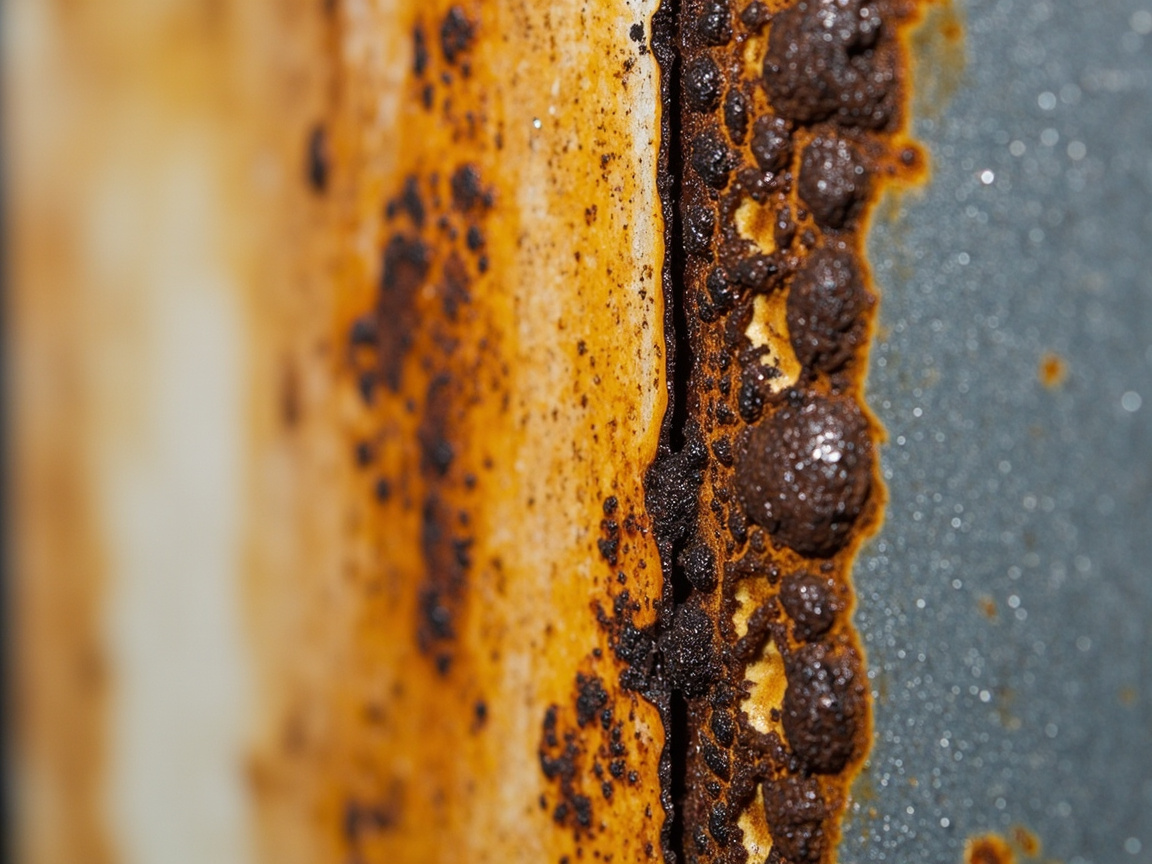
III. Panel Preparation: Whether Data is Credible or Not, 70% Depends on Panel Making
The reproducibility of salt spray results extremely depends on panel preparation. The same can of paint, with non-standard panel making, can yield results differing by several times. The environmental requirements given in the research archives in "Epoxy Polyurethane Topcoat (Domestic Product Parameter Summary)" can be directly applied to the panel making stage: temperature 5–35℃, relative humidity ≤80%, substrate temperature at least 3℃ above dew point; for surface treatment, alkyd anti-rust paint requires blast cleaning Sa2.5, roughness 30–75µm (according to GB/T 25251-2010 series, research archives). The standard panel making process is as follows:
3.1 Substrate and Surface Treatment
- Use specified-size tinplate or cold-rolled steel plates (commonly 70×150mm or standard test panels);
- Blast clean carbon steel test panels to Sa 2½ according to ISO 8501-1, with roughness controlled within a certain range (commonly 30–75µm reference for anti-rust paint types);
- Surface should be uniform, oil-free, no scale residue, which is the basis for data comparability.
3.2 Coating and Film Thickness
- Apply according to the product-specified DFT (dry film thickness), commonly sprayed to ensure uniformity;
- Film thickness must reach the design value—insufficient film thickness will systematically "lower" salt spray resistance time, causing misjudgment;
- Edge sealing: the back and cut edges of the test panel are commonly sealed with paraffin, tape, or special edge sealant, exposing only the specified area of the coated surface, to avoid edge effect dominating the result.
3.3 Curing and Conditioning
- After coating, fully cure under standard temperature and humidity as required by the product (often 7 days to reach stable performance);
- Entering the chamber without sufficient conditioning, incomplete cross-linking will falsely lose points.
In one sentence: salt spray data is the joint result of "coating + panel making process". When comparing different products, panel making conditions must be confirmed consistent, otherwise the comparison is meaningless.
IV. Test Process and Rating: From "Hours" to "Grade"
After panels enter the chamber, the test is conducted at (35±2)℃, 5% NaCl continuous spray, and taken out for evaluation at set durations (e.g., 240h, 500h, 1000h). Rating usually includes two types:
4.1 Blistering Grade
Rated by blister density and size (refer to ISO 4628 series or rating charts attached to each standard), recording "no blister / fine blister / medium blister / dense blister" and distribution. "500h no blistering" means no visible blistering on the coating surface at 500h.
4.2 Rust and Unilateral (edge creep) Spread
- Record rust spot quantity, size, and distribution;
- Unilateral rust (edge creep) is an important criterion: starting from scratch or cut edge, measure the width of rust expanding into the film, general pass line is ≤1–2mm (according to the general standards section of research archives).
- The corrosion width at the scribed line is often more sensitive than the undamaged area, and is a key location for judging primer protection.
Comprehensive judgment is often expressed as: "After 500h, panel shows no blistering, no rust spots, scribed line unilateral rust ≤1mm, rating qualified." This expression is much more informative than simply "salt spray resistance 500h".
V. What exactly do 500h / 1000h mean: taking real archival data as examples
To bring abstract standards down to concrete products, the research archive provides several credible references that help us establish an intuitive correspondence between "hours — grade":
5.1 Würth Rust Stop (Würth rust-stop primer, alkyd-based)
According to the research archive: Würth Rust Stop is an alkyd resin-based rust-stop primer, salt spray approx. 500h (DIN EN ISO 9227), meeting ISO 12944 corrosion grade C3 "high"; its drying time is approx. 16h, coverage approx. 8 m²/can (750ml), minimum application rate 90 ml/m², temperature resistance -30–80℃ (short-term 120℃). This shows: a conventional alkyd-based rust-stop primer, under the European salt spray standard, reaching approx. 500h, corresponds to a protective positioning of C3 "high" grade — that is, a medium-high industrial/urban environment, rather than a marine heavy-corrosion one.
5.2 ROSTIO anti-rust primer (German alkyd-based)
According to the research archive: ROSTIO is an alkyd resin-based anti-rust primer, salt spray compliant with DIN EN ISO 9227; coverage (60µm) approx. 8 m²/kg, recoating approx. 2h, fully dry approx. 24h. It belongs, together with Würth, to the "alkyd-based + German salt spray standard" route, confirming that this category of economical anti-rust primers anchors its salt spray performance at the 500h magnitude, near C3 grade.
5.3 General baseline and heavy-duty anti-corrosion upper limit
According to the general standards in the research archive: neutral salt spray typically 500h without blistering, single-edge rust ≤1–2mm; heavy-duty anti-corrosion can reach 1000–3000h. This baseline stretches the spectrum full — from the 500h entry level of conventional anti-rust paint, to a complete heavy-duty anti-corrosion system of zinc-rich + intermediate coat + topcoat reaching 1000h or even 3000h. For example, in the research archive, Jotun Barrier 80 UHS, a ultra-high solids epoxy zinc-rich primer, achieves "very high (VH)" durability under ISO 12944-6 test C5, which is exactly a representative of the heavy-duty salt spray magnitude.
From this we can derive a practical comparison:
| Anti-corrosion positioning | Typical salt spray resistance (neutral) | Corresponding corrosion grade / system |
|---|---|---|
| Conventional alkyd rust-stop primer | Approx. 500h | ISO 12944 C3 "high" (e.g., Würth, ROSTIO, per archive) |
| General threshold for industrial protective coating | 500h no blistering, single-edge ≤1–2mm | General standard (GB/T 1771 / ASTM B117 / ISO 9227, per archive) |
| Complete heavy-duty anti-corrosion system | 1000–3000h | C5 and above, zinc-rich + intermediate + topcoat (e.g., Barrier 80 type, per archive) |
Kexin New Materials (kexinMaterials) when matching anti-rust solutions for clients, first determines "how high a salt spray hour count is needed" according to the ISO 12944 corrosion grade, then back-derives whether to use a rust-tolerant maintenance primer, alkyd anti-rust primer, or a complete zinc-rich + intermediate coat + topcoat system — to avoid typical mismatches such as "using a 500h product to withstand C5 marine environment".
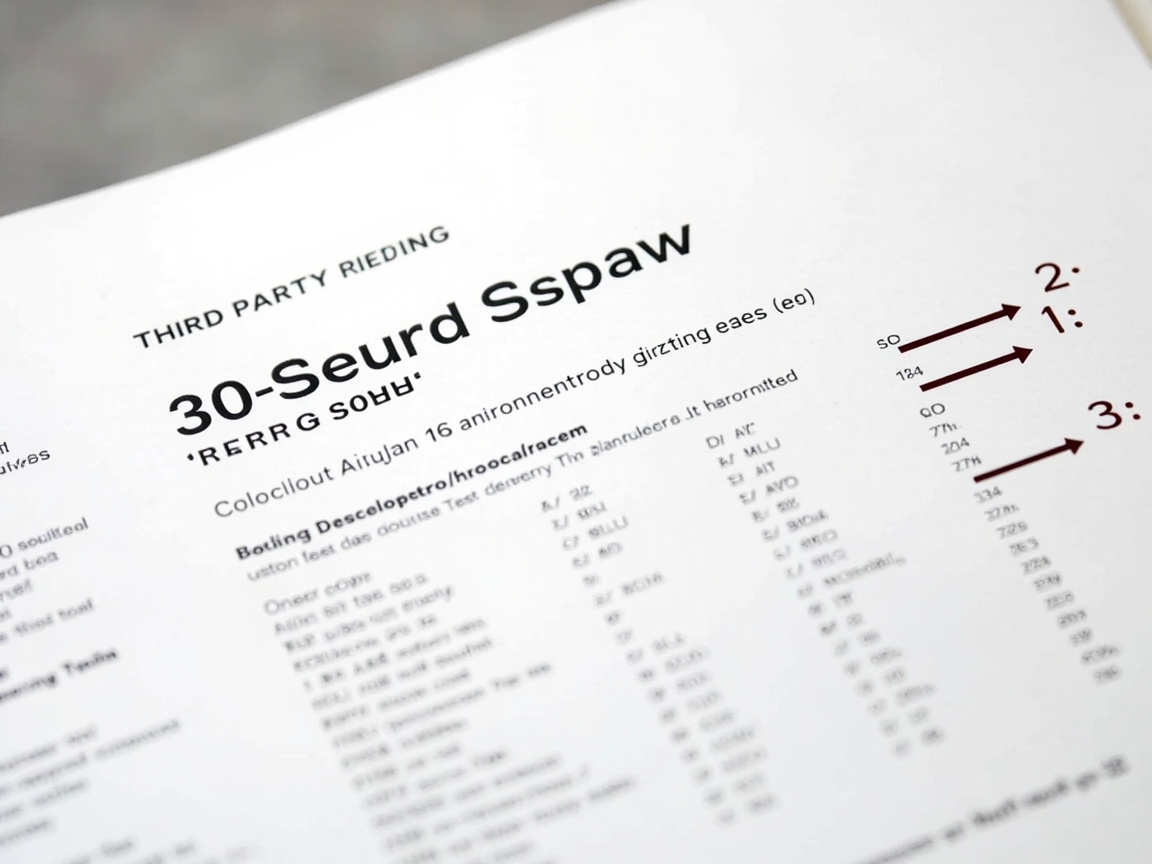
VI. How to read a third-party test report: don't just look at the three characters "500h"
When obtaining a third-party salt spray report for an anti-rust paint, what truly should be checked are the following fields, rather than merely confirming whether the conclusion says "qualified":
6.1 Check the standard and method
- Which of DIN EN ISO 9227 / GB/T 1771-2007 / ASTM B117 is indicated in the report? Different attributions affect validity in cross-border acceptance;
- Is "neutral salt spray (NSS)" stated? CASS/AASS are more stringent, do not misread them as the same.
6.2 Check the panel preparation conditions
- Substrate, surface treatment (whether Sa 2½), film thickness DFT are stated and meet standards;
- Edge sealing method, curing time are standardized. Conclusions from reports with insufficient film thickness should be discounted.
6.3 Check the judgment rules
- Test duration (e.g., 500h/1000h);
- Blistering grade (presence, density);
- Single-edge rust width (mm), whether ≤1–2mm;
- Scribe creep width;
- Which rating chart standard is adopted (e.g., ISO 4628).
6.4 Check conclusion and sample consistency
- Whether the report sample model and batch are consistent with your purchase;
- Is it "submitted sample test" or "random inspection / type inspection";
- Whether the institution's qualification (CNAS/CMA etc.) is within validity period.
One lesson: a report that only writes "salt spray resistance 500h" without panel parameters and single-edge rust data has very limited information; a complete report should allow anyone to reproduce the conditions accordingly.
VII. Common misreadings of salt spray data
Misreading 1: 500h equals 5 years on site. Wrong. Salt spray is an accelerated correlation method, not a linear conversion of on-site service life, and can only be used for relative comparison.
Misreading 2: Results from the three standards cannot be compared. Wrong. The NSS method shares the same origin; the same coating under DIN EN ISO 9227, GB/T 1771, ASTM B117 yields highly comparable results, with differences mainly in standard labeling attribution.
Misreading 3: Film thickness applied casually does not affect salt spray. Wrong. Insufficient film thickness systematically lowers the hour count; products must be compared at the same film thickness.
Misreading 4: No blistering written means perfect. Wrong. Single-edge rust width and scribe creep must be examined simultaneously; a single indicator cannot represent the whole.
Misreading 5: 1000h is definitely better than a 500h product. Not necessarily. If panel conditions, film thickness, and systems differ, directly comparing hour counts is meaningless; comparison must be made under "same system, same panel".
VIII. Putting salt spray indicators into the selection framework
The salt spray hour count is not an isolated number; it only makes sense when returned to the framework of "corrosion grade — system matching — acceptance". The research archive's summary for industrial protection is: design the matching according to C2–CX of ISO 12944-2018, carbon steel blasted to Sa 2½, primer + intermediate + topcoat system (per general standards in the research archive). Engineering parties can combine water-based industrial coating selection to determine the upper-layer system, and refer to water-based paint vs. oil-based paint adhesion comparison to understand the impact of interlayer bonding on salt spray performance; if salt spray acceptance needs to be incorporated into the overall water-based/oil-based decision, the comparison logic in how to select water-based paint vs. oil-based paint can also be consulted.
FAQ
1. Which three standards are for salt spray resistance testing?
The most mainstream are DIN EN ISO 9227 (European/German), GB/T 1771-2007 (Chinese national standard), ASTM B117 (USA). All three are based on the neutral salt spray (NSS) method, with homologous parameters and highly comparable results.
2. What are the general conditions for neutral salt spray?
Approx. 5% NaCl solution, test temperature approx. (35±2)℃, collected solution pH 6.5–7.2, deposition rate 1–2 mL/(80cm²·h). Specifics are subject to the current text of each standard.
3. What does 500h no blistering, single-edge rust ≤1–2mm mean?
This is the general qualified baseline for neutral salt spray summarized by the research archive: at 500h the coating surface shows no visible blistering, and the rust expanding inward from the scribe/edge does not exceed 1–2mm in width.
4. How many hours of salt spray can an alkyd-based rust-stop primer generally withstand?
According to the research archive, Würth Rust Stop (alkyd-based) salt spray approx. 500h (DIN EN ISO 9227), corresponding to ISO 12944 C3 "high"; ROSTIO (alkyd-based) salt spray compliant with DIN EN ISO 9227. Conventional alkyd rust-stop products anchor at the 500h magnitude, near C3 grade.
5. What is the general salt spray hour count for heavy-duty anti-corrosion?
The research archive points out that heavy-duty anti-corrosion can reach 1000–3000h, corresponding to C5 and above, a complete zinc-rich + intermediate coat + topcoat system (e.g., Jotun Barrier 80 type achieving "very high VH" durability under C5).
6. Why do panel preparation conditions affect salt spray results?
Salt spray data is a joint result of "coating + panel preparation process". Insufficient film thickness, substandard surface treatment (e.g., not reaching Sa 2½), improper edge sealing all systematically lower the hour count, so products must be compared under the same conditions.
7. How to read a third-party salt spray report without being misled?
Verify four things: the standard and method of the test (NSS/CASS), panel preparation parameters (substrate/film thickness/edge sealing), acceptance criteria (duration, blister rating, unilateral corrosion in mm, scribe creep), and consistency between sample and laboratory accreditation. A report that only states "Pass 500h" without details provides limited information.8. Can 500h salt spray be converted to how many years in the field?
No linear conversion. Salt spray is an accelerated correlation tool used for relative comparison of different formulations, not for precisely predicting field service life.
9. Why is creep from the scribed area important?
The scribe artificially creates coating damage and is a sensitive location for evaluating the primer's cathodic protection/barrier capability. Unilateral corrosion width (e.g., ≤1–2mm) is typically measured from the scribe, and is the core of the acceptance criteria.
10. What salt spray level of anti-corrosion paint should be selected for C3 environment?
Based on archival data, the "high" C3 level may use an alkyd-based anti-rust primer with about 500h (DIN EN ISO 9227) (such as Würth-type); if corrosion is more severe or the maintenance cycle is longer, a complete system with a higher salt spray rating should be upgraded to.
Further Reading
- Water-based Industrial Coating Selection: Resin Systems and Applicable Conditions: Links salt spray rating with ISO 12944 corrosion categories and system pairing for joint decision-making, supplementing the selection framework in this article.
- How to Select Water-based and Solvent-based Paint: Core Dimension Comparison: Starting from the overall water-based/solvent-based decision, understand the position of salt spray acceptance in system selection.
- Formulation Science and Application of Water-based Wood Coatings: Cross-scenario understanding of the "testing—formulation—application" closed-loop thinking, which is also inspiring for establishing coating acceptance logic.