Introduction: Storage Tanks — the "Direct Dialogue" between Chemicals and Coatings
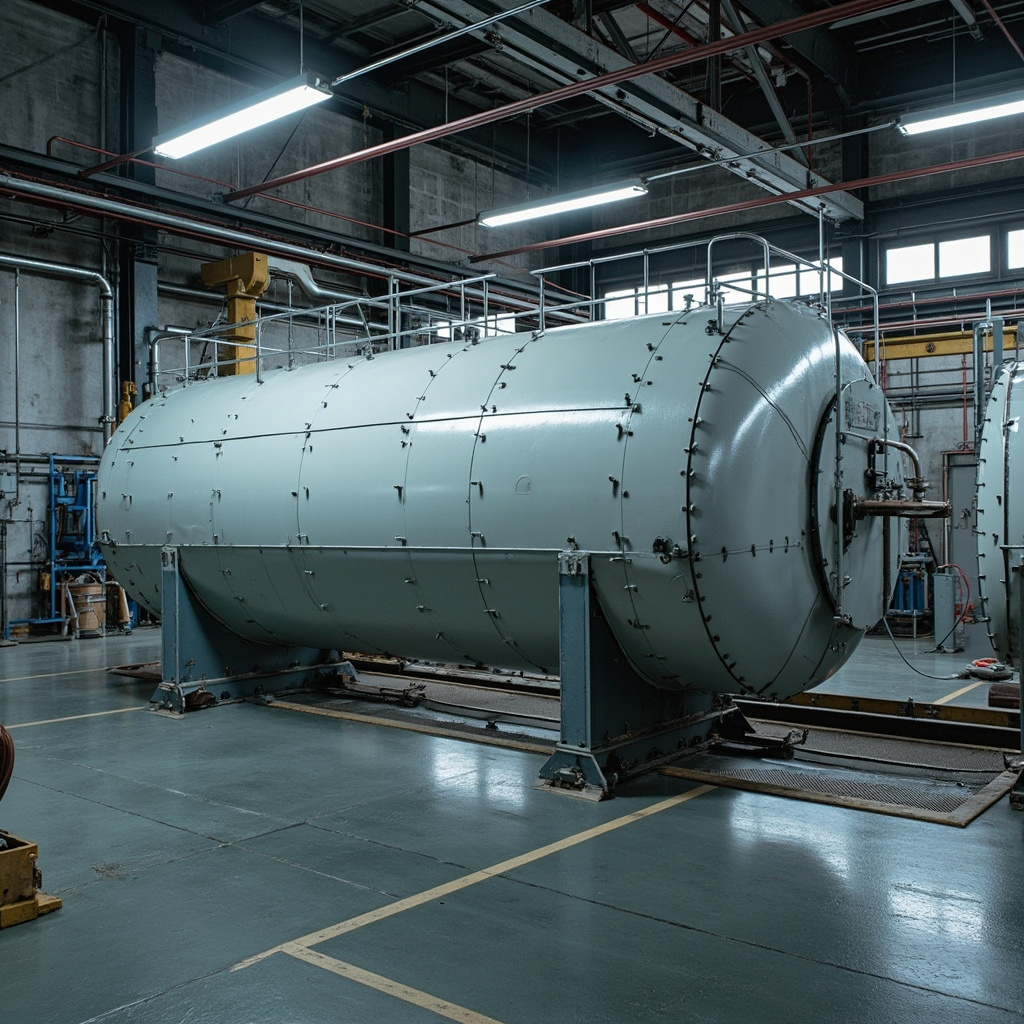
The inner wall coating of chemical storage tanks is one of the application scenarios for coatings that faces the most comprehensive chemical challenges and the most severe consequences of failure. The coating must not only withstand long-term immersion in high-concentration acids/alkalis/solvents/oxidizers, but also endure temperature fluctuations and mechanical stress from feed-discharge cycles. Chemical attack on coatings follows the “like dissolves like principle”: polar chemicals attack polar coatings (such as the ether and hydroxyl groups in epoxy), while non-polar chemicals attack non-polar coatings (such as polyethylene). The prerequisite for scientific selection is understanding this underlying chemical affinity law.

I. Chemical Resistance Rating Matrix for Coating Systems on Storage Tank Inner Walls
| Coating Type | Acid Resistance | Alkali Resistance | Solvent Resistance | Oxidizing Agent Resistance | Maximum Operating Temperature (°C) | Typical Applications |
|---|---|---|---|---|---|---|
| Epoxy (Bisphenol A type) | ★★★ (dilute acid) | ★★★★★ | ★★ | ★ | 80 | Alkali solution storage tanks, wastewater pools |
| Epoxy phenolic (Novolac type) | ★★★★★ | ★★★★ | ★★★ | ★★ | 120 | Acidic chemical storage tanks (recommended) |
| Vinyl ester (VER) | ★★★★★ | ★★★★ | ★★★★ | ★★★ | 100 | Strong acid + solvent mixed storage tanks |
| Polyurethane (PU) | ★★ | ★★★ | ★★★ | ★ | 60 | Neutral solvent storage tanks |
| Fluororesin (PVDF/ECTFE) | ★★★★★ | ★★★★★ | ★★★★★ | ★★★★ | 150 | Extreme chemicals (ultimate critical scenarios) |
II. Overview of Technical Parameter Comparison
| Technical Indicator | Standard Requirement | Premium Level | Test Method |
|---|---|---|---|
| Adhesion | ≥3MPa | ≥5MPa | ISO 4624 Pull-off Method |
| Salt Spray Resistance | ≥500h | ≥1000h | ASTM B117 |
| Weathering Resistance (QUV) | ≥1000h Gloss Retention >50% | ≥3000h Gloss Retention >80% | ISO 16474-3 |
| VOC Content | Complies with GB Standard | 50% below limit | GB/T 23985 |
| Application Window | 5-35°C | -10~40°C (wide temperature range) | TDS Recommended Conditions |
II. Selection Decision Tree
Step 1: Identify the polarity category of the chemical.Polar (acid/base/alcohol/ketone) → epoxy phenolic or vinyl ester recommended. Non-polar (hydrocarbons/oils/benzene series) → vinyl ester or fluoropolymer recommended. Oxidizing (nitric acid/hydrogen peroxide/sodium hypochlorite) → only fluoropolymer (ECTFE/PVDF) or inorganic coating recommended.Step 2: Confirm the temperature and concentration combination.Room temperature dilute solution (50%) → epoxy phenolic or fluoropolymer required. >100°C → only fluoropolymer or inorganic glass-lined coating.Step 3: Evaluate the complexity of the medium composition.Single chemical → select according to the above rules. Mixed media (e.g., acidic + containing solvent) → select based on the most severe component; mixed media with "mutual transformation effect" (e.g., sulfuric acid + nitric acid mixed acid) — corrosiveness far exceeds that of a single component — actual medium immersion testing is required, and theoretical selection alone cannot be relied upon.
Technical deepening: systematic optimization methods for process parameters (DOE experimental design)
The optimization of coating production processes should not rely on the "trial-and-error method" but should adopt the scientific method of DOE experimental design. Taking the dispersion process as an example—factors affecting quality (linear velocity/time/filling rate/temperature), 4 factors each at 3 levels—a full factorial requires 81 experiments—DOE uses orthogonal experiments L9 (9 times) or response surface methodology (27 times) to greatly reduce the number of experiments—while simultaneously obtaining the main effects and interactions of each factor. For example, it is found that "the interaction of linear velocity × time is significant": high linear velocity + short time and low linear velocity + long time can achieve the same dispersion effect—but the former saves over 20% energy.
In DOE analysis, interpretation of the P-value — P95% confidence). The final output of DOE is a set of predictive models (polynomial regression equations) — input line speed/time/temperature → predict fineness/viscosity/gloss — providing formulation engineers with a ”digital formulation optimization” tool.
Industry practice: from "master craftsman's feel" to "parameter standardization"
The common challenge in the coatings industry — when experienced veteran workers retire, their "feel" (mixing resistance / fineness gauge scraping / visual inspection of wet-film gloss) is taken away — new employees cannot replicate it. Transform the "feel" into quantifiable standard parameters (1) mixing resistance → viscometer reading; (2) fineness gauge scraping → fineness gauge reading (μm); (3) wet-film gloss → gloss meter (GU value). The "standard parameter card" for each process is posted next to the equipment — new employees operate according to the "card" rather than "by feel". "Parameter standardization" is a key step for coating factories to move from "workshop" to "factory".
FAQ
Q1: What are the chemical structural differences between epoxy phenolic and bisphenol A epoxy, and their effects on chemical resistance?Bisphenol A epoxy contains 2 ether bonds (-C-O-C-) and 2 secondary hydroxyl groups (-OH) per repeat unit. Ether bonds are alkali-resistant but acid-labile (acid-catalyzed cleavage), and hydroxyl groups are hydrophilic sites that increase the water absorption of the coating. Epoxy phenolic (novolac type) uses phenolic resin as the curing skeleton, with aromatic ring density 1.5-2 times that of bisphenol A and higher crosslink density (lower molecular weight between crosslinking points), and contains no easily hydrolyzable ether bonds—therefore its acid resistance and solvent resistance are significantly better than bisphenol A epoxy, but it is also more brittle.
Q2: What are the key differences in chemical structure between vinyl ester and epoxy?Vinyl ester (VER) is formed by ring-opening esterification of epoxy resin with methacrylic acid, and crosslinking occurs through free radical polymerization (with styrene diluent participation) rather than epoxy-amine condensation. The ester bonds (-CO-O-) in the VER molecular chain are characteristic groups of unsaturated polyester and are sensitive to alkalis (alkaline hydrolysis), but their resistance to acids and solvents is superior to that of epoxy (because VER has extremely high crosslinking density and contains no hydrophilic hydroxyl groups). Alkali-resistant improved versions of VER (such as those using bisphenol A type VER and special catalysts) can enhance alkali resistance to approach epoxy levels.
Q3: What are the difficulties in applying the coating on the inner wall of storage tanks?(1) Confined space—VOC accumulation inside the tank poses poisoning and explosion risks—forced ventilation (air exchange ≥15 times/h) and online VOC monitoring are mandatory; (2) Vertical/overhead spraying on tank walls—high-thixotropy coatings are needed to prevent sagging + airless spray equipment at high pressure; (3) Water accumulation at tank bottom—after sandblasting, water often accumulates at the bottom and must be pumped dry with a vacuum water extractor; (4) Welds and nozzles—these are the weakest areas of the coating and require 2 extra stripe coats.
Q4: How does the immersion test (ASTM D1308) simulate real storage tank conditions?The standard test is room-temperature immersion for 30 days. For actual tank service conditions, enhancements are needed: (1) Temperature — near the heating coils of a real tank, temperatures may reach 60–100°C, so the test should be conducted at the actual maximum service temperature; (2) Liquid/gas interface — vapor-phase corrosion in the tank headspace is often more severe than in the liquid phase (volatile acid/solvent vapors + condensed water), so the test must include liquid/gas dual-zone panels; (3) Thermal cycling — one heat-up/cool-down cycle per day to accelerate coating/substrate thermal stress fatigue. The standard test is a "minimum threshold," not a "sufficient condition."
Q5: How fatal are coating pinholes and holidays in storage tank scenarios? Extremely fatal. A 0.5mm diameter pinhole in a 5% HCl storage tank can corrode and perforate the steel substrate within weeks. After the internal coating of a storage tank is applied, 100% holiday detection is mandatory (ASTM D5162 wet sponge method or high-voltage spark method). Any detected pinhole must be immediately marked → ground → patched → re-inspected until zero pinholes remain. This is the ultimate quality control red line that distinguishes storage tank coatings from ordinary industrial coatings.
Q6: The "cross-contamination" issue between the coating and the tank contents?Food/pharmaceutical grade tanks: Residual monomers, plasticizers, and metal catalysts in the coating may migrate into the contents—must comply with the migration limits of GB 4806.10 and FDA 21 CFR 175.300. Chemical storage tanks: Extractables (EPS) in the coating may contaminate high-purity chemicals (e.g., electronic-grade sulfuric acid/hydrofluoric acid require metal ions <1ppb). The "cleanliness" of the tank coating is as important as its "chemical resistance."
Q7: Why are fluoropolymer coatings (PVDF/ECTFE/Halar) expensive yet irreplaceable?The bond energy of the C-F bond in fluoropolymers (485 kJ/mol) is among the highest of all chemical bonds, making fluoropolymers inert to almost all chemicals—only molten alkali metals and high-temperature fluorine gas can attack them. The price of fluoropolymer coatings (flake lining or spray molding) is 10–30 times that of epoxy, but they are irreplaceable in the following scenarios: 98% concentrated sulfuric acid / 65% nitric acid / liquid bromine / hydrofluoric acid / high-temperature strong oxidants—any organic coating would be destroyed by these media within days.
Q8: What is the difference between the "Gel Coat" and "FRP" (Fiberglass Reinforced Plastic) of vinyl ester coating?Gel Coat is a pure resin coating (thickness 0.3-0.5mm), while FRP is a composite material reinforced with resin and glass fiber (thickness 2-5mm). Gel Coat is used for the inner walls of lightly chemically exposed storage tanks (single-coat solution), while FRP is used for severe corrosion (integrated lining and structural reinforcement solution). The pinhole rate of Gel Coat is much higher than that of FRP (pure resin without glass fiber reinforcement has high shrinkage and high internal stress), therefore FRP rather than pure Gel Coat is recommended for high-risk chemical storage tanks.
Q9: Design life and inspection cycle of storage tank coating?Standard chemical storage tank coating design life is 10-15 years. Inspection cycle: internal inspection every year (visual + holiday test + film thickness + adhesion) and repair of local defects. For severe chemical scenarios (>50% concentration / high temperature) — internal inspection every six months. Once inspection finds coating blistering / peeling area >5% or holiday density >5 per m² — the coating system is judged to have entered the failure period and requires full renovation and repainting within 1-2 years.
Q10: What are the differences in coating construction between new tanks and re-lined old tanks?New tanks: steel substrate blasted to Sa2.5 (Rz 40-70μm) → salt content below 20mg/m² → primer + lining applied in one go. Old tanks re-lining: (1) remove old coating (high-pressure water jet 2000bar or chemical stripping); (2) inspect tank corrosion condition — pits with depth >1mm must be weld-repaired and ground smooth; (3) key areas at tank bottom (water accumulation zones / below heating coils) use non-destructive thickness measurement / ultrasonic inspection of remaining wall thickness — if remaining wall thickness is less than 80% of design value, structural assessment is required. The substrate quality of old tank re-lining is inferior to that of new tanks, so the expected coating design life should be reduced by 5-8 years.
Related Reading
Summary
The scientific selection of interior tank coatings for chemical storage tanks follows a three-step decision tree: "chemical polarity → temperature and concentration → component complexity." Epoxy phenolic (novolac type) is the preferred cost-effective solution for acidic chemical storage tanks, vinyl ester covers acid + solvent mixed media, and fluoropolymer resin is the ultimate solution for extremely oxidizing chemicals. After tank coating application, 100% holiday detection with zero defects is mandatory. Kexin New Materials provides chemical storage tank customers with full-process technical support ranging from coating selection, application guidance to periodic inspection.