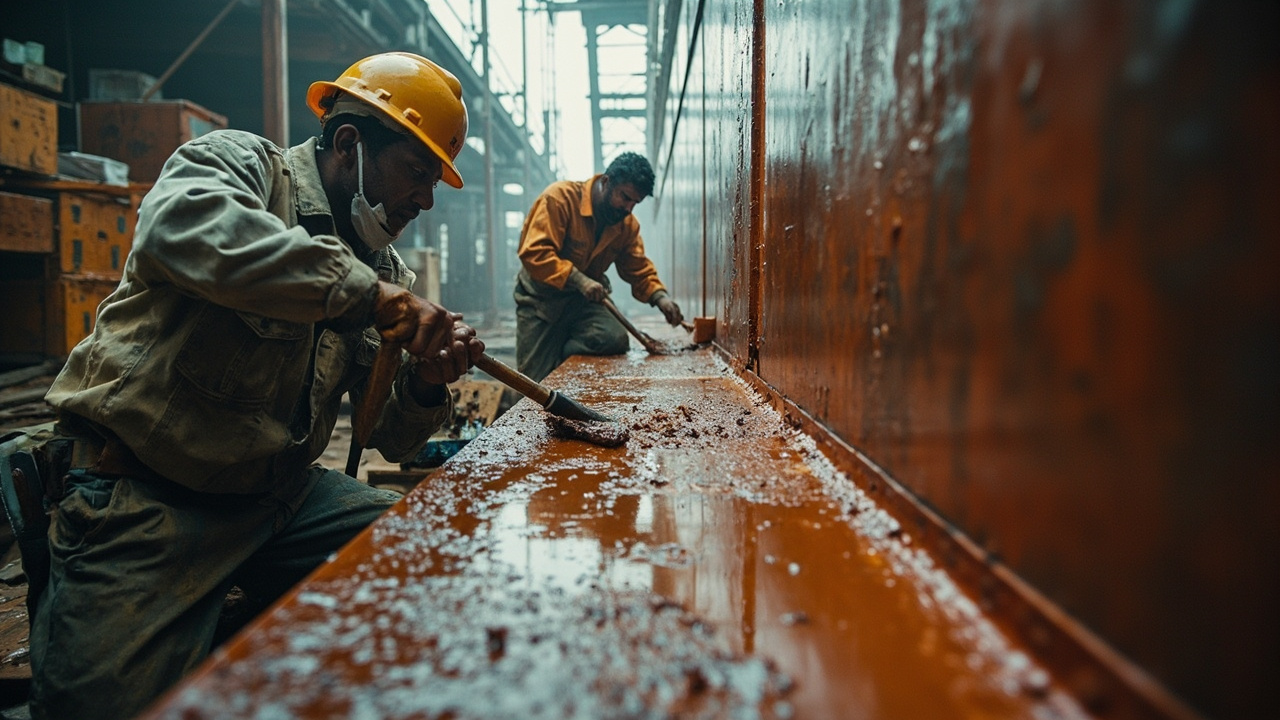
The difficulty of "oil-to-water" conversion often lies not in lab formulations, but at the construction site. Many companies buy water-based paint, only to fail on the job site: steel surfaces develop unexplained red rust, the paint film stays tacky and non-drying for hours, and entire batches turn white and delaminate during the plum rain season. Water-based industrial coating uses water as the medium, and its physicochemical behavior differs greatly from solvent-based coatings. Flash rust, slow drying, and environmental sensitivity have become the three most common on-site hurdles.
For painting teams, equipment manufacturers, and anti-corrosion engineering contractors, understanding the causes of these three major pain points is more fundamental than switching to a bucket of "better paint." This article breaks them down one by one and provides an actionable countermeasure framework.
I. Pain Point 1: Flash Rust
Flash rust is the most直观的 "on-site accident" of water-based paint—steel is briefly exposed to a water film before or after coating, and within minutes to tens of minutes, dotted red rust appears on the surface. Even covering it with topcoat cannot hide it, ultimately creating the hidden danger of "rust under paint."
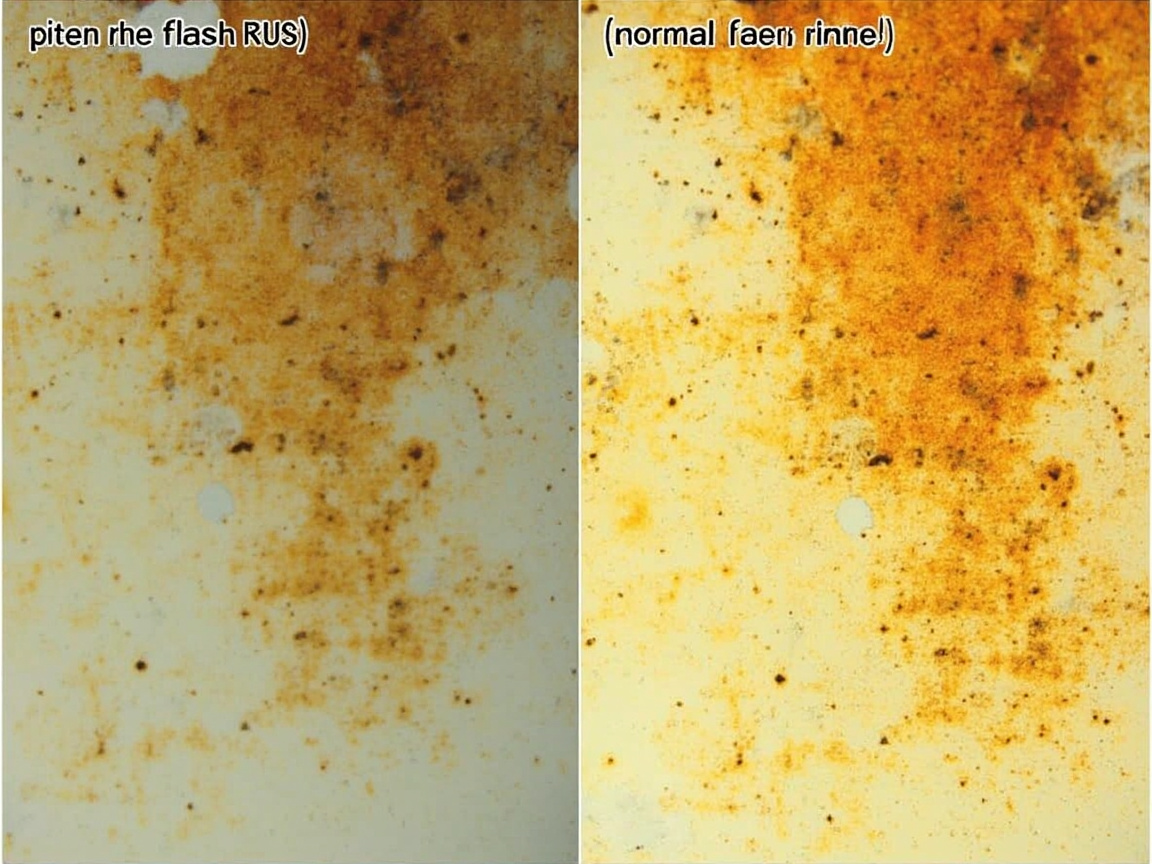
Causes:
- The water-based medium causes transient electrochemical corrosion on the iron surface, especially severe under high humidity, low temperature, and residual rust on the substrate;
- Excessively long coating intervals, or the primer failing to form an effective barrier layer, allowing water to continuously contact the steel.
Countermeasures:
- Thorough substrate treatment: Sandblast / grind to the specified grade; residual rust and scale must be removed—nano anti-rust primer cannot save loose floating rust;
- Anti-rust primer base coat: First build a nano passivation layer on the steel surface to block water–iron contact;
- Film-forming aids and pacing: Reasonably select anti-rust pigments and film-forming aids to reduce water film residence time.
II. Pain Point 2: Slow Drying and Tackiness
Water-based paint relies on water evaporation + emulsion coalescence to form a film, a process naturally slower than solvent-based. Once the environment is unfavorable, it becomes "not dry for half a day, tacky on touch."
Causes:
- Water has high latent heat of vaporization and evaporates very slowly at low temperature and high humidity;
- Oxidative / crosslinking water-based resins are more temperature-sensitive, with reactions stalling at low temperatures;
- Applying too thick at once causes skinning on the surface while the interior remains wet, leading to tackiness.
Countermeasures:
- Temperature and humidity control: Maintain ventilation, raise ambient temperature, and keep relative humidity within a suitable range;
- Driers and thin coats: Use driers reasonably, apply "thin coats in multiple passes" rather than one thick coat;
- Process scheduling: Arrange recoating and curing during periods with favorable temperature and humidity.
III. Pain Point 3: Environmental Sensitivity (Dew Point / Humidity)
Water-based construction most fears "invisible water"—when the workpiece surface temperature is below the ambient dew point, airborne moisture condenses on the surface, causing the paint film to turn white and adhesion to drop sharply, leading to later large-scale peeling.
Causes:
- Night cooling, morning high humidity, or workpieces taken from cold storage easily fall below the dew point;
- Water-based materials are extremely sensitive to water; even trace condensation destroys film formation.
Countermeasures:
- Dew point management: Before construction, measure workpiece surface temperature and ambient dew point, ensuring surface temperature is at least 3℃ above the dew point;
- Environmental monitoring: Equip with temperature, humidity, and dew point monitoring to establish a "workable window" judgment;
- Seasonal scheduling: Adjust operation plans during unfavorable periods such as plum rains and severe winter.
IV. kexinMaterials Water-Based Matching Countermeasures
As a manufacturing enterprise focused on nano new material R&D, kexinMaterials (kexinMaterials) addresses construction pain points upfront in formulation and matching design:
- Nano mechanical anti-rust primer: Build a nano passivation layer on the steel surface first to suppress flash rust at the source and prepare for topcoat adhesion.
- Environmentally friendly film-forming system: Optimize emulsion and film-forming aids to stably coalesce within a wider temperature and humidity window, easing slow drying.
- Dew point construction process package: Provide temperature/humidity / dew point monitoring thresholds and scheduling advice, turning "environmental sensitivity" into a manageable process.
- Graduated matching rather than single product: Based on substrate, corrosion grade, and site conditions, provide an integrated "primer–intermediate–topcoat" water-based matching with parameters.
V. Construction and Acceptance Key Points
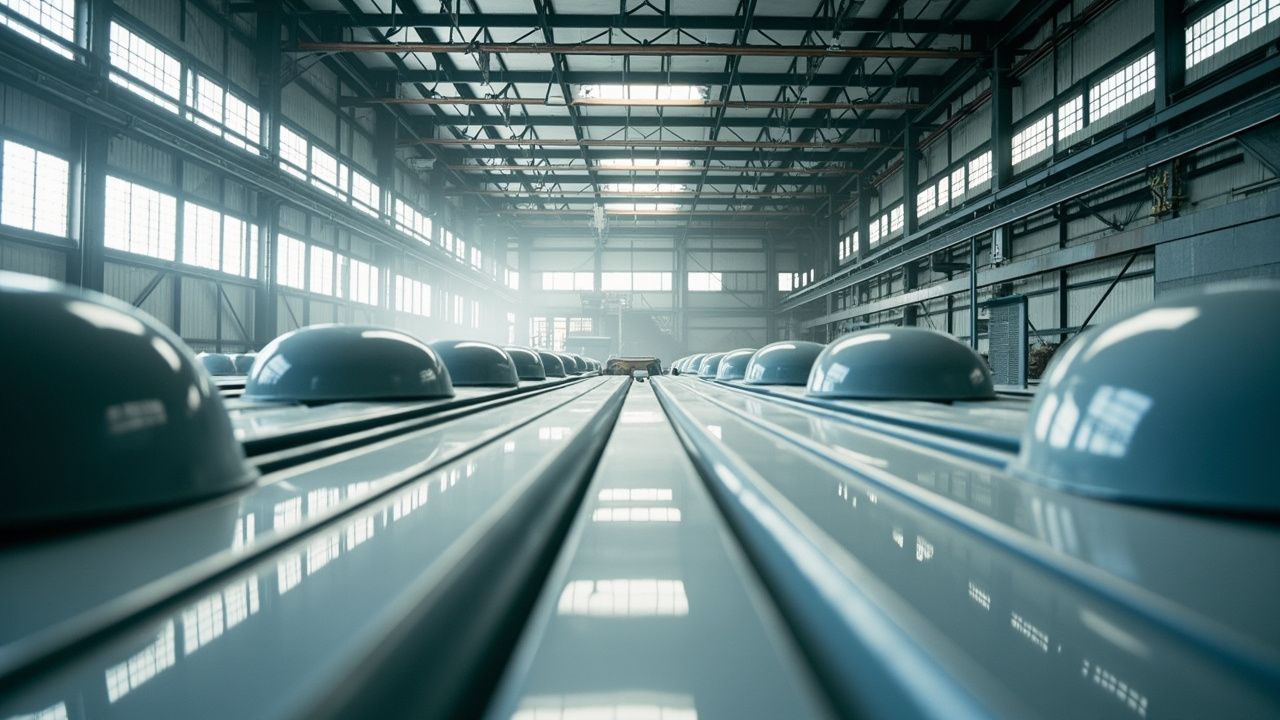
Water-based coating is "70% formulation, 30% construction"; acceptance is advised to hold three lines:
1. Surface treatment: Sandblasting / grinding meets standard, residual rust cleared, anti-rust primer base coat completed before coating to compress the flash rust window.
2. Environmental compliance: Monitor dew point and relative humidity, avoid construction within 3℃ below dew point, maintain ventilation during curing.
3. Film thickness and batch: Water-based paint easily sags; recommend wet film gauge + dry film thickness measurement, full inspection of critical parts and establish traceability files.
FAQ
Q1: Why is water-based paint especially prone to flash rust?
The water-based medium causes transient electrochemical corrosion of steel in the water film; high humidity, low temperature, and residual rust amplify this phenomenon, so primer base coating and environmental control are both indispensable.
Q2: Is waiting the only option for slow drying?
Do not just wait. Accelerate by raising ambient temperature, ventilation, reasonable driers, and "thin coats in multiple passes," and schedule recoating during favorable temperature and humidity periods.
Q3: What exactly is dew point and why does it matter?
When the workpiece surface temperature is below the ambient dew point, moisture condenses on the surface; water-based paint encounters trace water and immediately breaks film formation, with adhesion plummeting. Construction surface temperature must be at least 3℃ above the dew point.
Q4: Can water-based coating be done during the plum rain season?
Yes, but strictly monitor dew point and environment, introduce dehumidification and heating if necessary, or adjust scheduling to avoid high-humidity periods.
Q5: What can kexinMaterials do for water-based construction?
kexinMaterials (kexinMaterials) provides nano anti-rust primer to suppress flash rust, wide-window film-forming system to ease slow drying, as well as dew point construction process package and graduated matching.
Q6: What should water-based coating acceptance most focus on?
Whether substrate treatment meets standard, whether dew point / humidity is within the window, and whether film thickness is uniform—these three lines prevent major accidents.
Further Reading
- Water-based coating storage, transportation, and construction environment requirements
- Water-based industrial coating technical system and painting process compendium: from resin mechanism to construction implementation
- How to select water-based industrial paint under oil-to-water background: resin systems and applicable conditions