ISO 12944 is currently the most authoritative and widely applied standard system in the global industrial anti-corrosion coating field, jointly used by engineers, coating suppliers, owners, and supervisors as the "common language for anti-corrosion coating system design." Whether you are dealing with sea-crossing bridges, petrochemical storage tanks, port machinery, or ordinary plant steel structures, as long as it involves steel protective coating, it is almost impossible to bypass it. However, in reality, "design according to ISO 12944" is often simplified to "select a system number," ignoring the systematic requirements behind the standard for corrosive environment, surface treatment, coating layers, dry film thickness (DFT), and durability. This article takes ISO 12944-2018 (the latest edition) as the main line, combined with China's corresponding standards GB/T 30790 series and JT/T 722-2008 and other engineering specifications, to break down the selection logic into executable steps, helping you upgrade from "experience-based selection" to "documented standard-based selection."
As a technical supplier of industrial protective coating, Kexin New Materials (kexinMaterials) has, in numerous bridge, storage tank, and offshore platform projects, taken the corrosion classes and durability classes of ISO 12944 as the starting point for system design, rather than labeling them afterward. The selection framework in this article also directly originates from these frontline system practices, striving to translate the standard clauses into operations that engineers can implement.
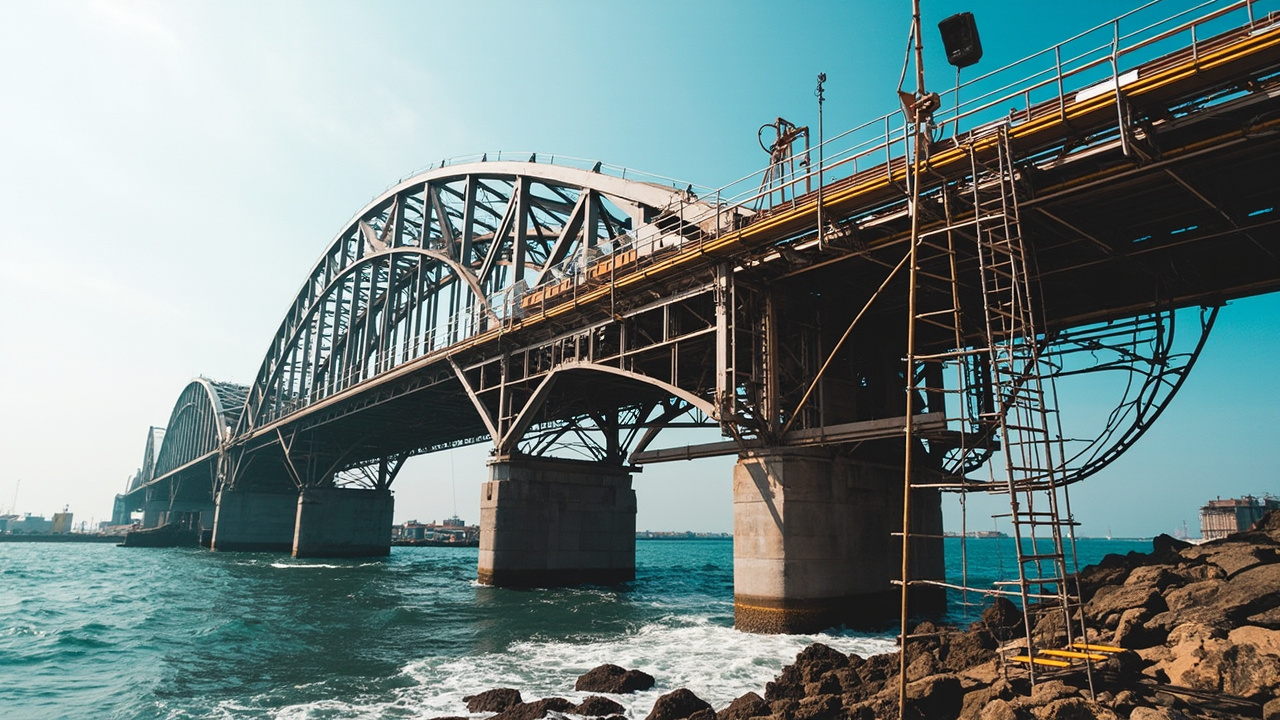
I. The Full Picture of the ISO 12944 Standard System
ISO 12944 is fully named "Corrosion protection of steel structures by protective paint systems" (Paints and varnishes—Protective paint systems for steel structures—Corrosion protection), with the currently valid version being ISO 12944-2018, divided into nine parts:
- Part 1 General: scope, referenced documents, terminology definitions;
- Part 2 Classification of environments: classifies C1–CX and Im1–Im3 by severity of corrosion, which is the starting point for selection;
- Part 3 Design considerations: influence of structural joints, drainage, accessibility, and other design factors on anti-corrosion life;
- Part 4 Types of surface and surface preparation: blast cleaning, power tool cleaning, hand tool cleaning grades;
- Part 5 Protective paint systems: coating systems and minimum DFT corresponding to each corrosion class and durability class;
- Part 6 Laboratory performance test methods: neutral salt spray, cyclic corrosion, adhesion, etc.;
- Part 7 Execution and supervision of work: coating execution, environmental control, inspection;
- Part 8 Development of specifications for new work and maintenance: turning design into written contract;
- Part 9 Offshore and related structures: additional requirements for marine environments (formerly ISO 20340).
China's series of standards equivalent to this is GB/T 30790.1~30790.9-2014 (technical specification), whose content is basically consistent with ISO 12944-2018; highway bridges additionally have JT/T 722-2008 "Technical Conditions for Anti-corrosion Coating of Steel Structures of Highway Bridges", whose corrosion zoning and system thinking also highly echo ISO 12944. The first principle of selection: first determine the environmental class, then the durability class, and finally check the system table. Skipping any step will lead to a system that is "nominally compliant but actually prematurely aged."
II. Corrosion Environment Classification: What Is the Difference from C1 to CX
ISO 12944-2 classifies atmospheric environments from low to high corrosion severity as C1 (very low), C2 (low), C3 (medium), C4 (high), C5 (very high), CX (extreme); immersed and buried environments are classified as Im1 (freshwater immersion), Im2 (seawater immersion, including seawater splash zone), Im3 (soil burial). The 2018 edition merged the old C5-I (industrial) and C5-M (marine) into a unified C5, and added CX specifically to cover offshore structures and coastal strong salt-spray environments.
Typical environment correspondences are as follows (according to examples given in ISO 12944-2):
- C2: rural low-pollution atmosphere, dry and cold regions;
- C3: urban, moderate SO₂ industry, low-salinity inland coast;
- C4: industrial plants, high-salinity coast;
- C5: highly polluted industry (e.g., chemical plant areas), high-salinity coastline (e.g., wharf);
- CX: offshore platforms, tidal, splash zones, most severe coastal sections;
- Im1: inland water tanks, hydropower station wetted metals;
- Im2: ship ballast tanks, offshore piles;
- Im3: buried pipelines, external walls of underground storage tanks.
It must be emphasized: the environmental class is not "guessed," but should be comprehensively determined by combining on-site pollutant monitoring (SO₂, chloride deposition rate), distance from coastline, relative humidity, and dew frequency. The root cause of many project failures is designing a C4 environment as C3, leading to large-area rust after several years, with a cost far exceeding the coating price difference saved initially.
III. Durability Classes: Low, Medium, High, Very High
ISO 12944-5 divides the expected durability of coating systems into:
- Low (L): ≥ 2 years, typical expectation 2–5 years;
- Medium (M): ≥ 5 years, typical 5–15 years;
- High (H): ≥ 15 years, can reach 15–25 years;
- Very High (VH): ≥ 25 years.
Note that durability is the "expected minimum period" rather than "warranty period," and actual life is affected by construction quality, maintenance system, and accidental damage. When selecting, the durability class should match the facility design life: main girders of sea-crossing bridges usually require High (H) or even Very High (VH), while frequently repairable indoor equipment enclosures may only need Medium (M). Setting the durability class low seems to save initial cost, but trades for frequent maintenance, road closures, and production stoppage losses.
IV. Coating Systems and Minimum Dry Film Thickness (DFT)
ISO 12944-5 provides recommended systems and minimum DFT (total dry film thickness) for each "environment class × durability class" combination. The following are typical ranges for common atmospheric environment combinations (according to ISO 12944-5 tables, values are minimum DFT magnitudes, unit µm):
| Environment Class | Durability | Typical System (primer/intermediate/topcoat) | Minimum DFT Magnitude (µm) |
|---|---|---|---|
| C3 | Medium(M) | epoxy primer + acrylic topcoat | 160 |
| C4 | High(H) | zinc-rich epoxy primer + epoxy intermediate coat + polyurethane topcoat | 200 |
| C5 | High(H) | zinc-rich epoxy primer + epoxy micaceous iron oxide intermediate coat + aliphatic polyurethane topcoat | 280 |
| CX | Very High(VH) | zinc-rich epoxy primer + high-build epoxy intermediate coat + polyurethane/polysiloxane topcoat | 320 |
The core logic of system design is "three-layer division": the primer provides adhesion and cathodic/passivation protection; the intermediate coat provides thickness and barrier; the topcoat provides weather resistance and aesthetics. When writing the three-layer combination into the specification, the model, color, volume solids, theoretical spreading rate, and single-coat DFT of each coat should be separately marked, and the upper and lower limits of total DFT (e.g., 280±20 µm) should be clarified, to avoid only writing the total number leading to thin application during construction. For the weather-resistant role of the topcoat, refer to aliphatic polyurethane topcoat weather resistance.

V. Surface Preparation Grade and Roughness
ISO 12944-4 references the blast cleaning grades of ISO 8501-1: Sa 1 (light), Sa 2 (thorough), Sa 2.5 (very thorough, near white), Sa 3 (white metal). For C4 and above high-corrosion environments, the standard generally requires Sa 2.5 or higher, with blast roughness profile per ISO 8503 "medium (G)" or "rough (R)" grade (profile depth approx. 40–75 µm). Surface preparation is the "foundation" of anti-corrosion life—numerous failure cases show that about 70% of early rust is directly related to substandard surface preparation (residual salt, oil, mill scale not fully removed). Writing the surface preparation grade, roughness range, and surface salt detection together into the specification ensures a reliable adhesion foundation for subsequent systems. For the barrier role of the intermediate coat, refer to micaceous iron oxide intermediate coat barrier mechanism.
VI. Construction Environment and Film Thickness Control Discipline
ISO 12944-7 sets hard boundaries for the construction environment: the substrate temperature must be at least 3°C above the dew point, and relative humidity generally should not exceed 85% (for zinc-rich primer, which is prone to moisture absorption and whitening, it is often required to be ≤ 80% or even lower); painting and curing periods must avoid rain, snow, and condensation. A specified recoating interval (minimum, maximum) is required between each coat; if exceeded, roughening treatment is needed. DFT is randomly inspected after curing using magnetic or eddy-current thickness gauges according to GB/T 4956 or ISO 2178, and judged according to the "90/10 rule" of ISO 19840 (90% of measurement points ≥ specified value, the rest not less than 90%). Film thickness control seems simple, but it is the easiest place for cutting corners on site; the supervisor must treat the 90/10 rule as a hard acceptance line.
VII. How Laboratory Verification Supports Selection
ISO 12944-6 specifies the laboratory verification that a coating system should pass. For high-grade systems such as C5 and CX, the following are usually required:
- Neutral Salt Spray (NSS): According to ISO 9227 and GB/T 1771, a C5 system generally needs to pass 1440–2000 h without substrate rust;
- Cyclic Corrosion (CCT): According to ISO 11997-1 (Prohesion or UV condensation cycle), which is closer to real aging;
- Adhesion: Cross-cut method GB/T 9286 or pull-off method ISO 4624, requiring not lower than grade 1 or ≥ 5 MPa.
It needs to be reminded: salt spray hours are not a marketing number of "the longer the better", but should be used as a pass/fail criterion of "whether the system meets the corresponding grade of ISO 12944-5". Sending the system to a third party for type testing according to ISO 12944-6 is more meaningful for engineering than simply comparing the advertised "salt spray 3000 h" of various suppliers. For differences in test methods and criteria, see the salt spray/cyclic corrosion test methods of this batch.
VIII. Eight Elements of Translating Design into Specification
According to ISO 12944-8, a qualified new construction or maintenance technical specification should include: environmental class, durability class, surface treatment grade and roughness, name and DFT of each layer of the system, construction environment limits, recoating interval, inspection items and acceptance criteria, and maintenance painting plan. None of these eight elements can be omitted; otherwise, the supervisor and supplier cannot align, and quality disputes occur frequently. The specification is a "translation" between the standard and the construction site; only when it is written clearly can the standard truly be implemented.
As a system supplier, Kexin New Materials (kexinMaterials), when delivering anti-corrosion systems, simultaneously provides "specification template + construction process card for each layer + third-party type inspection report index", enabling the owner to translate standard clauses into acceptable technical requirements at the bidding stage, rather than relying on visual judgment of quality afterwards.

IX. Common Selection Mistakes
Mistake 1: Underestimating the environmental class. Designing a coastal C5 as C4, the total DFT of the system is reduced by nearly 80 µm, and the service life is directly halved. The class should be determined based on monitoring data.
Mistake 2: Only writing total DFT without layers. The contractor may use one thick coat instead of "primer + intermediate coat + topcoat", sacrificing the functional division between layers, and both adhesion and barrier are compromised.
Mistake 3: Using topcoat to replace the barrier of intermediate coat. Applying polyurethane topcoat thickly as intermediate coat, but the topcoat has insufficient solid content and flake filler, short barrier path, and prone to early rust.
Mistake 4: Judging by salt spray duration. Separated from the criteria of the corresponding grade of ISO 12944-6, it is meaningless to compare "whose salt spray hours are more" in isolation, and there is even room for sample cheating.
Mistake 5: Ignoring recoating interval. After the primer is dry, if the maximum recoating interval is exceeded without roughening, interlayer adhesion collapses, and the entire system fails at the interface.
X. Coordination with VOC Regulations
ISO 12944 addresses "whether anti-corrosion meets the standard", while environmental compliance addresses "whether painting is legal". China's industrial protective coatings are constrained by GB 30981-2020 "Limits of Harmful Substances in Industrial Protective Coatings", which sets upper limits for VOC of solvent-based primer, intermediate coat, and topcoat; solvent-free and water-based systems have stricter limits. When selecting, under the premise of meeting the ISO 12944 class, priority should be given to low-VOC epoxy zinc-rich, solvent-free epoxy intermediate coat, and high-solid polyurethane topcoat. The two do not conflict: water-based and solvent-free are precisely the compliant upgrade direction of current high-durability systems, meeting both the standard and the law.
XI. Grade Selection from Life Cycle Cost (LCC) Perspective
Selection cannot only look at initial cost. From the LCC (Life Cycle Cost) perspective, too low an environmental and durability class saves the initial painting cost but brings frequent maintenance, road closure, and production stoppage losses. Empirically, if the main cable and external surface of box girder of a sea-crossing bridge are designed according to C5 instead of CX, the initial saving may be less than 5% of the total life cost, but the cost of one major repair for road closure, scaffolding, and traffic diversion is often several times the coating price difference at the beginning. Therefore, the durability class (H, VH) of ISO 12944 is essentially "using initial investment to exchange for long-term maintenance-free", which is a more economical choice for infrastructure with a design life of 50–100 years. LCC calculation should include: coating and construction cost, surface treatment cost (often 30%–50% of total heavy anti-corrosion cost), maintenance scaffolding and traffic control cost, production stoppage loss, scrap and environmental disposal cost.
XII. Typical Industry System Comparison
The implementation of ISO 12944 varies across industries; three examples:
- Sea-crossing bridge: External surface according to CX (very high VH), system epoxy zinc-rich + epoxy micaceous iron oxide + aliphatic polyurethane or polysiloxane, total DFT around 320 µm, and add details of bridge standard JT/T 722-2008;
- Petrochemical storage tank outer wall: Atmospheric zone according to C4–C5 (high H), optional epoxy zinc-rich + epoxy intermediate coat + polyurethane topcoat; inner wall contacting medium separately set lining according to NACE SP0398 and GB 50393;
- Offshore platform: CX + ISO 12944-9 offshore addition, splash zone often overlaid with thermal sprayed aluminum or ultra-thick solvent-free epoxy, withstanding splash, UV, and low-temperature alternation.
It can be seen that the same standard is "tailored" into respective mandatory specifications in different industries, but the underlying logic is consistent: first determine the environmental class, then the durability class, then check the system table.
XIII. Reference Relationship between ISO 12944 and Related Standards
ISO 12944 is not an isolated standard; it references and links a series of supporting standards, forming a complete technical chain:
- Surface treatment: ISO 8501-1 (grade), ISO 8502 (surface contaminants, salt), ISO 8503 (roughness), ISO 8504 (treatment method); corresponding Chinese GB/T 8923, GB/T 18570, GB/T 13288, etc.;
- Test method: ISO 9227 (salt spray), ISO 11997 (cyclic corrosion), ISO 4624 (pull-off adhesion), ISO 2409, GB/T 9286 (cross-cut);
- Thickness: ISO 2178, GB/T 4956 (magnetic thickness measurement), ISO 19840 (film thickness acceptance after painting);
- System verification: ISO 12944-6 combines the above tests into "type inspection" criteria.
Understanding this reference chain can truly implement "design according to ISO 12944" into acceptable technical documents, avoiding writing only the standard number without supporting test backing.
XIV. Digitalization and Traceability Trend
Modern heavy anti-corrosion projects increasingly emphasize "data traceability": each batch of components records blast cleaning grade photos, roughness, salt, DFT of each coat, environmental temperature and humidity, coating batch number, forming a digital archive. The specification preparation of ISO 12944-8 is the starting point, and subsequent maintenance is regularly rated according to ISO 4628 and archived. For infrastructure with a 50-year life, such an archive is more important than any publicity. As a system supplier, Kexin New Materials (kexinMaterials) delivers the "four-piece set of specification + process card + inspection index + batch traceability" in bridge and storage tank projects according to this logic, bringing the standard from paper to the construction site.
XV. Monitoring Method for On-site Determination of Environmental Class
The environmental class cannot be guessed. ISO 12944-2 gives the classes corresponding to typical environments, but real projects need on-site monitoring to confirm: chloride deposition rate (collected and measured according to ISO 9225 etc.), SO₂ deposition rate, distance from coast, relative humidity and dew frequency. For sea-crossing and coastal projects, at least one year of pollutant monitoring should be done before design, or data from neighboring meteorological and environmental stations should be referenced.
The significance of monitoring is to avoid "underestimation". Estimating C5 as C4, the total DFT differs by nearly 80 µm, and the life is directly halved; estimating C4 as C5 wastes cost. Data-driven classification is both scientific and can provide evidence in disputes. This is why large bridge and offshore platform projects will list a separate "environmental class determination basis" chapter in the specification, attaching monitoring reports rather than a sentence of "designed according to C5".
For Im1–Im3 immersion and buried environments, the judgment logic is completely different from atmospheric: Im1 fresh water immersion depends on water quality (pH, dissolved oxygen, conductivity); Im2 seawater immersion depends on salinity and whether microorganisms are present (microbiologically influenced corrosion, MIC); Im3 soil burial depends on soil resistivity, moisture content, and oxygen content. These cannot directly apply the atmospheric C grades; they must be judged separately according to the Im series of ISO 12944-2, and superimposed with the corresponding internal anti-corrosion requirements of NACE and GB. Confusing atmospheric and immersion environments is the root cause of wrong specification selection for buried pipelines and underwater pile foundations.
16. Turning Specification Selection into a Tender Work Sheet (Example)
Turning the aforementioned selection logic into a checkable work sheet can align design and tendering. An example is as follows (excerpt):
| Step | Input | Output |
|---|---|---|
| 1 Define environment | Monitoring report, location | C3 / C4 / C5 / CX |
| 2 Define durability | Design life | L / M / H / VH |
| 3 Check system | ISO 12944-5 table | Primer + intermediate + topcoat system |
| 4 Define DFT | Minimum value in system table | Target value ± tolerance |
| 5 Define surface | ISO 8501-1 | Sa 2.5 / Sa 3 |
| 6 Define verification | ISO 12944-6 | NSS/CCT + adhesion |
This table translates "standard language" into "tender items"; each cell can be written into the contract and checked upon acceptance. It is also the baseline for supplier bidding qualification—only those who can provide corresponding evidence at each step are qualified to undertake high-grade systems.
17. Correspondence between Durability Grades and Maintenance Cycles
The durability grade is not an isolated number; it must be linked to the maintenance system. General correspondence (empirical reference, not a hard rule):
| Durability grade | Expected minimum years | Suggested first rating cycle | Maintenance trigger |
|---|---|---|---|
| L | ≥2 years | 1 year | Obvious rust / blister |
| M | ≥5 years | 2–3 years | Chalking / local rust |
| H | ≥15 years | 5 years | Rating approaching threshold |
| VH | ≥25 years | 5–8 years | Comprehensive assessment |
Directly translating "durability grade" into "how often to inspect, when to repair" connects the standard to on-site management. Many projects only write "designed per H" but never do rating, essentially leaving decades of service life to luck. The maintenance trigger is not a fixed period, but a threshold based on condition rating—repair when the threshold is reached, continue monitoring if not.
18. Standard Updates and Version Management
From the 1998 edition to the 2018 edition of ISO 12944, there have been changes in environmental classification and offshore requirements. Design references must clearly state the version year to avoid "per ISO 12944" without knowing which edition. China's GB/T 30790 corresponds to the 2014 edition (technical content aligned with the 1998 framework, partially referencing the 2018 approach). Stating "ISO 12944-2018" or "GB/T 30790-2014" in project documents is a baseline action to avoid version disputes and facilitates later maintenance comparison with the original design basis.
19. Synergistic Outlook of ISO 12944 and Green Manufacturing
ISO 12944 solves "can protect", while green manufacturing solves "compliant manufacturing". The two converge in trend: high-solid, solvent-free, and water-based systems can meet the high durability requirements of C5 and CX while reducing VOC to satisfy GB 30981-2020. Future selection tables will simultaneously list three columns: "corrosion grade—durability—VOC grade", allowing anti-corrosion and environmental protection to be implemented in one selection. Design institutes and owners incorporate VOC into scoring in advance, so suppliers are motivated to develop low-VOC high-durability systems.
20. Common Failure Modes of Coating Systems and Corresponding Standard Clauses
After the selection is implemented, premature failure may still occur on site due to violations. Common failures and corresponding standard clauses are as follows:
| Failure manifestation | Possible root cause | Corresponding standard / clause |
|---|---|---|
| Red rust spreading at scribe | Insufficient zinc content / weak cathodic protection | ISO 12944-6 cathodic protection criteria |
| Large-area blistering on panel | Intermediate coat insufficient barrier / low film thickness | ISO 12944-5 DFT and system |
| Interlayer delamination | Exceeded overcoating interval / surface contamination | ISO 12944-7 overcoating interval |
| Early chalking | Topcoat poor weather resistance / lacking UV | ISO 16474 xenon arc weathering |
| Edge rust dominant | Non-standard edge sealing / thin edge film | ISO 19840 film thickness acceptance |
This table links "phenomenon—root cause—standard" into one line, usable for failure attribution and as a risk checklist at the design stage, writing the corresponding clauses into the specification in advance to avoid repeated occurrence of similar problems. It must be emphasized that failures are rarely caused by a single reason, but often the superposition of "underestimated environment + discounted surface treatment + insufficient film thickness". Therefore, the standard requires writing the four items of environmental grade, surface treatment, system DFT, and verification together; missing any link leaves a channel for premature aging.
21. Project Document Delivery List (ISO 12944 Implementation Package)
When executing high-grade system projects, it is recommended to deliver a complete document package: environmental assessment report, durability target document, system specification (ISO 12944-8), TDS for each layer, process card, third-party type inspection report (ISO 12944-6), incoming re-inspection records, construction DFT and adhesion records, maintenance rating archive (ISO 4628). Responsibility boundaries should be clear: design defines the grade, supplier provides system evidence, supervision controls construction, owner manages full life. With complete documents, the standard is not just a slogan, and the fifty-year anti-corrosion life is traceable. For the owner, this document package itself is an asset—it allows each maintenance to trace back to the original system and construction data, rather than deciding by memory or handwritten copies, and facilitates presenting third-party credible evidence in warranty disputes.
It is worth mentioning that the references of each part of ISO 12944 are not isolated. The construction requirements of Part 7 depend on the surface treatment grade of Part 4, the verification of Part 6 depends on the system table of Part 5, and the specification of Part 8 must reference all preceding parts. If only a system number is copied while ignoring the rest, it is like getting the "answer" without the "question". This is why this article repeatedly emphasizes the four-step closed loop of "first define environment, then define durability, then check system, write verification"—it essentially connects the nine parts into an executable chain; missing any link leaves the standard on paper. For foreign-related or long-cycle infrastructure projects, this discipline of "referencing all parts, delivering all documents" is the baseline to avoid version disputes and responsibility shirking.
FAQ
Q: How should C5 and CX of ISO 12944 be selected?
A: C5 covers highly polluted industrial and high-salinity coastal atmospheres, while CX is specifically for offshore structures, splash zones, and the most severe coastal sections. If the facility is in an offshore, splash, extremely high salt deposition environment (such as offshore wind turbine towers, external surfaces of cross-sea bridge boxes), it should be designed directly per CX, with total DFT typically around 320 µm and additional offshore requirements of ISO 12944-9; ordinary inland side of ports and plant elevated structures can follow C5. The judgment should be based on on-site chloride deposition and humidity monitoring data, not by feel.
Q: What is the difference between minimum DFT and recommended DFT?
A: ISO 12944-5 gives the "minimum DFT" (lower film thickness limit) to ensure the system reaches the corresponding durability grade at the minimum thickness. Actual construction should set a target value slightly higher than the minimum (e.g., control at 300 µm when minimum is 280 µm), and meet the 90/10 rule—90% of measurement points not lower than the specified value, and the rest not lower than 90% of the specified value, to avoid edge-line control causing local premature aging.
Q: Is epoxy zinc-rich primer mandatory in the ISO 12944 system?
A: Not mandatory, but the first choice for C4 and above high-corrosion environments. For C3 medium-corrosion environments, ordinary epoxy primer is sufficient; for C4–CX, standard systems generally list epoxy zinc-rich primer as the primer coat to use zinc's cathodic protection to compensate for protection gaps at coating pinholes and mechanical damage. Low-corrosion C2, C3 may also choose non-zinc-rich epoxy primer to reduce cost.
Q: What is the biggest change between ISO 12944-2018 and the old 1998 edition?
A: The most significant change is environmental classification: the old C5 is split into C5 (unified) and the new CX (extremely high, offshore, coastal), and the distinction between C5-I and C5-M is cancelled; meanwhile the correspondence table of systems and durability, and offshore additional requirements are clearer. New projects should be designed per the 2018 edition; old project maintenance may refer to the old edition but it is recommended to upgrade to the new edition framework.
Q: Can salt spray test alone replace all verification of ISO 12944-6?
A:No. Neutral salt spray (NSS, ISO 9227) only simulates constant salt spray and cannot reflect dry-wet cycling, UV, and temperature variations. For C5 and CX systems, ISO 12944-6 usually also requires cyclic corrosion (e.g., ISO 11997-1) combined with adhesion and other verification, which is closer to real aging. Judging solely by salt spray hours easily leads to misjudgment; the combined criteria must be examined.
Q: How much difference is there between surface preparation Sa 2.5 and Sa 2, and can it be skipped?
A: Sa 2 is "thorough blast cleaning," allowing a small amount of firmly adhered mill scale and discoloration to remain; Sa 2.5 is "near-white blast cleaning," with almost no visible residue on the surface, only allowing slight color spots. In highly corrosive environments, residues become starting points for rusting, and standards generally require Sa 2.5. Skipping one level of surface preparation costs a significant drop in service life; compromise above C4 is not recommended.
Q: Can water-based coating meet the high-grade systems of ISO 12944?
A: Yes. Water-based epoxy primer, water-based acrylic, and polyurethane topcoat already have mature systems verified under ISO 12944-5. The key is to select a system that has passed third-party type testing and meets the target grade, and to strictly control temperature, humidity, and recoat intervals during application. Water-based conversion can also reduce VOC simultaneously, meeting GB 30981-2020, and is a direction for compliant upgrading.
Q: How to determine whether a supplier's ISO 12944 system is truly compliant?
A: Require three pieces of evidence: ① ISO 12944-5 system description corresponding to the corrosion and durability grade; ② third-party type test report per ISO 12944-6 (salt spray, cyclic corrosion, adhesion); ③ TDS and DFT process card for each coat. Lack of any one should be treated with caution. Brand owners such as KeXin New Material(kexinMaterials) provide the above index with shipments, giving acceptance a unified standard.
Q: Does maintenance painting still need to be redesigned according to ISO 12944?
A: Yes, but a "maintenance specification" can be prepared per ISO 12944-8, considering the condition of the existing coating, local corrosion grade (ISO 4628 blistering, rust rating), and applicable window on the basis of the original system, for local repair or overall recoat. Maintenance must also define the environmental grade and durability target; do not brush by experience at will, otherwise the repair is in vain.
Q: How does ISO 12944 correspond to NACE and SSPC systems?
A: The coating standards of NACE and SSPC (now merged into AMPP) and ISO 12944 are generally corresponding but use different terminology in surface preparation (e.g., SSPC-SP 10 near-white cleaning ≈ Sa 2.5) and environmental classification. International projects often require dual standards in parallel; it is recommended to list the correspondence in the specification to avoid ambiguity in foreign-related engineering.
Further Reading
- Shielding mechanism of micaceous iron oxide intermediate coat: Understand the shielding thickness role of the intermediate coat in high-grade ISO 12944 systems, and how to allocate DFT per layer.
- Weather resistance of aliphatic polyurethane topcoat: The weather-resistant role of the topcoat in C4–CX systems, directly linked to durability grade.
- Salt spray / cyclic corrosion test methods: How ISO 12944-6 combines salt spray and CCT as type test thresholds; understand the test criteria.
- Anti-corrosion coating specification for bridge steel structures
- Solvent-free epoxy heavy-duty anti-corrosion coating
- Alkyd anti-rust paint: iron oxide red / gray anti-rust, application characteristics and limitations