In the heavy anti-corrosion coating system of "primer + intermediate coat + topcoat" three layers, the topcoat is the only layer that faces sunlight, rain, UV and thermal cycling directly over the long term. Its task is not to shield the steel (that is the job of the primer and intermediate coat), but to "prevent UV from breaking through the entire system from the outside over a decade or more." Aliphatic polyurethane topcoat is currently the most mainstream weather-resistant finish in ISO 12944 C4–CX systems, relying on the excellent gloss and color retention of HDI-type aliphatic polyisocyanate to firmly lock in the appearance and protective service life of sea-crossing bridges, storage tanks and offshore structures. This article systematically explains aliphatic polyurethane topcoat from the weathering mechanism, comparison between aliphatic and aromatic types, gloss retention and yellowing resistance, to application and verification, helping engineers avoid being misled by the vague statement "all are polyurethane" during selection, and helping owners write weather-resistance indicators into acceptable clauses at the tendering stage.
Kexin New Materials (kexinMaterials) uses aliphatic polyurethane topcoat as the default choice for the weather-resistant finish on external surfaces in bridge and offshore platform systems, and verifies its gloss retention and adhesion according to the C5 and CX system requirements of ISO 12944-5, providing acceptable weathering data so that "weather resistance" becomes a comparable number rather than an adjective, and facilitating owners to write key indicators into the technical specification at the tendering stage.
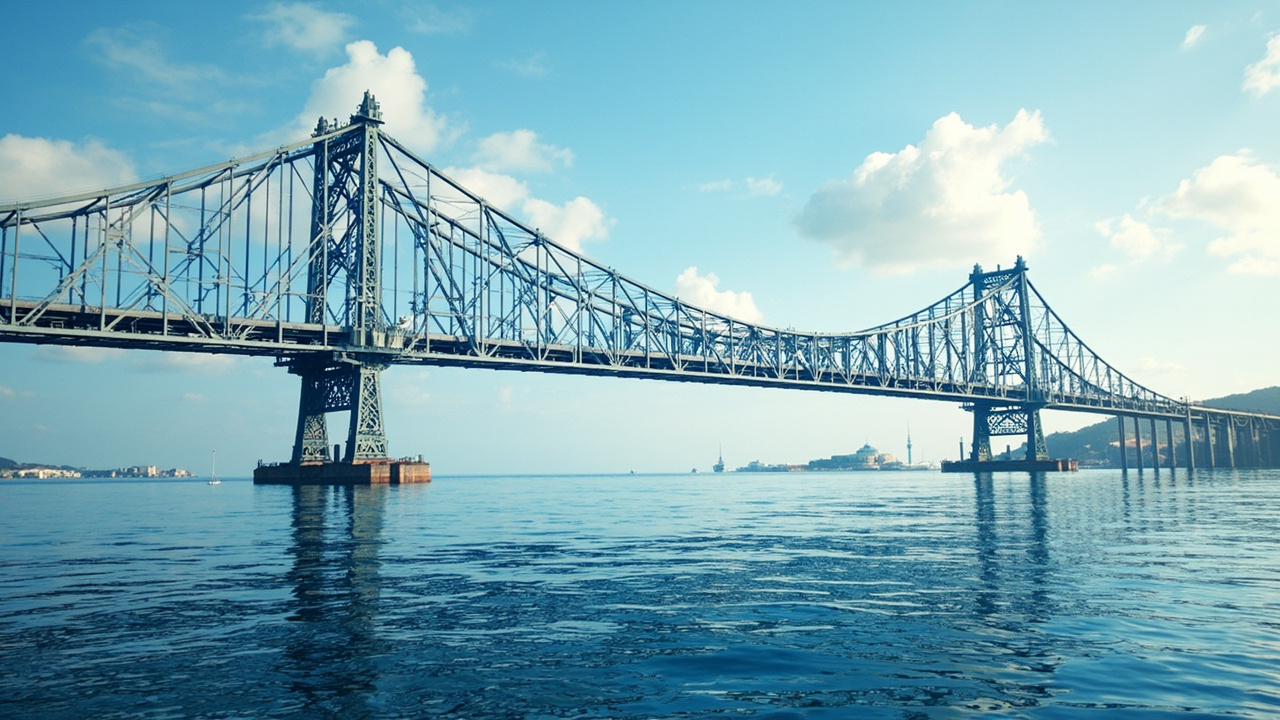
I. What is aliphatic polyurethane topcoat
Aliphatic polyurethane topcoat is a two-component polyurethane coating: component A contains hydroxyl acrylic, polyester resin and pigments, and component B contains aliphatic polyisocyanate (mostly HDI trimer, biuret). After mixing, —NCO and —OH crosslink into a dense polyurethane network, forming a high-gloss, high-hardness, weather-resistant finish. The so-called "aliphatic" means the curing agent backbone is aliphatic HDI rather than aromatic TDI, MDI—this difference determines the fundamental gap in weather resistance, and is the point that should never be confused during selection.
According to ISO 12944-5, weather-resistant topcoats include aliphatic polyurethane, polysiloxane, fluorocarbon, etc.; aliphatic polyurethane, due to its cost-performance and application tolerance, has become the most widely used finish. It is not the only option, but the optimal balance point for the vast majority of C4–CX projects: cheaper and easier to apply than polysiloxane and fluorocarbon, yet far more weather-resistant than aromatic polyurethane. Treating the three words "polyurethane" as a weather-resistance guarantee is dangerous; one must confirm that the curing agent is aliphatic HDI, otherwise even the most beautiful initial gloss will yellow and chalk within one or two years.
II. Weathering mechanism: why aliphatic does not yellow
The main cause of outdoor coating failure is UV-induced photodegradation: the benzene ring in aromatic isocyanate absorbs UV and undergoes Norrish reaction and oxidation, generating quinone structures that show yellowing, chalking and gloss loss. Aliphatic HDI contains no aromatic ring that easily absorbs UV, thus it has three advantages:
- Yellowing resistance: long-term exposure retains color, no yellowing;
- Gloss retention: slow gloss decline, remains high-gloss for years;
- Chalking resistance: polymer main chain is not easily broken, surface does not chalk.
The contrast is clear: aromatic polyurethane (e.g., TDI-cured) obviously yellows and chalks outdoors within 1–2 years, and is only suitable for indoor or non-exposed parts; aliphatic polyurethane in C5 systems can retain gloss and color for a magnitude of 10–15 years (depending on formulation and varnish, pigmented paint). Using aromatic as topcoat on a sea-crossing bridge is a typical mismatch; after a few years the whole bridge yellows and chalks, and owners often mistakenly think it is "poor coating quality," but in fact the curing agent was wrongly selected. This shows that weather resistance is not "just apply a topcoat," but "apply the right topcoat," and the curing agent backbone is the watershed.
III. Aliphatic vs aromatic polyurethane comparison
The two types of polyurethane have the same curing mechanism, but different backbones determine a huge difference in weather resistance:
| Item | Aliphatic polyurethane (HDI) | Aromatic polyurethane (TDI/MDI) |
|---|---|---|
| UV stability | Excellent, no yellowing | Poor, prone to yellowing and chalking |
| Gloss & color retention | Magnitude of 10–15 years | Obvious decline in 1–2 years |
| Application area | Outdoor weather-resistant topcoat | Indoor, primer/intermediate, non-exposed |
| Cost | Higher | Lower |
| Hardness, abrasion | High | High |
Conclusion: outdoor must use aliphatic; indoor or lower layers can use aromatic to save cost. The two have the same curing mechanism, but different backbones determine a huge difference in weather resistance. During selection one cannot only look at the three words "polyurethane," but must confirm the curing agent is aliphatic HDI. For the overall logic of the three-layer system, refer to the ISO 12944 anti-corrosion coating system selection guide of this batch, and for the shielding role of the intermediate coat below, refer to micaceous iron oxide intermediate coat shielding mechanism.
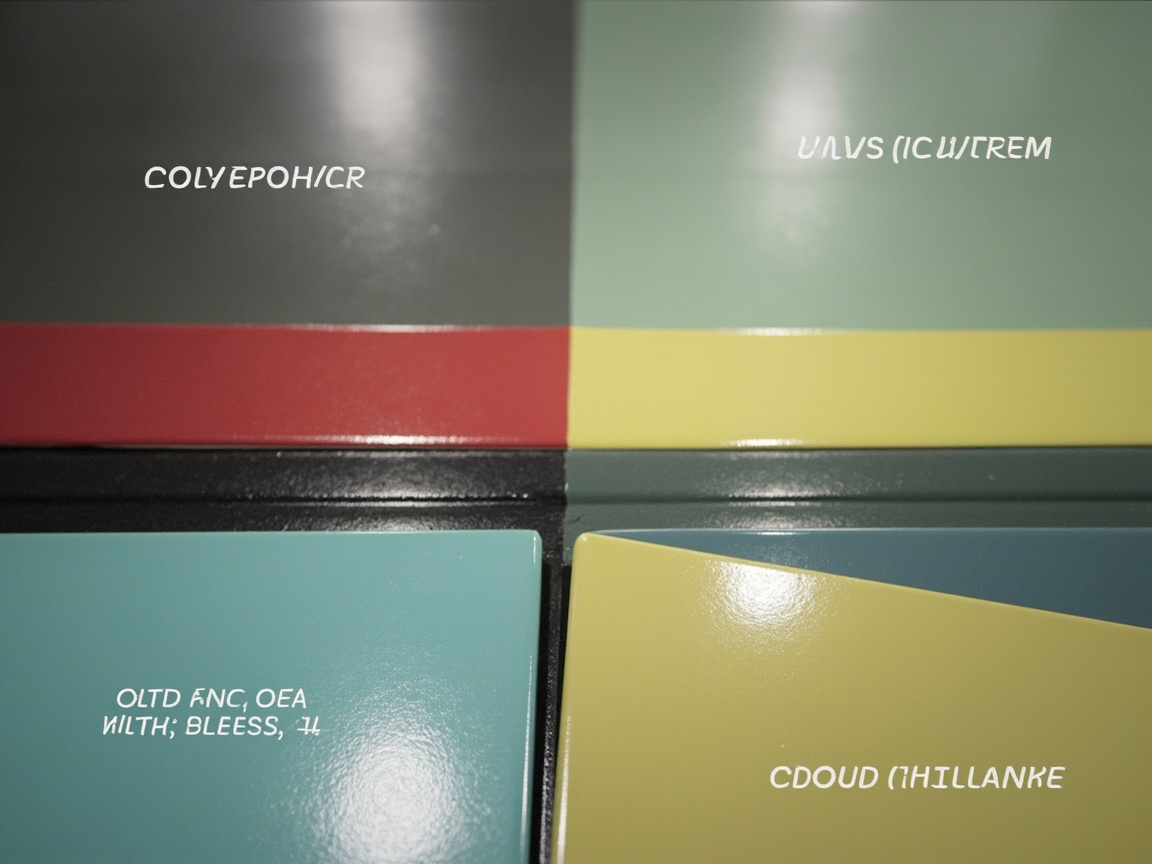
IV. Gloss retention and chalking: quantified indicators of weather resistance
Weather resistance must be quantified by measurement, not just by "shiny or not":
- Gloss retention: measure gloss (GU) at 60° angle per GB/T 9754, ISO 2813; new high-gloss paint ≥ 85 GU; weather-resistant topcoat after artificial accelerated aging (e.g., ISO 16474 xenon-arc, ASTM G154) should maintain high gloss retention (e.g., ≥ 80% after 2000 h);
- Chalking: rated per ISO 4628-6 (grade 0 no chalking is best); good weather resistance stays grade 0–1 long term;
- Discoloration: color difference ΔE per ISO 7724, GB/T 11186; good weather resistance has small ΔE;
- Gloss loss, cracking: rated per ISO 4628.
These indicators are far more rigorous than "shiny or not." Selection should look at the gloss retention and chalking grade in third-party accelerated aging reports, not advertising photos. Many suppliers only report "initial gloss 90 GU" but avoid "gloss retention after 2000 h," which is exactly the key data to追问 at acceptance. Making accelerated aging into "curve plus criteria" makes the topcoat's weather resistance truly comparable and acceptable, and avoids the embellishment of "pass at end point but severely chalked midway."
V. Topcoat role in ISO 12944 system
Aliphatic polyurethane topcoat in the typical C5 system "zinc-rich epoxy + micaceous iron oxide epoxy + aliphatic polyurethane" undertakes four duties:
- Weather resistance: block UV, protect lower epoxy from photodegradation (epoxy itself is not UV-resistant and will chalk);
- Barrier: dense polyurethane film further blocks water and oxygen;
- Decoration: high gloss, color adjustable, color retention;
- Chemical resistance: resistant to atmospheric pollutants, resistant to cleaning.
Note: the lower epoxy (especially intermediate micaceous iron oxide) is not UV-resistant; without weather-resistant topcoat protection it will chalk and peel, so the topcoat is the "protective layer of the protective layer." An epoxy system without weather-resistant topcoat will see its outdoor service life drop sharply, chalking and cracking within a few years. This also explains why, although thin, the topcoat is the "goalkeeper" of the entire system's weather-resistant service life. The topcoat's weather resistance determines the "closure time of the system's external protection"; when the topcoat retains gloss and color well, the lower epoxy is not broken through by UV, and the entire system can fulfill the durability grade of ISO 12944.
VI. Application key points
The application of aliphatic polyurethane topcoat is critical; any out-of-control item will void the weather-resistance promise:
- Surface treatment: overcoated on epoxy intermediate coat; intermediate coat must reach recoatable state; if recoat interval exceeded, must abrade; substrate blast Sa 2.5 (per system);
- Mix ratio: two components strictly by volume, mass ratio (typical 2:1 or per TDS); too much or too little curing agent causes defects;
- Film thickness: single coat 40–60 µm DFT, total topcoat 60–80 µm; too thick prone to sagging, cracking;
- Environment: relative humidity ≤ 85%, substrate 3℃ above dew point; avoid high humidity (isocyanate reacts with water to generate CO₂ causing pinholes);
- Spraying: airless or air spray, viscosity per TDS; avoid thick edges, sagging;
- Pot life: reaction starts after mixing; beyond pot life gels and is scrapped, mix as needed and use immediately.
Polyurethane topcoat is extremely sensitive to humidity; high-humidity application is the main cause of pinholes and blind bubbles. Site must control humidity and dew point, no luck. Many "topcoat gloss loss, pinholes" are not product problems, but caused by out-of-control temperature/humidity or mix ratio; field process discipline affects results more than brand selection.
VII. Positioning vs polysiloxane and fluorocarbon topcoat
Aliphatic polyurethane is not the only weather-resistant topcoat; horizontal positioning:
- Aliphatic polyurethane: high cost-performance, easy application, gloss retention 10–15 years, most common;
- Polysiloxane (acrylic siloxane): better gloss and color retention (up to 20 years+), lower VOC, but more demanding application, higher cost, suitable for ultra-long life (CX);
- Fluorocarbon (FEVE): best weather resistance (20 years+), good self-cleaning, but expensive, used for landmarks, extremes.
Choose by durability grade and budget: C4–C5 use polyurethane is sufficient; CX, very high VH can upgrade to polysiloxane, fluorocarbon. Using fluorocarbon on ordinary workshops is wasteful, while using polyurethane on offshore platform landmarks may require early refinishing—graded selection is the correct approach. Upgrading the topcoat is not simply "the more expensive the better"; look at the whole life: multiply the number of refinishing cycles by the single-cycle cost, then compare with the initial cost. Often the gap between polyurethane and polysiloxane is far smaller than the intuition given by the "unit price difference."
VIII. Chemical and Stain Resistance
Aliphatic polyurethane, besides weather resistance, also resists atmospheric chemicals: acid rain, salt spray splashing, cleaning agents. Its dense crosslinking prevents pollutants from easily penetrating, and combined with a high-gloss surface it is easy to rinse. However, strong solvents (such as gasoline, ketones) will soften it, so it is not used for tank interiors in long-term contact with strong solvents. The stain resistance and easy-clean properties of the topcoat allow bridges and tanks to maintain a clean appearance after many years, and also reduce cleaning and maintenance costs. On large structures such as sea-crossing bridges, periodic fresh-water rinsing is enough to maintain appearance; the easy-clean nature of the topcoat directly translates into lower whole-life maintenance expenses.
IX. Common Defects and Troubleshooting
The most common topcoat defects encountered in engineering and their corresponding root causes:
- Pinholes, blind bubbles: high humidity environment, —NCO reacts with water to produce gas; reduce humidity, control dew point;
- Loss of gloss: wrong ratio, insufficient curing, excessive dilution; strictly follow ratio;
- Yellowing: mistaken use of aromatic curing agent; confirm aliphatic HDI;
- Sagging: excessive film thickness, too much dilution; control DFT;
- Interlayer peeling: intermediate coat exceeded interval without roughening; recoat per TDS;
- Orange peel: poor atomization, high viscosity; adjust viscosity and pressure.
Most of these defects stem from construction environment or loss of ratio control, not the product itself, so process cards and on-site supervision are more important than simply choosing a brand. Taking "temperature and humidity records, mixing ratio records, film thickness records" as acceptance attachments can eliminate the vast majority of defects at the source, and also provide data-based evidence for disputes between supplier and buyer instead of each side telling their own story.
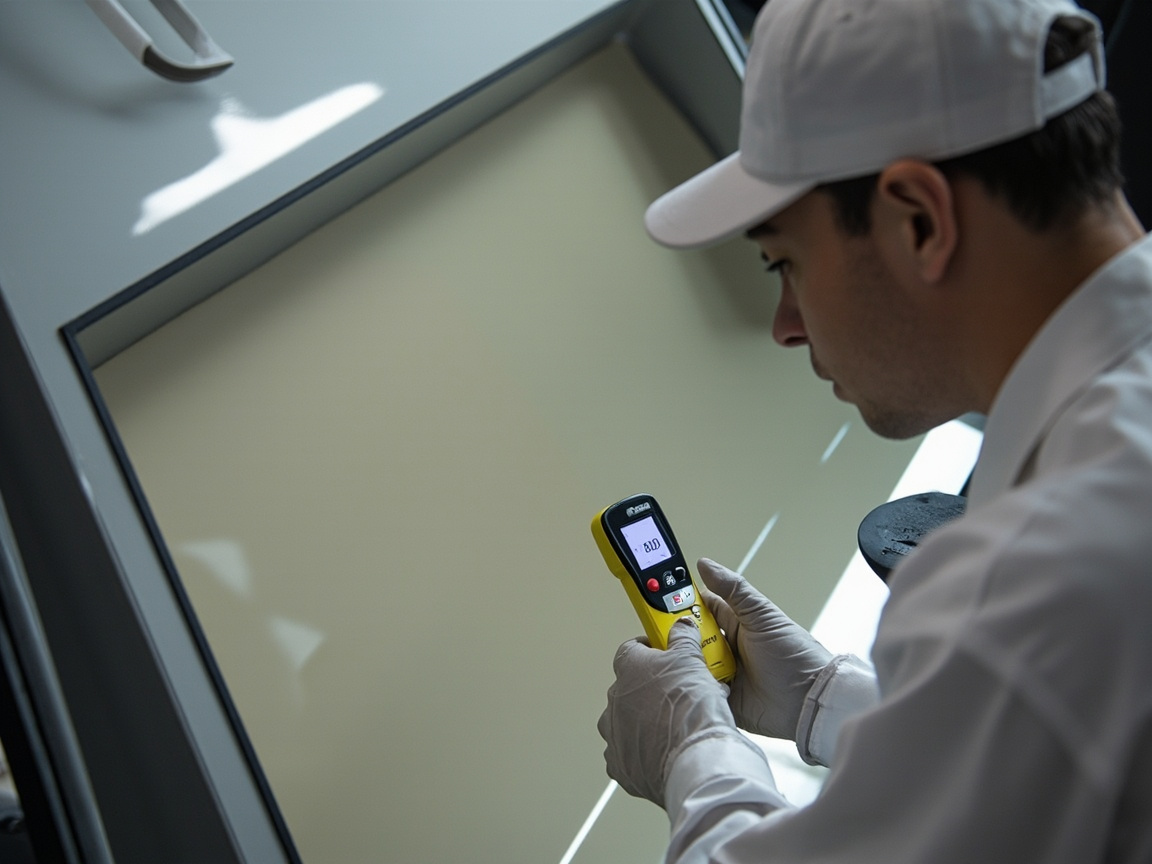
X. Verification and Acceptance
Acceptance of aliphatic polyurethane topcoat should form a quantified closed loop:
- Gloss: 60° ≥ 85 GU (GB/T 9754);
- Adhesion: cross-cut 1 grade (GB/T 9286) or pull-off ≥ 5 MPa (ISO 4624);
- Weather resistance: third-party xenon arc, UV aging gloss retention and chalking grade report;
- Appearance: no color difference, sagging, orange peel;
- VOC: comply with GB 30981-2020 limits (topcoat class mostly ≤ 420 g/L, high-solid type 250–350 g/L).
As a配套方, Kexin New Materials (kexinMaterials) attaches accelerated aging gloss retention reports and color difference data upon topcoat delivery, turning "weather resistance" from an adjective into comparable numbers, and facilitating owners to write weather resistance indicators into the technical specification at the bidding stage. One point stricter in acceptance, one point steadier in decades of appearance and protection; the owner need not wrestle with the supplier over subjective feelings like "shiny or not."
XI. Synergy with VOC Regulations
When aliphatic polyurethane topcoat is solvent-based, its VOC is constrained by GB 30981-2020 (topcoat ≤ 420 g/L); high-solid type can drop to 250–350 g/L, water-based polyurethane even lower. The trend is "high-solid aliphatic polyurethane," suppressing VOC while preserving weather resistance. VOC should also be included in topcoat review, not just weather resistance—compliance and legality must be satisfied simultaneously, not at the expense of one another. Many projects only ask about weather resistance and not VOC during bidding, only to find the product non-compliant on site and forced to change material, causing both schedule delay and cost increase—this is the price of "separate review of performance and compliance."
XII. Selection Review Checklist
Selecting aliphatic polyurethane topcoat is recommended to form a six-step closed loop:
- Confirm curing agent is aliphatic HDI (check TDS, "polyurethane" is not necessarily aliphatic);
- Request xenon arc, UV aging gloss retention and chalking report;
- Verify mixing ratio, film thickness, pot life;
- Verify VOC complies with GB 30981-2020;
- Confirm compatibility and recoat interval with underlying epoxy intermediate coat;
- Acceptance includes gloss, adhesion, appearance.
The six-step closed loop avoids low-level errors like "topcoat not weather resistant" or "mistaken use of aromatic," and also avoids being misled by "high initial gloss" promotional numbers. Writing this checklist into any anti-corrosion specification, the topcoat stage will not make major mistakes, and supplier bidding access is blocked at the threshold.
XIII. Differences between Aliphatic Curing Agents such as HDI and IPDI
Aliphatic polyisocyanates are not only HDI. Common aliphatic curing agents also include IPDI (isophorone diisocyanate), HMDI, etc., each with different characteristics: HDI trimer has good overall balance, excellent gloss retention, widest application; IPDI trimer dries faster, higher hardness, but gloss retention slightly inferior to HDI; HMDI has good flexibility. Selection depends on need: outdoor weather resistance priority HDI, fast-dry or high-hardness special parts may consider IPDI system. Regardless of type, the backbone is not aromatic, so all have non-yellowing basis—the difference lies in process window and final physical properties, not the item "yellowing or not."
The equivalent matching of curing agent and hydroxyl resin determines crosslink density: excess —NCO leaves residual free monomer, affecting weather resistance and odor; excess —OH leads to insufficient crosslinking, softening. Mature formulations control via equivalent ratio (e.g. —NCO/—OH ≈ 1.0–1.1) to balance performance and health. This is also why "mixing ratio" in TDS cannot be changed arbitrarily—changing the ratio is changing the crosslink network, directly relating to weather resistance and adhesion. Note: even within "aliphatic," different manufacturers' trimer residual monomer content differs, affecting construction health and final performance; selection should look at monomer content and VOC in TDS, not just the words "aliphatic."
XIV. Construction Equipment and Spray Process Key Points
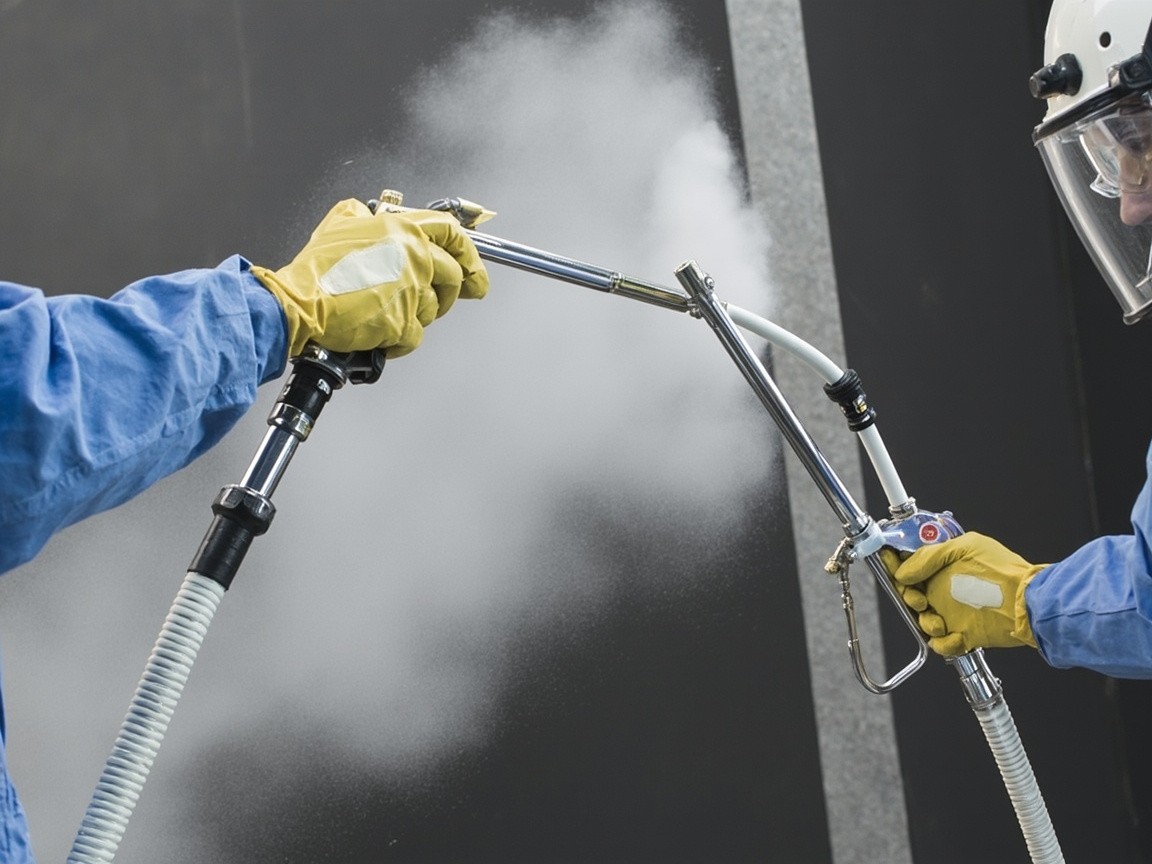
Aliphatic polyurethane topcoat is tolerant of construction equipment, but process parameters must be stable: airless spray commonly uses moderate pressure ratio, nozzle selection for uniform atomization; two-component requires precise ratio (volume or mass ratio per TDS), recommend two-component spray machine with static mixing tube to avoid manual mixing ratio drift. During spraying, gun travel at constant speed, even overlap, prevent thick edge, sagging, dry spray. Spray viscosity adjusted with thinner per TDS; too much dilution causes sagging, reduced resistance, too little causes poor atomization, orange peel; viscosity is one of the most recorded parameters on site.
Environmental control is equally critical: temperature 5–35℃, relative humidity ≤ 85%, 3℃ above dew point; no application in high humidity. Pot life after mixing shortens with rising temperature, summer requires mix-on-demand, no stockpiling. Many topcoat "loss of gloss, pinholes" are not product issues, but caused by spray equipment or temperature/humidity loss of control; on-site process discipline affects results more than brand choice, which is why the same coating can differ in lifespan by several years in different construction teams' hands.
XV. Local Repair and Refinishing of Topcoat
When topcoat is damaged (mechanical damage, local chalking), first rate then decide: local minor damage after sanding feathering recoat same-system topcoat; large-area chalking, loss of gloss requires evaluating underlying intermediate coat status, overall recoat if necessary. Before repair must confirm old coating has reached recoatable state, beyond recoat interval needs roughening activation, otherwise new topcoat will peel in sheets. Surface cleaning before repair is often overlooked: dust, oil, chalking layer on old topcoat if not removed, new paint adhesion is greatly reduced. Standard practice is fresh water rinse, sanding or light sweep blasting to remove chalking layer, then recoat per TDS.
Refinishing color must match old color (per color card and ΔE control), avoid "patch" appearance. For large structures like sea-crossing bridges, refinishing often accompanies traffic organization, so "preventive maintenance" (recoat before chalking) is more economical than "repair after failure"—this also echoes the ISO 4628 periodic rating whole-life management idea. Incorporating periodic rating into O&M system can intervene at early chalking stage, greatly extending interval between major overhauls.
XVI. Accelerated Aging Standards ISO 16474 and ASTM G154 Practice
Laboratory verification of topcoat weather resistance mainly relies on xenon arc (ISO 16474, ASTM G155) or fluorescent UV (ASTM G154). Differences are as follows:
| Method | Spectrum | Main evaluation | Applicable |
|---|---|---|---|
| Xenon arc ISO 16474 | Near natural light | Gloss retention, color retention, chalking | Comprehensive weather resistance |
| UV fluorescent ASTM G154 | UV-biased | Cracking, gloss loss | Quick screening |
Xenon arc spectrum is closer to natural sunlight, suitable for comprehensive gloss retention, color retention, chalking assessment; UV fluorescent is sensitive to cracking, gloss loss but UV-biased, lacks visible spectrum. In practice note: irradiance, black panel temperature, spray cycle set per standard cycle; sample preparation DFT and配套 consistent; assessment per ISO 4628 and GB/T 9754 for periodic testing (e.g. measure gloss retention every 500 h), draw decay curve not just look at endpoint. Giving quantified conclusion like "after 2000 h xenon arc gloss retention ≥ 80%, chalking 0–1 grade" is far more valuable than the four words "excellent weather resistance," and is also a hard acceptance indicator owners should write into bidding.
XVII. Cost-Life Trade-off between Aliphatic Polyurethane Topcoat and Polysiloxane
Upgrading topcoat is not the more expensive the better, look at life-cycle cost:
| Topcoat type | Gloss & color retention | Relative cost | Applicable durability |
|---|---|---|---|
| Aliphatic polyurethane | 10–15 years | 1.0× | H |
| Polysiloxane | 20 years+ | 1.3–1.6× | VH |
| Fluorocarbon FEVE | 20 years+ | 2×+ | VH/landmark |
Polyurethane offers the best cost-performance and is the first choice for the vast majority of C4–C5 projects; polysiloxane is more cost-effective in VH, CX long-life scenarios (the savings from one less refurbishment far exceed the price difference); fluorocarbon is used for landmarks or extreme weather resistance, at the cost of higher expense and demanding application. Topcoat selection should consider full life cycle: multiply the number of refurbishments by the single-cycle cost, then compare with initial cost—often the gap between polyurethane and polysiloxane is far smaller than the intuition given by the "unit price difference". For structures like sea-crossing bridges that cannot be frequently repainted, high-solid aliphatic polyurethane remains the most reliable weather-resistant topcoat choice due to its application tolerance.
18. Common Acceptance Disputes and Avoidance
Common disputes and avoidance for acceptance of aliphatic polyurethane topcoat: ① High initial gloss but no aging report → require third-party xenon-arc gloss retention in bidding; ② Misuse of aromatic as topcoat → TDS notes HDI and retains sample for comparison; ③ Pinholes from high-humidity application → on-site temperature, humidity and dew point records included in acceptance; ④ Insufficient film thickness → 90/10 rule statistics; ⑤ Interlayer peeling → recoating interval records and pull-off retest. Writing the "evidence requirements" for each dispute into the specification turns acceptance from "each saying their own" into "signing against the data". This is exactly the meaning of ISO 12944-8 in preparing specifications—turning possible wrangling into executable clauses in advance, saving trouble for both supply and demand.
19. Trends of Topcoat and Green Coating
Under the constraints of GB 30981-2020, aliphatic polyurethane topcoat is evolving toward high-solid and water-based: high-solid reduces VOC from around 420 g/L to 250–350 g/L; water-based polyurethane further lowers VOC, but is more sensitive to temperature and humidity and dries slower. The trend is not "eliminating solvent" but "finding a balance among weather resistance, application and compliance". When selecting, owners should include both VOC and weather resistance in scoring, guiding suppliers to provide topcoats that are both compliant and legal—this is the pragmatic path for the green transformation of the anti-corrosion industry, and avoids the dilemma of "weather-resistant but environmentally non-compliant". For large infrastructure, green and durable are never an either-or; the key is to select the right high-solid aliphatic system, rather than choosing between performance and environmental protection.
20. Final Recommendations for Topcoat Selection
One sentence to summarize topcoat selection: for outdoor exposed areas, use aliphatic HDI, request xenon-arc gloss retention report, control film thickness at 60–80 µm, VOC compliant with GB 30981, compatible with the lower epoxy intermediate coat and applied within the recoating window. Writing these five points into any anti-corrosion specification will prevent major errors in the topcoat stage. Weather resistance is the last line of defense of the entire system to the outside; if held, decades of protection will not be broken from outside by UV, and the clean appearance of bridges and offshore platforms can be maintained long-term. Many bridges yellow and chalk within ten years, the root often not in primer or intermediate coat, but in wrong topcoat curing agent or insufficient film thickness—holding the topcoat means holding decades of appearance and protection.
21. Storage and Safety Management of Aliphatic Polyurethane Topcoat
Aliphatic polyurethane topcoat is two-component; Component A (hydroxyl) needs sealed moisture-proof storage, Component B (isocyanate) especially fears water—contact with water causes gelation and releases CO₂, so warehouse and site must be moisture-proof, cool and away from water. Mixed material should be used within pot life; overtime gelling is scrap and cannot be "revived" by adding thinner. Construction ventilation must be sufficient to avoid accumulation of isocyanate vapor; personnel protection per TDS. Writing storage and mixing discipline into the process card is the basic management to avoid "material arrived on site already ruined" and "mixed material failed"—seemingly trivial but directly deciding the quality on the wall; many site accidents actually stem from storage and mixing negligence, not insufficient coating performance itself.
22. One-Sentence Acceptance Checklist for Owners
Shortest topcoat acceptance checklist for owners: curing agent confirmed as aliphatic HDI, third-party xenon-arc gloss retention compliant, 60° gloss ≥ 85 GU, adhesion cross-cut grade 1 or pull-off ≥ 5 MPa, film thickness meets 90/10, VOC compliant with GB 30981. All six passed, no major error in topcoat stage. Writing the checklist into the bidding technical specification, supplier bidding access is blocked at the threshold, and later disputes naturally reduce greatly. Weather resistance is the goalkeeper; one more point of strict acceptance, decades of appearance and protection are one more point stable, and owners need not wrestle with suppliers over subjective feelings like "shiny or not", all disputes can return to the data itself.
FAQ
Q: What is the difference between aliphatic and aromatic polyurethane topcoat, can they be mixed?
A: The core is the curing agent: aliphatic uses HDI, no yellowing outdoors, gloss retention 10–15 years; aromatic uses TDI, MDI, contains benzene ring prone to UV degradation, yellowing and chalking in 1–2 years, only suitable indoors. The two cannot be mixed or have curing agents interchanged under "both are polyurethane"; cross-type mixing causes loss of gloss and non-drying. Outdoor topcoat must use aliphatic, this is the watershed of weather resistance or not.
Q: How many years can aliphatic polyurethane topcoat be used without yellowing?
A: Depending on formulation and varnish or pigmented paint, outdoor gloss and color retention is typically 10–15 years magnitude, high-quality systems longer; after accelerated aging (ISO 16474 xenon-arc 2000 h) gloss retention should remain high (e.g. ≥ 80%), chalking 0–1 grade. Actual life affected by UV intensity, pollution, maintenance, should be based on third-party aging report rather than verbal years, cannot treat "15 years" as warranty promise.
Q: Why polyurethane topcoat over epoxy intermediate coat?
A: Epoxy is not UV resistant, direct exposure causes chalking and peeling. Aliphatic polyurethane topcoat blocks UV, protects the lower epoxy system, while providing decoration and surface chemical resistance. It is the "layer that protects the protective layer". Epoxy system without topcoat outdoor life drops sharply, chalking and cracking in a few years, so although thin, topcoat is the weather-resistant goalkeeper.
Q: Is polyurethane topcoat VOC high, is it compliant?
A: Solvent-based aliphatic polyurethane topcoat per GB 30981-2020 topcoat limit mostly ≤ 420 g/L, high-solid type can drop to 250–350 g/L, water-based even lower. Within limit is compliant. Selection should verify third-party VOC report, review "legal" and "weather-resistant" together, cannot only look at performance and ignore environmental limit.
Q: Why fear high humidity during application?
A: Isocyanate —NCO reacts with water to form CO₂ and amine, causing film pinholes, hidden bubbles, softening. Hence require relative humidity ≤ 85%, substrate 3℃ above dew point, no application in rain or condensation. High humidity is the main cause of polyurethane topcoat pinholes, site must control humidity and dew point, no luck-taking.
Q: Is higher gloss more weather-resistant?
A: No. Gloss is an appearance indicator; weather resistance looks at gloss retention and chalking grade. New high-gloss paints are all shiny, difference is gloss retention after a few years. Topcoat selection should look at gloss retention and chalking after accelerated aging, not initial gloss, and certainly not judge weather resistance solely by "new paint 90 GU".
Q: How to choose among polyurethane topcoat, polysiloxane and fluorocarbon?
A: C4–C5 use aliphatic polyurethane for best cost-performance; CX, very high durability (VH) or landmark can upgrade to polysiloxane (gloss retention 20 years+, lower VOC) or fluorocarbon (best weather resistance but expensive). Determine grade per ISO 12944 durability grade and budget, avoid two extremes of "low grade using expensive topcoat waste" or "high grade using ordinary topcoat early refurbishment".
Q: Can topcoat be applied thicker for more durability?
A: Not advisable. Topcoat single coat 40–60 µm, total 60–80 µm is appropriate; too thick causes sag, internal stress cracking, and wastes expensive topcoat. Increased thickness should be in epoxy micaceous iron oxide intermediate coat; topcoat is responsible for weather resistance not thickness, piling thickness onto topcoat is both crack-prone and wasteful, a typical system mismatch.
Q: How to verify supplier topcoat truly weather-resistant?
A: Request: ① TDS notes aliphatic HDI curing agent; ② xenon-arc, UV accelerated aging gloss retention and chalking grade report; ③ gloss (GB/T 9754 ≥ 85 GU) and adhesion report; ④ VOC compliance report. Kexin New Materials (kexinMaterials) provides the above index with goods, turning weather resistance from slogan into acceptable data.
Q: Are varnish and pigmented paint the same in weather resistance?
A: Under same system, varnish (no pigment) and pigmented paint (with pigment) have same weather resistance mechanism, but dark pigments absorb UV stronger, higher temperature rise, dark topcoat ages slightly faster than light; aluminum powder, mica pearlescent and other effect pigments additionally reflect UV. Choosing light color is more weather-resistant, an engineering common sense, and the underlying reason why sea-crossing bridge topcoats are mostly light gray, light blue.
Further Reading
- Micaceous Iron Oxide Intermediate Coat Shielding Mechanism: Understand how the intermediate coat under the topcoat shields, synergizes with topcoat weather resistance to extend life, and why thickness should be in the intermediate coat.
- ISO 12944 Anti-corrosion Coating System Selection Guide: The role of topcoat in C4–CX systems and corresponding durability grades, master the graded selection logic.
- Salt Spray/Cyclic Corrosion Test Methods: Beyond weather resistance, corrosion must also be verified; understand how salt spray, CCT together with topcoat weather resistance form complete acceptance.
- Anti-corrosion Coating Specification for Bridge Steel Structures
- Solvent-free Epoxy Heavy Anti-corrosion Coating
- Alkyd Anti-rust Paint: Iron Red/Gray Anti-rust, Application Characteristics and Limitations