Steel storage tanks are core containers in industries such as petroleum, chemicals, water treatment, and grain, while corrosion on the inner wall of tanks is often an "invisible risk": once the lining fails, it may lead to media contamination and production shutdown for minor cases, or perforation and leakage causing safety and environmental accidents for severe cases. Unlike structures exposed to the atmosphere, the inner wall of tanks is长期处于 liquid immersion, temperature fluctuation, media scouring, and a "breathing" humid atmosphere, making the corrosion mechanism more complex and imposing extremely high requirements on the density, chemical resistance, and construction reliability of the coating. This article systematically explains the design and material selection of anti-corrosion coating for tank interiors from media classification, system design, material selection, construction, to maintenance, helping engineers upgrade from "usable" to "reliable, inspectable, and maintainable".
As a heavy-duty anti-corrosion system supplier, Kexin New Materials (kexinMaterials) widely adopts solvent-free epoxy integral lining solutions in crude oil, intermediate product, and sewage tank lining projects, and performs source low-VOC design based on media characteristics and the limits of GB 30981-2020, providing process cards from surface treatment to holiday detection. The system design approach in this article also directly originates from these frontline practices.
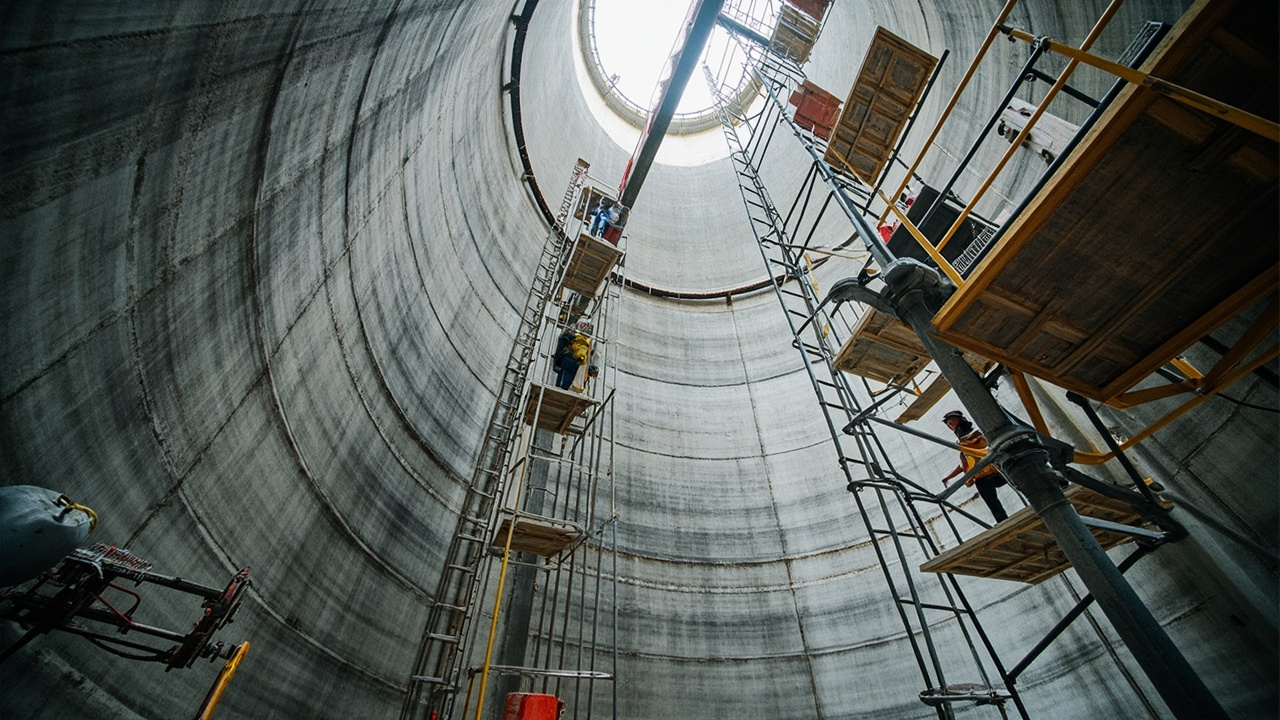
I. Where does corrosion on the tank inner wall come from
Corrosion on the tank inner wall is not a single mechanism, but a superposition of multiple factors:
- Chemical corrosion: acids, alkalis, and salt media directly attack metal and coating; sulfur-containing crude oil generates sulfides and organic acids;
- Electrochemical corrosion: water phase and metal form a galvanic cell, especially the oxygen concentration cell at the waterline (gas-liquid interface) is most severe;
- Erosion and wear: solids carried by incoming oil and media flow abrade the coating and bottom plate;
- Bacterial corrosion: sulfate-reducing bacteria (SRB) in sewage and oily wastewater produce hydrogen sulfide, aggravating pitting;
- Thermal stress: alternating cold and heat causes coating expansion and contraction, interface fatigue.
Understanding these mechanisms enables targeted material selection: chemical resistance relies on dense shielding, waterline resistance relies on integral defect-free, wear resistance relies on high-filler thick film, and bacterial resistance relies on density and compatible media.
II. Material selection by stored media classification
The media determines the coating type. Common classifications and adaptation ideas:
| Media type | Corrosion characteristics | Common lining material selection |
|---|---|---|
| Clean oil products (gasoline, diesel) | Mild, focus on pitting protection | Anti-static solvent-free / high-solid epoxy |
| Crude oil / heavy oil (sulfur-containing) | Sulfides, organic acids | Chemical-resistant solvent-free epoxy |
| Intermediate products / chemical liquids | Varying acidity and alkalinity | Select epoxy / phenolic-modified by chemical resistance grade |
| Acid and alkali tanks | Strong corrosion | Special high-temp chemical-resistant epoxy or lining |
| Drinking water / food grade | Health and safety | Food-grade certified epoxy lining |
| Sewage / oily wastewater | SRB, wear | Wear-resistant solvent-free epoxy + sterilization management |
First principle of selection: first clarify the media composition, temperature, whether it contains water and solids, then check the coating chemical resistance table, rather than just relying on "epoxy is fine". Chemical resistance data should come from immersion tests based on GB/T 1763 or ISO 2812 and the manufacturer's TDS.
III. System design: single thick film or multi-layer system
The mainstream for tank lining is "solvent-free epoxy single/double thick film" or "epoxy primer + epoxy topcoat" combination. Design key points:
- Dry film thickness (DFT): inner wall often requires 400–1000 µm level (according to media and standards), solvent-free epoxy can achieve in single coat, reducing interlayer risk;
- Defect-free priority: the inner wall fears pinholes most; thick film + holiday detection is more reliable than "multi-layer thin coating";
- Anti-static requirement: tank inner walls storing flammable and explosive media often require anti-static, the coating volume resistivity should meet specifications such as GB 6950, using anti-static solvent-free epoxy with conductive fillers (e.g., conductive carbon black, metal oxides);
- Food-grade certification: drinking water and food-contact tanks must use food-grade epoxy lining that has passed hygiene safety evaluation to avoid harmful substance migration.
For the film formation and process of solvent-free epoxy, see this batch's solvent-free epoxy heavy-duty anti-corrosion coating; its VOC compliance basis is in Industrial Coating VOC Limit Regulations (GB 30981).
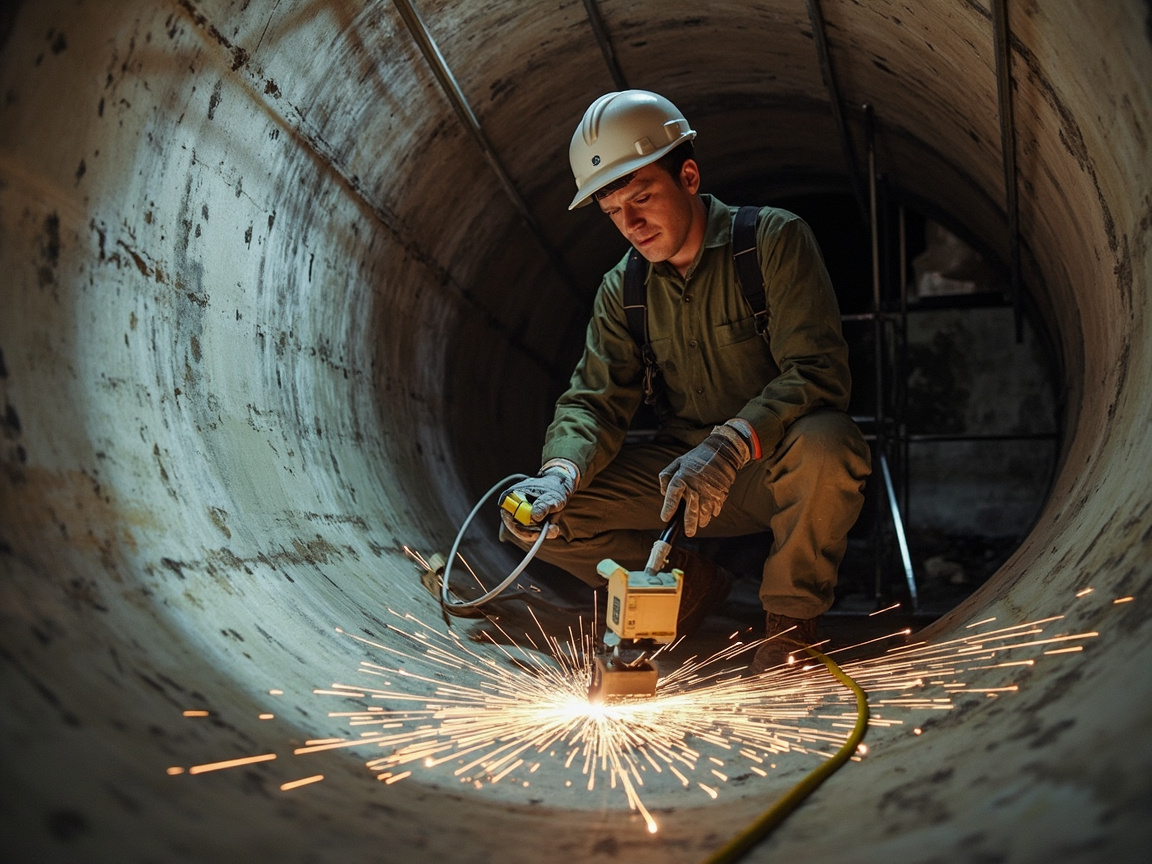
IV. Surface treatment and construction reliability
Inner wall construction has limited space and poor accessibility; surface treatment is the foundation of success or failure:
- Cleanliness: Sa 2.5 near-white (per ISO 8501-1 / GB/T 8923), focus on tank bottom and weld dead corners;
- Roughness: medium (G) grade, matching epoxy anchoring;
- Desalination and dust removal: residual salt and dust on inner wall more easily cause corrosion under coating, must be strictly controlled;
- Equipment: solvent-free epoxy requires two-component heated airless spray to ensure mixing ratio and atomization; confined space ventilation and explosion-proof must comply.
Kexin New Materials (kexinMaterials) provides a "blasting—mixing—spraying—holiday detection" process card for in-tank operations, writing environmental thresholds (dew point, humidity), single-coat DFT, and recoat interval into a checklist to reduce human error.
V. Holiday detection and quality acceptance
The most critical acceptance for tank lining is "zero pinhole":
- Spark holiday detection: after curing, scan entire area at voltage corresponding to DFT, mark and repair detected leaks;
- DFT detection: per ISO 19840's 90/10 rule, 90% of measurement points ≥ specified value, others not lower than 90%;
- Adhesion: pull-off method (GB/T 5210 / ISO 4624) for random inspection, ensure bonding with substrate;
- Anti-static verification: measure volume/surface resistivity, meet safety specs such as GB 6950;
- Appearance: no sagging, no bubbles, no missed coating.
Any leak point is the starting point of future perforation; inner wall holiday detection cannot be omitted.
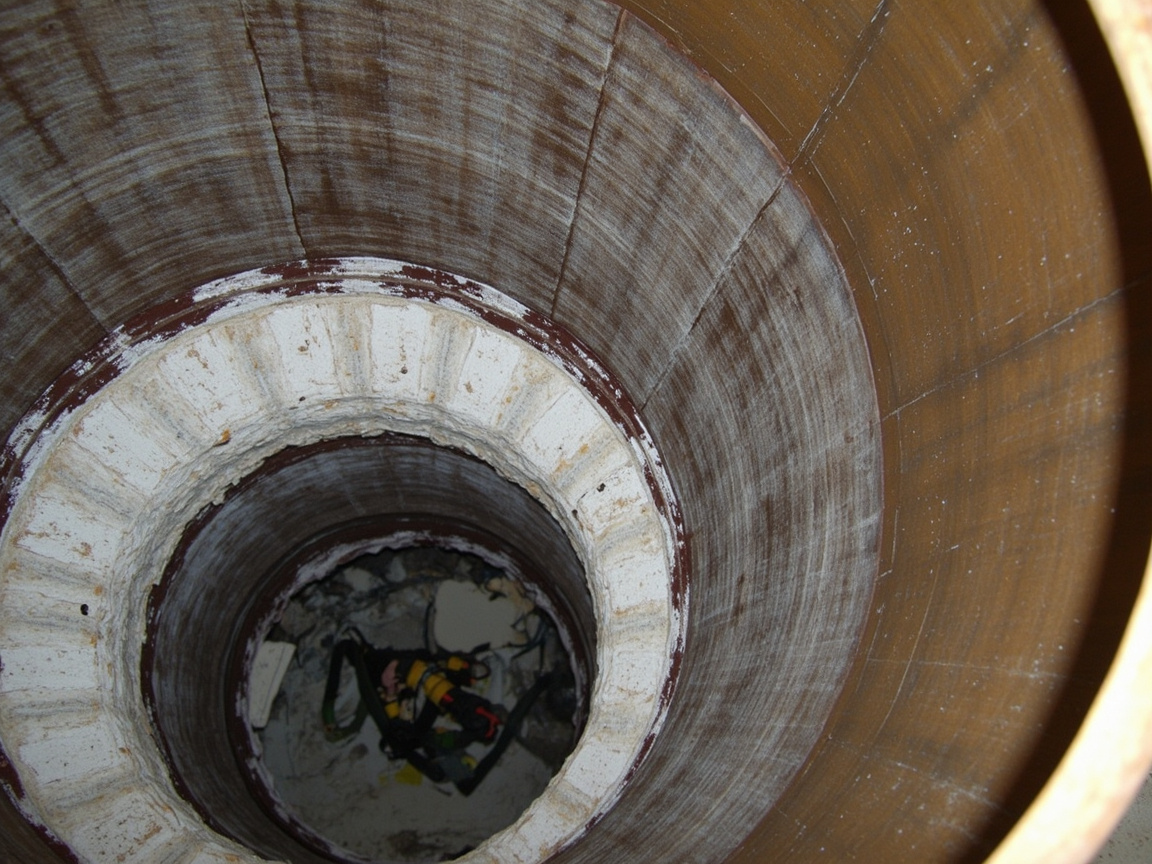
VI. Inspection and maintenance after commissioning
Lining is not "coat once and forever":
- Periodic tank opening inspection: set cycle by media corrosivity, focus on bottom plate, waterline, welds, inlet/outlet;
- Tank cleaning safety: confined space work must ventilate, test, supervise, comply with safety specs;
- Local repair: small-area damage after grinding repair with same system, large-area failure requires re-lining;
- Media management: control water, sulfur, SRB, reduce corrosion load, extend coating life.
Combining "coating + media management + periodic inspection" is the complete closed loop for tank longevity.
VII. Common failures and countermeasures
- Pinhole perforation: construction without holiday detection or insufficient voltage, must re-check entire area with spark and repair;
- Interlayer delamination: recoat interval exceeded or zinc salt untreated, strictly follow TDS window;
- Insufficient chemical resistance blistering: wrong selection for media, re-check chemical resistance table and change type;
- Wear thinning: media contains solids, select wear-resistant filler formula and control flow rate.
VIII. Coordination with overall anti-corrosion system
The tank inner wall is "internal protection", the outer wall and bottom also need external anti-corrosion (buried outer wall see ISO 12944 Im3, coating plus cathodic protection). Design should unify inner wall lining, outer wall coating, edge and bottom plate nodes, avoid "good inside, leaking outside". Related system selection see this batch's ISO 12944 Anti-corrosion Coating System Selection Guide.
IX. Anti-static and electrostatic protection design details
For storage tanks containing flammable and explosive media, an anti-static lining is not as simple as "adding a little conductive filler." Key points include: the dispersion uniformity of conductive fillers (conductive carbon black, conductive mica, metal oxides) determines the stability of resistivity; the coating volume resistivity must meet the upper limits of standards such as GB 6950, and should not be too low to form rapid electrostatic discharge sparks; the resistivity shall be measured after construction, and aging drift during service shall be considered. The anti-static lining also needs to form a continuous path with the tank body grounding, and connections such as flanges and manholes must not be interrupted. When selecting, request resistivity test reports from the manufacturer and conduct actual measurements during acceptance to avoid the hidden danger of "nominally anti-static but actually insulating upon measurement."
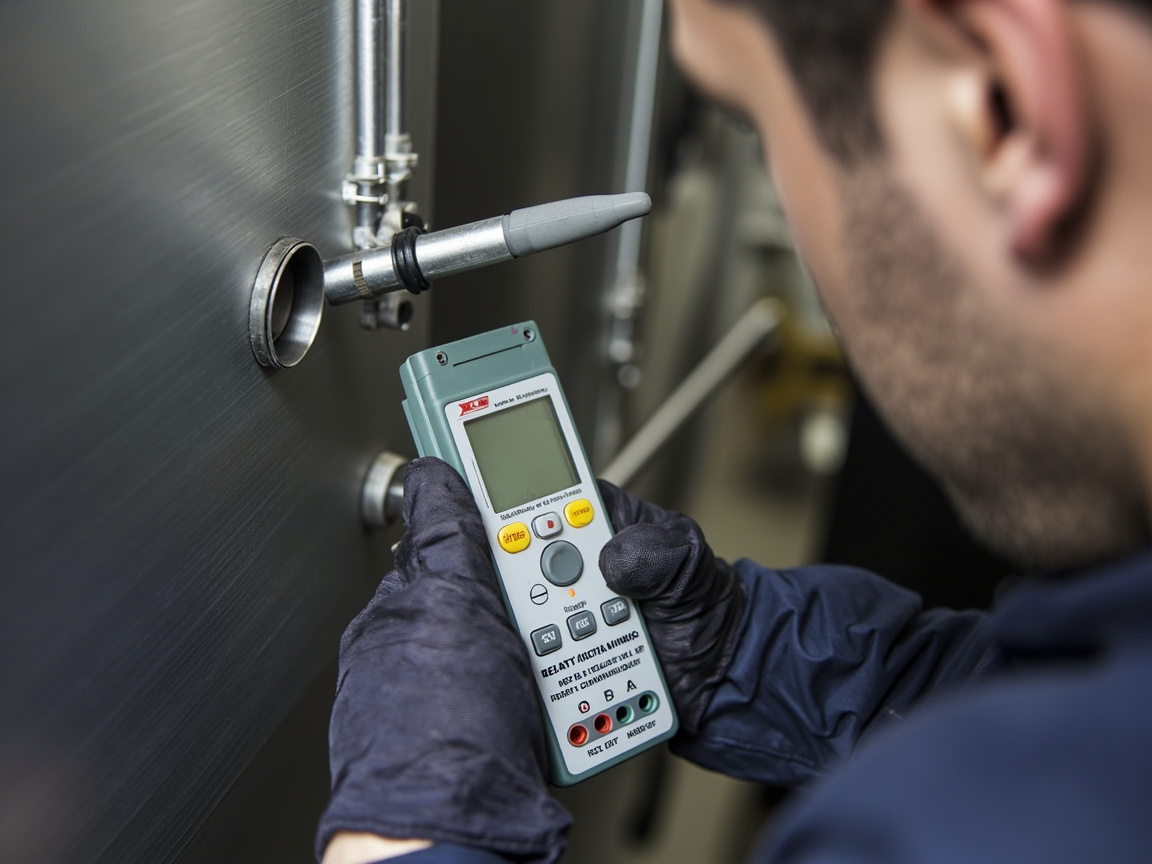
X. Food-grade and Drinking Water Lining Requirements
Linings for drinking water and food-contact storage tanks must pass hygiene safety evaluation, comply with relevant food safety and water-related product specifications, and ensure no harmful substances migrate into the medium. Key points: use dedicated food-grade epoxy, free of hazardous fillers; thorough construction and curing to avoid residual monomers; before commissioning, clean per specification and soak for sampling to test water quality. Such linings have stricter requirements for raw material traceability and test reports; selection should verify hygiene permits and third-party testing, and must not be mixed with ordinary industrial epoxy. For related coating in food plants, see this batch's food plant hygienic-grade coating.
XI. Special Treatment of Tank Bottom and Edge Nodes
Tank failures often start at the bottom plate and edge plate: the bottom plate bears deposited water, sediments, and microbial corrosion, while the edge plate suffers from expansion-contraction fatigue. Treatment strategy: thicken the bottom plate lining or use wear-resistant formula, combined with deposited water drainage design; use elastic sealing and flexible coating on the edge plate to absorb displacement; weld seams and internal corners should have arc transitions (ground R angle) to avoid thin coating points. These nodes require more attention than flat walls; during design, film thickness and process should be separately marked, and supervision should focus on inspection.
XII. Maintenance Cycle and In-service Upkeep
Lining life is affected by medium, temperature, and operational fluctuations; a maintenance system should be established: set tank-opening cycle based on corrosion severity, shorten interval for strongly corrosive or SRB-containing sewage tanks; before entering tank, ventilate, test, and supervise, complying with confined space work permit; inspection focuses on bottom plate, waterline, weld seams, inlet/outlet, and old repair areas; small damage should be ground and patched with same system, large-area failure requires re-lining. Combining "coating plus medium management plus regular inspection" is the closed loop for long tank life. For maintenance experience, also refer to this batch's general anti-corrosion system for steel structures.
XIII. Common Selection Errors and Avoidance
High-frequency errors: first, broadly selecting by the word "epoxy" while ignoring medium chemical resistance data; second, ignoring anti-static causing safety hazards; third, surface treatment in tank dead corners is inadequate; fourth, omitting holiday detection leaving perforation hazards; fifth, blindly thickening single coat causing cracking. The way to avoid is to include medium analysis, standard limits, surface treatment, holiday detection, and maintenance system into the technical specification, control via dual lines of ISO 12944 and GB 30981, and if necessary invite material suppliers to participate in system design.
XIV. Joint Protection of Inner Wall and Bottom Plate
Anti-corrosion of storage tank inner wall cannot only focus on flat walls; the bottom plate and edge plate are often weak points. The bottom plate contacts deposited water and impurities long-term, with the heaviest corrosion; the edge plate expands and contracts with temperature difference, and the coating easily fatigues. Joint protection idea: thicken bottom plate lining or use wear-resistant formula, and set deposited water drainage and tank cleaning cycle; use elastic sealant with flexible coating on edge plate to absorb displacement; all internal corners ground to R angle to avoid thin coating points. If the bottom plate outside is buried, it should also combine coating and cathodic protection (see Im3 of ISO 12944). Designing "wall—bottom—edge" as a whole can block leakage channels.
XV. Stress on Coating from Temperature Cycling
The medium temperature of storage tanks fluctuates with seasons and working conditions; the coating and steel substrate have different thermal expansion coefficients, generating alternating stress at the interface, which can cause cracking or delamination over time. Mitigation measures: select tough solvent-free epoxy or add toughening components; control single-coat film thickness to avoid internal stress concentration; for high-temperature media (e.g., hot water, asphalt) select temperature-resistant epoxy or silicone-modified type; estimate temperature range during design and determine DFT and system accordingly. Temperature stress is "invisible fatigue" and should be included in the medium parameter research phase, not remedied afterwards.
XVI. Safety of Tank Cleaning and Confined Space Operations
Both lining construction and maintenance of storage tanks are confined space operations with extremely high safety requirements: isolate, clean, and purge before work; test oxygen content, combustible gas, and toxic gas, only enter when qualified; forced ventilation and continuous monitoring; work permit, supervision, and emergency plan in place; personnel wear respirators and safety belts. Amine mist, solvent vapor, and hypoxia are main risks. Safety is the bottom line of lining engineering; any schedule pressure must not omit ventilation and testing. Relevant safety specifications should be issued to the team together with the coating process card.
XVII. Typical Patterns of Coating Failure
Identifying failure patterns helps targeted treatment: spot rust mostly from pinholes or missed blast cleaning points; sheet blistering often from osmotic pressure caused by residual salt or substrate contamination; interlayer delamination mostly from exceeding recoat interval or untreated zinc salts; wear thinning seen in solid-containing medium scour zones; priority failure at welds indicates insufficient treatment of internal corners and heat-affected zones. Site should photograph and archive with location marked, combine medium analysis to locate root cause, then decide local repair or overall repaint, avoiding the passive cycle of "repair where rusts."
XVIII. Comparison with Brick/Rubber Lining
Besides coatings, strongly corrosive tanks can also use brick lining, rubber lining, or fluoroplastic lining. Brick resists temperature and strong acid but has high self-weight and large construction; rubber resists wear and chemicals but needs vulcanization and joints easily leak; coating (solvent-free epoxy) is fast to apply, low cost, easy to detect leaks, but limited in temperature and extreme media resistance. Selection should weigh medium strength, temperature, life, and budget: general oil and sewage prefer epoxy lining, strong acid high temperature may consider composite lining. Composite solution (coating plus local brick) is also applied in extreme conditions.
XIX. Summary of Design Specification Key Points
Key points to write into the technical specification for tank internal anti-corrosion design: medium composition, temperature, and whether containing water or solids; lining type and DFT; surface treatment grade (Sa2.5), roughness, and salt limit; anti-static requirement and resistivity index (GB 6950); food-grade certification (if applicable); construction environment and equipment (two-component heated spray); holiday detection voltage and DFT acceptance rules (90/10 of ISO 19840); adhesion and anti-static actual measurement; maintenance cycle and safety requirements. Writing these clearly makes the system "verifiable, acceptable, and maintainable."
XX. Environmental Control for Tank Inner Wall Construction
Construction environment inside tank is harder to control than outside: enclosed space, poor ventilation, large temperature and humidity fluctuations. Require substrate temperature at least 3°C above dew point, relative humidity qualified, and forced supply/exhaust to keep solvent vapor and amine mist from accumulating. Summer tank is stuffy and hot, winter easily condenses, both need temporary temperature/humidity control or timed construction. Ventilation volume must meet personnel and explosion-proof requirements, test oxygen content and combustible gas. Environmental loss of control is the root cause of tank interior coating blushing, non-curing, and pinhole prevalence; environmental parameters must be written into process card and recorded in real time, not estimated by experience.
XXI. Integrity Confirmation before Commissioning
Between coating completion and commissioning, integrity confirmation should be done: holiday detection full-area scan and repair all leaks; dry film thickness sampled per rules qualified; adhesion pull-off qualified; anti-static (if required) resistivity qualified; appearance no sag or bubble; relevant records and test reports archived. Only after confirmation pass can water or oil be introduced. Rushed commissioning buries perforation hazards, and after medium is in, leak detection is impossible. For important tanks, third-party witness acceptance is recommended, with confirmation results as delivery documents to clarify quality responsibility boundary.
XXII. Material Selection Flexibility under Medium Fluctuation
Stored medium of tank is not constant; scheduling switches may expose inner wall to liquids different from original design. Material selection should keep some flexibility: set chemical resistance grade by most severe possible medium, not only current medium; for multi-purpose tanks improve lining versatility, prioritize epoxy with wide chemical resistance; evaluate compatibility before medium switch, clean and test if necessary. Including "future possible medium" into design input avoids failure upon switch. Operations and procurement departments should share medium plans, making anti-corrosion design forward-looking rather than passive.
XXIII. Collaborative Design with Cathodic Protection
The buried outside part of tank bottom plate often combines cathodic protection, while inner wall mainly relies on coating. For inner wall, coating reduces required protection current to extremely low; if sacrificial anode (e.g., tank bottom edge plate) is added, potential must match to avoid over-protection. Design should treat "inner wall coating plus outer wall coating plus cathodic protection" as a whole, uniformly calculate protection current and life. Isolated design of inner or outer wall easily leads to one short board dragging down the whole. ISO 12944's immersed and buried parts (Im1 to Im3) give corresponding system ideas, should be cited together with inner wall design.
XXIV. Coating Health Management in O&M
Include inner wall coating into asset management: establish single-tank file, record medium, lining type, construction, and past maintenance; regular tank opening inspection with photo rating; mark trend on wear and repair areas; predict remaining life by corrosion rate and arrange repaint. Coating health management can turn "sudden perforation" into "planned maintenance," significantly reducing unplanned shutdown. Combined with medium management (water control, sulfur control, sterilization), life can be further extended. This idea of treating anti-corrosion as asset operation is the direction of modern tank management.
XXV. Common Accident Lessons of Tank Internal Anti-corrosion
The industry has no shortage of accident lessons from lining failure: some tanks perforated and leaked shortly after commissioning due to no holiday detection; some had medium changed without re-evaluation, lining quickly eroded by new medium; some did not repair at weld heat-affected zone, weld rusted and perforated first. Common point of these accidents is ignoring a certain link: omitting leak detection, incomplete design input, or missing construction node. Lessons remind us that tank internal anti-corrosion is a system engineering; any loose link may evolve into safety accident, and rigorous process must cover design, construction, and maintenance entire process.
XXVI. Monitoring and Inspection Means during Operation
Monitoring after commissioning can detect hazards early. Common means include: regular tank opening visual inspection, focusing on bottom plate, waterline, and welds; use online corrosion probes to monitor medium corrosivity change; acoustic emission or magnetic flux leakage detection for key tanks to find wall thickness reduction; establish corrosion rate file to predict remaining life. Monitoring data should feed back to maintenance plan, achieving planned repair rather than post-accident rush. Linking operation-period monitoring with coating file is important guarantee for long-cycle safe tank operation and reflects modern O&M.
XXVII. Treatment Strategy for Old Tank Retrofit
Retrofitting internal anti-corrosion of old tanks is difficult due to complex old coating and rust conditions. Strategy is thorough evaluation first: find out old coating type and adhesion state, rust distribution and bottom plate thinning; compatible old coating that can be kept may continue after treatment, incompatible must be removed to substrate; severely thinned bottom plate should be reinforced before lining. Retrofit construction is limited by in-service facilities, with higher safety and environmental requirements, must isolate, clean, and ventilate. Retrofit plan should be more prudent than new build, because old tank has greater uncertainty, insufficient treatment easily fails again shortly.
XXVIII. Research Checklist in Early Design
To do good tank internal anti-corrosion design, early research must be sufficient. Suggested checklist includes: exact composition and concentration of stored medium; max and min temperature and fluctuation; whether containing solid, sulfur, bacteria; water level change and waterline position; tank cleaning and maintenance cycle; whether anti-static or food-grade required; local environmental and safety regulations. Collecting this information completely enables accurate material selection and film thickness, avoiding design detached from reality. Many failures stem from incomplete design input, applying general solution to special medium, so research depth directly decides system success.
XXIX. Internal Anti-corrosion and Intelligent O&M
With digital development, anti-corrosion inside storage tanks can also be integrated into smart operation and maintenance. Approaches include: deploying corrosion and leakage sensors at key tanks to upload data in real time; incorporating coating archives, inspection records, and monitoring data into a management platform to automatically remind of maintenance milestones; using trend analysis to predict remaining service life and support decision-making. Intelligence does not replace the coating itself, but makes maintenance more timely and precise, reducing sudden accidents. For large petrochemical and storage/transport enterprises, this model combining materials with management is becoming an important path to improve safety and efficiency.
30. Key Summary Points on Internal Anti-Corrosion of Storage Tanks
To summarize the whole text, the core of storage tank internal anti-corrosion design is: first identify the medium, then select materials; determine film thickness and type based on medium corrosivity; surface preparation up to standard is the foundation, and salt removal and roughness control must not be omitted; solvent-free epoxy thick film plus holiday detection is a reliable route; special requirements such as static dissipation and food grade must be listed as separate indicators; construction environment and confined-space safety are equally important; establish inspection and maintenance systems after commissioning. Writing these points into the specification and strictly executing them ensures the tank interior remains reliable long-term and avoids costly accidents such as perforation and leakage.
31. Embedding Experience as Enterprise Standards
For enterprises owning multiple tanks, it is recommended to embed the key points of this article as internal technical standards: clarify the lining type and film thickness corresponding to different media; unify surface preparation, holiday detection, and acceptance methods; fix the judgment process for static dissipation and food grade; standardize inspection intervals and record formats. Once an enterprise standard is formed, regardless of which tank or which crew performs the work, there is a consistent basis, making quality more stable and management easier. Turning scattered experience into reusable systems is a sign that an enterprise moves from passive emergency repair to active management, and also enables rapid replication of mature practices during mergers and capacity expansion.
FAQ
FAQ
Q: Must the interior of storage tanks use solvent-free epoxy?
A: Not the only option, but the most common. Solvent-free epoxy has near-zero VOC, single-coat thick film, and dense chemical resistance, suitable for tank interiors; high-solids epoxy or food-grade epoxy may also be selected, depending on medium, temperature, and compliance requirements.
Q: How thick should the tank lining be?
A: Interior DFT often needs to be in the 400–1000 µm range, depending on medium corrosivity; solvent-free epoxy can achieve this in a single coat, but must be applied in layers with thickness controlled per TDS upper limit and full DFT inspection.
Q: What is a static-dissipative lining, and when is it mandatory?
A: Tank interiors storing flammable and explosive media often require static dissipation; the coating volume resistivity must meet specifications such as GB 6950, using static-dissipative solvent-free epoxy with conductive fillers (e.g., conductive carbon black, metal oxides).
Q: Why can holiday detection not be omitted?
A: Any holiday on the interior is the starting point for future perforation and leakage; spark holiday testing scans the full area at voltage corresponding to DFT and is the most critical step in lining acceptance, which must never be omitted.
Q: What are the special requirements for drinking water tank linings?
A: Food-grade epoxy lining that has passed hygiene safety evaluation must be used to avoid harmful substance migration, and construction and curing must comply with food contact safety requirements.
Q: What grade must surface preparation reach?
A: Interiors typically require Sa2.5 near-white (per ISO 8501-1 / GB/T 8923), with key treatment of weld dead corners at tank bottom, and strict control of roughness and salt/dust removal; see details in Coating Surface Preparation Sa2.5 and Blast Cleaning Grades.
Q: How to select for sour crude oil tanks?
A: Sulfides and organic acids are highly corrosive; it is advisable to select chemical-resistant solvent-free epoxy, combined with medium desulfurization, water control, and regular inspection to reduce corrosion load.
Q: What are the thresholds for interior construction environment?
A: Limited by tank interior space, two-component heated airless spraying must be used, substrate temperature at least 3℃ above dew point, humidity within limits, and confined-space ventilation and explosion protection implemented; safety and quality are equally important.
Q: How often to inspect after commissioning?
A: Set intervals based on medium corrosivity; strongly corrosive or SRB-containing wastewater tanks should be shortened; focus on bottom plate, waterline, welds, and inlet/outlet, and repair damage promptly when found.
Q: How to divide labor between interior and exterior anti-corrosion?
A: Interior prevents medium immersion corrosion (lining), exterior/buried bottom plate prevents soil and atmospheric corrosion (coating plus cathodic protection); they should be designed uniformly to avoid "good inside, leaking outside".
Further Reading
- Solvent-Free Epoxy Heavy Anti-Corrosion Coating
- Industrial Coating VOC Limit Regulations (GB 30981)
- ISO 12944 Anti-Corrosion Coating System Selection Guide
- Anti-Corrosion Coating Specification for Bridge Steel Structures
- Salt Spray / Cyclic Corrosion Test Methods
- Alkyd Anti-Rust Paint: Iron Red/Gray Anti-Rust, Application Characteristics and Limitations